Prioritize...
After completing this section, you should be able to:
- Define climate reparations, explain their intended purpose, and describe the concept behind a "climate fund."
Read...
Mechanisms for Justice: Climate Reparations
Climate reparations are a framework for addressing the injustices of climate change by compensating those who have been disproportionately harmed by its impacts. Reparations are a way to make up for harm caused in the past by giving money, resources, or help to those who were unfairly hurt. In climate change, it means helping people or countries that didn’t cause much of the problem but are suffering the most from its effects.
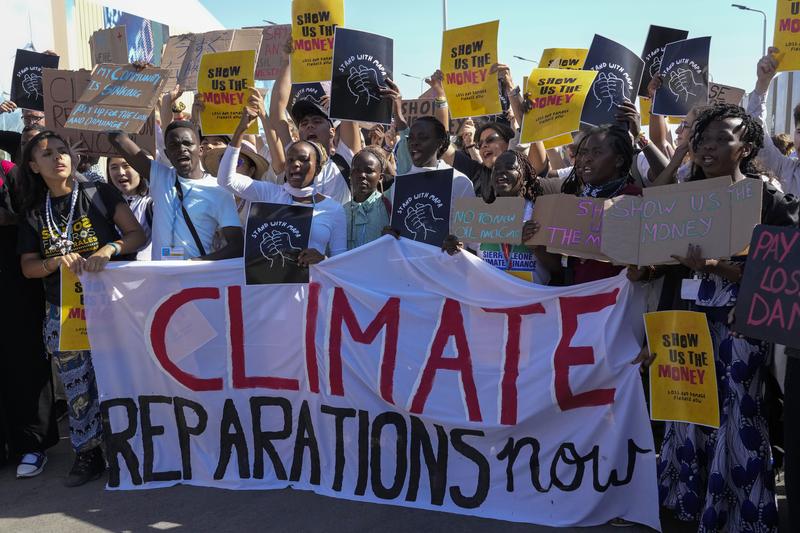
The concept centers on the principle that those most responsible for greenhouse gas emissions—historically wealthier nations and major polluters—should provide financial and material support to vulnerable communities and nations that have contributed the least to climate change but suffer the most from its effects. Reparations go beyond traditional aid or charity, emphasizing accountability and justice, acknowledging historical inequities, and fostering global solidarity.
A key mechanism for delivering climate reparations is the establishment of climate funds. These funds, often facilitated through international agreements like the United Nations Framework Convention on Climate Change (UNFCCC), are designed to channel financial resources from wealthier nations to those most affected by climate change. For example, the Loss and Damage Fund was recently created by countries working together at a global meeting to address climate change (at the 2022 United Nations Climate Change Conference or Conference of the Parties, if you aren’t into the whole brevity thing). This fund is designed to help communities and countries that are facing damage from climate change that cannot be reversed, like when rising seas destroy homes, floods wipe out farmland, or powerful storms force people to leave their communities. The idea is to provide money and resources to help these people recover and rebuild their lives.
The push for climate reparations has focused on achieving three main objectives:
- Acknowledging Historical Responsibility: Recognizing that industrialized nations and corporations have historically driven climate change through unchecked emissions and benefiting from fossil fuel consumption. For example, say a factory has been dumping toxic waste into a river for decades and making huge profits, while communities downstream suffer from polluted water. Holding the factory accountable is like acknowledging historical responsibility for the harm caused.
- Providing Fair Compensation: Leveraging climate funds to ensure vulnerable nations and communities receive resources to rebuild, recover, and adapt to climate-related impacts. If a hurricane with an attributable climate change signal destroyed a small island nation’s homes and infrastructure, fair compensation would mean wealthier nations, who contributed most to climate change, help pay for the island's recovery and adaptation to future storms.
- Promoting Global Equity: Bridging the gap between the Global North and Global South by redistributing resources through mechanisms like the Green Climate Fund and the Adaptation Fund to address systemic inequities exacerbated by climate change. Wealthier countries might contribute to these funds with an eye towards achieving goals like the Global South countries building more flood-resistant infrastructure and develop early-warning systems.

Case Study...
The Green Climate Fund: Addressing Global Climate Challenges
The Green Climate Fund (GCF) is the world’s largest fund dedicated to helping developing nations tackle climate change. Created under the United Nations Framework Convention on Climate Change (UNFCCC), it’s designed to support countries that often contribute the least to climate change but face its harshest impacts. With a portfolio of $13.5 billion (and over $51 billion when including co-financing) as of 2023, the GCF funds projects like building climate-resilient infrastructure, scaling up renewable energy, and preparing communities for disasters like floods and heatwaves. Governed by a 24-member board and based in South Korea, the GCF is a key player in global efforts to channel resources from wealthier countries to those that need them most. The above figure highlights the “buy-in” the fund has been getting from major nations. While the overall commitment pales in comparison to what is needed to address climate issues, the financial outlay indicates a real commitment!
But like any massive program, the GCF isn’t without its challenges. Critics argue that some funded projects don’t go far enough, sticking to “business-as-usual” solutions instead of fostering real innovation. There’s also ongoing debate about whether the money is being distributed fairly or efficiently, with some pointing out that it’s tough for smaller countries to access funds for adaptation projects. Cynics are concerned about the possibility of corruption and cronyism, meaning stringent oversight of the funds is a key request from contributors.
Despite these hurdles, the GCF remains a vital piece of the puzzle in addressing climate injustices, especially as wealthier nations work to fulfill their promises of supporting vulnerable communities around the globe.