Course Instructor: Thanasis Karamalidis, John A. Dutton e-Education Institute, College of Earth and Mineral Sciences, Associate Professor of Environmental Systems Engineering, John and Willie Leone Family Department of Energy and Mineral Engineering.
Course Author: Andy James, John A. Dutton e-Education Institute, College of Earth and Mineral Sciences, The Pennsylvania State University; Chief Marketing Officer, New Pig Corporation; Sustainability Council, Manufacturers Alliance for Productivity and Innovation; Industrial Advisory Board, Renewable Energy and Sustainability Systems (RESS), The Pennsylvania State University.
Course Structure: Online, a minimum of 8-10 hours a week for 12 weeks
Overview
This course explores sustainability as a business opportunity for developing innovative products and services. It will focus on consumer needs related to sustainability, willingness to pay for these needs, and the innovative processes necessary to create sustainable solutions.
When you successfully complete this course, you will be prepared to:
understand and critically analyze current realities, opportunities, and structural issues in sustainability across a range of organizations;
manage and evaluate insight-driven research as a precursor to sustainability-driven innovation;
map sustainability-driven offerings in the market to evaluate the competitive landscape and find strategic opportunity;
design sustainability-centric product and service offerings around identified and tangible market needs;
create, iterate, and evaluate initial beta offerings to understand viability.
Topics
Lesson 1: Realities of Sustainability - Planet
Lesson 2: Realities of Sustainability - People
Lesson 3: Realities of Sustainability - Profit
Lesson 4: Identifying Opportunities in Sustainability I
Lesson 5: Identifying Opportunities in Sustainability II
Lesson 6: Insight-Driven Innovation I
Lesson 7: Insight-Driven Innovation II
Lesson 8: The Ten Types of Innovation
Lesson 9: Organizational Context
Lesson 10: Testing the Offering I - Stated Preference Methods
Lesson 11: Testing the Offering II - Revealed Preference Methods
Lesson 12: Honing and Evaluating the Concept
Want to join us? Students who register for this Penn State course gain access to assignments and instructor feedback and earn academic credit. For more information, visit Penn State's Renewable Energy and Sustainability Systems Program website. Official course descriptions and curricular details can be reviewed in the University Bulletin.
This course is offered as part of the Repository of Open and Affordable Materials at Penn State. You are welcome to use and reuse materials that appear on this site (other than those copyrighted by others) subject to the licensing agreement linked to the bottom of this and every page.
mjg8
1 - Realities of Sustainability: Planet
1 - Realities of Sustainability: Planetmjg8
Lesson 1 Overview
Lesson 1 Overview
Summary
In this Lesson, we begin understanding the structure and overview of modern Corporate Sustainability, primarily through standardized filings and how organizations measure sustainability. During this exploration, we specifically seek to understand more about Planet-centric metrics and messages, and how organizations use them in Corporate Sustainability Reports (CSR). As I hope will be developed throughout the course, we will begin to see how relative definitions are in sustainability, and how even seemingly similar efforts can have drastically different metrics and underpinnings.
Arguably, one of the the most valuable attributes a modern participant in Sustainability can have is the ability to discern and differentiate facets of programs in order to evaluate efficacy. We will begin that journey in this Lesson.
Learning Outcomes
By the end of this lesson, you should be able to:
discern Planet-centric metrics and initiatives within a Corporate Sustainability Report;
evaluate an organization's approach to Planet issues through the lens of their stated Vision, Mission and Values;
compare established and emerging environmental standards and initiatives;
appraise how sustainability may reduce the environmental risk profile of an organization;
discern "badge proliferation" and marketing from meaningful third-party certifications.
Lesson Roadmap
To Read
Chapters 1 and 2 (Keeley, et al.)
Documents and assets as noted/linked in the Lesson (optional)
To Do
Case Assignment: Patagonia and REI
Case Post
Case Response
Peer Voting
Note: Case Study submissions are to be made in Canvas.
Questions?
If you have any questions, please post them to the general discussions forum in Canvas or contact me through Canvas Inbox. I will check daily to respond. If your question is one that is relevant to the entire class, I may respond to the entire class rather than individually.
mrs110
The 3Ps and Triple Bottom Line
The 3Ps and Triple Bottom Line
“In its purest, most distilled form, the imperatives of sustainability are summed up by just three words: Planet. People. Profit..”
In the practice of sustainability, the "3Ps" are widely known, and while there may be a few variations on the theme, they are almost universally agreed upon. At this level, there is no nuance or measurement or hierarchy, just the simple imperative that the role of sustainability is to simultaneously maximize benefit to:
Planet - The environment and Earth.
People - Everyone inhabiting the Earth, from domestic and offshore workers to families and children.
Profit - The financial and overall long-term viability of the organization.
This all sounds lovely, until we remember that by this same reductive logic, many daunting tasks can be made to sound downright simple:
"It's simple, Orville. All we need to do is make a machine that flies. We have an entire garage full of bicycle parts and canvas!"
What we will see is that the complexity of sustainability lies one layer beneath the elegance of Planet. People. Profit., when one is tasked with the details of how to make all three of these imperatives–which are very commonly in direct opposition–thrive within the organization. As we will address in this lesson and many throughout this course, maximizing the 3Ps involves virtually every facet and function of an organization, and is never truly complete.
But, luckily for us, the constraints, unmet needs, scarcities, and imperatives that face those seeking to improve sustainability are the essential building blocks for developing compelling product and service offerings. As we will cover in the coming lessons, the 3Ps will become a framework for how we seek to innovate.
Variations on the Theme
There are a handful of other expressions of the sustainability imperatives, the leading probably being the "Triple Bottom Line." Though they may be stated or modeled differently, below is a matrix comparing the terminology used in a few different models for sustainability:
Models for Sustainability
Model
"Planet" stated as:
"People" stated as:
"Profit" stated as:
Triple Bottom Line (Savitz adaptation of Elkington, 2006)
Society's Interests - Environmental
Society's Interests - Social
Business Interests
Sustainability "Sweet Spot" (Farver, 2013)
Environmental Stewardship
Social Well-being
Economic Prosperity
B Corporation Impact Assessment (Honeyman, 2014)
Good for the Environment
Good for Workers
Good for the Long Term
Five words:
Simple concept
with massive implications.
ksc17
Historical Context of Environmental Issues
Historical Context of Environmental Issues
Elkington's Pressure Waves
In order for us to fully understand the Planet imperative of sustainability, it can be helpful to consider a historical context for the environmental issues that have shaped our world. Elkington has delineated the events of the last generation into three environmental "pressure waves" of public opinion occurring from 1961-2001:
Corporate Sustainability Report and Sustainable Development frameworks (frequency of mentions, 1961–2001).
Credit: Elkington, John. “Good News & Bad: The Media, Corporate Social Responsibility and Sustainable Development.” SustainAbility with Ketchum and the United Nations Environment Programme (UNEP). ISBN 190316804X
Three pressure waves From 1960 to the present, three great waves of public pressure have shaped the environmental agenda. The roles and responsibilities of governments and the public sector have mutated in response to each of these three waves – and will continue to do so. Although each wave of activism has been followed by a downwave of falling public concern, each successive wave has significantly expanded the agendas of politics and business:
Wave 1 brought an understanding that environmental impacts and natural resource demands have to be limited, resulting in an initial outpouring of environmental legislation. The business response was defensive, focusing on compliance, at best.
Wave 2 brought a wider realization that new kinds of production technologies and new kinds of products are needed, culminating in the insight that development processes have to become sustainable – and a sense that business would often have to take the lead. The business response began to be more competitive.
Wave 3 focuses on the growing recognition that sustainable development will require profound changes in the governance of corporations and in the whole process of globalization, putting a renewed focus on government and on civil society. Now, in addition to the compliance and competitive dimensions, the business response will need to focus on market creation.
(Elkington, 2004)
While he has not updated this annotated graph, it is important to note that Elkington has since referred to a "Sustainability Wave" which began in 2005, and reached its relative peak around 2012. Let's hope that peak continues to rise!
One pressure wave event not specifically noted in the graph, but which has had tremendous influence, is the creation of the Environmental Protection Agency (EPA) in 1970. While we will more closely examine the influence of the EPA and regulatory pressures later in this lesson and in future lessons, it is worth noting that in the American environmental movement, the influence of the EPA is not to be underestimated.
In the case of innovation, the regulatory realm presents a significant set of opportunities that can be leveraged to create sustainability-oriented products and services. We must always consider that with any set of constraints and limitations introduced into an organization, whether externally introduced (i.e., regulatory, competitive) or internally introduced (i.e., self-imposed), there is an opportunity for a product or service to bridge the void. We will dive more deeply into how exactly to accomplish this in later lessons, but it is important that we view every sustainability challenge as an opportunity.
In keeping with the idea that 'every sustainability challenge is an opportunity,' examine the pressure wave events Elkington notes and consider the implications of each event. Regardless of our views on any specific outcome, consider the depth of implications from even one of the environmental events.
Check Your Understanding
Consider some of the cascading implications of the 1973 Arab Oil Embargo (which was noted as part of the "First Downwave" by Elkington):
CAFE (Corporate Average Fuel Economy) standards were enacted in 1975 to increase the fuel efficiency of passenger cars and light trucks.
The new concern with fuel economy in the American public moves increased attention to smaller, more fuel-efficient Japanese and European autos.
Auto manufacturers begin to move away from engineering platforms that have been the norm for decades before; heavy body-on-frame vehicles, with thirsty V8s.
New technologies are needed to meet the CAFE regulations.
What specific innovations can you think of that were the results of these cascading implications?
If you would like, jot a few notes below... and then click the link to reveal sample areas of interest.
Click for areas of potential interest.
Innovations:
An entire wave of new engineering and supplier development begins to take hold.
Ever heard of a thing called a BMW or a Toyota? Thank the Embargo.
Technologies that had been viewed as curiosities for decades before are reexamined; diesel autos gain significant popularity in the US.
Turbocharging, fuel injection, overdrive transmissions, electric fans, and a plethora of other developments are applied to vehicles.
Why do I mention these implications? Because in every case, growth and innovation was the response. We must always remember that regardless of the reason, any time an organization or industry is in a state of flux, it is an opportunity for the innovator or the upstart to gain a foothold. In the case of the 1973 Arab Oil Embargo, it was a groundswell of automotive innovation and a resurgence of development into technologies that may have been cost-prohibitive curiosities in the past.
It just happens that sustainability opens entire industries to innovation.
Five words:
Gradual shifts
with lasting impacts.
ksc17
Resource Scarcity
Resource Scarcity
Diminishing Supplies, Increasing Demand
Today, we are faced with an increasing world population with increasing standards of living, and both trends place considerable pressure on a wide range of natural resources from water to tungsten to timber. This escalation of demand in the face of decreasing availability of resources leads to a natural increase in commodity prices... and therefore, more aggressive exploration. At its most extreme, very low supply with high demand can lead to aggression of a different kind: according to the United Nations Environment Programme, between 1990 and 2009, "...at least eighteen violent conflicts have been fuelled by the exploration of natural resources. In fact, recent research suggests that over the last sixty years, at least forty percent of intrastate conflicts have a link to natural resources" (UNEP, 2009).
Consider the overall trajectory of commodity prices now, as compared to other times of scarcity, namely World War I:
One Economist's View on Scarcity in the Next 20 Years
Put simply, the world’s dwindling supplies of arable land, fresh water, energy, and minerals—essential for the production of food and appliances such as mobile phones, cars, televisions and washing machines— cannot meet rising global demand.
Commodity demand is being driven by three primary factors: the rising world population, expected to grow from roughly 7 billion today to 9 billion by 2050; increasing global wealth, with an estimated 3 billion people expected to join the ranks of the middle class by 2030; and a marked trend toward urbanization. On the last point, demographers predict that the number of urban dwellers will rise from 3 billion today to 5 billion by 2030, and each of them will demand better quality foodstuffs and modern conveniences that will accelerate the draw on the world’s resources.
On the supply side, however, arable land, potable water, energy, and minerals are finite, scarce and rapidly depleting. Take land—the earth contains approximately 13 billion hectares (32 billion acres) of land, or an area about 16 times the size of the United States. Of that, just 11% (1.4 billion hectares, or 3.5 billion acres) is arable and thus suitable to grow crops. The other 89%—including mountains and deserts—is prohibitively harder to exploit and farm. With the world’s population exploding, many more people will be looking to live and grow food on smaller patches of land.
Then there is water. Although the earth is 70% water, less than 1% is easily accessible fresh water that can be used for the sustenance of life, such as for drinking and sanitation. Meanwhile, by consuming about 85 million barrels of oil a day, we are living off oil discoveries that date as far back as the 1950s. Moreover, environmental concerns about fracking and shale gas could limit their promise so that such alternatives do not offer a real reprieve to global energy woes.
Finally, the global supply of minerals like copper is undermined by a decline in quality, a shrinking number of discoveries, and increased vulnerability to political interventions. Increasingly, companies have to go much farther afield, into more difficult terrain and riskier geopolitical environments, in order to secure these minerals.
It would be a natural response of consumers in a free market to respond to increasing prices by changing their behavior to consume less of the resource or product. If the price of gasoline reaches $3.50/gallon, people will tend to drive less than if gasoline were $1.00/gallon. If the price of electricity increased 500% overnight, people would take a much harder look at LED lighting, improvements to the energy efficiency of their homes, or perhaps invest in down jackets. Regardless of the mitigating behavior, in time, the market would find equilibrium between supply, demand, and price. But, that market balance can be upset in a significant way by subsidies. If there is an "invisible hand" which finds balance and equilibrium of market forces, we can think of subsidies as an "invisible finger" pushing down on one side of the scale. In essence, subsidies distort the balance of markets. If a government subsidizes the price of gasoline, it weakens the price signals which balance supply, demand, and price. This can lead to severe overconsumption of resources.
For decades, governments from Egypt to Indonesia have subsidised the price of basic fuels. Such programmes often start with noble intentions—to keep down the cost of living for the poor or, in the case of oil-producing countries, to provide a visible example of the benefits of carbon wealth—but they have disastrous consequences, wrecking budgets, distorting economies, harming the environment and, on balance, hurting rather than helping the poor.
Emerging markets are not the only places that distort energy markets. America, for instance, suppresses prices by restricting exports. But subsidies are more significant in poorer countries. Of the $500 billion a year the IMF reckons they cost—the equivalent of four times all official foreign aid—half is spent by governments in the Middle East and north Africa, where, on average, it is worth about 20% of government revenues. The proceeds flow overwhelmingly to the car-driving urban elite. In the typical emerging economy the richest fifth of households hoover up 40% of the benefits of fuel subsidies; the poorest fifth get only 7%. But the poorest suffer disproportionately from the distortions that such intervention creates. Egypt spends seven times more on fuel subsidies than on health. Cheap fuel encourages the development of heavy industry rather than the job-rich light manufacturing that offers far more people a route out of poverty.
The Economist (2014, Jun 14). Scrap them. Retrieved Feb 3, 2014.
Below is a Congressional Budget Office view of United States energy subsidies over the past decades. Consider the influence these subsidies may have had in increasing–or decreasing–innovation and natural market balance. In the next lesson, we will explore the relationships between subsidies, greenhouse gas emissions, and carbon taxes.
I'd like us all to temporarily cleanse our minds of any preconceived notions of greenhouse gases or carbon. Deep breath in, hold for 5 counts, deep breath out. Go to a serene place. Get a beverage and come back. I'll wait.
There are entire swaths of the practice of sustainability which, with discussion, rationale, and logic, can be met with incredible support in virtually every corner. Waste minimization and energy reduction tend to fall into this category. It's about living lean, reducing waste, and saving money while saving the planet. It's about responsibility, stewardship, and not wasting all of the work it took to create that aluminum can. It takes a little messaging and discussion, but, invariably, success can be had with even the most skeptical among us.
And then comes the issue of greenhouse gases (GHG) and carbon taxes.
In this topic, I would like us to explore a concept known as The Tragedy of the Commons (Hardin, 1968) as an entry point to help us understand why carbon regulation is a logical step which can help drive innovation and eliminate the market-biasing subsidies mentioned in the last section. For more about this please watch the following 6:36 video.
Video: Tragedy of the commons | Consumer and producer surplus | Microeconomics (6:36)
Click here for a transcript of the Tragedy of the commons | Consumer and producer surplus | Microeconomics video.
Let's say that we have three small ponds. This is pond A, this is pond B and this is pond C over here. Let's say that this first pond right over here, it's a privately owned pond. It's owned by Al and this pond over here is owned by Carol.
But this middle pond, pond B I guess we called it to start off with. This is common land, or I guess this is a common pond or this is open to the public.
Let's say that Al and Carol, they're both fishers. I guess Carol would be a fisherwoman. They both like to fish, that's how they make their living. Al in his pond, he has fish in there and he does some fishing in his pond. But he makes sure not to overfish because he doesn't want to deplete the stock of fish he has. He fishes just enough that he can pay his bills and whatever else but not so much that it depletes the fish and essentially makes them extinct in his pond. He doesn't want to overfish, and Carol does the same thing. She's got fish in her pond and she uses them to make a living. She gets them out and sells them and eats them and whatever else but she's careful not to overfish because if you overfish then there wouldn't be fish. There wouldn't be a next generation of fish.
Over here in this public pond, there are also fish. I'll draw their fish in orange. There are also fish in this public pond over here. They're smiling, maybe they won't be smiling for long. What is going to happen? Anyone can go and fish in this public pond. Al might say, and we'll just assume we’re in a world of two people. Obviously, the real world has more than two people.
Al will say, "Okay. I'm going to be very careful in my own pond. I'm going to fish just enough that I don't deplete the fish there. But any extra fish I need, I could go over here to this public pond and fish all I want." And I might be concerned about depletion in the public pond except for the fact, if I'm concerned about depletion, that's still not going to help the situation because other people might come and still not be so concerned and so I won't even get the benefit of the depletion if I hold back and other people come and deplete the pond.
When you have this pond that is open to the public, all of the surrounding people whether it's Al or Carol or I guess you could have other people here, they would say, "Look. I'm going to fish here. I'm going to get some benefit and even if I overfish the benefit of overfishing I'm going to get. In the near term I'm going to get all of those fish." Then the cost of that overfishing which is in the future there won't be as many fish or no fish at all, that's going to be spread out amongst everyone else.
So you have the situation where, because there's no one, I guess you could say, either owning this land or there's no one protecting this lake or however you want to describe it, there's a rational. And I want to be clear, rational does not always mean good. Rational actors might decide to overfish.
Essentially, by doing that, everyone's going to be worse off. They're going to destroy the productivity of this pond. They're going to destroy the productivity of the pond right over here. This idea that if there's this common land or common resource, in this case it was a pond and people can spread out the cause and they get the benefits directly. Essentially, you have a situation where that shared resource can get abused and this is called the tragedy of the commons.
This is the tragedy of the commons where in the example we did here, the pond is the common space that's being abused. It's especially a tragedy and I've already hinted at this already, is that even if Al decides that, "Hey, you know what? I'm going to hold back a little bit. I'm not going to fish so much because I don't want to deplete it." He'll say, "But wait. If do that, other people are going to come and deplete it so I have no incentive to hold back." So other people are also going to have the same logic and then this thing is going to get overfished here.
The classic example of tragedy of the commons where the example was first given was common grazing lands. Same exact idea. If this was private grazing land over here where I can keep my cows and my sheep and this is private grazing land over here where someone else has their cow and sheep but this over here is literally a commons where anyone can graze their cow and sheep. Then, just like the fishing, huge incentive for people to let their cow and sheep maybe overgraze the land, destroy the land, make it not sustainable but the cost of it are going to be shared by everyone else and the benefit of overgrazing, at least in the near term, you, the person who's overgrazing is going to get from it. You might even say, "I'm not even the one overgrazing it. It's all of us collectively overgrazing." So you don't blame me.
Now, what is the solution to the tragedy of the commons? How does a government or jurisdiction or a group of people avoid this type of destruction of a resource?
Well, one way that you could do is you could make this somehow into private land. If that was owned by the government, it could sell it, auction it off to private people who could then sell access to this. Or if the government does retain control of it, it could sell permits to the land. In this situation, you could sell permits. I could figure out hey, if someone fishes responsibly in a given day, they're going to get, I don't know, $200 of value by doing this. We're going to make a permit cost, I don't know, $150 so that someone still has an incentive to do it but that will also limit the amount of fishing that can be there and we can have some conservationist that makes sure that not too many permits are given for this space over here. We see that happening.
If you wanted to go hunting, there are permits you need to have. If you want to go fishing in a lot of places, there are permits that you want to have. If you want to go camping in a lot of places, there are permits because you could even over-camp an area if too many people are walking there, too much trash is there. It could ruin the camp grounds.
So this tragedy of the commons, the best way or the way most often seen, the best way of preventing the tragedy of the commons is through some type of a permitting process.
The Tragedy of the Commons is an intuitive explanation of something that happens every day in the world around us: finite, common-access resources–such as air, water, or fisheries–are depleted when individuals are given unrestricted access. In this regard, we must remember that the concept of "maximizing gain" is not necessarily restricted to physical benefit, but to any erosion of public resources by the self-interests of individuals. Regardless of the specific expression of the Tragedy of the Commons, the ultimate result is the same: the resource is either depleted or eroded to the point of collapse.
Greenhouse gases could perhaps be the purest expression of The Tragedy of the Commons: a byproduct which is invisible and created in thousands of ways in daily life and that will damage entire systems of common resources, worldwide. The idea of a finite, tangible resource, such as a pasture or pond being depleted is quite accessible, but when it comes to impacts on the scale of greenhouse gases, it can be so large as to be almost inconceivable.
Greenhouse Gases
Greenhouse gases refer to a group of seven gases found in the atmosphere: carbon dioxide, methane, nitrous oxide, chlorofluorocarbons (CFCs), hydrofluorocarbons (HFCs), perfluorocarbons (PFCs), and sulfur hexafluoride. There is also some level of discussion about other potential greenhouse gases, one of which is perfluorotributylamine, a man-made chemical which currently exists in extremely small quantities in the atmosphere, yet is "7.100 times more powerful at warming the Earth over a 100-year time span than CO2" (Goldenburg, 2013). Typically, the discussion on greenhouse gases tends to center squarely on carbon dioxide, as it is the most prevalent greenhouse gas and is generated heavily through the combustion of fossil fuels. In total, greenhouse gases share a common attribute in that they trap heat (infrared radiation) in the atmosphere and work to elevate temperatures.
Greenhouse Gases and Their Sources
Credit: Earth Untouched
In sustainability reporting and in the calculation of the greenhouse gases generated from an entity (commonly referred to as the "carbon footprint"), the common measure used is carbon dioxide equivalent or "CO2e", which accounts for the emission of carbon dioxide and methane. The amount of these gases generated is typically normalized as "kilograms of CO2e" per (hour, mile, kilowatt or other measure of usage or operation) and can be utilized in measuring the emissions of virtually any direct or indirect activity, from operating a tractor to composting. Measuring and reporting carbon emissions is made easier by the excellent availability of data to calculate Scope 1 (direct) carbon emissions, but measurement becomes far more complicated in the calculation of Scope 2 and Scope 3 (indirect) emissions. These emissions are generated in the creation of energy utilized (Scope 2) or as consequences of transport, production, supply chain, and other outside activities (Scope 3). As we will see in many issues of sustainability in coming lessons, measuring and reporting Scope 2 or 3 emissions many times requires one to make estimations and judgment calls based on the best information available... and many times, comes down to being transparent about the assumptions made.
In general, NBB, Sierra Nevada, and Full Sail Brewing Co. have some rather innovative approaches to sustainability, measurement and messaging.
Carbon Taxes
We may consider that any currency, be it the US Dollar or any other, is not inherently "good" or "bad". It is simply a mechanism by which the market accepts and unifies around a means of trade. We may consider the sheer mechanism of CO2e measurement in a similar way. It is a mechanism which the world at large accepts as the unified measurement of greenhouse emissions from virtually any activity from lighting a baseball field to burning off a wheat field. CO2e is so able to be empirically measured, we can even go as far as discerning the difference in emissions from burning the wheat straw residue vs rice straw residue:
Emission Coefficient for agricultural residue burning
Biomass type
CH4
CO2
CO
Reference
Emission factor (g/kg)
Agricultural residue
2.70
1515±177
92±84
44
Wheat straw
7.37± 2.72
156±22
45
Rice straw
5.32±3.08
82±20
45
Wheat straw
3.55±2.66
1787±35
28±20
43
Wheat stubble
21.1±1.9
89
Wheat fire
38.20
89
Wheat
44.1±7.4
89
Wheat
59.00
89
Wheat
35.00
89
Cereal waster
1400
35.00
53
Wheat residue
2.62-8.97
959-1320
61.1-179
86
Wheat residue
0.59-2.04
1540-1614
26-64
87
Wheat straw
0.41
34.65
88
Defalt emission ratio
Agricultural residue
0.01
0.06
20
Credit: T.V. Ramachandra. Decentralized Carbon Footprint Analysis for Opting Climate Change Mitigation Strategies in India
The versatility of CO2e is that it can be a universal mechanism of measurement which may be applied to help us avoid The Tragedy of the Commons, and furthermore which may be used to eliminate the market biasing effect of subsidies. For example, imagine that, in attempting to avoid The Tragedy of the Commons, a government would like to tax the negative impact of emissions from antiquated power generation operations and use the funds to research alternative fuels.
Without measuring CO2e, the government in question could attempt to modify behavior in a few different ways, all of which are somewhat removed from the actual goal of reducing damaging emissions:
Tax on a per-site basis. This is flawed in that a power company could have a shuttered facility which is in no way contributing to the negative impact of carbon emissions. Furthermore, the emissions of the restricted class of plants could be drastically different, yet they would all be taxed in the same way.
Tax the revenue of the site. This approach is difficult in that the accounting can be quite complex, and therefore prone to loopholes.
Subsidize clean energy. This may sound appealing, but consider that these subsidies are reducing price signals in the market, and therefore distorting market balance. This would also not deter a profitable company with antiquated plants from continuing their operations.
... and so on
Taxing CO2e emissions directly, on the other hand, would be considered a Pigovian tax, so named for British economist, Arthur. C. Pigou. Pigovian taxes are defined by the shared trait that they are designed to mitigate "negative externalities" (such as overgrazing, or greenhouse gas emissions) with the application of taxes specifically valued to offset the negative impacts. If you think back to The Tragedy of the Commons, it is an almost perfect parable of negative externalities: an activity where individual use of a shared resource is of detriment to others. In their purest form, we may think of Pigovian taxes as not artificially choosing "winners or losers" as subsidies may, but simply acting as an unbiased, unemotional accountant. These taxes essentially say, "You can build whatever kind of powerplant you prefer, but you will pay your share of any damage to shared resources."
The classic issue with Pigovian taxes is the valuation of the negative externality, essentially placing value on the erosion of a shared resource which is already difficult to valuate. For example, imagine placing a value on the shared visual damage wrought by a new residential development in a picturesque area, or the Pigovian price tag of a kilogram of carbon emissions. These are not easy determinations, but they may indeed change the landscape of daily life in the coming decades.
There are literally hundreds, if not thousands, of environmental certifications and standards today, ranging from those which could barely pass the sniff test of the marketing department in which they were incubated, to those which must pass formal audit and critical review by expert panels. Furthermore, to a casual observer, it may be difficult to differentiate between the extremes without performing research.
Unfortunately, the types of badges we may consider some of the most egregious offenders may have been created specifically to deflect or defuse what would be deserved criticism of environmental practices. This explosion of environmental marks may be referred to as "badge bloat," which is when there may be ten or more different standards all essentially certifying the same attribute. Unlike a battle of tangible and differentiated product standards (think of VHS v. Betamax or HD-DVD v. Blu-Ray) where the losing standard quickly ceases to exist because there is a direct cost, badges can live as long as the issuing industry group, NGO or corporation continues to exist. This persistence and proliferation can lead to tremendous confusion on the part of the consumer, and many a dinner debate among sustainability professionals as to the superior standard.
Prominent Certifications and Standards
Note that the term I use here is "prominent," and this is for a reason: below are some of the generally most referred to standards, and not necessarily the most valid or rigorous within a segment. As you gain more direct and indirect experience with certifications, you may begin to realize that some of those which are most popular may be beneficiaries of "first mover advantage" more than the most rigorous or well-defined.
A Summary of Different Certifications
Logo/Badge
Summary
Leadership in Energy and Environmental Design (LEED)
Primary domain: Sustainability of commercial, and increasingly, residential buildings. Primarily a US standard, though applied internationally.
Statement:"LEED, or Leadership in Energy & Environmental Design, is a green building certification program that recognizes best-in-class building strategies and practices. To receive LEED certification, building projects satisfy prerequisites and earn points to achieve different levels of certification. Prerequisites and credits differ for each rating system, and teams choose the best fit for their project."
Recipients: There are currently about 80,000 sites internationally holding a level of LEED certification or currently undergoing review. These sites range from Google locations and hospitals to manufacturing plants and private homes... and notably our Business Building, IM Building, and Moore Building on campus are all currently undergoing LEED certification.
Notes: LEED is an example of a standard which gained a first mover advantage... and never stopped growing. It tends to be a bit of a hybrid standard in that it is partially prescriptive, yet flexible. To underscore this, it goes as far as to reward not only compliance with the various standards, but innovation in those areas.
LEED AP (professional certifications) are very much in demand, with the U.S. Green Building Council reporting that over 9,000 job postings in the US between Mar 2013 and Feb 2014 required a LEED credential. To get a feel for what LEED looks like in practice, you can also peruse a database of LEED certified facilities and take a look at how your home might score according to the latest LEED standard.
International Organization for Standardization (ISO) 14001
Primary domain: A framework for the creation and reporting standards of an environmental management system (EMS). Global standard.
Statement:"ISO 14001:2004 sets out the criteria for an environmental management system and can be certified to. It does not state requirements for environmental performance, but maps out a framework that a company or organization can follow to set up an effective environmental management system. It can be used by any organization regardless of its activity or sector. Using ISO 14001:2004 can provide assurance to company management and employees as well as external stakeholders that environmental impact is being measured and improved."
Recipients: Many, especially in manufacturing (General Motors, Ford) and large facilities (hospitals, universities). In all, as of the ISO 2013 Survey, almost 302,000 sites worldwide held ISO 14001 certification.
Notes: Many of ISO's standards in the sustainability realm, notably 14001, are not at all prescriptive. In fact, a typical refrain from those sites holding ISO 14001 certification is that it is more about process reporting and record keeping than the specific environmental impacts. Consider that a site could conceivably violate state or federal environmental regulations, and yet still comply with ISO 14001 without as much as an infraction. Of late, there has been increasing discussion of ISO becoming more prescriptive in new revisions of standards.
In keeping with their sometimes idiosyncratic ways, ISO does not have a badge for 14001 certification, instead allowing companies to create their own according to a very specific set of standards (and contingent on ISO approval). Ironically, the vast majority of these badges are in violation of ISO standards, as ISO strictly requires all badges to refer to standard year (i.e., ISO 14001:2004). Most do not. ISO has provided an 11-page document on specifically how to refer to ISO 14001.
Global Reporting Initiative (GRI) 3.2 and 4.0
Primary domain: Organizational reporting and transparency, weighted toward large, publicly-traded corporations of all types. Global standard.
Statement:"GRI's mission is to make sustainability reporting standard practice for all companies and organizations. Its Framework is a reporting system that provides metrics and methods for measuring and reporting sustainability-related impacts and performance. The Framework – which includes the Reporting Guidelines, Sector Guidance and other resources – enables greater organizational transparency and accountability. This can build stakeholders' trust in organizations, and lead to many other benefits. Thousands of organizations, of all sizes and sectors, use GRI's Framework to understand and communicate their sustainability performance."
Recipients: A heavy percentage of the Fortune 500 and other large corporations worldwide, from Pepsi to Nike to Fiat. Overall, about 22,000 companies worldwide have filed reports with GRI, though many are not necessarily externally audited (you can submit what is called a "non-compliant" report, which basically means your company acknowledges that the report does not address each GRI reporting item). You can access all of the reports on their searchable Sustainability Disclosure Database, which we will be using more later in the semester.
Notes: We will be using GRI quite a bit to unearth positions and potential areas for innovation, so I will delve into that discussion in those lessons. While it is also not a prescriptive standard, it is extremely rigorous in the items to be disclosed, from executive compensation to governance documentation. In essence, it forces transparency by capturing a company's responses to very specific questions.
Sustainable Forestry Initiative (SFI)
Primary domain: Lumber products, both domestic and exotic. Global standard.
Statement:"The SFI program's unique fiber sourcing requirements promote responsible forest management on all suppliers' lands. SFI chain-of-custody (COC) certification tracks the percentage of fiber from certified forests, certified sourcing and post-consumer recycled content. SFI on-product labels identify both certified sourcing and COC claims to help consumers make responsible purchasing decisions. SFI Inc. is governed by a three-chamber board of directors representing environmental, social and economic sectors equally."
Recipients: As we might expect, recipients are centered around wood products and fiber, including large wood products companies (Georgia Pacific, Boise Cascade) and major printers (QuadGraphics, R.R. Donnelley).
Notes: A criticism leveled against SFI is that it is a "fluff" certification and sets a low bar. I have captured one of those lines of public discourse in the FSC Notes.
Forest Stewardship Council (FSC)
Primary domain: Lumber products, both domestic and exotic. Global standard.
Statement:"The Forest Stewardship Council A.C. (FSC) shall promote environmentally appropriate, socially beneficial, and economically viable management of the world's forests."
Recipients: HP, AT&T, Allstate and many others, notably also those who are using paper and fiber products as a relatively small part of core operation (i.e., Allstate).
Primary domain: Energy performance of appliances, lighting, HVAC components, and building systems. Primarily a US standard.
Statement:"ENERGY STAR is a joint voluntary program of the U.S. Environmental Protection Agency and the U.S. Department of Energy that helps businesses and individuals save energy and fight climate change throughenergy-efficientt products, homes, and buildings."
Recipients: Samsung, LG, Owens Corning, Carrier, and many other products have been rated to the Energy Star standard.
Notes: Arguably, one of the more visible environmental standards in daily life, as it has become very widely used in everything from hot water heaters to refrigerators. (Interestingly, the yellow "EnergyGuide" label you see on every new appliance showing how it compares to peers in energy consumption has no affiliation with EnergyStar, as it is provided by the Federal Trade Commission, and not the EPA.)
B Corporation
Primary domain: 3P-centric organizational standard, favored by small- and mid-sized companies. Global standard, though primarily US-based companies.
Statement: "B Corp is to business what Fair Trade certification is to coffee or USDA Organic certification is to milk. B Corps are certified by the nonprofit B Lab to meet rigorous standards of social and environmental performance, accountability, and transparency. Today, there is a growing community of more than 1,000 Certified B Corps from 33 countries and over 60 industries working together toward 1 unifying goal: to redefine success in business."
Recipients: Companies from Ben & Jerry's and Patagonia to lesser-known LEAP Organics and Pachamama Coffee Co-op are all certified B Corps.
Notes: Along with GRI, we will be taking a deeper look into B Corp later in the semester as a fertile ground for innovation.
Terracycle
Primary domain: Upcycling of packaging of consumer packaged goods, primarily food packaging, from large corporate partners. Global program, though heavily US-based companies.
Statement:"TerraCycle is a proud triple-bottom line company. [...] More than just a recycling company, TerraCycle strives to be a driving force behind increasing environmental awareness and action. Our goal is to be a trusted resource for families, schools, communities, and even corporations to find tips, stats, facts, tactics, and news to help them live a greener, cleaner lifestyle. Together, we are Eliminating the Idea of Waste®. Today, TerraCycle is a highly awarded, international upcycling and recycling company that collects difficult-to-recycle packaging and products and repurposes the material into affordable, innovative products. TerraCycle is widely considered the world's leader in the collection and reuse of non-recyclable, post-consumer waste."
Users: Target, Frito-Lay, Mars, and other consumer packaged goods and food companies.
Notes: While not a certification, it is a mark that a given package waste can be collected and sent to TerraCycle for upcycling. There has also been some criticism leveled against TerraCycle for how and what they upcycle... if it is effective. (Note the comments section in the link, as a TerraCycle Co-founder rebuts some of the claims made.)
Critical Analysis of Certifications and Standards
We will be embarking on quite a bit of critical analysis this semester, the reason being that the explosion of the sustainability practice has come with a number of certifications and companies with creative, interesting, and compelling public faces... and little else. When examining potential standards for your organization or the claims of others, it can be useful to consider the following:
What is the peer group? In essence, what organizations are supporting the standard and what are the resulting filings/reports/outcomes? While not perfect, it can be very useful to watch the moves that highly respected, and importantly, third-party verified sustainability leaders are making in regard to environmental standards.
Are organizations making it a requirement of their own supply chains? We will spend some amount of time on this topic as a source of opportunity and potential innovation, but if a company requires suppliers to be certified to an environmental standard, chances are they have quite a bit of interaction with it and believe it has an important role. One caution here is that these certifications can be in vogue on an industry basis... for example, conflict mineral standards are emerging as a significant concern in electronics, but are barely on the radar of many other industries not using these materials.
Are audits and reports public? In many cases, the results of third-party audits of the standards are made public, and these can provide an excellent view into how rigorous a standard is in practice. Metaphorically, think of certifications as a physical... if all that is being reported in the report is "blood pressure and heart rate," we could expect the doctor is not terribly concerned with the well-being of the patient.
Who can you talk to? One thing to remember is that those in the sustainability practice tend to be very highly engaged, though perhaps time- and resource constrained. If you are interested in a standard or choosing between competing standards, find a small handful of sustainability peers at organizations utilizing the standards and get in contact. I believe you will find that many are very willing to provide unvarnished experiences with the standards.
ISO has introduced a set of three standards specifically to evaluate environmental claims and labels: ISO 14021, 14024 and 14025. These could, in time, become exactly the independent validation of environmental claims many organizations are seeking, but currently, having to enlist a panel of judges to allow a company to use a badge on a product may be too slow and involved for many organizations. That said, the standards document provides many valuable ideas an organization could emulate internally to validate environmental claims being made.
It's a lovely Wednesday morning in February. The sun is shining and birds are happily singing about 900 miles south of your current locale. But you have hot coffee. You arrive at your office at about 8:30 a.m., and promptly at 8:45 a.m. every morning, between 150 and 600 pages of indecipherable legal text citing indecipherable legal text from years past metaphorically lands on your desk, and the desk of every single organization and person in the United States. Every single workday of every year.
While the word "journal" may conjure thoughts of sitting lakeside somewhere in an Adirondack chair and drawing ferns in your Moleskine, this is very different. This journal contains new rules, proposed rules, required notices, and other information with which your organization has to comply with in one way or another. These new rules and requirements can be literally decades in the making, or may arrive with no notice.
The fog of the regulations with roots in this document is literally so thick that the government many times does not agree with itself. Consider that a service of many environmental consultants is to literally take your organization's regulatory question, write a brief, submit it to a group of state or federal regulators, and ask for a formal ruling. If there are seven regulators on the panel, you could conceivably have seven different interpretations of the regulation, each of which could have wildly different implications for your organization. Perhaps this is an inflation. You may only receive four different interpretations with four wildly different implications for your organization.
While "E pluribus unum" may have appeared on the dollars you handed the barista that morning, the morning delivery of the Federal Register should bear "Ignorantia juris non excusat" – "ignorance of the law excuses no one."
Regulatory Influence and Legal Risk
The influence of regulations is not uniquely American. In fact, we may be beginning to see the creation of de facto global regulations due to the multinational nature of so many corporations. In essence, multinationals seek to unify systems and internal environmental reporting across international sites, as well as being able to sell products internationally, and they do so many times through the application of the more stringent regulations across all sites internationally. This, in turn, exerts downward pressure through the supply chains the company uses in each country as they similarly require suppliers to meet their standards. We are beginning to see this exercised with the application of European REACH chemical regulations being applied worldwide, as well as the very practical step of a unified chemical labeling and pictographic standard (the "Globally Harmonized System of Classification and Labeling of Chemicals" (GHS)).
Interestingly, in many cases, it has not necessarily been global accords or other international agreements which have led to this dissemination of regulations across the world, but it has been the multinational corporations and the desire for efficient international trade.
The influence of environmental regulations on the organization varies depending on the organization, as a small bakery will be subject to a fraction of the regulations borne by a chemical plant or a metal plating operation due to the complexity, volumes, materials, and chemicals used in their operations. As we will examine further in a moment, those regulations have very direct and indirect costs on the organizations, and becoming more sustainable is an excellent way to reduce regulatory influence–and risk–in the organization.
Below are a few examples of regulatory influences and how they can affect an organization:
Regulations and Risks
Domain
Example regulation
Influences and risks for the organization
Local
Sound ordinances
Hours of operation; specification of equipment used; facility soundproofing measures; expansion plans and siting
State
Vermont Stream Alteration Rule§27-102
Siting of any structure within the regulated areas; potential for restrictions on agricultural and silvicultural activities; additional reporting requirements and record keeping; need to notify the state in the event of moving or shifting; additional permitting required
Federal
EPA Resource Conservation and Recovery Act (RCRA) Hazardous Waste Regulations
Organizations are responsible for materials from "cradle to grave," meaning the generator of the waste is permanently liable for the environmental damages of a waste, even after disposal; additional transit restrictions; extensive record keeping requirements; additional handling, labeling and transit requirements
Location/ Habitat
Restrictions on land use near waterways officially designated as of "exceptional value"
Certain types of operations may not be able to establish within a certain radius of these locations; regular audits; more stringent record keeping and reporting requirements
Materials (in use)
OSHA Globally Harmonized System of Classification and Labeling of Chemicals (GHS)
Labeling on all bulk and use containers; regular training requirements; record keeping requirements
Wastes
EPA Waste Generator Accumulation Regulations
Inspection and handling requirements; requirements for container and closure types; establishment of designated or satellite waste accumulation areas; added air emission standards; additional record keeping and reporting; requirement to prove removal/disposal within specific time windows
Public Influence and Reputational Risk
Protest in Nike Store in support of strike at Dongguan Yue Yuen Shoes Factory, a supplier to many athletic brands.
In addition to the influence of required environmental regulations under which an organization operates, there is a significant component of risk to an organization's reputation. Reputational risk, stemming from poor environmental performance being brought to the public eye, is not to be underestimated. A notable case we will examine in the next lesson is that of the public's influence on the Nike approach to worker rights, and we will spend significant time in this course examining stakeholder engagement as a tool for innovation. I'd like to lay a bit of a framework for thought here, and we will be taking a far deeper look in the area of public influence throughout the semester.
Brands are the persona–the soul–of an organization, from the smallest non-profit to the largest corporation. Consider the years and billions of dollars spent annually to create and build brands that would otherwise sell commoditized goods, be they carbonated brown sugar water or printed T-shirts. The brands are what create the tremendous sales, continuous PR, and command a price premium in the market... as well as attracting investment. Despite their tremendous value, brands are extremely fluid and fickle, and it does not take catastrophic damage to a reputation to put the organization in peril. The damage to the reputation of a brand need be just enough to cause customers to consider other brands... after that door is opened with loyal customers, the market does the rest. The brand loses its gloss... it becomes less attractive, maybe people think twice about how they would be perceived as an owner of the product. In time, the brand–and sales–erode.
The easiest way to think of reputational risk to the brand is what I call "The Jilted Lover Effect." When a customer has a very personal involvement with your brand and strongly associates with the persona and there has been a significant transgression of those brand values, "The Jilted Lover Effect" dictates that those who once loved your brand the most will become your most vehement, vocal, and lasting critics. Imagine if Patagonia were found to be dumping toxic byproducts behind their plant... this would cause a very immediate backlash, beginning first in its (formerly) most passionate fans.
Primary and Secondary Damage to Reputation
While many of us may first think of protests as pictured above when thinking of "environment" and "public influence," it is necessary to look beyond the more limited and episodic risks and into the far more invasive secondary damages.
Types of Reputational Damage
Primary or episodic damage
A protest inside or just outside your flagship location
Pamphlet postings on windshields at your event
Negative blogs and opinion pieces
Public stunts, performances, and videos
Most anything involving bullhorns, signs, or crowds of people
Secondary damage
Decreased passion and dedication among most loyal customers
Decreased usage of your products to avoid stigma of negative associations
Decreased partnership opportunities
Decreased positive PR and media opportunities
Decreased organic search engine rank for positive stories
Increased consideration of competitive products and services by customers
Word of mouth mentions distracted by negative issue at hand
Increased retailer discounting in some goods to move stagnant inventory, potentially reinforcing the damaging effect to brand equity
Sustainability's Role in Reducing Regulatory and Reputational Risk
Throughout this course, you will be asked to carefully consider the linguistics, metaphor, and frames that we use in both description and messaging. This is not an empty exercise. We do this in order to underscore that words not only have tremendous underlying meaning, but also so that we may more succinctly package our responses, messages, and arguments. A significant goal is for us to understand our philosophies on sustainability, how it fits within the organization, and how to create significant value from sustainability-driven innovation.
Allow us to take a moment to examine the word "footprint" as it is used in sustainability to describe the collection of impacts a person or organization makes on the world around it. It really is a passive, somewhat delicate word. Think of the places where one might encounter footprints... in sand, on grass, in snow, in freshly vacuumed carpet... in all cases, the footprint is temporary and easily remedied (if "remedy" is needed at all).
So, if "footprints" are of minimal impact, then "reducing our footprint" sounds to be of even lesser concern, akin to someone mentioning they are 'working to limit how many times they blink daily.' Blinking is not widely perceived to be a problem to start with, let alone something to be reduced.
So, we must be cognizant in our messages, frames, and arguments that some terms may work to trivialize sustainability and our need to reduce impact and risk (note: two very non-passive words).
When it comes to sustainability's role in reducing regulatory and reputational risk, consider that sustainability works to reduce the exposure of the organization subject to risk. An organization can't be fined by the EPA or state regulators for hazardous waste it doesn't have; it can't be devastated by a public campaign against environmental abuses in which it does not partake. Every movement the organization makes TOWARD sustainability is similarly a movement AWAY FROM legal, regulatory, and reputational risk. We must be clear that sustainability not only represents a very tangible opportunity for innovation and growth, but that it is part of a core business imperative to reduce risk to the organization. Some organizations place special emphasis on this role of sustainability, and structure sustainability as a function of the Legal department.
So, as we hear discussions of reducing an organization's "environmental footprint" or "carbon footprint," we should consider the frame we set and the message we convey using those terms... no matter how prevalent they may be. Let us consider sustainability as playing a far more directed, serious, and essential role in an organization, and that role is one of reducing the risk profile of the organization. Much as in the clinical setting, we seek to use every available means to strategically reduce our risk profile... be it through process innovation, reporting and goal setting, transparency, supply chain auditing, stakeholder engagement, reduction of hazardous materials, or otherwise.
A sustainability report is a report published by a company or organization about the economic, environmental and social impacts caused by its everyday activities.
A sustainability report also presents the organization's values and governance model, and demonstrates the link between its strategy and its commitment to a sustainable global economy.
An increasing number of companies and organizations want to make their operations sustainable and contribute to sustainable development. Sustainability reporting can help organizations to measure, understand and communicate their economic, environmental, social and governance performance. Sustainability – the ability for something to last for a long time, or indefinitely – is based on performance in these four key areas.
Systematic sustainability reporting helps organizations to measure the impacts they cause or experience, set goals, and manage change. A sustainability report is the key platform for communicating sustainability performance and impacts – whether positive or negative.
To produce a regular sustainability report, organizations set up a reporting cycle – a program of data collection, communication, and responses. This means that their sustainability performance is monitored on an ongoing basis. Data can be provided regularly to senior decision makers to shape the organization's strategy and policies, and improve performance.
Sustainability reporting is therefore a vital resource for managing change towards a sustainable global economy – one that combines long term profitability with ethical behavior, social justice and environmental care.
We will spend significant time this semester working with CSRs as a type of source material for innovation and strategy. So while we will be taking a far more technical and critical view of CSRs as the weeks pass, I'd like to offer a primer here.
The Effective CSR
There tend to be two ends of the CSR spectrum: one of which represents the very conceptual and aspirational, long on vision, but short on execution… and the other which tends to take a more accounting-like view of reporting, simply laying out the numbers, without emotion, context, or philosophical underpinnings.
Upon reading many CSRs, you may begin to see that some seem to just flow. They're interesting, they're charming, they have aspiration and vision, but are also practical and show vulnerability. You may find you feel a certain bond to the brand after reading it. In fact, there is a case to be made that the purest expression of a brand may not lie in its advertising, but in its sustainability report. Advertising talks at you, but many times, sustainability reports talk to you. We may consider five facets of an effective CSR as a lens through which to not only critically evaluate the content of a sustainability program, but also how it is presented.
VISAS: Five Facets of a Compelling and Practical CSR
Vision.
Compelling CSRs hold a central vision and mission closely. The influence of the mission and vision on the organization's sustainability efforts and CSR is unmistakable. The vision and mission is what bounds the sustainability efforts, keeps it focused in the right direction (according to the organization), determines what are long-term goals and what is secondary. This vision tends to be articulated early in the CSR and referred to often.
Less compelling CSRs tend to perhaps make passing reference to the organization's vision for sustainability, but that vision is not infused and embodied in the sustainability program. It is simply used as a garnish. Less compelling CSRs also have a tendency, ironically, to set visions which are so lofty as to be completely unrealistic and entirely unsupported. Chances are, an organization which does not capture or allude to a single sustainability metric will not single-handedly make 'sustainable commercial development' a reality.
Innovation.
Compelling CSRs tend to be infused with a feeling of innovation, which one could consider simultaneously practical and playful. In many cases, this innovation tends to be because the CSR reflects a sustainability mission which is well-developed and embraced by the entire organization, and therefore becomes a hotbed for thought and interest. As the entire organization becomes more engaged in the vision and the program matures, the CSR tends to become a reflection of that enthusiasm. Innovative initiatives are developed and flourish as different people and functions within the organization bring their talents to the sustainability program. By nature, sustainability is a widely multidisciplinary field, and innovation in sustainability requires understanding, enthusiasm, and a sense of partnership.
Less compelling CSRs tend to go through the motions of innovation, perhaps highlighting one initiative or another as interesting. These programs struggle to create what could be considered a "veneer of innovation." An example of this is when an organization may have had an interesting initiative four or five years prior, yet is still touting its exploits. Interesting CSRs tend to be out of date before they are published, as there is constant movement, imagination, and innovation happening.
Storytelling.
Compelling CSRs tend to be rich with stories. These may be stories of triumph or ingenuity, passion or failure, but they are real stories with faces and voices. Rich storytelling is, in many ways, the byproduct of a sustainability program performing well on the other VISAS facets, as these stories tend to be a reflection of an organization's engagement in the sustainability vision and the empowerment of everyone to better the organization. With this kind of entrepreneurial spirit happening, one could expect that some great stories would arise.
Less compelling CSRs tend to either be entirely without stories, or have a sprinkling of highly sanitized stories. These stories are completely devoid of any emotion or persona, and tend to be bland because they are either wholly fabricated or intended as some sort of corporate parable: "A Generic Co. associate was walking into work at one of our 600 proud facilities nationwide and thought it would be nice to recycle office paper..."
Accomplishment.
Compelling CSRs are clear about metrics, goals, and accomplishments. They do not hide metrics or otherwise obscure progress toward goals, instead tending to distill what could be complex measures into simple, visual, easily understood metrics. These metrics may be backed by tremendous amounts of data and supporting assets, but the compelling CSR does not seek to impress with reams of fine print. Furthermore, in the interest of transparency and brevity, they are also equally likely to recount disappointments or missed goals, electing to embrace them as opportunities for learning.
Less compelling CSRs tend to bask in complexity to further appearances they have meaningful goals and accomplishments. They may have 40 or 50 poorly structured, redundant metrics, and may also tend to obscure how the metrics are derived. A common practice in these types of CSRs can be to index the next decade of performance to a "year zero" baseline. While they may provide impressive year over year performance (i.e., "in 2015, we reduced electricity usage 20% over our 2005 baseline."), they, in many cases, simply highlight how poorly performing the organization was in the baseline year. Furthermore, less compelling CSRs have a tendency to not "raise the bar" on metrics after they are reached, instead choosing to rest on their accomplishments as long as possible.
Structure.
Compelling CSRs have a logical flow and structure, and clearly depict sections. While this may sound to be a rather tactical and low-level concern, a well-articulated structure in a CSR makes the other facets that much more compelling. The reason for this is that CSRs with strong structure tend to take on an almost narrative quality, and read as a single, unified story as opposed to an assemblage of unrelated components. Think of anything from a compelling TED Talk to timeless literature, and they all follow one variation or another of the classic narrative structure: Orientation - Complication - Resolution. No CSR ends in total, perfect resolution of all problems, but ends on a hopeful note by showing progress made toward important goals.
Less compelling CSRs tend to lack the narrative feel, and therefore result in the reader skimming or choosing selected passages to review. In essence, it is very difficult to create an interesting story without a compelling viewpoint, meaningful accomplishment, notable struggle, or interesting characters. Interesting stories write themselves by comparison because the source content has richness.
Vision, Mission, and Values
A section of the CSR I would like to call attention to specifically is the Vision, Mission, and Values (VMV) of the organization. It may go by any one of those names, or some derivative, but it is typically set forth quite clearly early in the CSR, and acts to set the context of the organization's sustainability. The VMV acts as the frame by which we can judge a company's sustainability efforts. VMV sets the desired destination, so our first goal is not necessarily to judge the destination, but to understand if the organization's stated strategy, approach, and indicators align with the destination. In essence, we do not bring our preconceptions or existing frames to measure the organization, but we use their own words and definitions of what is important to their organization.
In keeping with the theme of this week's case, the below is a sample of the stated VMVs for a handful of outdoor products companies:
Mission Statements
Organization
Stated Vision / Mission / Values
[From CEO's letter]
"Our love of the outdoors anchors our focus on exploration, protecting recreation areas, and addressing the environmental effects of our business. To marshal our resources most effectively, we are targeting our energies at the areas where we can achieve the greatest impact. For The North Face, this means focusing on resource efficiency and material selection in our product manufacturing."
"Our Reason for Being: Build the best product, cause no unnecessary harm, use business to inspire and implement solutions to the environmental crisis."
"REI’s purpose is to inspire, educate and outfit for a lifetime of outdoor adventure and stewardship. At the co-op, being a good steward is reflected in how we care for the world in which we play, work and live, and how we connect people to nature.
Specifically, our efforts are designed to:
Facilitate the active conservation of nature
Inspire the responsible use and enjoyment of the outdoors
Enhance the natural world and our communities and the places in which we work through responsible business practices
Foster opportunities for outdoor recreation, with a focus on young people
Maintain REI as an employer of choice, where employees are highly engaged and reflect the diversity of our communities"
"At Columbia Sportswear, we are committed to building a company of which we can all be proud – not only of the innovative products we create and the financial results we achieve, but the manner in which we achieve them. Whether it’s responsible sourcing, giving back to our communities, or reducing our environmental impact, we believe corporate responsibility is a company wide effort."
"The single biggest area of our company’s environmental impact is the products we design and make. As a result, our environmental initiatives are primarily structured to address the footprint and composition of our product and materials.
In general, we seek to operate in a responsible, efficient, and mindful way.
This translates to minimizing waste in our operations, to sourcing safe and effective materials, and perhaps most importantly, to designing and manufacturing products to be the longest lasting and best performing in our industry.
Our environmental initiatives, like our product design in general, focus on extending the lifetime and performance of the products.
These initiatives span product design and care, materials research and development, efficient manufacturing, and responsible sourcing."
As you can see, the VMVs of a relatively defined group of companies vary greatly in their formality, depth, and areas of emphasis, but nonetheless, set forth a context by which their sustainability efforts may be judged.
Five words:
Understanding
what’s important & steps taken.
ksc17
"Planet" in the CSR
"Planet" in the CSR
The White Whale of Sustainability Reporting
Moby Dick
Credit: Melville, Herman, and Mead Schaeffer. Moby Dick. New York, Dodd, Mead and company, 1922. Wikimedia (Public Domain
There are hundreds, if not thousands, of Planet elements that could be addressed in a CSR, from solvent emissions to carbon emissions to chain of custody reporting, and it would appear that some organizations indeed feel compelled to address every single one. So, the CSR and sustainability program attempts to do everything, acquire every certification, address every standard... and in the process, does not actually progress toward any meaningful goal. For this reason, one might consider this overscoped organizational approach to Planet as pursuing some mythical "White Whale of Sustainability Reporting," as it represents a relentless, yet futile, chase on the part of the sustainability program.
If we try to understand the motivations of these organizations chasing the "White Whale," the underlying root cause may ultimately be a sustainability program weak in VISAS facets. Instead of concentrating on those Planet elements and metrics which are of high importance for their own sustainability vision, the tendency can be to "fill the void." Because the sustainability program lacks direction, purpose, and personality, it does what is easy and superficial... and it does so through a high volume of essentially meaningless activities. As we will see throughout the semester, effective sustainability programs are just as much about saying "yes" as they are about saying "no." We must make choices about what is important to the organization as we develop a platform for innovation.
For your consideration
BMW Group has more than 110,000 employees worldwide, around € 75 billion in annual revenue... and is arguably one of the most sustainable companies in the world.
It has three environmental Key Performance Indicators (KPI): (1) Energy consumption per vehicle produced, (2) Waste for disposal per vehicle produced, and (3) Water consumption per vehicle produced. It then adds three more measurements to create the core of its "group-wide environmental protection" program: Process wastewater, Solvent emissions, and CO2 emissions.
If BMW can focus on only SIX top-level environmental metrics most important to its vision, perhaps this is a worthy aspiration for any organization. BMW has said "no" to a tremendous number of potential distractions to be able to say "yes" and devote appropriate attention to those six measurements.
Planet aspects and indicators in sustainability reporting
A note on terminology we will be using quite a bit in this course and in reference in CSRs:
Environmental aspect: Any means by which the organization directly or indirectly impacts the environment through the manufacture, transportation, use, or end of life. This could be anything from emissions from trucks idling at a loading dock to landfilled waste.
Indicator: A measurement of the extent to which an aspect impacts the environment, such as '50 tons of CO2 generated per month 'or '450 gallons of hazardous waste generated per year.'
While there may be a seemingly infinite number of Planet aspects and indicators one could report in a CSR, there tends to be some level of uniformity on the generally most important aspect areas. Note that, while there may be best practices, there are no "required" units or means to state indicators in CSRs, even GRI-compliant ones. So, if you were compiling a CSR, you could choose to represent your energy consumption in BTU, joules, gigajoules, kWh... and potentially also index it to whatever baseline or other number you prefer. So, even if two companies state internal energy consumption in gigajoules, one could index to production ("gigajoules of energy consumed per 1000 cars produced"), while the other could index to a baseline ("gigajoules of energy consumed, compared to 2009 baseline"). So even if the aspect and core indicator are the same, they could be stated in drastically different ways.
In the table below are some expressions of the more common Environmental/Planet aspects you'll see in CSRs worldwide. I have also included links to the Global Reporting Initiative G4 Implementation Manual for reference (or if you would like to explore more on a certain aspect!).
Read the linked GRI pages (a page or two each), and pay special attention to the Guidance: Relevance sections, as they frame up the topic nicely.
Review the sample presentations of the indicators. Take some time to consider not only the structure of the presentation, but also the underlying aspects and indicators represented.
Are they are appropriately represented for the organization?
Are they clearly stated?
Could they be better stated in a different way?
As we become more advanced in our abilities to critically analyze filings, we will begin to see that although some indicators and graphs may appear to be beautifully executed, there may be serious issues underlying the scope and indexing on which the indicator is represented.
As a warm-up, I have included two graphs with elements we could consider "red flags" and deserving of some additional research and scrutiny. Again, these are all superficially well-structured, attractive presentations of the indicators, but they may hide significant flaws in logic or measurement. Give it a try, and see if you can identify the two "red flags" in the presentations below!
Planet Aspects and Indicators in Corporate Sustainability Reports
Greenhouse Gas Emissions (GHG)
Greenhouse Gas Emissions (GHG)
Aspect of Greenhouse Gas Emissions (GHG)
GRI G4 definition
Example/Presentation of the indicator as presented in CSR
“No house should ever be on a hill or on anything. It should be of the hill. Belonging to it. Hill and house should live together each the happier for the other..”
In the first three weeks of this course, we may think of ourselves as the architect surveying the site. Our goal is to understand the sustainability landscape, its functions, and as much nuance as possible at this point. By closely examining the sustainability landscape as it exists today, we may only begin to find interesting areas and niches upon which to build our initiatives. As we explore sustainability further, participate in discourse and discussion, and examine research techniques, the goal is to provide the tools by which you can identify specific opportunities and placements for the foundations of innovation. From there, we begin to understand, quite literally, the architecture of innovation and how to design.
As in the quote, our goal is to build strategies and initiatives that "belong" to sustainability and the needs of the market.
Recapping, our goals for this lesson are to:
discern Planet-centric metrics and initiatives within a Corporate Sustainability Report;
evaluate an organization's approach to Planet issues through the lens of their stated Vision, Mission and Values;
compare established and emerging environmental standards and initiatives;
appraise how sustainability may reduce the environmental risk profile of an organization;
discern "badge proliferation" and marketing from meaningful third-party certifications.
In service of deepening these goals, our case this week is applying our learning through the examination of two leading international outdoor brands, each with its own unique context and approach to sustainability. Again like the architect, our early cases are a type of 'guided design study' so that we may evaluate finished designs to better understand how–and why–they may have been constructed.
sxr133
2 - Realities of Sustainability: People
2 - Realities of Sustainability: Peoplemjg8
Lesson 2 Overview
Lesson 2 Overview
Summary
In this Lesson, our goal is to move from what may be more straightforward -- or at least semi-generally understood -- aspects of Planet from Lesson 1, and into the more esoteric. My intent in this Lesson, after showing the tremendous latitude organizations charitably extend themselves in Lesson 1, is to show you the even more amorphous People facet of sustainability. Where Planet aspects may have at least some anchor in the physical or empirical, People aspects rely on the definition and measurement of topics like worker engagement and happiness.
As we will cover in more depth in the second half of this course, it is essential in any measurement dealing with perception or emotion to pay special attention to research design and how questions are asked, as People-related aspects will deal with behaviors, perceptions, and survey results. If you have even a passing interest in the science of political polling, for example, you will very quickly see how selection bias, question design, and other factors can drastically influence outcomes. We will see how some organizations use this skew to their benefit.
In moving through this Lesson, my intent is to show you the second pillar of sustainability and all of the modern manifestations of it, but also to expose you to even more ill-defined aspects of Sustainability -- those which are made that much more malleable by the motivations of organizations.
Learning Outcomes
By the end of this lesson, you should be able to:
discern People-centric metrics and initiatives within a Corporate Sustainability Report;
evaluate an organization's approach to People issues through the lens of their stated Vision, Mission, and Values;
discern strategies and tactics used in organizations with proactive approaches to People aspects;
express how organizations engaging their workforces and communities benefit in tangible ways;
articulate the value of the stakeholder engagement process.
Lesson Roadmap
To Read
Chapters 3 and 4 (Keeley, et al.)
Documents and assets as noted/linked in the Lesson (optional)
To Do
Case Assignment: Nike and Apple
Case Post
Case Response
Peer Voting
Note: Submissions are in Canvas
Questions?
If you have any questions, please post them to the general discussions forum in Canvas or contact me through Canvas Inbox. I will check daily to respond. If your question is one that is relevant to the entire class, I may respond to the entire class rather than individually.
mrs110
Stakeholder Engagement
Stakeholder Engagement
It takes two to speak the truth - one to speak and another to hear.
Institutionalized Listening
In essence, stakeholder engagement represents an organization actively seeking to engage and listen to those affected by its operations. Ideally, these discussions may have some applied structure or framework by which the groups may prepare, so that they may stay focused on the topic at hand, but should ideally be conducted without precondition. One could think of stakeholder engagement as being the model of frank, open, and honest dialogue.
While in theory, stakeholder engagement sounds quite simple, in practice, it can be difficult for an organization to be willing to pursue discussion with those who may be its most outspoken critics. In some cases, "outspoken critics" may be putting it quite gently, as those stakeholder groups may have been responsible for labor strikes, protests, negative PR, or other damage to the organization. In these cases, persuading management to engage those stakeholders who may have a history of adversarial relationships with your organization could prove even more difficult. Herein lies the importance of stakeholder engagement:
Your organization doesn't have to like it. In fact, it probably shouldn't.
In any organization, it is always easy to survey and talk to those with closer relationships with the organization, perhaps suppliers, industry groups, or lead customers. But, for the sake of both transparency and insight into potential opportunities, stakeholders "further away" from the organization, such as lost or lapsed customers, can represent a wealth of insight. Furthermore, few organizations are willing to go to this extent in research and stakeholder engagement, so the insights gleaned through these efforts may be that much more valuable.
If the organization truly seeks truth from a variety of outside perspectives, comfort is an unlikely result. Not many organizations are willing to make themselves vulnerable in this way, but the insights for both the sustainability program and potential innovations can be significant.
What are stakeholders?
As we go about the operations of our organization, stakeholders are those we affect, even into the outer rings of suppliers and into NGOs and other groups we may have little contact with.
From Krick, Forstater et al. (p.24):
Stakeholders are individuals or groups who affect, or are affected by an organisation and its activities. [(Freeman, 1984)]
There is no generic list of stakeholders for all companies, or even for a single company (these will change over time) – those who affect and are affected depends on the industry, company, geography, and the issue in question. New business strategies and changes in the business environment will often mean a new set of stakeholders. The box below highlights some of the broad groupings typically considered.
There are a number of different dimensions that you can consider when identifying stakeholders;
By responsibility: people to whom you have, or in the future may have, legal, financial and operational responsibilities enshrined in regulations, contracts, policies or codes of practice.
By influence: people who are, or in the future may be, able to influence the ability of your organisation to meet its goals – whether their actions are likely to drive or impede your performance. These can include those with informal influence and those with formal decision making power.
By proximity: the people that your organisation interacts with most, including internal stakeholders, those with longstanding relationships, those you depend on in your day-to-day operations, and those living next to your production sites.
By dependency: the people that are most dependent on your organisation, for example employees and their families, customers who are dependent on your products for their safety, livelihood, health or welfare or suppliers for whom you are a dominant customer.
By representation: the people that are through regulatory structures or culture/ tradition entrusted to represent other individuals; e.g. heads of a local community, trade union representatives, councillors, representatives of membership based organisations, etc.. .
The Five Stage Stakeholder Engagement Framework
Krick, Forstater et al. offer many excellent, practical resources in The Stakeholder Engagement Manual, centered around what they call the Five Stage Stakeholder Engagement Framework (p11).
Effective Stakeholder EngagementText description of the IMAGE_NAME image.
The five stages of effective stakeholder engagement which come from 3 key areas: responsiveness, materiality and completeness.
The five stages are:
Act, Review and Report: planning follow up activities, ensuring learning, reviewing the engagement, assuring your stakeholders,
Analyze & plan: reviewing progress, learning from others & identifying partners, learning about stakeholders, setting stakeholder objectives, defining margins of movement,
Strengthen Engagement Capacities: strengthening the ability to respond to an issue, developing internal skills, building stakeholders' capacity to engage,
Design the Process & Engage: Identifying the most effective engagement approach, designing the process.
An Overview of the Stakeholder Engagement Tactics and Strategies
The Five Stage Stakeholder Engagement Framework may provide the intent and strategy of stakeholder engagement, but if those strategies aren't executed well in practice, the stakeholder engagement will fall short of its goals. Below, I have excerpted some key pages from Krick, Forstater, et al. to illustrate some of the tactics and checklists you could use to help guide your stakeholder engagement. Overall, it is a well-written instructional document covering a tremendous amount of practical concerns.
Stakeholder Engagement is an Important Concept on Two Fronts
A Core Mechanism of Sustainability
If transparency is a core precept of sustainability, then we can consider stakeholder engagement at the very foundation of it all. If we peel back all of the structures, reports, metrics, and missions in sustainability, what we are left with is an architecture built on stakeholder engagement. Here's why: a sustainability effort can only be as good as the stakeholder engagement upon which it is built.
There is a classic statement that holds true in many facets of both personal and organizational behavior, and that is the idea that 'it's not the original act that will get you in trouble, it's the cover up.' This is equally true of small children, public figures, politicians, and organizations. Honest, frank conversations with stakeholder groups may be extremely difficult, but will likely yield the foundational insights to improve... where ignoring stakeholder groups will only bring deeper scrutiny, more vocal criticism, and increased reputational damage. It would be overly idealistic to imagine that the types of long-term, untenable problems could be solved in the short term, but if nothing else, the organization may gain the perspective of these groups, and show that they are moving forward in best faith to become a more sustainable organization.
An Illustration
Imagine a consultancy is tasked with the background research, stakeholder engagement and recommendations for the creation of a sustainability program for a European tobacco company. This firm undertakes the due diligence of creating a stakeholder list and engagement plan to interview and survey groups of stakeholders. They interview employees worldwide; tobacco co-ops and farmers, customers, retailers, supply chain partners, shareholders, and even the small union present at one of their facilities. By the time they are complete, they have an impressive battery of stakeholder interviews spanning 5 countries, and 120 stakeholders across almost 300 hours of interviews.
The tobacco company goes about prioritizing the concerns raised in the stakeholder engagement interviews, and begins its plans for the next ten years. It will audit working conditions at all of its global operations, assist the co-ops and farmers it works with to transition into water-efficient tobacco hybrids and less intensive farming practices, and begin a slew of other sustainability programs.
One problem: the stakeholder engagement chose to ignore what would be, by far, the most contentious stakeholder group: those who have suffered through a range of physical ailments from long-time tobacco use, and the families of those who have died. While these stakeholders could potentially be very hostile toward the tobacco company, they would likely be at the core of many of the most important sustainability issues facing the company.
By ignoring these groups or otherwise choosing comfort over truth, the tobacco company has essentially made itself even more of a target by publicly ignoring or otherwise minimizing those who have perhaps suffered greatly from the use of their products. Even in the modern era of cigarettes with massive warnings on every package, advertising limitations, and punitive taxes where we could consider customers to be well-apprised of the risks of smoking cigarettes, these are still essential stakeholder groups to include in any engagement effort.
A Core Mechanism of Insight, Innovation, and Research
In its purest form, stakeholder engagement is a type of ethnographic research (which we will be spending some time on later in the semester). Similarly to any ethnographic or insight research, the first goal of stakeholder engagement is not to argue, divert blame, explain circumstances, or present ideas. It is to listen and provide just enough structure and framework to the interview to keep it on topic. Even more than this, it is to listen enthusiastically, yet without bias. Ethnographic research is both a science and an art in and of itself, and we will devote a significant part of a lesson to it. We place emphasis on this tool because the stakeholder engagement effort we undertake to frame our sustainability program will also act as the foundational research for cognitive mapping and identifying potentially rich areas for innovation.
Deep stakeholder engagement efforts can be especially rich when compared to the information competitors or other organizations in your space may hold. Comparatively speaking, very few organizations have the budget or willpower to devote limited time and resources researching those who will absolutely not purchase their products. By far, the most common case is this: if a new product line is being launched and has only $50,000 for all consumer research, it will be spent researching perhaps three or four consumer segments of interest, perhaps across a few markets, or other constituencies related to selling or purchasing the product. It tends to be a tough sell for someone in an Insight or Research department to tell the Product Manager that they want to spend even a quarter (the shiny type, not the percentage) of the research budget to understand those who are not only unlikely to purchase, but who may be in polar opposition to even the idea of the product.
In essence, part of stakeholder engagement is akin to understanding vegetarians' thoughts and feelings about their local steakhouse. While not the primary focus of the stakeholder engagement (or insight research), understanding those opposed to you can lead to some very interesting synthesis and opportunity for innovation (in the aforementioned example, if you have a group of ten thirty somethings going out for a celebration dinner, what are the chances that one (or more) of the ten is vegetarian or vegan? And how many times does this instantly eliminate a steakhouse from contention for that celebratory dinner? And what is the average check for a party of ten at a steakhouse? This is what insight and opportunity can look like.)
Examples of Business Benefits of Stakeholder Engagement
From Krick, Forstater et al (p.30):
Strengthened ability to assess and manage risks.
Agricultural company Monsanto admits that in the 1990s the company was arrogant and secretive in its dealings with the outside world over genetically modified crops, which severely damaged its reputation, markets and investor confidence. The firm has now committed to ‘The New Monsanto Pledge’ of dialogue, transparency, technology sharing, and respect for stakeholders.
Learning on products and processes.
The US company IBM considers community needs and benefits alongside the R&D efforts that IBM makes in creating new products. Sometimes IBM will use the community to beta-test new products before going to market. The dual benefits of this approach are that the community gets quicker and cheaper access to products that are useful to them and IBM gets valuable information about its products before going to market.
Greater credibility amongst stakeholders.
Nike established a multi-stakeholder Report Review Committee to consult them during the development of their 2005 CSR report. As an outcome of consultation and negotiation with these stakeholders, Nike disclosed an unprecedented wealth of information about its supply-chain, including labour and human rights abuses. In doing this, they raised the benchmark for corporate transparency and contributed to taking the societal dialogue on corporate responsibility issues to a higher level.
Better recruitment and retention of employees.
The Spanish telecommunications company Telefónica has a history of extensive efforts to provide integrated support to the disabled, access to telecommunications to the disadvantaged, and of a range of other initiatives to contribute to society. Its employees reward this with a remarkably high satisfaction rate: In a survey undertaken in 2004, 77% of the 174,000 Telefónica employees responded with “Yes, I am happy to be working in this company”. The culture of social responsibility is reinforced by and expresses itself in initiatives like ATAM, a Telefónica association providing care for disabled people. ATAM was founded out of the commitment of employees in partnership with labour unions and the company itself in 1973. Telefónica employees give 1% of their salary to this initiative, Telefónica doubles this amount. Employees, companies, and unions are present in ATAM governance bodies. See also www.atam.es.
Securing the formal and informal license to operate from government, regulators and communities.
The UK telecommunications company Orange engages with local communities and administrations in order to identify and ideally agree on the best possible location for new mobile phone transmitter masts. As the number of its masts determines its network's capacity and business potential, engaging with these communities to make its networ's expansion as smooth as possible is a strategic priority.
Learning and insights from non-traditional sources.
IBM's Community Relations Unit brokered a partnership between IBM's research labs and the non-profit organisation SeniorNet to help them understand the needs of computer users with vision, motor, and memory impairments and to develop and test solutions.
Collaboration to address problems and opportunities, and to change the ‘rules of the game’.
The Norwegian oil and aluminum company Norsk Hydro is continuously discussing common standards for corporate responsibility with industry peers. The key objective here is to take social and environmental issues out of business competition, as competitive pressures can keep companies from adopting more responsible practices. Within the IPIECA (International Petroleum Industry Environmental Conversation Association), the competitors agree on social standards that are promoted by the association in cooperation with governments. The French water company Suez is working with governments, NGOs and citizens to reduce the cost of delivering water and sewage services to poor communities. In Bolivia, Argentina, and the Philippines local communities have been involved in designing, digging, and installing a pipeline that provides affordable water services profitably.
I'd like to take a moment to share an experience that I think frames the realities, challenges, and potential of workforce training.
I had been interviewing the owners of a family-owned, second-generation machine shop located in a scenic, but somewhat downtrodden, part of Pennsylvania. Literally started in a garage by its founder, Bill Sr., it had grown into a 50-employee shop, tidily kept and loaded with modern CNC equipment, mills, and exotic alloys. Based on more than 40 years of reputation, the shop had more business than it could handle–much of it coming from major manufacturing plants on the East Coast who appreciated their attention to detail, honesty, and speed. He had a great pride in what he had built, and loved telling people that everything you were wearing–everything in the room– had been created by something a machinist had made, be it a plastic die for molding a monitor casing or the cutters for the glass on your iPhone.
Bill Sr. was a grandfatherly figure who happened to drop in while I was talking to his son, who now managed the shop. We talked about the beginnings of the business, the failures and successes, but you could tell he was a bit reluctant to talk about something, that he was holding back a bit. So as we got further into the discussion, I asked him if there was something bothering him. He looked at his rather significant boots, and back up at me, and said, "I can't believe what's happening with the kids today." This bear of a man was visibly hurt.
He told me about his disappointment about the closure of both the metal shop at the local high school, and the local vocational technical school. He told me about trying to keep kids interested in the trades by taking days away from the shop to speak at the schools, and inviting classes to the shop. He said that when he spoke to the classes, he offered a full scholarship to Machinist School to anyone willing to raise their hand, and he guaranteed he would hire them the day after they graduated. It was not an exaggeration or a parable–it was a contract.
Not a single student raised their hand. Year after year.
He was hurt because "working with your hands" was so looked down upon these days... that college was pushed by high school counselors as the only option, even for kids who shouldn't be in college. He talked about seeing people unemployed or on drugs in the local town, and couldn't help feeling that it was a tragedy. He wanted to provide the area and its families with what he knew were stable, well-paying jobs. He gestured with his head to the gleaming, 1940s Bridgeport vertical mill in the corner of the shop. "See that? That's the machine I fed my family with for 10 years. That's the machine that built my reputation, that's the machine that started this business."
We talked a bit more, and you could tell he was getting upset and tears began to well at his eyes. I felt for him, so I wanted to change the conversation a bit. "So, out of curiosity, what would one of those Machine School graduates make that day after they graduated?"
He took a deep, sighing breath. "Eighty thousand dollars. They would start at eighty."
Workforce Development and Sustainability
Workforce training and development is one of those initiatives that has yielded benefits in a range of ways: from providing a reliable, well-trained workforce for the organization (3P: Profit), to providing opportunity for advancement and stable employment for the employee (3P: People), to enriching communities by helping to provide stable employment and living wages. This is also another one of the facets of sustainability where a financial case can be clearly demonstrated, and can warm the hearts of even the most metric-driven CFOs and VPs of HR. The more specialized the skill needed by the organization, or higher the impact of losing an employee, the more workforce development and training becomes a compelling strategy for the sustainability of the organization.
Let's examine the current realities of workforce training in America, contrast it to the workforce training development model in Europe, and then look at an example of an American workforce applying and adapting the European model to create a sustainable "win-win-win scenario" between an organization, employee, and local community.
Current Realities of the American Workforce
From the "Pathways to Prosperity Project," Harvard University Graduate School of Education (Symonds et al., 2011) (emphasis is mine):
The “forgotten half” challenge has deepened with the growing importance of post-secondary education to success in the labor market. In 1973, nearly a third of the nation’s 91 million workers were high-school dropouts, while another 40 percent had not progressed beyond a high school degree. Thus, people with a high-school education or less made up 72 percent of the nation’s workforce. In an economy in which manufacturing was still dominant, it was possible for those with less education but a strong work ethic to earn a middle class wage, as 60 percent of high school graduates did. In effect, a high school diploma was a passport to the American Dream for millions of Americans.
By 2007, this picture had changed beyond recognition. While the workforce had exploded nearly 70 percent to 154 million workers, those with a high school education or less had shrunk to just 41 percent of the workforce. Put another way, while the total number of jobs in America had grown by 63 million, the number of jobs held by people with no post-secondary education had actually fallen by some 2 million jobs. Thus, over the past third of a century, all of the net job growth in America has been generated by positions that require at least some post-secondary education.
Workers with at least some college have ballooned to 59 percent of the workforce, from just 28 percent in 1973. Over the same period, many high school dropouts and those with no more than a high school degree have fallen out of the middle class, even as those who have been to college, and especially those with bachelor’s and advanced degrees, have moved up. The lifetime earnings gap between those with a high school education and those with a college degree is now estimated to be nearly $1 million. And the differential has been widening. In 2008, median earnings of workers with bachelor’s degrees were 65 percent higher than those of high school graduates ($55,700 vs. $33,800). Similarly, workers with associate’s degrees earned 73 percent more than those who had not completed high school ($42,000 vs. $24,300).
Going forward, these trends will only intensify. Although labor market projections, like all economic forecasts, are inherently uncertain, we are struck by the work of the Center on Education and the Workforce at Georgetown University. The Center projects that the U.S. economy will create some 47 million job openings over the 10-year period ending in 2018. Nearly two-thirds of these jobs, in the Center’s estimation, will require that workers have at least some post-secondary education. This means, of course, that even in the second decade of the 21st century, there will still be job openings for people with just a high school degree, and even for high school dropouts. But the Center projects that applicants with no more than a high school degree will fill just 36 percent of the job openings, or just half the percentage of jobs they held in the early 1970s. Even if the Center has overestimated demand for post-secondary credentials, the long-term trend is undeniable.
The message is clear: in 21st century America, education beyond high school is the passport to the American Dream. But how much and what kind of post-secondary is really needed to prosper in the new American economy?
The Georgetown Center projects that 14 million job openings—nearly half of those that will be filled by workers with post-secondary education—will go to people with an associate’s degree or occupational certificate. Many of these will be in “middle-skill” occupations such as electrician, construction manager, dental hygienist, paralegal, and police officer. While these jobs may not be as prestigious as those filled by B.A. holders, they pay a significant premium over many jobs open to those with just a high school degree. More surprisingly, they pay more than many of the jobs held by those with a bachelor’s degree. In fact, 27 percent of people with post-secondary licenses or certificates—credentials short of an associate’s degree—earn more than the average bachelor’s degree recipient.
Demand for middle-skilled professionals is exploding in the nation’s hottest industry, healthcare, which has added over half a million jobs during the Great Recession. Openings for registered nurses and health technologists—positions that typically require an associate’s degree—are expected to grow by more than 1 million by 2018. There will also be exceptionally rapid growth in such healthcare support jobs as nursing aide, home health aide, and attendant. Though such positions are still open to high school graduates, they are increasingly filled by people with some post-secondary education or a certificate. Similarly, over half of massage therapists and dental assistants now have a post-secondary certificate.
There will also be a huge number of job openings in so-called blue-collar fields like construction, manufacturing, and natural resources, though many will simply replace retiring baby boomers. These fields will provide nearly 8 million job openings, 2.7 million of which will require a post-secondary credential. In commercial construction, manufacturing, mining, installation, and repair, this kind of post-secondary education—as opposed to a B.A.—is often the ticket to a well-paying and rewarding career.
The European Apprenticeship Model
From the "Pathways to Prosperity Project," Harvard University Graduate School of Education (Symonds et al., 2011), emphasis is mine:
If you look at the U.S. secondary education system through a comparative lens, one big difference becomes immediately apparent: most advanced nations place far more emphasis on vocational education than we do. Throughout northern and central Europe especially, vocational education and training is a mainstream system, the pathway helping most young people make the transition from adolescence to productive adulthood. In Austria, Denmark, Finland, Germany, the Netherlands, Norway, and Switzerland, after grade 9 or 10 between 40 and 70 percent of young people opt for an educational program that typically combines classroom and workplace learning over the next three years. This culminates in a diploma or certificate, a “qualification,” as it’s called, with real currency in the labor market. In virtually all of these countries, vocational education also provides a pathway into tertiary education for those who choose to take it.
Upper secondary vocational education (or VET, as it is generally known) varies significantly in structure from country to country, but there are two basic models. The first, usually referred to as apprenticeship or the dual system, has students spend three or four days in paid company-organized training at the workplace, with the other day or two in related academic work in the classroom. Germany has the oldest and best-known apprenticeship system, which offers programs leading to recognized qualifications in about 350 different occupations. Switzerland also has a very highly regarded apprenticeship system. A second group of countries have opted for a model in which vocational education is mostly provided in school-based programs, although they all incorporate at least some work-based learning. These countries typically introduce students to a broad cluster of occupations (e.g., health care or IT) before narrowing the focus of training in the third year.
From a U.S. perspective perhaps the most important distinction among these countries is the age at which students are separated into different tracks. Germany and Switzerland have separate middle or lower secondary schools based largely on the school’s assessment of a student’s academic potential. This is a practice we deplore, and it is no surprise that the students in the bottom track German middle schools fare the least well in the labor market. Finland and Denmark, on the other hand, keep all students in a common, untracked comprehensive school up through grade 9 or 10, at which point students and their families, not the school, decide which kind of upper secondary education they will pursue. We believe this model makes much more sense for the U.S. to consider, but it would mean that we would have to be willing to abandon our reliance on the various forms of tracking, subtle as well as overt, that pervade much of our education system through the elementary and middle school years.
Despite their highly unattractive early tracking practices, there is much to learn from the German and Swiss apprenticeship systems. In many ways, they exemplify the new 3 “R’s” of much U.S. secondary school reform: rigor, relevance, and relationships. Thanks to high standards, those who complete a VET program have qualifications roughly equivalent to Americans who have earned a technical degree from a community college. As such, they’re prepared for more advanced studies in institutions of higher education, such as polytechnics and universities of applied science. The German federal states, which regulate education, are now working to improve access for such students.
In all of these apprenticeship systems employer organizations play a major role. They take the lead in defining occupational qualifications, providing paid apprenticeships or other work-based learning opportunities and (in collaboration with educators and trade union partners) assessing student performance and awarding certificates. In Germany, for example, they pay about half of the expenses associated with the system, contributing roughly as much as the government. Why are they willing to make such a substantial investment? Simply put, German employers believe that the best way to get a highly qualified workforce is to invest in the development of young workers, participate directly in their training and socialization at the workplace, and then hire those who have proven themselves to be productive at the end of the apprenticeship period. An added incentive is that apprentices can be hired for less than the standard wage, and terminated easily if they don’t work out. As a result, some studies suggest that the work and other benefits contributed by apprentices more than offset the costs to employers. No wonder roughly a quarter of German and Swiss employers participate in the dual system.
Strategic Advantages of Workforce Development
In creating a stable flow of reliable, highly trained employees for itself, BMW has managed to bring a significant practice of their German plants to the US: apprenticeships. Combining the best of the American and German training models, potential employees are paid to be trained for what could be their position at BMW. During this process, BMW has access to see how a prospective employee performs and learns, and the prospective employee is able to see how they like the position and fit, as well. Importantly, with its more than 4,000 apprentices, BMW addresses a significant identified risk to its business.
From the BMW Sustainable Value Report 2013:
Despite diverse challenging economic conditions for the global automotive industry, the BMW Group was able to achieve very good results in 2013. This is mainly due to the commitment, creativity and expertise of our employees. We want to continue to make every effort to attract and keep the best people. Apart from the fixed and variable salary components, we also offer our employees a wide range of social benefits. Our employees are deployed according to their individual strengths and talents, which they can continue to develop by taking advantage of targeted, future-focused further education and training programmes.
At the same time, we still face challenges ahead. In Germany and other Western industrialised nations in particular, skilled workers will become increasingly scarce in the medium term. Demographic change is also having a considerable effect on the age structure of our workforce. It is therefore essential that we position ourselves on all relevant labour markets as an attractive employer, for all target and age groups. To achieve this we offer an attractive working environment that takes particular account of age and life phases. We constantly develop the skills of our employees to meet our high commitment to innovation.
Please watch the following 5:26 piece PBS did on BMW's apprenticeship program in its Spartansburg, SC plant:
Video: BMW plant in S.C. imports German apprenticeship program (5:26)
Click here for a transcript of the BMW plant in S.C. imports German apprenticeship program video.
JUDY WOODRUFF: On Friday, we're going to get the latest snapshot from the federal government about the state of the job market. A separate payroll report issued today found private companies created almost 180,000 jobs in May fewer than in April. The unemployment rate remains very high for those under the age of 25. It's in the double digits, and at higher rates for teens without degrees.
The NewsHour's economics correspondent, Paul Solman, has a report about one program from an auto manufacturer that offers possibilities for some of those workers. It's part of his reporting on Making Sense of financial News.
PAUL SOLMAN: The BMW factory in Spartanburg, South Carolina, BMW's only US auto plant. Built 20 years ago, mainly for access to the American market, it's now the sole production facility for their popular X Model line of luxury crossover SUVs, 1,200 vehicles a day. But BMWs and the occasional Teutonic executive aren't the only German imports around here. There are also apprenticeships.
WERNER EIKENBUSCH: I actually grew up in Germany in a little village. And my daddy and my mom were of a blue collar background. So for them, college was not something that they had really envisioned for me.
PAUL SOLMAN: And so Werner Eikenbusch, BMW's head of workforce development for the Americas, left high school in 10th grade for an apprenticeship, combining on-the-job job training with vocational school.
WERNER EIKENBUSCH: This German dual system has a long history in Europe. I mean, it goes back hundreds of years, so it's really very much embedded. And it is actually a recognized, you could call it, educational pathway, that for whatever reason, did not make it over into the US.
PAUL SOLMAN: Eickenbusch later became an engineer, rose through BMW's ranks. A few years ago, unable to find enough skilled workers to fill jobs in the Spartanburg plant, he helped set up an apprenticeship program modeled on the ones back home.
At first it was far from an easy sell. For one thing, German apprenticeships are associated with unions, a no, no in this famously Right to Work state. For the record, the BMW plant is not unionized.
For another thing--
RYAN CHILDERS: There's a little bit of a stigma with going into a manufacturing type career.
PAUL SOLMAN: Ryan Childers, a former production worker himself now oversees the apprenticeship program. Where does the stigma come from, do you think?
RYAN CHILDERS: Maybe 30 years ago the textile industry or industries of that nature, a pretty dark environment to work in, dirty environment.
PAUL SOLMAN: Unlike modern auto plants. So Childers hit the recruiting road, and still does nearly every week, pitching the program at community colleges and high schools. At Greenville High School's career day, the main competition was the military, Wal-mart, and a small local chain of funeral homes. The BMW program looked pretty good to these seniors.
RYAN CHILDERS: It's $12.00 starting out it and goes up to $14.50.
WOMAN: See, I like that.
PAUL SOLMAN: Part-time work while getting an all expenses paid associate's degree at one of three area technical colleges with a near guarantee of a job and further education down the road.
STUDENT: You really got in touch with BMW, because I like the program they have.
STUDENT: You don't get too many jobs that start off about $12.00. That's great pay for kids our age.
PAUL SOLMAN: It was a similar pitch that got Amanda Echols' attention while attending a radiology program.
AMANDA ECHOLS: They pay for your college, first of all, so you will get a degree when you're done. You make good money while going to college. I just could not see anybody turning it down, really.
PAUL SOLMAN: But most people would turn it down.
AMANDA ECHOLS: I don't think they really understand what it is. I think when they hear manufacturing they think dirty, you know, sweaty, nasty. I mean, I keep my hands clean all day long. They don't get dirty at all.
PAUL SOLMAN: It's the robots that get dirty here. 1,400 of them rule the roost, making much of the plant seem on automatic pilot. But there are also 8,000 jobs for humans, starting at $15.00 an hour plus benefits.
BRIAN ORDONEZ: You get paid pretty good to be working on the line here.
PAUL SOLMAN: Apprentice Brian Ordonez hopes to make robotics his career. Thinks it's not so much a threat as an opportunity.
BRIAN ORDONEZ: You need a person to tell that robot what to do. And you need that person to fix it.
PAUL SOLMAN: Well, maybe you will have robots that fix the other robots.
BRIAN ORDONEZ: What robot are you going to have to fix that robot that's fixing the other robot? No, you need people. You need people to fix it.
PAUL SOLMAN: Well, for the next few years anyway. Since even the robots still need to wear protective sleeves in the paint shop, I suited up. Thank you, Dustin.
DUSTIN REID: You look just stunning.
PAUL SOLOMAN: Yeah. I've always wanted a white suit.
Dustin Reid may be sartorially indiscriminate, but he knows from dirty jobs. After high school and the Marines, he spent two years working in a scrap yard, then four as a supervisor in a poultry processing plant he'd just as soon forget.
DUSTIN REID: Manufacturing is really, really growing right now.
PAUL SOLMAN: But isn't the American dream to get a four year college degree and then get a good job?
DUSTIN REID: There's a lot of students nowadays that graduate with a four year degree and can't find work. But with this two year degree, I'm able to come and get a career for the rest of my life at a premier manufacturing company. Pretty much speaks for itself.
PAUL SOLMAN: Economist Bob Lerman, who tagged along with us in South Carolina, has been studying youth unemployment for decades. Right now, even college grads under age 25 have a 50% chance of being un or underemployed. And the long term prospects are much worse for the one third of young Americans without any college at all. Apprenticeships, Lerman thinks, provide a ray of hope.
BOB LERMAN: It's the most promising thing I've seen for the broad problem of youth that are not succeeding in a four year college.
BRAD NEESE: We talk all the time about people without jobs and jobs without people.
PAUL SOLMAN: Brad Neese runs Apprenticeship Carolina, a state funded office founded in 2007 that helps employers set up registered apprenticeship programs. To sweeten the pot, South Carolina offers a $1,000 per year tax credit per apprentice. But the companies bear most of the educational and training costs, which can run well over $50,000 a head.
BRAD NEESE: We've built this thing from 777 apprentices to over 10,000 now. When we started it we only had 90 companies. We now have 650 today. The reason we're growing is because the businesses are saying we need a pipeline of talent. We need to grow our own. We can no longer find talent in the open market.
PAUL SOLMAN: Even as US unemployment has remained stubbornly high, employers, especially in manufacturing, complain they can't find enough qualified workers. So Apprenticeship South Carolina helps tailor the State Technical College curriculum to each employer's needs, like this mechatronics program at Greenville Tech used by BMW and others. Do you worry at all that with industry so specifically running the show, it's somehow compromising the educational mission?
BRAD NEESE: So what if they're not reading Shakespeare? These guys want to work with their hands. They want to get into the theoretical knowledge, not of the iambic pentameter. They want to get into the theoretical knowledge of Ohm's law.
BRANDON RICHARDS: I'm more of a hands on person, not a sitting in a desk writing and looking at a computer screen.
PAUL SOLMAN: Brandon Richards is an apprentice at United Tool and Mold in Easley, which supplies BMW and other German companies, has modeled its new apprenticeship program on theirs.
JEREMY ARNETT: It starts out with a paid associates degree. And we also pay for their time while they sit-in the class. If their hourly rate at the shop is $10.00 an hour, then they're going to make that $10.00 an hour while they're sitting in school.
PAUL SOLMAN: A third generation tool and die maker, production manager Jeremy Arnett is a true believer in apprenticeships. When he started here 16 years ago--
JEREMY ARNETT: I didn't know the difference between a drill and a reamer and an [INAUDIBLE]. I see myself in those young kids. And all they want's an opportunity, but don't have the skill sets.
PAUL SOLMAN: But why, if apprenticeships are booming in the Palmetto state, are they lagging everywhere else? Down 40% nationwide in the last five years.
WERNER EIKENBUSCH: I think a lot of it has to do with really the mindset. Are you willing to think long term and invest on the front end? Because you're going to have the return on investment through the career of a successful and productive employee. It's just you have an upfront cost.
PAUL SOLMAN: Bob Lerman suggests another reason.
BOB LERMAN: Unless you allow everybody to do the same thing--
PAUL SOLMAN: Go to college, that is.
BOB LERMAN: Yes, go to college. You are reducing it equality. And people are very uncomfortable saying that my child will go to college but your child might not go to college. And then there are people who don't even start college. And what are their options? They're not very good.
PAUL SOLMAN: So perhaps apprenticeship should be one of them.
JUDY WOODRUFF: And Paul has more with BMW's Werner Eikenbusch who gives his unique perspective on management styles as a German working in the US. That's on Making Sense.
Five words:
Employee, employer,
community all win.
mjg8
Working Conditions
Working Conditions
Creating Sustainable Working Conditions Worldwide
While some of us could associate "sustainable working conditions" with compensation, benefits, diversity and the like, I would like us to focus our attention specifically on working conditions at the most basic level: workers are not beaten, they have the right to leave and quit on their own accord, and they have an expectation of safe working conditions. Basically, sustainable working conditions are to ensure that people are treated as humans regardless of where they work. Unfortunately, even in this day, this is not happening worldwide, and we do see some striking occasions of history repeating itself. In many cases, the repetition we see are some of the struggles facing workers in the United States in the 1800s-1900s being relived today in places like China and Bangladesh.
Today, with the worldwide prevalence of the internet and nearly a quarter of the world's population owning smartphones, poor working conditions and worker abuses are far more likely to be captured in realtime and disseminated instantly to a worldwide audience. Informed and aware consumers are also more likely to place pressure on those international companies operating in these countries to improve working conditions, and, as a result, many of the sustainability efforts of garment and electronics companies with offshore operations place heavy emphasis on working conditions in their supply chains. As we will see in the specific case of Nike, the reputational damage is swift in action and lasting in impact.
It was the deadliest workplace accident in New York City's history. On March 25th, 1911, a deadly fire broke out in the Triangle Shirtwaist Factory in New York's Greenwich Village. The blaze ripped through the congested loft as petrified workers–mostly young immigrant women–desperately tried to make their way downstairs. By the time the fire burned itself out, 146 people were dead. All but 17 of the dead were women and nearly half were teenagers.
The workers in the Triangle Shirtwaist Factory were among the hundreds of thousands of New Yorkers who toiled in the city's garment factories at the time. They came from countries such as Italy and Russia in search of a better future, and all around them they saw the riches promised by the American Dream. New York was in its Gilded Age and the Triangle Shirtwaist Factory was not too far from the limestone mansions of millionaires and the elegant shops of the famed Ladies Mile. Two men who had achieved the dream were the wealthy owners of the thriving Triangle factory. Isaac Harris and Max Blanck, immigrants who had arrived from Russia only 20 years earlier, had become known as New York's "Shirtwaist Kings," and each owned fully staffed brownstones on Manhattan's Upper West Side.
[...]
When a tossed match or lit cigarette ignited a fire on the eighth floor of the building, flames spread quickly. Blanck and Harris received warning by phone and escaped, but the 240 workers on the ninth floor continued stitching, oblivious to the flames gathering force on the floor below. When they finally did see the smoke, the women panicked. Some rushed toward the open stairwell, but columns of flames already blocked their path.
A few workers managed to cram onto the elevator while others ran down an inadequate fire escape, which crumbled under the weight, crashing to the ground almost 100 feet below. The only remaining exit was a door that had been locked to prevent theft. The key was tucked into the pocket of the foreman, who listened to the women's cries for help from the street. Hundreds of horrified onlookers arrived just in time to see young men and women jumping from the windows, framed by flames.
In the days that followed, a temporary morgue near the East River was set up for families to identify the bodies of their loved ones. Nearly 400,000 New Yorkers filled city streets to pay tribute to the victims and raise money to support their families. The ensuing public outrage forced government action. Within three years, more than 36 new state laws had passed regulating fire safety and the quality of workplace conditions. The landmark legislation gave New Yorkers the most comprehensive workplace safety laws in the country and became a model for the nation.
A building housing several factories making clothing for European and American consumers collapsed into a deadly heap on Wednesday, only five months after a horrific fire at a similar facility prompted leading multinational brands to pledge to work to improve safety in the country’s booming but poorly regulated garment industry.
By early Thursday, the Bangladeshi news media reported that at least 142 people died in the rubble of Rana Plaza, a building in Savar, an industrial suburb of Dhaka, the capital. Police officials put the death toll at 134, with more than 1,000 of 2,500 workers injured, many of them still trapped. Soldiers, paramilitary police officers, firefighters and other citizens clawed through the wreckage, searching for survivors and bodies.
Brig. Gen. Ali Ahmed Khan, head of the National Fire Service, said that an initial investigation found that the Rana Plaza building violated codes, with the four upper floors having been constructed illegally without permits.
“There was a structural fault as well,” General Khan added, noting that the building’s foundation was substandard.
The collapse followed a fire in November that killed 112 workers making shorts and sweaters for export and that led importers, including Walmart, to vow to do more to ensure the safety of factories where goods they sell are manufactured. The building collapse on Wednesday quickly revived questions about the commitment of local factory owners, Bangladeshi officials and global brands to provide safe working conditions.
The Bangladeshi news media reported that inspection teams had discovered cracks in the structure of Rana Plaza on Tuesday. Shops and a bank branch on the lower floors immediately closed. But the owners of the garment factories on the upper floors ordered employees to work on Wednesday, despite the safety risks.
Labor activists combed the wreckage on Wednesday afternoon and discovered labels and production records suggesting that the factories were producing garments for major European and American brands. Labels were discovered for the Spanish brand Mango, and for the low-cost British chain Primark.
Activists said the factories also had produced clothing for Walmart, the Dutch retailer C & A, Benetton and Cato Fashions, according to customs records, factory Web sites and documents discovered in the collapsed building.
[...]
“The front-line responsibility is the government’s, but the real power lies with Western brands and retailers, beginning with the biggest players: Walmart, H & M, Inditex, Gap and others,” said Scott Nova, executive director of Worker Rights Consortium, a labor rights organization. “The price pressure these buyers put on factories undermines any prospect that factories will undertake the costly repairs and renovations that are necessary to make these buildings safe.
The final death toll of the Rana Plaza accident would be more than 1,100.
Offshore, But No Longer Out of Mind
In some cases, what makes countries like China and Bangladesh attractive to low-cost offshoring are the same factors which can make them dangerous for workers: few environmental regulations, little concern for worker safety, lax enforcement, and little fear of worker litigation. Regardless of if a factory in one of these countries is complying with local regulations, it is becoming more and more common for companies to hold all factories in their supply chain–domestic or foreign–responsible to meet standards which may be far more stringent than any local law. The reason for these stringent standards is that the companies with offshore production are being made painfully aware of the tremendous financial and reputational risk of being associated with "sweatshops" or factories with substandard–or deadly–working conditions. In the case of Rana Plaza, brands such as Walmart, Benetton, and The Children's Place were linked to past or current production at the factory, and the public reaction was by no means positive.
Few brands want to have images of their logo and clothing tags associated with working conditions that left 1,100 dead. Needless to say, the primary and secondary reputational damage to a brand from such an occurrence could be significant.
Clothing labels in rubble
Credit: Screenshot from video by Nathan Fitch and Ismail Ferdous on April 14, 2014.
An example of offshore facilities being held to newly stringent standards happened just after the Rana Plaza tragedy, when the Accord on Fire and Building Safety in Bangladesh and other international auditing initiatives specific to the garment industry in Bangladesh were created. In the case of the Accord, signatory companies from around the world agreed to support and help share costs for what would act as a private international regulatory body working within Bangladesh. Some notable signatories include Puma, Abercrombie & Fitch, Helly Hansen, and H&M. The Accord's primary charter is to audit, inspect, and report on the working conditions of factories in order to create CAPs, or Corrective Action Plans.
To provide some scope of the current working conditions present, in one inspection of 1,326 factories, it found a staggering 95,293 structural, electrical, and fire hazards. In the specific case of structural failure as happened in Rana Plaza, the Accord found that "Most buildings are not constructed in accordance with the structural design drawings. In just over 10% of the factories inspected, this resulted in an immediate requirement to reduce the loads in the building, such as storage, water tanks and other weight" (Accord, p.7).
Supply Chain Auditing Becoming the Norm
With the tremendous reputational risk of being associated with "sweatshops," intensive, unannounced supply chain auditing is becoming the norm in some industries, with consumer electronics, shoe, and garment production being among the most intensive. It would also seem that the responsibility is so serious that these companies do not rely on self-reporting or even local auditing capabilities... many go to significant effort and expense to execute all international audits with dedicated staff from headquarters to ensure valid, consistent inspection without potential for bribery or conflicts of interest.
We will delve more into this topic later in this lesson, specifically in examining the GRI aspects and indicators related to working conditions. As we will see in the case of Nike, there are many opportunities for companies to make real, deep, immediate impacts to improve working conditions if they commit to action.
Five words:
Safe conditions
for workers worldwide.
sxr133
Compensation and Benefits
Compensation and Benefits
Transparency is Not Always a Choice
As turnover happens in an organization, inevitably information on salaries and benefits will become public, perhaps within the halls of the organization itself, and sometimes in more public venues via lawsuits or online salary aggregation sites like glassdoor.com. There are quite a few sites online now dedicated to anonymous sharing of company and salary information, and salaries of specific positions are made public, whether the organization wants it or not.
If stepping away from our 'sustainability lens' for a moment, compensation is a fundamentally complex and emotionally charged issue. For example, if one person comes to an organization and did a better job negotiating salary and benefits, does that create an imbalance somehow, or is that just smart business? Should a company founder or CEO have their compensation evaluated differently if they personally took on the risk of funding their fledgling company with their own money? Should a private, family-owned company be held to the same executive compensation transparency standards as a NYSE-listed corporation required to disclose salaries and compensation?
Therein lies an example of the decisions and arguments of sustainability, and as we will see, sometimes our job is to find that razor-thin line of being transparent, but also protecting the interests of the organization. While beating the drum of "transparency at all costs" sounds lovely in the spirited and hypothetical chatterings of a dinner with friends, the conversation with your boss, your boss's boss, or your boss's boss's boss will likely be quite different when you tell them you want to make their, their executives, and the Board's compensation public. Your friends may be buying you dinner for a while after that.
But, as we see in many cases in sustainability-related concerns, sometimes, being transparent will not be your choice. It may be someone else's.
B Corporation Guidelines for Compensation and Benefits
While quite a few sustainability standards delve into the aspect of compensation to varying degrees of detail, B Lab (the central hub of Certified B Corporation) offers a balanced view of compensation topics to be considered in their Impact Assessment. Formed as a straightforward set of assessment items, it asks questions in clear, unambiguous terms. While some standards may offer more open language and include somewhat undefined terms like "income equality," the B Corporation Impact Assessment is clear and decisive. This can be quite helpful for organizations to take the initial steps toward transparency and disclosure, and can seem quite a bit less intimidating than standards that may allow an organization to define an item themselves.
Especially in smaller, private companies, the need to take first steps and achieve modest successes in a sustainability program can not be underestimated, and the B Corporation Guidelines are especially well suited to these types of organizations. Their Impact Assessment also captures a Pareto-like slice of aspects and indicators, allowing it to deliver the majority of a meaningful sustainability assessment of an organization using a minimum of the aspects of a more widely scoped reporting standard, such as GRI.
Below is a brief look at the "Compensation & Wages" and "Worker Benefits" sections of the B Corporation Impact Assessment, as we can use it to scope the discussion with a bit more focus as opposed to speaking in general terms.
B Corporation Impact Assessment: Compensation & Wages
Metric
Impact Assessment Question
Weighting Assigned by B Lab
Is an hourly living wage paid to all full-time, part-time, and temporary workers and independent contractors (excluding interns)?
What % above the living wage did your lowest-paid hourly worker receive during the last fiscal year?
What multiple is the highest compensated individual paid (inclusive of bonus) as compared to the lowest paid full-time worker?
By what percentage has the company's total wages (excluding executive management) increased in the last fiscal year? Total wages are wages (including bonuses) paid to all employees during the last fiscal year.
Have you acquired or referenced a compensation survey of your industry in the past three years?
Based on referenced compensation study, how does your company's compensation structure (excluding executive management) compare with the market?
In the last fiscal year, the company's bonus plan represented what % of the company's salary base (when calculating, exclude executive bonuses and salaries)?
What % of non-executive, full-time employees participated in the company's bonus plan in the last fiscal year?
Worker Benefits
Metric
Impact Assessment Question
Weighting Assigned by B Lab
Is health insurance offered to all full-time employees and their families?
What % of paid health insurance premiums for individual coverage do full-time workers receive?
What % of paid health insurance premiums for family coverage do full-time workers receive?
At what juncture do your part-time/flex-time employees qualify for full-time health care benefits?
Is there an Employee Retirement Plan (e.g., Pension, Profit Sharing, 401(k) available for all full-time tenured workers (tenured defined as with the company for greater of 2 years or life of the company)?
What is the minimum number of paid vacation days / sick days / personal days / holidays offered annually to full-time tenured workers?
What is the minimum number of days of paid maternity leave offered to full-time tenured workers?
What is the minimum number of days of paid paternity leave offered to full-time tenured workers?
What is the severance (excluding employees terminated with cause) offered in practice and in writing to all full-time tenured workers?
What additional benefits are offered to full-time tenured workers? [list of insurances and other benefits]
Considering the overall scope of the issue of 'compensation and benefits,' are there any aspects you would have expected to see on the list? Do you agree with the weightings B Lab has assigned to each aspect? Should the compensation of outsourced/offshore workers be better addressed, or do you believe that to be addressed elsewhere?
An Original Innovator in Compensation: Ben & Jerry's
Ben & Jerry's was an early innovator on a variety of sustainability issues, but they were especially so on the issue of worker and executive compensation, and specifically living wages and indexing executive compensation to that of employees. It is a model which quite a few other companies have adopted over the years, including Whole Foods, which we will visit later in this Lesson. While Ben & Jerry's may have innovated in compensation, we have seen that admirable compensation practice fall by the wayside as the company matured and was then purchased by Unilever. Consider the progression of compensation practices over the years, as captured below:
From "Passing the Scoop," Claudia Dreifus's interview of Ben Cohen and Jerry Greenfield, as they were seeking a new CEO to succeed Ben. The New York Times, 1994:
Q: Your company used to have a salary system where the highest-paid employee made no more than five times the lowest-paid one. It's been in the press that you've increased your own salaries.
JERRY: We went from a salary ratio of 5 to 1 to 7 to 1. The top salary moved from $100,000 a year to $150,000 year. Ben and I are not at the top salary within the company. The president of the company, Chuck Lacy, is. Ben and I earn $132,500. In order to get this new C.E.O., we are not going to restrict ourselves. I expect that we will be paying compensation at the low end of market rates for a C.E.O.
From Edwards, 2011, in describing compensation in the years immediately preceding Ben & Jerry's sale to Unilever:
Ben & Jerry's once, admirably, had a 5 to 1 rule limiting the pay of its CEO -- $81,000 -- to the company's lowest paid worker. It required the CEO to raise the pay of his employees to create a pay raise for himself. Ben & Jerry's abandoned that rule in 1994 when the company couldn't find anyone to replace Ben Cohen upon his retirement.
During the 1990s, the 5 to 1 rule became a 7 to 1 rule, lifting the CEO's salary to $150,000.
By 2000, the CEO's pay rose to 17 to 1, or $504,848, not including stock options.
At that point, Ben & Jerry's was acquired by Unilever (UL) and the company stopped disclosing details about its CEO's pay. The board of directors no longer discloses its compensation either, even though board chairman Jeff Dossier claims he is "dedicated to creating a more just world." The compensation of current CEO Jostein Solheim is now a secret. That's less disclosure than is offered by Ben & Jerry's larger corporate parent.
Note that the 17:1 ratio was before the sale to Unilever, and that it did not include stock options. In the case of many executives, stock options are a massive portion of compensation, and many would consider the exclusion of options to be, at best a misstep, and at worst, a designed deception.
Then, Ben and Jerry's was sold, and the founders received their just compensation for their years of risk and work:
But the company eventually grew beyond the managerial abilities of its board, and after years of struggling, they were forced to sell to Unilever, the world’s second-largest food company. Co-founder Ben Cohen walked away from the deal with $41 million, and Jerry Greenfield got $9.5 million.
Working the numbers based on the 17:1 executive compensation ratio in place in 2000 before the sale, Ben's compensation that year would have been 1380:1, and he may have also walked away with options and other evergreen clauses. In many cases as we will see, the early ideals of sustainability create the "halo effect" for a brand, but the actual practices may erode or be hidden from view over time.
In the practice of sustainability and innovation, this is an omnipresent struggle: that we not only strive to create and live out ideals in organizations, but continue to grow the ideals over time as the organization grows. Unfortunately, as we will see throughout this course, companies that lived high ideals that faded over time may be subject to more criticism than than companies that never lived out high ideals in the first place (see "The Jilted Lover Effect"). Sustainability is certainly not without risk.
As we will try to cultivate throughout our time together, we will need to set aside our personal, idealistic passion for sustainability to also be able to judge situations, decisions, and business cases through an impartial, unbiased lens. It is through those optimist/realist lenses that we will be able to see the potential, as well as the potential risks. Sometimes, we will play the "short game," and other times we must take a longer view, and it is important to be able to take detached views at times. Companies may live by their ideals, but they can also die by those ideals.
So we may see both the idealist, passionate view that Ben & Jerry's "sold out" from their original ideals, but also the realist view that for the business to remain sustainable as it grew from a two-man operation into a powerhouse brand, finding a CEO capable of taking the reigns for sub-market compensation would be very difficult. Discussion of the finer points of compensation ratios becomes a bit moot if a sub 17:1-compensated CEO were to run Ben & Jerry's into bankruptcy.
Five words:
Defining fair pay & fair play.
sxr133
Whistleblower Anonymity and Protection
Whistleblower Anonymity and Protection
Initial Detection of Occupational FraudsText description of the Initial Detection of Occupational Frauds image.
Figure 11: Initial Detection of Occupational Frauds
As Figure 11 demonstrates, tips are consistently the most common detection method for cases of occupational fraud by a significant margin, which has been an observed trend since we first began tracking this data in 2002. Management review and internal audit follow tips, which was also true for the 2010 and 2012 reports.
Source of TipsText description of the IMAGE_NAME image.
Figure 13: Source of Tips
It is well known that employees are a valuable source of information for discovering potential fraud, and Figure 13 shows that employees were the source of almost half of all tips that led to the detection of fraud. Occupational fraud has a negative impact on an organization, including those who work for it, which might explain why employees so often step forward. At the same time, there is often a risk of backlash for whistleblowers, which might explain why a substantial amount of tips came from anonymous parties (14.6%).
The fact that more than half of all tips involved parties other than confirmed employees emphasizes the importance of cultivating tips from various sources. For example, many employers circulate a whistleblower policy or fraud hotline information to employees only, but our data indicates that it is also advantageous to educate vendors, customers, and owners/shareholders on how to report suspicions of fraud.
Impact of HotlinesText description of the IMAGE_NAME image.
Figure 14: Impact of Hotlines
The presence of a reporting hotline had a substantial impact on the initial fraud detection method in the cases we analyzed. Tips were the most common detection method for organizations with and without hotlines, but the benefit was much more pronounced in organizations with them (see Figure 14).
For organizations without hotlines, the reduced detection through tips resulted in other forms of detection being more prominent. Several detection methods tend to be associated with higher median losses and increased median duration. Some of these less-effective means of detection - by accident, notification by law enforcement, and external audit - were more than twice as common in organizations without hotlines.
Although many of the cases in which we are interested may not necessarily be considered "fraud," it could be expected that the same reporting and whistleblowing mechanisms unearthing fraud within the organization would similarly unearth any potentially damaging issue facing the organization.
A Brief View of Organizational Practices to Facilitate Whistleblowing
A policy about reporting illegal or unethical practices should include:
Formal mechanisms for reporting violations, such as hotlines and mailboxes.
Clear communications about the process of voicing concerns, such as a specific chain of command, or the identification of a specific person in the organization, such as an ombudsman or a human resources professional.
Clear communications about bans on retaliation.
In addition, a clear connection should exist between an organization's code of ethics and performance measures. For example, in the performance review process, employees can be held accountable not only for meeting their goals and objectives but also for doing so in accordance with the stated values or business standards of the company.
Get Endorsement From Top Management
Top management, starting with the CEO, should demonstrate a strong commitment to encouraging whistleblowing. This message must be communicated by line managers at all levels, who are trained continuously in creating an open-door policy regarding employee complaints.
Publicize the Organization's Commitment
To create a culture of openness and honesty, it is important that employees hear about the policy regularly. Top management should make every effort to talk about the commitment to ethical behavior in memos, newsletters, and speeches to company personnel. Publicly acknowledging and rewarding employees who pinpoint ethical issues is one way to send the message that management is serious about addressing issues before they become endemic.
Investigate and Follow Up
Managers should be required to investigate all allegations promptly and thoroughly, and report the origins and the results of the investigation to a higher authority. For example, at IBM, a long-standing open-door policy requires that any complaint received must be investigated within a certain number of hours. Inaction is the best way to create cynicism about the seriousness of an organization's ethics policy.
Assess the Organization's Internal Whistleblowing System
Find out employees' opinions about the organization's culture vis-à-vis its commitment to ethics and values. For example, Sears conducts an annual employee survey related to ethics. Some questions are: Do you believe unethical issues are tolerated here? Do you know how to report an ethical issue?
Five words:
Anonymous reporting
can save organizations.
sxr133
Diversity and Inclusion
Diversity and Inclusion
Understanding Definitions and Usage in Society
As a stand-alone term as used in sustainability and in reference to organizations, what I will refer to as the more formally defined "capital-D" Diversity tends to activate entire constellations of ideas for people, many of which are arranged around concepts of race, gender, sexual orientation, age, religion, and others. The University of California, Berkeley offers forth a definition of Diversity, which captures the essence of most definitions of Diversity you will see across a range of organizations, from universities to NGOs to corporations:
Diversity refers to human qualities that are different from our own and those of groups to which we belong; but that are manifested in other individuals and groups. Dimensions of diversity include but are not limited to: age, ethnicity, gender, physical abilities/qualities, race, sexual orientation, educational background, geographic location, income, marital status, military experience, parental status, religious beliefs, work experience, and job classification.
Now, consider the broader, strict definition of "little-d" diversity as found in the Merriam-Webster Dictionary and as we could apply to virtually any topic, from the diversity of species in a wetland to a diversity of thought:
the quality or state of having many different forms, types, ideas, etc.
We could argue that in 2015, the popular use is far more weighed toward Diversity as referred to in the Berkeley definition. Consider the Google Ngram results from more than 20 million scanned books spanning more than 200 years as to the relative use of the forms of "diversity" in English-language books published in any country from 1850-2008. I have added the terms "sustainability," "African-American," "disability," and "equality" to provide some insight into the use of associated terms:
Click for text description
Graph shows the relative use of terms between 1850 and 2000, including diversity, equality, disability, sustainability, and African-American. Sustainability and African-American don't appear until 1990 and rise marginally until 2000. Diversity, equality, and disability all rise in use, with diversity being the most frequent.
And for a measure of comparison across use in other languages, the relative use of "diversity" in books published in other languages:
Click for a text description
Graph shows the relative use of the term diversity in a variety of languages between 1850 and 2000, including: British English, U.S. English, German, French, Spanish, Italian, Chinese, and Russian. Almost all of the langauages remain relatively flatlined near 0, with the exception of British and U.S. English. Those rise to near 0.00400% and 0.00300%, respectively, before tapering slightly.
We will revisit the importance of the popular use of the term, how it relates to organizational framing, and how it can relate to our sustainability efforts, in a moment.
Exploring How People Understand and Frame Diversity
Take a moment to consider the concepts of "diversity" and "risk" within an organization. If you happen to have a piece of paper around, just take thirty seconds to jot down a few ideas or concepts that you may associate with these two words. You don't need to do some profound meditative thinking, just whatever associations come to mind.
To bring a few more perspectives into the discussion, on a Saturday afternoon, I posed the following question using an online survey tool to 123 American adults representing a range of socioeconomic factors:
"If you owned a business, what would you consider the #1 risk of NOT having diversity in your organization?"
Before we examine the results, let's sidebar for a moment and discuss two concepts at play: our discussion on diversity in the organization and the structure of the question I posed to those 123 respondents. The question posed to those respondents may seem a touch vague, but this is entirely by design given the intent of what we wanted to understand:
If you owned a business...
To set the scene that the respondent is responsible for the organization, is not constrained by the opinions or actions of others in the organization, and that they have a direct interest in the outcome.
...what would you consider...
A linking phrase to reinforce that this is solely their opinion/decision. If you use the impersonal "one" instead of "you," it functions to skew the question more toward how someone perceives the opinions of others, and not themselves (which is useful sometimes, but not our intent here).
...the #1 risk...
Add specificity and immediacy beyond asking for "a risk." We frame as "risk" to understand the perceived downside or negative aspects of the concept at hand. A more open phraseology would have been "a result" or "an implication."
...of NOT having diversity...
Emphasis on "NOT" for clarity, and we purposely did not add a parenthetical example or otherwise frame our definition of "diversity," as our intent is to understand an open range of perceptions.
If we wanted to more tightly frame the question, we could have segmented each (i.e ., one question on "racial diversity," one on "gender diversity," etc.) or, we could have used a brief parenthetical example ("i.e., race, creed, religious orientation, gender, etc.").
...in your organization?
Reinforcing ownership of the organization in question, and reinforcing that we want to understand diversity in the organization, and not generally. If we would have ended the question just after the word "diversity," we would have potentially left the question open to business owners' associations with diversity in society, and not specifically in an organization.
We will be discussing the selection of research tools and how to effectively structure beta research in later lessons, but I wanted to take a moment to illustrate why this structure was appropriate for what we wanted to learn in this specific case. In ANY consumer research, the structure of a single question can function to not only skew the results of that question, but can, in fact, skew the results of the entirety of a participant's responses.
The online research is by no means meant to be a scientific poll, but instead to act as a very quick and inexpensive way to understand sentiment, space, and short verbatim responses on a given topic. Of course, as the topic becomes more specific and technical, the participant criterion becomes more finite and selection becomes more rigorous... but for open topics where we desire a volume of free associations and quick inputs, this structure can be invaluable. We will be covering research design in far greater detail as we discuss Beta testing in later lessons.
Below are the results, represented as a cognitive map. Click/drag will move you along the map, and Ctrl+mouse wheel while you are over the map will allow you to zoom in/out.
Click for a text description
If you owned a business, what would you consider the #1 risk of NOT having diversity in your organization?
Reduced vitality
Less interesting
boredom
Less creative
lack of diversity in ideas
lack of diversity in creative ideas
creativity
a loss of originality
Fewer perspectives
there wouldn’t be any new points of view or out of the box thinking
no diversity in ideas and perspectives
not having new ideas and different points of view on a subject
lack of different perspectives
groupthink
the echo chamber of groupthink is what I need to avoid
lack of opposing opinions
Failure of organization
General references
unexpected losses would be high
narrower opportunity for success
going under
Lawsuits
lawsuit
getting sued
being sued
lawsuits (2)
possible discrimination lawsuit
government persecution
Bad PR/perception
offending someone
being accused of not selecting someone based on something other than their qualifications
Financial harm
bankruptcy
stagnant sales
Could cost business
financial
no money
Limited market
smaller clientele
less clientele
less customers
limited customers
loss of a diverse customer base
no diverse clientele
not all races would come into my restaurant
Reduced potential
Slow to adapt
stagnation
inability to adapt
Less org intelligence
not having an ability to make thoughtful decisions
intellect
stupidity in determining marketing
Lack of vision
judgment
lack of vision
narrowing of outlook
Reduced talent
Low morale
people not wanting to work there
low morale
morale
Limited talent pool
limited skill sets
not getting the best-qualified people
wouldn’t be an attractive place to work
As we will also explore in later lessons, we are looking for our innovation concepts to have some level of "background resonance" from which we can build. In this case, note the high prevalence of open "little-d" diversity themes and unprompted links to organizational prosperity and innovation, while it would appear that the blue path may deal more with the negative frames for not having diversity as 'the risks of discrimination.'
When we are "pencil sketching," we can begin to see a theme that could merit further research and which can serve as the very early nucleus of a message/strategy: There are already some very rich associations and links made between diversity and innovation, even when we are asking a very open, non-directed question. If we were seeking to understand what pathways and messages on diversity we wanted to include in our sustainability mission, for example, our next step would be to delve into all of those positive associations in far more depth using other research methodologies.
How could this be of strategic interest? If we were a media company, we might want to explore how diversity can reinforce creativity, a core facet of our operation. We could use this in focusing our efforts in recruiting new talent, in reinforcing our strategic position on diversity, or in setting diversity aspects and indicators. Perhaps if we wanted to create a unique cause for our agency to support, it could be to support the importance of diversity for creativity to middle schoolers.
Sometimes, in research, like in land exploration, the goal is to understand the entire landscape so that we may even begin to understand what could be of interest. To do so, sometimes one needs to take the highest vantage point possible to provide the widest view.
Organizational Frames for Diversity
Just as we seek to understand the thoughts and frames individuals have for Diversity, we can also consider the embedded frames which influence how an organization views Diversity... and ultimately, the types of actions they may choose to take, if any. At times, Diversity is used in a superficial way within organizations and sustainability programs without consideration of the deeper, long-term and more strategic implications of diversity. As we delve more deeply into our research and analysis this semester, we will begin to understand how organizations frame this, and other aspects of sustainability, and how it can affect innovation.
Consider three potential frames or perspectives on Diversity within the organization:
Tend to be driven by the law and what is legally required.
The use of EOE statement as the core of a "diversity program."
Diversity as a metric
Organizations functioning under this frame may take a more proactive approach to diversity in the workplace, but the impetus for doing so is framed more around metrics and empirical goals. Many times, this may simply be an outcome of a metric-driven organization applying their organizational culture to a goal.
Ultimately, without metrics and specific goals, few organizations will be able to attain progress in any pursuit, but the frame in these types of organizations is not that the diversity metrics are the means to an end... the metrics may, in fact, be the end goal.
Tend toward statistics and percentages by group; may set specific goals for specific groups by percentage of employees or in absolute numbers.
"As of April 2013, 2.46% of employees at Komatsu were persons with disabilities. Recognizing the need to enhance its hiring rate of persons with disabilities, in April 2008 Komatsu established the Business Creation Center within the Human Resources Department. The Center is designed exclusively for increasing the hiring of persons with mental disabilities." (Komatsu, 2014)
Diversity as a core strength
Organizations functioning under this frame do not see diversity as a "number" or a "checkbox," they see it as an essential, core component of being a great company. But the difference here is a deep appreciation for the strategic importance of having diverse backgrounds, experiences, viewpoints, and circumstances.
Proactive, aggressive pursuit of candidates across the entire spectrum of people; consciously seeking out new ways to recruit; specifically engaging groups and communities about employment opportunities; truly embraces the broad view of diversity throughout the organization.
“At Lockheed Martin, we’re at our best when we bring talented people with diverse capabilities and experiences together to take on our customers’ toughest challenges. Embracing diversity sparks creativity, generates new ideas, and raises smart, insightful questions. That’s when innovation really takes flight.” Marillyn Hewson, Chairman, President and Chief Executive Officer of Lockheed Martin
Diversity As an Essential Basis of Innovation
Throughout the semester, we will explore methodologies and processes to gain insight, and ultimately, to find opportunities from which we can innovate and create. We will see that having diversity of thought and perspective on a team is a core need for innovation, and that innovation thrives when built from diversity. But, consider that this is "diversity," not "Diversity." For an organization to truly operate that third frame above, "Diversity as core strength," it must seek and embrace diversity wherever it can: diversity of experience, diversity of color, diversity of perspective, diversity of belief, diversity of sexual orientation, diversity of education, diversity of approach. (This is also a driver as to why this course is structured around cases and discussion: so that we may all benefit from the discourse and diverse viewpoints afforded by our unique experiences and personalities.)
The following is from Stephanie C. Hill, now a President at Lockheed Martin, recounting her experiences as a integrated-product team leader... and a young African-American woman:
Perhaps the most important outcome of my experience as team leader was that it helped me evolve my understanding of diversity into a broader concept of inclusion. Diversity of age, gender, skin color, ethnicity, and more—the attributes of a diverse workplace that are the first to come to mind—is often visible and easy to identify and requires focus to engage and develop. The presence of diversity that you can see is often an indicator of an inclusive environment that embraces diversity of thought. A team dynamic that opens the door to inclusion will elicit ideas that spring from varied professional, educational and social experiences.
It's a truism that the best teams are greater than the sum of their parts. I believe that is only true when those parts are diverse. When everyone looks the same, acts the same and thinks the same, is it any wonder that they often fail to embrace—or even produce—innovative and unconventional ideas?
Underscoring Ms. Hill's experience is an interesting body of research by Van der Vegt and Janssen (2003) titled, "Joint Impact of Interdependence and Group Diversity on Innovation" that works to underscore that it is diversity of thought, experience, and behavior–not simply demographic Diversity–which functions to help drive innovative thinking in groups. Emphasis is mine:
Third, our results showed cognitive and demographic group diversity to be significantly interrelated. This provides some initial empirical support for a “trait-approach” to group diversity in which objective demographic differences are presumed to affect interaction and performance only in so far as such diversity is directly linked to differences in such underlying attributes as knowledge, skills, values, and beliefs (McGrath et al., 1995). Nevertheless,the modest relationship between demographic and cognitive group diversity found in this research suggests that we must be careful in equating both types of group diversity. Apparently, team members’ perceptions of cognitive diversity are influenced by other factors as well. More research that examines the exact relationships between demographic and cognitive group diversity as well as the antecedents and consequences of cognitive group diversity is clearly needed. Nevertheless, although cognitive and demographic group diversity were only modestly related, they were found to have similar moderating effects on the relationship between interdependence and innovative behavior. This does suggest that it is indeed the diversity in knowledge, values, and skills, resulting from demographic differences, that potentially promotes individual innovative behavior in work teams.
An Example of Diversity Driving Innovation
OXO, the now ubiquitous housewares and utensils company, was founded by the retired Sam Farber while he watched his arthritic wife in pain as she used a metal-handled peeler. Built on the foundation of Sam's diverse experiences and age, OXO would begin with a peeler design, turn a profit in year one, and grow at a compound annual growth rate of 30%+ every year from 1991 to 2004. Sam Farber would unveil the newly minted OXO Peeler at the the 1990 Gourmet Products Show, and would go on to sell for three times the price of the incumbent metal-handled peelers found in most kitchens.
Please watch the following 5:07 video made by the design house that worked with Sam Farber, addressing the importance of real people–and "the extremes"–in design.
Video: Objectified: Smart Design OXO Good Grips Story (5:07)
Objectified: Smart Design OXO Good Grips StoryTranscript: Objectified: SmartDesign OXO Good Grips Story (0:00)
[MUSIC PLAYING]
DAN FORMOSA: We work as consultants, which means we work with a lot of different companies in a lot of different fields. But really, our common interest is in understanding people and what their needs are. So if you start to think, well, really, what these guys do as consultants is focus on people, then it's easy to think about what's needed design-wise in the kitchen, or in the hospital, or in the car.
We have clients come to us and say, here's our average customer. For instance, female, she's 34 years old, she has 2.3 kids. And we listen politely and say, well, that's great. But we don't care about that person. What we really need to do to design is look at the extremes, the weakest, or person with arthritis, or the athlete, or the strongest, or the fastest person, because if we understand what the extremes are, the middle will take care of itself.
It's actually things I haven't seen in 1,000 years.
DAVEN STOWELL: Try to use less material. Here's one that's hollow inside. A good friend of mine, Sam Farber, he was vacationing with his wife Betsey. I got a phone call one night. He was so excited. He said he couldn't sleep. And what he was excited about is he had been cooking dinner with Betsy. And she was making an apple tart. And she was complaining about the peeler, that it was hurting her hands. And she had arthritis.
And she just couldn't hang on to it. And it hit Sam at that moment that here's a product that nobody's really thought about.
DAN FORMOSA: And my thought, was, well, if we can make it work for people with arthritis, it can be good for everybody.
DAVEN STOWELL: And we knew that it had to be a bigger handle. Kids have big crayons because they're easier to hold on to. It's the same thing for somebody that might not have full mobility with their hand. They need something a little bit larger that's a little easier to grip with a little bit less force. So we did a lot of studies around the shape of the handle, the size of it to come up with that size that would be perfect for everybody.
DAN FORMOSA: But eventually, we found a rubberized bicycle grip. And we basically did this. So it really goes through many, many more iterations than you would think to do a handle that's relatively simple in the end.
AGNETE ENGA: So I think one thing with the hand pruners, you have this constant friction happening, when you're closing it.
DAVEN STOWELL: But if you hold onto it-- because I feel like here is the spot that really hurts. This is the biggest pressure point for me.
AGNETE ENGA: This is here in this area on all four fingers. You have friction. So when we start out doing a project, looking at these different tools to understand really how we can design a better experience for someone erginomically-- so really, what we did here was just to map it out when we did the exercise with the glove and understanding where the pressure points are.
And when we go into this process of developing these models, some of the ideas-- one thing we realized with this model if you compare with other pictures, a lot of them just have a straight handle. So you can't, for example-- you don't have any control over the weights. If you're cutting far down, it means that you have to squeeze harder to hold the tool in place. Otherwise, it's going to slide out of their hands.
So with really sculpting this handle area, it locks your hand around this form. So you have to squeeze less. So you have a really secure grip.
JONATHAN CEDAR: We're really at the final stages of our design here where we put them into a place where we can control them much more closely to get them ready for manufacture. And that is known as CAD or Computer Aided Design. It's very important that we constantly are verifying our CAD with physical models.
[MUSIC PLAYING]
Once you get into that, we use a set of technologies that are called rapid prototyping. So we can really finally control the ergonomics of these parts. So these are the two halves that come out of the machine. And you can glue them together to make an entire handle, and attached them to prototypes such as this or they can really go out, and feel the comfort, and work with it, and make sure that our CAD model really represents our design intention.
DAN FORMOSA: The way we think of design is let's put great design into everyday things, and understand how to make these gadgets perform better.
DAVEN STOWELL: And that's what we're really always looking for whenever we design, are ways we can improve the way people do things or improve their daily life without them really even knowing it or thinking about it.
People aspects and indicators are highly varied in CSRs worldwide, with what is probably the most variation of any of the 3Ps. Some companies have tremendous emphasis on People aspects and address not only concerns internal to the organization, but also the entire supply chain. These organizations also tend to have a very high level of stakeholder engagement, not only as an input for the creation of People aspects and indicators, but many times, as an output of the creation of those aspects and indicators. For example, if an organization annually polled and surveyed the labor union at their manufacturing sites to address an important People aspect for their sustainability program, the very act of collecting that data and engaging union members would be a significant act of stakeholder engagement.
As we will see in our exploration of Nike in our case this week, sometimes the high level of attention to People aspects may also be the result of past negative incidents. Occurrences such as episodes of major PR damage, labor strikes, or NGO investigation tend to nudge organizations to pay more attention to those aspects in the future.
At the other end of the spectrum lie some of the same companies actively chasing "the White Whale of Sustainability" in regard to Planet aspects. Perhaps because of a superficial understanding of sustainability (i.e., "greenwashing") or perhaps because they wish to take a somewhat more passive approach to sustainability, these organizations will have a tendency to do one of two things with People aspects:
Include a few, somewhat generic aspects and indicators for employees. The scope of these efforts will tend to be as passive as possible, perhaps a short employee survey with no open-ended questions, or maybe a staged employee picture with a single statistic. We can not consider it meaningful stakeholder engagement when the effort itself is superficial, and the only stakeholder group engaged receives paychecks bearing the signature of the CEO of the organization in question.
Completely ignore People aspects and indicators. Typically, this is a symptom of a "greenwashed" sustainability effort.
People Aspects and Indicators in Sustainability Reporting
In the table below are some expressions of the more common People aspects you'll see in CSRs worldwide. I have also included links to the Global Reporting Initiative G4 Implementation Manual for reference (or if you would like to explore more on a certain aspect!). Please note that the GRI G4 Social section holds quite a few less common aspects not reflected in the table below, so it is worth reading the Social section in its entirety sometime.
Read the linked GRI pages (a page or two each), and pay special attention to the Guidance: Relevance sections, as they frame up the topic nicely.
Review the sample presentations of the indicators. Take some time to consider not only the structure of the presentation, but also the underlying aspects and indicators represented.
Are they appropriately represented for the organization?
Are they clearly stated?
Could they be better stated in a different way?
Again, remember as we become more advanced in our abilities to critically analyze filings, we will begin to see that some indicators and graphs may appear to be beautifully executed, but there may be serious issues underlying the scope and indexing on which the indicator is represented.
People Aspects and Indicators in Corporate Sustainability Reports
Employment
Employment
Aspect of Employment
GRI G4 definition
Example of the indicator as presented in CSR
New employee hires and turnover by age, gender and region
All production sites have a mandatory health and safety committee that covers all of the employees working on the site. Within Yara offices there are varying degrees of formal health and safety committees depending on local legislation. 33 of the 44 reporting countries have a health and safety committee in place. 8056 employees are covered by the mandate of the local health and safety committee, which, based on number of permanent employees, equals 82.5%, up from 58% in 2012.
Type of injury and rates of injury, occupational diseases, lost days, and absenteeism
For this examination of sustainability innovation leaders, we are going to examine three companies and how they can help people through social enterprise and focus on People. Think of this as an examination of three strata of People as opposed to three examples:
Greyston Bakery - We begin by looking at People on the local scale, and how a company can actively transform a community and the lives of those within it.
Patagonia - We continue by looking at Patagonia's approach to supply chain sustainability and how they can affect workers worldwide through sustainable sourcing and supply chain innovation.
CyArk and Iron Mountain - We close by looking at how a unique partnership has the potential to play a role in world history for generations to come. It's also an example of how every company can have a unique slant on sustainability and how it ties to their core business.
Greyston Bakery
Please watch the following video.
Greyston Bakery | Ben & Jerry's (6:55)
Transcript: Greyston Bakery | Ben & Jerry's (6:55)
ROB MICHALAK (BEN & JERRY'S GLOBAL DIRECTOR OF SOCIAL MISSION): Ben was at a conference with other leaders in social enterprise and Ben met Bernie Glassman who is the founder of the Greyston Community. Bernie's goal was to provide employment for those with barriers to employment and started this bakery that was part of a part of a larger community that was also providing services in Yonkers New York where Greyston is.
STEVEN BROWN (PRESIDENT OF GREYSTON FOUNDATION): The Greyston foundation is a multiplicity of different organizations. The foundation is at the top. It's a not-for-profit 501 c3 and the largest part of the Greyston Foundation is its for-profit affiliate, the Greyston Bakery.
ROB MICHALAK: And so, Ben said to Bernie hey look, you bake things, why don't we figure out what you can bake for us which turned out to be brownies. We make ice cream, we'll put them in the ice cream and the you know let's make it really good and let's see what happens.
MIKE BRADY (PRESIDENT & CEO OF GREYSTON BAKERY): For 30 years, Greyston has been a leading social enterprise combining contract manufacturing baking with a social justice program based around open hiring which means anyone that anyone that walks in the front door of our bakery we offer a job. They put their name on a list and we give them a position. Around the open hiring program, we have other capabilities through Greyston Foundations.
STEVEN BROWN: We provide about 300 units of affordable housing in Yonkers and the surrounding area. We have a child care center, we have a community gardens program, we have a program to service people with HIV and AIDS, and we have a workforce development program to help train people for jobs other than in our bakery.
ROB MICHALAK: Part of the relationship that's really important is that what we're trying to do is to see how business can create social good.
CHARLES JONES (BAKER, GREYSTON BAKERY): This business right here saves Yonkers. A lot of people they come here to change their life. They give ex-felons, ex-cons a chance to adapt back into society.
VERNATE MILLER (BAKER, GREYSTON BAKERY): It don't matter what type of record you got, the type of police history you got, they don't ask you all that.
REGINALD JONES (BAKER, GREYSTON BAKERY): That's what it's about at Greyston. They give you all opportunity, a chance to get off the street, get a fresh start. To um, pick up your life, and to excel.
MIKE BRADY: While we've been working at it for 30 years, we don't feel we necessarily all the answers. 24 those years we've been supplying brownies to Ben & Jerry's chocolate fudge brownie ice cream. The relationship has been critical to not only our open hiring practice but the business side as well. And for many years we've taken a page out of the Ben and Jerry's playbook which is linked prosperity.
ROB MICHALAK: The idea of linked prosperity is that you create benefits out of the business decisions that you make so that all along the value chain there's a sense of prosperity.
MIKE BRADY: And Greyston in is a wonderful model for that because the business that you provide to us we can then provide jobs and greater services. So, within a model of linked prosperity communities can change, businesses can succeed, and ultimately there's great products being created.
STEVEN BROWN: I think the beauty of the Greyston Bakery is that we started as this very small bakery and through this partnership with Ben and Jerry's, we've grown into a 17 million dollar community institution.
REGINALD JONES: Greyston's unbelievable for us. They um, they want the best for us. All we got to do is have the willpower to come to work.
DION DREW (BAKER, GREYSTON BAKERY): I can't even explain the feeling I have coming to work everyday, and I walk to work! I walk with my iPod, my little book bag with my lunch in it, it feel good. (crying) I'm sorry.
MIKE BRADY: The basis of open hiring which we find really rewarding is, is an element of non-judgement.
MIKE BRADY: It's not judging people on their past performance, but it's looking at what they're capable of in the future.
ISAIAH TENNYSON: And there's places that say that, but then don't mean it. but this place, this place really means it.
VERNATE MILLER: Before I came to Greyston that's where I was living, in the projects. I got arrested in those projects. Did a lot bad things in those projects.
DION DREW: I was looking for jobs, nobody wanted to hire me 'cause my background. I thought about Greyston what they do for people they hire people with backgrounds felonies, parole, or whatever.
CHARLES JONES: As far as me coming from the streets, I don't think if I didn't come to Greyston, I'd probably be incarcerated for the rest of my life.
STEVEN BROWN: One of the things that we focus on is this idea transformation. We actually have a philosophy here called path-making where we try to work with people on the holistic basis to help them improve their lives to become self sufficient and to become both better workers and better members of their family and better members of the community.
ANDRA GRAY (BAKER, GREYSTON BAKERY): They didn't change my life, I changed my life, but it put me in that position to help me change my life.
VERNATE MILLER: People that was working in Greyston, I knew them from the street. When I saw that they was here, you know, I said well I wanna be like them. You know, I wanna do the right thing and who knows maybe I could become what they are.
REGINALD JONES: I wasn't planning to be here this long, but I started learning things, picking up on things, and started growing.
ANDRA GRAY: They taught me everything I know, and that's not just picking up skills, that's sense of humor, how to be patient, really how to take discipline, and do things that you know you may not wanna do, but that's a part of life.
REGINALD JONES: They're on a mission, you know, not just good quality or value, but to serve this community. The opportunity to grow.
ROB MICHALAK: Linked prosperity means that the Earth prospers, the people prosper, the animals prosper, the communities prosper. By the way we make our business decisions, and how we link that together, we're looking to see if we can create social good, environmental good, economic good, all of that.
MIKE BRADY: Consumers are going to start looking more closely at the products that they're buying, and they're going to want to buy from businesses that they realize are doing better in the community. And Ben and Jerry's has been that leading model for years and years.
REGINALD JONES: We take pride, we've got thousands and thousands, millions of customers to be served with Ben and Jerry's help. So, it takes a team effort, and it's a hell of a team here.
Much of the insight of the very creation of Greyston is owed to its founder Bernard Tetsugen Glassman, a former McDonnell Douglas aeronautics engineer turned Buddhist priest and Zen master. The original Greyston insight from Roshi Glassman was that a profitable venture could be used to fund a non-profit for social good, in this case, to provide housing to the homeless.
The Opportunity
To take on their mission to change lives as both an input and an output of the Greyston process, the organization takes a very practical approach: making the best brownies and cakes possible, efficiently and profitably.
Proof of their approach of conventional means to unconventional ends? Their longtime CEO, Julius Walls Jr.: "Most of our customers had zero awareness of what Greyston was. They just thought we made great cakes" (Stewart, 2003).
As elegantly stated in their materials, "We don't hire people to bake brownies, we bake brownies to hire people."
From "Our History": "In the 1980s, our founder, Roshi Bernie Glassman, recognized that employment is the gateway out of poverty and towards self-sufficiency. In 1982, he opened Greyston Bakery, giving the hard-to-employ a new chance at life. His open-door policy offered employment opportunities regardless of education, work history or past social barriers, such as incarceration, homelessness or drug use."
Innovation
There are many innovations at play, but one is found in the combination of what may be seen as two pretty common enterprises: a 501(c)3 for economic renewal and a profitable bakery. The foundational innovation of Greyston lies in the coupling of those two enterprises and the radically simple approach to hiring: show up, get a number, and you get a job when your number is called. No questions asked.
Storytelling
Rich, authentic storytelling, as we can see from the video. Although Greyston appears to be a bit more of an ingredient brand at this point (Ben & Jerry's, private-labeled cakes at restaurants), it would appear that their story may get more play publicly as their brownies and cookies are now carried through Whole Foods.
Achievement
They do a nice job at capturing some of the basic metrics of their entrepreneurial and social successes thus far: 30,000 lbs of brownies per day, 300 units of affordable housing created and funded, 2,200 Yonkers community members served, 500,000 Whole Planet brownies sold through Whole Foods (with 1% of sales going to the Whole Planet Foundation for microcredit loans), community training programs, gardens, clinics, free daycare, and more.
Structure
They have a brief but very impactful and well-structured 2014 Annual Report.
Interestingly, in service of capturing the entire story of achievement, they cite savings realized by both the County and local government because of Greyston initiatives.
The Secret
Greyston's elegance and effectiveness is in its simplicity. In essence, it is a charitable enterprise which does not rely on your charity in purchasing its products, as it asks nothing but for its baked goods to be considered against all others.
It is no wonder Greyston's founder is a Zen master.
Patagonia (Footprint Chronicles)
Please watch the following 1:40 video.
Video: The New Footprint Chronicles - Patagonia's supply chain examined (1:40)
The New Footprint Chronicles - Patagonia's supply chain examinedTranscript: The New Footprint Chronicles - Patagonia's supply chain examined video (1:40)
Patagonia launched the Footprint Chronicles in 2007 to bring transparency to our supply chain and to tell the stories other companies typically don’t tell. We wanted to make it easy and engaging for customers to learn about our products and more about the suppliers that make them for us. On the Footprint Chronicles map we have the textile mills and the sewing factories as we always have. But now we’re really proud to add farms to it. We’re excited to show the farmers that grow the agricultural products that are the beginning of the products that we make.
We’re also making it easier to trace the origins of our products on the Footprint Chronicles by bringing it to the product page. Let’s say you’re interested in the Snap-T Hoody. Go to that page and scroll down, and you’ll see all the information about the hoody. You'll find a video explaining the recycling process to make the polyester, followed by a description of the mills that made the fabric and the factory that sewed the garment. In addition, with our responsive design website, all of this information is easily available on your mobile devices.
The Footprint Chronicles is also a place to learn about deeper stories in our supply chain. We will continually bring out the most interesting parts of our business to share on these pages and hopefully spur on a dialog about doing business in an industry that spans our planet, and is consistent with our mission statement of: Build the best product, cause no unnecessary harm, and use business to inspire and implement solutions to the environmental crisis.
Elevating the sustainable supply chain, telling stories around it, and making it a core differentiator.
The Opportunity
To continue to extend Patagonia leadership in sustainable sourcing and practices, a core tenet of their brand. There is also an excellent opportunity to help justify the (sometimes significant) Patagonia price premium on every product page.
Patagonia Mission Statement: "Build the best product, cause no unnecessary harm, use business to inspire and implement solutions to the environmental crisis."
In speaking specifically on The Footprint Chronicles, We promote fair labor practices, safe working conditions and environmental responsibility throughout the Patagonia supply chain." Also, from the video, "We wanted to make it easy and engaging for customers to learn about our products, and more about the suppliers that make them for us."
If you nest or link those three statements, it is possible to connect the tangible, customer-facing cues all the way up to the highest-level Mission of the company. This is essential to connect tactics to strategies, and we will be exploring and mapping how we can make this happen two lessons from now.
Innovation
I'd like to make something amply clear here, and a theme we will revisit throughout the course: "innovation" does not always mean that you have to create Cold Fusion or cars that run on water. Innovation can be, at times, as simple as having the willpower and vision as a company to do something others do not, can not, or will not. This program is a perfect example. Many companies with solid sustainability programs might rate or refer to suppliers anonymously, far fewer will mention suppliers by name... and then there's Patagonia, calling out the specific suppliers who are used to create the product right there on every product page.
Storytelling
Revealed in layers. Patagonia reveals the core information about the suppliers at the first level, on the product page, with a few notes about what the supplier does and why Patagonia partners with them. At the second level is The Footprint Chronicles Map, where they list all of their suppliers with a bit more information and talk about initiatives and standards used for suppliers. Finally, one could read their sustainability report (of sorts), Environmental and Social Initiatives, for the fully granular data and content.
This mechanism is effective because it does not foist massive amounts of supplier information on the valuable real estate of the product page. It instead tells a brief story, and links to a microsite/landing page delving into the topic and Patagonia's approaches.
Achievement
Patagonia addresses supply chain successes fully in its CSR, but the achievement specifically for this program is having the willpower and vision to add it to the product page. That, in and of itself, is an achievement.
Structure
Much like Greyston's Zen-like simplicity, Patagonia's structure for this initiative is as transparent and honest as it is simple: if a supplier is used for this garment, they are listed. They do not limit it to a special subset of products, or a sub-branded 'Patagonia Platinum': it's on every shirt, every pack, every wetsuit.
The Secret
It's another fantastic, yet subtle mechanism to reinforce why you pay more for Patagonia. In a world of seemingly infinite options, and with REI, EMS, Arcteryx, and other competitors a click away, constant reinforcement of brand and message is essential.
CyArk and Iron Mountain (Partnership to document world heritage sites)
Please watch the following 5:14 video.
Video: Cyark Technology & Iron Mountain (5:14)
Transcript of Cyark Technology & Iron Mountain
BEN KACYRA (CYARK FOUNDER): Cyark's mission is to digitally preserve world heritage sites.
ELIZABETH LEE (DIRECTOR OF OPERATIONS): We use the latest technologies to go and capture sites in 3D to create this robust digital archive.
JAIME PURSUIT (DEVELOPMENT MANAGER): We're preserving our present and our past so that the future will have the opportunity to look back in time and understand what the world was like.
ELIZABETH LEE: So many of the sites are at risk: natural disasters, floods, fires, acts of human aggression. When there's a fire in your home, one the first things that you're gonna grab is the family photographs. These sites are really the family photographs of human history. We've actually had an instance where we captured data from a particular site and then just a year later it was lost to fire. That digital record that we hold in our archive is what remains. We might need to take a raw data set and create a drawing for a conservator working on a wall in Babylon, Iraq or develop a lesson plan for 4th grade teachers. Making sure that we have good, reliable technology is integral. Previously we've had a fairly manual solution of offsite storage and hard drives.
JUSTIN BARTON (TECHNICAL SERVICES MANAGER): Hard drives fail and there are still issues with the cost of those. If they're failing, we have to have multiple extra backups. Our current system was becoming a bit cumbersome.
TOM GREAVES (EXECUTIVE DIRECTOR): We've made a commitment to the world, not only to capture this data but to archive in perpetuity. We're creating 2 or 3 terabytes per project these days. We needed a solution scalable. We needed a partner to help us do this.
JUSTIN BARTON: Iron Mountain, through its network, came back to us with the solution that was both affordable, robust and had that longevity.
ELIZABETH LEE: They've pulled together the other experts in the market to give us the kind of solution that we need.
SCOTT LEE (PRODUCTION SUPERVISOR): Crossroads provided us with a Strong Box and that allows an interface with the tape drive systems. The Strong Box has this cool capability of being able to write the data to two separate systems. The strongbox acts as an interface to the tape system which is the spectra logic system. It has a robotic arm, it moves around, it grabs tapes, sticks them in drives. The future in 5 years is to have 1 petabyte and 2 petabyte. We can expand almost infinitely. We can keep adding future boxes, keep going down the line.
ELIZABETH LEE: One of the compelling things with this solution was the ability to move data off of the spinning disks.
JUSTIN BARTON: We're taking the technology which is tape drives and making them a little bit more modern.
SCOTT LEE: With the system it basically will make the LTFS system look like a hard drive to us.
JUSTIN BARTON: CD's and DVD's have a less than 10 year life expectancy. These tapes will last 30 years.
SCOTT LEE: So we'll have an Iron Mountain delivery truck come here once a week, grab our tapes and we'll have a redundant backup.
BARBARA KACYRA (CYARK FOUNDER): We also keep a gold standard copy that is held in the vault there well underground. We've got a good secure place for the archive to reside.
ELIZABETH LEE: We can switch away from this manual system and offload that to partners like Strong Box and Iron Mountain who are really the experts. Cyark's captured about 70 sites worldwide to date, such as Tikal in Guatemala, Mount Rushmore in the United States, Pompeii in Italy and Angkor Wat in Cambodia.
SCOTT LEE: We have currently about 50 terabytes of data in our archive. We can scale up very quickly.
ELIZABETH LEE: The need for an expanding archive is very real for us.
JUSTIN BARTON: Once we've collected that data and put all that effort into it, we need to make sure that that data can last.
JAIME PURSUIT: We can share with people around the world and have them help contribute to the conservation an educational components what we're doing.
TOM GREAVES: We're a small organization and we need to focus on capturing world heritage sites.
SCOTT LEE: We're a pretty small operation with big aspirations.
ELIZABETH LEE: Knowing that it's gonna be around for the future we have time to think about creating new content from that data: Virtual tours at these sites, or 3D fly throughs, or mobile apps.
SCOTT LEE: Iron Mountain, Crossroads, and Spectra all of them have come together to really help us out with this solution.
JUSTIN BARTON: We have the best top-tier solution in terms of longevity of the data, accessibility to the data and we have a 2 petabyte server under construction. I mean, not very many people get to say that.
JAIME PURSUIT: Trusting our data with Strong Box, Iron Mountain, and Spectra Logic is something that we don't take lightly.
SCOTT LEE: The data we capture is truly irreplaceable data. If you lose your history you kinda lose everything behind you.
JAIME PURSUIT: If the data's not secure then I don't know why we're doing what we're doing.
JUSTIN BARTON: It's a very big mission.
ELIZABETH LEE: There's a lot of pressure on Cyark to make sure we go and get as many of these places as possible.
TOM GREAVES: We're free to do what we're good at and we also all sleep well knowing that our data is protected.
SCOTT LEE: If you don't have reliable solution to keep that data stored, it's a little rough to sleep at night.
JUSTIN BARTON: I definitely sleep better at night.
JAIME PURSUIT: We can all sleep at night.
ELIZABETH LEE: I do sleep better now that this thing is in place.
For a company that archives important documents, objects, and data in an ultra-secure mine (Iron Mountain), there could be an excellent opportunity to partner with a non-profit working to capture something which can not be physically archived: digital versions of some of the world's most important archeological and cultural sites.
The Opportunity
To do a service to humankind while doing a service to your brand.
CHALLENGE: Ensure the data used to document world heritage sites remains safe, secure and available for future generations.
SOLUTION: Innovative technologies and services from Iron Mountain, Crossroads Systems and Spectra Logic.
VALUE:
Innovation
Much of the innovation is in the partnership and the fact that the various providers partnered to supply CyArk with a solution to fit their unique needs.
Storytelling
There are certainly stories to be told, and many are indeed told effectively. It does feel that given the importance of the CyArk project, some of the materials on this partnership initiative spend far too much time talking about the companies as opposed to the importance of the project, etc. This may simply be a function of the audience, but it feels there is more opportunity to tell stories.
That said, the core story of CyArk and Iron Mountain can be that of a very compelling partnership, and one tightly tied to the core missions of both companies.
Achievement
Perhaps a little weak. It appears that after the initial partnership blast, CyArk has recorded all of the achievement and progress toward its goals on its pages, but Iron Mountain has stepped back a bit. This may simply be the tempo of business moving onto new messages, but given the potential for telling rich stories about their sustainability partnership and core business, perhaps Iron Mountain is leaving some value behind.
Structure
This is a story-driven initiative program, and while captured in Iron Mountain's sustainability report, it isn't necessarily highly structured. Iron Mountain mentions a paragraph on CyArk's mission, and that is essentially the extent of it. This is Iron Mountain's first CSR, so they absolutely had other concerns on which to concentrate, but like the other facets, it would seem that there is additional value to be taken away from what they have already done with the program.
The Secret
It's hard to overestimate the halo value of Iron Mountain being able to say that they 'are entrusted with the digitized versions of the world's most important sites... for posterity.' Might make you a touch more comfortable sending them your legal documents to archive for seven years.
Manage growing data volumes in a secure, cost-efficient manner
A timid person is frightened before a danger, a coward during the time, and a courageous person afterward.
There is no room for timidity or passivity in approaching People aspects of sustainability. You can't purchase "negative PR offset credits" or "worker happiness credits" like you can with carbon emissions, you can't expect a consultant to come in and "fix" things as you might with a facility energy audit. The fact that you are dealing with human beings, from customers to NGOs, to employees domestically and abroad, makes this element of the 3Ps very different from Planet or Profit.
Furthermore, addressing People aspects and indicators is an exercise in fluidity, and you may find that because we are dealing with people, perceptions from completely unrelated issues can influence behavior. Have a product recall? You may see increased media scrutiny of your organization and its treatment of workers. Have a multi-year run of prosperity in the organization and experience associated stock value increases? You may find stakeholder groups which were previously friendly beginning to question executive compensation. Conversely, if you are known as a good partner in the community, you may find NGO discussions having a far more positive tone.
People aspects of sustainability are also an interesting microcosm of society, and tap into what can be some fairly polarizing topics. And, by "fairly polarizing," this does not equate to "makes for lively dinner conversation." This equates to the fact that you may be one of the people in the mix of stakeholder engagement, or talking with NGOs not at all happy with your organization or the fact that you personally make a living from an organization with which they fundamentally disagree. You could, in fact, be the lightning rod in those polarizing discussions.
But, all that said, delving into People aspects is arguably some of the most rewarding work in sustainability, and fertile territory for innovation.
From the hands-on, physically (and frankly, emotionally) exhausting effort needed for robust stakeholder engagement, to initiating community engagement, to establishing grant programs and worker training programs, these efforts are all as ambitious as they are difficult. As we will explore in later Lessons, this difficulty is many times rewarded with your organization gleaning insights which can act as a significant platform for innovation. Where competitors may be performing focus groups with placid participants paid to attend and kept happy with snack food, robust stakeholder efforts will allow us the the ability to not only "get out front" of potential issues, but also to understand rich opportunities for innovation.
Recapping, our goals through the end of this Lesson are to:
discern People-centric aspects and initiatives within a Corporate Sustainability Report;
evaluate an organization's approach to People issues through the lens of their stated Vision, Mission, and Values;
discern strategies and tactics used in organizations with proactive approaches to People aspects;
express how organizations engaging their workforces and communities benefit in tangible ways;
articulate the value of the stakeholder engagement process.
To these ends, this week's case will focus on two of the world's most recognizable brands, both of which have suffered significant reputational damage from People issues. In Nike's case, most of the damage was suffered in the 1990s, while, it could be argued Apple continues to bear reputational damage from People issues as of the time of writing. We will discuss not only the strategies each company used to approach their respective People issues and how it relates to their stated Vision, Mission, and Values, but also the tactics which they use to execute those strategies.
axj153
3 - Realities of Sustainability: Profit
3 - Realities of Sustainability: Profitsxr133
Lesson 3 Overview
Lesson 3 Overview
Summary
My intent in covering the Profit pillar of sustainability third is very specific:
In Lesson 1, we begin in Planet, the first and only sustainability aspect most people tend to think about (and therefore think that they know), and show the tremendous breadth in how organizations define and measure.
In Lesson 2, my intent is to move you a little more into the 'deep end' of Sustainability, into the even more esoteric and complex People aspects. This is where hopefully you are able to see how much research and understanding is needed to understand the actual content of a CSR before we can evaluate it. For example, how could we possibly speak intelligently about how two organizations compare on "Worker Satisfaction" if we are solely reliant on their own metrics and data, and one obfuscates and the other misattributes?
In this Lesson, my intent is to snap you back into the aspect of Sustainability the public always takes for granted, but yet, is what allows an organization to take on its noble purpose at all. Even in the case of a pure charity, if operating expenses outstrip the ability to fundraise or otherwise generate funding, insolvency awaits.
For me, personally, Profit is the most exciting pillar in many ways, as it is what allows an organization to expand on their VMVs. Perhaps more than simply a 'nice to have' or a 'mission stimulant,' it is the oxygen of the organization.
The other aspect I hope to develop in this Lesson is that many 'nuts and bolts' organizations have done wonderful things in terms of waste reduction, product development, lifecycle, and efficiency under the auspices of "profitability." These organizations do the yeoman work of sustainability without sometimes even realizing it.
Learning Outcomes
By the end of this lesson, you should be able to:
discern the material aspects for a sustainability program and their importance;
evaluate an organization's approach to Profit issues through the lens of their stated Vision, Mission, and Values;
argue the relationships between sustainability, profitability, and long-term strategy of an organization;
differentiate sustainability-centric product offerings and strategies (revenue positive) from sustainability programs;
articulate the role of risk mitigation and regulatory compliance in sustainability.
Lesson Roadmap
To Read
Chapters 5 and 6 (Keeley, et al.)
Documents and assets as noted/linked in the Lesson (optional)
To Do
Case Assignment: IKEA
Case Post
Case Response
Peer Voting
Questions?
If you have any questions, please post them to the general discussions forum in Canvas or contact me through Canvas Inbox. I will check daily to respond. If your question is one that is relevant to the entire class, I may respond to the entire class rather than individually.
mrs110
Materiality and Sustainability Imperatives
Materiality and Sustainability Imperatives
What Was Once Intangible Now Becomes Immediate
In discussing sustainability with colleagues–or frankly anyone, after discovering you work in the field of sustainability–you may find two questions tend to be asked in one form or another:
"Where is all of this sustainability stuff coming from?"
"What does it mean to our organization?"
In both cases, materiality is a significant part of the answer, and there are two definitions of materiality which are equally important in stating our case: the formal Supreme Court definition of materiality in reference to financial reporting, and the functional definition of materiality as applied to each organization. Both are extremely important for shaping sustainability within the organization, and these two cores of materiality tend to be invaluable in explaining sustainability to anyone from a classroom of 10-year-olds to your organization's leadership (which may have strikingly similar attention spans!).
What is fascinating about the two cores of materiality is that they tend to capture much of the essence of sustainability as practiced in organizations today, as the Supreme Court definition captures the external requirement, and the functional definition tends to capture internal imperatives and what makes the sustainability program unique to the organization. For this reason, materiality is also what makes the practice of sustainability so varied from one organization to another, as there is no standard "sustainability playbook" an organization can dust off and execute. For example, an excellent sustainability program for Nike would, at best, be a poor fit for Ford.
The Formal Supreme Court Definition of Materiality
In 1976, the U.S. Supreme Court rendered a judgment in TSC Industries, Inc. v. Northway, Inc, creating a more defined definition of what information should indeed be considered material in financial disclosures, especially for publicly traded companies.
In summary, the case dealt with a merger between National Industries and TSC Industries where there had been some intermingling of board members and a significant share of company stock had traded hands before a merger vote, but this interaction was not disclosed to shareholders. In the case, Northway, a TSC shareholder, argued that the various pre-merger intermingling of TSC and National could have been construed as a conflict of interest, and would have caused them to therefore vote against the merger.
The earlier definition of materiality, as interpreted by the Court of Appeals in this case and recalled in the Supreme Court judgment was that, "...material facts include all facts which a reasonable shareholder might consider important." The Supreme Court believed that this Court of Appeals interpretation of material information was far too broad, and in a unanimous decision, Justice Thurgood Marshall penned an extremely important line in the Case Opinion:
...there must be a substantial likelihood that the disclosure of the omitted fact would have been viewed by the reasonable investor as having significantly altered the "total mix" of information made available.
This simple line would, in time, be the sentence that launched a thousand sustainability programs. This line is why sustainability programs are no longer "optional" for publicly traded companies, and why those publicly traded companies, in turn, "push down" sustainability requirements and audits into their suppliers. What those third-party suppliers do–for example, manufacturing shoes with child or indentured labor–is indeed a risk and material concern for the company purchasing from that supplier.
Let's all put on our black hats and question this in practice.
With our blackest-black CFO hats now firmly secured atop our collective consciousness, let's assert that nothing a company does with 'carbon emissions' or 'recycling soda cans' is going to change either the top or bottom line of the company, and that only "activist" investors would ever care about sustainability in determining whether to invest in a company or not.
What is the likelihood that not disclosing information such as the following would 'significantly alter the total mix of information made available to a reasonable investor'?
that 20% of a company's branded apparel (accounting for 40% of revenue) is made in factories utilizing child labor
that a highly-respected premium consumer brand is a human rights violator
that a company has nearly 10x the reportable injuries of peers
that a company suppressed whistleblowers from reporting a potentially-fatal product flaw
that a company's product portfolio energy performance lags peers by 50%, with no plans to improve
that a company relying heavily on green badging and "sustainable sourcing" has absolutely no proof of claims
If these types of issues indeed affect the "total mix" of information made available and have bearing on share value, then sustainability aspects are indeed material to the organization... and are, therefore, legally required public disclosures.
The Sustainable Accounting Standards Board (commonly referred to as SASB in text, pronounced 'sass-bee'), a 501(c)3 created to help create uniform standards for materiality disclosures (and chaired by Michael Bloomberg), further illustrates the point, bridging the Supreme Court finding with existing required disclosures for public companies (SASB, 2015):
Disclosure of material sustainability issues is important to investors, companies, regulators and the public for the following reasons:
The SEC already requires disclosure of material issues in the Form 10-K, 20-F and other filings in use by investors.
Institutional investors have a fiduciary duty that requires them to consider material issues.
Companies have limited resources, and must therefore focus on disclosing and managing the performance of material issues.
The potential for negative social and environmental impacts of operations can present high costs to investors, companies and society.
The Functional Definition of Materiality
GRI offers a short explanation of materiality principle as applied to an organization's sustainability program, stating it as aspects that "Reflect the organization’s significant economic, environmental and social impacts; or Substantively influence the assessments and decisions of stakeholders" (GRI, 2013). While this is certainly accurate, I tend to favor the more picturable definition of the GRI Materiality Tests:
In defining material Aspects, the organization takes into account the following factors:
Reasonably estimable sustainability impacts, risks, or opportunities (such as global warming, HIV-AIDS, poverty) identified through sound investigation by people with recognized expertise, or by expert bodies with recognized credentials in the field
Main sustainability interests and topics, and Indicators raised by stakeholders (such as vulnerable groups within local communities, civil society)
The main topics and future challenges for the sector reported by peers and competitors
Relevant laws, regulations, international agreements, or voluntary agreements with strategic significance to the organization and its stakeholders
The interests and expectations of stakeholders specifically invested in the success of the organization (such as employees, shareholders, and suppliers)
Significant risks to the organization
Critical factors for enabling organizational success
The core competencies of the organization and the manner in which they may or could contribute to sustainable development
Capturing Materiality: The Materiality Matrix
To set the boundaries of what aspects and considerations an organization considers specifically material to their operation, they create a materiality matrix. What is interesting about this chart or table is that it bridges the two cores of materiality in a rather illustrative and easy to understand format. We will do a bit of comparative analysis in a moment, but I'd like to briefly cover the process underlying the creation of a materiality matrix.
The organization begins by creating a full list of issues and aspects it faces, doing so both by internal meetings and external stakeholder engagement. These issues could range from minor concerns raised by an NGO to aspects which could potentially trigger the Supreme Court definition of materiality insofar as the omission of the information could alter "the total mix of information made available." Each aspect's materiality is then rated according to two standards, arranged on the X and Y axis:
In the X axis, usually referred to as "Organizational relevance" or "Organizational impact," the organization rates the importance of a given issue to its operations and viability. The act of creating this evaluation tends to be voted and argued by a broad team representing the various functions of the organization from marketing to EHS. Some companies are extremely scientific in this regard, creating weightings for the various functions based on their knowledge of each specific issue at hand, while other organizations essentially throw the issues up on the wall and vote to create a rank order.
In the Y axis, usually referred to as "Stakeholder concern" or "Stakeholder relevance," the organization then engages external stakeholder groups to understand how they would rate the importance of a given aspect.
Interestingly, there are issues which organizations consider a significant risk given their knowledge of operations, but which stakeholders may have no idea of, and vice versa. This is what makes materiality matrices so powerful, as they represent the entire field of issues and aspects to be considered, in turn guiding them toward the most important for both the organization and stakeholders.
Similarities and Differences in Materiality: An Example in Chocolate
To illustrate how varied material issues can be in similar organizations, let's examine the materiality matrices of four of the world's leading chocolate companies: Mars, Nestle, Hershey, and Ferrero. As we will explore in later lessons, comparative analysis of materiality matrices is an excellent way to unearth shared issues and opportunities for innovation, as well as revealing aspects an organization may be ignoring that its peers are addressing.
Check Your Understanding
Look through the four materiality matrices below and consider underlying similarities and differences.
Is there untapped potential or shared need which could be used as a platform for innovation?
Are there issues being ignored based on your understanding of the industry?
Any interesting disconnects or ratings which would merit further exploration?
Are there potential entry points to displace existing suppliers or reinforce existing relationships?
If you would like, jot a few notes below... and then click the link to reveal sample areas of interest.
Click for areas of potential interest.
Some areas of interest:
Health/Nutrition is a top 2 concern for all companies, except Hershey's, where it is ranked below aspects like "Governance" and "CSR Management" for stakeholders, which is odd given the heavy public emphasis on obesity, food deserts, and other nutritional concerns. Furthermore, Hershey itself shows it as their #6 issue. This is interesting and bears research.
All have some flavor of food/product safety in mid-pack, but Ferrero rates it as #2 overall. This may be a very fitting approach given their past experiences with their popular Kinder Eggs (chocolate eggs with toys inside) being banned in the US as a choking hazard for nearly 40 years. Notably, Ferrero takes a head-on approach to this issue, devoting 10 pages in its CSR specifically to Kinder Egg toys (beginning p.17 in linked PDF, p.30 on printed page).
"Littered gum" is unique to Mars, and may be an interesting read. Another example of how tailored materiality is to each organization, even within subsets of industries (Mars owns Wrigley Gum).
"Community presence/economic development" was a bit lower than one might expect, given that much of the supply chain is in impoverished areas. This may be either a function of robust programs in place, or simply of a lower relative priority. Bears investigation.
There are a few "entrance points" for suppliers... "Packaging innovation" and "Packaging/Materials" both ranked fairly high priority for Mars and Hershey's, respectively. I would be interested, of course, if I were an industrial designer, packaging company, or existing supplier to either of those companies. Furthermore, these are likely bellwethers that those companies are also concerned with waste minimization in their own manufacturing operations... again, an opportunity. If I supplied disposable goods to those manufacturing operations, I would proactively reach out to see what we could do to understand/partner/improve performance.
'Responsible marketing' is a fairly high priority all around, which would be interesting to anyone from an ad agency with specific expertise to a consumer behavior research firm proposing a study to understand what responsible marketing is.
If we wanted to deep dive, we could begin by breaking out equivalent issues in a pivot table or spreadsheet and looking at average ranks, etc. to find further "threads to pull."
Materiality Matrices
Ferrero Materiality Matrix - Click on image for larger version
Hershey Materiality Matrix - Click on image for larger version
Mars Materiality Matrix - Click on image for larger version
Nestle Materiality Matrix - Click on image for larger version
As covered in the "areas of potential interest" link in the exercise above, when a company lists its organization-wide strategic and tactical needs in a tidily prioritized form, it acts as a beautiful opportunity to innovate, find entry points, identify needs, and even to deepen relationships.
Here's the metaphor I would like to use: Imagine if you were a contractor, and you could freely walk into every house in town, and every owner had clearly marked their construction needs (i.e., "energy savings," "new paint," "child safety improvements") along with how important each project was to their family. Not every project would fit your expertise or strategy, but you could imagine that maybe... perhaps... it might be possible to find some opportunity there.
Needless to say, we will be exploring how to leverage materiality in innovation and creating offerings in later Lessons.
An emerging tool for both setting and evaluating an organization's material aspects is the SASB Materiality Map, which seeks to standardize material aspects by industry and sub-industry, as well as weighting relative importance. It's an interesting tool, and you can take a look at an early version in the linked page (red "Launch Map" link lower on page).
While organizations will always have unique issues to address (for example Ferrero's emphasis on product safety due to Kinder Egg line), the adoption of materiality standards could at least help create uniformity for the core aspects to make comparisons and benchmarking a bit more straightforward.
Five words:
Publicly traded?
Materiality not optional.
sxr133
Profitability and Added Value
Profitability and Added Value
As we will be devoting the majority of this course to understanding how we can innovate and leverage opportunities in sustainability, I would like to take this section to provide two readings examining correlations between high performing sustainability programs, increased organizational profitability over peers, and leading management processes.
The first reading is jointly authored by The Boston Consulting Group and MIT Sloan Management Review, and reflects survey results from more than 1500 executives and high-level managers, and in-depth interviews with more than 50 thought leaders. It has quite a few interesting insights into sustainability's benefits to the business model and profitability, but below is one which nicely illustrates the ties between shareholder return and sustainability efforts.
This is a shorter piece, centered on one, rather in-depth analysis of long-term performance. RobecoSAM, the auditing firm known for its international Sustainability Yearbook rankings, examined the sustainability profile of more than 500 companies a year over a 13-year dataset to create a five-level tier of their approach to sustainability. From Leader to Laggard, they then evaluated the financial performance of those companies over the same period. Below is a central finding of that research:
Sustainability can Outperform Click to view a text description
The results of the statistical analysis are shown in the graph. The green line tracks the cumulative outperformance of Portfolio 1 "Sustainability Leaders" versus the overall sample of the companies. The black line tracks the cumulative underperformance of Portfolio 5 " Sustainability Laggards" versus the broader sample. The turquoise line tracks the outperformance of an investment strategy that consists of maintaining the sustainability leaders on a long position and short-selling the sustainability laggards.
Five words:
Benefits to core business ops.
sxr133
Compartmentalized v. Infused Sustainability
Compartmentalized v. Infused Sustainability
Financial Benefits are Known, But Difficult to Unlock
To the public at large, the concept of sustainability tends to be associated with the color green, but those in the sustainability profession know far better that our work on a daily basis is dominated by the color gray.
Sustainability is one of those ventures which requires broad-based cooperation within an organization to have a chance of succeeding, but it can be difficult to know what that looks like. Metrics and surveys can reflect far more positive outcomes than are actually happening within the organization, and can signal far more progress than is actually taking place. Why? Because time and time again, experience and research tells us people are notoriously bad at self-reporting and predicting behavior, even when acting with the best of intentions. In fact, self-reporting is so poor in its performance of actual behavior that there are a few consumer research methodologies designed to use shifts in self-reporting after a distraction exercise –not the actual self-reported scores themselves–to measure sentiment. More on that later.
In talking to practitioners, it tends to be stories and episodic experiences more than survey results that signal the program is moving in the right direction:
"The product development team brought us into the early-stage design criteria last week."
"Legal has started to give sustainability a seat at the table in identifying risks to the organization."
"We've really started getting support from the business units on lifecycle analysis."
What is especially unique about sustainability's shade of gray is that even though it tends to have formal support at the C-suite level, sustainability programs tend to face a unique set of goals and constraints:
Because dedicated headcount is low, sustainability programs tend to use employees and resources that "report to someone else."
Sustainability budget for initiatives is many times formed at the individual project level, and therefore fluid.
Success can be heavily dependent on how many business units are willing to proactively share.
It ties to virtually every function within a business, so it does not have a single fixed role.
It may be perceived in some organizations as a hindrance more than a help (for example, the work required for ISO 14001).
Without conscious work and lobbying, it probably does not have revenue or sales applied to its work.
In its State of Sustainable Business Survey 2014, BSR and GlobeScan surveyed more than 700 experienced sustainability professionals about a range of topics, but the question relating to sustainability leadership challenges underscores the point at hand:
The image is a line graph titled "Most Important Leadership Challenges, 2011–2014 (% of total mentions)". The graph plots the percentage of total mentions of various leadership challenges over the years 2011 to 2014. The vertical axis represents the percentage from 0 to 75, and the horizontal axis represents the years 2011 through 2014. There are eight colored lines representing different challenges.
The topmost line, in red, indicates "Integration of sustainability into core business functions", which has a consistent percentage in the 60s with a final annotation at 63%.
The second-highest line, also in red but slightly darker, represents "Greater transparency", showing a slight decrease over the years and ending at 29%.
Other lines representing challenges such as "Convincing investors that sustainability enhances value", "Planning for the long-term", "Public advocacy for policies that promote sustainability", and "Developing enduring partnerships with non-traditional partners", show fluctuations between approximately 10% and 25%.
The lines for "Setting ambitious sustainability targets" and "Going beyond regulations" remain consistently below 15%.
Of all the potential challenges facing a working sustainability program, it isn't a challenge of resources, it is a challenge of integration of sustainability into the core of the business. But the question then becomes, if we know all of the acknowledged benefits of a robust sustainability initiative to the organization, how then can it be a question of integration? It would seem that the answer to that question is sometimes related to sustainability's broad reach, making it difficult to integrate deeply into only a handful of functions... there is so much to be done that the programs end up taking very finite people resources and try to do too much.
In going beyond rote integration and looking at motivations, actions, and organizational frames for sustainability, we may also consider that there is no one type of integration. In fact, one of the types of organizational integration of sustainability actively works to erode the reach of the program.
Chances are many new sustainability programs, even with significant support from management, will function in a compartmentalized way for a significant period of time. Despite best efforts, many sustainability efforts may never leave a place of compartmentalization. What is meant by compartmentalized sustainability is, literally, sustainability is a discrete function within the organization, and that function is overwhelmingly isolated to a special set of specific initiatives.
For example, if a large customer of the organization has their own sustainability program and supplier reporting requirements and sends an 80 page questionnaire to be completed, chances are it will land on the desk of the person with "sustainability" in their title to decipher and complete. Speaking with colleagues at publicly traded companies, and especially those supplying raw materials or components, completing these surveys is a 20-hour a week effort for someone on their staff to complete the basic surveys and requires more time and information gathering to answer first-time questions.
Needless to say, completing these surveys can be a significant time drain, and can have a consequence of preventing the sustainability folks in an organization from taking on their own proactive projects. So, the program has a difficult time gaining the necessary reach within the organization to affect change or institute proactive work.
Infused Sustainability
To achieve the types of financial and organizational benefits described earlier in the readings in this Lesson, sustainability is not a role, it is a core function of the organization, and lives everywhere. In these types of organizations, the number of people with "sustainability" in their title may be the same as organizations with compartmentalized sustainability, but the role of sustainability becomes one which is far more about enabling others internally.
When sustainability is infused, it may have been originally shepherded in by a passionate founder or CEO, but it tends to be perpetuated by a genuine value for being a sustainable organization and one which succeeds and leads. So while the intent and basic knowledge of sustainability may be throughout the organization, there is typically the need for resources to provide more insight, find resources, and tie it all together. This is the role of the sustainability team: to assist the rest of the organization in their infused sustainability efforts and act as keepers of central information and strategy.
Naturally, the next question is something like, "OK. So how does one infuse sustainability into the organization?" Well, there's certainly no single or easy answer to that question. Otherwise, that 63 % of organizations having trouble integrating sustainability into the organization would have likely found the solution long ago.
I will say this: Many of the methods and philosophies we will employ in creating sustainability-driven innovations in this course can just as easily be applied within an organization as to create an offering. Furthermore, showing–not telling–what sustainability can bring to the organization through the creation of new offerings can go a long way to get people in an organization interested in what they can do, as well. We have seen this first-hand.
So, in understanding how this all ties back to Profit as a 3P imperative in the organization, it is important to consider that infused sustainability reinforces the profitability and prosperity of the organization just as much as the profitability of sustainability-related offerings can work to create infused sustainability within the organization. It really is a cycle of prosperity... or at least a "chicken or egg" arrangement.
Five words:
Highest benefit?
Only from infusion.
sxr133
Operational Efficiency
Operational Efficiency
Lean: Sustainability's Blue-Collar Brother
In understanding operational efficiency for many of the world's corporations, two systems of thought tend to predominate: the Toyota Production System (TPS, more broadly known as "Lean") and Six Sigma.
Although Lean and Six Sigma are systems used to create, hone, and, over time, optimize virtually any process or system, it is important to note that a central concern of each is the elimination of waste. While sustainability may deal with the longer-term ramifications of overuse and waste, as well as other wide-ranging implications, this expression of sustainability on the plant floor is as elegant and brutally efficient in intent as it is in execution: Waste costs measurable amounts of money. Period. There is no nuanced interpretation, no delicate interpretive dance of language to be had here, which is perhaps why the application of these systems are so popular with CFOs and operations management alike.
Underscoring some of their shared underpinnings, Lean and Six Sigma share essentially the same definitions of waste:
Click here to expand a text description
Definitions of the 8 wastes in the Lean Six Sigma are described as the following:
Inventory is the excess products and materials not being processed.
Talent is understanding people's talents, skills, and knowledge.
Waiting is the time wasted waiting for the next step in a process.
Motion describes the unnecessary movements by people (e.g., walking).
Defects are the efforts caused by rework, scrap and incorrect information.
Transportation is the unnecessary movements of products and materials.
Overprocessing makes more work or higher quality than is required by the customer.
Overproduction is production that is more than needed or before it is needed.
In consideration of what is a shared prescription of two of the dominant efficiency systems in the world, let's consider the sustainable underpinnings of the eight wastes and the types of aspects related to each waste:
Type of Sustainability Aspects Related to Eight Wastes
Lean Waste
Examples of Related Sustainability Aspects
Inventory Waste
Oversizing of warehouse and production areas, increased energy usage (Planet)
Unnecessary frustration of moving excess inventory to reach needed bays (People)
Inefficient use of capital and resources (Profit)
Talent Waste
Decreased employee satisfaction and engagement (People)
Inefficient use of one of the organization's most valuable assets (Profit)
Waiting Waste
Energy waste from idled or below-capacity use of machinery and buildings (Planet)
Energy waste from idled or below-capacity use of machinery and buildings (Planet)
Increased labor cost; Inefficient use of capital and resources (Profit)
Motion Waste
Excess motion likely means unnecessary energy and fuel consumption for machinery (i.e., conveyors, forklifts, etc.) (Planet)
Potential for increased injuries; Excess "round trips" on site likely unrewarding; Increased physical requirements for the same job; Position may no longer be appropriate for older or less-conditioned employees (People)
Increased labor cost; Increased injuries; Increased cost of energy; Decreased machine life (Profit)
Defects Waste
Increase in disposed packaging and product; Increase of in-line waste; Additional materials/processes/energy needed to rework (Planet)
Increased frustration and decreased morale in employees (People)
Decreased profitability from writeoffs and increased waste (Profit)
Transportation Waste
Increased Scope 3 energy use and emissions; Increased use of related chemicals and solvents (Planet)
Need for transport support potentially reducing opportunities in other positions (People)
Decreased profitability (Profit)
Overprocessing Waste
Unnecessary use of resources, energy, or materials which are not adding value (Planet)
Unnecessary work and potential for injury; Decreased morale in doing "busywork" (People)
Decreased profitability (Profit)
Overproduction Waste
Excessive energy use and emissions; Wasteful use of materials (Planet)
Unpredictable shift loads; Potential for temporary disruptions or layoffs; Decreased morale (People)
Especially in regard to sustainability's efficiency imperatives, we may find that the Lean/Six Sigma waste principles as practiced today are far more advanced and prescriptive than any GRI report or sustainability management system when it comes to the overall consideration of all types of waste. Where GRI may be far more focused on the defined wastes and setting indicators, Lean/Six Sigma takes a more holistic view in opening the facility to see the less obvious, but equally erosive, wastes.
Furthermore, and of key interest for our efforts in creating sustainability-driven innovation, is that the last 30 years of heavy worldwide adoption of these management systems presents us with ample numbers of cognitive "hooks and anchors" from which we may build a platform. For anything from beginning a sustainability initiative internally to creating a B2B offering, the philosophies of sustainability may already be deeply embedded in the organization already: they call them Lean/Six Sigma.
As we will cover in coming Lessons, our goal then is not to unnecessarily create new ideas (which is difficult, and frankly, expensive), but to build on and extend the thoughts, feelings, and frames that already exist in the in the minds of customers.
Caterpillar's Use of Six Sigma in Supply Chain Sustainability
Caterpillar is arguably one of the foremost adherents to this efficiency thinking, applying Six Sigma at very high levels throughout not only its organization, but the organizations within its supply chain. In a sense, this push functioned as a very proactive effort on the part of Caterpillar to drive efficiency and waste reduction in its suppliers and to allow its suppliers to work together to find ways to become more efficient. A few highlights from a Gillett, Fink, and Bevington piece in Strategic Finance about Caterpillar's use of Six Sigma:
In addition to its own use of 6 Sigma, the company has taught its suppliers and dealers about the benefits of using the technique to refine the entire sales model. Caterpillar has introduced 850 suppliers worldwide to 6 Sigma, which has created more than 1,000 supplier Black Belts to help run the projects. One supplier that said it was interested in the Caterpillar 6 Sigma methodology allowed Cat to consult and transform the business. When implementing 6 Sigma, Caterpillar used facts and data to show the results the supplier could expect, so it didn’t take long for the supplier to totally buy in to the methodology.
Dealers have also taken on the 6 Sigma commitment. More than 165 dealerships have produced more than 1,000 Black Belts to help with projects. Dealers find it amazing that they can share their projects with one another on a Caterpillar website that depicts best practices among the dealers. Even though each dealership is run as a separate business, 6 Sigma has helped give all of them a common feel across the world. Not only are dealerships learning about projects that need to be done in their business, but they’re following the steps of the process and learning which projects to do first. Just as Caterpillar embraced the methodology, dealers have also accepted the idea of making 6 Sigma a top-down methodology that pushes the training and concept down to the workers at the lowest level.
While Caterpillar's Six Sigma push started in 2001, a full four years before it would issue even its first sustainability report, the links between the two efforts are readily evident: In both the CAT approach to Six Sigma efficiency and its sustainability efforts, the drive for waste reduction and efficiency is coming from a very directed and structured approach, one which has its roots in operations.
The intermingling between Six Sigma, operations, production, and sustainability at Caterpillar becomes even more evident when examining the Critical Success Factors statement of its Sustainability Vision, Mission, Strategy:
Critical Success Factors
Culture. Create a culture of sustainability in all our business units and in all our daily work.
Progress: We promote our employees’ awareness and understanding of sustainability. We continue to foster a corporate culture of transparency, disclosure and engagement.
Operations. Champion our sustainability principles and contribute to 2020 aspirational sustainable development goals.
Progress: The Caterpillar Production System provides the recipe for efficiency and excellence in our facilities. We actively encourage employees to conserve resources and be more efficient. Operating in a more efficient and sustainable manner will reduce impacts on people and the environment, and help us and our customers save money.
Business Opportunities. Identify and pursue business growth opportunities created by sustainable development.
Progress: We are actively embedding sustainability throughout our Caterpillar brand portfolio, our new product development process and our technologies. Our business leaders continue to drive growth in sales of products, services and solutions that help customers meet their sustainability challenges. We utilize 6 Sigma methodologies to focus our work and drive measurable benefits.
For one of the world's foremost manufacturers, it would appear a significant portion of Six Sigma enables its sustainability goals, and vice versa. In these types of operations, operating from a place of infused, organization-wide sustainability, it can be very difficult, if not impossible, to determine where "sustainability" ends and "operations" begins.
Five words:
Sustainability on the plant floor.
ksc17
Efficiency Stagnation
Efficiency Stagnation
Perception of Diminishing Financial Returns in Sustainability Projects
The advent of Lean/Six Sigma adoption in organizations worldwide has also brought with it requisite continuous improvement efforts that analyze virtually every important process and material on a priority-weighted basis. In some cases, the organization undertakes intensive exercises to unearth inefficient processes, then the group elects to engage on the improvement of a handful of those processes by creating task forces. What this has meant for many organizations is that the most inefficient or wasteful areas of the business were likely identified years ago, have received one or more cycles of continuous improvement efforts, and perhaps even the efforts of outside consultants or experts.
This leaves many organizations today in a situation where the cost and effort to take on the next level of new efficiency projects can't be justified by financial measures alone, or cases where the waste is so small as to be inconsequential. In these projects, it isn't even necessarily that the capital needed is an issue, but it tends to be more of a problem of lacking return on investment and overly long payback periods. Many organizations have found themselves in a place where the progress of these higher-level tiers of efficiency projects become dependent on larger trends over time, which may include factors such as:
Change in fuel or energy costs (i.e., lighting and machine upgrades become more cost effective, or alternatively, less expensive freight opens waste-to-energy as an option)
Increased material costs (i.e., increased cost of wasted materials)
Increased cost of disposal (i.e., waste material becomes prohibitively expensive to treat or landfill)
Change in regulations (i.e., increased regulation requires a different approach, or alternatively, loosened regulations open options before prohibited)
Significant changes in technology
New business entries (i.e., a waste-to-energy site opens 30 miles away, making transportation viable)
et cetera
What we may therefore see is a period of "efficiency stagnation," where the organization may have new efficiency projects queued based on earlier identification, exploration, and scoping (i.e., continuous improvement efforts), but is waiting for something to change to make those programs viable. Unfortunately, those changes don't always work in favor of progressing efficiency, as we have seen some of the same free market forces and commodity prices which helped establish widespread industrial recycling, for example, regress as supply increases. Essentially, recycling's own popularity in industry has made it more difficult for recycling companies to profit, in some cases.
The below is a summary image from a bit of research I did with 304 facilities in the US in 2013, exploring the state of waste minimization. Note the 40+ point drop in adoption rates for the more established "classic" forms of recycling/waste reduction projects to some of the "next level" projects.
Click here for a text description of the above image
Image describes current and future waster minimization projects: Plants begin their efforts with easier to handle projects such as recycling scrap metal, paper and cardboard, batteries and electronics, oils and coolants, and bottles and cans. However, when considering the more difficult tasks such as chemical substitution, absorbent recycling, and rental bag reduction, many plants claim to have plans to begin to accomplish these in the future and less are actually implementing those tasks currently.
Credit: Andy James, wastemin.com (website no longer hosted)
An Opportunity for Innovation
What is important for us to note is that this potential stagnation in efficiency projects is not due to a lack of interest on the part of organizations, nor is it due to a lack of capital. Needless to say, an engaged organization with money to spend makes for a fertile ground for opportunity and innovation.
And while we may think that those larger trends cited earlier are the only external tailwinds that can spur an organization to pull an efficiency project from the queue, we must consider an opportunity in the information itself: The fact that these projects are contingent on some external change also signals they are contingent on an organization 1) knowing an external change has happened and, 2) having at least a passing understanding of the interactions between different factors.
Organizations are, by nature, resource constrained. Even the most sustainability- and efficiency-minded organization does not have time to continuously check the state of the art of every process, material, and resource under their purview. So, while a project may have been placed in a queue, it may not be because of the actual state of the situation, but simply the organization's perception of the situation at a given point in time. They may have had limited information on new options or processes, they may have had an incomplete understanding of the situation itself, there may have even been conflict of interest issues in displacing existing vendors or suppliers. Nonetheless, the issue with getting these efficiency projects out of the queue and into action may be as much about quality of information as it is about the actual project to be enacted itself.
Allow me to illustrate:
A few years ago, in talking to plant managers, I started seeing a bit of a trend. When discussing their waste minimization programs and what projects to take on, the discussion always revolved around pounds or tons of waste, but very, very rarely around density. The conversation would go something like this:
Me: "So what's next for your waste minimization program? Have anything on the radar?"
Plant Manager: "Well, we were looking at recycling waste X, but based on our tonnage to the landfill, it looks like it would cost us 10% more to have it recycled."
Me: "What kind of density is it and do you know what you're paying in dumpster rental?"
Plant Manager: (pause) "All I know is that we are paying $90/ton for tonnage, and I haven't dug any deeper because the recycling was more expensive."
It was prevalent enough of a problem I created an Excel-based tool which would allow someone to input ALL of the data related to landfilling a waste, including dumpster rental, tonnage, pull fees, and density (either extrapolated or pulling from EPA-accepted densities of 100 industrial wastes) to understand the full cost of disposal, by prorating all costs by either weight or density. So, if a dumpster was filled with something fluffy, like Styrofoam peanuts, the tonnage would be very inexpensive, but it would be burdened with the full cost of dumpster rental, etc, (which, incidentally, could easily cost twice as much as tonnage). In the case of a heavy material, like brick, it would bear the appropriate costs of tonnage, but only a prorated portion of dumpster rental. It would allow the same calculations for recycling the material, including the cost of any necessary machinery or additional labor.
In the end, it would also calculate payback periods and create an executive summary, as well as calculating cost benefit of source reduction of a waste.
So, only after seeing the full picture, could a facility make the right decision. And in many cases, accounting for the full, real financial burden of landfilling ended up swaying cases heavily toward recycling options. In one example, a recycling program savings had been accounted at $26,000 a year using flawed calculations... with the calculator, those actual savings were shown to be closer to $110,000. In fact, in some test cases, neglecting density could skew actual cost to dispose of some materials by nearly 300%.
In two years, more than 3,000 facilities worldwide of all sizes would use this tool to evaluate the actual costs of landfilling v. recycling to get programs 'out of the queue.'
Why do I mention this?
Because a flawed understanding of just one fundamental portion of the efficiency equation has the ability to keep countless programs on the shelf... and, by bringing new information or insight to the table, those programs can be moved forward in a meaningful way.
We must remember that a significant part of the innovation effort may not only be in the offering itself, but in displacing incumbent technology and creating a compelling case by whatever means necessary.
Five words:
Low-hanging fruit still abundant.
axj153
Regulatory Risk and the Hidden Cost of Compliance
Regulatory Risk and the Hidden Cost of Compliance
Some Liabilities are Not Recorded on any Balance Sheet
As we continue to discuss the third of the 3Ps, Profit, we may tend to think of those affirmative actions an organization takes which help it turn a profit, therefore helping it remain solvent and sustainable in the long term. This is certainly true. But it is also important to consider how a byproduct of sustainability efforts can invisibly affect an organization's bottom line by reducing or eliminating the costs of regulatory compliance.
Not many organizations have a clear picture of what exactly having to comply with a given regulation costs the organization every year, in terms of productivity, additional capital and equipment, handling areas and disposal contractors, additional training for employees, record keeping requirements, or any other factors. It may be a fun exercise for an otherwise bored actuary to take on, but it is a bit pointless for most operations: why go through the significant complexity of the calculation when the end result remains that the facility still has to comply with the regulation?
In an increasingly competitive international marketplace, operating a business exempt from regulations which may hinder the speed or profitability of peers could be a strategic strength. Unfortunately, the way for some organizations to operate without regulatory oversight is not to reduce the substances or practices being regulated, but to simply conduct those operations overseas in a region with little or no meaningful regulation to start with.
The Hidden Costs of Compliance
So while very few organizations would have a reason to calculate the incremental cost of every environmental or labor regulation they are subject to, in some cases, isolated regulations may be accounted for if they affect operations in a significant way. Despite a concerted effort to understand the cost of complying with a given regulation, evidence shows that organizations may still significantly under-account for the costs of regulations.
In one examination of plant-level financial data of 55 steel mills, Joshi, Krishnan, and Lave (2001) found each was significantly lacking in capturing the total cost of complying with a specific set of new regulations. Emphasis is mine:
The results indicate that visible costs, as reported by these firms’ accounting systems, identify only a minor portion of the overall costs associated with regulatory compliance. For firms in the integrated mill sector, a $1 increase in visible environmental operating expenditure is associated with an increase of $9.23 in total cost (at the margin), of which $8.23 is hidden, and embedded in accounts other than "regulatory costs." Similarly, for firms in the mini-mill sector, an increase of $1 in the visible environmental operating expenditure is associated with an increase in total cost of $10.68 (at the margin), of which $9.68 is hidden. Thus, considering only the visible costs of environmental regulation will seriously underestimate the effect of regulation on cost and profit.
We also conducted structured interviews with corporate-level executives and plant-level accountants from seven steel firms to validate our econometric estimations and to gain insight into such questions as: are the managers aware of the large hidden costs of environmental regulation? What are the reasons for the large hidden costs? What types of decisions are large hidden costs likely to affect? We found that the managers are aware of these hidden costs but seriously underestimate their magnitude. The managers cited several reasons why the accounting system does not identify all environmental costs: difficulty in separating the environmental portion of the incremental costs of materials, utilities, and overheads; problems of aggregation across plants and functional departments; and complexity in separating environmental component of costs of process changes that have multiple objectives.
Our finding that the steel industry suffers from large hidden costs has implications for the design of costing systems in industries facing significant environmental regulations. Gross under-estimation of hidden costs is likely to lead to sub-optimal decisions in managing these costs. Hidden costs may distort variance analysis, contribute to product mis-pricing, and lead to inappropriate product mix, plant closure, and investment decisions. Our interviews reveal examples of these effects. We conclude that managers have under-estimated the magnitude of hidden costs, and our results suggest that they should reconsider the costs and benefits of updating standard costing systems to better track environmental costs.
In addition to the costs of compliance at the Federal level, we can not forget about the highly variable state regulations. Levinson(2001) created a model to index state environmental compliance costs, and found that the variation in compliance costs between states was significant:
Expenditures on pollution abatement in 1994 ranged from 0.5 percent of GSP in Nevada, to 6 percent in Louisiana. While much of this difference is accounted for by differences in the two states’ industrial compositions, the industry-adjusted index for the most expensive state (Maine) remains 1.7 times the national average, and 4.13 times as large as for the least expensive state (Nevada).
A more personal story of the hidden cost of environmental regulation is provided by Drew Greenblatt, President of Martin Steel in a piece he wrote for Inc.(2013):
When I testified before Congress last winter about the impact of regulatory excess on business, a Congressman posed this question: Don’t the total benefits of environmental regulation offset their cost? After all, the Office of Management and Budget has estimated the regulatory benefits exceed the costs by as much as 16 to 1. Other estimates have found even higher benefit-to-cost ratios, he said.
But the analysis omits one major question: How do you calculate the opportunity cost of thousands of small businesses like mine whose employees are focusing on regulatory paperwork and agency communications instead of serving and finding customers? I’m not sure how those costs are being measured. Is it by the amount of federal employee time and resources put into the effort? Or by the amount of time my employees are filling out forms? (By the way, according to that study that the congressman referenced, the benefits of EVERY agency’s rules outweighed the costs. And the more rules an agency had, the greater the benefits over the costs. Who knew?)
My company’s success relies partly on our ability to reach the 95 percent of consumers who live outside the U.S. But unnecessary paperwork impedes that mission. While we need only three minutes to fill out the requisite form when we ship to Canada or Mexico, it takes us 20 minutes per form when shipping to a non-NAFTA country. If that happened on rare occasion, no big deal, but multiply that step hundreds of times a year and it becomes a mountain. A few years ago, we took a photograph of two Martin Steel employees standing beside the cartons that held our files to respond to government regulations. The stack was three feet taller than they were--and would be even higher today.
Every Risk is an Opportunity for Innovation
As we begin to merge from understanding the pure frameworks and philosophies of sustainability and into the process of layering understandings of how to find opportunities in sustainability, we will continue to revisit and reinforce those earlier frameworks and philosophies. In this case, I'd like us to do a little bit of that now, in consideration of our discussion of regulatory risk and the hidden costs of compliance.
In each of the three examples above–the poor accounting of the cost of compliance by steel mills, the tremendous variance of the cost to comply with state environmental regulations, and the Martin Steel example of compliance paperwork–we need to realize one important point before moving on:
Without exception, each case represents a unique opportunity for innovation and the creation of a service, software, or product offering.
This is why impartiality will be so important in our work together this semester. Do you have a personally-held belief on the situation in each of the examples above as being unjust or overstated, oppressive, regressive, or progressive, believing that regulations go too far or not far enough? Save it for the kitchen table.
When we are talking about finding opportunity for innovation, we have to be able to turn off that biasing part of our brains to be able to recognize the underlying needs of the situation at hand. Those needs may not necessarily fit our organization's competencies, or perhaps they do, but we first need to be able to see without bias:
Steel mills could use a good accountant and consulting firm to help them capture regulatory costs more appropriately, or a software package to help in creating uniform assumptions of environmental costs. According to the findings of the paper, it's fairly safe to say there are at least 55 steel mills who could potentially need the product.
The huge variation in state compliance costs offers similar opportunities, from consulting to software to clearinghouses of data to assist in financial projection. I would be curious how organizations with nexus in many states would account for the differences in state compliance costs, if they do.
Mr. Greenblatt's example of NAFTA v. Non-NAFTA paperwork sounds like a problem many companies could have, and one which occurs with high volume. Are there automation steps, software packages, or regulatory fast-tracks to be benefited from?
Also note that being able to evaluate a situation impartially first does not mean that you suppress your beliefs, ethics, or otherwise... exactly the opposite. It simply means that the first operation is to see, and the second is to layer in our personal perspectives and experiences. Interesting developments and discussions can happen at that confluence of the impartial and the reapplication of our personally-held philosophies. It sounds esoteric, but we will begin to see it in our case discussions as the semester progresses.
Regardless of the needs and potential opportunities created from the need to comply, Porter and van der Linde offer an interesting perspective, and one which relies on data as opposed to a blindly-held belief:
We are currently in a transitional phase of industrial history where companies are still inexperienced in dealing creatively with environmental issues. The environment has not been a principal area of corporate or technological emphasis, and knowledge about environmental impacts is still rudimentary in many firms and industries, elevating uncertainty about innovation benefits. Customers are also unaware of the costs of resource inefficiency in the packaging they discard, the scrap value they forego and the disposal costs they bear. Rather than attempting to innovate in every direction at once, firms in fact make choices based on how they perceive their competitive situation and the world around them. In such a world, regulation can be an important influence on the direction of innovation, either for better or for worse.
[...]
A few studies of innovation offsets do go beyond individual cases and offer some broader-based data. One of the most extensive studies is by INFORM, an environmental research organization. INFORM investigated activities to prevent waste generation-so-called source reduction activities-at 29 chemical plants in California, Ohio and New Jersey (Dorfman, Muir and Miller, 1992). Of the 181 source-reduction activities identified in this study, only one was found to have resulted in a net cost increase. Of the 70 activities for which the study was able to document changes in product yield, 68 reported yield increases; the average yield increase for the 20 initiatives with specific available data was 7 percent. These innovation offsets were achieved with surprisingly low investments and very short payback periods. One-quarter of the 48 initiatives with detailed capital cost information required no capital investment at all; of the 38 initiatives with payback period data, nearly two-thirds were shown to have recouped their initial investments in six months or less. The annual savings per dollar spent on source reduction averaged $3.49 for the 27 activities for which this information could be calculated. The study also investigated the motivating factors behind the plant's source reduction activities. Significantly, it found that waste disposal costs were the most often cited, followed by environmental regulation.
In this installment of leaders, we will be covering two companies and a philosophy:
We'll start with Packsize, a unique on-demand box creation system for shipping and fulfillment operations, especially those which are e-commerce centric.
From there, we'll transition from discussing the negatives of shipping air to the positives of rebuilding heavy iron when we take a look at Caterpillar's Remanufacturing operations.
And we'll close with a talk from Michael Porter, a leader in business strategy and long-time Harvard business professor, who is discussing the power of profit for social good.
Since Profit is usually covered in depth in public financial filings like 10K (and not GRI), I will be using VISAS to discuss the innovations and how the companies communicate the innovations more so than the sustainability reports.
Packsize
Please watch the following 3:26 video.
Video: Packsize: Packaging for all business types (3:26)
Click here for a transcript of the Packsize: Packaging for all business types video.
[Music]
The Packsize mission is to provide smart packaging for a healthy planet. We make all this possible for customers worldwide with a fleet of custom box-making machines. Businesses of all types are doing away with the old store-and-retrieve box inventory by producing right-size boxes for every order or product as needed, right on their own packaging lines.
By offering hardware, software, accessories, consumables, and professional consultation and care services, Packsize is a full-service, single-source partner for any company that ships a variety of products, SKUs, and sizes.
When using an on-demand packaging system, there are three ways to capture a product’s dimensions to determine the size and style of box needed: manual measurement, scanning the product barcode, and via an integrated warehouse management system (WMS).
The following examples also demonstrate how easily Packsize integrates with third-party equipment to tailor and optimize each packaging workflow to suit your company’s needs.
In this setup with an IQ 3, the operator is capturing product dimensions manually. Although this can be done with a handheld disto, a Cubiscan 75 is used in this example. The 75 automatically captures the length, width, and height of the products to be shipped. Upon capturing the dimensions, the Packsize machine immediately produces a right-sized box for the scanned product. This process gives a company the ability to capture volumetric data that doesn’t yet exist for the new inventory on the spot, while also providing the option of storing that data for future orders if necessary.
In this next setup, the operator scans a product barcode, which is relayed directly to the EM9. If there are several products in the shipment, the operator scans all the product barcodes through the order, and the EM9 will produce a box that will fit all the products. The right-sized box eliminates space that was previously stuffed with void filler or air. PackNet, which is Packsize’s production and optimization software, can supplement this process. PackNet DIM, for example, has cavity fill and nesting capabilities and can store these product attributes for future use.
[Music]
The third solution is a whole integration with a WMS. In this scenario, the Packsize X4 receives volumetric data already in place with the company’s WMS when a customer places an order, computing the length, width, and height without barcode scanning or manual measurement. With minimal labor, the X4 automatically produces a right-sized box upon receiving the desired box dimensions straight from the WMS, again via PackNet.
[Music]
On-demand packaging improves your packaging methods, simplifies your packaging needs, and provides sustainable results, all while lowering your costs and benefiting your bottom line.
[Music]
The Insight
Shipping boxes are loaded with inefficiency: either you inventory a tremendous number of different sized boxes and pay a high price per box due to low volumes, or you limit the number of sizes and waste money and material on void filler (i.e. Styrofoam peanuts) and pay unnecessarily high shipping costs due to empty volume. Packsize is a machine that creates perfectly-sized boxes on-demand as an order is fulfilled. Very little, if any, void fill is needed, and shipping costs are reduced significantly.
The Opportunity
With the advent of major online retailers and e-commerce being a major area of growth, parcel shipments reach new records virtually every year. During the holiday season in 2014, FedEx saw a 9% increase in shipments to 290 million, and UPS an 11% increase to 585 million. Despite this massive growth over the past decade, the box itself had remained unchanged and inefficient.
Furthermore, one has to question the sustainability of brands shipping massively oversized boxes, as well as how much they are wasting on those boxes.
Vision
Not terribly inspiring, but accurate:
"We are the global leader in On Demand Packaging®. With Packsize as your packaging company, making boxes is easier than printing labels. Smarter packaging means fewer planes, fewer trucks, and less material."
Innovation
The patented software and equipment is the real star of the Packsize offering. They hold multiple patents for the machinery, and it provides speeds sufficient to meet the demands of even high-volume shippers like Staples and REI. It is smart enough to size boxes exceptionally well and with minimal waste. Furthermore, a little bit of business model innovation in that the machines are leased for $1 per year to companies, with Packsize making its money on the cardboard supply (and therefore, actual usage).
The technology, while simple in concept, is a game-changer.
Storytelling
Very little on the emotional side, though Packsize does share some case study videos from satisfied companies. It also does a nice job with some white papers on use cases.
Achievement
They do leverage their client list heavily in most materials, and it speaks volumes: Staples (the world's second largest online retailer), Rubbermaid, GE, Crutchfield, REI, Andersen Windows, and more.
Structure
For what sustainability materials they do have, structure is lacking. It is mostly trivia on packaging waste more than covering how many tons of GHG are prevented from correctly-sized boxes, etc.
The Secret
They're a company making what is a highly sustainable product and using sustainability buzzwords, but they might not really understand sustainability.
Click here for a transcript of the Caterpillar Remanufacturing Overview video.
ON SCREEN TEXT: In the next decade, the most successful companies will be those that integrate sustainability into their core business. - Doug Oberhelman, Caterpillar Chair & CEO
For Caterpillar and its customers, sustainability is a competitive advantage and sustainability is what remanufacturing is all about. Caterpillar is a global leader in the remanufacturing business. Our Cat Reman Program supports the cat machine and engine product lines as well as remanufacturing activities at our subsidiaries Solar Turbines, Progress Rail, and EMD. We're setting the pace for the industry and delivering value to our customers worldwide. Customers get a product with the same quality, performance, and warranty as a new product, but at a fraction of the price which really helps reduce owning and operating costs. In short, remanufacturing is good for customers, good for business, and good for the environment. Caterpillar's Reman process reduces waste, lowers greenhouse gas production, and minimizes the need for raw materials. And our customers find new value for products that would otherwise go to the landfill. We remanufacture more than two million components each year. That means Caterpillar recycles an average of 1.94 billion pounds or $880 million kilograms of end-of-life iron each year.
As an example, here's how the process works for Cat Reman products. A customer needs a replacement part for a Caterpillar product. They buy a Cat Reman part or component. The Reman price includes a core deposit which gives the customer financial incentive to turn in the product being replaced. Once the dealer inspects and accepts the old product, also called a core, the deposit is returned to the customer. Now the remanufacturing process begins. The Cat dealer ships the core to one of our core receiving facilities located around the world. We confirm the dealers inspection and refund the cost of the core deposit to the dealer. The core is then shipped to one of our Caterpillar remanufacturing facilities around the world where the remanufacturing work is performed.
First, the core is disassembled into its individual elements down to the level of every individual nut and bolt. Its original identity is lost. Then each element goes through a cleaning process followed by a rigorous inspection using detailed caterpillar remanufacturing criteria. The individual components are salvaged to exact specifications using advanced technologies many of which were developed by CAT Reman. This provides the same quality, performance, reliability, and durability as new while salvaging a significant percentage of the original material creating a sustainable competitive advantage. Elements that don't pass are removed from the process and recycled.
Finally, salvaged and new elements are assembled in the Cat Reman products that include engineering updates. Will fitters just can't match the tolerances, precision, or technology of Cat Reman. Each product is tested to ensure it meets specifications same as new and is assigned a new serial number.
Finally the product is painted and made ready for sale as a Cat Reman product. As a result, our customers can select from a broad portfolio a value-packed remanufactured products. They're as good as when new and as strong as ever. Today we're also remanufacturing products for companies outside of the Caterpillar family which turns our sustainability efforts into an engine for growth. It's good news for Caterpillar, our customers, and the world we share.
The Insight
It all actually started as a favor in 1973. Ford, a major customer, asked Caterpillar to supply it with rebuilt truck engines. "It was something we had to do," according to Steven L. Fisher in a 2005 Bloomberg article.
The real insight would come when Caterpillar realized how profitable the remanufacturing division could be.
The Opportunity
To make profit multiple times on the same Caterpillar part while providing customers with outstanding service and a factory warranty. An engine connecting rod can be rebuilt up to seven times during its life, and CAT Reman will turn a profit on every single one of those "seven lives" while keeping that iron out of a scrap yard or landfill.
GOOD FOR CUSTOMERS Cat remanufactured parts and components provide same-as-new performance and reliability at fraction-of-new costs—while reducing the impact on the environment. And over-the-counter availability gives customers more options at repair and overhaul time. The results are maximum productivity and lower costs.
GOOD FOR BUSINESS The remanufacturing program is based on an exchange system where customers return a used component (core) in return for our remanufactured products. Reman options are one more way we support our customers and help lower owning and operating costs.
GOOD FOR THE ENVIRONMENT Caterpillar is a global leader in remanufacturing technology, recycling more than 120 million pounds of end-of-life iron annually. Because we are in the business of returning end-of-life components to same-as-new condition, we reduce waste and minimize the need for raw material to produce new parts. Through remanufacturing, we make one of the greatest contributions to sustainable development—keeping nonrenewable resources in circulation for multiple lifetimes.
Innovation
While the program may seem straightforward, the logistics of returns, fulfillment, and refunds, let alone the thousands of remanufacturing processes themselves, are daunting. Caterpillar is famously tight-lipped about its manufacturing processes, but to be able to resurface and rebuild parts with service lives in the tens of thousands of hours is an engineering achievement, however it is accomplished.
Storytelling
Caterpillar gives the Reman division significant airtime in both its Sustainability Report as well as its core marketing, sharing stories of both success and satisfied customers.
They are especially proud of the fact that their "take back" percent, that is, the percentage of parts that are returned for remanufacturing, hovers between 93% and 95%.
Achievement
They capture achievements in a few different ways throughout their CSR and marketing materials, and all are illustrative: lbs of EOL material remanufactured and placed back into service, % of total parts remanufactured, etc.
Structure
They do a solid job of making sure that the emphasis they place on the Reman program in their sustainability program is reflected in their sustainability goals in a meaningful way. In fact, two of their nine major sustainability performance measures are Reman specific indicators.
The Secret
Caterpillar now considers remanufacturing in the product design process so that it may become ever more efficient... and profitable.
Michael Porter
Please watch the following 16:24 video. If the video is not displaying on the page, please view it on the Ted website. A transcript is available on the external site as well.
Video: The case for letting business solve social problems (16:24)
The Case for Letting Business Solve Social Problems
Click here for a transcript.
I think we're all aware that the world today is full of problems. We've been hearing them today and yesterday and every day for decades. Serious problems, big problems, pressing problems. Poor nutrition, access to water, climate change, deforestation, lack of skills, insecurity, not enough food, not enough healthcare, pollution. There's problem after problem, and I think what really separates this time from any time I can remember in my brief time on Earth is the awareness of these problems. We're all very aware.
Why are we having so much trouble dealing with these problems? That's the question I've been struggling with, coming from my very different perspective. I'm not a social problem guy. I'm a guy that works with business, helps business make money. God forbid. So why are we having so many problems with these social problems, and really is there any role for business, and if so, what is that role? I think that in order to address that question, we have to step back and think about how we've understood and pondered both the problems and the solutions to these great social challenges that we face.
Now, I think many have seen business as the problem, or at least one of the problems, in many of the social challenges we face. You know, think of the fast food industry, the drug industry, the banking industry. You know, this is a low point in the respect for business. Business is not seen as the solution. It's seen as the problem now, for most people. And rightly so, in many cases. There's a lot of bad actors out there that have done the wrong thing, that actually have made the problem worse. So this perspective is perhaps justified.
How have we tended to see the solutions to these social problems, these many issues that we face in society? Well, we've tended to see the solutions in terms of NGOs, in terms of government, in terms of philanthropy. Indeed, the kind of unique organizational entity of this age is this tremendous rise of NGOs and social organizations. This is a unique, new organizational form that we've seen grown up. Enormous innovation, enormous energy, enormous talent now has been mobilized through this structure to try to deal with all of these challenges. And many of us here are deeply involved in that.
I'm a business school professor, but I've actually founded, I think, now, four nonprofits. Whenever I got interested and became aware of a societal problem, that was what I did, form a nonprofit. That was the way we've thought about how to deal with these issues. Even a business school professor has thought about it that way.
But I think at this moment, we've been at this for quite a while. We've been aware of these problems for decades. We have decades of experience with our NGOs and with our government entities, and there's an awkward reality. The awkward reality is we're not making fast enough progress. We're not winning. These problems still seem very daunting and very intractable, and any solutions we're achieving are small solutions. We're making incremental progress.
What's the fundamental problem we have in dealing with these social problems? If we cut all the complexity away, we have the problem of scale. We can't scale. We can make progress. We can show benefits. We can show results. We can make things better. We're helping. We're doing better. We're doing good. We can't scale. We can't make a large-scale impact on these problems. Why is that? Because we don't have the resources. And that's really clear now. And that's clearer now than it's been for decades. There's simply not enough money to deal with any of these problems at scale using the current model. There's not enough tax revenue, there's not enough philanthropic donations, to deal with these problems the way we're dealing with them now. We've got to confront that reality. And the scarcity of resources for dealing with these problems is only growing, certainly in the advanced world today, with all the fiscal problems we face.
So if it's fundamentally a resource problem, where are the resources in society? How are those resources really created, the resources we're going to need to deal with all these societal challenges? Well there, I think the answer is very clear: They're in business. All wealth is actually created by business. Business creates wealth when it meets needs at a profit. That's how all wealth is created. It's meeting needs at a profit that leads to taxes and that leads to incomes and that leads to charitable donations. That's where all the resources come from. Only business can actually create resources. Other institutions can utilize them to do important work, but only business can create them. And business creates them when it's able to meet a need at a profit. The resources are overwhelmingly generated by business. The question then is, how do we tap into this? How do we tap into this? Business generates those resources when it makes a profit. That profit is that small difference between the price and the cost it takes to produce whatever solution business has created to whatever problem they're trying to solve. But that profit is the magic. Why? Because that profit allows whatever solution we've created to be infinitely scalable. Because if we can make a profit, we can do it for 10, 100, a million, 100 million, a billion. The solution becomes self-sustaining. That's what business does when it makes a profit.
Now what does this all have to do with social problems? Well, one line of thinking is, let's take this profit and redeploy it into social problems. Business should give more. Business should be more responsible. And that's been the path that we've been on in business. But again, this path that we've been on is not getting us where we need to go.
Now, I started out as a strategy professor, and I'm still a strategy professor. I'm proud of that. But I've also, over the years, worked more and more on social issues. I've worked on healthcare, the environment, economic development, reducing poverty, and as I worked more and more in the social field, I started seeing something that had a profound impact on me and my whole life, in a way.
The conventional wisdom in economics and the view in business has historically been that actually, there's a tradeoff between social performance and economic performance. The conventional wisdom has been that business actually makes a profit by causing a social problem. The classic example is pollution. If business pollutes, it makes more money than if it tried to reduce that pollution. Reducing pollution is expensive, therefore businesses don't want to do it. It's profitable to have an unsafe working environment. It's too expensive to have a safe working environment, therefore business makes more money if they don't have a safe working environment. That's been the conventional wisdom. A lot of companies have fallen into that conventional wisdom. They resisted environmental improvement. They resisted workplace improvement. That thinking has led to, I think, much of the behavior that we have come to criticize in business, that I come to criticize in business.
But the more deeply I got into all these social issues, one after another, and actually, the more I tried to address them myself, personally, in a few cases, through nonprofits that I was involved with, the more I found actually that the reality is the opposite. Business does not profit from causing social problems, actually not in any fundamental sense. That's a very simplistic view. The deeper we get into these issues, the more we start to understand that actually business profits from solving from social problems. That's where the real profit comes. Let's take pollution. We've learned today that actually reducing pollution and emissions is generating profit. It saves money. It makes the business more productive and efficient. It doesn't waste resources. Having a safer working environment actually, and avoiding accidents, it makes the business more profitable, because it's a sign of good processes. Accidents are expensive and costly. Issue by issue by issue, we start to learn that actually there's no trade-off between social progress and economic efficiency in any fundamental sense. Another issue is health. I mean, what we've found is actually health of employees is something that business should treasure, because that health allows those employees to be more productive and come to work and not be absent. The deeper work, the new work, the new thinking on the interface between business and social problems is actually showing that there's a fundamental, deep synergy, particularly if you're not thinking in the very short run. In the very short run, you can sometimes fool yourself into thinking that there's fundamentally opposing goals, but in the long run, ultimately, we're learning in field after field that this is simply not true.
So how could we tap into the power of business to address the fundamental problems that we face? Imagine if we could do that, because if we could do it, we could scale. We could tap into this enormous resource pool and this organizational capacity.
And guess what? That's happening now, finally, partly because of people like you who have raised these issues now for year after year and decade after decade. We see organizations like Dow Chemical leading the revolution away from trans fat and saturated fat with innovative new products. This is an example of Jain Irrigation. This is a company that's brought drip irrigation technology to thousands and millions of farmers, reducing substantially the use of water. We see companies like the Brazilian forestry company Fibria that's figured out how to avoid tearing down old growth forest and using eucalyptus and getting much more yield per hectare of pulp and making much more paper than you could make by cutting down those old trees. You see companies like Cisco that are training so far four million people in I.T. skills to actually, yes, be responsible, but help expand the opportunity to disseminate I.T. technology and grow the whole business. There's a fundamental opportunity for business today to impact and address these social problems, and this opportunity is the largest business opportunity we see in business.
And the question is, how can we get business thinking to adapt this issue of shared value? This is what I call shared value: addressing a social issue with a business model. That's shared value. Shared value is capitalism, but it's a higher kind of capitalism. It's capitalism as it was ultimately meant to be, meeting important needs, not incrementally competing for trivial differences in product attributes and market share. Shared value is when we can create social value and economic value simultaneously. It's finding those opportunities that will unleash the greatest possibility we have to actually address these social problems because we can scale. We can address shared value at multiple levels. It's real. It's happening.
But in order to get this solution working, we have to now change how business sees itself, and this is thankfully underway. Businesses got trapped into the conventional wisdom that they shouldn't worry about social problems, that this was sort of something on the side, that somebody else was doing it. We're now seeing companies embrace this idea. But we also have to recognize business is not going to do this as effectively as if we have NGOs and government working in partnership with business. The new NGOs that are really moving the needle are the ones that have found these partnerships, that have found these ways to collaborate. The governments that are making the most progress are the governments that have found ways to enable shared value in business rather than see government as the only player that has to call the shots. And government has many ways in which it could impact the willingness and the ability of companies to compete in this way.
I think if we can get business seeing itself differently, and if we can get others seeing business differently, we can change the world. I know it. I'm seeing it. I'm feeling it. Young people, I think, my Harvard Business School students, are getting it. If we can break down this sort of divide, this unease, this tension, this sense that we're not fundamentally collaborating here in driving these social problems, we can break this down, and we finally, I think, can have solutions.
While I do find that Porter makes quite a few good points in this lecture, I tend to be more of a fan of his writings on the topic (namely his paper you read on the last page).
jls164
Closing Remarks
Closing Remarks
Pie charts displaying the color balance of Van Gogh paintings
"I haven't got it yet, but I'm hunting it and fighting for it, I want something serious, something fresh—something with soul in it! Onward, onward."
Finding our Palette
The intent of our last three Lessons on the 3Ps–Planet, People, and most recently, Profit–is not just to lay the foundations of our understanding of sustainability as it is practiced today, but to get a feel for just a fraction of what our "palette" might look like. Not that we are necessarily even sketching at this point, but we are beginning to immerse ourselves in what is available to us in creating sustainability-driven innovation. By looking at the underpinnings as well as some leaders in each realm, we may begin to see how others have used their palettes and the deliberate selections they have made in creating their works. As we have seen, each organization will have various strengths, competencies, and economic moats, all of which may be leveraged in creating innovation works which are sustainable, defensible, and ownable for the brand.
In understanding Profit, we understand one of the essential components of any innovation we seek to create in the sustainable space. Realistically, if we seek to create businesses and opportunities from these innovations, Profit, or more appropriately, the potential pathways to profit, will be of significant concern. Even for NGOs and non-profits, it is undeniable that the revenue must be there to be able to do further good works, whatever they may be. In our own thoughts and in discussions with others, we must remember thatfor sustainability to be truly sustainable, there must be profit. Whether a specific initiative or a sustainability program as a whole, the profit or value must be evident. Otherwise, that initiative or program is living on charity and borrowed time.
Adding Depth and Theory to our Work
My hope is that as we progress through our time together, you will begin to find your voice and your philosophies and begin to refine your approaches to both innovation and sustainability. I have personally known innovators of all types:
the extremely deliberate, experiment-driven engineer
the brilliant and emotional artist
the impatient and anti-authoritarian rogue
the precise and organized project manager
the identifier (and funder) of innovation in others
...and they are all equally effective in their own ways. What you may find is that you may work one way in your daily work, but when you engage in innovation and emergent work, you tend to take a different approach. Great, go with it, and I hope that we will see that approach and flair–whatever it may be–in your writings and discussion.
While we have spent the course thus far primarily immersing ourselves in the "colors" of sustainability, the close of this Lesson marks not necessarily a transition as much as the addition of another dimension of our work: theory and analysis. We will begin to not just discuss current and emerging trends, but to dissect innovations and break them into their component parts so that we may understand them more deeply. Specifically, in the next Lesson, we will examine the available tools for finding opportunities in sustainability, in essence, identifying clusters of interest.
If you're wondering about the lead image on this page, it represents the percentage of colors van Gogh used in his 28 most famous works. You may see a bias toward his trademark rich yellows, golds and browns, but in the act of abstracting color and taking a more critical approach, we see he also used quite a bit of varied color in his pieces.
This lies at the core of what we will be doing next, going beyond admiring the works and into understanding how they are created and composed.
jls164
4 - Identifying Opportunities in Sustainability I
4 - Identifying Opportunities in Sustainability Isxr133
Lesson 4 Overview
Lesson 4 Overview
Summary
Where we have been doing some amount of tablesetting or precursor in the first three Lessons, this week we will begin into what I consider the beating heart of modern Sustainability: Understanding realities versus fabrications.
The reason I place so much emphasis here is that having a well-informed and nuanced understanding is what will allow you to find opportunity if developing a new offering. Conversely, if you are in an organization in the Corporate Sustainability function, you will be able to understand how your program actually delivers, how it can be improved, how it can better deliver on the organization's VMV, and potential weaknesses.
I say this in all seriousness: Without the ability to research and understand the actual performance of a sustainability program, one is nothing more than a 'Public Relations Parrot,' broadcasting sustainability words and stories without any real caring for the actual underlying performance or improvement. And frankly, my hope by this point in the course is that I have helped to show you the range of ways CSRs can warp and hide realities.
Now, we will learn how to very specifically prosecute our own research in service of understanding Sustainability. We will be able to differentiate 'hidden gems' of sustainability from those which are essentially over-hyped PR efforts.
Learning Outcomes
By the end of this lesson, you should be able to:
critically evaluate sustainability filings and stated strategies through the lens of an organization's stated mission, vision, and values;
articulate the role GRI plays–and does not play–in an organization's sustainability reporting;
analyze filings through omission, indicator, narrative, and commission analyses;
propose public sustainability filings as a platform for innovation and competitive advantage;
discern what the major filings do–and do not–require an organization to do to comply.
Lesson Roadmap
To Read
Chapters 7 and 8 (Keeley, et al.)
Documents and assets as noted/linked in the Lesson (optional)
To Do
Case Assignment: Finding opportunity
Case Post
Case Response
Peer Voting
Questions?
If you have any questions, please post them to the general discussions forum in Canvas or contact me through Canvas Inbox. I will check daily to respond. If your question is one that is relevant to the entire class, I may respond to the entire class rather than individually.
mrs110
Critical Analysis of Public Filings
Critical Analysis of Public Filings
Finding Areas of Opportunity
In finding areas of opportunity, undertaking competitive intelligence or understanding trends, for decades the perennial resource was to pore through public filings, most notably a company's last five years of 10-K reports. These reports provide a comprehensive view of a company at a point, its financial health, areas in which it may be investing through either acquisitions or R&D efforts, and management's view of risks which could have a significant bearing on the success of the company.
Remembering the importance of materiality in publicly traded companies and their disclosures to investors, these 10-Ks act as a bit of a "truth serum" in many ways, laying bare many statements and facts which a company would otherwise be reluctant to disclose. For example, Section 1A of the 10-K is a significant disclosure of "Risk Factors" the organization faces. Here is an excerpt from the risk factors section of Tesla Motors' 2014 10-K:
If we fail to manage future growth effectively as we rapidly grow our company, especially internationally, we may not be able to produce, market, sell and service our vehicles successfully.
Any failure to manage our growth effectively could materially and adversely affect our business, prospects, operating results and financial condition. We continue to expand our operations significantly in North America as well as in Europe and Asia. Our future operating results depend to a large extent on our ability to manage this expansion and growth successfully. Risks that we face in undertaking this global expansion include:
finding and training new personnel, especially in new markets such as Europe and Asia;
controlling expenses and investments in anticipation of expanded operations;
establishing or expanding sales, service and Supercharger facilities in a timely manner;
adapting our products to meet local requirements in countries around the world; and
implementing and enhancing manufacturing, logistics and administrative infrastructure, systems and processes.
We intend to continue to hire a significant number of additional personnel, including manufacturing personnel, design personnel, engineers and service technicians. Because our high-performance vehicles are based on a different technology platform than traditional internal combustion engines, we may not be able to hire individuals with sufficient training in electric vehicles, and we will need to expend significant time and expense training the employees we do hire. Competition for individuals with experience designing, manufacturing and servicing electric vehicles is intense, and we may not be able to attract, assimilate, train or retain additional highly qualified personnel in the future, the failure of which could seriously harm our business, prospects, operating results and financial condition.
In fact, this is only one of fifty-eight specific, named risks to the business along with nine more common stock risks Tesla presented in its 10-K in this year. This is not uncommon for 10-Ks.
Why is this of interest to us? In understanding the niches and space for innovation, it will be essential for us to first understand the broad landscape before us. The combination of public financial filings and sustainability filings are an outstanding way to understand the opportunity landscape and current needs.
A Deeper Examination of a Single Stated Risk
For example, let's consider just one of the implications from that single Tesla risk statement [emphasis is mine]:
Because our high-performance vehicles are based on a different technology platform than traditional internal combustion engines, we may not be able to hire individuals with sufficient training in electric vehicles, and we will need to expend significant time and expense training the employees we do hire. Competition for individuals with experience designing, manufacturing and servicing electric vehicles is intense, and we may not be able to attract, assimilate, train or retain additional highly qualified personnel in the future, the failure of which could seriously harm our business, prospects, operating results and financial condition.
Preparing to release a $35,000 Model 3 in 2017, which, if current Federal incentives are extended, will equate to a MSRP of $27,500
So, we have Tesla in dire need of technicians, facing explosive growth, and selling cars loaded with new to the world technologies... and a technician training pipeline completely unprepared and lacking leadership.
Two of the major automotive training institutes, WyoTech and Universal Training Institute, have courses ranging from core automotive technician training to "Motorsports Chassis Fabrication," but not a single course for hybrid or electric vehicle service.
Furthermore, it took ASE (The National Institute for Automotive Service Excellence, the major technician testing and certification body in the US) until 2015 to have even a single tech certification for hybrid or electric vehicles. Consider that Toyota has been selling the Prius in Japan since 1997 (the US since 2001), and the number of alternative fuel vehicle models sold in the US is rapidly approaching 200.
Click for text description.
The bar chart depicts the number of Alternative Fuel Vehicle (AFV) and Hybrid Electric Vehicle (HEV) model offerings by various automobile manufacturers over a range of years from 1991 to 2012. The x-axis of the chart lists the years in intervals of 3 to 6 years. The y-axis quantifies the number of models, ranging from 0 to 200 in increments of 50. Each bar represents a year and is composed of segments of different colors, each corresponding to a specific manufacturer as indicated by the legend on the right. The colors ascend from the bottom of each bar to the top and represent manufacturers such as Acura, Audi, and Ford, among others. Notably, the bars show an overall increase in model offerings over time, with significant growth occurring after 2006, which results in taller bars filled with a diverse array of colored segments as more manufacturers introduce models.
The image presented is a horizontal, clustered bar chart depicting the number of Alternative Fuel Vehicle (AFV) and Hybrid Electric Vehicle (HEV) model offerings by various automobile manufacturers over a range of years from 1991 to 2012. The x-axis of the chart lists the years in intervals of 3 to 6 years. The y-axis quantifies the number of models, ranging from 0 to 200 in increments of 50. Each bar represents a year and is composed of segments of different colors, each corresponding to a specific manufacturer as indicated by the legend on the right. The colors ascend from the bottom of each bar to the top and represent manufacturers such as Acura, Audi, and Ford, among others. Notably, the bars show an overall increase in model offerings over time, with significant growth occurring after 2006, which results in taller bars filled with a diverse array of colored segments as more manufacturers introduce models.
Title: AFV and HEV Model Offerings, By Manufacturer
Y-axis labels: Number of Models, at intervals from 0 to 200.
X-axis labels: Years ranging from 1991 to 2012.
Legend with manufacturer names and corresponding colors:
Acura: Blue
Audi: Yellow
Bentley Motors: Orange
BMW: Burgundy
Buick: Purple
Cadillac: Green
Chevrolet: Brown
Chrysler: Grey
Coda Automotive: Aqua
Dodge: Light Green
Fiat: Magenta
Fisker Automotive: Light Purple
Ford: Pink
General Motors EV: Olive
GMC: Dark Grey
Honda: Gold
enter credit here
If the tech sector took the same glacial approach to training as the auto sector has in training on hybrid and electric technology, today's students would be prepared to enter a market... using Windows 98. (If you don't know what Windows 98 is, consider it was released in 1998... a time then you had to actually go to a store to buy physical software contained in a highly-protected plastic security box and AOL was a very successful company.)
I offer this analysis not as some massive proponent of Tesla, electric vehicles, or any other cause, but as an impartial view of the opportunity laid before us through a brief analysis of public filings. I believe you will find that as we become proficient in the critical analysis of financial and sustainability filings we will find insights few others may have. For example, as of the time of this writing, I was unable to find a single article or blog post written about the coming demand for electric vehicle and hybrid technicians, but literally hundreds on the explosive growth of Tesla and electric vehicles.
If we are to view ourselves as innovators, investors, and leaders concerned with sustainability, we must become proficient at finding and discerning opportunity–wherever it may be.
Critical Analysis of Filings as a Defensive tool
As we will examine in this Lesson and in much of the course from this point, "innovation" is far too often coupled with the idea of revolutionary, new-to-the-world offerings. What we will see is that the opportunities for innovation we find may be quietly incremental, but will still have the potential to lead the market and fill important sustainability needs. Upon hearing "sustainability-driven innovation" many may think of "Tesla," but we will see that much of the opportunity may look more like 'training technicians to meet Tesla's emerging needs in an exploding electric vehicle market.' In this case, the defensive facet from our critical analysis comes into play when considering there are frankly tens, if not hundreds, of major national automotive training schools which could have been training on this technology years ago.
Consider also other defensive positions from this type of analysis: your organization may be an existing supplier to a publicly-traded company, and you should therefore be first in line to read every 10-K and CSR they release. Every one of these filings will represent opportunity for incumbent suppliers to grow based on the stated needs of the company... or potentially find themselves at risk to newly identified needs and trends. Just as Tesla discusses risks in its 10-K, it also discusses supplier relationships, needs, and other issues important to the success of the company. Especially in the case of sustainability filings, it will identify specific needs and struggles... all of which would be an excellent opportunity for an existing supplier to deepen their relationship.
Five words:
Unearthing needs from the source.
sxr133
The Clouds and Roots Model of Strategy
The Clouds and Roots Model of Strategy
Understanding a Common Failure in Creative and Strategic Work
Please allow me to tell you a story, one which has been repeated time and time and time again in some of the most respected companies and creative agencies in the world; unfortunately, it is also a central weakness in sustainability as it exists today.
Far too often, in a campaign brief, business case, or frankly any strategic document, people enjoy hearing themselves speak. These words may be anything from the elaborate strategic designs of a visionary creative director, to the fevered attempts of a manager to make a mundane product launch plan seem interesting. Regardless of the cause, for some reason, strategy brings out a certain overstated, semi-Shakespearian manner of speaking in those writing the brief.
These presentations tend to go something like this:
"We seek. We strive. We live. People every day are looking for something. Searching for something they are missing. Searching for a piece of themselves. It happens to us all. It defines the human condition.
In our campaign, we will fill this deep yearning in our customers' lives. We will craft a physical tether–a link–representative of their connections to their family AND their possessions. Possessions which help them reach their family. We will blanket them in the comfort and security of being able to find keys and live their lives without uncertainty.
Behold: KeySeekr. The yellowest keychain in the world.
We will build the yellow color of our KeySeekr high-visibility keychain into the next Tiffany Blue. The campaign will secure our position in the lives of key-minded individuals and create an unbreakable bond of trust and an indelible mark on their lives. In our "Secure Yellow" campaign, we will show people that they will find the key to happiness... and it will be on a KeySeekr keychain."
Vision is an essential component of innovation and any new effort, and it is always a struggle to keep the vision alive. Perhaps the KeySeekr product and campaign may indeed deliver on those lofty goals. It is not ours to judge, but to understand. There may be, in fact, reams of research and insight work the KeySeekr team undertook that led them to this campaign platform (alternatively, not).
Regardless of the product or campaign, what we need to understand is how that vision will make its way into the actual customer experience: campaign messages and tactics, design cues, interactions, store atmospherics. And then, without any biasing influence or priming, we want to hear customers reflecting.
There are two thoughts to always keep in mind:
Everything sounds good in a brief... Everything.
It all means nothing until the strategy is reflected in tangible outputs, and furthermore, until we can test with customers. Many times, it may actually be beneficial to not even hear the brief so that you can interpret in an unbiased way.
How This Strategic Failure Presents Itself in Sustainability-Driven Innovation
Sustainability, by its very nature and intent, is highly aspirational. There aren't too many fields where the crux of your job is to 'make things better for the community and workers, the planet, and our company.' Similarly, when we seek to create truly sustainability-driven innovations, much of the same aspiration and good intentions are at play, as well... we are seeking to create offerings that make the world a better place while allowing us to provide for ourselves and our families.
But. The stronger the aspiration and vision is, the higher the potential to be disconnected from various stark realities:
Perhaps the strategy is beautiful and relevant and the product delivers, but it costs 4000% more than similar products while delivering marginal sustainability benefit.
Perhaps the deeply aspirational goals of your program are not shared by the overwhelming majority of customers.
Perhaps the sustainable vision of the team is not yet feasible given current technological constraints.
These stark realities come in a wide range of forms in sustainability, and this is why our critical analysis is so important: so that we may see if an organization is truly delivering on an especially set of goals, or if it is simply a veneer of good copywriting and design.
A Mechanism to Visualize and Map these Strategic Failures
The Clouds and Roots Model is intended to help us take those lofty aspirations and anchor them in the realistic and tactical experiential cues of our offering or program. What is interesting is that with some practice, you may find that this model can be applied to virtually any creative challenge... from logo design to redesigning a room in your home. It is indeed that flexible.
This may all sound a bit esoteric at the moment, but I promise it will not only make sense as we use it, but that we will use this model in very tangible, practical ways as we create and test offerings.
In any case, we can map continuity in strategy by linking three elements:
The Clouds: The aspirational and emotional end benefits we seek to create.
This may directly tie to the Vision, Mission, and Values of the program, the emotional experience we want the customer to have from our offering, or the aspiration for the brand.
Regardless of the intent, the cloud is about big ideas. Things we are passionate about as an organization or as people.
Much of the aspiration we feel in sustainability can be located here... the ideas around making the world better, and 'doing well by doing good.'
In many cases, the Clouds tend to be neglected or poorly defined because we tend to focus on executional details and creating 'what's in the box.'
The Trunk: The unifying theme or idea.
The trunk is the idea that brings it together. The central theme. The first idea you want people to say when describing the offering.
This may be a theme which is used only internally at the organization, or a customer-facing tagline.
It acts as a path for perception, if you will. It is clearly defined in the middle, but diffuses at each end. This allows room for people - customers - to interpret and enrich with their own interpretations.
Like a tree, the strongest campaigns have a single, straight, direct "trunk." You may have variations or riffs or extensions, but the goal is that everything anchors back into the main theme.
In reality, the trunk is the most difficult to create, but the most beneficial. It can be difficult to select just one central theme or idea on which to execute.
The Roots: The tangible and tactical design cues, messages, and other experiential details.
This is what the customer will actually experience, from store atmospherics to product packaging to service features.
Just as in root systems, there could be hundreds, if not thousands, of experiential details if you get very granular. Every one creates meaning and provides "nourishment" to the vision.
Ironically, in actual fieldwork and research, the most granular or "gritty" details are those which impress people the most.
Just as a brief example and to show some versatility, let's imagine we wanted to create a strategy for the first two minutes of a customer's experience at a nature-oriented spa.
Clouds - These high-level thoughts and feelings could include peace, tranquility, connectedness, separation from the "real world," safety, physical and emotional comfort, relaxation.
Trunk - "Be isolated together in a natural space." When many nature lovers speak of their most cherished - and relaxing experiences outdoors, they had a common theme of intense isolation, and yet, strong connection to themselves and their partner.
Roots - Water threshold entry, remove shoes before entry. Heated and cooled surfaces. "messy" materials like sand, pebbles. Scent design. No computers. Limited bookings and partitioned entry to provide continuous feeling of isolation. Location and siting to fit.
Then comes the true test of the strategy: live testing with real people. This is where virtually all organizations stop short... and why so many strategies fail. The elegant strategy that seemed so perfect in the meeting room is interpreted in completely unintended or unexpected ways by customers.
Through beta testing and consumer research, we will attempt to directly overlay customers' perceptions onto the model we create. In an unbiasing way, we will show a group of customers our offering in beta form and understand how they "redraw" the model. They may spontaneously share stories and feedback that directly tie to the intended emotional outcomes, they may perceive the product as having absolutely no tie to what we believed was the central idea, they may not understand the campaign at a basic level.
Our work is to continue to refine until the research shows that customers are, without our bias or influence, perceiving the offering as intended... and if it is a compelling proposition for them.
Five words:
Strategy is nothing without execution.
ksc17
Mining GRI Reports
Mining GRI Reports
Using GRI's Uniformity to Reveal Differences in Strategy
As we have seen through our examinations of GRI-filed aspects thus far, it offers a diverse and somewhat exhaustive view of a company's sustainability initiatives and performance. While GRI aspects are most commonly captured and noted within a company's CSR and not separated out into a stand-alone filing, examining the differences between GRI aspects can be interesting to help us find spaces of potential opportunity and unearth the strategies of others.
What we should also consider is that GRI aspects are not dictated to be stated in one form or another, so organizations can cite drastically different figures and indicators for the same GRI aspect. While this can make superficial analysis a bit more difficult, it tends to be very illuminating for deeper analysis, as it can show some level of an organization's engagement and intent in one aspect or another. GRI-compliant CSRs are certainly more uniform and more easily comparable than unstructured CSRs, but there is still significant variation.
There are many potential analyses we could perform on GRI filings, below are a sample of the types of analysis you can perform with GRI filings, as well as the strengths and limitations of those analyses. My hope in providing these is that we may begin to see the wide range of insights we can glean from just one type of filing, and how these insights may help us to establish the wireframe for innovation (our next Lesson).
Four Types of GRI Analysis and Their Roles
Omission analyses can be extremely effective in unearthing "bare threads" and generating leads for further research. As a group, these analyses tend to be a bit more difficult than other types of analysis simply because you will be examining gaps in data and not the data itself, per se. Where you could create grids and calculations of what data is present in filings and use it as a framework for comparison, in examining omission, you will be closely considering what is NOT in the filing.
These analyses tend to be especially valuable when considering if a company is trying to hide something or bury signs of an emerging strategy; they will most likely ignore it and hope it goes unnoticed.
Types of Omission Analysis
Name
Analysis considers
Chronology
Summary
Example (fictional)
Omission analysis across peers
Two or more peer organizations
Single filing period
This analysis can be especially effective in revealing a single organization's strategy, or problems it is attempting to hide.
Examining John Deere, Caterpillar, and Komatsu and noticing only two are emphasizing fuel efficiency in their equipment.
Omission analysis across industries
Two or more industries comprised of several organizations each
Single filing period
If a given industry has typically poor performance in an area or there have been industry groups working toward a shared goal/set of measures, it will typically be manifested when comparing industries.
Examining the commercial resort industry and the more conventional hotel industry and finding that the resorts omit most discussion of fair compensation.
Omission analysis across world regions
Two or more global operations of the same organization filing separate GRI
Single filing period
This analysis can be especially revealing when examining the global business units or affiliates of an organization. It may be indicative of separate standards driven by regulations, but it may also be evidence of units holding different strategies.
In analyzing the five GRI reports of the units of a global company, you notice that India has a very different set of People aspects and is the only unit not formally reporting to GRI LA6 in regard to injury rates.
Omission analysis over time
Single organization
Multiple filing periods
This tends to be among the more straightforward of the omission analyses, but can also be among the most revealing of an organization's strategy shifts over time.
Compiling and analyzing the last five years of GRI filings to see what aspects were reported on and finding that Scope 2 emissions were reported in depth only in years 1, 2, and 4.
Omission analysis across filings
Single organization, multiple filing types (i.e., GRI, 10K)
Single filing period
A personal favorite. This tends to be an exceptional filter of what is an organizational strategy and what may be greenwashing or PR.
This can also be interesting in examining materiality, as a company could list a topic as highly material and a significant risk in the CSR, and then not have it as a Risk Factor in the 10-K. This would be a flag.
A company headlines their CSR with the company's Mission, but it is different from the Mission stated in all other documents (this is more common than you might think). Similarly, the company could spend the CSR discussing management's deep commitment to topic X but not a word about it in any of the other management or strategy documents.
In GRI reports, a given aspect may share the same name, but the indicators an organization elects to use in measuring the aspect can be wildly different. In indicator analyses, consider that "peers" may be organizations with similar offerings, of similar revenue, or even of similar stature across industries. Where omission analysis relies on more direct, almost forensic peer comparisons, indicator analyses can be especially valuable when considering those more liberal interpretations of "peers" because they can help illustrate how outright leadership or true innovation manifests itself.
Types of Goal Analysis
Name
Analysis considers
Chronology
Summary
Example (fictional)
Goal analysis across peers
Two or more organizations
Single filing period
In creating goals or Key Performance Indicators (KPI), an organization's performance on a relative basis may look stellar. Sometimes this is because the goal itself was set exceptionally low. Bringing peers into the analysis can help reveal if one organization is suppressing absolute target goals to be able to boast what appears to be stronger relative performance.
In a group of five peers, the company in question shows a staggering 90% progress toward its solid waste goal in the first year. Upon further review and looking at absolute tonnage in an Appendix, the goal that company set for itself is about 75% less than its peers.
Goal analysis over time
Single organization
Multiple filing periods
This analysis can act as an excellent bellwether for either innovation or poor performance elsewhere by looking at how the organization responds to progress made on a single aspect/indicator over time. Here's why: the tendency for aggressive, highly strategic companies is to continue to move goals as they progress toward, and eventually surpass a goal. One might consider this a natural progression in our daily lives: that when we meet a goal, we continue the positive momentum and set a new goal.
In performing this analysis and examining an organization's goals over time, you could see that they began by setting a low ten-year sustainability goal, met that goal in year two, and then spent the remaining eight years touting that it has 'already met its goal.' If you think of the strategy at play, it is maximum superficial performance at minimal expenditure of effort.
If you sense a tinge of disdain in my writing, you would not be mistaken. In my personal view, organizations that do this are in an advanced phase of greenwashing, and are likely treating sustainability efforts as PR.
Certification analysis across peers
Two or more organizations
Single filing period
As in our earlier discussions of third-party certifications and standards, some are far more stringent than others. In considering the certifications a group of peers organizations elects to pursue, it may illuminate how engaged those organizations are in improving performance in a given topic.
Examining a group of lumber and forest product manufacturers and finding that the vast majority cite FSC certifications while a relative handful use SFI. This could merit additional investigation.
Index basis analysis
Single organization
Single filing period
Any time an indexed baseline of any type is used, it merits consideration of the index itself. Many companies prefer to choose a baseline performance year, many times the first year of their sustainability program, from which to index all performance. While it allows organizations to publicly state performance without absolute statistics, it can inflate performance.
Examining the absolute performance of the 2006 baseline from which all years after are indexed and finding that it was the highest year of unit production in the last 40 years for the company. This would then function to likely inflate absolute waste, energy consumption, GHG emissions, and injury numbers in the index year.
Analysis of intensity vs absolute indicators
Single organization
Single filing period
It can be interesting to consider if and when an organization changes from stating indicators on an intensity basis (i.e., "10 kilograms solid waste per unit produced") versus an absolute basis (i.e. "2 million kilograms solid waste produced in 2015"). In some cases, using intensities versus absolutes can be warranted, but it warrants analysis in some cases.
There are even some cases where the intensity is stated relative to revenue dollars (i.e. "kg GHG per $1000 revenue"), which could further cloud analysis if the company is improving financial performance without improving sustainability performance.
Finding that a company decided to index its solid waste generation to a year where production was at an all-time high, and also elected to state the indicator in absolute terms. This index could have been made more valuable, and perhaps valid, by using an intensity.
Analysis of measurement bias
Single organization
Single filing period
This analysis examines what is actually being considered in measuring a given indicator, and may require interaction with the company's Investor Relations or Sustainability staff.
A company may generate 30 million tons of fly ash from its powerplant operations, but not include it in waste generation reporting because it considers it a "byproduct." Unless footnoted or asked specifically, a sustainability report would not necessarily capture this fact.
Analysis of relationship bias
Single organization
Single filing period
This can be an especially valuable analysis in supplier and employee surveys which are sometime used and reported in sustainability reporting. For example, employee surveys are the cornerstone of how many companies report their internal People aspects.
In this analysis, we look at any mitigating factors which could function to bias these reports, down to the survey wording and submission mechanisms.
A company uses employee surveys heavily in its sustainability reporting, but asks the questions in biasing or unclear ways, sends the survey along with the employee's bonus check, and requires employee name and signature on the survey itself.
These tend to be more qualitative analyses, centered around how well the organization explains its actions or how it may state an indicator in one way or another. These can be interesting in that seeing narratives with qualifiers or which seem to be opaque can signal areas of further exploration.
Types of Aspect Commentary Analysis
Name
Analysis considers
Chronology
Summary
Example (fictional)
Aspect commentary analysis
Single organization
Single filing period
This is a less formal analysis, but can be valuable to find areas warranting further exploration. When a company lists and indexes the GRI aspects addressed in the CSR, it will many times accompany the aspect with a narrative statement of why it took that approach. Furthermore, if a company elects to not address a GRI aspect, it will offer a narrative statement on why it did not address that aspect.
In either case, these narratives can be interesting... is the statement explanatory and illuminating, or is it legalistic and worded in a way which seems more concerned with avoiding transparency?
In addressing why it does not address important People aspects in an otherwise complete CSR, an organization states that, "We are not required by the laws in any country to disclose the information requested by GRI, and we therefore decline."
Aspect commentary analysis over time
Single organization
Multiple filing periods
This is a little more formal qualitative analysis than the single filing equivalent, but the intent here is to see if there have been shifts in tone or content in the narratives that could signal a change in strategy or other underlying issues.
For five years, an organization was transparent and cited examples in explaining why it chose to not report on an aspect due to proprietary information. In year six, it reverted to a highly legalistic narrative in explaining why it chose to not report an aspect, and removed indicators for three more related aspects using the same legalistic narrative.
Substantiation analysis
Single organization
Single filing period
This analysis examines the overall approach an organization's lead sustainability claims take in the CSR, and would examine if it chooses to lead the reporting with "splashy" claims that are otherwise poorly substantiated. If it chooses to use with a high number of relative performance claims, it may warrant deeper analysis.
In the headlines of every section of the CSR, the organization makes claims which do not cite indicators, or perhaps which are significantly overstated.
Polish or "Fluff" analysis
Single organization
Single filing period
This is a favorite, especially when considering implications for innovation. This analysis looks at the overall design and feel of the report in comparison to the actual content of the sustainability efforts. You could also think of this as the "Ad agency analysis," as some reports are exceptionally well-designed and read beautifully because they were created by an outside creative agency, but are significantly lacking in actual substance.
This is similarly manifested in top level (headline) copy, where the organization may make beautiful, emotionally evocative statements which are in no way connected to their actual sustainability efforts or performance.
While a report is highly polished, visually interesting, and captures interesting graphs, the underlying data is significantly lacking.
Definition analysis
Single organization
Single filing period
This can be an especially difficult analysis, but can unearth logical problems in reports which would otherwise appear to be well-structured and substantiated.
In essence, the researcher needs to understand how the organization uses and defines a given term (even seemingly simple terms). For example, even definitions of "waste" can vary significantly, and would have bearing on the sustainability program.
A common finding of definition analysis is one that tends to open many eyes outside the profession: that organizations claiming "Zero Waste" may have wildly different definitions of the term. Some definitions exclude hazardous wastes, some simply claim "Zero Waste" or "Zero Waste to Landfill" by sending all of their waste to a Waste to Energy plant for incineration.
So, an organization could create 5000 tons of waste material, pay a surcharge to have it shipped to a Waste to Energy incinerator, and make the claim they are "Zero Waste." Furthermore, some of that waste could be a material like concrete, which provides absolutely no energy value when incinerated.
If you want for a lively dinner or conference conversation, ask the sustainability manager of a company claiming "Zero Waste" what their functional definition of "Zero Waste" is.
The polar opposite of Omission Analyses, these seek to understand exactly what actions the organization has actually taken and what commitments they have executed.
Types of Commission Analyses
Name
Analysis considers
Chronology
Summary
Example
Action analysis
Single organization
Single filing period
This is exactly as it sounds: an analysis specifically looking at the actions the organization took in a filing period. This can be interesting in that it can reveal how much an organization is doing... or not doing. Think of this as another forensic-type analysis that examines if the inputs and actions match the outputs and claims.
For the purposes of innovation and further exploration, this analysis can also show evidence of an organization "black boxing" part of its sustainability program... either because it is doing something strategic and proprietary, or perhaps because it has unsubstantiated claims. Metaphorically, think of this as the "hidden room test"... that if you measure the exterior length of a building and it does not match the sum of the lengths of interior rooms, there is a hidden room.
Upon the examination of the actions taken by the organization, it becomes evident there is a low probability they are accomplishing what they state with the inputs and initiatives they describe.
This becomes fertile ground for further research and exploration as to the cause for this disconnect, as there may be a significant strategy or innovation at play.
Outlay analysis over time
Single organization
Multiple filing periods
Another straightforward analysis in concept, this analysis seeks to understand the infrastructure, headcount, equipment, and external resource outlays an organization made for its sustainability program in a given reporting cycle.
An organization states all of their 110 manufacturing facilities are now LEED compliant, but yet there is no evidence of the undertaking financially or any other evidence of a project or effort.
Analysis of proactivity vs reactivity
Single organization
Multiple filing periods
The most common manifestation of this analysis is examining the actions an organization took which were elective and proactive as opposed to those which were reactive or required. Conceptually, we would probably have far more to learn about strategy and innovation from an organization adopting a sustainability strategy or taking an initiative proactively vs another organization taking the same action as a reaction to pressure from regulations or NGOs. In some cases, you can see an organization touting claims in a GRI-compliant report which are actually required by Federal regulations.
Much as in law, motive is important.
An outdoor apparel company begins a "responsible goose down" sourcing project in 1996, completely by its own proactive efforts and significant outlays.
In 2014, another outdoor apparel company begins a similar sourcing effort after its plants had been picketed for two years by NGOs, and the company received significantly negative mass and social media attention.
In our earlier discussion of mining GRI-compliant CSRs to frame potential opportunities, we found the GRI framework provides some structure to how an organization reports their sustainability aspects and indicators, but is by no means a rigid set of definitions. Think of GRI as a set of guardrails for an organization, keeping it within some roughly defined boundaries. By comparison, we will see 10-K filings as a set of rails, allowing very little deviation by comparison.
Keeping those metaphors in mind, we could consider the unstructured CSRs as a wide open field. There are no rules, there are no criteria or standards to abide by, allowing organizations to refer to anything from a single page of PR to a full report as a "CSR." Understandably, this leads to a significant variance in data presented and how it is stated. So, our methods of analysis must flex accordingly to allow us to glean as much insight as possible within a given field of CSRs.
Of note in our discussion of structured (GRI, etc.) and unstructured CSRs: There is perhaps a misconception that GRI-compliant reports are superior in content and transparency to non-structured reports. This is not necessarily true for a few reasons:
Application levels vary significantly. GRI has six-letter grade Application Levels for filings, ranging from C to A+. Especially at the lower, non-audited levels of filing, the aspects an organization is required to report on can be a bit of a low bar to meet. Furthermore, only A and A+ require an organization to report on all aspects, meaning they could conceivably ignore swaths of topics and indicators and still be considered GRI-compliant.
GRI is not prescriptive. If there is a common misconception about many of the leading standards in sustainability, it is that they are prescriptive and in some way evaluate the quality of an organization's efforts. This is not true. GRI and ISO 14001 are reporting standards, requiring disclosure of philosophies, processes, and measurements (GRI), or processes, decisions made, and documentation (ISO). You may conclude that organizations making the effort to file a high-level GRI application do indeed have robust sustainability programs, but we will see this is not necessarily always the case.
Transparency is not mandated. Even if an organization does file a high level GRI report, this still does not necessarily mean they have disclosed everything in a full and transparent manner. Like a good lawyer, they may simply use the interpretations of GRI aspects in such a way to be of maximum benefit to the organization, and not necessarily provide full disclosure.
Organization size is a factor. There is some level of stratification of organization size in regard to filing standard selection. Many of the large, multinational corporations file with GRI because they are highly advanced and already reporting much of the information to shareholders. Mid-cap organizations are a mix of lower-level GRI, B Corp, and unstructured. Small-cap and non-profits tend toward B Corp and unstructured.
Patagonia as yet has not published a CSR or Sustainability Report that follows the guidelines of the Global Reporting Initiative (GRI) or other framework used by other companies.
We are committed to co-responsibility for decent treatment of workers throughout the supply chain. We publish our factory list online. You can access social audit report results for factories that make Patagonia clothes through the Fair Labor Association (FLA) website (we are an accredited member of FLA; they randomly audit a sampling of our factories every year). Our newly redesigned Footprint Chronicles site also includes social audit results from our supply chain.
To report on environmental responsibility, the Footprint Chronicles looks at some of the environmental impacts in our supply chain. The Footprint Chronicles allows us to talk about critical social and environmental stories with all our stakeholders – customers, the press, suppliers, employees and students – in unspecialized, everyday language. We give priority to the issues that challenge us the most – or that our stakeholders regard as a challenge and ask us to address. We highlight failures and ongoing challenges as well as incremental successes.
We inform our customers and the public on our progress in social and environmental responsibility in other ways too – in the Corporate Responsibility section of The Footprint Chronicles, in our annual Environmental Initiatives booklet, in the Environmentalism section of our website, and on our blog, "The Cleanest Line." We feel these are exciting, interesting, interactive and transparent methods to show our commitment to human rights, environmentalism and ethics.
In early 2012, we became the first company in California to become a Benefit Corporation (B-Corp) with the State of California. This certification process requires annual reporting.
The advantage to the reader/user of sustainability reports that follow the GRI framework is the ability to easily compare data from different companies. The disadvantage: a sustainability report, like an annual report, can be a dull read held forth in specialized language that clouds as much as it reveals. Because we recognize the advantages of easy comparability, we are investigating the possibility of importing data we collect for the Footprint Chronicles into a GRI framework (and with as much plain speaking as possible). Sustainability reports can be expensive for a company of our relatively small size to research and produce and can only supplement, not substitute, for the Footprint Chronicles. We want to continually raise rather than lower the quality of the conversation we've created with our stakeholders over the past years.
Patagonia's sustainability reputation is well known, but many other organizations filing unstructured CSRs may not be as well known. Unfortunately, for some organizations lower in supply chains, its customers may require GRI reporting simply because it is well known and these customers do not have the resources to deeply understand an unstructured CSR. So they require what is standardized and accessible.
Philosophies for Finding Opportunity in Unstructured CSRs
While the examination of GRI-compliant CSRs may feel more like forensic accounting or auditing, finding opportunity in unstructured CSRs tends to have a less methodical, more aggressive approach. I would describe it as almost a feeling of legal discovery or journalism, as it is far less process-driven and more about considering overarching storylines and finding leads. We all have our own approaches and preferred tactics, but I will say this: When dealing with unstructured CSRs, it can be useful to stay loose and step back from the CSR often to consider the larger story and strategy. Because there are fewer clear points of comparison, unstructured CSRs can have a tendency to lead you where they want to go.
You may find that adaptations of the GRI analyses covered earlier can certainly be adapted and applied to the research of unstructured CSRs, but here are a few philosophies to consider:
What information surrounds the CSR? In our search to unearth strategies in the CSR, it can be useful to compile non-CSR information from the same period, anything from press releases to LinkedIn posts to interviews. We want to understand where an organization is moving strategically, how sustainability fits, and our opportunity.
What is the organization's context? If a local dairy created a 10-page unstructured CSR, it would be both rare and commendable... if Ben & Jerry's did the same, it would be both out of character and highly questionable. Because the breadth of circumstances and complexities is so wide with unstructured CSRs, we must always be conscious of context. For example, if we are an organization attempting to strengthen a strategic relationship with a customer based on its sustainability goals, we must consider that a smaller company may not have the resources to share all of its sustainability goals in a CSR, let alone pursue them all at once. If we seek to strengthen our relationship with PepsiCo, there is probably a high probability that staying within the stated goals of their CSR will serve us well, as those goals have likely been through rounds of refinement and expertise.
What are they proud of? This may sound a bit odd, but where does the company seem to get a little twinkle in their collective eyes? What do they seem especially proud of? Do they have a pet project or product line? In engaged organizations taking on innovative projects, it can be hard for them to suppress their own excitement, especially in interviews and PR. This is also true for sustainability reports. Where do they tell the most stories and put the most effort?
What might they not be talking about? Are there omissions from the discussion that would otherwise seem obvious? Are there areas which you might expect to warrant considerable attention in the CSR which seem to be glossed over? There may be something more to the story. If an automotive manufacturer issues a 120-page CSR and there are two sentences on fleet fuel mileage, chances are something is off.
Are there embarrassments? Are there areas where the organization has come under scrutiny from customers, mass media, social media, or NGOs? Did they address it in the CSR, and if they did, how did they address it? There are some fairly inspiring examples out there of organizations taking embarrassments head-on in CSRs, and there are also some which completely ignore anything negative. We can learn from both.
How do they compare to peers? Because two peers may have significantly different levels of unstructured filings, we need to take a more holistic view. Does the company's level of strategy and intent in sustainability generally match, trail, or exceed other initiatives in the organization? Are they a young program showing great promise and innovation in what they are able to do, or are they generally floundering? When examining drastically different peers, we need to find some way to normalize to gain a better view.
Where are the over- and understatements? Is the report loaded with overstatements and greenwashing, or does the filing have a certain feeling of "duck feet"... that is, a serene and somewhat understated public appearance with furious effort not visible to the casual observer? The companies that tend to have that duck-like appearance may have far larger strategies and plans in the works, while those overstating tend to have far less happening beneath the surface. (If you are curious about where the 'duck foot metaphor' comes from, here is an example of the source material.)
As we begin to be able to critically analyze both GRI-compliant and unstructured CSRs, we will be able to understand not only the spaces in which we wish to innovate, but also the strategies and tactics that true innovators undertake to find opportunity to grow sustainability as a core business imperative. Much as in our earlier example of Van Gogh's color theory, our goal is to be able to deconstruct the work of others so we may be able to find our own philosophies and construct our own ideas. Being able to deconstruct sustainability filings will be a centerpiece of this effort.
Five words:
Finding opportunity
in unstructured filings.
jls164
Supplier Scorecards and Requirements
Supplier Scorecards and Requirements
Understanding How Organizations "Push Down" Strategies
As we seek to understand the landscape of organizations, actions taken, and underlying strategies, supplier scorecards can help us to understand the steps actively taken to "push down" their sustainability strategy into the supply chain. This tends to be an excellent measure of how far along the sustainability path an organization is, as it tends to be the more advanced that have rigorous supplier sustainability scorecards, with the most advanced being those that integrate sustainability measures into the core of their supplier ratings. When those scores determine how much business a given supplier may receive and how protected they are from supplier trimming efforts, it takes on a very different feel than an "optional" supplier sustainability scorecard.
If you are unfamiliar with supplier scorecards, there are a range of manifestations as wide as you could imagine. The common thread is that the intent of supplier scorecards is to help an organization understand key supplier relationships and high performers, and similarly, to signal low performers that could be eliminated from the supplier list. Ultimately, it is up to the organization to dictate what they include on a supplier scorecard depending on their needs and emphasis, and could include anything from on-time delivery measures to ratings of responsiveness.
Why this is so important to us is that by understanding what is on a supplier scorecard and what the organization emphasizes, we can gain a view of the "scoring rubric" of what the organization holds most important. We understand what is important to the organization by understanding what they make important to suppliers. In most cases, these scorecards are an excellent barometer for how true an organization is to their stated strategy.
In many cases, for those organizations which have not added sustainability reporting requirements to supplier scorecards, we can see the paths already being established in GRI reports. Some organizations will clearly state their timelines for supplier sustainability requirements in their GRI filings, while others may allude to the fact that they will seek and measure supplier sustainability efforts in the near future.
While the specifics tend to not be public, here are a few samples of what organizations have to say in regard to supplier sustainability requirements:
PPG expects suppliers to evaluate and maintain sustainable processes and raw material sources throughout their supply chain and supplier base. PPG's preferred supplier criteria includes vendors that demonstrate world-class sustainability practices and marked improvements regarding their respective organization’s sustainability within the markets they serve. PPG will foster and maintain a sustainability culture with our suppliers, encouraging these suppliers to innovate and develop new products requiring less intensive material and energy consumption, along with leveraging their collective strengths to meet PPG’s sustainability goals.
Selecting preferred suppliers We evaluate all potential new suppliers against a set of business requirements before they can become a WPP supplier. These include assurance of supply, quality, service, cost, innovation and sustainability. Our sustainability criteria cover six areas: policy, senior responsibility, materiality and issues identification, reporting, supply chain and anti-bribery and corruption.
Sustainability is increasingly a key consideration in the way we select and manage our suppliers. For example:
Suppliers must have a "satisfactory" sustainability rating to become a preferred production supplier.*
General or product/service-specific sustainability requirements are integrated into suppliers’ bids and tenders, and account for a portion of the total scoring and selection criteria.
Sustainability performance is one of the eight areas of the supplier scorecards used during business reviews with our suppliers (see section 4.2).
* "Preferred" suppliers are those sources for a given purchasing family that we consider first for new projects. Our objective is to concentrate our spending on these suppliers. Preferred suppliers take priority for incorporation into new designs and must be used for purchase orders whenever possible.
Sustainability requirements – as a guiding principle for our supply chain management – are an integral part of all relevant supplier management processes – such as supplier selection, supplier qualification and evaluation, and supplier development. We require all of our suppliers to comply with the principles of our Code of Conduct for Siemens Suppliers, which include, besides others, respect for the basic rights of employees, strong safety and health and environmental protection standards as well as zero-tolerance on corruption and bribery. We also require them to support its implementation in their own supply chains. We have established and continually further develop a risk-based system of appropriate processes to enable us to systematically identify potential risks in our supply chain. It consists of sustainability self-assessments by suppliers, risk evaluation conducted by our purchasing department, sustainability questions within supplier quality audits and sustainability audits by external auditors. To further encourage sustainable business conduct throughout our entire global supply chain, we are committed to building our suppliers’ competence and intensifying knowledge transfers related to sustainability.
Of all of the developments in sustainability we will discuss, the addition of sustainability measures to supplier scorecards may be one of the most direct and tangible ways we will see sustainability spread across organizations in the near future.
Much of this may act to shift how sustainability is framed in organizations.
Frames for Sustainability: "Active Reward" Versus an Emerging "Passive Detriment"
The "Active Reward" Frame
During our time together this semester, we have examined organizations that lead in sustainability across a range of concerns, from community involvement to profitability to waste reduction. What we may see in these organizations–and many of those leading in sustainability–is they share a very active approach to sustainability, and one which is highly biased toward seeing the rewards of sustainability.
Let's briefly examine the titles statements of leading sustainability reports I chose at random. Emphasis is mine:
"Local Citizen: Making Sustainable Progress Possible One Community at a Time" - Title of Caterpillar's 2014 Sustainability Report
"Creating Shared Value" - Title of Nestle's 2014 Sustainability Report
"Finding the Upside" - Title of Abbott Laboratories 2014 Global Citizenship Report
"At the BMW Group, we believe that sustainability means investing in our future." - Headline of BMW Chairman Dr. Norbert Reithofer's Letter in BMW's 2014 Sustainability Report
"Enhancing personal well-being," "Building stronger communities," "Protecting the environment" - Coca-Cola's definitions of their 2020 Sustainability Commitments
"Reaching Further" - Title of Biogen Idec 2013 Sustainability Report
"Making Progress, Driving Change" - Title of Unilever's 2013 Sustainability Report
This is just a very brief sample of messages, but it acts to help illustrate what is currently a dominant frame in sustainability: To receive the benefits of sustainability, whatever they are, it will take effort. Thus, we see many active, driving, aggressive-type frames. We can call this the "Active Reward" frame for sustainability, one which we see almost everywhere in organizations, NGOs, people, the media, and elsewhere.
What is important about this frame is it creates a belief that if one is not compelled by the "reward" of taking on sustainability, they simply need not be "active" in those efforts. The core operations of the business are unchanged if they do not engage in these seemingly extracurricular activities.
The "Passive Detriment" Frame
What we may begin to see with the emergence of sustainability requirements in suppliers is a new frame for sustainability–one where there will be a very tangible and significant detriment to the organization if they take a passive approach to sustainability. In essence, the integration of sustainability requirements in supplier scorecards will begin to establish new frames for sustainability:
'We will lose preferred supplier status if we do not perform on sustainability criteria.'
'Not reporting on sustainability will close doors to potential new business.'
'Our core business will suffer if we do not meet (company's) supplier criteria and are dropped.'
'If we do not meet the criteria, X% of our revenue will be at risk.'
While enterprising and innovative organizations will continue to see the more positive and benefit-oriented "Active Reward" sustainability frame, organizations which are passive will begin to see the negative effects of inaction.
We can only imagine what the passage of a carbon tax would do for the creation of a "Passive Detriment" frame in organizations.
Five words:
Requirements will
change organizational frames.
jls164
Non-Sustainability Sources
Non-Sustainability Sources
Rounding Out Our Understanding
I'd like to start out not by laundry-listing the non-sustainability-oriented sources of information which may be of interest to us, but instead examining what we seek to gain from those additional sources of information.
Whether we seek to understand opportunities to deepen relationships with customers, niches within which to innovate and create offerings, or to understand the competitive space, sustainability filings can only reveal part of the overall picture. In fact, while examining only sustainability reports may not actively hinder our research, we may find that our insights lack a certain depth because they rely only on the sustainability viewpoint. I firmly believe that as you gain experience researching or performing fieldwork, you do indeed develop an almost unconscious feel for when the insights are well-developed. I like to say that at a certain point, the insight takes on a certain "bite"... that it stands alone, has a certain crispness of information, and exudes power and verve. It may be hard to explain, but a significant goal of this course is to help develop that feel for when insights have "bite" in yourselves and your colleagues.
(If you ever want to test if your insight really has bite, try to create a one-page infographic centered on it. Something about the infographic format condenses thought and forces interest while adding some narrative... while bad infographics are instantly boring.)
In our efforts to provide a full, unbiased view of the desired topic, it can be beneficial to integrate other sources of research, some which we have briefly before, and some of which may be a bit less conventional. Regardless of the corroborating sources of information, it can be useful to "triple source" to provide a full view of the question at hand.
Triple Sourcing to Help Validate and Deepen Understanding
Far too often, research becomes an effort of finding information that confirms a frame or narrative we already hold. In fact, the clearinghouse of seemingly all initial understanding, Google, tends to underscore this tendency for confirmation (and sloppy research). What may begin as a search for "Ford sustainability" returns an overwhelming set of results, so we may lense it with "Ford sustainability leadership" or "Ford sustainability award."
The most significant liability in any research is that our initial beliefs may cloud or bias our extraction of source information, which will in turn cloud our results and the insights we create. Unfortunately, the effect is especially pronounced as the timelines for research are condensed and searches become even more directed and biased, as we seek to find substantiating information that won't stray from the developing narrative. (If you would like to see this at work on a daily basis, you may notice many media outlets citing Tweets in-line in otherwise journalistic pieces. They support the story's narrative because these supporting "sources" for seemingly any story are only a fraction of a second away.)
Triple sourcing is a quick mechanism which can help us to avoid not only our biases, but also instances of a single statistic or story (usually PR-oriented) potentially coloring our substantiating research. How it works is that we match our primary source for a given piece of information with two secondary sources to test the primary source. This is designed to be in initial screen, as deeper research will likely go far beyond three sources, but it can be very helpful.
Source 1: Primary Source
This is the initial finding of the information you will potentially include in your research. For the sake of argument, let's assume one of the "big three" sources of initial information we will tend to use will be: a GRI-compliant sustainability report, an unstructured CSR, or a company's 10-K filing.
Source 2: Contrarian or Third-Party Source
The goal of this source is specifically to test your primary source. So, if your initial source provided a glowing take on a company's sustainability efforts, your goal for Source 2 is to find third-party information specifically refuting that original source. This is where you may consciously search for biased information, and furthermore, you will consciously slant your search for this source in hopes of unearthing contrarian views or other information. Your goal is to find any information that may bring the first source into question, or otherwise provide depth.
Source 3: A "Voiced" Source of Information
While a voiced source may come from anywhere, I tend to favor those who are not in PR or Communications from the organization. Where the greatest information tends to come from is someone actively working with the area in question, be it an engineer, product manager, or otherwise. Industry publications tend to be excellent for this, as they tend to concentrate on areas of expertise, and not so much on PR posturing. What you are looking for in this source is specifically someone from the organization talking about the topic in question in an unscripted way.
So, if you found an interesting story on worker safety at an organization in their CSR, the ideal would be to find a Safety Manager talking to EHS Today about the tactics the company uses to create such a stellar safety record. What we are looking for is ground-level substantiation of the original source, or otherwise to see any disconnects or "overstatement" in the CSR, for example. The CSR could talk about "a new, proprietary machine safety system reducing injuries" while a safety engineer talks about adding $50 of acrylic sheets to danger areas to prevent people from sticking their fingers in machines at the wrong time.
One note on finding voiced sources: If you see strikingly similar wording between the sources, chances are they're scripted or PR. They may be accurate and valid for our research, but just know that they may be prepared statements.
Some Non-Sustainability Sources of Supplemental Information
Financial Filings, Namely 10-K or Equivalent
As mentioned earlier, these tend to be centered on the shareholder and financial interests of a publicly-traded company, but we see increasing airtime for sustainability information, especially in the Risks section. Where 10-K can be especially valuable for us is in testing if the assertions made in the sustainability filing in fact make it to SEC filings. If the sustainability report alludes to climate change as a major long-term risk to the organization's operations, we would certainly expect to see that fact addressed in the 10-K risks.
General Media and Reporting
Open reporting on a topic is, and will likely remain, a viable source for information. This is certainly no surprise.
This is a surprise to some, but really should not be. Here's why: they live and die by the posts they publish. Can they be sensationalist or overstated? Absolutely. Can they be expertly written and researched? Absolutely. But, here is where all of that should net out for us: blogs can do very real, very substantial damage to brands, and I would argue that blogs are quite close to NGOs for the potential they can have to disrupt the otherwise normal flow of a sustainability program. The last boycott you read about may have all started with a blog post. Organizations should ignore at their own peril.
For this reason, blogs can also be an excellent media for those contrarian sources we seek in triple sourcing.
PR
PR tends to be interesting no so much for what it can reveal, but for what it may confirm. If you think of PR as the 'sanctioned stream of consciousness' of an organization, it can be interesting to see what themes are carried from CSR or other sources and into PR. Those that do make it have been formally sanctioned by management in the organization as noteworthy and able to be shared at one point or another. This is interesting to us as we may see developing themes in the CSR which are then not part of PR conversations they otherwise would be.
Industry Interviews
As I mentioned earlier, these can sometimes fly under the PR radar at an organization because they may be related to industry groups, whitepapers, and other discussions. Having someone not speak from "the teleprompter" while talking about issues important to the organization can be especially interesting to us in research and finding opportunity.
LinkedIn and Posted Openings
Finding where people are moving positions and seeking headcount can be a great way to color research or provide another viewpoint. If the company offers a one-liner on their excitement on the new sustainable offering but you see that there are 12 openings posted for product management and support in for that product line, something may be afoot. Similarly, LinkedIn resumes can signal where internal expertise is moving within an organization to support emerging businesses.
Anywhere Else
Quite literally, anything can potentially be a source of information. From asking a customer service representative when a new product release is happening (gauging if the message has been formalized across the org and if there has been training) to researching the filings of related companies or suppliers for shared themes, some of the least-common sources can be the most valuable.
“As you can see, I am immersing myself in color—I've held back from that until now; and I don't regret it.” -Vincent van Gogh to Theo van Gogh, September 3, 1882 in speaking of a sketch of this work, The Beach of Scheveningen
Analyzing How Others Have Used Their Palettes
In this Lesson, we are quite granular in the analysis of whatever sustainability source material may be laid before us. With highly structured filings, we are able to have highly structured analyses, and with less-structured filings and information, we take a more blended and philosophical approach to extract as much meaning as possible. We are quite literally immersing ourselves in the colors of sustainability to find areas of opportunity on which to innovate. Our research is rarely a finite, directed highway, but far more often an exploration of winding and converging paths through which we find areas of interest. Many times, these areas represent opportunity.
As we have discussed before, there is this perception that creative people create. They lock themselves in rooms and somehow exude these brilliant thoughts onto their respective canvases, and that those who rely on weaknesses like "analysis" or "deconstruction" or "comparison" somehow fall short.
One would never conceive that van Gogh, arguably one of humanity's most important artists, actually thought about his work or analyzed his own creative process, correct? His letters show otherwise.
Here is an excerpt from later in the letter noted above, referring to another sketch of a wooded area:
Painting it was hard graft. There are one and a half large tubes of white in the ground — yet that ground is very dark — in addition red, yellow, brown ochre, black, terra sienna, bistre, and the result is a red-brown that varies from bistre to deep wine-red and to pale, blond reddish. Then there are also mosses and an edge of fresh grass that catches the light and sparkles brightly and is very difficult to get. There at last you have a sketch which — whatever may be said about it — I maintain has some meaning, says something.
While making it I said to myself: let me not leave before there's something of an autumn evening in it, something mysterious, something with seriousness in it.
However, because this effect doesn't last, I had to paint quickly. The figures were done with a few vigorous strokes with a firm brush — in one go. I was struck by how firmly the slender trunks stood in the ground — I began them using a brush, but because of the ground, which was already impasted, one brushstroke simply disappeared. Then I squeezed roots and trunks into it from the tube, and modeled them a little with the brush. Yes, now they stand in it — shoot up out of it — stand firmly rooted in it. In a sense I'm glad that I've never learned how to paint. Probably then I would have learned to ignore effects like this. Now I say, no, that's exactly what I want — if it's not possible then it's not possible — I want to try it even though I don't know how it's supposed to be done.
Here is one of the world's greatest painters interspersing a discussion of the tactics of colors and his attention to shaping the paint to create satisfactory trunks (and later, complaining about the cost of paint), with philosophy and his uncertainty and concern about being able to execute his final vision. This creative and strategic struggle lies at the foundation of the Clouds and Roots Model: Tangible tactics must be linked to higher level strategies and visions to be effective, and vice versa. We will spend time in what seems like frustrating and messy minutia and analysis, and then be struck with a vision of what could be possible... but then face the stark reality that it may not be possible or feasible.
What is important is that although the final products may seem beautiful and elegant and masterfully executed, the creative process is messy and far more rigorous than one might imagine.
If it were an easy, clean, or defined process, it would be paint-by-numbers. No one is remembered for their paint-by-numbers artistry.
A Modern Example of the Rigor and Analysis of Creation
In this discussion of the rigor and analysis underlying elegant, powerful, interesting creations from humble tactics and analyses, I'd like to also offer a modern example of the creative process. In this case, our look into the creative process is with Aaron James Draplin, the mind behind DDC, a one-man logo design house in Portland. He has done work for companies from K2 and Burton Snowboards to Nike, and I thought this unfiltered look into the thought and rigor underlying creation was especially illuminating. (I can tell you from experience, logo design is far, far harder than it looks.) Please watch the following 16:14 video.
Video: Aaron Draplin Takes On a Logo Design Challenge (16:14)
Click here for a transcript of the Aaron Draplin Takes On a Logo Design Challenge video.
We'll start by me getting the lens cap off that thing from all the professionals here in the shop. Hi, I'm Aaron James Draplin, and welcome to the Draplin Design Company. Here we are. Let's get going. (rock music) Here at the Draplin Design Company, I mean, it's basically just me, doing whatever it takes to make cool stuff. (rock music) Along the way, a full line of spirited merch, plastic things with DDC all over it, and of course, Field Notes. It's just a little book, and there's some staples, and some paper, you know, and nice little edges and rounded corners.
(rock music) I am surrounded by tons and tons of things. I've had to go dig it up in the deadest, weirdest places, you know, places where you have to, like, talk to people, and other sketchy stuff like that. Out there in the world, you're digging around, you're looking at stuff, you're going to find stuff like that. (rock music) We're in this world where those programs, they offer you a million, million options, and you see too much used.
When you go back and you look at this old world, there's just sort of reminders of just a simple little logo, a simple couple little shapes. I like things that worked 40 years ago, and then work right now in the smack dab of 2014. (rock music) Okay, you guys. Lynda.com has sort of challenged me to make a logo. I picked one called All Base, right? All Base would be, and the story goes, they're from Tennessee, and there's a sort of heritage component, where they've been doing business for a lot of years.
It's slab concrete. All Base Concrete Foundations, right? What if they came to me and said, "We've been doing business for 100 years, "and we don't want to look like 2014. "We want to look like something "maybe our grandparents might have signed off on "50 or 60 years ago." With any logo, just start writing the name out. Lower case, upper case. We're just kind of taking a look at what we're working with here. Now maybe there's something about it being this heritage quality, where you're going to do this handwritten thing.
But you quickly, quickly, quickly, just this way, kind of say, well, there's maybe something there that we go explore, right? Now listen. This is sketching. This is meant to be fast and fun, and just kind of like free. Your hand is freer here than it would be on your illustrator. Now, of course, you look at that and you kind of say, that A, you know. What if we just make them a killer, burly A? It's this big slab of concrete. There's already colors that start coming to mind, these grays, maybe a little bit of earth tones, or wet concrete or something.
Right there you already have a color palette. You start making notes about stuff. So you're just kind of saying, all right, concrete, grays. You're just sort of writing stuff down. When you make this logo, there's like a sense to me that All Base needs to pretend that All Base is as big as their biggest competitor. Right? But more often than not in my life, they're smaller and crustier. Right? Design can elevate them. There's a sort of subversive quality to that. When my buddies in the band come to me, it's a fight.
It's a fight to say, "We're not funded. "How am I even getting paid?" But we're going to make them look as good, or even better, or more considered, than the guys in the major label. That's been my life forever now. The same thing sort of here. Let's go take a look at - We've looked at what things look like out there. You see a certain vernacular and a certain flavor. But what's most appropriate for these guys. What if we start making some slabs here? I'm thinking of sediment and layers and things underground and stuff.
You take a look at that thing and you say, okay, we've got a little A happening right there. There's so many ways you could take it. You think of, like, what are the basics of an A. This, this, and this. Well, if we take that guy, and there's our big old foundation. Something's coming out of that thing. Now, listen, I already hit a couple things just in the last two minutes that I wasn't expecting. That's the magic of a pencil on paper. On Field Notes.
On Field Notes. $9.95 for three, you guys. Come on, get it together. (rock music) So listen, I love books. You can see behind me I have a big old library here. But to trace back, the things that have been super critical in my half-wit career, it's two books here by Mr. Kuweyama, any which one of these pages, there's just, you can see I have beat this thing pretty good.
But there's just this sense of like ... There's just this sense of clarity. I'll just go dig around these things to look at the simplicity. Because listen, first thing to remember, all this has been done before. But yet, any one of these in the right context in 2014, it'll feel just as fresh today. Now, I don't think that works the same when you take something made in 2014, and try to go back there to the dawn of sort of like corporate design.
This is the stuff that I love. Corporate Identity Manual. It's just like, man ... Corporate's a weird word, especially in this town of Portland, Oregon. But you can't mess with the sort of bedrock of understanding how a logo works all over the world. Or let me just see if I can find something cool here. Oh, man, that is great. How to handle it. This idea of like, okay, here's this Louisiana Pacific.
They made this killer logo. But you really got to think, they're going to be on trucks. Big trucks, little trucks, sides of trucks, hoods of trucks. Here's how they go and look. It's one thing to design that logo, and have it just floating on this PDF, and you're sort of drunk of white space and negative space and just floating. Rarely will you see it that way. The way you're going to see it is on some stupid little Instagram in the corner, right? Or on a guys business card, or embroidered on his sweatshirt or something. That's where you're going to see it.
So at all times, show context, show context. (rock music) Okay, we're going to take a couple of those sketches that we busted out pretty quick, and we're just going to go try to rebuild it. So let's just start. Everything is a basic shape. So take this guy, and remember, command and dupe, and pull it off to the side. Then you kind of say, well, I want a little triangle out of my Symbols palette.
I've got these guys already built for quickness sake. So we're just going to jump in here, and kind of say, okay, let's get a color that kind of weird. Let's make a little line here. That's going to be our little separators here. Let's just get these things to snap on these edges, because all we're using is we're just going to try to go make four equal parts. There's one, two, three, four. So we'll grab these lines and pull them out.
We're going to center everything. The top line and the bottom line snap to these top and bottom edges. But we want to go through and make sure that those little guys are equidistant, so there you go. Now we're just going to be ... Before we do anything, we're going to click and drag and dupe it. Because here's the thing. When you look at that, you don't want to go and start tearing this thing apart until you, to make sure, because what if you have to take a step back. You have to make sure that you've got that thing. Because now we're going to look at that sketch. We're going to put these other little lines in here. Just real quick, real fast.
We're going to click and drag again. We're going to grab all that stuff. We're going to make it white. We've got a logo that we're already starting to build there, right? Look at that. That's starting to work. Then you can quickly take this little guy off to the side, group it all. Make a tiny little version of it, and then kind of just see how the feel. There's already something starting to happen there. Now it becomes the fun part. We've got something to work with. Now maybe that top was just a little too much.
We can take that little guy, and kind of scootch it in a little bit. Say, okay, that's cool. Now pull it off here to the side. Let those guys go white. And then start messing with some of this stuff, to make these big old slabs. So maybe there's an A that's starting to happen. But it's kind of getting this pyramid thing going. But now as you step back, that's another version right there. That's just a little different than what we were having happening right here.
So you can kind of see here. I've built this thing pretty quick. When you go look at your outline version, all that math is all nice and intact. You've got it live. Always keep it live. Because now if we go grab a piece of type, something's starting to happen already. It's just some big extended Akzidenz-Grotesk. So now to quickly take a look at that thing and say, wait a second. I kind of liked this one sketch where I had the A kind of working off some of the different pieces back there.
Let's go plop one in there. So we'll go grab a little triangle. We just started one right here. We're going to get rid of this guy. We're going to snap it to the bottom of here. We're going to get that thing in there. We're going to bring it down. We'll get rid of this other guy, and kind of say, okay, now we're getting into some zones here. You kind of say, all right. Maybe it's a little too much. But remember, now we've got those pieces. We can always go back to where we were.
So we can go back and say, all right. Let's try this real quick. You can take a version over here, and just quickly say, well, let's go try it to where we have the triangles on the inside of there also. So quick ways to do it are just go through, flatten that guy. What do you call it? What do you even call that thing? Just sort of minus front. Go grab those two right there.
This is just to be fast, because the math isn't going to be totally perfect. But if you got your math right, things might start to feel good. You can see here, I was doing this. All these angles were all the same, because I was using parts and pieces to subtract and minus and kind of pathfind my way out of it. You start hitting right here, you're saying, all right, man. We've got an A. We've got a little base. There's your All Base A, maybe. As we're working through this stuff, there's all sorts of pieces you can start building. Now I put it in some shapes.
I put a little type next to it. You can see there. Man, that thing's feeling pretty good. As I start working my way over, it's like, what if there's a gradation? What if there's this little base part that's a little bit darker? We've got some quick ideas of what this thing could be. There it is working in concrete. Here it is laid over a photo. Here it is as just a nice shape, and then a nice piece of type next to it. If the type isn't, if we're not feeling it, okay, that's okay, that's okay.
Because there's a lot of ways you can do it. You can do it something like this, and bring this guy in a little bit smaller, and just let it be, like, there's your patch on your hat, already done. But the cool part is, if we pull this guy out of here, it'll work that way, too. As a way to test this stuff, I have all these things built in my symbol palettes, just to kind of say, all right. Those first t-shirts for all the worker guys there.
We're just going to make some shirts for the dudes out loading up the cement. Bam. You know, we were hitting something over here, and maybe that's it right there. That might feel like a little tent or something, but we're just going fast. Now let's just grab this guy real quick, and plop something in there. Now it's not going to be quite right. But when you take this guy, and put that guy on a t-shirt, and you can kind of say, wow, man, that might work, too.
That might work, too. The thicknesses need a little bit of work. But I left all those guys live in there. So you can kind of take this and say, all right, I want that thickness to be brought up just a little bit more, so there's all three equidistant pieces. There's something starting to happen. If it isn't feeling right, you can kind of take a look at what these things could be. Here it is sort of 1960. Here's a big old house industries. Maybe to modernize this thing, if you look at some of these characters, they're these nice, big, chiseled edges.
There might be something there. Let's just get those colors all feeling right. Make sure it's all nice and centered up. You know, somethings starting to happen. At all time, as you're going through, what we're going to do is we're going to quickly take another big blast of color, and see what it feels like on a dark value. So at all times you want to make sure that this thing feels good on a dark value also.
Nowith you kind of say, well, that's kind of hard to read. That's kind of hard to read. So, okay, let's give it just a little bit of hierarchy. There's our logo. Here's our name. Stuff is starting to happen. (light rock music) That was what? A couple minutes of sketching. Bring it into the machine. Tuning things up. Seeing how things felt. I know if I go another 20 minutes, or another couple of days, that we're going to hit something and be able to show them seven, eight strong directions.
Complete with a nice rationale of why we did what we did, and what we were thinking. It's kind of like a volume knob. To kind of say, here it is, what we think it could work right now. But we get out into the ether a little bit, and it might be really fun that way. That's just sort of my job to show them a range. It all comes from here, and then quickly building it here, and then getting into a nice presentation, and well, sealing a deal. (rock music) When I went freelance in 2004 it was hard to leave, because you left health insurance.
You left 401K's. But equally my horizon opened, to where I could take on little crusty things, and then take on things that were maybe for no money. But later on trick design into hiring me. So that leap for me was just sort of like, it just really freed me up. Has freelance always been perfect? Not even close, you know. I've had guys stiff me. The client completely do like a big old 180, and you lose all the work you've done. But that's what we're up against.
I've found that in my life, working for myself, working with my buddies, has been just more, like a reason to want to get up in the morning. I feel better about it. I feel excited. I feel engaged. I can dream. I turned 40, and your bones hurt, and your back hurts, and your feet hurt, and whatever the hell else. It doesn't matter, because I need to make some new little logo for something. I can't wait to see how the sticker turned out, with the cool little kiss cut in the back, as much as the poster with six colors and flash printing and weird paper, and then how to ship them here.
Every time I turn around, there's something to deal with here. I love that little world I've sort of built for myself.
Our approach to deconstruction and analysis needs to be just as thought out and rationed as our creative process. This is why we devote a significant part of our time together to analysis, philosophy, and theory. In our next lesson, we take the next step–merging the analytical and the creative as we classify the results of our research and analysis into clusters of opportunity we refer to as White, Gray, and Black Spaces.
Applying Our Analytical Lens
To refresh ourselves, our goals specifically for this Lesson are to:
critically evaluate sustainability filings and stated strategies through the lens of an organization's stated mission, vision, and values;
articulate the role GRI plays–and does not play–in an organization's sustainability reporting;
analyze filings through omission, indicator, narrative, and commission analyses;
propose public sustainability filings as a platform for innovation and competitive advantage;
discern what the major filings do–and do not–require an organization to do to comply.
To these ends, this week's case will allow us to open the palette a bit and find our own areas of interest and perform our own critical analysis using available data.
sxr133
5 - Identifying Opportunities in Sustainability II
5 - Identifying Opportunities in Sustainability IIsxr133
Lesson 5 Overview
Lesson 5 Overview
Summary
In this Lesson, we will be spending our time learning some practical and tactical means by which we can understand "space." Understanding space and where peers and competitors function is a bedrock concept in terms of understanding opportunity and potential differentiation.
In my experience and observation, much time and effort is wasted in trying to create "synthetic innovation," whether a product, service, or campaign. What I specifically mean by "synthetic innovation" is a syndrome of which people struggle to create something in the ether, without meaningful stimuli or underlying rationale, attempting to alloy raw creativity and mental horsepower into something new. Ironically, it is the type of innovation on display when you ask a child to "invent something," and they mash together a few nearby concepts to create something new to the world. Perhaps "Unicorn toothpaste" or "Corgi saddles."
If you consider real, successful innovation in the sustainability space (or any space), they very commonly take the form of a stepwise and logical improvement on an existing concept. Even if that improvement is 'new to the world,' I would argue it is many times still anchored in some existing function or translating function from another domain. I challenge you to take the most innovative new service or product and reverse engineer it: The magical success of Uber becomes a 'decentralized taxi service with driver ratings,' and there were actually quite a few smaller iterations of that concept long before Uber. Airbnb is basically 'decentralized hotel service with host ratings' a la Uber for hotels, and so on.
So, with the goal of improving our 'tool set of innovation' during our time together in this course, this week we will spend time understanding the building blocks of differentiation. By understanding those building blocks and how they are combined, we can then rearrange the blocks and add meaningful innovation, as opposed to failing around to create differentiation around an effort of questionable value.
We could spend millions in advertising and marketing to cement your reputation as 'the world's foremost Corgi saddlery,' but you might be less than satisfied with the financial performance of that endeavor.
Learning Outcomes
By the end of this lesson, you should be able to:
frame the importance of "expanding from center" to create sustainability-driven innovation, strategic integration, and brand equity;
articulate White, Gray, and Black space and how each can be of strategic interest;
deconstruct sustainability strategies and Corporate Sustainability Reports into White, Gray, and Black areas for innovation;
conduct research to gain detailed understandings of White, Gray, and Black spaces.
Lesson Roadmap
To Read
Chapters 9 and 10 (Keeley, et al.)
Documents and assets as noted/linked in the Lesson (optional)
To Do
Case Assignment: Sketching WGB spaces
Case Post
Case Response
Peer Voting
Questions?
If you have any questions, please post them to the general discussions forum in Canvas or contact me through Canvas Inbox. I will check daily to respond. If your question is one that is relevant to the entire class, I may respond to the entire class rather than individually.
From the most logical product line extensions to the most out there innovation, one should be able to connect it directly back to the overall Mission of the organization, its core competencies, and what it stands for... the organization's center, if you will.
In practice, organizations, especially those with strong brands and connections with customers, tend to underestimate how much license customers will give to these more out there innovations and extensions of offerings. Why? Because many organizations aren't actually well acquainted with how customers perceive their brand and what they do for the customer, both at the functional and emotional levels.
This disconnection from center can happen in a few different ways within an organization:
Experience and expertise far beyond that of customers. Like any expert, people who are immersed in a given field have far more attuned senses and abilities to perceive and describe the offering. Experts simply have higher engagement and more experience, which breeds an assumption that many customers may be far more advanced than they are.
High self-involvement. In another words, the fact that you feed your family selling paperclips does not mean that customers share that same high level of involvement with your products.
Focus on shallow experience. If you work at Porsche and believe that Porsche makes only two-seat sports cars, you have created a very finite set of bounds on what you do. If you believe that you build the purest, most refined, and exciting vehicles in the world, other options are open to you. We will talk a bit more about this, but if you see your company as making only what's in the box, it places very specific bounds around what you do.
Over time, a company may touch with how they are perceived, a construct which can shift significantly over relatively short periods of time. In fact, those organizations may have never had a clear understanding of what their center was to begin with. This has everything to do with innovation and sustainability for us, as understanding the space in which your organizations and others operate in an unbiased way can be a tremendous starting point and anchor for innovation.
A Simple Metaphor for Why Center is Important to our Efforts
Think of the center of what your organization and brand represents in the minds of customers as a fixed pin attached to a heavy brick. Every innovation and new offering adds a rubber band and a new pin. Chances are that your company has an array of products and services close to your center pin. Forays further away from that center require strong pins, otherwise the tension is simply too much, and the pins simply break or pull out. Those far out pins may, in time, sprout their own supporting pins, and so on.
If you have enough pins and bands pulling in one direction, over time, the brick will move along in the same direction and re-find center. John Deere is one example: the man was originally a blacksmith who found a new way to make plows... which then became a tractor company... which then became an agricultural (and merchandising) giant. If the product creates enough tension, the company will come along with it.
Our goal is to gain an understanding of where the pins and bands are located, and to understand current boundaries. This will give us some feel for the landscape within which we will be working, and some feel for where the current boundaries lie. We won't consider these limits, per se, because a very significant innovation can instantly break the current boundaries of any organization. For example, if Lockheed Martin has indeed found a way to create compact fusion, they will instantly transcend any current association people may have with their organization. 'Unlimited energy for the world' is a pretty strong band and pin for any organization.
If you've ever seen a cognitive map, they look a lot like an overhead view of these pins and bands, and work much in the same way. If you haven't worked with cognitive maps in a rigorous way before, we will be doing exactly this in a few Lessons.
How Centers May Change Over Time
There are a few ways organizations can lose center over time. This may sound like a branding problem, and it certainly is... but it is also a foundational concern in developing new offerings. Unless you are a startup company, you will have existing thoughts and frames held by customers and the public at large about your organization. For better or worse, these existing thoughts and frames will affect perception of the new offering, just as your existing thoughts and frames about a person will affect how you perceive their new endeavors.
We will be diving into consumer research methodologies next week and cognitive mapping the week after, so we will indeed have tools to be able to find center for any organization in significant detail. But for the rest of this Lesson, we want to understand a concept related to an organization's center, one which defines much of how it will view and approach new offerings: White, Gray and Black Spaces.
Five words:
Leveraging our
center in everything.
ksc17
Introduction to White, Gray, and Black Space Innovation
Introduction to White, Gray, and Black Space Innovation
There is a certain facet or theme of innovation that seems to dominate all others, and this is innovation as a new to the world, disruptive, revolutionary achievement.
Here is a representative sample of the types of endeavors typically associated with innovation, from a Washington Post year in review:
NASA's Orion spacecraft
Apple Watch
ZMapp (treatment for Ebola)
Lockheed Martin's aforementioned fusion concept
Samsung Gear VR (virtual reality)
Uber and the sharing economy
Heartbleed (computer virus)
HP Sprout (3D manipulation suite)
Google's cancer detecting pill
This is certainly part of innovation, but in practice, innovation tends to be far more quiet, incremental, and purposeful. Where the persona attached to the revolutionary and disruptive innovation may be rockstar, the majority of innovation may be far closer to engineer or scientist. Innovation in practice is a rigorous and methodical endeavor.
So where there is a misuse, or at least popular misappropriation of the term innovation, pairing sustainability with it tends to have a multiplying effect... not only must your innovation be revolutionary and completely new to the world, it must also save the world at the same time. Tidal power generation and residential solar cogeneration and the like. While these are certainly important projects, what is important to us is that there are far more opportunities to innovate than those massive undertakings. Incremental progress is progress nonetheless, and many organizations large and small have the opportunity to participate.
White, Gray, and Black Spaces
In our efforts to understand sustainability-driven innovation of others in order to create our own, it is important that we create an understanding of the incumbent offerings and organizations already occupying the spaces we seek to explore. These organizations may be existing competitors well known to us in the core business, we may be exploring new ventures into other competitive spaces, or we may be creating completely new spaces. In each case, there may be a compelling strategy for us to create and frame our sustainability-driven offerings, but it is important that we understand the space in which we will be working.
Our critical analysis of sustainability up to this point is important because it allows us to see the landscape in a clear and unbiased way. Like the image above, our goal now is to take that knowledge and identify seams, gaps, niches, and paths of opportunity.
In the following pages, we will discuss the three types of spaces and examine the strengths, weaknesses, and strategies of each.
Five words:
Innovation is
not always revolutionary.
sxr133
White Space Innovation
White Space Innovation
The Wide Open Spaces of Innovation
White spaces are exactly as they sound. These are indeed those new-to-the-world offerings that have the potential to truly disrupt the category, and potentially, an industry. While these may be the prototypical "innovations," there is one slight problem: incredibly smart people and organizations go decades without creating a single truly white space innovation, if ever. Consider that while there were 615,243 patents issued in the US in 2014, the vast majority of those patents do not come to commercial fruition, let alone become truly viable white space innovations.
White Space Innovation
Defining Characteristics:
These innovations are defined by the fact that they are often radical departures from the established, and may indeed signal a revolutionary change, even if in a small niche. While this revolutionary development may be in a category already established (e.g., biodiesel, computing), the means of creation may be a significant departure from any successful venture before it (e.g., biodiesel from algae in under an hour, quantum processors).
These innovations also have a tendency to have three things in common: long development times, elevated costs, and specialized knowledge. I purposely use the word "tendency" here because there will always be those white space innovations driven by a chance occurrence, or a single genius in a garage somewhere. There will always be those people and organizations that can capture lightning in a jar.
Pros:
If successful, these innovations define the space in which others will operate
Early acceptance by market can drive growth and further separation from peers
Early success may draw in further talent and ideas
Intellectual Property protections and proprietary technology
Appealing to venture capital and investors
Differentiation is unavoidable
Cons:
Unless a wide technological or developmental moat, competitors will likely follow
Patent protection only covers so much
Potential for significant development cost
Potential for significant development cycle time
Unreliable pipeline of innovation
Unsuccessful market entry can prove financially damaging
Best Utilized By:
Any organization that can craft a true white space innovation should utilize it to the fullest, but some organizations are better positioned to create them in the first place. Organizations with a significant in-house braintrust, ample resources, and the financial wherewithal to invest in long-term, potentially fruitless research tend to have the edge in creating these types of sustainability-driven innovations. In many cases, we are talking about large corporations, universities, labs, and the like as being the hotbeds of whitespace innovation, although many small "spin offs" are incubated by these larger enterprises every year.
Examples of White Space Innovation
Pacific Northwest National Laboratory's Work Into Algal and Biomass-Derived Fuels
In a 2013 study, the U.N. found that 6 billion people worldwide have access to mobile phones, a full 1.5 billion more than have access to toilets. Craig Jacobson, Co-Founder of Point Source Power, recognized that many in the world have the need to charge a cell phone, but may be without accessible means to do so. To fill this need, he went about creating a thermal fuel cell with a probe that can be placed into a cooking fire, and which charges either a spare battery or a cell phone directly. It is not only a fascinating development, but one which is built at a bare minimum cost in order to be affordable to those in third world countries.
Click here for a transcript of the Point Source Power video.
CRAIG JACOBSEN, POINT SOURCE POWER: There are 1.5 billion people in the world today that don't have electricity. However they do have electric needs, primarily driven by the cell phone. They may have no electricity, no running water, no toilet, but they'll have a cell phone and they want to charge it and use it. What they do to charge their cell phones today is go through a very long, arduous process. They have to take their cell phone to what's called a town center, and they may have to walk for an hour or more to get there. They then leave it there, and if there's a line, maybe they have to leave it there overnight, for a day and a half before they get their cell phone back. and so it's very inconvenient, time consuming, and expensive. They would really like an in home solution where they can control their cell phone, they don't lose their cell phone for a day, and they can save some money, and that is really what we've tried to come up with.
The technology we're using is a fuel cell technology. Most people have probably heard of fuel cells. Fuel cells operate on a fuel, which typically Hydrogen and Oxygen air. And they use a chemical reaction to generate electricity rather than generating heat. This is actually one of our fuel cells. This little circle here it's about the size of a nickel. So, to make this operate we need three things: we need Oxygen, which is in the air around us, we need heat, and then we need fuel. In this case, I will take a butane torch. When I turn this on, I'm going to heat this up to about 700 or 800 degree Celsius. And when it gets to that temperature, it will turn on the LED light. Now of course in the developing world they don't have creme brulee torches. What do they have? What they have is a cook stove. Everyday they cook, and they've got a fire burning, and that fire has the fuel and the heat we need to operate. And every time they cook they can generate electricity.
This is actually one of our prototype units and it has several important parts. This is actually the fuel cell part. This goes in the stove, so they will put this into their cook stove. They'll cover it with fuel, which is typically a charcoal. The charcoal is what they set on fire. They start burning. They put a pot on top of that and they start cooking. Once this gets red hot, that starts generating electric power then goes into here, and we can store the power in a battery or we can go straight through this plug into a cell phone, or we can go into an LED light. And they can use that power any way that they want.
What we've done is radically simplified the system, and lowered the materials cost so that we have a very simple, cheap system. And this technology and this product can make a real difference in people's lives. Hundreds of millions or billions of people around the world could use this type of technology and really benefit from it. These are people that will never get electricity in their lifetime unless something like this comes out. And so it makes us feel very good, and very proud of the work that we're doing. That we can have that kind of impact. And we hope that other people will join us in this journey as we go forward and bring this technology into these markets.
Stonyfield / WikiPearl Edible Packaging
There are a few interesting innovations at play here, but it will remain to be seen if the technology, design, and taste is truly up to the rigors of the supermarket, or if this product will live and die as some sort of novelty. Please review the article titled "Stonyfield tests package-less froyo."
Five words:
The rockstar of
sustainable innovation.
jls164
Gray Space Innovation
Gray Space Innovation
Incremental Innovation and Refinement
Gray space innovations are those where there may be some incumbent product or service, but it may be an unestablished or immature market. This is where meaningful improvements to the offering or a small handful of differentiators can be enough for an organization to enter the competitive fray and explore.
Gray Space Innovation
Defining Characteristics:
These innovations are defined by the fact that they many times represent incremental innovation. This may be manifested by the organization developing a new set of attributes, a new delivery method, new cost structure, or other innovations. We will explore these in more detail when we cover the ten types of innovation in a few lessons, but the key for gray space innovation is remembering that they are built on incremental innovation.
One misconception, perhaps driven by the interpretation of white space innovation as the "true" innovation, is that gray space innovation is not really "innovation." What is ironic about this is that many of the most famous innovations in any realm, were not white space innovation, but in fact, gray space innovation. Some examples? From Henry Ford's assembly line (actually Samuel Colt's) to Apple's computer mouse (actually Xerox), these innovations may be refined and popularized by one organization, but have their roots in the white space innovations of others. Much of technology, including smartphones, tend to exhibit gray space innovation. A new system or way of operation here, a new sensor there, a revised interface.
Pros:
"Fast follower" or incremental approach to innovation allows accelerated cycle times
Typically lower development cost than white space innovation
Reduced need/cost to market an already semi-established concept
Ability to position offering against an incumbent
Allows a sort of "a la carte" combination of innovations in one offering
Builds on existing market successes and preferences
Reduces the number of unknowns in creating the offering around pricing, features, etc.
Cons:
Intellectual property protections may not offer total coverage
Requires some level of differentiation or education of the market (like most products)
Not as wide of a technology or competence moat to discourage competitors
Potential to be derivative and confusing for customers
May enter a market already dominated by the originator or another incumbent
Requires some speed in development, lest your offering becomes obsolete before hitting the market
Best Utilized By:
Many organizations. This is perhaps the most common and versatile space for innovation, as it allows any organization to leverage its specific strengths while evolving a concept. An organization with an especially strong brand can elect to leverage this fact by popularizing its take on an offering, while an organization with especially efficient organization may elect to come into the market as the low-cost player by leveraging its strengths.
Examples of Gray Space Innovation
Apple's Vision for the Xerox GUI and Mouse
Sometimes, gray space innovation comes down to seeing potential in the offerings of others that even they can't. A pure example of what this can look like is Steve Jobs' visit to Xerox PARC. Xerox saw the GUI and mouse, at best, as an overpriced curiosity, Jobs saw it as a potential revolution in computing. (The most important segment begins at 6:26)
How Steve Jobs got the ideas of GUI from XEROX (6:26)
Transcript: How Steve Jobs got the ideas of GUI from XEROX (6:26)
PRESENTER: It all began in 1971 in Palo Alto, just south of San Francisco, when Xerox, the copier company, set up the Palo Alto Research Center, or PARC. Xerox management had a sinking feeling that if people started reading computer screens instead of paper, Xerox was in trouble unless they could dominate the paperless office of the future. You could take computer technology into the office and make the office a much better place to work, more productive, more enjoyable-- a lot more enjoyable, more interesting, more rewarding, and so we set to work on it.
PRESENTER: Bob Taylor ran PARC's computer science lab, and one of the first things he did was to buy bean bags for his researchers to sit on and brainstorm.
BOB TAYLOR: These are a couple of the original beanbag chairs. The role of beanbag chairs in computer science is ease of use.
PRESENTER: OK. It was said that of the top 100 computer researchers in the world, 58 worked at PARC-- strange, as the staff never exceeded 50. But Taylor gave these nerd geniuses unlimited resources and protected them from commercial pressures.
PRESENTER: It's very comfortable.
BOB TAYLOR: Now let's see you get out of it.
PRESENTER: I feel my neural capacity already increasing.
BOB TAYLOR: There you go.
PRESENTER: Oh God.
JOHN WARNOCK: The atmosphere at PARC was electric. There was total intellectual freedom. There was no conventional wisdom. Almost every idea was up for challenge and got challenged regularly.
LARRY TESLER: The management said, go create the new world. We don't understand it. Here are people who have a lot of ideas and tremendous talent-- young, energetic.
ADELE GOLDBERG: People came there specifically to work on five-year programs where their dreams.
PRESENTER: This is a computer room in the basement of the Xerox Palo Alto Research Center. About 25 years ago, they built the Max time-sharing system in here, and now it's loaded with all sorts of other computers. And there's one that we're really interested in here. Let's see. Here it is. Let me turn on the lights. OK. Here we have it. This is a Xerox Alto computer built around 1973. Some people would argue that this is the first personal computer. It really isn't, because for one thing, it was never for sale, and the parts alone cost about $10,000. But it has all the elements of a modern personal computer, and without it, we wouldn't have the Macintosh, we wouldn't have Windows, we wouldn't have most of the things we value in computing today. And ironically, none of those things has the Xerox name on it.
SPEAKER 1: What's the mail this morning?
PRESENTER: This promotional film made in the mid 70s to flaunt Xerox PARC research shows just how revolutionary the Alto was. It was friendly and intuitive.
SPEAKER 2: This is an experimental office system. It's in use now--
PRESENTER: It had the first GUI using a mouse to point to information on the screen. It was linked to other PCs by a system called Ethernet, the first computer network. And what you saw on the screen was precisely what you got on your laser printer. It was way ahead of its time.
LARRY TESLER: Everybody wanted to make a real difference. We really thought we were changing the world and that at the end of this project or this set of projects, personal computing would burst on the scene exactly the way we had envisioned it, and take everybody by total surprise.
PRESENTER: But the brilliant researchers at PARC could never persuade Xerox management that their vision was accurate. Head office in New York ignored the revolutionary technologies they owned 3,000 miles away. They just didn't get it.
JOHN WARNOCK: And none of the main body of the company was prepared to accept the answers, so there was a tremendous mismatch between the management and what the researchers were doing, in that these guys had never fantasized about what the future of the office was going to be. And when it was presented to them, the had no mechanisms for turning those ideas into real-life products. And that was really the frustrating part of it, because you were talking to people who didn't understand the vision. Yet the vision was getting created every day within the Palo Alto Research Center, and there was no one to receive that vision.
PRESENTER: But a few miles down the road from Palo Alto was a man ready to share the vision. The most dangerous man in Silicon Valley sits in an office in this building. People love him and hate him, often at the same time. For 10 years, by sheer force of will, he made the personal computer industry follow his direction. With this guy, we're not talking about someone driven by the profit motive in a desire for an opulent retirement at the age of 40. No, we're talking holy war. We're talking rivers of blood and fields of dead martyrs to the cause of greater computing. We're talking about a guy who sees the personal computer as his tool for changing the world. We're talking about Steve Jobs.
STEVE JOBS: Hi. I'm Steve Jobs.
When I wasn't sure what the word charisma meant I met Steve Jobs and then I knew
BOB METCALFE: Steve Jobs is on my eternal heroes list. There 's nothing he can ever do to get off it.
LARRY TESLER: He wanted you to be great, and he wanted you to create something that was great. And he was going to make you do that.
BOB METCALFE: He's also obnoxious, and this comes from his high standards. He has extremely high standards, and he has no patience with people who don't either share those standards or perform to them.
STEVE JOBS: And I'm also one of these people that I don't really care about being right. I just care about success.
PRESENTER: Steve Jobs had co-founded Apple Computer in 1976. The first popular personal computer, the Apple II, was a hit and made Steve Jobs one of the biggest names in a brand-new industry. At the height of Apple's early success in December 1979, Jobs, then all of 24, had a privileged invitation to visit Xerox PARC.
STEVE JOBS: And they showed me, really, three things, but I was so blinded by the first one that I didn't even really see the other two. One of the things they showed me was object-oriented programming. They showed me that. But I didn't even see that. The other one they showed me was really a networked computer system. They had over 100 Alto computers, all networked, using email, et cetera, et cetera. I didn't even see that. I was so blinded by the first thing they showed me, which was the graphical user interface. I thought it was the best thing I had ever seen in my life. Now, remember, it was very flawed. What we saw was incomplete. They'd done a bunch of things wrong. But we didn't know that at the time. And still, though, they had-- the germ of the idea was there, and they'd done it very well. And within 10 minutes, it was obvious to me that all computers would work like this someday.
PRESENTER: It was a turning point. Jobs decided this was the way forward for Apple.
ADELE GOLDBERG: He came back, and-- I almost said "asked," but the truth is demanded, that his entire programming team get a demo of the Smaltalk system. And the then head of the science center asked me to give the demo, because Steve specifically asked for me to give the demo. And I said, no way. I had a big argument with the Xerox executives, telling them that they were about to give away the kitchen sink. And I said I would only do it if I were ordered to do it, because then, of course, it would be their responsibility. And that's what they did.
SPEAKER 3: The mouse is a pointing device that moves a cursor around the display screen.
PRESENTER: Adele and her colleagues showed the Apple programmers an Alto machine running a graphical user interface.
SPEAKER 3: A selected window displays above other windows, much like placing a piece of paper on top of a stack on a desk.
PRESENTER: The visitors from Apple saw a computer that was designed to be easy-to-use, a machine that anybody could operate and find friendly, even the French.
SPEAKER 3: Choose one.
BILL ATKINSON: I think mostly what we got in that hour-and-a-half was inspiration, and basically, just sort of a bolstering of our convictions that a more graphical way to do things would make this business computer more accessible.
LARRY TESLER: After an hour looking at demos, they understood our technology and what it meant more than any Xerox executive understood it after years of showing it to them.
STEVE JOBS: Basically, they were copier heads that just had no clue about a computer, what it could do. And so they just grabbed defeat from the greatest victory in the computer industry. Xerox could have owned the entire computer industry today. It could have been a company 10 times its size. It could have been IBM. It could have been the IBM of the '90s. It could have been the Microsoft of the '90s.
While there had been thermostats, touchscreen thermostats, even smart thermostats before it, Nest brought the most intelligent features and best design into one product. Central to the Nest concept is its ability to learn from the habits of those in the home, as well as the ability to leverage "the internet of things" to become even more efficient and seamless (for example, relying on the motion sensors in Nest smoke alarms to know when the home is occupied or not, or looking at the weather forecast and adjusting behavior).
While the Nest modus operandi for gray space innovation is to take very boring, "dumb" things and make them smart and sustainable, we can only imagine the developments now that Nest Labs is owned by Google. Please watch the following 2:11 video.
How the Nest Learning Thermostat Learns (2:11)
Transcript: How the Nest Learning Thermostat Learns (2:11)
OK. Most people don't really think about their thermostat. But here's an eye-opening fact. The thermostat on your wall controls half your energy bill. A lot of that energy is wasted, usually when the heat or AC stays on after you've left the house. Programmable thermostats were supposed to help, but there's a hitch. They're incredibly complicated. According to one study, 90% of people don't program them properly, and they all lost the EPA's Energy Star rating in 2009. But what if a thermostat could program itself around your life, not the other way around? The Nest Learning Thermostat does.
Nest learns when you change the temperature, so treat it like a normal thermostat. Turn it up when you're cold and down when you're hot. Nest will remember your temperature adjustments and use an array of sensors, sophisticated algorithms, and the processing power of a computer to help it learn. We call it Nest Sense. After a few days, you'll be adjusting Nest less. Within a week, it will put all it has learned into a schedule for your home. Nest will begin noticing when you're gone and will turn on Auto-Away to avoid heating or cooling an empty house.
To make the biggest impact on your energy bill, teach Nest good energy saving habits in the first week. Remember to turn the temperature down at night and when you leave the house. You can control Nest from anywhere using your laptop, smartphone, or tablet. Soon you won't have to remember. Nest will do it for you. And as Nest learns from you, you can learn from Nest.
The Nest Leaf will guide you to more energy savings. Changing the temperature just one degree can reduce your energy use by up to 5%. Check your Energy History to see how much you saved. You'll see if your temperature changes, the weather, or Auto-Away saved you the most. So maybe it's time to think about your thermostat.
This is an example of a fairly straightforward concept, packaged elegantly, sold brilliantly, and benefiting from tremendous efficiencies of scale. Battery backups for homes, and even home-built power cells to capture solar energy, have been around for years, but, like Nest, Tesla is making it interesting and feasible for the common homeowner. If you wonder about Tesla's ability to make battery backup interesting, consider that they booked $800 million of preorders in the first week, on track to surpass the iPhone for one of the most successful new product launches in recent history. Please watch the following 4:00 video.
Tesla’s Powerwall Home Battery: The Stuff Worth Knowing (4:00)
Transcript: Tesla’s Powerwall Home Battery: The Stuff Worth Knowing (4:00)
BRENT ROSE (TECH WRITER): Hey guys, I'm Brent Rose tech writer and gentle assassin. Elon Musk just announced Tesla's first home battery product. He thinks it's going to change the way the world consumes and stores energy. Let's break this down so you can sound smart at your weekend barbecue.
First off, let's talk about the product itself. Tesla's powerwall is basically a big lithium-ion battery. It's about four feet tall, three feet wide, and 7 inches deep. It looks kind of like the Monolith the monkeys worshipped in 2001 a Space Odyssey. Now Tesla isn't the first company to offer home batteries, but they're selling it for about a third of the price of the competitors and they say it'll last a lot longer. It comes in two different flavors. There's a 10 kilowatt hour version for 3,500 bucks which is basically used as backup power in case you have an outage or there's the seven kilowatt hour version for 3000. This one is meant for daily cycling that means powering up and depleting that power every single day running your house off of it basically. The unit sleek enough that can be mounted to the wall inside your garage or even an exterior wall on your house. They can be lined up side by side by side to match the power requirements of your home. It also comes in several different colors in case you wanted to match that pretty model s you got inside your garage.
Tesla is also going to be selling an infinitely scalable hundred kilowatt hour power pack. That's just for utility companies and commercial purposes, so let's leave that aside for today. So why is this a big deal? Well solar energy can obviously only be generated when the sun is out in the middle of the day. However, peak energy consumption happens at night when there's no potential for solar energy. So all that energy we generate during the day essentially goes to waste. What this system does, it gives us a way to store that energy and then be used later when we turn the lights on, run the dishwasher, and watch TV. If you have enough solar panels, the system has the potential to take you completely off the grid. Now you don't have to have solar panels to use the power wall, because you can use the grid to charge it up too. One theoretical benefit could be charging it up during off-peak hours when electricity is cheapest and then running your home off of it during the peak evening hours when electricity prices go up. That said, given the current price of the batteries, we just don't see the cost-benefit here.
The place where it would make sense is if you lived in a blackout prone region. The ability to charge up when you did have power and then run your home off the batteries when the grid goes down could be a real lifesaver. But what if you use these things plus solar to get completely off the grid? How much money could you save? Well, the average U.S. household uses about 30 kilowatt hours per day or just over ten thousand nine hundred kilowatt hours per year. So, let's say you get four of Tesla's seven kilowatt-hour batteries at three thousand apiece. That's twelve thousand dollars for the batteries alone. Now the average cost of electricity in the U.S. is roughly thirteen cents per kilowatt hour so you would need to use roughly 90 2300 kilowatt hours before you broke even on the cost of the batteries and the average rate of consumption that's eight and a half years before this thing pays for itself. And that doesn't account for the cost of installation, of maintenance, of the price of an inverter, which would be thousands, or for the gradual decreasing efficiency of a lithium-ion battery over the course of its lifetime. Again these are just averages, but currently this is not something that's going to save most Americans any money, and that's not even factoring in the cost of solar panels. That said, if you live in a place where energy is more expensive, you would break even sooner. For example, in Hawaii the cost per kilowatt hour is a whopping 37 cents. At that rate, it would only take about three years to recoup the cost of the battery which is approaching reasonable.
Ultimately, if you're just trying to save money, then this isn't the way to go yet, but if you've got the cash to spend and you live in a sunny area, then the concept of being able to live independently of the power grid has a lot of appeal. So what do you think? Is this really the beginning of an energy revolution or is this just Tesla trying to sell more batteries to justify the existence of its gigafactory? Let us know what you think in the comments and don't forget to subscribe to Wired. Thanks for watching.
Think of black space innovation perhaps as a continuation of gray space innovation, just more intense (thus, our stroll further down the color spectrum). Black space innovation is when the space is already crowded with incumbents, but your organization has the ability to innovate and differentiate the offering by leveraging multiple organizational strengths: efficiencies of scale and manufacturing, logistics, distribution, brand, vertical integration, and more. In many cases, this happens when a large player enters the space, but can also be when a smaller organization is able to outmaneuver the competition or otherwise bring its unique strengths to bear.
Regardless of the mechanism or organization, black space innovation is all about the application of significant amounts of leverage; not just a handful of innovations, but entire constellations of innovation.
Black Space Innovation
Defining Characteristics:
These innovations are typically defined by the fact that they are already crowded spaces, and the attempt for one company to bring enough leverage to bear that the market aligns behind them. In order to do this, it requires a significant effort on a variety of fronts, as an incremental innovation would likely not justify the organization entering the competitive fray.
Pros:
Entry into more mature space allows many unknowns to be revealed by market
Greater potential for research and learning
Even lower cost to market or educate into a more mature space
High potential to leverage the organization's full portfolio of strength
Cons:
It may be more efficient to merge or acquire an organization already in the space
Brand may not translate well into the new space
Competitors may be able to adapt more quickly than your organization
If leveraging size, potential for high startup cost
Unsuccessful market entry can prove financially damaging
Best Utilized By:
Typically larger or more established organizations, or those organizations which elect to consciously and actively sit on the sidelines of innovation until the time for entry is appropriate. While "actively sitting on the sidelines" may sound like an oxymoron, it is important to realize that an insights or market intelligence team at a large organization could be performing more consumer and competitive research than those actually actively participating in the market at the time.
Examples of Black Space Innovation
IKEA LED
While there are quite a few established players in the LED market, namely Cree and Philips, IKEA has consciously committed to use its size, scale, efficiency, and brand to take LED to the next level. While it could have struck a supply agreement, it instead elected to start from scratch and commit to taking on the manufacturing of its bulbs. We will be covering the IKEA LED case in a bit more detail later in this course, but it is an example of a large company consciously electing to enter a fairly mature and crowded market. Please watch the following 1:27 silent video.
Video: Design Power of LED. Music only, no speech. (1:26)
As related in this compelling talk by Chef Dan Barber, Veta la Palma has taken a drastically different approach to aquaculture by making it sustainable, and its fish some of the world's best. In this case, Veta la Palma is not just taking on a group of tangible competitors, but instead, it is challenging an entire method of farming and going to market with fish. Veta la Palma is doing things drastically different in service of a drastically different product and in a drastically more beneficial way.
Please watch the following 18:55 Ted Talk "How I fell in love with a fish" by Dan Barber.
Click here for a transcript of the How I fell in love with a fish video.
So, I've known a lot of fish in my life. I've loved only two. That first one, it was more like a passionate affair. It was a beautiful fish: flavorful, textured, meaty, a bestseller on the menu. What a fish. (Laughter) Even better, it was farm-raised to the supposed highest standards of sustainability. So you could feel good about selling it.
I was in a relationship with this beauty for several months. One day, the head of the company called and asked if I'd speak at an event about the farm's sustainability. "Absolutely," I said. Here was a company trying to solve what's become this unimaginable problem for us chefs: How do we keep fish on our menus?
For the past 50 years, we've been fishing the seas like we clear-cut forests. It's hard to overstate the destruction. Ninety percent of large fish, the ones we love -- the tunas, the halibuts, the salmons, swordfish -- they've collapsed. There's almost nothing left. So, for better or for worse, aquaculture, fish farming, is going to be a part of our future. A lot of arguments against it: Fish farms pollute -- most of them do anyway -- and they're inefficient. Take tuna, a major drawback. It's got a feed conversion ratio of 15 to one. That means it takes fifteen pounds of wild fish to get you one pound of farm tuna. Not very sustainable. It doesn't taste very good either.
So here, finally, was a company trying to do it right. I wanted to support them. The day before the event, I called the head of P.R. for the company. Let's call him Don.
"Don," I said, "just to get the facts straight, you guys are famous for farming so far out to sea, you don't pollute."
"That's right," he said. "We're so far out, the waste from our fish gets distributed, not concentrated." And then he added, "We're basically a world unto ourselves. That feed conversion ratio? 2.5 to one," he said. "Best in the business."
2.5 to one, great. "2.5 what? What are you feeding?"
"Sustainable proteins," he said.
"Great," I said. Got off the phone. And that night, I was lying in bed, and I thought: What the hell is a sustainable protein? (Laughter)
So the next day, just before the event, I called Don. I said, "Don, what are some examples of sustainable proteins?"
He said he didn't know. He would ask around. Well, I got on the phone with a few people in the company; no one could give me a straight answer until finally, I got on the phone with the head biologist. Let's call him Don too. (Laughter)
"Don," I said, "what are some examples of sustainable proteins?"
Well, he mentioned some algaes and some fish meals, and then he said chicken pellets. I said, "Chicken pellets?"
He said, "Yeah, feathers, skin, bone meal, scraps, dried and processed into feed."
I said, "What percentage of your feed is chicken?" Thinking, you know, two percent.
"Well, it's about 30 percent," he said.
I said, "Don, what's sustainable about feeding chicken to fish?" (Laughter)
There was a long pause on the line, and he said, "There's just too much chicken in the world." (Laughter)
I fell out of love with this fish. (Laughter) No, not because I'm some self-righteous, goody-two shoes foodie. I actually am. (Laughter) No, I actually fell out of love with this fish because, I swear to God, after that conversation, the fish tasted like chicken. (Laughter)
This second fish, it's a different kind of love story. It's the romantic kind, the kind where the more you get to know your fish, you love the fish. I first ate it at a restaurant in southern Spain. A journalist friend had been talking about this fish for a long time. She kind of set us up. (Laughter) It came to the table a bright, almost shimmering, white color. The chef had overcooked it. Like twice over. Amazingly, it was still delicious.
Who can make a fish taste good after it's been overcooked? I can't, but this guy can. Let's call him Miguel -- actually his name is Miguel. (Laughter) And no, he didn't cook the fish, and he's not a chef, at least in the way that you and I understand it. He's a biologist at Veta La Palma. It's a fish farm in the southwestern corner of Spain. It's at the tip of the Guadalquivir river.
Until the 1980s, the farm was in the hands of the Argentinians. They raised beef cattle on what was essentially wetlands. They did it by draining the land. They built this intricate series of canals, and they pushed water off the land and out into the river. Well, they couldn't make it work, not economically. And ecologically, it was a disaster. It killed like 90 percent of the birds, which, for this place, is a lot of birds. And so in 1982, a Spanish company with an environmental conscience purchased the land.
What did they do? They reversed the flow of water. They literally flipped the switch. Instead of pushing water out, they used the channels to pull water back in. They flooded the canals. They created a 27,000-acre fish farm -- bass, mullet, shrimp, eel -- and in the process, Miguel and this company completely reversed the ecological destruction. The farm's incredible. I mean, you've never seen anything like this. You stare out at a horizon that is a million miles away, and all you see are flooded canals and this thick, rich marshland.
I was there not long ago with Miguel. He's an amazing guy, like three parts Charles Darwin and one part Crocodile Dundee. (Laughter) Okay? There we are slogging through the wetlands, and I'm panting and sweating, got mud up to my knees, and Miguel's calmly conducting a biology lecture. Here, he's pointing out a rare Black-shouldered Kite. Now, he's mentioning the mineral needs of phytoplankton. And here, here he sees a grouping pattern that reminds him of the Tanzanian Giraffe.
It turns out, Miguel spent the better part of his career in the Mikumi National Park in Africa. I asked him how he became such an expert on fish.
He said, "Fish? I didn't know anything about fish. I'm an expert in relationships." And then he's off, launching into more talk about rare birds and algaes and strange aquatic plants.
And don't get me wrong, that was really fascinating, you know, the biotic community unplugged, kind of thing. It's great, but I was in love. And my head was swooning over that overcooked piece of delicious fish I had the night before. So I interrupted him. I said, "Miguel, what makes your fish taste so good?"
He pointed at the algae.
"I know, dude, the algae, the phytoplankton, the relationships: It's amazing. But what are your fish eating? What's the feed conversion ratio?"
Well, he goes on to tell me it's such a rich system that the fish are eating what they'd be eating in the wild. The plant biomass, the phytoplankton, the zooplankton, it's what feeds the fish. The system is so healthy, it's totally self-renewing. There is no feed. Ever heard of a farm that doesn't feed its animals?
Later that day, I was driving around this property with Miguel, and I asked him, I said, "For a place that seems so natural, unlike like any farm I'd ever been at, how do you measure success?"
At that moment, it was as if a film director called for a set change. And we rounded the corner and saw the most amazing sight: thousands and thousands of pink flamingos, a literal pink carpet for as far as you could see.
"That's success," he said. "Look at their bellies, pink. They're feasting." Feasting? I was totally confused.
I said, "Miguel, aren't they feasting on your fish?" (Laughter)
"Yes," he said. (Laughter) "We lose 20 percent of our fish and fish eggs to birds. Well, last year, this property had 600,000 birds on it, more than 250 different species. It's become, today, the largest and one of the most important private bird sanctuaries in all of Europe."
I said, "Miguel, isn't a thriving bird population like the last thing you want on a fish farm?" (Laughter) He shook his head, no.
He said, "We farm extensively, not intensively. This is an ecological network. The flamingos eat the shrimp. The shrimp eat the phytoplankton. So the pinker the belly, the better the system."
Okay, so let's review: a farm that doesn't feed its animals, and a farm that measures its success on the health of its predators. A fish farm, but also a bird sanctuary. Oh, and by the way, those flamingos, they shouldn't even be there in the first place. They brood in a town 150 miles away, where the soil conditions are better for building nests. Every morning, they fly 150 miles into the farm. And every evening, they fly 150 miles back. (Laughter) They do that because they're able to follow the broken white line of highway A92. (Laughter) No kidding.
I was imagining a "March of the Penguins" thing, so I looked at Miguel. I said, "Miguel, do they fly 150 miles to the farm, and then do they fly 150 miles back at night? Do they do that for the children?"
He looked at me like I had just quoted a Whitney Houston song. (Laughter) He said, "No; they do it because the food's better." (Laughter)
I didn't mention the skin of my beloved fish, which was delicious -- and I don't like fish skin; I don't like it seared, I don't like it crispy. It's that acrid, tar-like flavor. I almost never cook with it. Yet, when I tasted it at that restaurant in southern Spain, it tasted not at all like fish skin. It tasted sweet and clean, like you were taking a bite of the ocean. I mentioned that to Miguel, and he nodded. He said, "The skin acts like a sponge. It's the last defense before anything enters the body. It evolved to soak up impurities." And then he added, "But our water has no impurities."
OK. A farm that doesn't feed its fish, a farm that measures its success by the success of its predators. And then I realized when he says, "A farm that has no impurities," he made a big understatement, because the water that flows through that farm comes in from the Guadalquivir River. It's a river that carries with it all the things that rivers tend to carry these days: chemical contaminants, pesticide runoff. And when it works its way through the system and leaves, the water is cleaner than when it entered. The system is so healthy, it purifies the water. So, not just a farm that doesn't feed its animals, not just a farm that measures its success by the health of its predators, but a farm that's literally a water purification plant -- and not just for those fish, but for you and me as well. Because when that water leaves, it dumps out into the Atlantic. A drop in the ocean, I know, but I'll take it, and so should you, because this love story, however romantic, is also instructive. You might say it's a recipe for the future of good food, whether we're talking about bass or beef cattle.
What we need now is a radically new conception of agriculture, one in which the food actually tastes good. (Laughter) (Applause) But for a lot of people, that's a bit too radical. We're not realists, us foodies; we're lovers. We love farmers' markets, we love small family farms, we talk about local food, we eat organic. And when you suggest these are the things that will ensure the future of good food, someone, somewhere stands up and says, "Hey guy, I love pink flamingos, but how are you going to feed the world?" How are you going to feed the world?
Can I be honest? I don't love that question. No, not because we already produce enough calories to more than feed the world. One billion people will go hungry today. One billion -- that's more than ever before -- because of gross inequalities in distribution, not tonnage. Now, I don't love this question because it's determined the logic of our food system for the last 50 years.
Feed grain to herbivores, pesticides to monocultures, chemicals to soil, chicken to fish, and all along agribusiness has simply asked, "If we're feeding more people more cheaply, how terrible could that be?" That's been the motivation, it's been the justification: it's been the business plan of American agriculture. We should call it what it is: a business in liquidation, a business that's quickly eroding ecological capital that makes that very production possible. That's not a business, and it isn't agriculture.
Our breadbasket is threatened today, not because of diminishing supply, but because of diminishing resources. Not by the latest combine and tractor invention, but by fertile land; not by pumps, but by fresh water; not by chainsaws, but by forests; and not by fishing boats and nets, but by fish in the sea.
Want to feed the world? Let's start by asking: How are we going to feed ourselves? Or better: How can we create conditions that enable every community to feed itself? (Applause) To do that, don't look at the agribusiness model for the future. It's really old, and it's tired. It's high on capital, chemistry and machines, and it's never produced anything really good to eat. Instead, let's look to the ecological model. That's the one that relies on two billion years of on-the-job experience.
Look to Miguel, farmers like Miguel. Farms that aren't worlds unto themselves; farms that restore instead of deplete; farms that farm extensively instead of just intensively; farmers that are not just producers, but experts in relationships. Because they're the ones that are experts in flavor, too. And if I'm going to be really honest, they're a better chef than I'll ever be. You know, I'm okay with that, because if that's the future of good food, it's going to be delicious.
I once guest judged an Entrepreneurship capstone course at a major university, a multidisciplinary effort between business, engineering, and design schools. The intent of the course was for these teams to work together to create an innovative product release from start to finish, including financials, marketing sizing, working prototypes using 3D printing, etc. It was an impressive program with impressive students.
While they spent the day trotting out their presentations like proud parents, I began to see a microcosm of an issue I have seen for years, over and over again, in both the private and public sector. Simply put, in the scope of innovation, new product development, or campaign development, research is seen as somewhere between a speedbump and a roadblock.
The teams that day were no different in composition than many you might see on a lean innovation team: a couple of marketers/researchers, a finance guy, engineers, and designers. Because the teams were "on the clock," there was usually a brainstorming session to develop an idea, followed by the marketing people doing some superficial research while the designers and engineers started on "the real work." In any organization, this is played out in similar ways: budgets and time are constrained, so there is a push to get to the prototype as quickly as possible. Getting to Beta quickly will be a significant goal, but this speed should by no means be because initial research was under resourced or ignored.
So, what is the pattern? That the first step the teams took were to revert to something a member was passionate about, then back filling the research to confirm the chosen direction. This is no different than a creative director executing concepts and animatics based on "gut" or any team looking to use the research to "confirm" instead of "explore." I can absolutely tell you that this syndrome is in no way limited to college students. It is everywhere.
I can also tell you that when research is an afterthought used to confirm pre-Beta offerings, it typically ends up in one of three ways:
It confirms a decent, but sub-optimal product. This may seem acceptable until considering that the product tested at Beta and the next iteration may be drastically different.
The results are ambiguous, and the team elects to ignore warning signs and emphasize the positive. The offering fails at Beta.
The results are so negative they can not be denied. The effort grinds to a halt, and may have to restart from scratch. The team may be disbanded.
Why do I share this story?
Critical analysis may define the space and the potential opportunities, but WGB space illuminates viability, and how your organization may best apply its leverage in the space. The opportunities identified in critical analysis are raw and open... and therefore can be magnets for mindless passion and a rush to begin building the offering. This is exactly what we want to avoid.
The goal of White, Gray, and Black spaces should not be to evaluate or "rank" potential opportunities, but as a tool to understand context, scope, and how the organization can engage in the space. At face value, all three spaces are equally valuable.
Examples of Tactics to Analyze WGB Spaces
In our studies thus far, we have worked from the coarse analysis of examining areas of opportunity and merged into increasingly fine-grained analysis. We have also worked on understanding the foundations of sustainability, to the strategies and tactics organizations use in sustainability, to the critical analysis of public filings, to understanding the overall opportunities in those filings and the competitive context of those opportunities. We are now analyzing the early phases of how organizations may be able to leverage those opportunities.
Let's follow this flow for the earlier example of the opportunity Tesla's growth presents in regard to training and licensing technicians on all-electric drivetrains. At this point, we have roughly scoped the opportunity and it is of interest to us. Now, we want to understand the context within the opportunity exists, specifically how it is a White, Gray, or Black space, and how the organization may be equipped (or not) to move the idea to the next step.
While tactics to understand WGB spaces can be wildly different–from ethnography to forensic accounting–here are the types of questions that would further narrow the scope to understand the space. Let's imagine we are an independent automotive training institute curious about the opportunity of training techs to service Teslas.
Competitive Intelligence
What organizations currently operate in this space? We may be surrounded by other highly-competent automotive training institutes, as well as the potential that others have entered the electric technician training space from other vectors. Perhaps Tesla itself is training all technicians, or another training institute has a well-rounded offering of courses on servicing all-electric drivetrains. We would want to explore all other organizations in the space, regardless of if we would consider them a competitor or not.
How dedicated are these organizations to the space? Are they investing, divesting? In understanding the other organizations functioning in the electric technician training space, we would want to gain some initial understanding of their commitment to the initiative. Do they have 85 courses dedicated to conventional drivetrains and only one for electric drivetrains... or did they just complete the construction of a new hybrid and electric training building on their campus? Many initiatives are taken on and abandoned, or proven not viable for another organization... we would want to understand those organizations and what those trajectories may have looked like.
What organizations would we expect to operate in this space? While not as widely embraced by the market, Nissan has the all-electric Leaf... how were those technicians trained? By Nissan? By a contractor in the US or abroad? Did a training institute create a course specifically for the Leaf? Furthermore, if we were to imagine those organizations that might be interested in this opportunity, who would we expect to see?
Are there any indications of other organizations seeking to enter the space? Part of the answer to this question might be revealed in critical analysis, but are there signs that any organizations–large or small–are interested in the space? Are any organizations having success in related spaces (i.e., training technicians on hybrid drivetrains) that could set the framework for an entry?
Patent and trademark search. Are there any recent patents, trademarks, or other intellectual property filings showing that an organization might be interested in the space? If a trademark search showed "The electric drivetrain experts" as being filed by another training institute three months ago, that would be something to follow up on and understand at greater depth.
Are there any indications of resource movement into the space? An interesting one here can be looking into any changes in title or any postings to LinkedIn, for example. While official organizational communication channels may be tight-lipped, someone may decide to give an interview that perhaps they shouldn't have or post something to their profile page that can signal organizational moves behind a new offering. In this case, if the Director of Training Curriculum posted that his current work includes exploring electric drivetrain technology, we would want to know that.
Expert Analysis
Are there any failed past initiatives in the space? Much can be learned from false starts and failures. Experts in a given field (covered by a non-disclosure agreement, of course) who have been around and connected in all the right places could probably advise as to some of the challenges and failed initiatives of the past.
Known pitfalls or limits to technology that have hindered other efforts in the space? Perhaps organizations have attempted to train technicians on electric drivetrain systems, but were unable to secure drivetrains to allow students to work hands on. Perhaps the electric drivetrains present potentially lethal voltage that could kill an untrained technician, therefore making the training of these technicians a liability minefield. Again, consulting with subject matter experts can help to understand the overall story quickly.
Any other general knowledge on the space? Are there similar models for technician training that just don't apply in this case? Perhaps, to avoid investing in training on short-lived technologies, a rule of thumb is that training institutes require 3 million units of a technology to be on the road before considering adding a course. At this point, we are trying to quickly and effectively reduce the number of assumptions we hold about the space and the opportunity, and speaking with subject matter experts can be an excellent way to do this.
Initial Mapping of Organizational Strengths Onto the Space
How do the organization's strengths and relationships map onto this space? Consider this a 'back of the napkin' analysis, but think about the leverage your organization can bring into the space. Perhaps your training institute is well-positioned to add electric drivetrain courses, but is lacking any relationships or expertise in the electric drivetrain space. Perhaps your training institute is slow to respond but has the scale and connections to enter the space quickly and significantly.
How quickly can the organization add needed competencies, and at what cost? In looking at this initial map of strengths, we would seek to consider if the needed competencies could be gained with a consultant or subcontractor, for example. Marketing and reaching potential customers in new spaces may not be a strength, but is a competency that can be easily added, while finding the full-time trainers who know the intricacies of all-electric drivetrains may be a far greater challenge requiring full-time employees.
Regardless of the research tactics we use to better understand the space, our goal is to provide an independent, well-reasoned analysis of the space to better guide our decisions and the next phases of research.
Five words:
Unvarnished view
of the space.
jls164
Closing Remarks
Closing Remarks
Credit: Sunflowers. Vincent van Gogh : the sketchbooks, 2013, p. 61, May-July 1890. Amsterdam (Vincent van Gogh Foundation). Public Domain.
"I now consider myself to be at the beginning of the beginning of making something serious."
Understanding Composition and Space
In this Lesson, we begin to merge from researching the techniques and decisions of others, to beginning to frame what our own work may look like. It is still very early, the "beginning of the beginning," as van Gogh stated it, but we are starting to make decisions at this point, even if we do not necessarily realize it.
As we go through the process of understanding the WGB space and doing base research, we are already beginning to understand how our innovation may be composed, and the spaces available to us. We will understand if the space in which we will focus is entirely new and a blank canvas, or if it already has elements in place. In this early process of understanding the space, we are already beginning to think about the innovation.
Staying Loose
There are two descriptors that I remember from earlier in life, which seemed odd at the time, but, in later life, I realized are stunningly accurate. The first is that a basketball coach once remarked that, while effective, I had "a wrestler's jumpshot." He wasn't far off, as I was a shotputter and therefore had an arm motion more suited to throwing a 16lb iron ball than a 2lb leather one.
The second descriptor is that my sister, an outstanding artist, once remarked that my sketches looked like they had been drawn by "an overcaffeinated engineer on a deadline." When I had the occasion to ask her what this meant, she remarked that I was incredibly tight, that my sketches were far too formal, I was overly focused, and that physically, all of my movement was coming from the fingers instead of the wrist and arm. "You're trying to draw one perfect line instead of drawing multiple lines to find the overall composition... you need to loosen up your hand, your eyes, and your head."
We need to remember that we are sketching at this point. We can't become invested in our ideas, and we need to stay loose and sketch out spaces that interest us, then quickly evaluate what we see. Any attempts at perfection are wasted at this point, and, more importantly, make us more resistant to throwing something away and starting new if we have to.
Similar to loose sketches and composition, this is a phase of the work which can benefit from the occasional break. In its full form, critical analysis and WGB space research tends to be quite exhaustive, so make sure to take breaks and perhaps take on some small, one- or two-day projects to allow you to refresh yourself a bit. For example, if I have a very tight, detail-oriented project, I will take on something iterative and loose... and vice versa.
Understanding the Space for Ourselves
To refresh ourselves, our goals specifically for this Lesson are to:
frame the importance of "expanding from center" to create sustainability-driven innovation, strategic integration, and brand equity;
articulate White, Gray, and Black space and how each can be of strategic interest;
deconstruct sustainability strategies and Corporate Sustainability Reports into White, Gray, and Black areas for innovation;
conduct research to gain detailed understandings of White, Gray, and Black spaces.
To this end, this week's Case is designed to accomplish two things: 1) to allow us to identify and research WGB spaces for ourselves, and 2) to encourage us to keep ourselves loose while we are in the sketching phases of our work.
jls164
6 - Insight-Driven Innovation I
6 - Insight-Driven Innovation Isxr133
Lesson 6 Overview
Lesson 6 Overview
Summary
So where we have understood the overall innovation landscape and slowly increased our factor of magnifcation over the past five weeks, this week we continue in our highest magnification, but now we begin experimenting.
If we have created an innovation using the tools covered thus far, we have hopefully identified something which is in a fruitful vein, fits organizational strengths, and appears to have at least some potential to create value and impact. So we're off to a good start.
This week, we add to the toolset means by which we can quickly understand if we have created something with promise. The intent is to understand -- in a concise way and with minimal relative expense -- if the concept has 'legs.' Are we seeing the kind of spark of innovation in the market that we would expect? Are there weaknesses? Are there other veins of richness being identified in research which may be of even greater value than the initial concept?
We are now entering the phase of development where the concept is initially revealed to some sample of the public, and an initial view of what value the concept actually delivers into the market.
If we have done our due dilligence up to this point and indeed ended up inventing the next 'Corgi saddle,' now is exactly when we need to find out: before we have spend considerable time, effort, and resources on bringing the concept to fruition.
Learning Outcomes
By the end of this lesson, you should be able to:
create a well-structured plan for insight research as a basis to substantiate innovation opportunities;
discern the strengths and weaknesses in various research methodologies, as well as the stages of concept development in which they are most appropriate;
articulate the insight mindset, as opposed to a "project ownership" mindset.
Lesson Roadmap
To Read
Chapters 11 and 12 (Keeley, et al.)
Documents and assets as noted/linked in the Lesson (optional)
To Do
Case Assignment: Structuring research
Case Post
Case Response
Peer Voting
Questions?
If you have any questions, please post them to the general discussions forum in Canvas or contact me through Canvas Inbox. I will check daily to respond. If your question is one that is relevant to the entire class, I may respond to the entire class rather than individually.
Allow me to tell you a tale, one which has been disguised to protect the innocent.
I had the occasion to be a party to some research on "highly designed" vitamin bottles some years ago.
In this case, these vitamin bottles were not designed by some local or regional design firm, but were four designs crafted by literally a rock star of the design world. He has been on covers of major magazines, TED Talks, the whole bit. Let's call him Jacques.
These prototype bottles were 3D printed–before 3D printing was a thing–and were delivered to the test site, by hand, in four separate aluminum briefcases. They were unveiled with reverence usually reserved for ancient artifacts and the like, as they were extracted from their custom cut foam liners with white cotton-gloved hands. The cost just to build the prototypes could have bought a decent house at the time. (This is not an exaggeration, as I had momentary thoughts of absconding to Mexico with four aluminum briefcases and their precious cargos.)
They were indeed "highly designed."
So, these bottles were then sent through usability testing with the exact types of customers who would be using these "highly designed" bottles in the real world. People poked and prodded at them, which is terrifying if you are responsible for the prototypes' well-being (they indeed had a full-time handler), and rather entertaining as the observer.
There was one design called "Oval," which was a short, squat bottle with what looked like a blunted and flared 3" diameter "crown" on top. If you twisted the crown, a little port would raise from the center of the top of the crown, and this little port had a slot exactly the width of a vitamin, plus 1 mm. If I were to estimate the production cost of this tiny mechanical marvel, it would have been in the $15 range. Just for the bottle. By general retail packaging cost rule of thumb, that would have made a garden-variety bottle of drug-store vitamins around $150. (By the way, the bottle was single-use).
A funny thing happened as person after person used the vitamin bottles. Each thought they were on a hidden camera show.
Here's why: The design would dispense 10-15 vitamins at a time through that tiny slot as if they were shot out of a Lilliputian cannon. Many times they landed loudly on the glass tabletop as they were ejected.
From here, people did what they would naturally do, which is try to put the aforementioned vitamins back into the bottle. With any conventional bottle, this entails the usual 'hand cup and shake' maneuver. Not so with this "highly designed" bottle.
In this case, the participants would place the pills carefully back onto the tiny crown, daintily pushing them round and round in the hopes that one would fit into the tiny slot and drop back into the bottle. What was hilarious was that, for older participants, this typically entailed holding the bottle about 5 inches from one's eyes, and poking with all the gentle intent of trying to make a ladybug walk more quickly down a set of tiny stairs.
So, one might think that the design house would have received the message that the prototype *might* need a little refinement for usability.
Some weeks later, the research findings were presented, with Jacques in attendance. The researchers brought video and verbatim quotes of the encounters, as well as offering their own ratings, based on the participants' encounters, on a variety of facets. Without saying as much, it was clear the designs, in the presented iterations, scored between a C and an F- in the eyes of the participants. (The scores were actually presented on a soft scale, using descriptors instead of letter or percentage grades.)
Remember that by "participant" we are referring to a significant cross-section of the people who could conceivably be in the sweet spot to purchase this bottle. If you are prone to capitalistic dreaming, replace "participant" with "wallet with feet."
Jacques grew more and more agitated as the researchers presented, until, about 10 minutes in, he leapt up screaming, "Who are you? Who are you? You have no idea what you are talking about! You have no idea about design! These people (pointing at participant video frozen on the screen) are idiots! You chose them to insult me! I will not have this!" With this, he stormed out of the room, and his Senior Handler scurried after him. This left Junior Handler 1 and Junior Handler 2 in the room, who looked helpless for a couple minutes as the presentation continued, until they both decided to leave as well. Jacques was never heard from again.
Why do I tell you this story? Because in developing new offerings, there is a Jacques in all of us.
There is a natural tendency for us to protect what we create, and this is not a tendency that ever serves us well in innovation.
Truths of Research, Creative, and Innovation
As we begin to test early-phase innovations, we indeed will have at least three personas or roles at play within ourselves, namely, the researcher, the creator, and the innovator. It is a conflict that really plays out no differently within each of us as it does between people, but when it happens internally, it is quiet and especially dangerous.
Here's what can happen, and we see it time and time again:
You do the research and critical analysis, and find a space for sustainability-driven innovation that is exciting both for yourself and the organization.
You get early buy-in, early project is greenlighted.
You then take ownership of this fledgling innovation, both operationally and emotionally.
There are no clear answers, so you have some initial research performed on the early-phase prototype.
The research has warning signs interspersed with promising findings.
Warning signs are not heeded or minimized due to emotional engagement.
The offering suffers significantly in Beta (or in the market).
There is also a pervasive belief in the "creative genius" archetype, one that tells us anyone who is truly "creative" should be able to lock themselves in a room and just create. This is what we pay creative or innovative people to do, correct? To work in "genius isolation" and rely on only their flawed personal perspectives to create offerings which will be sold to hundreds of thousands, if not millions of individuals? We should believe in creative genius, but great research can make average people perform like creative geniuses.
I would suggest a shift in mindset as we embark into the joint acts of creating and trying to find flaws in our creations.
The Insight Mindset
The following are a few mantras I have relied upon over the years and tend to come back to when in the thick of research and gathering insights.
Real artists love constraints.Igor Stravinsky was once quoted as saying, "The more constraints one imposes, the more one frees one's self. And the arbitrariness of the constraint serves only to obtain precision of execution." Rest assured, many constraints will be revealed as we research the offering, from cost to timing. These are simply design constraints working to focus and refine the offering to better fit the market.
Every result is a victory, and brings us closer to truth and innovation. It can serve us very well to take the "detached scientist" approach in all of our innovation work, but especially in early phase research. Those who are over-protective of the offering see negative results or feedback as a defeat, those who take the detached scientist view see every valid result, positive or negative, as valuable. Taking this view is actually extremely freeing, as it allows you to concentrate more on ultimate success rather than being temporarily "right."
Save emotion for when it is a strength, not a weakness. Much of this comes down to introspection, but know when you are getting in your own way, or when you are trying to make excuses for the findings.
If you aren't failing, you're either lying or not trying. Many of the greatest inventors in history failed miserably for years before finding success. If you are attaching your personal pride and ego to the success of a first draft offering, you're going to see failure as terminal, as opposed to a gateway.
Untested intuition fuels ego and little else. Everyone wants to be "the guru" or "the rainmaker," with knowledge and experience so vast that they can predict the future. They don't exist. If you want the offering to fail, go with untested intuition.
Sometimes creation is destructive. You may find that the second prototype is vastly different than the first, and so you have to start over. You may also find that the new offering cannibalizes the first. It's OK. Remember that innovation is neither clean nor a defined path.
There was a famous automotive engineer and designer named Carroll Smith, whose fastidious attention to detail has won his teams major victories at virtually every level. I do not use the term "fastidious attention to detail" lightly: he has written a 224-page book devoted solely to nut and bolt selection.
There is one phrase he is most famous for: "There is no such thing as material failure. All failures are human in origin." He argues that the role of the engineer is to account for everything from metal porosity to poor machining to the tendencies of the driver, and if a component fails in a crucial moment, the responsibility lies on a human–not an inert material.
While this is certainly a compelling platform for engineering, his statement may be adapted and applied to consumer research, as well. Research methodologies do not fail, research design is typically where the failure lies... and humans are responsible for this. As we will see, each methodology has strengths and weaknesses, and it is our responsibility to not only account for those, but to be smart about research design.
How do we tend to fail in consumer research design?
Asking too many questions. The survey that goes on for 40 minutes? Not only will few participants complete the survey, the validity of those who do complete drops off a cliff as they get bored and disengage. Open-ended questions become one-word answers, at best.
Asking the wrong level of question. Using a survey to ask people deep or emotional questions and expecting them to write tomes of explanation is not going to happen.
Not accounting for self-reporting bias. Humans are notoriously bad at self-reporting even the most basic behaviors. Asking people hypothetical questions about hypothetical products purchased with hypothetical money held in a hypothetical bank account can be a very dangerous path if not structured with high levels of statistic validity.
Poor participant selection. This is one which is a perennial failure, as there is a bias to select groups who are more engaged with a product or current customers because they are easier to obtain. Ever consider that much academic research relies on 18-22 year old undergraduates as the core participant pool?
Poor participant screening. Especially online, people can say virtually anything if they think it will make them eligible for the research. This can lead to very dirty data.
Poor segmentation. Neglecting groups of interest, or not appropriately weighting one segment or another, can significantly distort the research findings. You can even have ironclad statistical significance... but with the wrong customers.
Imprecise or confusing questions. "Have you or have you not encountered questions which are not designed to illuminate, but appear to be designed to obfuscate a straightforward answer?"
Survey fatigue. Much like the Tragedy of the Commons, researchers who are inconsiderate of participants and oversurvey will reduce the chances of those people participating in research in the future. This is a very real problem when you are dealing with limited pools of participants to begin with.
...and others
Note that none of the above are methodological failures, but failures on the part of the researcher. While professionals and professors alike devote their lives to the art and science of research design, in our case, we will be looking to perform quick–but "clean"–research which can be built upon. In essence, we will seek to perform research which will not be thrown away after a month, but which may be built upon to create a research narrative which accompanies our revisions to the offering over time.
What is freeing about research design is that if it is sound and done well, the results are the results. No explanation is needed for negative outcomes, no congratulations accepted for positive outcomes.
Our role is to think, structure, execute, and learn as much as possible. Only after, may we interpret results.
A Spectrum of Options
In the following pages, we will examine a few methodologies and techniques especially well-suited to testing early-phase ideas, messages, and offerings.
When discussing the realities and underpinnings of these research techniques, we will consider how each fits into a few different spectrums:
Speed. How long does it take to go from zero to final findings?
Cost. Where does the methodology fall on the cost spectrum? Do you have the ability to do a battery of projects on your offering and the offerings of competitors, or is it a more involved and limited scope "deep dive" to explore an idea?
Level of insight. Are the insights provided by the findings likely more toward the shallow and superficial or deep and subconscious?
Verbatims. Does the methodology provide brief participant sound bytes or deep transcripts?
Remote/In-person. Can you start the research from your office and monitor results in real-time, or does the research require face-to-face interaction with participants?
Ideation. What are the chances participants will come up with related ideas or concepts to your offering during the course of the research?
I will also share some experiences with the methodologies and applications of technologies you may find interesting. Some methodologies may be timeless, but there are ways you can deploy the methodologies which can also produce dividends for the research and generally make things more efficient.
Surveys are the most used, and unfortunately, the most abused research methodology. It is the least common denominator, in that everyone from 5th graders to college professors can use it, but it takes a significant amount of thought to structure a valid, scalable survey.
There was a time in the lifespan of this classic technique when participants felt "special" when asked to complete a survey that their opinion mattered. JD Power and Nielsen were masters of this, and Nielsen became famous for its technique of enclosing a crisp dollar bill in every survey mailed to create a sense of obligation on the part of the recipient.
With the advent of the internet, online surveys have become incredibly pervasive in our daily lives. To understand just how pervasive surveying is, I decided to count how many surveys I was presented with while going about my usual business on a Saturday. The final count? Fifteen, including three on shopping receipts. (I was fortunate in that CVS was an early errand that day, so I had an ample 24" receipt/scroll upon which to record the day's findings.)
Consider also that this survey overload is a reinforcing cycle: researchers receive fewer responses to surveys, so require higher number of survey sends (impressions) to reach the level of validity they require. Now multiply this escalation in survey sends by thousands upon thousands of companies, researchers, and media, all of which are in a similar situation. In essence, we have our own miniature Tragedy of The Commons in survey research, in that it is a race to deplete what is an openly-accessible, but finite resource: attention.
"Survey fatigue" has long been a concern among pollsters. Some social scientists fear a pushback on feedback could hamper important government data-gathering, as for the census or unemployment statistics.
If more people say no to those, "the data, possibly, become less trustworthy," said Judith Tanur, a retired Stony Brook University sociology professor specializing in survey methodology.
Response rates have been sinking fast in traditional public-opinion phone polls, including political ones, said Scott Keeter, the Pew Research Center's survey director and the president of the American Association for Public Opinion Research. Pew's response rates have fallen from about 36 percent in 1997 to 11 percent last year, he said. The rate includes households that weren't reachable, as well as those that said no.
The Associated Press conducts regular public opinion polling around the world and has seen similar trends in response rates. There's little consensus among researchers on whether lower response rates, in themselves, make results less reliable.
Keeter attributes the decline more to privacy concerns and an ever-busier population than to survey fatigue. But the flurry of customer-feedback requests "undoubtedly contributes to people putting up their guard," he said.
This has become a very real problem in consumer research, so we must get creative in how we first contact participants, continue the research relationship, and how we survey in the first place. We will discuss this a bit more in a moment, but in some cases, it can be helpful to take non-traditional approaches to find, approach, and continue relationships with your participant pool.
Duke University Initiative on Survey Methodology
In regard to pure survey design, Duke University has an excellent set of condensed Tipsheets to help you create well-structured surveys. They have examples throughout to help explain not only the problem and solution, but also what the question looks like in practice.
These Tipsheets cover the major points you need to pay attention to in any survey design, and are a great resource to bookmark. If you happen to have staff helping to write or deploy surveys, it can be useful to point them to the Duke Tipsheets to not only help them do a better job in adding questions to the survey, but also in reviewing the other questions.
Eleven Common Mistakes in Survey Design
Beyond the prescriptions of the Duke Tipsheets, there are quite a few common survey mistakes that happen in the field, and anyone can have significantly negative outcomes for the survey results and completion. These mistakes are not limited to just the less experienced, they happen all the time to experienced research designers.
What can make mistakes especially damaging is if they happen early in a series of surveys. So, for example, let's imagine you seek to create a "survey narrative" over time, building a robust set of baseline data on a core set of questions. If you commit an especially egregious mistake, such as omitting what would be a very common response to one of the questions, it not only distorts the results of that survey, but every survey that contains that question. You may have built 3 years of baseline data, but the results may be in question because of one carried miscue from the first survey.
Mistake #1: Survey Too Long
In a short-attention, low-engagement context, lengthy surveys are a liability. Participants will start to offer superficial, single word, or repetitive answers, or might abandon the survey altogether. Especially in the case of research pools you intend to survey over time, abandons can reduce the chance that your participants will opt in to the next round of survey. Furthermore, long surveys can skew results invisibly through attrition of participants, as we likely do not desire responses from only those who can devote 50 uninterrupted minutes in the middle of a workday.
Solutions: If you have a survey over 10 minutes, strongly consider carrying content to another survey or otherwise splitting the survey. Regardless of timing of the survey, one of the first things to do before the participant begins is to be clear about average completion time (i.e. "Average time required: 7 mins"). This creates not only an expectation on the part of the participant, but a type of implied contract. In the end, it is also common courtesy and good research practice. If you have stimuli integrated into the survey, such as animatics, videos, or prototypes, you can stretch the 10 minute boundary, but you still need to be conscious of (actual) time to complete.
Quite a few of the online survey tools have a feature you can enable to chart progress (as a percentage or bar chart) at the top of the page. This can allow someone to know where there are in the survey, generally allows better pacing, and can reduce opt-outs.
You may also have success gaining participants by using especially short survey length as a selling point. For example, a 'one-minute survey,' or even a 'one question survey.' There are a few mechanisms for continuance with a willing participant you can then use, such as an opt-in for future surveys in the future.
Mistake #2: Questions Too Long
Multiple clause questions with multiple modifiers are confusing to participants, and can lead to dirty data without you ever knowing it. There is no mechanism for you to know your results were skewed.
Solutions: Even in highly-educated participant pools, simplicity and clarity are paramount. Chances are, multiple clause questions can be worded more simply, and if they can't be, you will need to split the question. Save the lawyerly questions for the courtroom, counselor.
It can also be a great practice for larger surveys to include a simple mechanism to allow the participant to "flag" questions. You can add this as a cell at the bottom of the survey page, and some survey software allows it as a pop-in tab from the side of the survey page. Either way, the goal is for a participant to let you know they found the question confusing and to perhaps put a sentence of why.
Mistake #3: Survey Hard to Internalize for Participants
This is a classic issue that often goes unnoticed or unchallenged. These are surveys wherein each question is voiced in the third person, and using impersonal language and referring to "one" or "it" question constructions. For example: "It has been argued that one could tie a shoe with one hand. Agree or disagree." These types of constructions add a layer of interpretation for the participant, and may move their answers from their personal thoughts and feelings and into the hypothetical. For example, for the shoe tying, am I being asked if I can tie a shoe with one hand, if someone else conceivably could, of if I am aware of the argument.
Solutions: Be direct and personal. Your participants' responses are only valid in reference to themselves, not the thoughts of feelings of others or hypothetical "ones" hovering somewhere in the ether. Replace "one" and "it" with "you." If the more personal approach to these questions seems casual, it's because it is. If you prefer your surveys to sound clinical, yet be unclear and ineffective, that is entirely your prerogative.
Mistake #4: Survey Poorly Vetted
This tends to be more of an overall issue, and can range from typos and awkward questions to a lack of logical flow through the survey.
Solutions: Use a group of peers or "pre-deploy" your survey to a small group of live participants and contact them immediately after. This is especially easy to do on the web, as you can watch survey completions come in as they happen, and call the participant to ask if all of the questions made sense and if there are any suggestions they would have. The goal here is to take just a handful of live, unprompted survey participants and intercept them immediately after taking the survey.
Mistake #5: Choppy or No Flow
Surveys should feel like a good interview for participants, having a logical flow and seamlessly working from one question to the next. Choppy surveys tend to feel like being interviewed by a 4th grader: The questions in isolation may be valid, but it feels like you are being barraged with unlinked questions flowing from a stream of consciousness. This seems to be a more stylistic concern, but it can indeed confuse and detach participants from the survey.
Solutions: Don't be afraid to use "chapters" or breaker pages to allow your participants a bit of a break and to shift gears. So, if I were transitioning from a series of questions about demographics and into asking about experiences with the product category, I would insert a blank breaker page, and note something like, "Your Experiences With [Category]: In the following section of this survey, we would like to understand your thoughts, feelings and experiences with [category]. By [category], we are referring to products that [definition of the category to make sure all are on the same page]. It can be helpful to take a moment to think of specific times you have used (category) in the past to help you remember. Please restrict your answers to your experiences, and not the experiences of others."
Generally, the goal is to start with the more simple and straightforward background questions, and build on the questions until the most complex or emotionally charged are at about the 80% completion mark. The last 20% of the survey tends to act as a "cool-down" and reflection, capturing any closing remarks, feedback, or narrative responses. As a rule of thumb, if there is a chronological flow to the actual experience being examined (i.e., first impressions, use, disposal), the survey should mirror it.
Mistake #6: Incomplete Answer Choices
There are few faster ways to lose a well-intentioned participant than to run them through two or three questions that do not allow them to answer as they intend. Essentially, the participant realizes that they will not be able to express their thoughts, and there is therefore no reason to complete the survey. They abandon the survey.
Solutions: The simplest way to resolve this problem is simple: always include open-ended "Other" as a selection. Not only will it allow you to capture the responses, but "Other" responses can be a hotbed for new thinking and unexpected answers.
Having an internal review and a limited "pre-deploy" of the survey will also help you avoid many incomplete answers.
Mistake #7: Limited Variation in Questions
Having thirty Agree/Disagree questions in a row is not a terribly engaging survey for participants.
Solutions: Before writing any questions, list the topics you seek to address in your survey. It may help to arrange them in outline format to create chapters, but the overall goal is to avoid general line-listing of topics that breed uninspired questions. While you do not need to balance the types of questions in your survey, it can be helpful to give it a read-through with an eye toward the question type to make sure you have some variation.
Mistake #8: Swapping Axes or Scales
Having four of five questions with the scale arranged left to right, and the fifth with the scale reversed can lead to some unintended answers and the dirty data that comes with this confusion or omission.
Solutions: While it can occasionally be useful to add a "check question" to make sure that a participant is not running through the survey and clicking in the same place every time, varying question types does the same function. Having thirty Agree/Disagree questions in a row necessitates a check question or an axis reversal, but you shouldn't have thirty of the same question type in a row to begin with. One way or another, you shouldn't need to do axis reversals.
Mistake #9: No Open-Ended Components
Too often, expediency in calculation overrules the thoroughness of results. People tend to lean toward questions that can be calculated and tallied for this reason, or that they do not know how to treat or score open-ended questions.
Solutions: Although there are a wide variety of ways you can compile and summarize open-ended responses, remember that just because you capture data does not mean that you have to instantly undertake calculations and manipulations. So, for example, if you have twenty questions ready to go and five open-ended questions you aren't sure how you're going to score, deploy the survey. As long as you are able to capture the open-ended responses, that information does not have a shelf life.
Mistake #10: No Filters or Branches
The researcher does not include filter questions and decision points in the survey (i.e., asking a group different questions based on their response to an earlier question). For this reason, the questions are either inaccurate for a large proportion of participants, or the logic and structure of the overly-broad questions are so convoluted it becomes difficult to read. Either way, the end result is not good.
Solutions: I would argue that one of the most useful functional benefits of online survey tools is the ability to introduce filter questions to create a branched survey. Use it. Not having branches and filter questions when they are needed is usually a sign of a poorly executed survey, an inattentive researcher, or generally sloppy research by thinking that you can send everyone every question, and they will answer them all.
If you want to check for the need for filters and branches in your survey, try taking the survey acting as a member of any different groups of participants. If the survey is all about understanding your thoughts about a product trial, and you have the potential that a handful of people receiving the survey have not yet used the product, include a filter question to separate that group and ask them questions specific to their experience, why they haven't used the product yet, etc.
Mistake #11: Timing Mistakes
When surveys are related to an experience the participant had with a prototype, for example. And there is a two-month lag because the researcher waited until everyone in the beta group had received their prototype. The participant has had the prototype on the shelf for one and a half of those two months and has forgotten all of their first impressions and reactions.
Solutions: Lay out the project timing before you begin. If there are going to be any significant lag times between the experience you seek to understand and survey deployment, either split the beta groups and survey them separately, or simply include the survey file with the prototype itself. I tend to be a heavy proponent of including the survey right along with the product/offering being tested, as it tends to make participants more attentive to the experience and remind them to think and record their thoughts and feelings.
It is also possible to send a survey too soon in regard to understanding experiences, as you can send the survey before the participant has even received the product.
Selected Tools for Survey Research
While the best practices for survey design and question structure are the same regardless of how you deploy the survey, there are a few different approaches we may use to fit our research needs. Some offer almost instantaneous results by using massive pools of participants, while others allow you the flexibility to deploy surveys very quickly and effectively. For the sake of this discussion, I am going to assume we are already aware of our ability to survey via hard copy, phone, and other conventional means, especially for "nearfield" groups like customers.
In testing spaces and potential offerings, these tools can be used to deploy anything from surveys to a closed beta group of customers, to conducting wide-open public polling to gauge how many are familiar with a topic.
For example, I work with a charity benefiting children with Neurofibromatosis Type 1 (NF1), of which there are as many sufferers as multiple sclerosis worldwide (about 3MM). I wanted a quick gauge of awareness to test a hypothesis as I was setting up a messaging and branding platform, so I did a quick online awareness test with 500 American adults. The findings were that MS awareness was around 94% in American adults, while NF1 was less than 3%. Should I have needed ironclad results, I could have taken the next steps, but for my purposes, a sample of 500 was ample for my needs. Best of all, I had the responses within 30 minutes.
Here are a few tools and where they tend to fall on the survey spectrum:
Survey Monkey, Question Pro, and other online survey suites. If you've never used any of these, they're usually chock-full of features, inexpensive, well-developed, and can do an acceptable job of performing basic summary calculations. You basically build the survey, and deploy a link to each participant that allows them to log into to the stand-alone survey pages.
Wufoo: This is a relatively new tool, but it allows you to take similar functionality and embed it into existing websites and pages. This can be useful if you seek to understand an online experience while the participant is on that page, for example.
Amazon Mechanical Turk: Still in beta, Amazon Mechanical Turk (or, mTurk) is a massive clearinghouse for what they call "human intelligence tasks" or "HITs." In essence, it is a marketplace for people to do very small tasks, such as completing surveys. This audience is worldwide, but because there are so many people participating already, you can use the included screening tools to find the type of audience and demographics you are looking for. The jobs are priced just as any free market would be, in that you could post a ten question survey job for $.05, and if it is perceived as low pay for the amount of work, people just won't complete the job. I tend to use mTurk for very early, public opinion-type testing when I need a same-day read on something, especially if I would like an international component.
PickFu, Survata, and others: These are more conventional online panels where you can set the demographics, psychographics, and other criteria for those you would like included in your survey. In most cases, these people have already registered and been confirmed with the online panel service, so you can feel more comfortable in the knowledge that validity is usually quite good.
Google Consumer Surveys: While many might defer to the massive pool of potential participants and the Google name, I have found that this service has one major flaw: it uses something akin to Google ad serving logic to embed your survey as an interrupter in articles, YouTube videos, etc. For them to access the media, they have to answer your question. Needless to say, you're getting a lot of low interest, and frankly angry people. Many times, people will either answer out of spite ("I just want to read this article!"), enter a string of random letters, or click whatever they need to get to the media. It's a great interface and a great idea, but the deployment mechanism has been a significant issue in regard to response quality.
A Goal for any Research: Creating a Narrative Over Time
Especially in the case of surveys, we want to not think of "a point in time" or a "snapshot," we want to think of a continuous line of research that needs to tell a story. If we want to understand shifts in perception over time in a closed group, for example, we need to pay attention to details like making sure we ask the same questions in the same order to help make sure our narrative is not skewed or interrupted.
The "snapshot" frame for research tends to lead to fractured efforts without an overarching structure or goal, and online surveys especially can worsen this condition with their instant feedback.
It may seem a bit esoteric at this point, but we will work on it in the Case this week a bit, as it is important to be able to build the entire narrative and understanding of the offering or topic. Isolated, unlinked efforts can be more confusing or distracting than they are worth.
Creating an early prototype of an offering or a concept to be tested is hard enough, as there are many variables at play. From messaging to features to pricing and more, much of the offering may still be yet to be determined. It is indeed a fun, creative endeavor, but the same possibilities which you identified in WGB analysis can be daunting to pare down.
What we should seek to do at this point is to try to not necessarily eliminate variables altogether, but to try to limit the variables to series of ranges. Gerald Zaltman, Professor Emeritus at Harvard University, used to refer to this type of thinking as, "Understanding the direction in which the wind is blowing, but not yet concerning ourselves with exact wind speed."
For practical purposes, we do not want to test 200 concepts or prototypes, but we we want to put our best thinking into perhaps five concepts.
All of the research methodologies we are covering in this Lesson are intended to help the team better understand the space and how the proposed offering "fits." What is unique about message and proposition testing is that it offers us a look at how the offering performs in a the live environment.
Think of the internet as this seemingly infinite stream of customers and information, but in which we have a limited view of the individuals or their thought processes at any one time. What we seek to do with message or proposition testing is to place a sampling net into the water and see what ends up in the net. If eight of our ten sampling nets come up empty time after time again, we know we can stop sampling in that area of the stream for the time being and focus our efforts on the two sampling net regions which did show some promise.
So, how can we do this? By using the massive sample sizes of the internet and pay-per-click advertising to act as our sample nets.
First, a primer on Google AdWords/Pay-Per-Click advertising. Please watch the following 3:24 video.
Click here for a transcript of the Learn The ABCs of AdWords video.
Online advertising has a language all its own and if it sounds like a foreign language to you, you're not alone. But it's important to get comfortable with the terms so that you can make the most out of your AdWords investment. To help make sense of it all, here's a scenario: Owen is planning a wedding and Brenda is a photographer. Brenda uses AdWords to advertise online to people who are looking for a photographer. This is one of her ads. Brenda takes three types of photos: Babies, real estate, and weddings. She uses different ads for each area of her business. Each collection of ads makes up an ad group. Brenda assigns to each ad group the words and phrases that are relevant to that part of her business. These are keywords. AdWords uses keywords to help decide which ads to show to people searching for things online. Brenda's three ad groups make up a campaign. The campaign is where Brenda decides big picture things, like her preferences for the devices her ads will show up on, and how much she spends.
Owen types "experienced wedding photographer" into Google.com. The phrase "experienced wedding photographer" is his search term. He sees two types of search results: organic search results located in the middle of the page are the websites that match Owen's search term. No one can pay to appear in these results. The second type of results, paid results, are usually located at the top, bottom, or right side of the page. These are ads from businesses that are using AdWords. In most cases, an advertiser is charged when someone like Owen clicks one of these ads.
Does Brenda's ad appear when Owen makes his search? That depends. Whenever someone uses Google to search there's an auction that determines which ads appear and in which order. Two main factors determine the outcome: How much an advertiser is willing to pay for a click, which is a bid, and something called "Quality Score." Quality Score is an estimate of how relevant and useful your ad and the page on your website it links to are to someone seeing your ad. Together, bid and Quality Score determine where and if Brenda's ad appears on Owen's search results page.
Bids and budget are different. Your bids affect how much you'll spend each time someone clicks one of your ads. Your budget affects how much you'll spend each day on your entire campaign, which influences how often your ads are shown. As it turns out, Brenda's ad appears on Owen's search results page. This is an impression. Owen clicks Brenda's ad to find out more on her website. This is a click. Owen likes what he sees on Brenda's website and hires her to photograph his wedding. Brenda's ad has gotten Owen to do something valuable. Hire her for an event. This is a conversion. Owen is a satisfied customer. Brenda is a happy advertiser. These are results.
This tutorial provides a view into what the AdWords interface looks like, and some of the practical concerns when starting out. It is really quite straightforward to get started with AdWords, and there are many tutorial resources, but there is an entire profession devoted to the art and science of PPC advertising. Our goal in this early phase research is not to engage in advanced e-commerce, but simply to conduct a small, highly focused and controlled market test to help us focus our research efforts. Please watch the following 12:00 video.
Video: How to Set up a Google Adwords Campaign (12:00)
Click here for a transcript of the How to Set up a Google Adwords Campaign video.
So you want to set up a Google AdWords campaign so that you can start to show up in Google AdWords within a few minutes after completing your campaign setup. So I want to take you through the steps of how to do that.
The first thing that you're gonna do when you're in Google AdWords, and in today's world it's pretty easy with Google to start that campaign. They make it pretty simple you know if you have a one hundred dollar coupon that they've sent you in the mail, if you don't let me know and I can get you one, but you can start it off with a hundred dollar credit. So, here's we're going to do. We're going to create a campaign and we'll call it Plastics Molding Seminars. And so, the first thing that they're going to give you the option is the search and display networks. Now search, you want search only in the beginning because in, in the beginning I don't know why they do this to have to change my... hold on one second. Plastics Molding Seminars. So in the beginning, you want to limit your campaign reach, so that you can fine tune it and then when it's working for you then you can expand your reach. Typical of starting out in any market you're not going to go test a theory or a new concept nationwide/internationally you're gonna test in select markets. So, you want to choose search network only and you really just want to choose the standard. Don't get into all features necessarily or product listing ads - we can come back to that later.
The next thing you want to do is Google search network. You can also show up in the search partners, but again if you want to just focus on Google alone in the beginning when you're setting up that campaign especially if you have a limited budget you might want to just use Google search network only and not have include Search Partners. In terms of all available devices, you can run everything all on one, however, best practice would be to remove the mobile devices with full browsers, but keep desktop and laptop, and keep tablets with full browsers and we'll talk more about this later. In terms of Geo settings or locations, US or you could choose select area. You could say I just want to show up in Atlanta or Georgia. Keep in mind that the more targeted your reach the less traffic potential you will get, but in the beginning if you have a local search product that you only way to promote clearly would want to put your zip code or your country. I'm sorry, or your city or region here. For right now for the purpose of this I'm gonna choose all of US and now I'm ready for bidding and budget. Here I'm gonna say that I'll manually set my bids for click. You see that AdWords wants me I'm to choose at words will set my bids. I do not want Google choosing my bid management strategy.
The default that we'll start out at 250 and we'll go with a hundred dollar per day budget. Now here's where a lot of people make mistakes. A lot people will put a very low default bid. There are a lot of reasons for that, but in the beginning that might choose twenty five cents a click, fifty cents a click. In terms of budget a lot of people put ten dollars fifteen dollars a day and the way they're coming up with that is based on if I have three thousand, let's just say to spend, I'll divide that by 30 days, let's just say, and therefore I'll have a hundred dollar per day budget. So 100 times 33,000. And so if somebody says why don't have three thousand dollar budget maybe I only have a thousand dollar budget a lot of times their dividing that amongst 30 days. With Google you really have to say you'll be willing to spend more. Especially if your default bids in order to get on the first page and in the top three positions are gonna be 250 or more. You're going to have to show Google that you're willing to spend more money. Doesn't mean that you necessarily will if you manage it properly. I rarely run into my daily budget, except for during Christmas for holiday retail.
So location ad extensions I'll do a separate thing on ad extensions. For right now for the purpose of this I'm going to ignore them I'll pass them, but we will have a separate session just on ad extensions. So then you're ready to save and continue, and now you're going create a name for your ad group. So, we've got plastics molding seminars we'll call this and Molding Seminars. Now we're ready to write an ad.
So what is it that you want to say about your ad? Now keep in mind that you have twenty five characters your headline, description line 1, and description line 2 have 35 characters. Display URL also only 35 characters and the destination URL as well, so let's do the headline. (typing) So you see that that I can't get one more letter in there. Right, so for example say plastics molding seminar, new schedule posted, see what the experts. I'll change this. (typing) And of course it's going to take a few minutes figure out exactly what you want to say. (typing) That's good for now. Remember you can always change your ad, and then of course your site. Orbitalplastics.com in this case. Remember, this is my display, so if I want to work in another word here I could come in and put molding seminars and of course I can't get that in there. So, I can put in another word like training. And then my actual destination URL should be the exact URL, not necessarily the homepage. Right, so, in this case we'll put that page. It shows you what it's gonna look like on the side and also at the top and it tells you that you have the option to add more extensions we will get back to that separate video, and now you're ready for your keywords. So we've got molding seminars, molding training, plastics molding seminars, and plastics molding workshop.
Now let me tell you a little bit about the match types you see here. You've got two types of match shapes in this particular listing. You have a broad match modifier which you see with the plus signs. You also have a phrase match molding training with the quotes, and then I've also used by broad match modifier down here again. Broad match modifier says that these two keywords molding seminars must exist in the user's search query, however, they are not required any particular keyword order. Whereas this one says that molding training in this case is that this word molding must exist in a search and it must exist alongside with the keyword training. And so, you typically get higher click-through rates on molding training in quotes, however, because you're requiring that the key words exist in that exact order, it may limit your reach. You may not get as much traffic, but you get a better click through rate and oftentimes a little better lead conversion rate for something like this. This keyword here plastics molding seminars. You know what I'm actually gonna take away the phrase match here, and I'm going to keep one and broad match. And so, Google supposed to find search queries and show our ad in our pages for keyword searches on any one of those keywords. And it could be in any particular order. There could be contextual relationship something similar to this. There is a possibility you open yourself up in this one with broad match that there may be non-relevant keywords so you need to manage it and monitor your keywords in your search queries data closely. And then you have something along like the last one which is the word plastics must exist the word molding must exist, and the word workshop. One thing can also do, is you can take away the requirement on workshop opening this last word up. I know I want it to be plastics, I know I want to be molding, but it workshop that could be subjective.
One last one. Let's do a singular. I'll put broad match modifier in front of this one and one more. Plastic, mou, that's for the British spelling. So let's just see what this does for it. I've already set up my default bid. I'm now ready to save and continue to billing. So where are we located? We're in the United States.
And our last recommendation here before we conclude this video training session is.. one moment here while it loads. You want to make sure that they bill you in retrospect as opposed to in advance. Right, so enter your information here and you're settings but you want to make sure that you set it up so they're not billing you in advance, but they're billing you after the ads and the spent has run. Thanks for enjoying this with me. Hope it was helpful.
Early-Phase Message or Proposition Testing With Google AdWords
Step 0: Go rogue.
Have you ever wondered why so many great innovations and companies are born from garages? Innovation is messy and emergent. It's loud, it's chaotic, and it's definitely not tidy and clean and neat. Therefore, it isn't something people generally want taking place in the house. This also holds true when testing early-phase concepts.
Think of the core brand of your organization as "the house." We don't want to disrupt that when creating offerings, so we want to find a space away from the house in which we can work without disrupting the house. This is why we do our testing and creation in safe places which won't be a nuisance. Call it "going rogue" or "working in the garage," but we need to provide some isolation and insulation when creating and testing.
Step 1: Group your messages or propositions.
If you have thirty interesting messages or propositions from survey research or ideations, try to group them into five or so groups or topics at this point. For example, if you have some very powerful customer quotes from an earlier survey, group them into "Customer Quotes," and if there is a highly differentiated attribute that has been well-received in surveys, you could have a "Lead Attribute" group, and so on. Our goal here is to condense all of the different ideas as tightly as we can, so that we may then see which theme appears to show the most promise.
Step 2: Create PPC versions of the lead message or proposition.
For each theme you have identified, create four or five different variations of each. These will be your AdWords ads. These will provide us with some very early indicators of what message or proposition may be the most interesting to customers in a live environment. While there is an entire science behind conversion and what makes customers buy, consider each click on your research ad as a "vote." We are still quite far away from selling anything, but a click is the first step a potential customer could take to show interest. If customers don't even show interest by clicking, they could never take the next step, no matter how appealing it may be.
Step 3: Select keywords for your ads.
This can get very, very complex. The easiest way is to use the same keywords for all of your ads to eliminate that variable, and Google will show suggested keywords directly on the page as you begin entering a few. We (i.e., a consultant) can worry about dialing in keywords in the live campaign, but at this point we want to keep things simple.
Step 4: Create a landing page to capture information.
At this point, you don't have a product to sell, but yet you're testing in the live market. How do you get around this? Land any of the Adwords clicks on an information gathering page, because they were interested in the proposition, and we would want to potentially interview them. For this reason, our AdWords ad can link to a page that asks the visitor to "sign up to receive more information" or "sign up if they would like to be part of a beta test." This signup should be the first thing on the page, and it may indeed be the only thing.
Remember, we probably do not want to disclose the organization at this point, lest competition catch wind of our early phase projects. So our goal is for interested people to sign up for more information, and we may then fold them into the research.
Step 5: Closely monitor every metric possible.
By understanding the number of clicks each "mini-proposition" receives compared to the total number of impressions for the ad (known as Clickthrough Rate or CTR and expressed as a percentage), we may have some very early window into messages that may show more promise than others. If we see that Message A receives 80% more clicks than Message B over the span of two weeks, we may pencil in that Message A is what we will use as our headline in subsequent testing. This is a very simplistic view of analytics, but the nice part is that analytics are forever: they will be captured, and you can filter and refine them however you may prefer at a later date.
Step 6: Repeat, repeat, repeat.
As our research and offering progresses, so too can our PPC advertising testing. As we will see later in the semester, PPC will be a cornerstone of our beta testing, as it will help to drive traffic into our microsite, from which we will refine the offering even further.
Remember the Insight Mindset, and that our goal for early phase research is to replace intuition with data, and that it doesn't have to be exhaustive or perfect at this point. Over time, we seek to replace unknowns with "somewhat knowns," and "somewhat knowns" with "confirmed knowns."
Advantages to Using Pay-Per-Click Advertising for Early Phase Message/Proposition Testing
Some may consider the use of a commercial online advertising tool to be a bit removed from more "pure" research techniques. I would argue that "pure" research techniques are pure because they are theoretical, and that our goal as researchers at this point is to quickly understand if the offering has merit, and what customers find most attractive about the offering.
Here are a few ways PPC message testing can play a valuable part in your early-phase research mix:
It is incredibly fast. You can set up a campaign and start testing messages in under an hour.
It can be instantly revised or discontinued. Want to try a different message or variant? Change it in 5 minutes and push it live instantly. Very, very few other media allow you that kind of flexibility.
It allows you to test the message/proposition with those interested in related terms at that moment. If I want to understand how a new sustainable beer growler proposition is received, I do not have to rely on mass media: I can expose people actively searching for "beer," "sustainable beer," and other related keywords at that time. In essence, I can make the stream to be sampled as wide or as narrow as I want, and dip the sampling net in at any time.
It offers massive impressions/sample size at minimal cost. Depending on keywords used, you can have data from hundreds of thousands of ad impressions in a few days. You pay only per click (not impression), and you may very likely find that your cost per click is $2 or less. Dollar for dollar, this can be extremely effective research.
It levels the playing field to an extent. Visually, all of the ads at the top of Google pages are text, and have the same length constraints. There are no special fonts or room for flashy animation, and large companies can not buy larger ads to crowd others out. This allows an almost clinical type research, in that the entire market is using the same constraints for stimuli. This would be akin to a magazine requiring all advertisers use the same font and number of characters on a white page for their ads.
Five words:
Powerful tools
enable nimble research.
axj153
Focus Groups
Focus Groups
A Common Choice of Less-Experienced Research
Focus groups tend to be one of the "go to" choices for early-phase consumer research, many times because the methodology is common, and resources, such as facilities and moderators, are generally easy to locate. I would argue that focus groups are not well suited to the needs of early-phase innovation research, the type which we would be prone to conduct.
I've spent thousands of hours both "behind the glass" and "in the room" in research facilities conducting fieldwork of various types, and have had the occasion to both observe and participate as a member in focus groups. Even in the well-moderated sessions, I tended to come away thinking about how skewed the discussions tended to become, and how much I would have wanted to interview the participants one-on-one.
The effect of the focus group format on validity of findings as opposed to one-on-one depth interviews have received quite a bit of scholarly attention, and papers have been written exploring methodological issues with focus groups. This abstract from Boateng (2012) summarizes the findings of the overall body of research:
The efficacy of Focus Group Discussion as a qualitative data collection methodology is put on the line by empirically comparing and contrasting data from two FGD sessions and one-on-one interviews to ascertain the consistency in terms of data retrieved from respondents using these two data collection methodologies. The study is guided by the hypothesis that data obtained by FGD may be influenced by groupthink rather than individual respondents' perspectives. A critical scrutiny of the data that emanated from the two organized focus groups discussion departed quite significantly from the data that was elicited from the one-on-one qualitative interviews. The difference in responses confirms that FGDs are not fully insulated from the shackles of groupthink. It is recommended, among others, that though FGD can stand unilaterally as a research methodology for nonsensitive topics with no direct personal implications for respondents; researchers should be encouraged to adopt FGD in league with other methodologies in a form of triangulation or mixed methodological approach for a more quality data, bearing in mind the central role occupied by data in the scientific research process.
Furthermore, in my experiences, the group discussion format of focus groups tends to elicit the following behaviors, each of which has its own way of biasing or eroding the findings. (If the group is composed of 18-35 year-old males and females, multiply the biasing factor by 3):
The Domineer. In a group setting, the domineer will tend to overtake the discussion, at times even acting as a deputy moderator. In rare cases, or with an inexperienced moderator, this person can take the discussion entirely off the rails, but the more common form tends to be that of steering the discussion.
The Silent One. The polar opposite of The Domineer, this person will simply withdraw from the discussion (sometimes in response to The Domineer). In the research field, these participants are known as "Facility Wallpaper," as they tend to generally blend into the background, and will eat every available snack.
The Genius. A close relative of The Domineer, this behavior will also result in overtaking conversations, but typically in very unrelated or odd tangents. This personality tends to want to be right in any discussion, or otherwise prove to be the most knowledgeable.
The Critic. If testing prototypes, everything will be "horrible" or "dumb." While specific criticism is a primary goal of research, the critic will tend to wilt when asking for specifics of the criticism. This makes the feedback especially hard to analyze.
The Lovefest. The opposite of The Critic, this person will love everything. If a brand is presented, they will go on at (unrelated) length about the brand and how they love everything they do. This person will not react specifically to the stimuli at hand, and tend to work in generalities.
The Impractical Inventor. If you blended The Domineer, The Genius, and The Critic, you have The Impractical Inventor. Upon seeing a prototype, they will devise Rube Goldbergian solutions, or the idea that your packaging can be 'fixed' with 3D printing. Cost, practicality, or the current technology available to man are of no concern. Will derail the group into a wild ideation session.
The Ad Exec. The blend of The Genius and The Critic, and cousin to The Impractical Inventor. This personality type will devise slogans in the meeting, and will probably be the one to add comments and revisions to your nicely mounted $300 ad concept boards with a Sharpie while you aren't looking.
My overall point with this example is that, much like any social gathering with people who do not know each other, when you get 8-12 people in a room in a single conversation, people "overact" or take on personality traits they otherwise would not. Impromptu caucuses will form before your eyes, as people with similar thoughts will band together.
I offer the following as a humorous example of some of the exhibited traits you might see in a focus group. Interestingly, the morning after this Saturday Night Live sketch aired, the consumer research world exploded in agreement and story as to how realistic "Linda" was! Please watch the following 6:49 video.
Video: Taste Test - SNL (6:49)
Hidden Valley Ranch Taste Test SNL
Click here for a transcript.
ROGER: Hi there, thank you all for coming in. My name is Roger. I'm going to be running today's focus group.
ROGER: Thank you...hahaha. Ok, the products we are going to be testing today is a new line of dressing from Hidden Valley Ranch.
LINDA: Awesome. Whewww! Awesome! Hidden Valley Ranch! HVR! HVR! HVR!
ROGER: Hahaha, ok. Alright. Ok, we love your enthusiasm.
LINDA: I love your product, man. I love your product. Linda, I'm Linda. Love their product, man. Yes.
ROGER: Ok, alright. Great, Linda.
LINDA: Good stuff.
ROGER: Ok, we're going to put three new dressings in front of you to taste and then we just want your feedback.
LINDA: Alright, well they're going to be awesome, Roger. They really are.
ROGER: Alright, well let's just wait until we taste them and then we can discuss.
LINDA: HA, ok.
ROGER: Ok, let's start with number one.
LINDA:[SPOONS DRESSING INTO MOUTH] I'm getting strawberry. I'm getting kiwi. Man, I'm getting a big can of kiwi. Big can of kiwi. Hi, Kiwi!
MARK: You know what. It just tastes like ranch dressing with bacon to me.
ROGER: Ok, that's right. It's our new bacon ranch dressing.
LINDA: That was really good Mark. Man, what a palette. That was.. You nailed it. That was awesome.
MARK: Thanks.
LINDA: That's nice.
SUE: Yeah, I'm not really tasting the bacon at all.
LINDA: Are you kidding me? It's, It's, It's loaded with bacon. The product is loaded with bacon. Come on. It's in the name!
SUE: I know.
LINDA: God! I just, I think, I mean she's going to ruin it Roger. We have this good thing happening and then your kind... You're going to ruin this for us.
ROGER: Ok.
LINDA: She's ruining it for us.
ROGER: Ok, hey Linda everyone's opinion is valid Linda, ok. We just want your honest reactions. Actually one thing we do here for fun is we give an extra 50 dollars to whoever has the best comment today.
MARK: Oh, cool.
SUE: Oh that's fun.
LINDA: Oh my God.
ROGER: Yeah,
LINDA: 50 bucks.
ROGER: You might even hear your quote in the ad campaign. So uh, ok. Let's move onto number two.
LINDA: Man I could really use that cash, Mark. I mean, That cash could really get me out of a couple of jams. I just..alright. Alright. Game on.
ROGER: Alright.
LINDA: Game on.
ROGER: Ok. Alright, so why don't we just get started.
LINDA: There's a Hidden Valley Ranch party in my mouth. Hidden Valley Ranch party in my mouth. Write that down for your... There's a Hidden Valley Ranch party in my mouth. There's a Hidden Valley Ranch party in my mouth. You wanna write that? Party, Hidden Valley Ranch, in my mouth! You wanna write that down for the campaign?
ROGER: I'm probably not going to write that down.
LINDA: Linda, write Linda Hidden Valley Ranch.
MARK: I like this one, it's got a real kick.
ROGER: Oh, ok. Hey I like that. It's got a real kick. That's our new garlic ranch blast.
LINDA: You betcha it's a blast! You betcha its a blast. In lightning bolts. You betcha its a blast! Linda...You betcha it's a blast!
ROGER: Linda, please you haven't even tasted it yet.
SUE: Hey, this could, this could even make my husband eat salad.
ROGER: Hahahaha, ok, I like that. That's a great comment, Sue.
LINDA: Um. Could you garlic ranch blast me now? Could you garlic ranch blast me now? Could you garlic ranch blast me now? Write that down. Could you garlic ranch blast me now?
SUE: Ok, she's just doing the Verizon slogan.
LINDA: It's a hugely successful campaign. She doesn't get it.
ROGER: Ok. Why don't..
LINDA: She doesn't get it.
ROGER: Why don't we just move on?
LINDA: Do do do do do. I'm garlic ranch blasting it!
SUE: Oh, that's McDonalds.
LINDA: Do do do do do. I'm garlic...God. Shut up, Sue. Every...We all hate you. So much. We, We hate you! We hate your guts!
ROGER: Ok, please. Let's just taste the third one. Ok. It's our new pepper jack ranch.
LINDA: That's jack-tastic! That's jatastic! That's Ja-tastic! That's Ja-tastic! Did you write that down? That's Ja-tastic!
MARK: You know, this would be great on a burrito.
LINDA: I'd, I'd put it on a burrito.
ROGER: Ok, that's good. Maybe a little more descriptive.
MARK AND LINDA: Um, it's not just for salads anymore.
ROGER: Wow.
LINDA: not just for salads anymore.
ROGER: That is great Mark. That is great.
LINDA: And Linda...and Linda. so we'll split that 50. 50, 25, 25 will get me out of one jam. Group effort, not Sue. Not you. 25, 25. I was telling Sue earlier, you know, Hidden Valley Ranch is not for salads anymore.
SUE: She didn't, she never said that.
LINDA: Yes, I did Ro...she has got to go. Got to go.
SUE: Now, this ones way too spicy for me, I'm sorry.
MARK: Not me, I could eat a whole bottle.
LINDA: I could eat a whole bottle too. See... [LINDA SQUEEZES BOTTLE OF RANCH ONTO FACE]
That's ja-tastic! Do do do do do. That's good til the last....do do do. Good to the last bit.
ROGER: Ok.
LINDA: This is awesome,
ROGER: Ok. Ok.
LINDA: This is awesome!
ROGER: Just stop it. Stop it please! I will give you 50 dollars just to leave.
LINDA: Deal. Can we make it 30? Because I'm going to need just a little more of this,
ROGER: Yeah.
LINDA: ...good stuff.
ROGER: Fine. Just go ahead please.
LINDA: Boy, that's real good. Do do do do do ja-tastic!
If we break apart some of the research "jobs" we would likely need in evaluating ideas or early-phase concepts, the role of the focus group becomes more and more niche.
Exploring the space broadly.
Surveys do a better job at understanding the overall space than focus groups, and are far less expensive. Furthermore, you are receiving "clean data" in a survey, unbiased by social pressures of the group or groupthink.
Exploring the space deeply.
Individual interviews will give you far more depth than any focus group, while allowing the interviewer to explore topics and ideas of interest.
Prototype or usability testing.
Observation and ethnography will tell you more about use phase in real application. Individual interviews will tell you more about initial impressions of a prototype in a controlled environment, free from group biases.
Concept testing.
Message or proposition testing in a live environment will provide far more realistic, specific, and practicable information.
This leaves us with focus groups being used as ideation sessions to generate ideas and creative. Needless to say, in these applications, focus groups may have far more in common with the SNL skit than you might like.
Five words:
Significantly flawed
(but still popular.)
jls164
Depth Interviews and Observation
Depth Interviews and Observation
A Versatile Combination
Also referred to as individual interviews, IDI (in-depth interviews), or one-on-one interviews, the depth interview methodology may seem quite straightforward but can take years to do well. Luckily for our efforts, the depth interview is also one of the most accessible types of research: it is simply one person guiding the discussion and asking questions, and the interviewee responds. For this reason, many depth interviews tend to be quite conversational and natural in format, as this will also allow the participant to discuss the topic freely. The truly adept depth interviewers take it a level further, eliciting specific stories and experiences from the participant and using various probes to explore ideas further.
Dr. Kelly Page offers a nicely composed overview of depth interview techniques:
Qualitative Marketing Research - Depth Interviews Click for a text version.
Slide 1: Title
Qualitative Marketing Research – Depth Interviews Week 4 (2) Dr. Kelly Page Cardiff Business School E: pagekl@cardiff.ac.uk T: @drkellypage T: @caseinsights FB: kelly@caseinsights.com
Slide 2: Summary
What Are In-depth Interviews?
Applications of Depth Interviews
Key Features
How Are We To Think Of An In-depth Interview?
The Art of a Good Interview
Interview Techniques & The Interviewer
Managing the Interview
Constructing a Discussion Guide
Wording Questions
Types of Probes
Tape-Recorded Interviews
Transcribing Interviews
In-depth Interviews: Advantages & Limitations
Slide 3: What Are In-depth Interviews?
An unstructured, direct, personal interview in which a single respondent is questioned and probed by an experienced interviewer to uncover underlying motivations, beliefs, attitudes, and feelings on a topic
In-depth interviews aim to explore the complexity and in-process nature of meanings and interpretations that cannot be examined using positivist methodologies.
In-depth interviews are more like conversations than structured questionnaires.
In-depth interviews stand in 'stark contrast' to structured interviews.
Slide 4: Applications of Depth Interviews
Professionals
Children
Detailed probing
Confidential, sensitive, embarrassing topics
Avoiding strong social norms
Complicated behavior
Competitors
Sensory Experiences
Slide 5: Key Features
A methodology that attempts to be more conversational and engaging, hence requires greater skill and experience.
The level of skill required means that it is common for interviews to be conducted by the researchers themselves.
It is both inductive and deductive, but often, it is assumed that all relevant questions are not known prior to the research
It makes use of some of the assumptions of grounded theory that attempts to build up understandings of general patterns and important issues through the process of interviewing.
It can involve a single half-hour interview with each participant, or it may involve several sessions each of two hours duration, or up to twenty-five sessions in some cases.
Slide 6: How Are We To Think Of An In-depth Interview?
An in-depth interview is like the half of a very good conversation when we are listening.
The focus is on the other person's own, meaning contexts.
Good interviewing is achieved out of a fascination with how other people make their lives meaningful and worthwhile.
It is this inquisitiveness that motivates the in-depth interviewer who uncovers new and exciting insights.
The hardest work for most interviewers is to keep quiet and to ‘listen actively’.
One of the most important skills to learn in interviewing is that of keeping silent.
Slide 7: The Art of a Good Interview
Creative interviewing involves the use of many strategies and tactics of interaction, largely based on an understanding of friendly feelings and intimacy, to optimize cooperative, mutual disclosure and a creative search for mutual understanding.
Slide 8: Interview Techniques
Conducting a good in-depth interview is an art that cannot be achieved by following rules. But, there are many skills, rules of thumb and practical guidelines which may facilitate a good interview.
Its all about ‘experience’:
People often say things like: “My experience is very different to other people’s and may not interest you”, etc.
Researchers need to reassure the participants that they are OK and their experiences, whatever it may be, is what we are interested in.
You may say: “We are interested in everyone’s experience of having a baby”, or “We think your experience of … is quite common and we are interested in our story”.
Slide 9: The Interviewer
Some argue that interviewers should be of similar age, gender, ethnicity, class, and sexual orientation to the people being interviewed.
This is not necessarily the case. But, in some cases, it may be appropriate to select particular types of interviewers.
E.g., in a study of living with HIV/AIDS, the gender of the interviewer may not be important if the interview focuses on working life.
But, it would be more appropriate for a woman to interview another woman about complications during her pregnancy rather than a male interviewer.
Slide 10: Managing the Interview (1)
Once, a sampling strategy has been decided upon, there are things to be considered.
Introductions:
Having someone introduce you is very helpful. If someone the participant trusts introduces you, the process of gaining their trust will have been already begun.
Permissions:
It may be essential to obtain permission from formal or informal gatekeepers.
A database of participants can be very useful to ensure that all the appropriate phone calls and confirmations have been completed.
Time:
In-depth interviewing typically requires a relatively large investment of time and energy in recruiting participants and arranging the interview.
Slide 11: Managing the Interview (2)
Location:
Deciding where to conduct the interview can be difficult. Most people will feel more comfortable and relaxed in their own homes.
Conduct:
When the researcher actually arrives at the interview, you need to settle into the interview location and wait until the participant is ready.
Do not leave immediately soon after the interview is finished. Hang around for a cup of tea or chat is a good strategy. It makes the participant feel that you are really interested in his/her story.
After an interview:
It is important for the researcher to have an opportunity to debrief with someone else working on the project, or familiar with the issues dealt with in the project.
This is particularly important when the topic deals with sensitive or emotionally charged issues.
Slide 12: Constructing a Discussion Guide
Although the in-depth interviews are 'open' and often exploratory, a discussion guide, theme list or inventory of important topics is typically used.
Discussion guides are best kept to one-two pages. This ensures that it can be referred to without having to flip too many pages over, which can be very distracting.
It may also be appropriate to use a separate theme list for each interview. The theme list is a useful place to take notes and record questions that should be returned to later in the interview.
At the beginning of the interviews, explain the purpose of the interview and emphasis that we are interested in their story, that they are the expert.
Try to stress that the criteria for what is important or relevant are what the participant thinks is important.
Slide 13: Wording Questions
While questions are not prescribed beforehand, the general topics and themes of the interview are typically already decided upon.
Dialogue is best enabled through a questioning strategy they describe as 'no-knowing’. Understanding is best gained through questions born of a genuine curiosity for that which is 'not-known' about that which has just been said.
Questions should be open-ended.
Questions that are best avoided include those that appear as if they are a test of knowledge.
Try not to ask questions that begin 'what do you know about this?
Rather, start with questions that invite people to share.
Such as: 'Tell me about that'.
It is also a good idea to avoid technical phrases.
Slide 14: Types of Probes
Elaboration probes - ask for more detail:
'Can you tell me a little more about that?'
'What did she say to you?’
Continuation probes - encourage the participant to keep talking:
'Go on.‘ or 'What happened then?'
Body language such as a raised eyebrow can also serve as a probe.
Clarification probes - aim to resolve ambiguities or confusions about meaning:
'I'm not sure I understand what you mean by that.''
'Do you mean you saw her do that?‘
Attention probes - indicate that the interviewer is paying attention to what is being said:
'That's really interesting.‘ or 'I see.'
Slide 15: Types of Probes
Completion probes - encourage to finish a particular line of thought:
'You said that you spoke to him, what happened then?'
'Are you suggesting there was some reason for that?’
Evidence - seek to identify how sure a person is of their interpretation, and should be used carefully:
'How certain are you that things happened in that order?'
'How likely is it that you might change your opinion on that?’
Participants often laugh in response to nervousness or ambiguity rather than simply because something is funny. If this is the case, laughter is often a good cue for a probe or further exploration
Slide 16: Closing the Interview
Toward the end of interviews, it may be worthwhile to reflect back to the participant some of the main themes of the interview, to check that the interviewer has understood the main responses and interpretations that have been described.
At the very end of an interview, we always ask the participant if there is anything else that they think is important in understanding the issue under discussion that has not already been covered.
This question sometimes produces surprising results suggesting a completely different approach to an issue or problem.
The key to asking questions during in-depth interviewing is to let them follow, as much as possible, from what the participant is saying.
Theme lists should not so much direct questions, as remind interviewers of the topics that need to be covered.
Slide 17: Tape-Recorded Interviews
Practically, the interview must be taped so that we may capture what the participant says in-depth.
The recording of the interview must be with the consent of the participant.
Make sure that the tape and microphone are working.
Bring extra cassettes and batteries.
Quote:
I always try and use a tape-recorder, for some very pragmatic reasons: I want to interact with the interviewee, and I don’t want to spend a lot of my time head-down and writing. Also, the tape provides me with a much more detailed record of our verbal interaction than any amount of note taking or reflection could offer. (Rapley, 2004: 18)
Slide 18: Transcribing Interviews
All interviews must be transcribed for data analysis.
The careful attention to the tape required during transcription sensitizes the interviewer to ways in which they could have asked questions differently or to cues that were missed.
Often, all conversations in the interview will be transcribed.
Researchers may want to include things like the length of pauses, other sounds like laughter or even ‘um’.
An indication of who is speaking is necessary, e.g., the researcher, the participants, family member (if present), etc.
Transcripts need to be checked through to ensure that technical terms and difficult areas have been correctly transcribed.
Slide 19: In-depth Interviews: Advantages
In-depth interviews are an excellent way of discovering the subjective meanings and interpretations that people give to their experiences.
In-depth interviews allow aspects of social life, such as social processes and negotiated interactions, to be studied that could not be studied in any other way.
While it is important to examine pre-existing theory, in-depth interviews allow new understandings and theories to be developed during the research process, particularly grounded theory.
People's responses are less influenced by the direct presence of their peers during in-depth interviews.
People generally find the experience rewarding.
Slide 20: In-Depth Interviews: Limitations
Investment:
In-depth interviewing requires considerable investments of time, money and energy.
This investment needs to weighed against the research problem and goals.
Evolution
Understandings and experiences are developed from interview to interview.
By comparison, new ideas can be responded to immediately by all other participants in a focus group.
Skills
In-depth interviewing is difficult to do well.
It requires persistence and sensitivity to the complexities of interpersonal interaction.
It may not always be appropriate to delegate the task of interviewing to research assistants.
Slide 21: Summary Slide
What Are In-depth Interviews?
Applications of Depth Interviews
Key Features
How Are We To Think Of An In-depth Interview?
The Art of a Good Interview
Interview Techniques & The Interviewer
Managing the Interview
Constructing a Discussion Guide
Wording Questions
Types of Probes
Tape-Recorded Interviews
Transcribing Interviews
In-depth Interviews: Advantages & Limitations
Slide 22: Licensing information
The content of this work is of shared interest between the author, Kelly Page and other parties who have contributed and/or provided support for the generation of the content detailed within. This work is licensed under a Creative Commons Attribution-NonCommercial-Share Alike 2.0 UK: England & Wales. http://creativecommons.org/ Kelly Page (cc)
Credit: Kelly Page, Cardiff Business School
There are a few additions and points of emphasis I would make to the slides:
Natural conversation is essential. For this reason, you want to practice the same cues you would in any engaged conversation: eye contact and active listening. Furiously jotting notes or reading questions do nothing but reinforce it as an interview, and not a conversation, and your findings may suffer.
Be a great listener. The best interviewers use the fewest words and are incredibly nonbiasing. They do not "color comment" or prod the interview along. I can tell you I have conducted 1.5 hour interviews with participants and probably uttered no more than a paragraph of words after the initial introductions.
Stories are extremely valuable. If we are interviewing someone about their experiences using a prototype, you want to hear short stories about their experiences. Hearing "I had a little bit of trouble with the instructions" is good, but hearing a participant specifically discuss how the instructions gave them trouble is the goal.
Interviewer similarity. I very much tend to fall on the side of dissimilar interviewers, unless the topic is highly sensitive. Some of the most compelling interviews I have ever witnessed or taken part in were people being interviewed on topics of which the interviewer had no knowledge or experience. Vegetarians interviewing people about their thoughts and feelings on a steakhouse concept. A 20-something Venezuelan woman interviewing men about the baseball experience and relationships with their fathers. Why does it work? Because the participant assumes the interviewer knows nothing and assumes nothing. This is a recipe for an excellent interview, as we can gain an understanding of the entire experience.
Be playful. Again, bring a childlike curiosity and assume nothing. Have fun. What you will many times realize is the meaning you assumed the participant would have for a very basic concept or response was very different than yours.
Avoid interviewing from behind a desk. Tactically, the office desk interview is challenging: there are distractions and interruptions, they are in a place of total comfort (and power), and the body positioning is adversarial instead of conversational. You want to either walk/sit alongside the participant, or sit at a 90 degree angle. Sitting facing each other tends to feel forced and more like a job interview than a conversation.
Transcription. If you are serious about doing analysis, don't rely on notes, have a transcript made. I would strongly recommend against trying to type it yourself, as even the professionals can't type fast enough to keep up with the speed of speaking, so there is significant fast forwarding and rewinding (they use foot pedals). The easiest way? The upper levels of voice recognition software (less than $300) usually allow you to load an MP3 and create a transcript in a few minutes directly from the audio file. Bear in mind, it won't have paragraphs or perfect punctuation, but it does an exceptionally good job of capturing the words in a very fast and cost effective way.
Skype. Face-to-face depth interviews involve traveling to the locations, or setting up multiple interviews in one location, but Skype or other video conferencing suites can be an excellent option. Participants do not need to leave their home or office, and you do not have to travel to different locations. Does it offer the full experience of being physically present? No, it does not... but it's also significantly less expensive and more efficient.
Pairing Observation with Depth Interviews
Observing the participant interacting with or reacting to a concept can be an invaluable way to gain unfiltered insights. While observation may be conducted as a methodology by itself or paired with many other research techniques, it is especially potent when paired with depth interviews. This potency comes from the fact that the interviewer may first depth interview the participant on the topic or offering category, learning about their experiences, thoughts, and feelings. After understanding the participant's thoughts and feelings about the general topic, they may then be exposed to the offering or prototype being tested to provide full feedback.
There are three major types of observation you will most commonly see when researching early-phase concepts or offerings:
Covert Observation.
Covert observation is exactly as it sounds: You are observing a behavior or interaction without the participant knowing it, either by camera or by blending into the surroundings in a public space. Only after you have observed the behavior fully do you reveal to the participants that you have been observing them.
In practice, covert observation tends to be limited to occasions when you can actually locate a camera somewhere to see how a group of participants might interact with a machine, for example. In a sense, proposition and message testing acts as a form of covert observation in that you are watching online behaviors, preferences, and analytics to create your findings.
Overt Observation - Detached.
Detached overt observation is similar to covert observation with the exception that you let the participant know you will be observing them, and then retreat to a detached vantage point to watch their behaviors. Overt detached tends to be a bit limiting in that participants may act a bit differently if they know they are being watched or recorded from afar, especially if they are the only participant.
Overt Observation - Narrative.
Also sometimes referred to as "side-by-side" observation, this is when you not only tell the participant you will be watching them, but when you stay just behind them or by their side and ask them to narrate the experience. This is especially potent in usability or refinement studies, where participants may first try to interact with the product in an unguided way, then asking the researcher questions afterward. If they are operating from an "insight mindset," overt narrative observation is especially beneficial for designers and those most involved in the offering, as it allows them to see the experience through the eyes of the participant.
Much of the value of the pairing of depth interviews with observational research is that it provides the researcher with a frame of reference for the participants' experiences from which to better understand the observational portion. For example, if the participant talked about their electrical engineering degree and expertise in solar energy in the depth interview, and then had trouble understanding and interacting with the solar controller offering being observed, that should stand as a significant warning sign that an experienced lead user is having trouble understanding the product. If only using the observational research, one could think that the older gentleman was just not technologically savvy or otherwise try to fabricate some backstory to explain their trouble interacting with the offering.
I long so much to make beautiful things. But beautiful things require effort—and disappointment and perseverance."
Research, Truth, and Disappointment
In this Lesson, we have started to move from the theoreticals of strategy and into the realities of research and testing and learning things about the offering that no other organization in the world may know. It is these specific research efforts which can create meaningful organizational knowledge of the kind which is not found in textbooks or the boilerplate slide decks of consultants. The early-phase research you conduct on an offering is unique to your organization. At this point in time, it is likely no one holds more practical knowledge on this specific offering than your team.
But, many times, the first round of research will result in more unknowns than when you first started. As the unknowns expand, it can be easy to lose sight not only of the core proposition and strategy of the offering, but the research itself. In view of the overall project, the research phase can be both exciting and depressing for many of the same reasons: you are finally gaining real data on the offering, but rarely are all signs wildly positive. There are areas of further research, areas which are still unclear, and some of these areas may be crucial to the viability of the offering. It can indeed feel as if the research is being dragged down further and further into the unknown.
Take a breath.
You'll be fine.
Remember the Insight Mindset. Chant it if need be. But, remember that things shouldn't be clear at this point. Promising projects will have more questions than answers in early phases. Every result is a victory, and brings us closer to truth and innovation. The only way to continue to gain results and data is to continue to research and try to find the overall storyline of the offering.
Which brings us to the van Gogh at top. That portrait of a woman is not superimposed over the painting of a grassy meadow, van Gogh actually painted "Patch of Grass" over the portrait of the woman. This would not be the only time van Gogh would paint over complete works, in fact, it is estimated that up to a third of his known works are painted over his earlier works.
Even as a frustrated and resource-constrained artist in need of more canvasses on which to paint, in his letters, van Gogh would go on to say:
"I've just kept on ceaselessly painting in order to learn painting."
He saw it not as a destruction of earlier works and efforts, but an act of continuous learning and evolving his craft. We should all aspire to be able to destroy our earlier works while embracing it as an opportunity to learn.
As we begin creating more and more advanced versions of the offering, it is important to know that frustration is inevitable, results will be unclear, and questions will multiply.
Like painting, take some solace in the fact that if it was easy, everyone could do it.
Creating a Path Into the Unknown
To refresh ourselves, our goals specifically for this Lesson are to:
create a well-structured plan for insight research as a basis to substantiate innovation opportunities;
discern the strengths and weaknesses in various research methodologies, as well as the stages of concept development in which they are most appropriate;
articulate the insight mindset, as opposed to a "project ownership" mindset.
To this end, this week's Case will pick up where we left off last week, and will take the next step by framing the types of insights we seek to gain in our initial research effort.
jls164
7 - Insight-Driven Innovation II
7 - Insight-Driven Innovation IIsxr133
Lesson 7 Overview
Lesson 7 Overview
Summary
In continuing our quest to create, vet, and deploy meaningful innovation, this week we focus our efforts on a very specific and very powerful strategy and tool for our effort: Means-Ends Chains and cognitive mapping.
Equal parts innovation strategy, research validation, and foundational marketing in our use case, Means-Ends Chains (MEC) quite literally can reveal the landscape into which your innovation fits and if it is delivering maximum potential.
While MEC is rather intuitive in concept and people tend to feel that they grasp it easily, it is a practice which can yield significant dividends from diligent effort. It can reveal gaps in thinking between intent and delivery of the concept, which is our overall intent at this point, as we need to know if the concept can potentially fail not because the strategy/brief is unsound, but if somehow that strategy was not translated or delivered to the market.
Much like consumer research, if there is a gap in the offering, we need to be both precise and diagnostic about that gap, and equally precise in filling it.
Learning Outcomes
By the end of this lesson, you should be able to:
create a cognitive map to find strategically potent areas of white, gray, and black space in the minds of the customer;
deconstruct ideas and strategies to understand if they reflect full Means-Ends Chains and sustainability thinking;
identify pathways of potential interest and innovation.
Lesson Roadmap
To Read
Chapters 13, 14, 15 (Keeley, et al.)
Documents and assets as noted/linked in the Lesson (optional)
To Do
MEC & Cognitive Mapping
Case Post
Case Response
Peer Voting
Questions?
If you have any questions, please post them to the general discussions forum in Canvas or contact me through Canvas Inbox. I will check daily to respond. If your question is one that is relevant to the entire class, I may respond to the entire class rather than individually.
mrs110
Levels of Insight
Levels of Insight
The Hierarchy of Needs
For the purposes of this discussion, in the beginning, there was Abraham Maslow. Maslow was an American psychologist who, in 1943, would publish one of the most influential psychological journal articles of the last 100 years: "A Theory of Human Motivation." In this piece, he would lay out his case for the "Hierarchy of Needs," which is commonly referred to as "Maslow's Hierarchy" today.
Maslow's Hierarchy is elegant in its simplicity: It delineates universal human needs, beginning with the most fundamental physiological needs at the bottom, and progressing to the most abstract at the top:
This base layer represents fundamental biological requirements, including breathing, food, water, sex, sleep, homeostasis, and excretion.
Safety Needs (Green Layer):
The second level emphasizes security and stability, encompassing employment, resources, morality, family, health, and property.
Love and Belonging (Blue Layer):
In the middle layer, we find social needs related to friendship, family, and sexual intimacy—essential for a sense of belonging.
Esteem (Yellow Layer):
The fourth layer focuses on self-esteem, including elements like confidence, achievement, respect from others, and respect for others.
Self-Actualization (Purple Layer at the Top):
The apex represents the pinnacle of human potential. It includes aspects like morality, creativity, spontaneity, problem-solving, and acceptance of facts.
Remember that this pyramid illustrates how these needs build upon each other, with basic physiological needs forming the foundation. As individuals satisfy lower-level needs, they can progress toward self-actualization.
The hierarchy is used in many contexts today to explain any number of psychological phenomena, and it has been adapted for use in everything from management to motivation to marketing. Some of the applications of Maslow's Hierarchy may be a bit of a stretch from his original vision, but to provide some feel for the influence Maslow still holds on psychology and other fields, below is a graph of the use and citation of the more important psychologists in recent history. I have also included "Kardashian" for some frame of reference. (Bear in mind, thankfully, that this chart shows incidence of the terms in books and journal articles.)
Nonetheless, in the scope of meaningful reference and use, Maslow's work is in some fairly-rarified territory:
Click for text description
Graph shows the relative use of terms between 1900 and 2000, including: Carl Jung, Jean Piaget, Abraham Maslow, B.F. Skinner, and Kardashian. Jung, Piaget, and Maslow appear the most frequently over time. Skinner is quite a bit lower, and Kardashian experienced a small blip in the 1990s.
Why do we care about Maslow's Hierarchy to kick off a Lesson centered on insight-driven innovation? Because in the First World, much of our lives are not spent on the literal act of daily subsistence, but on pursuits higher on the pyramid. So, while Maslow's hierarchy does an excellent job of explaining human needs, many of our efforts are centered around wants.
Most interestingly: Consider how sustainability manifests itself in Maslow's Hierarchy. What you may commonly see is that sustainability has this somewhat odd tendency to function at the bottom-most (Physiological) and top-most (Self-actualization) levels. What I refer to is that even the word "sustainability" refers to that bottom level, addressing long-term viability. This can be either from a human perspective (i.e., addressing the continuation of life as we know it at the most basic level) or the organizational perspective (i.e., addressing the continuation of the organization as we know it at the most basic level).
But, then, as we have addressed in the Clouds and Roots Model, and as we will address further in the Lesson, sustainability is very much about self-actualization for many people and organizations. What I refer to there is that the person or organization is extremely aspirational about sustainability, how sustainability refers to their own personal philosophies, and evaluating how we define and evaluate "success."
What we have is this combination of sustainability operating at the two farthest levels of the Hierarchy, which can make it very difficult to craft a coherent strategy for the innovation we are moving through research and development. This is not a trivial concern, as the strategy shapes the research, which refines the strategy, which drives the messaging.
It's a very interconnected web of the offering we are trying to understand and refine here, and far too often, messaging is considered an afterthought. The effort is centered on "what's in the box," which is then passed over to marketers and merchandisers later. We absolutely can not divorce or defer the strategy and messaging from our research, as quite literally, messaging shapes how customers experience the offering, and how they perceive the offering we are researching. Messaging has so much power that it can quite literally change how the brain processes signals from taste receptors, for example. (More on that later.)
So, how do we understand this "interconnected web" of the offering in order to refine strategy and messaging? By using a very specific and descriptive tool which we could consider a "relative" of Maslow's Hierarchy: The Means-Ends Chain.
Five words:
Sustainability’s unique place on Hierarchy.
ksc17
Means End Chains and Laddering
Means End Chains and Laddering
Introduction
Although Means End Chain thinking has been around for quite some time, it began to receive elevated attention and application in academic journals in the 1980s, with significant contributions by Olson, Reynolds, and Gutman. Unlike some tools and methodologies which fall into and out of favor, the Means-End Chain (MEC) is a classic model, and one that has grown in popularity and refinement over the years.
The thinking behind the Means End Chain is quite simple: That we, as humans, may think that we "hire" a product or service to do a tangible "job" for us, but that there are very important emotional drivers underlying all of it. It may seem a simple rationalization that we choose one product over another only because of "what's in the box"... but this, at best, is only part of the story.
Ultimately, the most important decisions we make about products and services are the decisions we do not realize we are making, as they are emotional and subconscious. To give you some frame as to how important the subconscious** is to the purchase decision, Gerald Zaltman of Harvard is popularly quoted as stating that around 95% of decision making takes place in the subconscious. (**See "A note on terminology" at the bottom of this page.)
When taken in isolation, the connections between the products we buy and the ultimate end benefits we seek from them may seem quite detached and ridiculous.
For example:
We buy a soft frozen dairy food to comfort us in times of distress.
We buy machines that transport us more quickly than others to reassure our feelings of masculinity.
We purchase expensive forms of ethanol from different countries and drink them from the comfort of our sofas in order to feel worldly.
We buy new shoes that are already scuffed and worn to allow us to feel more authentic and soulful.
We buy the brands of our parents and grandparents when we want to feel nostalgic and connect to the past.
While many innovation development cycles tend to take a heavy focus on product attributes and "what's in the box" early in the development cycle, pushing forward our understanding of the deeper and more emotional associations customers have with a prototype offering can bear significant dividends. From Zaltman [emphasis is mine]:
The insights offered by methods that probe the unconscious mind are relevant at all stages of the product life cycle. For instance, when introducing a radically new product, it is necessary to understand how consumers currently frame their experience of the problem addressed by the new offering. That is, no matter how radical a new product is, it will always be perceived initially in terms of some frame of reference. It is essential that this frame be understood, especially if it is an inappropriate one, detrimental to early trial of the product. For a mature product, insights about the category or a specific brand can lead to modifications that will extend its life and sustain its economic value to the firm. One firm with a very "tired" brand explored consumers' hidden thoughts and feelings and discovered a relevant, basic emotion that had been overlooked by all brands in the category. They were able to connect this emotion with their brand giving it a major sales boost. Other firms use the hidden treasures of the unconscious mind to identify new product opportunities.
As we will see in the coming pages, the rigorous use of the Means End Chain and laddering is a very tangible and practical way to understand the entire experience of the offering, and one which is especially valuable early in development.
The Means End Chain
There are quite a few different versions of the Means End Chain that have been born and refined by various professors and practitioners, and some with quite a few levels of classification and nuance. These granular models may be well suited to applications which require a very high level of resolution, but, in practice, are likely overcomplicated for our purposes. For this reason, the four-level Means End Chain is more than enough for our purposes, and will allow us ample resolution to understand our concepts.
Click here for a text description.
The four-level Means End Chain (MEC)
There are two hierarchical triangles. The first is the basic components of the Means End Chain and the second is an example of the MEC in use.
The MEC starts as very tangible and concrete at the Attribute level (i.e., there is no interpretation) and is extremely interpretative and personal at the top.
The basic components of MEC include the attributes, benefits, psychosocial consequences, and emotional ends.
The attributes are the tangible aspects of the product/service.
The benefits are the specific "job" the attribute does for the consumer. Benefits build on top of Attributes.
The psychosocial consequences are the emotional or social outcomes derived from experiencing the benefit. They build on top of the Benefits.
The emotional ends are the deep, personal, and emotional benefits derived from the use experience.
Now we will look at the MEC applied to harvesting goose down.
The attribute = The Thing, which in this case is "Responsibly harvested goose down".
The benefits = the outcome. In this case, geese are treated well and do not experience pain.
The psychosocial consequences = the feeling. In this case, I feel responsible, and I help protect animal rights.
The emotional ends = the self. In this case, I am a thoughtful, good person.
A few notes on the Means End Chain itself:
Think of them, quite literally, as sequential "chains" (we are actually going to visualize some in the next page).
The MEC starts as very tangible and concrete at the Attribute level (i.e., there is no interpretation) and is extremely interpretative and personal at the top.
We can not "jump" levels of the MEC. If a level is not apparent, you may be thinking of two levels as one (i.e., collapsing a Benefit and a Psychosocial Consequence).
At the moment, start at the Attribute level and work upward. It's easier to get started that way (we will be working from the top down when talking about designing experiences).
It is not a 1:1 relationship at any level, so many Attributes could create one Benefit, or many Psychosocial Consequences could lead to one Emotional End.
Try This
Pivot your chair to the left (if in a fixed chair, please turn your head as to not strain yourself).
Find the first thing you have purchased nearby. It may be a window, a book, or some souvenir you bought on your last trip.
Try to write a Means End Chain for that product from your own perspective. If you were lucky enough to choose a lower involvement item (i.e., the air vent on the floor), you might find that creating a MEC is a little hard. Perfectly normal, and you're illustrating a point we'll cover later.
If you hit an impasse, or it doesn't feel right, start with a higher involvement item you bought recently and try another MEC.
Revealing the Means End Chain Through Laddering
What is useful to the interviewer is that much of the Means End Chain may be revealed through effective in-depth interviewing, which we covered in the last Lesson. If you have done a good job interviewing, chances are that you will be able to recreate a significant portion of the interview's thoughts as MEC, from which you can then do further analysis.
While Means End Chains may make perfect sense in a static model, in my experience, much of being able to identify MEC during a live interview (i.e., "out in the wild") depends on:
A concerted effort to listen for and elicit MEC in the interview.
A significant amount of practice.
There are some specific interview techniques referred to as "Laddering" which are designed to specifically elicit the most valuable MEC, which are chains that are robust, descriptive, and complete from Attribute to Emotional End. The following article gives some specific examples of these techniques and what they look like in a live interview.
Read "Laddering Theory, Method, Analysis and Interpretation" by Reynolds and Gutman, paying special attention to the "Laddering Methods" section beginning on page 4 of the document. You will see that they refer to Attributes, Consequences, and Values as the levels in the Means Ends Chain, but the laddering methods themselves are unchanged.
Five words:
Mapping the
entire customer experience.
**A note on terminology: Let me elaborate on that "subconscious" point for a moment, and help make sure that we understand the difference between subconscious and unconscious thought. When we say that there are subconscious drivers in decision making, we are not lapsing into some far flung decision of "triggers," "buy buttons" and subliminal messaging, but instead referring to those drivers which we do not actively think about, but can be revealed through research and interview. For example, we see the subconscious at play on those commutes home where we have little recall of the trip, and seemingly just "appear" at home. We did not require some intense amount of cognitive processing during the trip, and we can recall the trip itself in hindsight, and so it is just below our active consciousness: it is subconscious.
While one Means End Chain is certainly an interesting view, we want to be able to understand the experience of the offering across multiple test users to see what is working about the offering, what isn't, and areas of potential interest. To do this, we will combine the Means End Chains of test users onto a single view called a Cognitive Map.
Cognitive maps are called this because they quite literally end up looking like maps, and are designed to illuminate pathways of thinking from one concept to another, as well as highlight those areas which are more commonly traveled.
For the sake of providing a picturable example for us to work with, let's say the offering is a new native grass seed your company has identified which is extremely drought tolerant, low growing, and low maintenance.
At this point, you have interviewed ten users whom you sent the seed to last year, and they have now used and lived with the lawn for a full four seasons. You had done some other, shorter user testing with the grass seed that spanned either a single season, and invited testers to a lawn which had already been planted with the seed to understand their thoughts, and the results had been promising, but it is the full-year test cycle which you believe is most interesting–and crucial–to the potential success of the new seed offering.
We will imagine you are relying not only on your notes taken during the interviews, but also audio recordings (or, even better, transcripts from those recordings).
We will start by writing down the MECs used by one participant, and for simplicity and readability, we'll try to keep attributes near the bottom of the page, and emotional ends near the top. We'll use lines to not only connect the chains, but also between concepts the participant associated so we don't have to write the same attribute multiple times.
Here's an example of what a very simple map from one of those participants could look like. Take a few moments to look at the map without the red text, and then take a look at the layer with red text to see what the participant verbatims might look like for each link.
Click for a text description
The simple map includes the following statements: I am a good dad. I am a responsible neighbor. No watering. More time for kids, family. No chemicals on lawn. Doesn't die in drought. Don't have to mow as much. No fertilizer needed. Native species. Grass grows slowly. Expanded map with potential participant verbatims includes: "I feel like I'm doing my job as a dad when I can take those nice days to play instead of mowing." "A good dad should be a good neighbor." "I'm not the 'jerk' neighbor who waters for 5 hours a day during a water restriction." "I feel like a good dad when we can roll around and I know I'm not hurting anything." "I'm doing my part for the neighborhood by not putting phosphorous in the rainwater." "I have more time to play with the kids because I'm not mowing every 3 days." "I don't have to mow that week of crazy growth from fertilizer." "I don't need to put all of the artificial nitrogen on the grass." "I don't have to mow as often because the grass is slow growing." "Because it doesn't dry out, I don't have to water it." "Because it doesn't grow quickly, I don't need to fertilize." "Because it's a native, you don't have to fight to keep it alive with fertilizers." "It doesn't die off in summer because it's here naturally."
As you work through mapping, remember that it is the participant's MEC and thoughts we are mapping... NOT yours. So if they make associations that are "wrong" or don't mention something, don't make the associations for them. In the above example, even though there could be a link between "native species" and "grass grows slowly," we didn't add it because the participant didn't make that connection. This is important because by adding in your own knowledge and "over-mapping," you would be skewing the overall picture.
Creating the Overall Map by Building Consensus From the Individual Maps
After compiling the cognitive maps for each participant, we have a deep, but still somewhat unpolished view of the information. This is because we will have the knowledge from taking a very rigorous approach to the interviews and understanding their content, but yet we do not yet have a fully formed analysis showing the consensus across participants. This view will be provided by the overall map, which is also sometimes referred to as a "hierarchical value map."
Without specialized programs, the easiest way to create the final map is to "standardize" similar concepts and enter each linkage into Excel. The purpose of standardization is to make sure we don't have two different names for the same concept in different maps (e.g., "Native species" in one map and "Species that are native" in another), and to allow us a final chance to refine or collapse our list of concepts.
After we have the final list of concepts, it is a matter of putting each pair into Excel and keeping a tally of the number of times participants connect the two concepts. For example, we would have "Native species" in Column A and "Doesn't die in drought" in Column B, and we would keep count of the times we see that connection in the individual maps in Column C.
From here, it is a matter of setting a threshold for those concepts and linkages that will make it to the overall map. If we sort the linkages from most common to least common, we would probably look to eliminate the bottom 10% or so from a map covering ten participants, or otherwise to try to eliminate those concepts which are outliers. From here, you are left with a list of the concepts and linkages for the final, overall map, and it is a matter or redrawing the map from this list, perhaps also noting the number of times a linkage or concept was mentioned by participants.
Here is what the overall map from our native turfgrass research could look like, after we have built and formatted it. It can be useful to create two versions of the map, one as a "pure" view with just concepts and links, and the other with line weighting according to how many participants made each connection. I have included both as examples:
Click for a text description
Map of 10 user interviews after one year with native grass includes the following statements: I am a good dad/mom. Pride in doing the right thing. I set a good example. I am not stressed. I feel smart. More time for family/kids. I am a responsible neighbor. I am thrifty. Can enjoy surroundings, weather. I'm an early adopter, leader. I protect the environment. No insecticide, chemicals. Save time. Save money. I mow less. No phosphate, runoff. Don't need to patch, reseed. No insect problems. No mold/fungus problems. I am frustrated. No fertilizer needed. Harder to get advice, info. Doesn't die in drought. Well adapted, hardy. Not as attractive. Lawn is slow to establish. Grass grows steadily. Questions from neighbors. Native species. Light green color.
While it does take some effort, the overall map is a valuable tool to provide a deep, rigorous, and yet, simple view of our ten test participants and their thoughts and feelings about the native turfgrass. You will find that the overall map also provides a very valid basis from which to compare future revisions of the offering, definitively showing how your revisions have affected the deep perceptions and associations held by customers.
The value of mapping does not end there, as we may also use the map as a strategic framework to drive further ideation, as we will see in our next topic.
After going through the rigor of interviewing early adopters or a test sample of customers, eliciting Means End Chains, and mapping each interview, it could be easy to consider the Overall Map to be a "summary" to capture what was said in interviews. And the tendency can then be to believe that one "has a handle" on the interviews and analysis from the individual interviews, and to therefore skip this final step. That would be a misstep, as you would be leaving an opportunity for significant strategic learning behind:
You are literally looking at the consensus thoughts and connections your customers make about the offering.
This map can be used as the "baseline" from which you can build subsequent learnings in the future.
It is a lasting document you will find yourself using regularly early in the offering.
It is an excellent way to educate others in your organization, as well as a very efficient way to get partners and agencies up to speed.
The process of creating the map will be illuminating, as those involved most in the offering will start to see "what made it" onto the map, and what fell short. You will see concepts that weren't anywhere on the organization's collective radar appearing en masse, and some associations which you had hoped for nowhere to be seen. You will find the participants seem to have almost premeditated levels of attention to some innocuous details, and other concepts will be so in line with strategy that some in your organization will accuse you of witness tampering. This is perfect. Why?
Remember the Insight Mindset: Every result is a victory, and brings us closer to truth and innovation. What you will find is that going through the steps of interviewing and creating a Map will bring you ample amounts of truth and potential for innovation.
Importantly, you will see opportunities to add concepts or reframe adjacent thoughts and feelings that users already have as opposed to trying to create new thoughts in less-related spaces. Think of refining strategy and messaging as being similar to remodeling a home. You will be presented with the existing blueprint of the home (the Map), and will find that some of the parts of the structure may be more easily adapted or modified than others. For this reason, it is typically more efficient to maximize spaces in the existing structure or add on than it is to build a completely new room detached from the house.
We see this idea represented in the words of Gerald Zaltman from our last topic: "...no matter how radical a new product is, it will always be perceived initially in terms of some frame of reference." Moving highly embedded frames can take tremendous effort and require years of work, but we may be able to reach the same ends using different means, so to speak.
Types of Map Ideation
To illustrate these points, here are examples of a few analyses and strategies you can use on your Map:
What concepts were UNDERWEIGHTED compared to our expectations?
Despite marketers' and product developers' best efforts, there will be attributes, benefits, and associations that users just didn't "get." Depending on your cutoff threshold, these concepts may make the Map, but at a far lower level than anticipated.
In this case, perhaps you expected that "Well adapted, hardy" and "Don't need to patch, reseed" would have been much more strongly linked. Maybe users just didn't see that as a concern, or maybe these users haven't had problems with die-off before. From there, you could do some quick survey work to understand if the broad market even considers die-off a problem, or if you're trying to market to a problem that doesn't really exist.
Implication: This is more of a "first pass" question to ask yourself to get started, as it tends to be the most obvious analysis.
What concepts were OVERWEIGHTED compared to our expectations?
Sometimes, concepts or associations make the map that would have been completely unexpected to your team, and sometimes concepts you thought would be minor turn out to quite prevalent.
For example, perhaps "Can enjoy surroundings, weather" could fall into that group, as the link you saw as most important may have been straight from "I mow less" to "Save time." But time and time again users would talk about the fact that 'the times when the grass is growing so fast you have to mow every two days are also some of the most beautiful to be outside, especially late Fall and early Spring.'
There is also a prevalent connection from "Questions from neighbors" to "I'm an early adopter, leader" which you may have expected, but not with that level of potency that makes it one of the three strongest associations on the Map.
Needless to say, these are the types of insights and nuances that can mean the difference between a generic and truly resonant strategy.
What links would we like to REINFORCE or ADD?
At this point, we can go beyond general acknowledgement of concepts which may be underweighted and begin to specifically discuss those concepts we will seek to strengthen in the minds of users. The key at this point is to not concern ourselves with the tactics of how we will strengthen the desired concepts, but instead the pure consideration of what we want the Map to look like in the end. Later, we can use this as the framework by which to refine the offering, tune messaging, change the overall use experience, and more.
In this case, perhaps we really want to own the idea of "Can enjoy surroundings, weather" because it is not only strategically potent for us, but it is emotionally potent for users who are generally "outdoorsy" anyway. But, if we look at the weighted Map, all of the paths to that concept are happening at a low level, and furthermore, the connection to the attribute level (i.e., the seed we are selling) is equally weak. So, we may seek to reinforce the path from "Grass grows slowly" to "Can enjoy surroundings, weather," and add a link from there to the already potent "More time for family/kids."
Reinforcing concepts that are already present on the Map–even at a low level–is significantly more efficient and resonant than trying to create entirely new ideas or regions of thought. For this reason, the moves you take to reinforce links tend to be among the most beneficial.
What links would we like to ERASE?
On the other side of the spectrum, when we start actively talking about strategic goals, there will be concepts and links which we wish to minimize or eliminate altogether.
We have something interesting here, and that is a little bit of a duality around "Light green color." About half of the users associated this with "Not as attractive," which is certainly a problem for us. BUT, "Light green color" is also a prime pathway to "Questions from neighbors" (because the grasses do look so different), which then triggers a tree trunk of a link to "I'm an early adopter, leader." If we seek to use this to our advantage, we want to own the light green color, and reinforce it as a point of pride. (For example, did you know that the native grasses of Europe, such as Poa Trivialis, are lighter green by nature, and that Europeans overwhelmingly prefer this color over the darker–water and fertilizer hungry–Kentucky Bluegrasses and Perennial Ryes that Americans are conditioned to?)
What are the most strategically interesting PATHWAYS?
At this point, we take a little wider strategic view and create pathways, from Attribute to Emotional End, we think are differentiated, ownable, and important to customers. Remember the Clouds and Roots: We need to limit these paths and leverage them as strongly as we can. If users make other associations naturally, that is excellent... but we need to own one or two paths in the minds of customers.
Take a look yourself for other pathways you think could be of interest.
Where do we potentially have WHITE, GRAY, OR BLACK SPACE opportunities?
As a final check, we want to look at the Map for any potential areas of WGB space opportunity.
For example, if I really wanted to take a stand against the lawn industry Black Space, I could use "I am a responsible neighbor" as a wedge issue of sorts. The platform could be to turn the "keeping up with the Joneses" curb appeal competitions from a badge of pride into something not to be proud of. I would cut humorous ads showing people manicuring their lawns while their kids sat on the driveway, and make a point of encouraging people to look past those who have the "greenest lawn" and to those who have the safest lawn for my kids to play on.
If I'm thinking White Space, maybe I do a little bit of research into the environmental impacts of a high maintenance lawn, from the carbon footprint to the impacts on water and air quality. The results could be surprising, and could be used to gain support of NGOs.
We will be doing some mapping and strategy work this week, and my hope is to be able to help you see how Maps can be used to drive and refine innovation in an rigorous way.
There is sometimes the belief that to be "pure" research, it cannot be tainted by the hand of messaging or marketing in any fashion. At best, this notion is somewhat idealistic, and ignores the importance of messaging to the product experience itself.
While it may be facile to say that what is in the box and what is on the box are completely separate in the mind of the consumer and are able to be tidily compartmentalized, this is rarely the case. In fact, it can be quite difficult at times to separate messaging from the customer's perception of the use experience. We will cover a body of research that underscores this in a few moments.
So while we are conducting these interviews to understand perceptions of the offering, it can be exceptionally valuable to include very early phase messaging, or "proto-messaging," if you will. Think of the goal of including a proto-message in your interview as trying to provide a very faint pencil sketch of the message, from which the user can add their interpretations, colors, and extensions. This is very much in keeping with our goals for the interviews in the first place, which is for us to say as little as possible, and gently guide participants through their own thoughts. There is one expert in the interview in regard to the use experience, and it isn't you.
The challenge in creating this "sketch", when including this proto-message in the interview, is that one wants to provide the basest of statements to react to. For this reason, we want to purposely avoid imagery, design, or visual stimulus, instead keeping to black text on a white page. In essence, the message should read as somewhat sterile, but not unfriendly, and should avoid buzzwords, brand names, etc.
Here's how we could include a proto-message in our interviews on the native grass experience:
In the last 15 minutes of the interview, you would give the participant the proto-message, and probe as you have during the rest of the interview. We would want to be especially attentive for any new ideas or associations that didn't arise in the interview of native grass.
A sample statement:
"At [Company], we want to redefine what a "healthy lawn" looks like. We believe that a healthy lawn starts with the seed, one which is adapted and native to your location. After that, nature does the rest. Not "nature and a few hundred pounds of chemicals every year," not "nature and tens of thousands of gallons of irrigation." Just nature.
Lawns are a sanctuary for families, and a place for us to be close to nature... not a science lab. Artificially dark, chemically augmented, nitrogen addicted lawns that require constant attention and bleed chemical runoff into our streams aren't the answer, but neither are lawns that look messy and unkempt.
Our goal is to redefine the American lawn by using American grasses to create healthy, beautiful, natural, and low maintenance lawns. We hope you'll join us."
We would also want to understand the participant's thoughts about anything in the proto-message that didn't "fit" their experiences, or things they didn't understand. Again, we want to use it as a stimulus and understand how they interpret it.
Research on Sustainability-Specific Messaging Challenges
While messaging can meaningfully influence the user experience and their interpretations, there is some evidence that customers will also layer in their interpretations of the company's motivation for making a sustainable or socially beneficial product.
In the following research, we see that customers will make evaluations about whether sustainability benefits were intended or unintended by the company, as well as how the performance of the product may be affected by attempts for a company to make a more "green" product. It offers four well-structured experiments, with findings that can very directly affect our work in creating sustainability-driven offerings.
Here is the Abstract, to give you a preview of the paper itself [emphasis is mine]:
Many companies offer products with social benefits that are orthogonal to performance (e.g., green products). The present studies demonstrate that information about a company’s intentions in designing the product plays an import role in consumers’ evaluations. In particular, consumers are less likely to purchase a green product when they perceive that the company intentionally made the product better for the environment compared to when the same environmental benefit occurred as an unintended side effect. This result is explained by consumers’ lay theories about resource allocation: intended (vs. unintended) green enhancements lead consumers to assume that the company diverted resources away from product quality, which in turn drives a reduction in purchase interest. The present studies also identify an important boundary condition based on the type of enhancement and show that the basic intended (vs. unintended) effect generalizes to other types of perceived tradeoffs, such as healthfulness and taste.
Credit: 1889 van Gogh painting Wheatfield with cypresses anagoria
"My view on this is as follows: the result must be an action, not an abstract idea. I think principles are good and worth the effort only when they develop into deeds, and I think it's good to reflect and to try to be conscientious, because that makes a person's will to work more resolute and turns the various actions into a whole. I think that people such as you describe would get more steadiness if they went about what they do more rationally, but otherwise I much prefer them to people who make a great show of their principles without making the slightest effort to put them into practice or even giving that a thought. For the latter have no use for the finest of principles, and the former are precisely the people who, if they ever get round to living with willpower and reflection, will do something great. For the great doesn't happen through impulse alone, and is a succession of little things that are brought together."
"For the great doesn't happen through impulse alone, and is a succession of little things that are brought together."
As Lesson 7 comes to a close, I'd like to take a moment to cover a common thread which infuses our time together, and that is that when it comes to innovation, details make the difference. Whether it is finding an opportunity, understanding the space, or creating Means End Chains and Cognitive Maps, many do not realize the amount of time, thought, and rigor it takes to create a new "innovation." This is just as we see in van Gogh's letters: The famously impulsive and eccentric artist best known for cutting off part of his own ear in a fit of frustration was extremely concerned with detail and process.
But, also, just as in van Gogh's passage, "principles are good and worth the effort only when they develop into deeds." We can have the utmost concern about the steps we take in research and rigor, but we must never forget the end goal: This is all in service of creating the most compelling offering possible. We must never find ourselves lost in the process and doing something without knowing exactly and specifically why. Interviewing users and creating MEC and Maps could certainly fall into this category, as one could simply go out and feel that they need to "talk" to some customers, and therefore don't give the interviews or analysis proper attention. Because the desired result of those interviews is muted or lost, interviewing customers simply becomes a minimally engaged "checkoff" in a process of which we have lost sight.
If there is a single methodology or mechanism which time and time again helps to refine and progress the strategy of any organization, is it a well-executed Cognitive Map. It is a simple, yet powerful tool, and one I promise you will find myriad uses and adaptations for over time. I hope to be able to further your experience with both Means End Chains and Cognitive Maps in this week's exercise.
Just as a painter considers every brushstroke in service of the larger image, so too must we remember that our attention to detail is in service of the larger, more meaningful end.
"... the result must be an action, not an abstract idea."
Creating Our Own 'Succession of Little Things'
To refresh ourselves, our goals for this week's Lesson are to:
create a cognitive map to find strategically potent areas of white, gray, and black space in the minds of the customer;
deconstruct ideas and strategies to understand if they reflect full means-ends chains and sustainability thinking;
identify pathways of potential interest and innovation.
To these ends, this week's effort will have us creating and working hands-on to create a draft Cognitive Map, and then examining strategically interesting spaces within.
jls164
8 - The Ten Types of Innovation
8 - The Ten Types of Innovationjls164
Lesson 8 Overview
Lesson 8 Overview
Summary
My intent in this course is to be eminently practical and purpose-driven in honing our innovation toolset, and this week is no different. Similarly to our intent to understand very tactically and specifically what makes innovations work& and the spaces of opportunity, this week we will specifically overlay a framework created by Larry Keeley to understand if there are additional grounds for innovation in our concept.
I see Keeley's model as another of those seemingly simple -- but very powerful -- means by which we can understand and hone our thinking, especially when used in this general phase of creating our innovation concept.
What can be especially powerful about this overlay is that it has a tendency to expand thinking beyond 'concept-level' and more into 'platform-level.'
Learning Outcomes
By the end of this lesson, you should be able to:
discern the ten types of innovation and how they may be blended;
assess how the ten types of innovation may be paired with white-gray-black space thinking to unearth potential innovation platforms;
integrate the ten types of innovation onto Cognitive Maps to provide additional strategic opportunities.
Lesson Roadmap
To Read
Chapters 16 and 17 (Keeley, et al.)
Documents and assets as noted/linked in the Lesson (optional)
To Do
Identifying the Ten Types
Case Post
Case Response
Peer Voting
Questions?
If you have any questions, please post them to the general discussions forum in Canvas or contact me through Canvas Inbox. I will check daily to respond. If your question is one that is relevant to the entire class, I may respond to the entire class rather than individually.
mrs110
Profit Model Innovation
Profit Model Innovation
Introduction
In understanding innovation centered around how the organization creates, structures, or times revenue flows from the offering, consider how flexible this form of innovation can be to the organization. In many cases, profit model innovation can be achieved with the same product or service, but delivered with what may be a more beneficial model for the customer.
From The Ten Types of Innovation:
"Innovative profit models find a fresh way to convert a firm's offerings and other sources of value into cash. Great ones reflect a deep understanding of what customers and users actually cherish and where new revenue or pricing opportunities might lie. Innovative profit models often challenge an industry's tired old assumptions about what to offer, what to charge, or how to collect revenues. This is a big part of their power: in most industries the dominant profit model often goes unquestioned for decades."
Profit Model Innovation in the Sustainability Space
Saint John's University: Sustainable Revolving Loan Funds
Consider that profit model innovations are not always strictly limited to the accounting definition of "profit," but can extend to innovation in how funding is structured. Saint John's University has an interesting approach (Sustainable Revolving Loan Fund) to how it funds sustainability projects at the University, one which balances the more immediate savings with a "snowball effect" for overall sustainability spending,
SJU has set aside a sum of money that will be used to grant zero interest loans to projects with cost savings. The cost savings will pay back the loan until 120% of the loan is paid off. As the fund grows, more and larger projects can be initiated. There are a multitude of ways we can decrease consumption of energy and products. The results are decreased operating costs and a more sustainable campus. Since part of sustainability is equity, anyone can submit a proposal and it will be reviewed. Projects will be audited and results will be posted to prove the viability and legitimacy of the fund. A committee of faculty, staff, administration, and students will govern the fund.
Solar City
In the case of Solar City, what is now the largest residential solar in the country, the profit model innovation has a few different facets, as they offer four distinct options to homeowners, ranging from leases to power purchase agreements (their most popular option). In this case, they install panels for free on your home and you pay a low rate to Solar City based on the electricity you use. Interestingly, this option is made possible by the fact that Solar City, as a business, can depreciate the solar panel assets (where a homeowner can't), as well as collecting what is currently a 30% Federal investment tax credit for solar panels.
So, while Solar City may introduce some element of uncertainty into their business with what equates to a subsidy loophole (which could close for them at virtually any time), it would seem that the hope is that they use this boom period to take as much market share as possible. You could consider that this strategy is working, as they are rapidly approaching a juggernaut 40% market share number.
From the customer side, all of this results in what can be significant savings, little to no upfront cost, and the pride of going solar. Wade Michels, a stock analyst, wrote an interesting article (What I learned..." recounting his experience with Solar City, both as a customer and potential investor. Here is what the cost options looked like for him:
The main reason SolarCity owns its market (its share is equal to its next 14 competitors combined) is its various Power Purchase Agreement plans. I asked my consultant: Who came up with this great idea? She says it came from Elon Musk. I'm sure you've heard of him, he has some pretty cool ideas for batteries, electric cars, and space.
The first option was the "Pay as you go" plan. This plan is popular because it requires no money down and would reduce the price of my energy by about 41.5%. My new estimated average electric bill would be about $50 less per month and I would save nearly $24,000 over 20 years. Obviously, with no upfront costs, I would be cash flow positive from day one.
The second option was the "Pay only for what you produce" plan. This required a $3,125 investment, but cut the price of my energy by 51%. Over 20 years, I would have saved nearly $29,000 and I would have gotten my money back by the fourth year.
But in my opinion, the smartest way to go is the "Full pre-pay plan." In this scenario, you pay for the amount of power your system will produce up front. It would have cost me only $0.066 per kWh, compared to the $0.188 I currently pay my electric company. That's a savings of 66% and I would save about $125 per month. My initial investment of $10,000 would be recovered by year six, and over 20 years, I will have saved more than $36,000.
Uber
In one of the more disruptive innovations in the last decade (just ask a taxi driver), Uber's innovations in bringing ridesharing to the masses have been not only to make it flexible, but to adjust the cost of a ride in real time, based on local supply and demand. Needless to say, the ability to increase the cost of a ride according to demand makes the Uber price model quite interesting, as Uber receives a share of the cost of every ride. Please watch the following 1:38 video.
Click here for a transcript of the Ublyup - Uber Dynamic Pricing video.
People depend on Uber to provide a reliable ride at all times. That’s what our riders tell us they want and expect.
The way we are able to always come through for them is with a dynamic pricing system we call surge pricing.
When demand for rides exceeds the supply of drivers on the road, like after a big event, prices go up to encourage more drivers to go online. The increase in price is proportionate to demand. And as soon as more drivers are available, prices go back down. Riders always know the price before they request. The surge amount is prominently displayed, and when it's more than double, they must type the amount themselves to confirm.
We also provide fair estimates up front when riders enter their destination. And offer to send notifications when prices return to normal. It’s important for us to give everyone a choice to have a safe, comfortable ride whenever they need one.
Dynamic pricing enables us to meet high demand.
Riders always know the surge amount up front.
Surge amounts are prominently displayed.
When double, riders type the amount to confirm.
Fare estimates are available in the app.
jls164
Network Innovation
Network Innovation
Introduction
In understanding innovation synthesized between multiple parties collaborating, consider the ability of network innovation to help widen your organization's capabilities, or to help launch a program quickly. In many circumstances, organizations may be hesitant to collaborate due to perceived risk, but consider that much of this may be mitigated with honest conversation and well-structured non-disclosure agreements.
From The Ten Types of Innovation:
"Network innovations provide a way for firms to take advantage of other companies' processes, technologies, offerings, channels, and brands–pretty much any and every component of a business. These innovations mean a firm can capitalize on its own strengths while harnessing the capabilities and assets of others. Network innovations also help executives share risk in developing new offers and ventures. These collaborations can be brief or enduring, and they can be formed between close allies or even staunch competitors."
Network Innovation in the Sustainability Space
Wendy Schmidt Oil Cleanup XPRIZE
Although it was lost in much of the continuing news coverage of the Gulf Oil Spill, a scant three months after the Deepwater Horizon accident began and the same month the well was stopped, XPrize launched a $1.4 million open competition to improve oil spill cleanup technology at sea. No matter how unconventional the means, it's hard to argue with the end: A little more than a year after it was launched, the Oil Cleanup XPRIZE resulted in "quadrupling what had been the current industry rate of surface oil recovery."
If you're unfamiliar with XPRIZE, their mission is as elegant as it is specific:
Founded in 1995, XPRIZE, a 501(c)(3) nonprofit, is the leading organization solving the world’s Grand Challenges by creating and managing large-scale, high-profile, incentivized prize competitions that stimulate investment in research and development worth far more than the prize itself. The organization motivates and inspires brilliant innovators from all disciplines to leverage their intellectual and financial capital for the benefit of humanity. XPRIZE conducts competitions in five Prize Groups: Learning; Exploration; Energy & Environment; Global Development; and Life Sciences. Active prizes include the $30 million Google Lunar XPRIZE, the $10 million Qualcomm Tricorder XPRIZE, and the $2.25 million Nokia Sensing XCHALLENGE.
Below is a brief look at the process and the Elastec/American Marine team that would go on to take the Oil Cleanup XPRIZE. Please watch the following 6:19 video.
Video: Team Elastec/American Marine--Wendy Schmidt Oil Cleanup X CHALLENGE (6:19)
Click here for a transcript of the Team Elastec/American Marine--Wendy Schmidt Oil Cleanup X CHALLENGE video.
[Audio from news clips]
We’re Team Elastec. We’re from Carmi, Illinois. We've been in the oil spill business for twenty years. We’ve got over a hundred employees now, so it's a big, big family here.
We build oil spill recovery equipment. We’re the largest manufacturer in the US, and definitely a contender in the world. We export to over 100 countries. We go out in the field and actually make our equipment work ourselves. During the twenty years we've been manufacturing, we’ve worked in many spills: Russia, China, South America.
We were on the Gulf of Mexico during the Deepwater Horizon incident. There was about 300,000 barrels of oil that we eliminated. So we've been around the business for a while.
So we heard of this X PRIZE challenge, certainly anybody in the industry is going to recognize that’s a pretty high mark to hit. When we first started I gotta admit we said we don't know if we can do this. 2500 gallons a minute was, I felt, was unreachable. Nobody's gonna do that. We like challenges and this certainly was a challenge.
We've been building skimmers with grooves on drums. We just moved our groove technology onto a disk and gave it a shot. We built a single disc prototype. This is the first time it's ever been shown. The first time.
We have a disc with grooves on one side, and then it's a smooth surface on the other side. And we were all just amazed at what it did.
You can see the recovery rate on the right-hand side is much higher than the recovery rate on the left-hand. We rigged up just a very quick little hydraulic motor to be able to suspend in the oil, and then actually just set scrapers up onto it and filled up a 32-gallon garbage can in 35 seconds or something like that. Now that was the Eureka moment for me anyway.
You're not just improving the surface area. You're actually making a channel that the oil will want to adhere to - what we call a meniscus effect. It’s kind of a capillary thing. It's almost like a vacuum that's pulling that into the groove and allows us to spin at very high RPMs. So it can spin faster than competitors and we’re capturing more oil.
This is the largest skimmer we've ever built. I don't think I've ever ordered so much material for one particular project. In our world, ninety days to build something from concept is pretty challenging. So we pulled out all the stops. We have a rather deep infrastructure. We have 140 employees, our own fabrication shops, our own machine shops. So we're able to pull this sort of thing off. But it took a lot of resources, a lot of overtime. It was late nights and early mornings and it wasn't just for us to build, but to pull in all of our vendors. We’ve got technologies here that's never been used before in any other device.
[No narration. Video of skimmer working.]
We never count our chickens before they're hatched. Now the wave action is going to be the biggie.
[No narration. Video of skimmer working.]
Perfect. It doesn’t get much better than this. I think right now we’re the team to beat. We raised the bar quite a bit, so we'll see. Failure’s not an option. We didn't come here for second place.
DeepWater Desal / Data Center Co-Location Project in Monterey Bay
While the project overall has been relatively quiet in the news, the proposed DeepWater Desalinization project is an interesting example of teaming two facilities with complimentary needs. The DeepWater Desal plant chose the location because of both demand and the fact that it would have easy access to the end of the Monterey Submarine Canyon just offshore. The ability to place the water intake more that 100 feet undersea is valuable to mitigate any impacts on what is one of the US's most valuable marine environments.
But, the access to deep water has the drawback that the water is very cold, which is not desirable for desalinization... so the goal is to co-locate a 150mW data center in the complex. Data centers have tremendous cooling needs, so the plant will first route the cold water to the data center to provide server and infrastructure cooling, and then the warmed water will then flow through for desalinization. Considering Monterey Bay is only about 75 miles to the heart of Silicon Valley's data center demands–and the area already is in need of its own data infrastructure–the project appears to be a win all around. Please watch the following 3:02 video.
Video: DeepWater Desal aiming to build desalination plant in Moss Landing (3:02)
Click here for a transcript of the DeepWater Desal aiming to build desalination plant in Moss Landing video.
We are beginning tonight with what could be a first-of-its-kind facility located in Moss Landing. It would combine a Deepwater Desal plant and a data center that would solve water issues on the central coast and improve energy efficiency for big tech firms.
Action news reporter May Chow has some insight on the plan, is live with tonight's top story.
Dan...cooling data centers with cold water isn't anything new. in fact nearly every data center is liquid cooled today. So what's different about this idea?
No one has ever thought to do it using the Monterey Bay. The founders behind Deepwater Desal -- a company that plans to build a Desal facility at Moss Landing to supply drinking water to Santa Cruz and Monterey counties -- say they have a solution that would solve both sustainability and environmental issues.
GRANT GORDON: "leverage the seawater that's going to be drawn in for the deep water Desal project for desalinated water to support the region, Monterey Bay region, and use that cold sea water to cool the data center complex in exchange for taking the heat that's produced from the data centers and raising the ambient temperature of the water prior to going into the Desal plant."
Chief operating officer Grant Gordon says this system will provide a more efficient solution for not only processing seawater into potable water, but also cooling data centers. He sees it as a win-win situation for the central coast and the silicon valley.
The Soquel creek water district has a future water source. And tech companies reduce their carbon footprints and utility bills.
GRANT GORDON: "these are all household names, everyone in the valley would know...(reporter softly begins listing names...) GRANT GORON: "any of those companies...Facebook, Apple, Intel, Cisco, Hewlett Packard, Microsoft, LinkedIn, Amazon, any of those companies...eBay...would all be likely candidates for this type of project."
The proposed project, which is still in its early stages, would be built on the Moss Landing power plant site, and process 25-million gallons of water per day. The water would be drawn from the Monterey submarine canyon -- limiting the impact on marine life.
GRANT GORDON: "this has not been done anywhere in the world before. The elements have been done. Certainly data centers and Desal plants have been created, but the integration of the two has never been done before."
Another draw to bring data centers here on the central coast…there isn't one south of Silicon Valley all the way to LA. So having a facility here would upgrade fiber optics and increase bandwidth for the central coast, which is much needed here. Dan?
The Deepwater Desal team submitted its project application on May 30th to the state lands commission, which will begin the environmental review process. After which, it will be forwarded to the California coastal commission for review. This review will take between 18 to 24 months before any work can begin.
Freightliner, et al. / Department of Energy Supertruck initiative
While there have been some other "tractor trailer of the future" initiatives, the Freightliner joint venture is not a showpiece: It is what they believe to be the future of their company.
This effort represents the best of network innovation with almost 50 companies, suppliers, and universities coming together on the project, including MIT, Oak Ridge National Laboratory, Walmart, A123 Systems, and Michelin. Because they believed the truck, trailer, and all systems needed to work in full concert toward the unified goal of efficiency, the team had the foresight to fully involve those organizations and suppliers holding expertise in the respective areas. As could be expected for what would be a worldwide initiative, the needs for communication and open collaboration are considerable, and this is perhaps at the very heart of why this initiative was so important in the first place: Experts in respective areas need to be networked in meaningful ways if they are to solve the "big" problems. (This is not unlike the XPRIZE philosophy, as well.)
The result of taking a network innovation approach? A 115% fuel efficiency improvement while in actual use on public roads. The implications for transportation would be significant, to say the least.
If you'd like to see what HTML5 can do, give their Supertruck initiative site a look (after allowing a few seconds to load). Quite a compelling use of the technology. Please watch the following 4:17 video.
Video: Freightliner Supertruck: Amerika's 'truck of the future' (4:17)
Click here for a transcript of the Freightliner Supertruck: Amerika's 'truck of the future' video.
The fifty percent target was definitely a daunting goal. We want to develop the most fuel-efficient truck running on the streets in North America. The question was how aggressive would we need to be.
Each individual manufacturer received a Department of Energy Supertruck grant. We immediately embraced it because it fit exactly our long-term strategic plans. We want continuously to improve fuel efficiency. They not only wanted us to look at technologies that could be implemented in say the next five to seven years, but also technologies that were 10 years or plus out.
We had to do a clean sheet approach. We looked at the very beginning over the external aerodynamics of the vehicle. You try to take your ideas and shape them into something. Then test it. You say, “Okay, is that aerodynamic?” And once you get there it is a question of how to turn that into a real truck.
So the first phase was identifying and measuring our baseline and then figuring out what we needed to do to get to fifty percent. The cooling team had to work with the aerodynamic team to say, “Okay, yes, we both need to meet our goals but how do we do it together?”
Within the Supertruck program, we are able to leverage the knowledge and expertise of the global Daimler organization - experts within North America both in Portland as well as in Detroit. We have our global hybrid center in Japan. Our powertrain experts came from Detroit and from Germany. You can really leverage expertise across the globe, across different national labs, and that really accelerates the development of the technologies.
The Supertruck features the integrated Detroit powertrain. You can downspeed the engine to reduce the frictional losses and achieve fuel consumption reduction. In order to overcome the trade-off between aerodynamics and cooling, we came up with an innovative grille design. So open the grill only in times when cooling is required, and close the grill under high vehicle speeds in order to improve aerodynamics.
Waste heat recovery was not something that heavy-duty trucking had at all. So what we try and do with heat recovery devices or systems is to recover some of that energy especially from exhaust, which just escapes out of the tailpipe, and utilize that to drive the truck itself, thereby reducing fuel consumption.
The contribution to trailer aerodynamics was certainly a very surprising thing to us. We looked at the nose cone, trailer side skirts, and the boat tail. Over two-thirds of the benefit actually comes from the trailer.
How that affected the tractor - things like equal role and hybrid - we had more energy to recuperate simply because the tractor and trailer were more aerodynamic as a system. At the end, we achieved one hundred fifteen percent freight efficiency improvement on public roads in Texas between San Antonio and Dallas. We also saw better than 12 miles per gallon fuel consumption which is amazing and never heard about in the industry.
A one-percent of freight efficiency over the 10,000 vehicles running at a hundred twenty thousand miles per year – I mean you're saving millions of gallons of fuel
We have to invest in the future - not just of our company or the economy of the United States, but in the future of the entire planet. We were able to work on very high-risk, high-reward technologies and provide functional demonstration on a long-haul vehicle The super truck program provided us the opportunity to see what's really possible: not today, not next year, but many years into the future.
jls164
Structure Innovation
Structure Innovation
Introduction
Structural innovations can take many forms, but when you peel them all back, they tend to have one characteristic in common: commitment. While the book calls out some of the more tactical facets of structural innovation, the roots of structural innovation begin in an organization taking a stand to differentiate.
If you have a finance background, think of companies with the classic "wide moat" profile. At some point in their history, they aligned significant resources behind one vision, and, in the process of doing so, created a seemingly insurmountable separation between themselves and peers. Think of Caterpillar, for example, a classic wide moat business and structural innovator. As we will see, while you may not associate Whole Foods with a "wide moat" profile, some of their early decisions have indeed created structural innovations which would be difficult for competitors to replicate.
From The Ten Types of Innovation:
Structure innovations are focused on organizing company assets–hard, human, or intangible–in unique ways that create value. They can include everything from superior talent management systems to ingenious configurations of heavy capital equipment. An enterprise's fixed costs and corporate functions can also be improved through Structure innovations, including departments such as Human Resources, R & D, and IT. Ideally, such innovations also help attract talent to the organization by creating supremely productive working environments or fostering a level of performance that competitors can't match.
Structure Innovation in the Sustainability Space
Whole Foods Culture of Transparency
Here's about as structural an innovation an organization could have internally, so much so that one could imagine it would be virtually impossible to "retrofit" onto an existing organization: The salaries and bonuses of every employee at Whole Foods are available to be "looked up" by other employees. Co-founder John Mackey instituted the program very early in the life of the company, taking a stand to eliminate office politics and personal agendas in favor of making goals visible and attainable. I'd like us to focus on this very specific aspect of Whole Foods structural innovation, as opposed to taking the book's more broad view of their 'culture' as the structural innovation.
John Mackey's logic as stated to Business Insider is quite elegant:
Whole Foods co-CEO John Mackey introduced the policy in 1986, just six years after he co-founded the company. In the book, he explains that his initial goal was to help employees understand why some people were paid more than others. If workers understood what types of performance and achievement earned certain people more money, he figured, perhaps they would be more motivated and successful, too.
"I'm challenged on salaries all the time," Mackey explained. "'How come you are paying this regional president this much, and I'm only making this much?' I have to say, 'because that person is more valuable. If you accomplish what this person has accomplished, I'll pay you that, too.'"
Watch the Inc. Live interview of John Mackey, entitled The Benefits of Radical Transparency, where he discusses his approach to compensation and disclosure. He covers it more passionately and succinctly in this interview than in most all writings.
Pittsburgh's Department of Innovation and Performance
The City of Pittsburgh has taken a rather unique structural innovation approach through their creation of a Department of Innovation and Performance in February 2014. While the creation of the Department itself is certainly a structural differentiator, consider that Debra Lam, the Chief Innovation & Performance Officer, is one of only six executive-level positions in the city. Add in the factor that CIOs still aren't terribly common in the corporate world, let alone government, and we have the makings of a structural innovation for the City of Pittsburgh.
The description of the Department of Innovation and Performance platform:
We live in an age of infinite possibilities. The Department of Innovation & Performance (I&P), created in February 2014, reflects Mayor Peduto's vision for the Next Pittsburgh and our team's role in fostering a culture of accountability and innovation at levels and sectors of society. I&P aims to transform Pittsburgh into a world-class city through not only managing information systems and delivering technology, but by pursuing data-driven decision-making, creating sustainable solutions, and driving quality performance.
While technology is an important component to this, it is not the only end goal. There is no silver bullet, fancy platform, or expensive software that can magically transform the City. The City's greatest asset is us, its people, and our commitment to collaboration and better serving the City government and its residents.
Beyond servicing the City and its departments and agencies internally with strategy and hardware, I&P has a wider external component. We work to better service all residents of Pittsburgh by closing the digital divide, fostering entrepreneurship and innovation, improving access and application of information, and empowering neighborhoods, especially vulnerable communities. We want citizens to better utilize their resources and have the information to make better decisions and take action.
To underscore the importance of enabling innovation in the Next Pittsburgh, the Department takes responsibility for keeping the concept of a fresh, innovative Pittsburgh at the forefront of minds, as well. It has created an Innovation Community Map as just one tactic to help reinforce what will be a long-term strategy.
jls164
Process Innovation
Process Innovation
Introduction
Process innovations are arguably one of the most evolved forms of innovation, in that they have roots in literally hundreds of years of product and service development. From the cotton gin to the assembly line, process innovation is a classic form of innovation, as well as one which typically allows the organization intellectual property protection, and therefore, some level of defensible differentiation over time.
From The Ten Types of Innovation:
Process innovations involve the activities and operations that produce an enterprise's primary offerings. Innovating here requires a dramatic change from “business as usual” that enables the company to use unique capabilities, function efficiently, adapt quickly, and build market-leading margins. Process innovations often form the core competency of an enterprise, and may include patented or proprietary approaches that yield advantage for years or even decades. Ideally, they are the “special sauce” you use that competitors simply can't replicate.
“Lean production,” whereby managers reduce waste and cost throughout a system, is one famous example of a Process innovation. Other examples include process standardization, which uses common procedures to reduce cost and complexity, and predictive analytics, which model past performance data to predict future outcomes–helping companies to design, price, and guarantee their offerings accordingly.
Process Innovation in the Sustainability Space
MBA Polymers Revolutionary Recycling Separation Process
The world of recycling and waste minimization is one which feels to continuously be on the edge of a revolutionary development but is many times fraught with frustration. Regardless of the constraints and struggles on the part of the recycler, all paths lead to the classic problem on the demand side of recycled plastics: There are relatively few applications for black, low quality, downcycled plastics, which are typically problematic in molding and processing. These are the types of plastics that are downcycled into parts like automotive wheel well liners and fairings (if you open the hood of your car and see a black, "swirly" finished plastic, this is low grade, downcycled plastic.) Like all supply and demand balances, if all plastics are recycled into black, low-quality plastics of limited marketable use, the price per ton is going to be suppressed.
Needless to say, if plastics can not only be recycled and repelletized by type, color, and other properties, it would represent a revolution in recycling and plastics. This is what MBA Polymers can do, and has roughly 60 patents to cover the process by which it does so.
"But by the time he saw Puckett's film, Biddle had quietly achieved what most thought impossible: He had discovered how to separate certain mixed plastics completely. This was no mere down-cycling. Biddle could take the plastic from, say, a laptop, reduce it to its purest form, and sell it back to a computer company to make another laptop. What's more, at his facility in Richmond, California, Biddle could produce recycled plastic with as little as 10 percent of the energy required to make virgin. In a world where people use 240,000 plastic bags every 10 seconds, where passengers on U.S. airlines consume one million plastic cups every six hours, where consumers in total discard more than 100 million tons of plastic annually, closing the loop on production and recycling could reduce global dependence on oil, the source material for virgin plastic. It could conceivably influence not only the price of oil, but global flows of trade as well. And it could dramatically reduce the wholesale smothering of communities across Asia and Africa with hazardous e-waste. If Biddle could convince people to give him waste rather than dump it around the globe, he could conceivably change the world."
Please watch the following 10:51 video. If the video is not displaying on the page, please view the video on the external site. The transcript is also available on the external site.
Click here for a transcript of the We can recycle plastic video.
I'm a garbage man, and you might find it interesting that I became a garbage man because I absolutely hate waste. I hope within the next 10 minutes to change the way you think about a lot of the stuff in your life. And I'd like to start at the very beginning. Think back when you were just a kid. How did you look at the stuff in your life? Perhaps it was like these toddler rules. It's my stuff if I I saw it first. The entire pile is my stuff if I'm building something. The more stuff that's mine, the better. And of course, it's your stuff if it's broken. Well, after spending about 20 years in the recycling industry, it's become pretty clear to me that we don't necessarily leave these toddler rules behind as we develop into adults. And let me tell you why I have that perspective. Because each and every day at our recycling plants around the world, we handle about one million pounds of people's discarded stuff. Now, a million pounds a day sounds like a lot of stuff, but it's a tiny drop of the durable goods that are disposed each and every year around the world, well less than one %.
In fact, the United Nations estimates that there's about 85 billion pounds a year of electronics waste that gets discarded around the world each and every year. And that's one of the most rapidly growing parts of our waste stream. And if you throw in other durable goods like automobiles and so forth, that number well more than doubles. And of course, the more developed the country, the bigger these mountains. Now, when you see these mountains, most people think of garbage. We see above-ground mines. And the reason we see mines is because there's a lot of valuable raw materials that went into making all this stuff in the first place. And it's becoming increasingly important that we figure out how to extract these raw materials from these extremely complicated waste streams. Because as we've heard all week at Ted, the world's getting to be a smaller place with more people in it who want more and more stuff. And of course, They want the toys and the tools that many of us take for granted. And what goes into making those toys and tools that we use every single day? It's mostly many types of plastics and many types of metals.
And the metals we typically get from ore that we mine in ever widening mines and ever deep mines around the world. And the plastics we get from oil, which we go to more remote locations and drill ever deeper wells to extract. And these practices have significant economic and environmental implications that we're already starting to see today. The good news is we are starting to recover materials from our end-of-life stuff and starting to recycle our end-of-life stuff, particularly in regions of the world, like here in Europe, that have recycling policies in place that require that this stuff be recycled in a responsible manner. Most of what's extracted from our end-of-life stuff, if it makes it to a recycler, are the metals. To put that in perspective, and I'm using steel as a proxy here for metals because it's the most common metal, if your stuff makes it to a recycler, probably over 90% of the metals are going to be recovered and reused for another purpose. The plastics are a whole 'nother story. Well less than 10% are are recovered. In fact, it's more like 5%. Most of it's incinerated or landfilled. Now, most people think that's because plastics are a throw away material, have very little value.
But actually, plastics are several times more valuable than steel. And there's more plastics produced and consumed around the world on a volume basis every year than steel. So why is such a plentiful and valuable material not recovered at anywhere near the rate of a less valuable material? Well, it's predominantly because metals are very easy to recycle from other materials and from one another. They have very different densities properties. They have different electrical and magnetic properties, and they even have different colors. So it's very easy for either humans or machines to separate these metals from one another and from other materials. Plastics have overlapping densities over a very narrow range. They have either identical or very similar electrical and magnetic properties, and any plastic can be any color, as you probably well know. So the traditional ways of separating materials just simply don't work for plastics. Another consequence of metals being so easy to recycle by humans is that a lot of our stuff from the developed world, and sadly to say, particularly from the United States, where we don't have any recycling policies in place, like here in Europe, finds its way to developing countries for low cost recycling.
People, for as little as a dollar a day, pick through our stuff. They extract what they can, which is mostly the metals, circuit boards and so forth, and they leave behind mostly what they can't recover, which is, again, mostly the plastics. Or they burn the plastics to get to the metals in burnhouses like you see here, and they extract the metals by hand. Now, why this might be the low economic cost solution? This is certainly not the low environmental or human health and safety solution. I call this environmental arbitrage, and it's not fair, it's not safe, and it's not sustainable. Now, because the plastics are so plentiful, and by the way, those other methods don't lead to the recovery of plastics, obviously. But people do try to recover the plastics. This is just one example. This is a photo I took standing on the rooftops of one of the largest slums in the world in Mumbai, India. They store their plastics on the roofs. They bring them below those roofs into small workshops like these, and people will try very hard to separate the plastics by color, by shape, by feel, by any technique they can.
And sometimes they'll resort to what's known as the burn and sniff technique, where they'll burn the plastic and smell the fumes to try to determine the type of plastic. None of these techniques result in any amount of recycling in any significant way. And by the way, please don't try this technique at home. So what are we to do about this space-age material, at least what we used to call a space-age material is plastics. Well, I certainly believe that it's far too valuable and far too abundant to keep putting back in the ground or certainly stand up and smoke. So about 20 years ago, I literally started in my garage tinkering around, trying to figure out how to separate these very similar materials from each other, and eventually enlisted a lot of my friends in the mining world, actually in the plastics world. And we started going around to mining laboratories around the world because after all, we're doing above-ground mining. And we eventually broke the code. This is the last frontier of recycling. It's the last major the material to be recovered at any significant amount on the Earth. And we finally figured out how to do it.
And in the process, we started recreating how the plastics industry makes plastics. The traditional way to make plastics is with oil or petrochemicals. You break down the molecules, you recombine them in very specific ways to make all the wonderful plastics that we enjoy each and every day. We said there's got to be a more sustainable way to make plastics, and not just sustainable from an environmental standpoint, sustainable from an economic standpoint as well. Well, a good place to start is with waste. It certainly doesn't cost as much as oil, and it's plentiful as I hope that you've been able to see from the photographs. And because we're not breaking down the plastic into molecules and recombining them, we're using a mining approach to extract the materials. We have significantly lower capital costs in our plant and equipment. We have enormous energy savings. I don't know how many other projects on the planet right now can save 80 to 90% of the energy compared to making something the traditional way. And instead of plopping down several hundred million dollars to build a chemical plant that will only make one type of plastic for its entire life, our plants can make any type of plastic we feed them.
And we make a drop in replacement for that plastic that's made from petrochemicals. Our customers get to enjoy huge CO₂ savings. They get to close the loop with their products, and they get to make more sustainable products. In the short time period I have, I want to show you a little bit of a sense about how we do this. It starts with metal recyclers who shred our stuff in the very small bits. They recover the metals and leave behind what's called shredder residue. It's their waste. A very complex mixture of materials, but predominantly plastics. We take out the things that aren't plastic, such as the metals they miss, carpeting, foam, rubber, wood, glass, paper, you name it, even an occasional dead animal, unfortunately. And it goes in the first part of our process here, which is more like traditional recycling. We're sieving the material, we're using magnets, we're using air classification. It looks like a Willy Wanka factory at this point. At the end of this process, we have a mixed plastic composite, many different types of plastics and many different grades of plastics. This goes into the more sophisticated part of our process and the really hard work, multi-step separation process begins.
We grind the plastic down to about the size of your small fingernail. We use a very highly automated process to sort those plastics not only by type, but by grade. And at the end of that part of the process, come little flakes of plastic, one type, one grade. We then use optical sorting to color-sort this material. We blend it in 50,000-pound blending silos. We push that material to extruders where we melt it, push it through small dye holes, make spaghetti-like plastic strands, and we chop those strands into what are called pellets. And this becomes the currency of the plastics industry. This is the same material that you would get from oil. And today we're producing it from your old stuff, and it's going right back in to your new stuff. So now, instead of your stuff ending up on a hillside in a developing country or literally going up in smoke, you can find your old stuff back on top of your desk in new products, in your office, or back at work in your home. And these are just a few examples of companies that are buying our plastic, replacing virgin plastic to make their new products.
So I hope I've changed the way you look at least some of the stuff your life. We took our clues from Mother Nature. Mother Nature wastes very little, reuses practically everything. And I hope that you stop looking at yourself as a consumer. That's a label I've always hated my entire life. And think of yourself as just using resources in one form until they can be transformed to another form for another use later in time. And finally, I hope you agree with me to change that last toddler rule just a little bit to, if it's broken, it's my stuff. You for your time. Thank you.
Vortic
I had the pleasure of judging an entrepreneurship competition at Penn State when Vortic, as a business venture, was but a glimmer in the eye of a team of upperclassmen, but even then, their focus, determination, and innovation was quite evident.
Vortic's core business is taking a uniquely stylish (and patent pending) approach to watchmaking, by upcycling century-old pocketwatch movements into beautiful, Corning Gorilla Glass-faced watches. Because of the variation of these old pocketwatches, they created a proprietary case design and fit process for each individual movement, which is then 3D printed and machined individually.
Their decidedly high-end and high-tech approach to upcycling resulted in their Kickstarter reaching its $10,000 goal within 12 hours, eventually landing at $41,035. Since then, the popularity of their watches means that you now have only the opportunity to purchase a backorder slot for your own Vortic... starting at $1,395.
Please watch the following 8:35 video:
Video: How Watches Are Made: Vortic Watch Co. (Fort Collins, Colorado) (8:35)
Click here for a transcript of the How Watches Are Made: Vortic Watch Co. (Fort Collins, Colorado) video.
TYLER WOLFE, CO-FOUNDER: Most of what I do here was definitely not training that I got in a classroom. For the most part, everything that I know that I do I learned hands-on. Here we're going all the way from computer model to finished product under one roof. I do something new every single day. Every single watch is different.
R.T. CUSTER, CO-FOUNDER: We wanted to start Vortic because we wanted to make a truly American-made watch. We figured we could make the cases and crowns and everything else but we needed an American-made movement and no one was making them for resale at that time. You know, this is 2013, 2014 we were talking about this and so as we did research, we found those old pocket watches that have been orphaned from their their original cases and we realized that people are literally throwing away those pieces of American history when they were scrapping those gold cases. We figured, you know, we can solve that problem and save those pocket watches and also make one heck of a product at the same time and so we put that idea on Kickstarter in 2014 and apparently it was a good idea because we still exist.
[MUSIC]
R.T. CUSTER, CO-FOUNDER: So in the beginning of Vortic, we decided to use metal 3D printing, and it's actually called direct metal laser sintering for our product because we couldn't afford the minimum order quantities from contract manufacturers. So, if I wanted to make a watch, and I wanted that one manufacturer to just make the case, we would have to order five hundred to a thousand watches worth of cases. The inherent problem with salvaging these pocket watches is they're all different sizes, they're all different configurations, and they were made by, you know, ten different companies across eighty years of production. And so, 3D printing actually solves a lot of those issues because we can make just a couple dozen at a time for a reliable and achievable cost, and then we could design all of our fixtures and post-processing to adjust those cases to fit the one-of-a-kind movements that we use. We kind of tripped into what seemed like a really good idea, and it's also been a lot of fun and a huge learning experience, as the 3D printing technology has come a long way since we started.
TYLER WOLFE, CO-FOUNDER: So step one to bring a lot of the manufacturing in-house was buying a couple manual machines, and that was our introduction into machining. So I would take a case, sit down there and use hand cranks to to move the machine around, and it would take me somewhere between three and four hours to do a case, and when I say three to four hours, that's three to four hours of hands on the machine. So with our Haas CNC Mills, I have to spend a lot more time setting them up. So, designing the fixture, and creating the tool paths, testing a program, but once I make one part it's essentially the press of a button to duplicate it. That's the huge difference. Manual machines are great for making one unique part, but the CNC machines can duplicate that part over and over and over again. Everything we do, I just I like to think we're combining old technology with the most efficient new technology to make something that's totally unique, beautiful, interesting with a story and not charge $50,000 for it.
[MUSIC]
R.T. CUSTER, CO-FOUNDER: Our American artisan series is what we call it right now, basically our pocket watch conversion, it was actually inspired by railroad grade pocket watches. Those railroad grade ones actually are lever set. What that means is there's a lever actuator system near one o'clock on the dial and you actually had to remove the whole front bezel including the glass of the pocket watch to pull that lever in order to set the time, and it was literally a safety mechanism on the railroads back then so you couldn't accidentally change what time it was, but for us it makes for a huge engineering problem that we had to solve. And so we invented this casing system for railroad grade pocket watches that we call the railroad edition of the American artisan series. We decided to mill this railroad edition from a block of titanium so that we could make sure absolutely everything is perfect, and we could control the entire process on our CNC Mills. Really, what we're able to make now is the product we originally wanted to make, this amazing railroad grade pocket watch. Now we have a home for those.
TYLER WOLFE, CO-FOUNDER: Due to the fact that this lever set system requires access to the movement it is a huge design issue. I don't know the number of iterations that we did before we got to this this final version, but it just, every day, we were like how are we gonna solve this. We use the big wave board and we just kind of sat down and said, what's possible? They would throw out a crazy idea, and I'd say, I guess I can try and make that see if it works, let's see if this works, see if that works. It'd be very strange to sell a watch where a customer can touch the dial, and it'd be very strange to sell a watch that's not water resistant. So those two things alone are really what motivate the removable bezel. First of all, it uses a cam lock system instead of a thread. Before it was very difficult to get the front of the watch off and when you take off that bezel the crystal is still in the watch so the customer who does not have any access to the dial. This product is definitely a result of iteration and thinking outside of the box.
R.T. CUSTER, CO-FOUNDER: What's next for us is fully modern watches, and we're still going to make the artisan series with the old pocket watches, but we can layer on a new product line that we can completely design from the ground up, work with the Swiss experts making modern movements for us, and build a product that is truly Vortic, that says it on the dial. And I think that all really ties in well to what we stand for and our tagline, which we say America wasn't assembled, it was built. And we say that because every watch we make is built here. We try to make as much of it in Colorado, in this building, as we possibly can, and I think that's what separates us from companies that make thousands of the same thing is that every watch is handmade just for you and that to me is the difference between built and assembled.
jls164
Product Performance Innovation
Product Performance Innovation
Introduction
Product Performance innovation is another classic (and rather broad) form of innovation, as it covers those innovations that allow you to outperform competitors on the attribute or benefit level. As the authors briefly allude to, attributes in and of themselves are difficult to defend. As we have seen in our work with means end chains, strategy comes from chains of meaning and are therefore highly defensible. When unidimensional, "one-trick pony" brands are surpassed by competitors on that "one trick," it can be extremely hard to recover. In fact, it could be argued that a competitor can simply leverage all of your past marketing to slingshot past you on that attribute. Product performance is certainly a core type of innovation, but one which must be used judiciously.
From The Ten Types of Innovation:
Product Performance innovations address the value, features, and quality of a company's offering. This type of innovation involves both entirely new products as well as updates and line extensions that add substantial value. Too often, people mistake Product Performance for the sum of innovation. It's certainly important, but it's always worth remembering that it is only one of the Ten Types of Innovation, and it's often the easiest for competitors to copy. Think about any product or feature war you've witnessed–whether torque and toughness in trucks, toothbrushes that are easier to hold and use, even with baby strollers. Too quickly, it all devolves into an expensive mad dash to parity. Product Performance innovations that deliver long-term competitive advantage are the exception rather than the rule.
Still, Product Performance innovations can delight customers and drive growth. Common examples of this type of innovation include: simplification to make it easy to use an offering; sustainability to provide offerings that do no harm to the environment; or customization to tailor a product to an individual's specifications.
As evidenced throughout this Lesson, we might tend to disagree with Keeley and the other authors who take a narrow view of sustainability and represent it as only a part of product performance. Sustainability can infuse strategy everywhere, open entirely new opportunities, and represent new spaces for innovation in many cases.
Product Performance Innovation in the Sustainability Space
Toyota Prius
It may seem like almost a lifetime ago, but there was a time when hybrid drive technology, first commercialized by the Toyota Prius, was downright revolutionary. Toyota had enough of a product performance advantage, and perhaps more importantly, committed to the Prius' success, that the Prius model continues to account for about half of all hybrids sold in the US, with Toyota owning nearly 64% of the US hybrid market.
Click here for a transcript of the Toyota Prius - Commercial video.
They thought it impossible for the world to be round.
They laughed when somebody dreamed that man could fly.
They said that no one would make a car with an electrical motor while there was still a drop of oil on this planet.
Or that someone in a wheelchair could never cross a city.
Or that a car can't be made that produces water instead of smog.
So we say thank you, because when something is impossible, we make it reality.
Toyota.
FLIR One
FLIR has dominated the worldwide thermal imaging market for decades, typically selling highly specialized imaging solutions for thousands or tens of thousands of dollars each. FLIR describes their approach to core markets as such:
Pioneers in thermal imaging, we were founded in 1978, originally providing infrared imaging systems that were installed on vehicles for use in conducting energy audits. Today our advanced systems and components are used for a wide variety of thermal imaging, situational awareness, and security applications, including airborne and ground-based surveillance, condition monitoring, navigation, recreation, research and development, manufacturing process control, search and rescue, drug interdiction, transportation safety and efficiency, border and maritime patrol, environmental monitoring, and chemical, biological, radiological, nuclear, and explosives threat detection.
What FLIR accomplished with the FLIR One was taking technology that was overwhelmingly inaccessible to the average consumer and making it available (first) as an add-on hardware component for the iPhone for around $200. While there was an initial early adopter "gadget geek" audience that knew FLIR, it eventually began to gain traction as a wider audience that recognized that the FLIR One could have far greater and more practical applications.
One of those applications is the ability to bring thermal imaging's application in energy auditing to the forefront. While professional energy audits might rely on thermal images of the interior and exterior of the home generated from one of FLIR's $10,000 units, more DIY-inclined homeowners began to realize that they could do ongoing energy audits using the FLIR One as they build, retrofit, or remodel their homes.
Please watch the following 9:51 video. Energy use application begins at 5:24 in the video.
Video: FLIR ONE Thermal Camera Unboxing and First Images (9:51)
Click here for a transcript of the FLIR ONE Thermal Camera Unboxing and First Images video.
Hi, everybody. I just got this FLIR ONE thermal camera. This is pretty cool. I'm very excited about this. What it is is it's a thermal camera accessory for iPhone 5 and 5S. I already happen to have that type of a phone.
I spent $250 for this. It's kind of neat. What it does is it comes with sort of a slimline case, so you put your phone in there. And then it has a hole on the back that lines up with this part right here. And then on the bottom, this really acts kind of like a dock. It really has a thunderbolt connection at the bottom, just like the cord for your iPhone 5 has on it. It's the same type of connection. And then you slide the phone right down into there, and it just clicks together.
Now, with the FLIR ONE thermal camera, it does have its own battery, and it does charge up separately. It comes with a mini-USB cable. Funny, though, it doesn't come with a little wall power adapter, but if you already have an iPhone, you probably already have one of these. So this is what I used. I just plugged it into this to charge it up. The other thing is that the FLIR ONE accessory itself makes the foam a little thicker and also just a little bit longer. The goofy thing is if you want to plug your headphones in while the camera's installed, they actually give you a little adapter. It's just a extension for the headphones, so that it literally just goes right through there so your headphone plug can reach if you want to listen to music while you're doing thermal photos, I suppose.
Basically, on the back, there's two cameras. One's the thermal, and one's visible light, and then the device puts the two together. Basically, the visible camera gives you the edges of the image. And the thermal camera isn't very high-resolution, but by putting together the thermal image and the visible spectrum image, you can tell what you're looking at.
Right here, this is the power switch. So right now it's off. And if I flip it to on, it also-- integrated right in here is sort of a little mini lens cover. So basically, turn the phone on, punch in your secret password if you have one, and then go to the FLIR app. This is a free app. You just download it off the App Store.
There's also a couple of other apps available for the FLIR camera, as well including a panorama and some other things. But we just go to the app. And what it's going to tell you is, make sure it's on, and then pull this down to calibrate it. Give it a second, then let go.
And now you've got your thermal camera. For example, I've got a coffee cup full of hot water here, and if I take a look at that through the thermal camera, it's pretty cool. Right away you can see that heat difference. It's also got little crosshairs in the middle listing temperature. It's in Fahrenheit. I could kick it over to centigrade if I wanted. Then on the settings for this, there are different color scales. So right now I'm looking at the iron, which is the default color scale, but we can flip through to different ones-- black and white, rainbow. And what they do is they kind of show the heat in different ways. You might be looking at the coldest part of the image, the hottest part of an image. There are different ways you might want to look at it. So it's nice that it has that available in there.
The other thing that's kind of neat is when you take an image here, it's going to save a photo. You can also set this up so that it saves it into your camera roll as well, which I thought was a neat feature. Now, it's not real high-res. It's only 640 by 480, so it's not super-megapixel here. Relatively low-res, but it gives you lots of information. Here's something kind of cool. I had the coffee cup sitting there for, I don't know, 30 seconds. Let's move the coffee cup. You can still see where I set the coffee cup on the table, and if I put my hand right there, I can feel that. I can feel the table's a little bit warmer. Pretty neat.
There are some other fun settings in here. That spot meter can be turned on and off. If you're in the dark, you can turn the light on the iPhone on. Settings-- let's change a few things, go from Fahrenheit to centigrade, some things like that.
Now, you can also shoot video with the FLIR ONE. All you have to do here is press this little button. It kicks it over to the video mode. It's just like taking video with your iPhone normally. The difference is it's only 640 by 480 video. It does shoot each 264, but it's a low frame rate. It's, like, six or seven frames per second, so it's going to be pretty jerky. It's not smooth video at all.
OK, we're now in my living room. You're looking at an outside wall. It's January. It's a couple degrees below zero Fahrenheit right now. We have a wood stove in my living room. This is the chimney pipe for my wood stove, but let's take a look at the wall through the FLIR ONE thermal camera.
And right away you can see some vertical lines and a horizontal line. Those are the studs in my wall. That's the actual house framing. Where the studs are it's a little colder, because that's solid wood instead of fiberglass insulation. So if I look around, I can actually use this as a stud finder, which is pretty amazing all by itself.
The dark spot there on the left-- that's my back door. It's a big glass door. Glass is not a very good insulator. And one thing I am glad to see is that the stove pipe here hardly shows up any different from anything else. That stovepipe isn't cold. That's good. It means it's not letting heat out of my house.
But up at the very top here-- that's the connection where the stove pipe leaves the house-- and if I look at that, that's that dark spot. That part's really cold. So that might be a good candidate to see if maybe I could insulate that. But just being able to take a look at framing in a building is pretty neat. You can see where there is and isn't insulation. Here's another neat thing if I look to the right a little bit. There's a window. The window is dark because it's cold. But the camera only has a certain thermal range. So just like an auto iris, if you put something really cold and something really hot next to each other, those colors are going to change. Like if I frame out the cold window, we go from the oranges back over to the purples. So a good way to use this device, actually, is kind of move it around a little bit. You get a much better sense of the differences between hot and cold by moving it around like that.
Here's something else that's fun to look at. In the upper left here, there's a bright spot and a dark spot. The dark spot is actually a heating vent, because my furnace is off right now and it's made out of metal, so it's cold. And that bright spot is a light, and it's a can light, and if you see it's a little darker on the left. That can light is basically up in the attic, and it looks like there's less insulation on the left side of it than on the right side of it.
So overall, the FLIR ONE camera is pretty easy to use. It adds a little bit of heft to the phone. It makes it a little bit larger. It fits in the hand pretty nice, but it's not the sort of thing that I would walk around with this on my iPhone all the time. It's a little bit of a pain that it uses the slimline case on the phone to line it all up. I'd liked the case that I had on my phone. And you would think it's a little bit of a pain to switch back and forth between the two cases, but typically, I think most people are going to use these a whole bunch but at a crack. You might swap the case and then use this all day, looking at where you do and don't have insulation in your house, for example. It does charge separately from the phone. In the latest firmware, it is set up now that when you plug in the mini-USB cable that comes with it, once the FLIR ONE is charged, it will then continue to charge the iPhone. That's an update they did recently, which looks like that's kind of a cool thing.
And still, here's that coffee cup with hot water in it-- pretty neat. This is great for looking at electronics, looking at heating, ventilation, and air conditioning. It was pretty interesting looking at my furnace and my water heater. I haven't done any external views of my house yet, but I have already found a spot in my attic where there's a strange circle of cold, and I think that may have been where there was a leak, for example.
But check out the FLIR ONE. It's pretty neat. And please head on over to EcoProjecteer.net to see my full blog review of this cool little thermal camera.
jls164
Product System Innovation
Product System Innovation
Introduction
Product system innovations are those which have a unique way of retaining customers over time, as they create deep and tightly interwoven connections with the user.
Even in creating product system innovation, we can consider creating open product systems (think Google's android, or IFTTT, which we will examine in a moment) or closed product systems (think Apple's elegant connectivity between its devices... and only its devices).
From The Ten Types of Innovation:
Product System innovations are rooted in how individual products and services connect or bundle together to create a robust and scalable system. This is fostered through interoperability, modularity, integration, and other ways of creating valuable connections between otherwise distinct and disparate offerings. Product System innovations help you build ecosystems that captivate and delight customers and defend against competitors.
Product bundling, or taking several related products and selling them in a single package, is a common example of a Product System innovation. In the twenty-first century, technology companies in particular have used this type of innovation to build platforms that spur others to develop products and services for them–including app stores, developer kits, and APIs. Other Product System innovations include extensions to existing products, product and service combinations, and complementary offerings–which individually work just fine on their own, but are far better together (even ones as humble as peanut butter and jelly).
Product System Innovation in the Sustainability Space
IFTTT
First off, please know IFTTT is pronounced "ift" as if you are saying "gift" without the "g"... hopefully, this will save you improvising pronunciations that may sound somewhat like an angry cat.
If you're not familiar with IFTTT, it stands for "if this, then that," and is at the core of "the internet of things" you hear about. In essence, IFTTT is an open platform that allows connecting different apps and devices to each other to be used as triggers. These "if this, then that" statements are called "recipes," as they allow you to combine different devices, trigger and action ingredients, at will. Many of these recipes can be used in smart homes, and there are many ways IFTTT can be used to make smart devices in your home even smarter and more efficient.
For example:
IF my iPhone is farther than 20 miles from my home, THEN automatically turn the Nest thermostat in my home to Away Mode, thereby saving energy.
IF my Adam soil sensor shows soil moisture below a certain point, THEN to send my neighbor a text to check on my garden, as she is an expert gardener and can tell if it needs some water while I am away (instead of automatically triggering my drip irrigation from the soil sensor).
IF the summer evening forecast is to be less than 70 degrees, THEN change the color of my Philips Hue smart led bulb to a certain shade of blue to remind me to open the windows.
IFTTT is now the connecting logic hub for devices from Apple, Amazon (Alexa), Google (Nest, et al.), Samsung (Smartthings) and hundreds of others, so it is a massive system with amazing potential for making many facets of life more efficient and sustainable.
While this video covers the "Works with Nest" platform, all of the interactions they cover can be accomplished with IFTTT today. Please watch the following 4:12 video.
Click here for a transcript of the Introducing Works With Nest video.
[MUSIC BEGINS PLAYING]
MATT ROGERS: All around the world, the home is the center of people's lives. It's where you start your day and end your day. It's where you raise a family and make memories with the people you love.
So wouldn't it be cool if our homes could be more aware? If our homes could learn from us and help take care of us? At Nest, we do just that.
It all started with the Nest Learning Thermostat. Then, came Nest Protect. But for us, that was just the beginning. Our goal has always been to bring this kind of thoughtfulness to the rest of your life. That's what Works with Nest is all about.
Works with Nest makes it possible for your Nest thermostat and smoke alarm to interact with the things you use every day. Because we make connections between these different parts of your life, we can deliver personalized comfort, safety, and energy savings without you having to do a bunch of work. We've been working with companies big and small to make this a reality. And we're very excited about we've been able to do.
TRAVIS BOGARD: UP is a combination of a band that you wear on your wrist and an application on the phone that together help track your movement throughout the day. By connecting your UP and your Nest, you can have this complete, effortless experience. Because UP's right on the body, we have this rich, contextual set of information about what the person's doing in the moment.
So that means those days that you might wake up a little bit earlier, before you even get out of bed, we can let Nest know that. So it can then adjust the temperature in the room to start to be for my daytime.
This is about technology not for technology sake, but technology in service of a better life-- helping us be more human, allowing us to live our lives better.
MARC BITZER: Why would we ever bring the thermostat and washer together? That's a good question. If you look at it from a perspective of energy consumption, it's an easy one. These are big energy consumptions at the home, and these are also the ones which require a lot of day to day interaction with the consumer. You have already the thermostat communicating to the utility company, it's much easier if there's one signal going to the Nest. And that is disseminated through the household to all appliances to basically reduce consumption now, because we're the peak. It's just a tremendous consumer benefit that just happens in the background.
PHIL BOSUA: LifX is an LED light bulb that you control with your smart phone. When we first heard about the Nest developer program, we were really excited to be part of it. With Nest Protect and LifX, when the smoke alarm event is triggered, we can pulse your lights red, which can help you see in the dark, as well as give extra notification that there's a problem in the house, which is especially good if you're hearing-impaired. Nest brings this whole other dimension to LifX. Who would have thought by combining Nest products and LifX products, we could help save lives.
JOHANN JUNGWIRTH: Automotive industry is in a very deep change. I foresee that in the next 10 years, the changes are going to be more substantial than in the last 50. Likely your car today interfaces with your home through the garage door opener.
After learning about the Nest developer program, we thought about, how can we take this to the next level? How can we integrate the car better with your home? As you get into your car and drive home, the car will, in the background, send the estimated time of arrival to your Nest thermostat. So your home can be at the right temperature as you arrive at home.
Taking workload off of customers-- it will improve safety, it will increase comfort, because people just don't have to think about all these things. It's just great-- like magic in the background.
MATT ROGERS: At Nest, we believe these experiences are the future. We're able to connect things inside and outside your home to better anticipate your needs. We're already doing some pretty incredible things, but this is just the beginning. And we can't wait to see what's next.
[MUSIC CONTINUES PLAYING]
Canadian Refillable Beer Bottle
It may seem simple, but the Canadian refillable beer bottle product and service system begins with the Canadian beer industry agreeing in 1992 to unify on an Industry Standard Bottle (ISB 341ml AT2), a specific design, which can be refilled up to 16 times before being recycled. Although the Canadian brewers had partnered on refill programs since 1927, the AT2 can be given much of the credit for making the system efficient and modern.
This seemingly simple unified system approach to collecting and refilling beer bottles has resulted in Canada having a tremendously successful and beneficial program.
The Beer Store, co-owned by Labatt Brewing Company, Molson Coors Canada and Sleeman Breweries, will take back anything it sells at its 447 Ontario locations: bottles, caps, cans, cases, kegs, plastic bags. About 94 per cent of all containers and 99 percent of all refillable beer bottles are returned.
The Beer Store's deposit return system began in 1927. Since then, it has recovered 75 billion beer bottles.
In 2007, the province introduced the Ontario Deposit Return Program and The Beer Store expanded its recycling program to accept containers purchased at the LCBO and wineries for a refundable deposit of 10 or 20 cents.
That first year, 63 per cent of containers were recovered. By 2012, the return rate was 81 per cent.
The fact that all of these beverage containers aren't being created from scratch is a boon to the environment — and wallet.
According to a TBS report, in 2011 both The Beer Store and the Ontario Deposit Return Program diverted 454,478 tonnes of beverage alcohol containers from Ontario landfills, saving 2.9 million gigajoules of energy, and avoiding 205,090 tonnes of greenhouse gas emissions, the equivalent of removing 40,210 cars off the road for a year.
Keeping those containers out of garbage bins and blue boxes saved Ontario taxpayers about $40 million in waste management costs. Please watch the following 1:26 video.
Click here for a transcript of the A day with a beer bottle video.
An empty beer bottle can be returned, refilled, and resold all in one day. Here's how. So, have a good day.
While the article notes some of the reasons why refillable bottles fell out of favor in the US–transportation to increasingly distant breweries being one–we can hope that the surging market share of craft and local breweries may bring back a renaissance of the refillable glass bottle.
jls164
Service Innovation
Service Innovation
Introduction
In considering how organizations can innovate in the support and supplemental servicing of their primary offer, remember that the definition of "service" may actually be quite wide. Because of the potential breadth of this innovation, it is one which we many times see tightly overlapping other innovations, especially Customer Engagement.
Consider also the case of "halo services," those services which may be infrequently used by customers, but are invaluable to the brand and word of mouth of a company. One classic example of the halo service? Herrod's Department Store in London, which has a motto of "Omnia Omnibus Ubique"–"All Things for All People, Everywhere"–and which has cemented that reputation with myriad stories of being able to source anything for its customers. One of their latest offerings is being able to buy gold "off the shelf," up to and including a 12.5kg bar (Harrod's bank) (value of about 500,000 Euros).
From The Ten Types of Innovation:
Service innovations ensure and enhance the utility, performance, and apparent value of an offering. They make a product easier to try, use, and enjoy; they reveal features and functionality customers might otherwise overlook; and they fix problems and smooth rough patches in the customer journey. Done well, they elevate even bland and average products into compelling experiences that customers come back for again and again.
Common examples of Service innovations include product use enhancements, maintenance plans, customer support, information and education, warranties, and guarantees. While human beings are still often at the heart here, this type of innovation is increasingly delivered through electronic interfaces, remote communications, automated technologies, and other surprisingly impersonal means. Service can be the most striking and prominent part of the customer experience, or an invisible safety net that customers sense but never see.
Service Innovation in the Sustainability Space
AmazonSmile Program
A bit of an unexpected bonus in the service department is the AmazonSmile program, which donates .5% of all of your purchases made through smile.amazon.com to the charity of your choice. It really is that simple, as all of the products, prices, and navigation of the site is identical, the only difference is that the Amazon logo changes to the AmazonSmile logo, and "Supporting: [your chosen charity]" appears below the search box.
"AmazonSmile is a simple and automatic way for you to support your favorite charitable organization every time you shop, at no cost to you. When you shop at smile.amazon.com, you'll find the exact same low prices, vast selection and convenient shopping experience as Amazon.com, with the added bonus that Amazon will donate a portion of the purchase price to your favorite charitable organization. You can choose from nearly one million organizations to support.
[...]
The AmazonSmile Foundation will donate 0.5% of the purchase price from your eligible AmazonSmile purchases. The purchase price is the amount paid for the item minus any rebates and excluding shipping & handling, gift-wrapping fees, taxes, or service charges. From time to time, we may offer special, limited time promotions that increase the donation amount on one or more products or services or provide for additional donations to charitable organizations."
For those already making a significant amount of purchases through Amazon, it is a seamless way to donate to their favorite charity. Please watch the following 1:26 video.
Video: Amazon Smile Video (1:26)
Click for Transcript of Amazon Smile Video
When you shop at smile.amazon.com, amazon donates a half a percent of the purchase price to your favorite charity.
There are almost a million charitable organizations to choose from, including innovative research hospitals, international relief organizations, conservation charities, local pet shelters, school groups, and more.
Customers who shop at smile.amazon.com have already supported tens of thousands of different organizations, generating millions of dollars in Amazon Smile donations. Thanks to donations from Amazon Smile, charities are accomplishing amazing things.
JAMES SCHREDER, THE NATURE CONSERVANCY: When our supporters shop at smile.amazon.com, The Nature Conservancy is able to protect and restore incredible places all around the world.
SCOTT HARRISON, CHARITY:WATER: It’s thanks to these donations from Amazon Smile that we’re able to continue serving people with clean and safe water in Malawi.
ROBERT MACHEN, ST. JUDE CHILDREN’S RESEARCH HOSPITAL: Thanks to the support that we’ve received from Amazon Smile, we’ll continue to make sure that no family ever receives a bill from St. Jude Children’s Research Hospital.
Only purchases made at smile.amazon.com will result in donations. Start at smile.amazon.com every time you shop to support your favorite charity. It’s the same amazon you know: same products, same prices, and same great service. You shop, amazon gives. Smile.amazon.com. Bookmark it today.
Subway Symphony & Heineken
Not every service has to be directly linked to the product offering and can instead be a service acting to reinforce what the brand stands for. In the case of Heineken's partnering with Subway Symphony, we could consider it more as a 'service to all subway goers'... and one which could also generate tremendous goodwill (and PR value) for Heineken. Imagine the conversations generated on the first day when subway travelers heard the change.
It is an attempt for Heineken, a brand overwhelmingly associated with youth, cities, and technological hipness, to partner with an organization to reinforce their identity and generate goodwill.* Please watch the following 2:35 video.
Video: LCD Soundsystem's James Murphy Makes Subway Sounds (2:35)
Click here for a transcript of the LCD Soundsystem's James Murphy Makes Subway Sounds video.
[MUSIC PLAYING]
[ON SCREEN TEXT]: What if the NYC Subway sounded like this?
JAMES MURPHY: I'm James Murphy. I am a musician who lives in New York. I used to be in a band called LCD Soundsystem which played its last show in New York at Madison Square Garden three years ago almost. I'm a DJ and a record producer and mad about town. It's kind of a tough city and expensive city, but the Subways are sort of like very, very egalitarian, purist, New York thing. Runs all night. So I have kind of have a love affair. It's like the best of New York, I think, the Subway. I'm sort of noticing that the Subway sounds quite brutal. I'm missing an opportunity at the turnstile. At the moment, there's this kind of unpleasant beep. I said given that all that information is already in the turnstile, why don't we just make it a nice sound? Just make it pleasant.
[ON SCREEN TEXT]: James Murphy's MTA audio concept. Turnstiles at each station generate different notes from a given harmonic set.
JAMES MURPHY: Recently when I read that the Subway system's going to move to a tap and ride rather than a swipe, I thought this is my chance, really. I wanted to be part of the installation of the Subway inherent, so it didn't cost any money. So, it's just... there's already going to be a thing that makes a sound, why can't it make the sound, the nice sound? The more I thought about it, it's an opportunity for music. Why not make the worst times in Subways, the best times? So, the more people going through, the more times the turnstiles gets turned, if you have different notes that are in agreement it would make music. It's just an opportunity to have something quite beautiful in a place where something beautiful seems impossible or unlikely.
*The feasibility of the program at all may be quite slim, as the MTA notes about James Murphy and the Subway Symphony program:
"We have heard from him, and as we've told him many times, we cannot do it. The tones are an ADA element for the visually impaired, and we won't mess with them — much less take turnstiles out of service and risk disabling them for an art project. (It would be a very cool project, don't get me wrong, but we can't mess with turnstiles that handle 6 million customers a day for it.)
[…] As a condition of filming [the promo ad] in the subway, we made them acknowledge that we can't and won't do it."
Perhaps the ADA compliance could be met by other means, but it may be difficult to satisfy the requirements if the tone is an aural identifier.
jls164
Channel Innovation
Channel Innovation
Introduction
Channel innovation is another type which is far-reaching and frequently triggered with other types of innovation. When we examine channel innovations, consider not just the core offering, but also complimentary products or offerings which may undergo channel innovation as a byproduct of other innovations. A very basic example could be that the advent of the automobile allowed myriad channel innovation in the delivery and fulfillment of non-automobile related products, such as milk, ice, or beer. In a more modern example, we may someday see channel innovation in the delivery of emergency medical supplies as a byproduct of the advent of the modern drone.
From The Ten Types of Innovation:
Channel innovations encompass all the ways that you connect your company's offerings with your customers and users. While e-commerce has emerged as a dominant force in recent years, traditional channels such as physical stores are still important— particularly when it comes to creating immersive experiences. Skilled innovators in this type often find multiple but complementary ways to bring their products and services to customers. Their goal is to ensure that users can buy what they want, when and how they want it, with minimal friction and cost and maximum delight.
Channel innovations are particularly sensitive to industry context and customer habits. Flagship stores can be an extremely valuable Channel innovation, creating signature venues that showcase a firm's brand and offerings, while pop-up stores may be useful for a short, sharp splash at the holidays. In contrast, selling directly through e-channels or other means can reduce overhead costs, maximizing margins and cost advantage. Or you might pursue indirect distribution or multi-level marketing, either of which recruits others to shoulder the burden of promoting and/ or delivering an offering to the end customer.
Channel Innovation in the Sustainability Space
Vermeer BP714 Block Press
While a block press may sound terrifyingly uninteresting to the majority of us, Vermeer has created a tool born from the sustainability efforts of the Vermeer Charitable Foundation which allows those in need to create incredibly strong bricks on site using soil and a small amount of water and cement. This makes structurally-reliable buildings a possibility in places where the transportation of building materials–let alone brick–would have been virtually impossible in the past.
So we could consider the true innovation of the Vermeer BP714 to be that it changes the channel through which building materials can be acquired by those in remote or desolate villages.
"The BP714 takes these materials and presses them into 4″x14″x7″ blocks that when cured nearly rival the strength of traditional concrete block. It cranks out three blocks a minute which are stacked and cured for 28 days. The blocks have an interlocking design so you don't need mortar to secure them. There are also cavities designed into the blocks for running rebar, roof tie downs, electrical conduit and plumbing. The blocks don't have to be fired to cure, so kilns and all the energy they require are not needed.
According to Terry Butler, operations manager for Vermeer, the Vermeer Charitable Foundation provided the impetus behind the project and currently has four projects going on around the globe. The foundation also supported the creation of a separate entity called Dwell Earth, which provides technical support and ancillary equipment necessary to set up and run a portable block plant."
Please watch the following 5:40 video.
Video: VermeerPress (5:40)
Click here for a transcript of the VermeerPress video
Okay we're making bricks. We've made, oh I suppose, around sixty or eighty this morning already. I’m told we’re making one every 35 seconds. You can see a number of them coming in here. I'll walk you through the whole process from beginning to end, and I'll show you the whole process. We’ve got a lot of people working here.
Moving around, there you see the machine working, but that's the end of the process. Let’s walk down here.
We begin the process down in this little hole. Here these guys - they're digging out the clay that we need for the bricks. Wave at the camera! All right! Wave at the camera! Yea, that’s right!
They’re digging the dirt out. Then they carry it over here and it gets put in the wheelbarrow. And then it gets sifted. This gentleman here is sifting it through a quarter inch screen. We have a screen on either side. Usually we have two people here. Barry’s down there digging up the extra to get rid of it. You can see we’ve got two sides to the screen. So we have one on either side sifting through the dirt.
At the same time we sift the sand right here. It’s a different kind of setup. But that's also a sifting unit. So we sift the sand. We need three buckets of dirt to one bucket of sand. Then we carry it up here. We mix the dirt and the sand all together on the board. And after they get it mixed up good, we put in cement and they mix the cement in. They just turn it over and over and over again until it’s mixed in good.
And after they get the cement mixed in, they’ll add water. We have a little problem with the water content. When it’s sunny it dries out. When it’s cloudy, then we’re a little wet, so we’ve got to keep adjusting to get just the right amount.
They’ll shovel that over and over and over again until it’s all one color. Then they’ll add a little bit of water to it.
When they get the water done they’ll carry it up to the machine. We have two of those outfits going. Here’s another crew just finishing up with the mixture. They’ll pour it in the bucket. Then they’ll carry it up here to the machine. Then they put it in the hopper like he’s doing now. This young man is learning to run the machine. Wayne’s helping him.
There comes a brick. Wipe the excess off the top. And then these other two gentlemen carry the brick up and put it in place. Meanwhile he goes back to make a new brick.
And there comes another brick. Brush it off, and then we're back where we started. It gets carried up to the brick pile. We have to put plastic under it and then plastic over it. It can’t dry out too quickly. It takes seven days to cure. We’ve got, I think, 20 bricks in a line. 1, 2, 3, 4… Four complete lines and starting the 5th. So we’re approaching a hundred bricks. We’re at 80-some.
The idea is to keep the machine working all the time. The operator is still learning to do it. It looks like they had a broken brick here they’ll have to put back in the hopper.
We can see these guys. They've added the cement mix now. So they're going to be ready to add water. Looks like they’re gonna add water right now.
Okay, signing off.
Credit: ChristAidIntl. "VermeerPress." YouTube. September 29, 2013.
Kiva Microfinance
In developing countries, small business loans can be scarce, and those available may have obscenely high interest rates of 90% and higher annually. Needless to say, this can put small business owners in developing countries under the influence of what amounts to predatory loan rates. The goal of Kiva, and most microfinance, is to circumvent that predatory lending channel of finance altogether and allow small business in developing countries to thrive with reasonable loans.
While in existence for decades, microfinance, or the practice of small peer to peer lending, gained significant traction in 2006 when the founder of Grameen Bank, Muhammad Yunus, won the Nobel Peace Prize "for their efforts to create economic and social development from below."
Click here for a transcript of the The Power of Kiva video
Kiva.org is a website who’s mission is to connect people through lending to alleviate poverty. Kiva brings small loans to entrepreneurs all around the world who could use a little bit of money to start their own business and in the last six years has helped 800,000 small businesses in over 60 countries get started. Kiva is a word in Swahili that means unity.
When you make a loan to someone across the planet, and you help them out and then they pay you back over time it helps you see how interconnected you are with someone else even if you may never really visit them. 183 people lended to Jose with the connect the power of technology today I can now connect with a woman in Uganda who wants to buy a cow to start a dairy business. I can partner with her, not actually donate money to her, but actually partner with her as an investor. I can invest in the informal sector of the developing world which is forty to sixty percent of the developing world economy, on a personal one to one basis. Through that relationship she can economically empower herself and then pay back that loan and I can do this in 5 clicks or less.
What I get excited about is how technology can connect us in ways that were previously unimaginable. It's allowing people who previously left out in the financial services system to actually get access to quality, affordable, ethically provided financial services like a microloan through Kiva.org. Behind us you have some of the best banks in Nicaragua, but they will not make a loan to her. She seems too risky. But she’s now taken six loans through a Kiva field partner. She’s paid them all back in full.
If you're poor, you don't actually have a lot of options. If someone's going to give you an option at an affordable price, you’re going to steward that money very carefully, you are going to be very judicious about how it’s used, and you know that not only is your future loan access dependent on it but everyone else in your community is counting on you to pay it back so that they can get access to the Internet communities capital.
To give you a sense of the growth of Kiva, in their first year we raised four hundred fifty thousand dollars in twenty-five dollar increments from the Internet community and now we raise one million dollars every three days. It's accelerated in the last six years at an incredible rate and we're really hopeful that more and more people will want to get involved.
My name is Marvin. I am Nicaraguan. I have been running this farm for fifteen years I work 12 to 15 hours a day. My family is my wife and three children the youngest one is 4 years old. Her name is Jimena. As long as I am able to support my family, this is my struggle, my work, so that they have everything. In Nicaragua it is important to have outside help because if you're with your hands like this and you don't have anywhere to go, you can't do, you can't act. Kiva provided the loan that allowed me to increase my crop. I have more income and we are improving and that is why I feel grateful. Kiva is looking for the small ones to lift them up, to support them. It is a big deal because this does not happen here in Nicaragua.
What I can't tell, I feel here, I feel it here that Kiva is great. I feel that my daughter now has a future. When I go around the world and visit micro entrepreneurs, what you find is a ton in common with entrepreneurs right in Silicon Valley or New York City or all around the world who are building for-profit businesses that scale to you, affect hundreds of millions of people I think being an entrepreneur is fundamentally about believing tomorrow it's going to be better than today even if there's an insurmountable challenge whether it's feeding your family or actually changing the way something works that really needs to be improved. I think entrepreneurs are fundamentally optimistic people. They're willing to take risk and they're willing to bet on themselves and basically on humanity in order to create a better world.
Think of a brand not as a static "thing" (and please, especially not a logo), but as a living, breathing persona which builds character, associations, and friends over time.
Compelling brands, like people, have a way of building this positive karma over time, and also, like people, attract those who share their interests or admire some quality in them. There are those people who you have a transactional relationship with, and those with which you proudlychoose to associate. For a wide variety of reasons, from hiring top talent to corporate culture to long-term profitability, you want to be in that latter group.
Within innovating brands, the tactics can be virtually anything, and we may find an increase in brand equity (a la "karma") as a byproduct of virtually any positive innovation, and especially those which also happen in the sustainability space. In fact, it can be extremely difficult to separate what a brand stands for and its sustainability efforts, and I would argue that you shouldn't be able to.
From The Ten Types of Innovation:
"Brand innovations help to ensure that customers and users recognize, remember, and prefer your offerings to those of competitors or substitutes. Great ones distil a “promise” that attracts buyers and conveys a distinct identity. They are typically the result of carefully crafted strategies that are implemented across many touchpoints between your company and your customers, including communications, advertising, service interactions, channel environments, and employee and business partner conduct. Brand innovations can transform commodities into prized products, and confer meaning, intent, and value to your offerings and your enterprise.
Brand innovations include extensions that offer a new product or service under the umbrella of an existing brand. Alternatively, they might make a company stand for a big idea or a set of values, expressing those beliefs transparently and consistently. In business-to-business contexts, Brand innovations aren't limited to the final manufacturer or the consumer-facing producer of a product; branding your components and making customers aware of their value can build both preference and bargaining power."
Brand Innovation in the Sustainability Space
Shinola Watches
In the midst of Detroit's long bankruptcy, Shinola helped to reinvigorate a trade which has been long dormant in the United States: watchmaking.
The sustainability slant in this profile comes from the fact that Shinola did not just create a homebase in Detroit, it built full operations including marketing and operations, and, more importantly, had its watchmakers Swiss-trained in how to assemble watches. To say this is an investment in worker training would be an understatement, and you could consider that after receiving that training, you have a group of employees who are trained in a very valuable skilled trade, not just for Shinola, but for themselves.
Shinola is partially owned by Bedrock Manufacturing Company, LLC (co-founded by the founder of Fossil Watches) which also purchased storied outdoor outfitter Filson a few years ago, so we can certainly see that there is long-term strategy underlying the Shinola brand.
Please watch the following 3:06 video.
Video: A Visit To Shinola Detroit (3:06)
Click here for a transcript of the A Visit To Shinola Detroit video
WILLIE HOLLEY: I've never heard of a watch manufacturer here in Detroit, let alone the United States. It's an honor to be a part that and to bring something like that to the city after all the little trials and tribulations that’s happened here. It's just amazing to bring jobs here to the city - especially, the city that I live in.
HEATH CARR: Well, we were talking about how we would create an American-made accessories brand with accessories that we were passionate about - one of those being watches and leather goods and bikes and journals. Detroit was a natural for us because of the manufacturing heritage here.
So we built a factory that we’re sitting in today that can manufacture 500,000 units a year. We had a partner in creating Shinola, which is Rhonda. They designed the factory and actually built all of the equipment. And it was all shipped from Switzerland.
JACQUES PANIS: The parts are brought in from Switzerland and are assembled right here in the facility in Detroit. Doing that in this country hasn’t been done in decades, so doing that, I think, is what really makes them very, very special.
DANIEL CAUDILL: The Shinola design is really about being simple. It's not about the bells and whistles. It's about great quality, beautiful materials, and simple design. A lot of detail underneath and on the inside, so the product that you buy today is something that you'll still want to wear ten years from now.
Obviously, there’s a huge movement right now in regards to American manufacturing. People want to know where their food is from, who's making their shoes, who’s making their bag. Shinola fits in that world.
HEATH CARR: Shinola for me and, I think, for the team here, is about a community of people who are focused on quality over quantity, and making an investment in a purchase of something that you'll have for a lifetime - whether that's a bike or a watch or a leather good. And we hope to convince folks that you can do this. You can make just about anything that you would dream up in the United States.
DANIEL CAUDILL: It really is about these people that we work with - from the people in the factory to the people in our bike factory to the designers - everyone coming together. This is a really big family.
JACQUES PANIS: People here are proud to be doing what they are doing. We all love this brand. This brand is something that has created blood, sweat, and tears among all of us.
WILLIE HOLLEY: Bringing a fresh new breed of manufacturing here to my city is a - that’s a big deal. I am honored that Shinola, itself, is willing to take a chance here in the city.
In the case of the Seaqualizer, it is starting its brand's life in a fairly fortuitous place at the intersection of government, NGOs, and sportsmen, and was actually hatched as part of a WWF crowdsourcing competition.
Hoping to find innovative solutions to the problem, the World Wildlife Fund launched the International Smart Gear Competition in partnership with industry leaders, scientists, and fishermen. As sophisticated as the competition sounds, its solutions aren't being made in a James Bond-esque lab: According to WWF, most are being pioneered by the people closest to the problem—fishermen themselves.
One of the most innovative tools to come out the competition is the SeaQualizer. Created by two fishing buddies from South Florida, this hydrostatic descending device returns victims of bycatch to their native depths. Unlike fish caught in shallow lakes, many deep-water dwellers won't survive if you simply toss them back, because as they ascend toward the surface, changes in pressure wreak havoc on their internal organs. By the time you reel them in, they're experiencing barotrauma and will only pull through with assistance.
Fishermen historically helped bycatch recompress by venting, a process that involves puncturing the fish's swim bladder to release the gas that built up during ascension. It's as barbaric as it sounds and often leads to injury or death, but until around four years ago fishermen had no alternative—in some places, venting was even required by law.
Jeffrey Liedermen and Patrick Brown, the duo behind the SeaQualizer, had heard about an interesting alternative: descending devices that lower fish to appropriate depths—no stabbing required. But early descenders lacked precision. Some were crates fishermen manually lowered to the seafloor; others required the user to constantly tug on the line. Liedermen and Brown saw an opportunity and took to Brown's parents' garage to build a solution.
The Seaqualizer is so effective that its use has drawn endorsements from both the World Wildlife Fund and NOAA, which "reopened portions of the Pacific after testing the efficacy of descending devices in partnership with the Sportfishing Association of California and WWF."
While the product may have opened the door, the brand has a tremendous opportunity to capitalize on the opportunity to become a responsible brand and a staple on boats worldwide. Perhaps, we will see a day not far in the future when day charter deep sea fishing tours will not only use this product, but proudly tout "We use SeaQualizer" on its materials.
Please note the first couple minutes of this NOAA video on the joint effort show fish with barotrauma, and so have bulging eyes and the occasional stomach swell. Just to be aware. Please watch the following 3:57 video.
Video: Recompression Devices: Helping Anglers Fish Smarter (3:57)
Click here for a transcript of the Recompression Devices: Helping Anglers Fish Smarter video
On Screen Text: Too many fish released by recreational fishermen are dying. NOAA Fisheries, state agencies, recreational fishermen, and the Pacific Fishery Management Council have come together to address this problem.
[music, images of rockfish fishing]
On Screen Text: Recompression Devices - Helping Anglers Fish Smarter
Pete Gray, Sport Fisherman and "Let's Talk HookUp" Radio Host: It's so important for us to care about the future of our resources. Nobody else is going to do it but the guys out there fishing.
Nick Wagner, NOAA Fisheries: The big problem with barotrauma is that these fish are at the surface and if you don't release them using one of these descending devices, they're going to die - they're going to get eaten by a bird or succumb to their injuries. Nobody wants to see that.
Jeffrey Liederman, Developer of the SeaQualizer: Barotrauma is the effects that are caused from bringing a fish up from deep water too fast. Most bottom fish have an air bladder to keep them buoyant and when you bring those fish up from the bottom, that air bladder expands, and it'll push his stomach out, his eyes will start bulging and once you release that fish at the surface he has so much gasses built up inside of his abdomen the fish can't swim back down.
Ken Franke, Sport Fishing Association of California: About a year ago, we were really impacted by a lot of closures out in California for rockfishing. When you catch a certain number of them statewide, the reaction is by the agency is to close the areas to fishing. So a number of private vendors developed devices called descending devices and said, "Hey, this is a cool device. That fish that you guys are so worried about, if you clip it onto this device and send it back down to the bottom, the device will release it free, and the fish will be alive and well."
Nick Wagner: There's several different types of recompression devices. They've all been invented mostly by the recreational fishing community who's concerned about this issue. And it's not necessarily that one device is better than the other, but they can be used in different circumstances and there's a lot of options for fishermen to choose from.
So, we're doing a tagging study offshore that looks at the survival of rockfish released using these recompression devices and our results so far show that 80 to 85 percent of the fish are living and that's a really big deal. So, even if you take a conservative estimate and say that 50 or 75 percent of the fish that you're releasing are not mortalities, are alive, that really changes the fish counts, the number of fish that are considered to die and that really affects how we manage our fisheries.
One of the things that we're doing and the purpose of today's trip is to test out the different devices, get the fishermen familiar with these devices and have them tell us how they think they're working and then share that with their friends.
Steve Lauriano, Recreation Fisherman: I didn't know anything about barotrauma before I came out here. I didn't know what was being done to get these fish back into the water safely so they can be released safely. I was very excited about that. It was nice to see the fishing guys - the boats, working with the scientists to come up with a solution for this problem so that we can all come out here for years to come and fish.
Ken Franke: The environmental groups brought these devices to us. The NOAA scientists volunteered as well as the Department of Fish and Wildlife in California to come and monitor the studies. The commercial passenger boats are bringing in the recreational fishermen, and we're working with the media to get the message out. It's kind of like one of those amazing stories that you just never hear. So we're pretty excited about it.
Nick Wagner: Everybody's a winner in this project, especially the fish. But the fishermen are happy because they're not wasting fish, they're releasing the fish that they don't want to keep. The fisheries managers are happy because it gives us more options potentially to manage the fishery, and environmentalists are happy because fish are not dying.
Customer Engagement is another type of innovation which can be quite far-reaching strategically and overlap with many other innovations. From driving relationships between customers by creating sharing communities to creating engaging store atmospherics that make shopping a more active experience, Customer Engagement innovation takes many forms.
Themes which you may tend to see within Customer Engagement are authenticity and knowledge. Authenticity is a highly desired, but somewhat scarce, resource for any organization, and having authentic interactions with customers can be valuable to the brand and the business. Knowledge can also be a core ingredient in these interactions, as those most valuable customer engagements tend to involve the exchange of information or ideas... and don't be surprised if the organization is on the receiving end of knowledge from customers, in many cases.
From The Ten Types of Innovation:
Customer Engagement innovations are all about understanding the deep-seated aspirations of customers and users, and using those insights to develop meaningful connections between them and your company. Great Customer Engagement innovations provide broad avenues for exploration, and help people find ways to make parts of their lives more memorable, fulfilling, delightful–even magical.
Increasingly, we see these innovations taking place in the social media space, as many companies move away from “broadcast” communications toward delivering more organic, authentic, and mutual interactions. We also see companies using technology to deliver graceful simplicity in incredibly complex areas, making life easier for customers and becoming trusted partners in the process. However, as ever, technology is only a tool. Even simple gestures like elegant and intuitive packaging can extend and elevate the experience customers have with a company— long after the point of purchase.
Customer Engagement in the Sustainability Space
MIT Trash | Track
Created from a joint initiative between MIT, Waste Management, Qualcomm, Sprint, and The Architectural League NY, Trash | Track sought to understand and visualize the paths 3000 items took from Seattle to their final destinations. The results have been used in classrooms and as conversation starters on hundreds, if not thousands of sites over the years, engaging people in discussions which may have never had a topic statement or stimulus in the past. The Trash | Track project certainly delivered in that aspect.
Where the Trash | Track project may have stopped short was in understanding the paths and the implications of those travels or pushing the discussion further... in essence, taking the next step to understand what can be improved in what they call the "removal chain" and undergoing, quite literally, the accounting of those items. For example, are there closer accumulation points for e-waste than Florida? When accounting for its travels cross country, is e-cycling that item still an intelligent decision? Please watch the following 2:18 video. Note that there is no narration in the following video.
Video: Trash | Track (2:18)
Click here for a transcript of the Trash | Track video
[Garbage rustling]
Nobody wonders where, each day, they carry their load of refuse.
Outside the city, surely; but each year the city expands, and the street cleaners have to fall farther back.
[machines droning]
"The bulk of the outflow increases and the piles rise higher, become stratified, extend over a wider perimeter." ~ Italo Calvino, invisible cities.
[lively orchestra music begins]
Imagine we could use smart tags to follow where our garbage goes...
We could reveal the final destinations of our everyday objects and increase awareness of sustainable practices.
Trash Tag Ver 2.0
Trash tag Ver 3.0 – Qualcomm InGeo
We invited 500 people in Seattle to tag their trash and followed a total of 3000 trash objects.
The day of deployment
After 2 days
* map showing trash travelling across the united states.
After 3 days, 4 days, 5 days, 6 days, 7 days,
After a week, 2 weeks, 3 weeks, a month
After 2 months
[upbeat orchestral music continues]
Credits
[music ends]
Credit: MIT Senseable City Lab. "Trash | Track." YouTube. January 22, 2011.
Cheng Concrete Exchange
Fu-Tung Cheng has been a renowned architect in Berkeley, California for decades, and had been using concrete countertops in his designs for years. In 2004, he built on his architectural and design experiences with concrete to create Cheng Concrete in 2004, a combined training/product company for concrete countertops. In doing so, his core model was one that would serve contractors, designers, and DIY equally by making the necessary components and most importantly, knowledge, well-packaged and available to the masses.
Instead of relying on private-labeled, pallet-sized shipments of specialized concrete mix (which would have been a nightmare on multiple fronts), Cheng Concrete packages and ships only the colorants and added components necessary to add to your locally-sourced concrete. Combined with the knowledge support of others, you will have a countertop or surface which will outlive your kitchen, if not your home, but is readily recyclable locally.
Where Cheng Concrete engaged customers was not only in opening this emerging interior material to the masses of homeowners, but also in highlighting designs and how they are created, both online and in print. If you search "concrete counter" on YouTube, you have more than 43,000 results, and much of this popularity is due to Fu-Tung Cheng's engagement of homeowners more than a decade ago. Please watch the following 4:10 video.
Video: Make a Concrete Barbecue Surround with CHENG Outdoor Concrete Mix (4:10)
Click here for a transcript of the Make a Concrete Barbecue Surround with CHENG Outdoor Concrete Mix video
In this video we're going to show you how to make the silo BBQ surround. It's easy to make because you're just taking one small curved section and repeating it four times. You stack them and, voila, you have something that’s permanent and really compliments the iconic American barbecue.
Hey! I'm Eric! Welcome to the Cheng fabrication shop. Here’s what you're gonna need for the silo barbecue surround: the form; decorative aggregate; Cheng outdoor pro formula; Sakrete five thousand-plus; clean water; rubber gloves; particle mask; safety glasses.
Step 1: mix the concrete. Step 2: pour the concrete.
We have a finished silo mold here. We're ready to pour. We can't get the concrete in between the form wall and the liner. Now we got it about halfway filled up. We’re getting the air bubbles out. Now that we're close to the top we're going to rod again. We're going to let that set up for a little bit and we're going to trowel in some decorative aggregates for the finished top.
Step 3: add decorative aggregate.
It’s been 15 to 20 minutes, and we’re all ready to add some decorative aggregates into the top. Just kind of sprinkle them. You want them to fall in sort of a natural pattern, and you probably won't see them all by the time we're done with it, so we’re going to add a little bit more than you think you're gonna want to see. Then we're going to take our trowel and kind of smooth them out. Then if the concrete covers them up a little bit it’s not a not a big deal because the idea here is we're going to come back and polish this, which will expose the aggregates just under that surface.
So now we're done pouring the silo mold, we're going to actually cover this with plastic and let it sit for three days.
Step 4: De-mold the concrete.
Basically just this front board is all we need to take off. After we do that we're going to actually turn it on its side so we can take the bottom off first. And then we're going to separate the two halves. And that’s it!
I've been working around concrete for about 25 years as a professional. I’ve worked in design and I’ve worked in fabrication but I started my career as a DIYer. Since then I've had many opportunities to expand the creative potential of concrete. My new product, Chang outdoor concrete formula, does just that. This unique formula transforms ordinary concrete into high quality designer concrete. It provides color for your project. It provides crack resistance. It holds up in extreme weather. And the creative possibilities are endless. Enjoy!
"And I can't work without a model. I'm not saying that I don't flatly turn my back on reality to turn a study into a painting — by arranging the colour, by enlarging, by simplifying — but I have such a fear of separating myself from what's possible and what's right as far as form is concerned. [...] But in the meantime I'm still living off the real world. I exaggerate, I sometimes make changes to the subject, but still I don't invent the whole of the painting; on the contrary, I find it ready-made — but to be untangled — in the real world." - Vincent van Gogh to Theo van Gogh, October 5, 1888.
As we have addressed throughout our time together, some fatal flaws in innovation efforts are those which work without a "model," that is to say those efforts which are artificially synthesized as opposed to being found and untangled in the real world.
The Ten Types of Innovation is a readily accessible framework to help us better refine and hone our strategies by further forcing us to apply a strategic lens. If we think of the Cognitive Map as representing the context in which our innovation will function–'the real world model'–then the Ten Types allow us to further refine and untangle our strategy.
Through taking on and truly engaging in the process of researching, mapping, testing, and crafting our initial strategies, we may begin to 'untangle the real world.' Perhaps most importantly, we will take what is, for some, a random and sporadic process of innovation, and instead understand where we are taking risks and where we are not. This may seem like a trivial detail, but it allows us a far more detailed and strategic view of our landscape.
For example, we may elect to choose what is a relatively gray space, and what is already a well-established path on the Map, and approach the initiative using a completely unique set of innovation types (e.g., Amazon's early days as an online bookstore). We may choose to take on what is a white space, build a substantially new path on the Map, and apply more time-tested and proven innovations (e.g., selling and marketing a product innovation through an existing model).
In each case, because we are able to layer the models, we know where we are being aggressive and taking risks, and where we are being a bit more conservative. Knowing that our innovation will likely go through rounds of refinement in the market, knowing how we can "twist the dials," so to speak, allows us paths for intelligent refinement.
Creating Meaning in the Real World, From the Real World
To refresh ourselves, our goals for this week's Lesson are to:
discern the ten types of innovation and how they may be blended;
assess how the ten types of innovation may be paired with white-gray-black space thinking to unearth potential innovation platforms;
integrate the ten types of innovation onto Cognitive Maps to provide additional strategic opportunities.
To these ends, this week's assignment will build on our last two weeks' efforts to create another view by which we may 'untangle the real world.'
axj153
9 - Organizational Context
9 - Organizational Contextjls164
Lesson 9 Overview
Lesson 9 Overview
Summary
When translating a purpose-driven sustainability concept, at a certain point, translation into a mature program must happen. A significant part of that translation depends on the organization, its capabilities, and its competencies. While you may eventually be able to hire outside consultants and allocate extensive resources, you will likely find that the fastest path to an initial concept is in leveraging the org's existing resources. In reality, this can many times come down to resourcing the concept via the 'beg, borrow, acquire' approach, as you may not have the time or resouces to go external at this point. Whether tapping into someone's time and expertise or gaining access to specific tooling or equipment, some favors may be needed in early-phase development.
In leveraging any platform, strategy, or concept, a significant aspect in success will be how it integrates into the framework of the organization itself. One program may be a wonderful, logical fit for an organization and experience an easy transition and launch, where translating that same program into a different organization may be a poor fit which will not come to fruition regardless of resourcing.
The overarching purpose of this Lesson is to take the concept into the next step of development and help you to understand the interface between concept and organization.
Learning Outcomes
By the end of this lesson, you should be able to:
discern the functional and cultural competencies of the organization;
deconstruct an organization to understand core competencies and how they may be leveraged in innovation platforms;
create and modify strategies depending on organizational contexts.
Lesson Roadmap
To Read
Documents and assets as noted/linked in the Lesson (optional)
To Do
Case Assignment: Five Contexts
Case Post
Case Response
Peer Voting
Questions?
If you have any questions, please post them to the general discussions forum in Canvas or contact me through Canvas Inbox. I will check daily to respond. If your question is one that is relevant to the entire class, I may respond to the entire class rather than individually.
There is a tendency in many organizations to view sustainability as a pastime of sorts, sitting at the fringes of the business and functioning by itself. In the organizational body, sustainability is viewed as the appendix: nice to have, little tangible function or value, and easily removed.
In our time together, we have explored the role of sustainability as infused throughout the organization, and as representing meaningful opportunity for the organization on a myriad of different fronts. If we truly believe that sustainability represents significant opportunity, we should adopt the view that, like all of the other core operations of the organization, sustainability must perform and continue to improve. To do so, sustainability must be viewed as competition.
In broaching this topic in some groups, there is an instant and quite visible recoil from some members of the audience at the very thought of sustainability being competitive, as though the very act of bringing competition into the discussion hints at a corrupt and nefarious plan to actually make money for the organization. For shame, for shame.
Here is the rough logic trail we could propose:
The more value sustainability brings to the organization (whether financial value, brand value or otherwise), the more resources it will receive from the organization (be they access to other departments, budget, etc).
The more resources sustainability efforts receive, the more sustainable works they may undertake.
The more sustainable works undertaken, the more ultimate good they will do.
If we desire sustainability to course through the veins of the organization, we need to stop treating it as an appendix. Appendix thinking leads to appendix programs.
In seeing sustainability as a core function of the organization, it should be treated as such. Sustainability must be measured, goals must be set, and it should receive a level of metrics commensurate with any other function in the organization.
Just because we view sustainability with a competitive frame does not cheapen it or mean there are winners and losers... it simply signals that we want to do as much good with the program as possible. Sustainability is a competition with ourselves to become better, and to do so we know that we must track performance and take a competitive mindset.
Competencies, Advantages, and the Competitive Frame for Sustainability
As we have seen in understanding and creating sustainability-driven strategies, much of the effort depends on understanding the opportunity and fitting the need. We can think of understanding and leveraging organizational competencies as expressing yet another level of "fit" for a strategy.
For example, if we identified two potentially compelling strategic paths on a map, organizational fit and competencies would be the next filter we would apply. Imagine one of the paths relies heavily on engineering and new product development expertise, where the other relies on high-level marketing and the ability to message over time effectively to educate the market. The logical step would be to evaluate how those needs match the competencies of the organization and its partners, and to do so, we must take a competitive approach to how we can best execute on sustainability.
In this Lesson, we will move our innovation effort forward by gaining a precise view on how a specific organization may execute a strategy, and the resources potentially needed to do so. Where our work up to this point has been to understand the opportunity and create the strategy, we are now entering the feasibility and execution phase of our effort. In the real world, organizations do not all have the same levels of competency in the same skill sets, so as we seek to execute on our vision in the real world, we must consider organizational strengths, weaknesses, and other factors that can affect feasibility.
In executing sustainability-driven innovations, your organization will inexorably have advantages other organizations executing the same effort would not... this is not something to be lamented, it is the competitive frame that we must embrace if we desire do the most good possible in the most effective ways.
In considering innovation, what will become readily apparent is there is a very bold line separating the strategy of innovation and the execution of innovation.
Where we may spend significant time and effort understanding the space, finding areas of opportunity, and honing potential propositions, at a certain point, we must begin transforming those thoughts and ideas into beta offerings to test. Although we may have been unconsciously selecting and honing opportunities with an eye toward our organization's competencies, this Lesson addresses considerations in organizational context. In transforming our thoughts and strategies into a tangible offering, we could consider this Lesson as bridging from the "what" to the "how."
To consider, from a detached and insight-minded perspective, the organizational context and competencies in actually being able to execute the strategy is to consider the realities of the road ahead.
As we layer the organization into our innovation strategy, our goal will be to find strategies where our organization will provide even more of an advantage over other organizations that could execute on the strategy. We need to give our offering as much of a chance to succeed as possible, and leveraging competencies, capabilities, and resources already woven into the organizational DNA will increase our odds of success even more.
Eleven Organizational Competencies
In taking an independent eye toward organizations' competencies, it can be helpful to not consider mission statements and corporate releases, but what the organization has actually and tangibly executed on recently. This is important as there is a tendency for organizations to define themselves by works from prior decades, as opposed to competencies it may have developed recently.
When considering organizational competencies, think not of what the organization brings to the market or how it behaves, but of those highest-level traits which enable the organization to do those things in the first place.
Organizational capabilities emerge when a company delivers on the combined competencies and abilities of its individuals. An employee may be technically literate or demonstrate leadership skill, but the company as a whole may or may not embody the same strengths. (If it does, employees who excel in these areas will likely be engaged; if not, they may be frustrated.) Additionally, organizational capabilities enable a company to turn its technical know-how into results. A core competence in marketing, for example, won't add value if the organization isn't able to spark change.
There is no magic list of capabilities appropriate to every organization. However, we've identified 11—listed below—that well-managed companies tend to have. (Such companies typically excel in as many as three of these areas while maintaining industry parity in the others.) When an organization falls below the norm in any of the 11 capabilities, dysfunction and competitive disadvantage will likely ensue.
Talent: We are good at attracting, motivating, and retaining competent and committed people. Competent employees have the skills for today's and tomorrow's business requirements; committed employees deploy those skills regularly and predictably. Competence comes as leaders buy (acquire new talent), build (develop existing talent), borrow (access thought leaders through alliances or partnerships), bounce (remove poor performers), and bind (keep the best talent). Leaders can earn commitment from employees by ensuring that the ones who contribute more receive more of what matters to them. Means of assessing this organizational capability include productivity measures, retention statistics (though it's a good sign when employees are targeted by search firms), employee surveys, and direct observation.
Speed: We are good at making important changes rapidly. Speed refers to the organization's ability to recognize opportunities and act quickly, whether to exploit new markets, create new products, establish new employee contracts, or implement new business processes. Speed may be tracked in a variety of ways: how long it takes to go from concept to commercialization, for example, or from the collection of customer data to changes in customer relations. Just as increases in inventory turns show that physical assets are well used, time savings demonstrate improvements in labor productivity as well as increased enthusiasm and responsiveness to opportunities. Leaders should consider creating a return-on-time-invested (ROTI) index, so they can monitor the time required for, and the value created by, various activities.
Shared Mind-Set and Coherent Brand Identity: We are good at ensuring that employees and customers have positive and consistent images of and experiences with our organization. To gauge shared mind-set, ask each member of your team to answer the following question: What are the top three things we want to be known for in the future by our best customers? Measure the degree of consensus by calculating the percent of responses that match one of the three most commonly mentioned items. We have done this exercise hundreds of times, often to find a shared mind-set of 50% to 60%; leading companies score in the 80% to 90% range. The next step is to invite key customers to provide feedback on brand identity. The greater the degree of alignment between internal and external mind-sets, the greater the value of this capability.
Accountability: We are good at obtaining high performance from employees. Performance accountability becomes an organizational capability when employees realize that failure to meet their goals would be unacceptable to the company. The way to track it is to examine the tools you use to manage performance. By looking at a performance appraisal form, can you derive the strategy of the business? What percent of employees receive an appraisal each year? How much does compensation vary based on employee performance? Some firms claim a pay-for-performance philosophy but give annual compensation increases that range from 3.5% to 4.5%. These companies aren't paying for performance. We would suggest that with an average increase of 4%, an ideal range for acknowledging both low and high performance would be 0% to 12%.
Collaboration: We are good at working across boundaries to ensure both efficiency and leverage. Collaboration occurs when an organization as a whole gains efficiencies of operation through the pooling of services or technologies, through economies of scale, or through the sharing of ideas and talent across boundaries. Sharing services, for example, has been found to produce a savings of 15% to 25% in administrative costs while maintaining acceptable levels of quality. Knowing that the average large company spends about $1,600 per employee per year on administration, you can calculate the probable cost savings of shared services. Collaboration may be tracked both throughout the organization and among teams. You can determine whether your organization is truly collaborative by calculating its breakup value. Estimate what each division of your company might be worth to a potential buyer, then add up these numbers and compare the total with your current market value. As a rule of thumb, if the breakup value is 25% more than the current market value of the assets, collaboration is not one of the company's strengths.
Learning: We are good at generating and generalizing ideas with impact. Organizations generate new ideas through benchmarking (that is, by looking at what other companies are doing), experimentation, competence acquisition (hiring or developing people with new skills and ideas), and continuous improvement. Such ideas are generalized when they move across a boundary of time (from one leader to the next), space (from one geographic location to another), or division (from one structural entity to another). For individuals, learning means letting go of old practices and adopting new ones.
Leadership: We are good at embedding leaders throughout the organization. Companies that consistently produce effective leaders generally have a clear leadership brand—a common understanding of what leaders should know, be, and do. These companies' leaders are easily distinguished from their competitors'. Former McKinsey employees, for instance, consistently approach strategy from a unique consulting perspective; they take pride in the number of the firm's alumni who become CEOs of large companies. In October 2003, the Economist noted that 19 former GE stars immediately added an astonishing $24.5 billion (cumulatively) to the share prices of the companies that hired them. You can track your organization's leadership brand by monitoring the pool of future leaders. How many backups do you have for your top 100 employees? In one company, the substitute-to-star ratio dropped from about 3:1 to about 0.7:1 (less than one qualified backup for each of the top 100 employees) after a restructuring and the elimination of certain development assignments. Seeing the damage to the company's leadership bench, executives encouraged potential leaders to participate in temporary teams, cross-functional assignments, and action-based training activities, thus changing the organization's substitute-to-star ratio to about 1:1.
Customer Connectivity: We are good at building enduring relationships of trust with targeted customers. Since it's frequently the case that 20% of customers account for 80% of profits, the ability to connect with targeted customers is a strength. Customer connectivity may come from dedicated account teams, databases that track preferences, or the involvement of customers in HR practices such as staffing, training, and compensation. When a large portion of the employee population has meaningful exposure to or interaction with customers, connectivity is enhanced. To monitor this capability, identify your key accounts and track the share of those important customers over time. Frequent customer-service surveys may also offer insight into how customers perceive your connectivity.
Strategic Unity: We are good at articulating and sharing a strategic point of view. Strategic unity is created at three levels: intellectual, behavioral, and procedural. To monitor such unity at the intellectual level, make sure employees from top to bottom know what the strategy is and why it is important. You can reinforce this sort of shared understanding by repeating simple messages; you can measure it by noting how consistently employees respond when asked about the company's strategy. To gauge strategic accord at the behavioral level, ask employees how much of their time is spent in support of the strategy and whether their suggestions for improvement are heard and acted on. When it comes to process, continually invest in procedures that are essential to your strategy. For example, Disney must pay constant attention to any practices relating to the customer-service experience; it must ensure that its amusement parks are always safe and clean and that guests can successfully get directions from any employee.
Innovation: We are good at doing something new in both content and process. Innovation—whether in products, administrative processes, business strategies, channel strategies, geographic reach, brand identity, or customer service—focuses on the future rather than on past successes. It excites employees, delights customers, and builds confidence among investors. This capability may be tracked through a vitality index (for instance, one that records revenues or profits from products or services created in the last three years).
Efficiency: We are good at managing costs. While it's not possible to save your way to prosperity, leaders who fail to manage costs will not likely have the opportunity to grow the top line. Efficiency may be the easiest capability to track. Inventories, direct and indirect labor, capital employed, and costs of goods sold can all be viewed on balance sheets and income statements.
In considering these eleven competencies in your organization, consider forcing yourself to take a rigorous approach to detach your perspective a bit:
What evidence do you have that your organization has this competency?
What are three or so recent projects or initiatives completed that substantiate this belief?
Choose three others in your organization and ask them to similarly identify and substantiate their position on competencies. Do they match?
Ask a customer or partner the same question. Are they symmetrical with the other opinions?
As we move through our layering of organizational context and competencies onto our strategy, it will be essential that we are working from an unvarnished view of realities.
Please allow me to be blunt: sustainability departments are not defined by being flush with resources or headcount (and even then, they may actually be a shared department, such as "sustainability and EHS").
To put it in perspective, Caterpillar, a $56 billion company, has three people in its sustainability area. In essence, each sustainability staffer at CAT is therefore responsible for the sustainability activity of 12 L.L. Bean's worth of revenue (quite literally, "a hill of Beans").
Make no mistake, there are very large and respected organizations in sustainability doing wonderful work with one or two dedicated staff (who, in turn, tap freelancers, consultants, partners, interns, or any passersby on the street wearing a Patagonia jacket who happens to make eye contact). More often than not, this pattern is a hallmark of sustainability as it exists in the organization: The best programs are many times decentralized and infused throughout the organization, and therefore, are quite lean in dedicated staff.
In some cases, the creation and execution of our sustainability-driven innovation may fall onto other functions, such as product development, marketing, HR, or other classically less constrained departments. But they, too, face the constraints of the organization, be they budgetary, attentional, or otherwise.
Although we may be experimenting and ideating and "playing in the white space," as some point, we must consider the realities of the organization if we are to select, create, and roll out our offering in the most effective manner. These realities may be considering the highest level competencies of the organization (as we saw in our last topic), or the most nuanced and personal constraints. In small organizations, a retirement or turnover in a core position may cause some level of reevaluation of strategy, as an initiative which was once feasible is now considerably less so.
Incorporating Both Broad and Narrow Views of Available Resources
We will go through the rigor of lensing and evaluating an opportunity according to capabilities, competencies, capacity, and constraints later in this Lesson, but, philosophically, the goal should be to place names (internal or external to the organization) next to those resources we will likely need to launch the Beta offering. If we are unable to resource a needed item internally or externally, it is not necessarily a red flag, but we must consciously consider the implications.
For example:
If you were to create a lean team that would allow the offering to go to Beta (with data and conviction), who specifically would you need?
What amount of time (in hours) would be required of each of those people?
What outside competencies or firms are needed?
Do you realistically have the budget to engage those firms for a Beta?
What constraints do you face, either in knowledge or capacity?
Are there hard skills (e.g., a certified engineer) that would be likely be required for Beta?
Remember, our goal is for our Beta to prove or disprove the viability of the offering, and create an extended list of assumptions to be tested... not to create the final product. You may find that a freelancer may fill the need for your internal copywriter, a prototype may fill in for the final product for photography, or that you can use a graduate student as opposed to a licensed engineer for initial calculations.
If Beta offerings are designed to be lean, and sustainability, as a practice, is perennially lean, you can imagine what a sustainability-driven beta could potentially face. So, for that reason, we need to have a realistic view of, quite literally, the amount of begging, borrowing, stealing, and cajoling we may need to do to bring the offering to beta.
Five words:
Resources are
nothing if unavailable.
jls164
Core Competencies v. Innovation Competencies
Core Competencies v. Innovation Competencies
Hard v. Soft Competencies
In our consideration of organizational competencies in the earlier topic, "Identifying Competencies," you'll note that "innovation" itself is listed as a single of the eleven competencies.
Innovation: We are good at doing something new in both content and process. Innovation—whether in products, administrative processes, business strategies, channel strategies, geographic reach, brand identity, or customer service—focuses on the future rather than on past successes. It excites employees, delights customers, and builds confidence among investors. This capability may be tracked through a vitality index (for instance, one that records revenues or profits from products or services created in the last three years).
But, consider what may be a more traditional definition of "competency" in an organization, those based in product and differentiation. We may call these "hard competencies," as they are highly tangible, quite evident within the organization, and well-recognized by those external to the organization.
At least three tests can be applied to identify core competencies in a company. First, a core competence provides potential access to a wide variety of markets. Competence in display systems, for example, enables a company to participate in such diverse businesses as calculators, miniature TV sets, monitors for laptop computers, and automotive dash-boards—which is why Casio's entry into the handheld TV market was predictable. Second, a core competence should make a significant contribution to the perceived customer benefits of the end product. Clearly, Honda's engine expertise fills this bill.
Finally, a core competence should be difficult for competitors to imitate. And it will be difficult if it is a complex harmonization of individual technologies and production skills. A rival might acquire some of the technologies that comprise the core competence, but it will find it more difficult to duplicate the more or less comprehensive pattern of internal coordination and learning. JVC's decision in the early 1960s to pursue the development of a videotape competence passed the three tests outlined here. RCA's decision in the late 1970s to develop a stylus-based video turntable system did not.
Few companies are likely to build world leadership in more than five or six fundamental competencies. A company that compiles a list of 20 to 30 capabilities has probably not produced a list of core competencies. Still, it is probably a good discipline to generate a list of this sort and to see aggregate capabilities as building blocks. This tends to prompt the search for licensing deals and alliances through which the company may acquire, at low cost, missing pieces.
When considering the more traditional definition of competency in an organization, we can begin to see where an organization with expertise in "hard competencies" may function as such without the ability to actually innovate in those same competencies. For example, consider a long-term market share leader in a given industry, defined by its portfolio of products, and perhaps launching one major product rollout every three years. While this organization may absolutely be a powerhouse in its domain of expertise and loaded with core competencies that allow that advantage, it may not have "innovation competencies."
While we examine the organization's competencies, it is important to layer both the "soft competencies" (such as Leadership and Speed) with the "hard competencies" (such as domain expertise). If we do not consider both hard and soft competencies, we may neglect to understand how the organization may be fully leveraged in the innovation offering.
The purpose of adding this lens to our consideration of organizational competencies is to help us understand not just general "competencies" within the organization, but specifically those soft and hard competencies which we may leverage in service of taking our offering to Beta.
Five words:
Org competencies
must be accessible.
jls164
Competencies on the Map
Competencies on the Map
Introduction
Our consideration of organizational competencies is not simply background information, we can actively add it to our strategy and consider it in our Cognitive Map for the offering.
Although this discussion of organizational competencies may appear to happen rather late in the innovation process, it is by no means an afterthought or to be given short consideration. There are a few, very purposeful reasons why we choose to hold what is an examination of organizational strengths and weaknesses:
It tends to constrain–not open–our views. If we identify twenty potentially interesting strategies early in the process, and then begin to cull them based on what the organization's competencies are, we may be inadvertently short-circuiting the innovation process by bringing constraints into the process too early. If our goal is to innovate in the sustainability space, we should consider each potential strategy by its own merits before we begin trimming and prioritizing.
It leans toward the tactical and executional, instead of the strategic. Layering constraints and practicalities also tends to draw one into the execution of an idea or offering, as opposed to the strategy or ideation of the same.
It represents feasibility for the organization at a point in time. This is especially important because if an opportunity is significant enough, the organization will likely stretch to expand its competencies. So, when considering competencies at a given point in time, it neglects the ability for the organization to grow and adapt around opportunity.
It does not represent the competencies of external partners. In all of this discussion, we are considering the organization internally. While this represents the core of how the innovation offering will be created, it also does not account for the essentially unlimited scope of competencies an organization can subcontract or add. If an organization is weak in marketing, it finds an ad agency or marketing consultancy; if an organization is weak in fulfillment, it finds a logistics firm.
So, as we begin to go through the rigor of layering the organization's competencies onto our Map, do not consider a gap in competencies to be a reason not to pursue a strategy, but a signal that additional competencies will need to be added for the offering to be successful.
In the following, we will consider some organizational scenarios, examine how they may influence our interpretations of the Map, and what they may signal for those involved. Remember there are many different strategies and tactics which we can use, and the below are sample narratives that an organization could consider.
Scenario #1: The Marketing Powerhouse
In this case, both the rewards and barriers are potentially high. If an organization sought to tap what is a new constellation of concepts centered around "Can enjoy surroundings, weather," "More time for family/kids," and "I am a good dad/mom," it would have to be acknowledged that there would be a heavy marketing/storytelling need to gain traction. While any organization could take the rogue position and attempt to own this space in the minds of customers, we could consider this strategy may be best served by those with heavy ad spend, high marketing competency, and a strong brand.
Click for text description
Here we see a subset of attributes from the image "Map of 10 test user interviews after one year with native grass X, cutoff n = 2."
The subset includes concepts centered around the following topics:
Can enjoy surroundings, weather,
More time for family/kids, and
I am a good dad/mom
and includes the following attributes:
I am a good dad/mom
More time for family/kids
I feel smart
I'm an early adopter, leader
Can enjoy surroundings, weather
Save time
I mow less
Scenario #2: The Upstart/Startup
If we are considering a potential strategy for a new, perhaps small organization, we would likely be well served by tapping existing concepts as opposed to trying to create spaces and educate the market. In this case, the story would be clear: Native grass X is easy to care for because it is well adapted, so it does not require the chemical and herbicidal inputs that the seed from the neighborhood "big box" would.
By taking this strategy in a smaller startup, we would embrace the position of a sustainable "fighter brand," taking a clearly defined position against the incumbent lawn products companies. When in startup mode, we have to consider the ability to own the message against far more well-funded companies, so the goal is to chisel out a niche and own it.
Click for text description
Here we see a subset of attributes from the image "Map of 10 test user interviews after one year with native grass X, cutoff n = 2."
The subset includes concepts centered around the following topics:
Native grass X is easy to care for
Does not require chemical and herbicidal inputs
“Fighter brand”
and includes the following attributes:
I am a responsible neighbor
No insecticides/chemicals
No mold/fungus problems
No insect problems
Well adapted/hardy
Native species
Scenario #3: The Product Expert
Some organizations are especially competent on the product knowledge side, perhaps boasting especially deep technical and product knowledge. In this case, let us imagine the organization has a couple PhDs in plant biology who can represent that deep knowledge. Let's also assume this product expertise approach is one taken on the other seeds and products in the portfolio (i.e., why they have two PhDs on staff).
In this case, the strategy could embrace that knowledge and tell the story of the attributes and what makes the seed different. In this case, we could take what could be a negative attribute ("Light green color"), and own it as a badge of pride, of sorts. Our goal here could be to leverage the knowledge competency already in the organization to make our early adopter customers "experts," as well, knowing that they will be answering questions from neighbors, etc.
In this strategy, we could also elect to leverage the fact that there is indeed less information about "native grass X" as a lawn seed, and therefore it is that much more important to rely on a company with expertise and experience to help you.
Click for text description
Here we see a subset of attributes from the image "Map of 10 test user interviews after one year with native grass X, cutoff n = 2."
The subset includes concepts centered around the following topics:
Early adopter customers are "experts"
Important to rely on a company with expertise and experience to help you
and includes the following attributes:
I feel smart
I’m an early adopter, leader
Harder to get advice, info
Native species
Grass grows slowly
Questions from neighbors
Light green color
Scenario #4: The Social Leader
In the case of an organization (or non-profit) with an especially strong social pull or presence, we should elect to take a strategy which leverages this competency and reach as much as possible.
The strategy here could be a fairly pure sustainability play, one which talks about how wasteful lawns are (CHG needed to create fertilizer, water intensity, etc.), and then compares this resource intensity to that of a native grass. Similar to "droughtshaming" that happened in the midst of the California droughts, we could elect to go even further as part of "lawnshaming," while also reinforcing that a beautiful lawn can be had in a far less wasteful manner.
This strategy could also highly leverage Instagram, Twitter, and other social channels to support those converting their lawns, by showing how much less effort and material it takes to maintain, etc. It is one destined for infographics, shares, and bringing the wasteful lawn to light.
Click for a text description
Here we see a subset of attributes from the image "Map of 10 test user interviews after one year with native grass X, cutoff n = 2."
The subset includes concepts centered around the following topics:
Lawns are wasteful (CHG needed to create fertilizer, water intensity, etc.)
“Lawnshaming”
Beautiful lawns can be had in a far less wasteful manner
How much less effort and material it takes to maintain
Leverage Instagram, Twitter, and other social channels
and includes the following attributes:
Pride in doing the right thing
I set a good example
I’m an early adopter, leader
I protect the environment
Native species
Questions from neighbors
Not as attractive
Light green color
Scenario #5: The Lean Operation
If we are in an organization which embraces the "fast follower" approach to the product offering and gaining as much leverage as possible as quickly as possible, we may elect to pursue a strategy built around an almost accounting-based approach. This is one which could leverage a tactic such as an online calculator to calculate time and financial savings from converting an existing lawn to native seed, for example.
In its purest form, an approach a lean operation could elect to take would be to take the concept path with the highest current use/potential/traffic, and see if it can capture some percentage of revenue. This is not necessarily a strategy which is especially appealing to those most concerned with brand building, but it is one which is an obvious strategy, and one which could allow rapid growth in market share.
In essence, it is a similar bite-sized and elegant approach to strategy, just a larger niche: "Tired of mowing your lawn all the time? Mow 40% less with native grass x."
Click here for a text description
Here we see a subset of attributes from the image "Map of 10 test user interviews after one year with native grass X, cutoff n = 2."
The subset includes concepts centered around the following topics:
Online calculator to calculate time and financial savings from converting an existing lawn to native seed
Take the concept path with the highest current use/potential/traffic, and see if it can capture some percentage of revenue
and includes the following attributes:
I mow less
No fertilizer needed
Grass grows slowly
Native species
Five words:
Strategy must embrace
competency & differentiation.
jls164
Closing Remarks
Closing Remarks
Balance, Nuance, and Patience
I'm writing to you in great haste, I assure you that there's a lot involved in compositions with figures, and I'm very busy. I assure you that there's a lot involved in compositions with figures. ... It's like weaving... you must control and keep an eye on several things at once.”
Up until this point in the creation process, our focus has primarily been on spaces of opportunity, how they may be leveraged, and understanding as much as possible so that we may make the most informed decision. At this point, we are transitioning into the actual execution phase of innovation, considering tools and resources at our disposal, and how they may shape our strategies.
In doing so, the need for balance and "keeping an eye on several things at once" becomes paramount to the innovation process, as this begins a period where there can be a tendency to fall into the rush of execution, especially given the time and effort spent in all of the preliminary research up until this point. Just after this point, you (and your organization) may feel compelled to get a Beta into the market as soon as possible, which is certainly understandable.
I mention this "pull" now because we are now in (or rapidly nearing) the point in the process where we are likely down to three or so potential "Tier 1" strategies or a tightly defined space, and we may have been responsible to present those to management or other areas in the organization to be vetted, approved, etc. What works in your favor is that you likely have deep research and have found some appealing short- and long-term opportunities... yet, this same fact can also work against you, as the more appealing the strategy, the more excited and impatient all involved become. While you may have been able to get away with the classically sheepish insight line, "We're exploring some interesting opportunities," those opportunities are now likely "out in the open" in the organization, and the clock begins ticking.
The pull can be exhilarating, but it can also significantly short-circuit your long-term innovation efforts.
This is dangerous namely because it can have the tendency to close you from opportunities not within the current capabilities and competencies of the organization, as going outside the current competency footprint of the organization to find partners, resources, suppliers, and agencies to work with you on an emergent project can, in and of itself, be daunting. The greater the pressure of the pull, the more apt we are to revert to those lower-hanging strategies we know the organization can execute currently.
There is absolutely nothing wrong with this, but we need to have a level of consciousness and awareness as to the strategic decisions we make and why. If we consciously make the decision to pursue shorter-term, more near-field strategies, that is certainly a valid strategy - - as long as we do so in a well informed and purposeful way.
The Weaving of Strategy
This is indeed also the point which, in my opinion, differentiates the basic strategies from the great. Basic strategies tend to be a bit of an awkward fit, those which are not conscious of context, fit, or how well they may be executed in practice. These are the impractical, the carbon copies, the generic. These are the strategies which may sound lovely on a white sheet of paper, but meet very real limitations in practice.
On the other hand, the great strategies are those which, to the casual observer, are almost insultingly simple. You may explain them in a sentence or two to the unacquainted in your organization, and you may be met with a blank stare and something along the lines of, "We should have been doing this five years ago." Those are indeed some of the best strategies, as they fit, reinforce, and leverage the organization as it stands today while creating the trajectory of what the organization desires to be tomorrow.
The great strategies appear simple not because they are, but because they make so much sense for the organization.
No strategy for innovation can truly be great without a deep understanding of the organization, for it is the organization which acts to provide form and context to the strategy. Needless to say, one can only imagine that if the organization has this much influence on the strategy, that the actual tactics of executing the strategy–be the product design, messaging, marketing, or otherwise–are that much more dependent on the organization.
For all of these reasons, we are now entering the "weaving" phase of our offering and strategy, as we will be simultaneously considering strategies, tactics, offerings, messaging, research design, and more as we enter Beta. Needless to say, like van Gogh's letter to his brother, "you must control and keep an eye on several things at once."
Luckily for us, the goal is not to get it right on the first try, but to iterate and test the offering until we do.
Adding Another Layer of Depth To Our Strategy
To refresh ourselves, our goals for this week's Lesson are to:
discern the functional and cultural competencies of the organization;
deconstruct an organization to understand core competencies and how they may be leveraged in innovation platforms;
create and modify strategies depending on organizational contexts.
To these ends, this week's assignment will closely examine how our strategies may be woven in different ways depending on organizational context.
jls164
10 - Testing the Offering I: Stated Preference
10 - Testing the Offering I: Stated Preferencejls164
Lesson 10 Overview
Lesson 10 Overview
Summary
One of the most common pitfalls of new concept introductions is a hidden overreliance on basic stated preference measures. For reasons unbeknownst to me, stated preference and "willingness to pay" surveys have become what appears to be a default choice in new concept efforts.
Part of the overreliance may be due to the fact that stated preference surveys are incredibly straightforward to deploy for a basic user. You design a little experiment, perhaps you create a little intercept survey in a public place, read a brief and show a prototype, and then ask 'if you would buy,' and likely, 'how much would you expect to pay.' Then the basic user compiles results in a few bar charts, and shows management that '70% of people surveyed (n=102) said that they would buy the concept.'
There is a foundational issue, and it only degrades from there: most people, if willing to participate in a survey, will significantly skew to the high (positive) side. In cases where the moderator is physically attractive, the skew can be even more severe.
The reality is that even with the best of intentions and soundest research design, raw verbatim responses of intent tend to be a poor indicator of actual purchase behavior.
This Lesson is designed to point out the shortcomings of stated preference methodologies, how to design to understand consumer preference, and ways to capture purchase preference and intent in your concept development.
Learning Outcomes
By the end of this lesson, you should be able to:
articulate the strengths and limitations of the stated preference methodologies;
discern where stated preference methodologies are most valuable;
evaluate concept development scenarios for best fit with the various stated preference methodologies;
describe the types of insight each methodology can reveal.
Lesson Roadmap
To Read
Documents and assets as noted/linked in the Lesson (optional)
To Do
Final Case Prospectus
Questions?
If you have any questions, please post them to the general discussions forum in Canvas or contact me through Canvas Inbox. I will check daily to respond. If your question is one that is relevant to the entire class, I may respond to the entire class rather than individually.
Stated preference methodologies are not necessarily a cleanly and distinctly defined set of research tools, they are instead unified by the fact that they rely on gleaning insight, quite literally, from a test audience's "statements." Most commonly in our application, this test audience will be one or more groups of target customers whom we think could create the foundation of the purchase and use of our final offering.
As we will see in the following lesson, the questions underlying stated preference models can sometimes take on the feel of a courtroom examination on paper, and one could consider the goals to be somewhat similar at times. Stated preference models will sometimes ask the participant several very similar questions in hopes of finding any inconsistencies. They may ask what could be considered confusing or overly hypothetical questions in hopes of revealing your inclinations.
These mechanisms are by design, and lie at the heart of stated preference models, as they tend to be highly dependent on very specific research design and statistical analysis. We will be asking the witness batteries of related questions, and then statistically analyzing the results across a statistically significant number of witnesses.
Flawed Recall
One of the weaknesses of stated preference methods is, indeed, that they rely on statements as opposed to actions. These methods rely on not just the participant's recall of their own actions (which are famously biased and subject to post-rationalization), but on their hypothetical decisions on hypothetical products presented in isolation and purchased with hypothetical money participants hypothetically have.
You can perhaps see but a glimmer of a methodological weakness here.
If participants' self reporting was indeed highly accurate, consider the extension of the concept: products and businesses utilizing these methodologies in their offering research would indeed never fail, as there would be no financial risk or uncertainty. They would but simply send out batteries of surveys, and have consumers tell them exactly how much revenue they can expect.
If that were the case, the below would never happen to a company like Apple, the world's 5th largest corporation, upon the release of the Apple Watch:
The fact that one of the most touted product releases from Apple in the past decade (2014 revenue: $183 billion) is struggling to create the same level of interest of a far more limited product from a company .04% the size of Apple (Fitbit estimated 2014 revenue: $754 million), or that sales have dropped 90% since release week, is likely something that Apple did not forecast.
And make no mistake, Apple is arguably one of the most successful companies on the planet, especially in regard to innovation, supply chain, forecasting, and new product rollout.
Biased Witnesses
Sustainability-driven innovation specifically faces a unique set of obstacles in stated preference research, and that is the social pull of sustainability creating positive social approval bias in participants. In essence, what this means is that if someone sees sustainability as socially desirable, they will likely self-report their willingness to engage in sustainability-related behaviors and purchases that they actually would partake in "in the real world." In considering the tremendous social influence sustainability can have on people, this is a very real research concern for us in developing sustainability-driven offerings.
To provide some context for how much influence this may have, consider the influence of social approval bias in something as simple as reporting how many fruits and vegetables you consumed the day before.
A randomized blinded trial compared reported fruit and vegetable intake among subjects exposed to a potentially biasing prompt to that from control subjects. Subjects included 163 women residing in Colorado between 35 and 65 years of age who were randomly selected and recruited by telephone to complete what they were told would be a future telephone survey about health. Randomly half of the subjects then received a letter prior to the interview describing this as a study of fruit and vegetable intake. The letter included a brief statement of the benefits of fruits and vegetables, a 5-A-Day sticker, and a 5-A-Day refrigerator magnet. The remainder received the same letter, but describing the study purpose only as a more general nutrition survey, with neither the fruit and vegetable message nor the 5-A-Day materials. Subjects were then interviewed on the telephone within 10 days following the letters using an eight-item FFQ and a limited 24-hour recall to estimate fruit and vegetable intake. All interviewers were blinded to the treatment condition.
Results
By the FFQ method, subjects who viewed the potentially biasing prompts reported consuming more fruits and vegetables than did control subjects (5.2 vs. 3.7 servings per day, p < 0.001). By the 24-hour recall method, 61% of the intervention group but only 32% of the control reported eating fruits and vegetables on 3 or more occasions the prior day (p = 0.002). These associations were independent of age, race/ethnicity, education level, self-perceived health status, and time since last medical check-up.
Using Research Intelligently
That said, there is not a research methodology in existence which does not have significant flaws or limitations. The key for us is to understand the limitations of each methodology and be intelligent in the use of additional research methods to create a well-rounded understanding of the offering.
There are a few significant functional advantages to stated preference methodologies:
They are time and cost efficient.
You do not need to have a final product, making it useful for testing product renderings or even concept statements.
You can change or modify proposed offerings and retest.
It can provide a useful set of boundaries to guide your decision making in later phases.
When statistically significant, findings can provide an initial "gate" for the offering development process.
Expert judgments, a stated preference methodology, rely not on a volume of opinions of those in the target market, but instead elicit the opinions and judgments of experts who may have decades of experience in domains related to the offering. These experts could range from economists to subject matter experts to innovation experts to pricing strategists, but a key to the expert judgment methodology is to interact with these experts in a very structured and methodical way.
Expert judgments can be valuable not only in that they may be an excellent "jump start" to your team's body of knowledge about the emerging offering, but the experts may offer a depth of experience in a subject matter your team may never have (or need to have). In expert judgment, these subject matter experts may help you to understand the space, the opportunity, potential competition, market acceptance of similar offerings in the past, pricing, and other practical concerns from many different perspectives.
That said, as we will see in a moment, we must always be conscious of the limitations of expertise.
Structuring Expert Judgments
As we just addressed, effective and more formal expert judgment analysis does not start with a phone call and end with some scrawled notes. Expert judgments may be presented in ways to increase the probability of direct and highly focused judgments.
The following excerpt captures some practical and philosophical considerations in eliciting expert judgments, from "Structured Decision Making" by Gregory, Failing, et al.:
In an ideal world, uncertainties are reduced quickly and efficiently with research, monitoring, or modeling, and information is provided in time to aid decision making. However, it is not always possible to conduct new research to address key uncertainties, and it is seldom possible to eliminate them even with new research. In such cases, decision analysis suggests the elicitation of subjective technical judgments. There is well-established literature on the methods that are required for eliciting defensible and transparent judgments in the face of significant uncertainty and on the opportunities and limitations for using such judgments as aids to improved management (Morgan and Henrion, 1990; Keeney and von Winterfeldt, 1991).
The steps associated with best practice in structured expert judgment include:
Identify multiple experts based on an explicit selection process and criteria, and include experts from different domains and disciplines of knowledge (e.g., science versus local knowledge).
Clearly define the question for which a judgment will be elicited, making sure that the question separates (as much as possible) technical judgments from value judgments.
Decompose complex judgments into simpler ones. This will improve both the quality of the judgment and, to the extent it helps to separate a specific technical judgment from the management outcomes of that judgment, its objectivity.
Document the expert's conceptual model. Not only will this help the quality of the judgment and its communication to others, but it will create a clear and traceable account that will facilitate future peer review.
Use structured elicitation methods to guard against common cognitive biases that have been shown to consistently reduce the quality of judgments (Morgan and Henrion, 1990).
Express judgments quantitatively where possible. The use and interpretation of qualitative descriptions of magnitude, probability or frequency vary tremendously among individuals. This seems likely to be amplified in a cross-cultural setting.
Characterize uncertainty in the judgment explicitly, using quantitative expressions of uncertainty wherever possible to avoid ambiguity.
Document conditionalizing assumptions. Differences in judgments are often explained by differences in the underlying assumptions or conditions for which a judgment is valid.
Explore competing judgments collaboratively, through workshops involving local and scientific experts, with an emphasis on collaborative learning.
Methods for eliciting probabilistic judgments include:
Fixed value methods. Estimate the probability of being higher or lower than a selected value–what is the probability that abundance (or price or nitrate loading) will be greater than 1000?
Fixed probability methods. Estimate the value associated with a specific probability. "Tell me the abundance (or price or nitrate loading, etc.) that you think has only a 5% chance of being exceeded."
Interval methods. Estimate probabilities associated with intervals. Usually it's useful to focus on medians and quartiles. Elicit the upper and lower extremes (usually using a fixed probability of 5%). Choose a value of abundance so that there is an equal probability that the true value lies above or below the value. This is the median. Then divide the lower range into two bins so that there is an equal probability that the true value falls in either bin. Then do the same for the upper range.
Knowing the Limitations of Experts
As the intrepid innovator trying to launch a new, sustainability-driven offering, it can be quite easy to be minimized by any one (or all) of the experts you engage. For this reason, it is always useful to not feel intimidated, but instead channel your lack of expertise into understanding the expert's position on your offering. Not only will the knowledge be useful in understanding more about the judgment and rationale the expert has applied in evaluating your offering, it will help you understand if the expert's experience falls more toward being a practitioner or a philosopher/lecturer.
Professor Philip Tetlock of the Wharton School has done some incredibly interesting long-term research of the predictive power of experts, and if they indeed are able to predict future outcomes any better than a non-expert person (or the classic example of 'the dart-throwing chimpanzee').
The following is an introduction into arguably his most publicized research regarding the classification and study of "fox" and "hedgehog" experts. Please watch the following 3:57 video.
Video: Everybody's an Expert: Fox vs. Hedgehog Personalities (3:57)
Click here for a transcript of the Everybody's an Expert: Fox vs. Hedgehog Personalities video.
But who are these foxes and hedgehogs? Well there's an essay by Isaiah Berlin that came out about 45 years ago in which he draws on a fragment of Greek poetry from 2,500 years ago by the Greek warrior poet Archilochus, which is roughly translated as: the Fox knows many things but the Hedgehog knows one big thing.
And he defines the ideal type hedgehog as an expert or a professional or a thinker who relates everything to a single central vision, in terms of which, all that they say has significance. So you could be a Marxist hedgehog; you could be a libertarian hedgehog; you could be a boomster hedgehog; or you could be a doomster Malthusian hedgehog. You could be a realist hedgehog; you could be an idealist hedgehog.
The important thing is that you approach history, you approach current events in a deductive frame of mind. You have certain first principles and you try as hard as you can to absorb as many different facts into the framework of those first principles. That might sound like rigidity, but if you think about it for a minute from a philosophy of science point of view it also is parsimony. That is what scientists are supposed to do. They’re supposed to explain as much as possible with as little as possible. So we'll come back to that value tension in a moment.
The ideal type hedgehogs Berlin defined this way: they pursue many ends often unrelated and even contradictory. They entertain ideas that are centrifugal rather than centripetal, without seeking to fit them into, or exclude them from, any one all-embracing inner vision.
Those are the Foxes. So foxes and hedgehogs: foxes are skeptical of big theories. You're not going to find very many foxes who are true believers. And interestingly the foxes who did the best on my forecasting exercises were the least enthusiastic about participating. And they're the most diffident about their ability to forecast because they really do see history in substantial measure as quite unpredictable, whereas the Hedgehogs were more enthusiastic about it. They tend to be more enthusiastic about extending their favorite theories into new domains and they tend to be more confident in their ability to predict.
Now this is some data which I'll just go over very quickly. If you're on the perfect diagonal, the straight line here represents perfect calibration, whereas the curvy lines represent actual groups of human beings making thousands of predictions. And these are aggregations of that. And the key thing to note here is that one of the lines strays further from the perfect diagonal and all the other lines. So the line that strays farthest is the line in which hedgehogs are making long-term predictions within the domains of their expertise, whereas the line that is closest to the perfect diagonal is foxes making short-term predictions within the domain of their expertise.
Now there's an argument that started to unfold about whether the foxes were doing better than the Hedgehogs - not because they're more perceptually accurate, but rather because the foxes are (excuse the pun) - foxes were chickens. The foxes were unwilling to say anything much more than maybe. So the foxes were clinging around the subjective probability point of .5. So one way to test that - if that were true then the Foxes should not be as discriminating as the Hedgehog. The Hedgehogs should maybe lose on calibration, but they should win on discrimination.
Credit: Fox vs. Hedgehog Personalities by FORA.tv YouTube
In the most comprehensive analysis of expert prediction ever conducted, Philip Tetlock assembled a group of some 280 anonymous volunteers—economists, political scientists, intelligence analysts, journalists—whose work involved forecasting to some degree or other. These experts were then asked about a wide array of subjects. Will inflation rise, fall, or stay the same? Will the presidential election be won by a Republican or Democrat? Will there be open war on the Korean peninsula? Time frames varied. So did the relative turbulence of the moment when the questions were asked, as the experiment went on for years. In all, the experts made some 28,000 predictions. Time passed, the veracity of the predictions was determined, the data analyzed, and the average expert's forecasts were revealed to be only slightly more accurate than random guessing—or, to put more harshly, only a bit better than the proverbial dart-throwing chimpanzee. And the average expert performed slightly worse than a still more mindless competition: simple extrapolation algorithms that automatically predicted more of the same.
Cynics resonate to these results and sometimes cite them to justify a stance of populist know-nothingism. But we would be wrong to stop there, because Tetlock also discovered that the experts could be divided roughly into two overlapping yet statistically distinguishable groups. One group would actually have been beaten rather soundly even by the chimp, not to mention the more formidable extrapolation algorithm. The other would have beaten the chimp and sometimes even the extrapolation algorithm, although not by a wide margin.
One could say that this latter cluster of experts had real predictive insight, however modest. What distinguished the two groups was not political ideology, qualifications, access to classified information, or any of the other factors one might think would make a difference. What mattered was the style of thinking.
One group of experts tended to use one analytical tool in many different domains; they preferred keeping their analysis simple and elegant by minimizing "distractions." These experts zeroed in on only essential information, and they were unusually confident—they were far more likely to say something is "certain" or "impossible." In explaining their forecasts, they often built up a lot of intellectual momentum in favor of their preferred conclusions. For instance, they were more likely to say "moreover" than "however."
The other lot used a wide assortment of analytical tools, sought out information from diverse sources, were comfortable with complexity and uncertainty, and were much less sure of themselves—they tended to talk in terms of possibilities and probabilities and were often happy to say "maybe." In explaining their forecasts, they frequently shifted intellectual gears, sprinkling their speech with transition markers such as "although," "but," and "however."
Using terms drawn from a scrap of ancient Greek poetry, the philosopher Isaiah Berlin once noted how, in the world of knowledge, "the fox knows many things but the hedgehog knows one big thing." Drawing on this ancient insight, Tetlock dubbed the two camps hedgehogs and foxes.
The experts with modest but real predictive insight were the foxes. The experts whose self-concepts of what they could deliver were out of alignment with reality were the hedgehogs.
It's important to acknowledge that this experiment involved individuals making subjective judgments in isolation, which is hardly the ideal forecasting method. People can easily do better, as the Tetlock experiment demonstrated, by applying formal statistical models to the prediction tasks. These models out-performed all comers: chimpanzees, extrapolation algorithms, hedgehogs, and foxes.
But as we have surely learned by now—please repeat the words "Long Term Capital Management"—even the most sophisticated algorithms have an unfortunate tendency to work well until they don't, which goes some way to explaining economists' nearly perfect failure to predict recessions, political scientists' talent for being blindsided by revolutions, and fund managers' prodigious ability to lose spectacular quantities of cash with startling speed. It also helps explain why so many forecasters end the working day with a stiff shot of humility.
Is this really the best we can do? The honest answer is that nobody really knows how much room there is for systematic improvement. And, given the magnitude of the stakes, the depth of our ignorance is surprising. Every year, corporations and governments spend staggering amounts of money on forecasting and one might think they would be keenly interested in determining the worth of their purchases and ensuring they are the very best available. But most aren't. They spend little or nothing analyzing the accuracy of forecasts and not much more on research to develop and compare forecasting methods. Some even persist in using forecasts that are manifestly unreliable, an attitude encountered by the future Nobel laureate Kenneth Arrow when he was a young statistician during the Second World War. When Arrow discovered that month-long weather forecasts used by the army were worthless, he warned his superiors against using them. He was rebuffed. "The Commanding General is well aware the forecasts are no good," he was told. "However, he needs them for planning purposes."
This widespread lack of curiosity—lack of interest in thinking about how we think about possible futures—is a phenomenon worthy of investigation in its own right. Fortunately, however, there are pockets of organizational open-mindedness. Consider a major new research project funded by the Intelligence Advanced Research Projects Activity, a branch of the intelligence community.
In an unprecedented "forecasting tournament," five teams will compete to see who can most accurately predict future political and economic developments. One of the five is Tetlock's "Good Judgment" Team, which will measure individual differences in thinking styles among 2,400 volunteers (e.g., fox versus hedgehog) and then assign volunteers to experimental conditions designed to encourage alternative problem-solving approaches to forecasting problems. The volunteers will then make individual forecasts which statisticians will aggregate in various ways in pursuit of optimal combinations of perspectives. It's hoped that combining superior styles of thinking with the famous "wisdom of crowds" will significantly boost forecast accuracy beyond the untutored control groups of forecasters who are left to fend for themselves.
Other teams will use different methods, including prediction markets and Bayesian networks, but all the results will be directly comparable, and so, with a little luck, we will learn more about which methods work better and under what conditions. This sort of research holds out the promise of improving our ability to peer into the future.
Brochet's Research into Flawed Expert Judgment
One of my favorite examples to illustrate the role of marketing and the imagined consumption experience also happens to dually serve the role of mitigating the weight of expert opinion: Frédéric Brochet's body of research into the wine consumption experience, beginning with his dissertation. In a complimentary vein to Tetlock's research into foxes and hedgehogs, the following video summarizing two of Brochet's studies (indexed to play from 3:10 to 7:06) helps to illustrate that expertise may not always lie with the "experts."
Video: The Trouble with Experts (39:00)
Transcript of The Trouble With Experts
[MUSIC PLAYING]
PRESENTER: Trust me, because I'm an expert.
ANN-MARIE MACDONALD: Been getting good market advice lately?
PRESENTER: Bear Sterns is fine.
ANN-MARIE MACDONALD: Help with those nagging symptoms.
PRESENTER: The one way to cure eczema, gout, arthritis.
PRESENTER: And consultants at work. Not losing faith in the professional experts, are we? Take heart-- qualified help is coming right up.
PRESENTER: [INAUDIBLE]
[INTERPOSING VOICES]
PRESENTER: I'm not going to be bullied by your ranting.
PRESENTER: Only the experts who are guaranteed to be wrong get on television.
ANN-MARIE MACDONALD: I'm Ann-Marie MacDonald, and this is the trouble with the experts.
[MUSIC PLAYING]
PRESENTER: Well Mark, it depends who those people are. Obviously, I represent--
ANN-MARIE MACDONALD: Experts. We can't live without them.
PRESENTER: They have ulterior motives. They're using it. There's something [INAUDIBLE].
ANN-MARIE MACDONALD: They tell us how to fix our cars, decorate our homes, raise our kids, and cook our meals.
PRESENTER: Quarter them. Or you can use small, red onions.
ANN-MARIE MACDONALD: They tell us what wines to drink, what art to buy, and what opinions to hold, as well as how to eat right, exercise right, and live forever.
PRESENTER: If you want to go on a diet, there's someone who's may tell you exactly how you should diet. And if you want to clip your toenails, there's someone who's going to be an expert in that.
ANN-MARIE MACDONALD: Every day, armies of new experts, analysts, pundits, consultants, and other authorities are churned out to fill our needs in the media and elsewhere.
PRESENTER: I'm an expert in prison survival. Trust me, I'm an expert.
[INAUDIBLE]
PRESENTER: [INAUDIBLE]
PRESENTER: Thumbs down to the stock, Amanda. It's going to go to zero.
ANN-MARIE MACDONALD: And we often cede our own opinions to them because, well, they're experts, so they know better, don't they? In the 2008 stock meltdown, we discovered that our most important experts, our financial gurus, didn't know much at all. And no expert predicted the recent Middle East revolution, though everyone had plenty to say afterwards.
[INTERPOSING BROADCAST VOICES]
So what about all the other experts out there? Should we listen to them? Does having expertise mean you make better decisions and better predictions than regular people? Or are they just part of a new cult, an ever-growing expert industry that's become our new religion?
DAN GARDNER: The average expert is about as accurate as a chimpanzee throwing a dart.
DR. BEN GOLDACRE: It's like a sort of vast army of fools. And they're afforded absolute authority in mainstream media.
TJ WALKER: A huge, huge percentage of experts are absolutely full of nothing but BS. And that's your sound bite for today.
ANN-MARIE MACDONALD: It's time to examine the experts and see how reliable they are. And we'll start with the experts who intimidate almost everyone-- wine experts, whose godlike ratings tell us mere mortals what we're supposed to drink to join the fine wine crowd. These experts are among the snootiest of authorities who take one sip of wine and pronounce it to be pecan-flavored with a hint of melted licorice and stone dust. But do wine experts really know what they're talking about? A good place to find out is here in France's Loire Valley.
Frederic Brochet started tasting wine on his father's vineyard when he was just 11. Today, he produces a million bottles a year of Chateau [INAUDIBLE] Ampelidae. But Brochet is also a professor of oenology, the science of wine, at Bordeaux University. He says most wine experts can't tell a great wine from an ordinary one. And he's proved it many experiments.
In one study, Brochet asked a group of wine experts to taste two bottles of Bordeaux, one labeled as a fancy grand cru, the other has ordinary table wine. In fact, the same wine was in both bottles. But 54 of the 56 experts preferred the wine in the better bottle, fooled by what they expected to taste.
In his spare time, Brochet is also an expert who consults for Fauchon, Paris's most prestigious wine store. He holds informal blind tastings here, too, for passing shoppers and some professionals. And he's been known to switch a bottle or two. Brochet is swapping this $30 Chateau Chamirey for this $500 Nuits St-Georges and vice versa. Will anyone know the difference?
Unlike his real experiments, people here can discuss the wines and help each other in their detective work. But even so, most are fooled. This wine consultant rated the $30 wine higher than a $500 one.
[BUZZER]
This non-expert chooses the better wine in the cheaper bottle. But the store's young wine consultant correct hers, only he's been fooled.
[BUZZER]
In one famous study, Brochet found that experts can't even tell white wine from red wine. He served 54 other wine experts a red and white wine to compare. In fact, they were both secretly the same wine, only one was dyed red with a drop of food coloring. Not a single expert spotted the trick. Brouchet says it's all about grape expectations.
Brochet says no wine costs more than $20 a bottle to produce. And the price of very great wine is largely driven by mythology and marketing.
But wine tasters aren't the only ones dictating our tastes. And in some fields, the stakes are breathtaking. In the multi-million dollar world of art, it's hard to know which paintings have great value and are worth buying and which are just imitations. But a good art expert can help you decide, or so you'd think, only here, too, top experts can be fooled by what they expect to see.
This exhibit at London's National Gallery is embarrassing, so disgraceful, these paintings are usually hidden away in the basement. But now, they're out for all to see. It's a collection of fakes and forgeries that fooled the museum's experts and curators for decades.
The museum is bravely displaying its mistakes for all to see. But it's just a small part of the picture when it comes to art experts being fooled by forgers all over the world. How does it happen? Meet British artist John Myatt, who forged more than 200 works by the great masters, from Manet to Matisse, then passed them off as originals with the help of a conman partner.
JOHN MYATT: Nicolas de Stael, if anybody's heard of him.
ANN-MARIE MACDONALD: For almost a decade, Myatt fooled England's top art critics, galleries, museums, and auction houses in what Scotland Yard called the biggest art fraud of the 20th century. Myatt started forging in the late 1980s by visiting museums to study the style of a well-known British painter, Ben Nicholson.
JOHN MYATT: And I looked at the painting, stood there for about an hour or so until I sort of, more or less, knew it backwards, went home, and painted something along the same lines. And it seemed to work quite nicely.
ANN-MARIE MACDONALD: Myatt says his paintings were amateurish at first, yet he and his partner, John Drewe, took two fake paintings by well-known French artist, Roger Bissiere, to the world famous Tate Gallery. They pretended to be art historians and fooled the museum's experts into thinking the paintings were genuine.
JOHN MYATT: And then two people in white coats bring the paintings up. So we're looking down a table, looking at the paintings. And they said, oh, they're just so lovely. Oh, you know. And they were painted in just ordinary house paint on modern canvases. Their expert looked at it. And he said, yeah, looks good to me. I thought it was unbelievable. I just thought it was just too stupid to be true.
ANN-MARIE MACDONALD: By the mid '90s, Myatt had painted almost 200 fake Chagalls, Picassos, Moreaus, and Giacomettis and seen them sell at Europe's top auction houses. Gradually, his forgeries got better. But he still can't believe that so many experts were fooled.
JOHN MYATT: They've been told what they're going to see. And so when they see it, they see it. I feel very sorry for experts, frankly. Even the very best expert is fallible. They will make mistakes. The best fakers have never been caught. The very best fakes are the ones that you think are genuine right now, in the art galleries through the world. So you don't know whether they're fakes or not.
ANN-MARIE MACDONALD: Over at the National Gallery, curator Marjorie Wieseman says even top experts make mistakes because, like wine tasters, part of them wants and expects to believe they found something special.
MARJORIE WIESEMAN: All art historians, all curators, are looking for the next great discovery. So they want to find an important lost masterpiece. And sometimes, they lose sight of doing the right homework. I think what gets in the way most often is greed. And not just financial greed, but also scholarly greed-- you want to be credited with a great discovery.
ANN-MARIE MACDONALD: In 2009, a major Hamburg museum opened an exhibition of Chinese terracotta warriors, only to have them exposed as worthless fakes. Meanwhile, an art expert who ran a German state museum was duped into declaring that a painting with bold splotches of color was the signature of Ernst Wilhelm Nay, a Guggenheim prize-winning artist. In fact, the artist was a chimpanzee.
MARJORIE WIESEMAN: I think that it's museums, auctioneers, private collectors, art historians, scholars. I think everyone is vulnerable to that.
ANN-MARIE MACDONALD: Art and wine may be elusive qualities to judge. But business is made up of cold, hard facts. That's why there are countless business coaches and management consultants whose advice fills bookstores. But what exactly makes them such experts?
When former management consultant Matthew Stewart started out, he didn't have a shred of knowledge about business, just a philosophy degree. But his employer gave him a three week management course that turned him into an overnight expert.
MATTHEW STEWART: I was an accidental consultant. I pretty much fell backward into consulting. The first surprise for me was that my absolute lack of training didn't matter. I didn't know how the stock market worked.
ANN-MARIE MACDONALD: Stewart soon became a jet set consulting star. Traveling all over the world, advising businesses and governments. He explains how anyone can do it if they look the part in his book, The Management Myth, Why The Experts Keep Getting It Wrong.
MATTHEW STEWART: So there are a number of simple tips if you want to be an expert. First thing is it's important to be tall. That's always a good way to establish authority. Second thing is to wear bling-bling, shiny things. Wear things that show that you have wealth on your person. Drive the right cars. Stay in the right hotels.
Well, nothing sells like success. That's very important to establish your expertise. You demonstrate your knowledge and your expertise with the result, the fact that you've turned these forces in your favor.
PRESENTER: Maximize. Minimize.
ANN-MARIE MACDONALD: To pass as a successful expert, says Stewart, you have to sound like one, too.
MATTHEW STEWART: You do need to master a certain amount of jargon, which meant I dropped a lot of bottom lines. And I tried maximizing things, instead of making them better. You don't want to say, our strategy is based on doing what we do well. It's, you say it's based on our core competences. So that's how you become an expert.
ANN-MARIE MACDONALD: In Paris, historian [? Etienne ?] [INAUDIBLE] believes experts are our new priests and jargon is their secret language.
PRESENTER: Well, jargon Is going to be the magical terms, you know, like in most religions. Latin, for instance, for the Catholic church, can be like jargon, in the sense if you don't understand it but the priest does, it means that he's closer to certain powers that you don't deserve to be close to.
ANN-MARIE MACDONALD: Matthew Stewart feels that management gurus are an illusion, that the whole field is a dressed up facade that pretends business is a science run on formulas.
MATTHEW STEWART: There's a notion out there very important for our economy that there are these people who have special access to a kind of expertise. It's an expertise in how to organize businesses, how to run the world. And then that creates this opening for people to step forward and say, I am the expert. I know how to run human organizations in the same way that you, sir, know how to build a cell phone or design a building. And yet, it's unfounded.
ANN-MARIE MACDONALD: But Stewart says if he was a management expert fraud, so were all the rest.
MATTHEW STEWART: You're in a field where, truth is, there are no genuine experts. The field is cracked. The basic idea that there is a kind of science or technology that you can apply in this field, that's just false.
ANN-MARIE MACDONALD: Yet corporations and governments love to hire experts anyway to cover their ass-sets.
DAVID FREEDMAN: Basically, it's a cover-your-butt kind of deal. If things later on go down the tubes, you want to be able to say you listened to some pretty, smart respectable people. And they were wrong, too. If it goes right, of course, then you're a genius. And you don't really actually have to mention all those experts who steered you in the right direction.
ANN-MARIE MACDONALD: There's another area where almost everyone is hungry for expert advice.
PRESENTER: Vitamin D, it is the miracle drug.
PRESENTER: Pomegranate juice, a study says--
PRESENTER: A new study says coffee is good for your heart.
ANN-MARIE MACDONALD: In our health-obsessed society, we look for wonder foods to help us live forever, from miracle omega-3 eggs and salmon to life-saving cereals packaged more like medicine than food.
PRESENTER: Pineapple contains a protein-digesting enzyme called--
ANN-MARIE MACDONALD: We seek our magic answers from an army of new nutrition experts, diet specialists, and others who give us precise advice on what foods to eat and avoid to stay well or ward off cancer.
PRESENTER: Leafy green vegetables, all good stuff.
PRESENTER: Avocado. Avocado.
ANN-MARIE MACDONALD: Dr. Ben Goldacre is a well-known British science critic. He says many nutrition experts have even less training and qualifications than management gurus.
DR. BEN GOLDACRE: They've called themselves nutritionists. What's interesting is that this group of academics who work on researching the relationship between food and health, who also used to call themselves nutritionists, who are now starting to realize they're going to have to change the name for what they do, because it's been so devalued and caricatured by the arrival of this new, bizarre profession.
ANN-MARIE MACDONALD: Goldacre says professional associations often have such informal standards that anyone can get some kind of official-looking certificate. In fact, he mailed away for one from this nutrition association for his deceased cat, Henrietta, and got it.
DR. BEN GOLDACRE: Which shows, you don't have to be a nutritionist. But you also don't have to be a human being, nor do you even have to be alive to be a member of the American Association of Nutritional Consultants.
DR. JOE SCHWARCZ: Ready? Three, two, one. Ah, what do you know? Instead of an explosion, we have a lamp.
ANN-MARIE MACDONALD: Dr. Joe Schwarcz is McGill University's official science watchdog.
DR. JOE SCHWARCZ: The false expert is a huge problem in the science world. Many of these experts, professed experts, really are quacks.
PRESENTER: The results we obtained with thousands of patients with all types of cancer definitely proves Essiac to be a cure for cancer. Did you hear that? The c-word-- cure for cancer. Studies done in a laboratory--
DR. JOE SCHWARCZ: They are promoting cancer treatments that do not work. They're promoting dietary supplements that do not work.
PRESENTER: That says, food-grade hydrogen peroxide is the one way to cure cancer, to eczema, to gout, to arthritis.
DR. JOE SCHWARCZ: And of course, all you have to do is follow the money to see why they are doing this.
ANN-MARIE MACDONALD: Schwarcz says another problem is that even respectable experts get hired to do studies with industries that may compromise their research.
DR. JOE SCHWARCZ: Once you're getting paid, it's very hard to be totally objective. There's always an angle. You know that the people who are paying you want to play it up, even though it's never really stated. So any time that there's money involved, I think the expertise becomes somewhat questionable.
ANN-MARIE MACDONALD: Ben Goldacre says that endless experts promising easy magic bullets in the media and on the internet just distract us from the long term behavior we need to stay healthy.
DR. BEN GOLDACRE: I could write, you know, Dr. Goldacre's Healthy Lifestyle book, like a day-by-day advice diary. And it would say exactly the same thing on all of the 365 pages. You should eat more fresh fruit and vege every day for 70 years.
And I'm really sorry about that. You know, I'm really sorry it's 70 years. I'm really sorry that your five day detox diet won't work. But that's the reality. And I think if you tell people that their five day detox diet will work, they think, well, I can have some chips and sit around watching telly all evening instead of going to the gym.
ANN-MARIE MACDONALD: Coming up. Yes, there are even experts on experts.
DAN GARDNER: When it comes to expert predictions, you don't lose guru status simply because your forecast flops.
ANN-MARIE MACDONALD: Just how widespread is expert mis-expertise? Christopher Cerf is a founder of The National Lampoon. Victor Navasky is former editor of The Nation. The two men direct the Institute of Expertology, a wandering academy that goes wherever experts on experts are needed.
VICTOR NAVASKY: Voila, the Institute of Expertology
ANN-MARIE MACDONALD: Together, they researched a book tracking the great expert predictions of all time, for instance--.
IRVING FISHER: The stock market has reached a permanently high plateau.
ANN-MARIE MACDONALD: Irving Fisher, world famous economist, just before the 1929 stock crash.
[SINGING]
WARNER BROTHERS: Who the hell wants to hear actors talk?
ANN-MARIE MACDONALD: Warner Brothers, 1927.
[CROWDS CHEERING]
In 1962, a Decca recording executive turned down a music group and said.
DECCA RECORDING EXECUTIVE: We don't like their sound. Groups with guitars are on their way out.
ANN-MARIE MACDONALD: After looking at the Beatles.
CHRISTOPHER CERF: You would think by pure chance that the experts, even if they had no expertise, would be right at least 50% of the time. But we have not found a single expert who is right about anything.
ANN-MARIE MACDONALD: OK, maybe he's exaggerating slightly. But in their book of predictions, they show military mavens are no better than other experts.
NAPOLEON: Wellington is a bad general. We will settle this by lunch.
ANN-MARIE MACDONALD: Napoleon before losing at Waterloo.
[TRUMPETING]
GENERAL JOHN SEDGWICK: They couldn't hit an elephant at this distance.
ANN-MARIE MACDONALD: Last words, General John Sedgwick, US Civil war. Christopher Cerf says that media experts, often known as pundits, have been mushrooming largely because the media needs them for endless 24/7 cable channels.
CHRISTOPHER CERF: More and more, they use the format of having an expert who is on one side and one who is presumed to be on the other who will have a violent argument right on screen about something.
PRESENTER: Oh yes. Oh, yes.
PRESENTER: No. I said it was a good investment.
VICTOR NAVASKY: Are there more than two sides to every issue? Suppose one person says two plus two is seven and the other person says two plus two is five. Is the truth someplace in between? Is it six?
ANN-MARIE MACDONALD: Science writer David Friedman spent two years writing a book about expert predictions and their accuracy in many fields. His conclusion? They're wrong an astonishing amount of the time.
DAVID FRIEDMAN: Experts are usually wrong. It's that simple. Surprisingly, you can actually put a number on how wrong experts are. And it turns out to be, on average, roughly 2/3 of studies in the top medical journals end being wrong.
ANN-MARIE MACDONALD: And he is talking about respected academic experts. But today, we're told to get an expert for almost everything. We need an installation expert to set up our TV system and a color specialist to paint her walls.
PRESENTER: Right now, grays are popular.
ANN-MARIE MACDONALD: And a relationship expert to sort out our marriage.
MATT TITUS: You should not be deceitful. And when you're married, you're married.
ANN-MARIE MACDONALD: Not to mention the experts we trust with our money and our government finances in a supposed science that's actually bogus to look at the results.
DAVID FRIEDMAN: Economists have studied the wrongness rate in economics journals and have concluded it's very close to 100%. Virtually all of the studies published in economics journals are wrong.
ANN-MARIE MACDONALD: When the economic bubble burst in 2008, Canadian William White was the chief economist for BIS, the central bank for government banks everywhere. Now in Paris, White says even the world's top financial experts couldn't see past their own pet theories.
WILLIAM WHITE: I think the experts over the course of the last few years have done a terrible job. They thought economics was a science. Fact of the matter is that economics is not a science. Economics is highly dependent upon human behavior. It would be a lot better if experts were to start off by recognizing how little we know about the functioning of the economy.
ANN-MARIE MACDONALD: But being wrong doesn't affect your expert status, says this author.
DAN GARDNER: When it comes to expert predictions, the rule is heads I win, tails you forget we had a bet. You don't lose guru status simply because your forecast flops.
ANN-MARIE MACDONALD: Gardner points out The Economist Magazine once ran an experiment comparing 10 year forecasts about the economy and inflation predicted by a varied group of experts.
DAN GARDNER: And among these individuals were corporate CEOs, economists, some very esteemed people, and also some London garbageman. And 10 years passed. And at the top of the table were the London garbagemen.
ANN-MARIE MACDONALD: Meanwhile, the reign of error continues, from trivial decisions to the biggest purchase of our lives.
MIKE HOLMES: Aye, Awesome! Gimme, gimme a top, so I've got--
ANN-MARIE MACDONALD: Meet Mike Holmes, the Canadian TV star who's on a global crusade to expose experts who do shoddy work in home renovation. His latest TV series has a new target, home inspectors.
PRESENTER: And then there's a Holmes inspection.
ANN-MARIE MACDONALD: Yup, they make lots of mistakes, too, really expensive ones. Today, Holmes's crew is filming this Toronto house. It was purchased for $280,000 after a home inspector expert gave it the a-OK. When problems started, the owner turned to Holmes, who discovered it needed almost $200,000 more in repairs. Holmes has seen lots worse. He says the real problem is that home inspectors are seen as highly-qualified experts when many have little or no real expertise.
MIKE HOLMES: To become a home inspector, it's you can snap your finger. There's a one hour course that you can do online. There's a two week course. And really, let's think about this. What's their background? Where did they come from? Were they builders?
The ones that were builders, I want to see as home inspectors. But if you just worked at McDonald's, and you were tired of working at McDonald's and, again, didn't know what to do and you just did a two week course, and all of a sudden, you're a home inspector? And now you, the homeowner, looks at them as an expert?
ANN-MARIE MACDONALD: Despite all the evidence, the expert industry keeps growing, turning out more insta-experts all the time. Coming up, a visit to expert school.
TJ WALKER: Well, it is a fantasy to be a pundit. It is a fantasy to be a guru. So there are a lot of people trying to get in.
PRESENTER: I would like to become a well-known expert. I'd like to be on CNN one day.
ANN-MARIE MACDONALD: The expert industry keeps growing, partly because manufacturing experts has become a whole new business. There are people who claim they can turn anyone into an expert in just a few days-- yes, even you. Welcome to expert school.
TJ WALKER: When that light went on and the camera went on.
ANN-MARIE MACDONALD: TJ Walker teaches people to look and sound like a TV expert in days.
TJ WALKER: Imagine if I came out here today, I am going to really coach you had to be great on your image and really impress people that you're the world's greatest expert. What are you noticing?
PRESENTER: Well, at least it's not your fly.
[LAUGHTER]
TJ WALKER: When it comes to being an expert in the media, if there's one thing that's off, that's the only thing anyone will remember.
PRESENTER: Just really like to take out of this class.
PRESENTER: You know, It's been around for about 25 years.
ANN-MARIE MACDONALD: His students pay anywhere from $2,000 to $7,000. They range from successful doctors and business people to PR reps who want to become known in their fields as TV pundits, like Sarah Harding, a former Miss Fitness trying to get known as a TV exercise expert.
SARAH HARDING: Absolutely, I would love to be an expert. I want people to see me as an expert in my field of specialty.
PRESENTER: I would like to definitely become more of a well-known expert in the short sales arena. I'd like to be on CNN one day.
PRESENTER: I'd like to become a sports psychology expert that goes on to new shows and sports shows to discuss sports psychology and how it impacts athletes.
ANN-MARIE MACDONALD: TJ says there's an enormous hunger for experts because of the massive growth of cable TV.
TJ WALKER: There's a huge need for pundits these days for one reason. It's cheap. The cheapest thing to do is to have an opinionated host and bring in a couple of opinionated people, one on one side of a debate, one on another. And it's virtually free. And, well, it is a fantasy to be a pundit. It is a fantasy to be a guru to many people. It's a very attractive career option. It can be intoxicating, so there are a lot of people trying to get in.
ANN-MARIE MACDONALD: TJ says you can become an expert by writing a book or having a degree in something. But the easiest way is just to get some media training and then some exposure. Because once you're on TV once, you're seen as an expert, and print and radio will want you, too.
TJ WALKER: All right, what's the easiest way to get quoted? I guarantee you'll get quoted this way. The easiest way to ever get quoted is this. [PUNCHING SOUND] That's right-- attack.
[YELLING AND ARGUING]
ANN-MARIE MACDONALD: TJ's golden rule is never sound uncertain. The more absolutely sure of yourself you sound, the more likely you are to make a career as a TV expert. So always say always and always say never but never say maybe.
TJ WALKER: Any time you can state something with finality-- absolutely, always, must, he has to do this-- any time you can do that, they're going to quote you again, and again, and again.
ANN-MARIE MACDONALD: So another classroom of premature pundits marches out to sell certainty, part of the growing army of experts who are just experts at giving opinions. A Berkeley professor is the world's leading expert on experts. He's been scrutinizing experts closely for 20 years. Professor Philip Tetlock followed 300 top government and media experts over two decades as they made 82,000 predictions. These included political predictions about world events, questions like--
PHILIP TETLOCK: Will the Soviet Union collapse? Will Germany be reunited? Will Quebec separate?
ANN-MARIE MACDONALD: The results? The experts barely did better at their forecast than monkeys throwing darts. That's like random guessing. And the more well-known and certain the experts were, the more often they got it wrong.
PHILIP TETLOCK: The very worst experts, the experts whose predictions were furthest from reality, had very strong opinions. The formula for getting it really wrong is to have very strong opinions, to be unwilling to revise them in response to new evidence, and to be willing to make predictions that go out far in time.
PRESENTER: We're going to see depression-level unemployment rates, 22%, 25%.
PRESENTER: $200 a barrel oil.
PRESENTER: Bear Stearns is fine! Do not take your money out. This is ri-- if there's one takeaway--
PHILIP TETLOCK: And when you have the combination of all those things, you go off a cliff.
DAVID FREEDMAN: We get the experts who give us the wrongest answers and give it to us in the most certain terms. They're the ones that get quoted in the mass media. We hear the most from them. They're the wrongest.
CHRISTOPHER CERF: So if you're actually thoughtful and admit that there are many sides to an issue, you don't get hired. And you don't get heard. And you're not an expert. So more and more, because of that process over many years, only the experts who are guaranteed to be wrong get on television.
DAVID FREEDMAN: If we were a lot smarter about it, if we wanted better answers, we'd look for the very unconfident expert, the expert who is stammering, and wondering, and constantly, contradicting him or herself. I think boring experts, probably as a rule, are more right.
ANN-MARIE MACDONALD: In almost every field we examined, we heard similar praise for the unsung uncertain expert.
MARJORIE WIESEMAN: When you have an expert that is absolutely certain, for me, that's when alarm bells go off. And I automatically say, mm, no, there's something wrong here. I want to find out more.
WILLIAM WHITE: I think real experts should appear more uncertain, particularly in the area of economics. Of course, it's hard to work your way up the career ladder like that.
ANN-MARIE MACDONALD: But Matthew Stewart says certainty is exactly what business consultants are selling.
MATTHEW STEWART: Now, maybe that's why I don't particularly like the expert business. I mean, I'm always questioning myself. And I'm ridden with self-doubt.
ANN-MARIE MACDONALD: The laws of physics are predictable. But human behavior is too complex for anyone to accurately predict. Yet in uncertain times, we crave certainty in our lives. Is there any area where you can be a successful expert and admit to being uncertain? We searched the skies for it.
PRESENTER: For the greater metropolitan area, today's forecast is 30% chance of showers with a 50% chance of thunderstorms.
ANN-MARIE MACDONALD: Here at Environment Canada, weather forecasts are always given with percentage probabilities behind every prediction. In fact, for longer term forecasts, there's a warning on their site that says their predictions are no better than chance. Senior climatologist, David Phillips.
DAVID PHILLIPS: I mean, it's like saying flip a coin. Throw a dart. Turn the roulette wheel. We have to say something. We can't just sort of put a blank map and say, the weather this month has been canceled. So the best way we can communicate is to give them something but then to also suggest a user beware. Don't trust it. Almost anything is possible.
ANN-MARIE MACDONALD: So why don't our experts give us similar percentages for their predictions? And why do the most confident and cocky experts usually get heard most? When we return, the secret behind the expert industry's success.
PRESENTER: Your relationship that doesn't have a divorce in it. And you'd be more happy than what you are right at the present time.
MARK: And I don't know where else to turn. I'm in my mid 50s. I'm white, relatively well-to-do. I mean, I don't who the hell I'm going to get stuck in prison with, you know. I mean, are these people rapists? Are they murderers? The effect on my family has just been horrible.
LARRY LEVINE: Well, you know? What I'm an expert at this. You've been to my website. You know that I did 10 years. I did all the custody levels. I'm going to be blunt with you, Mark. You're screwed. But we're going to do some damage control.
ANN-MARIE MACDONALD: Meet Larry Levine, the latest addition to the expert industry. Larry is an ex-convict. But now, he advises terrified white collar criminals about what to expect in jail. He's a prison expert who gives a crash course called Fed Time 101.
LARRY LEVINE: Don't go to the showers in the middle of the night, as an example. Don't go places alone. Not necessarily the other inmates you have to worry about, you got to worry about the staff.
When I tell you about what's going to happen on the inside of a prison on the other side of the fence, you need to trust me. Because I'm an expert.
ANN-MARIE MACDONALD: Who can say whether Larry's assured expertise really works. But many clients are desperate to believe him, because they're scared. And there's nowhere else to turn. And that may be why we all turn to experts.
We live in a hectic world with endless, bewildering choices. And we are too overwhelmed to work things out for ourselves, so we seek advice on how to live our own lives and find it in many new preachers, from personal trainers to sexperts and parenting experts.
PRESENTER: Go and use the potty. It will just create more anxiety. Remember, this all--
ANN-MARIE MACDONALD: Our growing dependence on experts just creates more of them.
DR. BEN GOLDACRE: I think we're too easy on ourselves if we caricaturize this process as being about exploiters and victims. I think it's much more interesting than that. I think it's that we want to have these experts. And there are people who want to be experts. And we're kind of, we're all playing this game together.
We want someone to come in and say, don't worry any more. Do this, and it will get better. And if somebody is going to say feel better now, then feeling better now is almost as good as fixing the problem.
WILLIAM WHITE: It's like the little child that always wants to believe that somebody is in charge. And I think one of the most important moments in my life, actually, was when I began my professional career at the Bank of Canada. And what became perfectly clear was that there wasn't actually anybody in charge. But I think we all want to believe that somebody knows and somebody really understands, because the alternative, to confront all of this what is essentially chaos, is very difficult for people to live with, I think.
MATTHEW STEWART: We look for certainty. And the experts give us that. They tell us that it's all OK, that someone knows how it all works. They have a lot more in common with witch doctors or shamans than they would like to admit and that we tend to admit to ourselves.
PRESENTER: Then the relationship will be a relationship that doesn't have a divorce in it. And you'll be more happy than what you are right at the present time.
ANN-MARIE MACDONALD: For millennia, we have used clairvoyance, palm readers, and other fortune tellers to guide our actions and tell us what's going to happen in the future. But in today's modern world, we're too sophisticated to believe in fortune tellers. So we look for replacements. It's been said that those who make a living from their crystal ball are condemned to eat shattered glass. But that doesn't seem to be true for those behind the glass of our TVs who continue to talk, because we're desperate for someone to point the way, any way at all.
MATTHEW STEWART: There's a tribe, when they're out on the hunt and they don't know which way to go, their shamans take out a bone from a carcass. They examine the cracks. They throw it on the ground. And if the cracks point a certain way, they go off in that direction. Turns out that that is an effective way for them to avoid preconceived notions. If they sit down and discuss where should we go, they tend to go in the same direction all the time. Whereas, if they rely on the cracks in the bone and they imagine that it involves some expertise, that sends them off in directions that they might not have gone. And that ultimately proved more fruitful.
DAVID FREEDMAN: In the end, we have to make decisions. We have to do things. So sure, experts of course play a role in our society. If nothing else, they sometimes give us the confidence to act. Typically, doing something is better than doing nothing.
ANN-MARIE MACDONALD: Back in England, forger John Myatt was finally caught by police and sentenced to a year in jail. But when he got out, a surprise was waiting. The Scotland Yard police inspector who had arrested Myatt hired him to do a family portrait and so did the prosecutor and some court officials who appreciated his unusual talents.
Today, Myatt makes a good living selling his forgeries honestly for Legitimate Fakes, LTD. He's painting this fake Manet for Ronnie Wood of the Rolling Stones, whose face will appear on one of the figures. But Myatt is still fooling the experts. Police think 120 of his 200 fakes are still in circulation with private owners, art dealers, and perhaps museums who value them. And Myatt would just as soon leave it that way.
JOHN MYATT: If they do own it and enjoy owning it and everybody thinks it's authentic, you know, including the experts, then why on earth would anybody want to come along and say, oh, you know, I painted that?
ANN-MARIE MACDONALD: So perhaps there is some benefit in getting the wrong advice from experts if the result leaves you happy. Then again, there's definitely an expert out there somewhere with a totally different view. As Yogi Berra once said, it's very hard to make predictions, especially about the future. Experts and the rest of us can catch up on our entire season at cbc.ca/doczone. I'm Ann-Marie MacDonald. Thanks for watching.
Surveying Customers to Derive Willingness to Pay (WTP)
Customer surveys to understand acceptance of a product concept and map pricing can seem to be the most straightforward way to quickly understand the potential market, and you may feel that there is no better way to understand the market than to directly ask those in the market what they want and how much they would be willing to pay for it.
While we may apply surveys in many different ways to understand the spaces and the offering, using surveys to directly ask the market what it is willing to pay for an offering is a severely flawed application of the tool.
If one attempts to forecast consumer behavior in response to different prices, the evident way is to directly ask the customers. One of the first applications of direct surveys was a psychologically motivated method for estimating WTP developed by Stoetzel (1954). Stoetzel's idea was that there is a maximum and minimum price for each product which can be elicited by directly asking the customers. Studies based on this idea consist of the following two questions formulated by Marbeau (1987):
Above which price would you definitely not buy the product, because you can't afford it or because you didn't think it was worth the money?
Below which price would you say you would not buy the product because you would start to suspect the quality?"
Directly asking respondents to indicate acceptable prices is referred to as a direct approach to measure WTP. Other researchers continued to build upon this idea and research in this area became quite popular (e.g., Abrams, 1964; Gabor et al., 1970; and Stout, 1969). Van Westendorp (1976) introduced a price sensitivity meter which included two additional questions on a reasonable cheap price and a reasonable expensive price of the product under consideration. Applications of this approach can be still found in commercial applications (for example, the pan-European market research company GfK utilizes the procedure to attain critical price ranges for new or relaunched products).
Recently, several other procedures based on direct customer surveying have been established. An example is the commercial tool BASES Price Advisor by ACNielsen. The tool's procedure presents the subjects with several typical product profiles. The products can be in an early conceptual phase or already marketable. The subjects are then asked to name prices at which they consider a product to have a very good value, an average value, and a somewhat poor value. From the responses, purchase probabilities for different prices are derived. According to Balderjahn (2003, p.392) the price for “a somewhat poor" value could be interpreted as reflecting a respondent's WTP.
Quite obviously, directly surveying customers has some flaws:
By directly asking the customers for a price, there is an unnatural focus on price which can displace the importance of a product's other attributes.
Customers do not necessarily have an incentive to reveal their true WTP. They might overstate prices because of prestige effects or understate prices because of consumer collaboration effects. Nessim and Dodge (1995, p. 72) suppose that “buyers in direct responding may also attempt to quote artificially lower prices, since many of them perceive their role as conscientious buyers as that of helping to keep prices down." Nagle and Holden (2002, p. 344) observe the opposite behavior. To not appear stingy to the researcher respondents could also overstate their WTP.
Even if customers reveal their true valuations of a good, this valuation does not necessarily translate intro real purchasing behavior (Nessim and Dodge, 1995, p. 72).
Directly asking for WTPs especially for complex and unfamiliar goods is a cognitively challenging task for respondents (Brown et al., 1996). While it remains unclear whether this leads to over- or understating of true valuations a bias is likely to occur. Note, that this effect also occurs in the Vickrey auction and the BDM mechanism which were introduced in the previous section about experiments.
The perceived valuation of a product is not necessarily stable. Buyers often misjudge the price of a product, especially if it is not a high frequency purchase or an indispensable good (Marbeau, 1987). This can lead to an abrupt WTP change once the customer learns the market price of the product.
An empirical comparison between a field experiment, a laboratory experiment, and a personal interview was carried out by Stout (1969). In this experiment the prices for different products were varied and the changes in demand were measured. The results showed significant quantity changes on systematic price changes in the field experiment. As expected, the demand for the products decreased as the prices were raised and vice versa. For the other two methods, no significant changes in demand for the products could be measured caused by raised and lowered prices. The personal interview even contained reversals. For some respondents the demand increased when the prices were raised.
Overall, directly asking customers' WTP for different products seems not to be a reliable method. Balderjahn (2003, p. 402) explicitly alludes to the distortional effects of direct surveys and pleads against its use. Nagle and Holden (2002, p. 345) even state that “the results of such studies are at best useless and are potentially highly misleading".
As we will see in following topics, there are a few far more valuable applications of tools to understand the attractiveness and potential pricing of our offering. For this reason, I would like us to please consider the limitations of asking consumers direct "would you buy this"" and "how much?" type questions, as they may be far more counterproductive and misleading than they are valuable for our efforts.
For this reason, we will move on to the next methodology.
Five words:
Hypothetical questions,
real negative effects.
jls164
Conjoint Analysis
Conjoint Analysis
Introduction to Conjoint Analysis
Conjoint analysis tends to be among the most popular stated preference methodologies for developing new offerings, as it helps us understand exactly where the market finds utility in the offering. For example, we could apply conjoint analysis as yet another layer of understanding for our cognitive map, showing us strategic paths and combinations which are perceived to bring the most positive benefit to consumers. While having a consultant perform a full-blown conjoint analysis of the entire cognitive map would likely be prohibitively expensive and require significant sample sizes, conjoint analysis would be very well applied as we choose one or two strategic paths and begin to iterate offerings. In this topic, we will also see what powerful, yet simple software can do to automate both deployment and results of conjoint analysis.
Like many methodologies, conjoint analysis is by no means perfect, but where others attempt to offer a definitive "yes/no/how much" reading for our offering, conjoint analysis tends to be most helpful in showing us "hot spot" attributes and benefits in the offering, and how individual aspects of the offering can increase or decrease perceived utility and value. Please watch the following 4:09 video.
Video: What is conjoint analysis? (4:09)
Click here for a transcript of the What is conjoint analysis? video.
One of the increasingly popular techniques being used in new product development is an analytical technique called conjoint analysis. The early academic work was done by Professor Paul Green at the Wharton School back in the nineteen-sixties and it's really come into very wide use now. It’s very useful for a number of reasons that I'll get to in a few minutes.
What is conjoint analysis? Well, I think the opening assumption is that if you ask customers, “Do you want this feature? Do you want this feature?” they want everything. But that's not the way it works in the real world. We have to make trade-offs between various features because we usually can't afford to have absolutely everything.
So what Green suggests is a technique where we give people combinations. We give people pairs or groups of products that are a combination of various features and ask them which one they prefer. And the example I always like to give is the following:
Let’s say you're gonna be flying to Paris from here in Boston and I'm gonna give you two options. Okay, option 1 is United Airlines. It's a Boeing 767. The seat width is this. The seat pitch, i.e. the distance in front of you, is this. The food quality is pretty good. The on-time performance is eighty percent and the price is 1450 dollars. So that’s option 1.
Option two is Air France. It’s an Airbus A340. The seat is a little bit wider but the seat pitch is a little bit less. The food quality - of course, it’s Air France so the food is terrific. The on-time performance is a little less good at seventy percent. The price is a little higher at sixteen hundred and fifty dollars
Which of those two do you prefer?
Now if I do that, what I'm doing is I am implicitly asking you to trade off a bunch of potential features or attributes in a product: airline; aircraft; seat width; seat pitch; food quality; on-time performance; and price. And if I create an experimental design and give you enough combinations of products like that I can derive out of that how much utility you derive or how much importance you place on each of those various attributes. And that’s referred to as conjoint analysis.
The term comes - it's a contraction of the words considered jointly. It's a somewhat complex thing to do although there are great tools that have made it quite a bit easier today.
The real benefits of conjoint analysis are two-fold. First of all, the variables can be categorical rather than continuous. So we could have Air France and United where there's no obvious higher lower interval - anything like that. They're simply categorical. The other thing is it's the only technique in all of market research that has been shown to be valid in evaluating price. That is, it answers the question of how much a customer would be willing to pay for a given feature or level of some attribute in a product. The old method of asking a customer, “how much would you be willing to pay for this feature?” is just shown to be completely invalid. The customer either doesn't realistically know or they’ll game the system. I mean no one in their right mind would, if a car dealer asked them, “how much would you pay for this car?” No one in their right mind would tell them the truth, and that's a problem in that old style of trying to get pricing.
Conjoint analysis presents price as a trade-off in a whole series of attributes. It works much, much better.
What is also useful about conjoint analysis is there are quite a few variations and tactics which can be applied to increase validity, ensure appropriate attention from participants, and improve the accuracy of overall findings. In some cases, these variations involve using actual product or credits as the incentive for accuracy, as the participant would actually be receiving the product they choose, or have the right to purchase the product at a certain price.
Options to Structure and Deploy Conjoint Analysis Easily
There are also quite a few reputable software packages that allow us to structure, deploy, and read the results of our conjoint analysis. For a very basic example, Sawtooth Software has made a simplified trial of their Choice-based Conjoint survey tool to allow potential users to try the package.
The video below gives you some feel for the power and usefulness of conjoint analysis software, in this case being the Number Analytics offering. Please watch the following 1:45 video.
Video: Number Conjoint Introduction (1:45)
Click here for a transcript of the Number Conjoint Introduction video.
With conjoint, one is trying to understand the preferences of consumers. And so the software allows you to recover the preferences of consumers at the individual respondent level by using fairly sophisticated hierarchical Bayesian methods when trying to understand the preferences of individual consumers.
Now we’ll look at the analytics of conjoint analysis. You can add the features and the questions and settings.
Now our questionnaire is generated from the conjoint design we just created.
Now we’ve got the results. The first shows importance. Then the utility for each attribute will be shown with different colors.
Check our summary of statistics for these attributes and importance.
Individual estimates.
Demographics.
So, the males dislike Dunkin’ and the Indians like Dunkin’.
Market simulator. So we can see that I changed price.
Although its name may seem to be pulled straight from an obscure reference to some line in a science fiction movie ("Sir, the Van Westendorp meter is fully pegged!"), this tool is one which indeed has use in very real applications to understand the perceived value of an offering.
The Van Westendorp meter (or more properly referred to as the "Van Westendorp Price Sensitivity Meter") is somewhat of an extension of the direct consumer survey we eschewed a few brief topics ago. But, like many methodologies related to pricing and analyzing perceived benefit in offerings, the Van Westendorp offers a few advantages that may make it more appealing in use.
A brief walkthrough of the Van Westendorp in practice from Mike Pritchard:
First, a refresher. Van Westendorp's Price Sensitivity Meter is one of a number of direct techniques to research pricing. Direct techniques assume that people have some understanding of what a product or service is worth, and therefore that it makes sense to ask explicitly about price. By contrast, indirect techniques, typically using conjoint or discrete choice analysis, combine the price with other attributes, ask questions about the total package, and then extract feelings about price from the results.
I prefer direct pricing techniques in most situations for several reasons:
I believe people can usually give realistic answers about price.
Indirect techniques are generally more expensive because of setup and analysis.
It is harder to explain the results of conjoint or discrete choice to managers or other stakeholders.
Direct techniques can be incorporated into qualitative studies in addition to their usual use in a survey.
Remember that all pricing research makes the assumption that people understand enough about the landscape to make valid comments. If someone doesn't really have any idea about what they might be buying, the response won't mean much regardless of whether the question is direct or the price is buried. Lack of knowledge presents challenges for radically new products. This aspect is one reason why pricing research should be treated as providing an input into pricing decisions, not a complete or absolute answer.
Other than Van Westendorp, the main direct pricing research methods are these:
Direct open-ended questioning ("How much would you pay for this"). This is generally a bad way to ask, but you might get away with it at the end of an in-depth (qualitative) interview.
Monadic ("Would you be willing to buy at $10"). This method has some merits, including being able to create a demand curve with a large enough sample and multiple price points. But there are some problems, chief being the difficulty of choosing price points, particularly when the prospective purchaser's view of value is wildly different from the vendor's. Running a pilot might help, but you run the risk of having to throw away results from the pilot. But if you include open-ended questions for comments, and people tell you the suggested price is ridiculous, at least you'll know why nobody wants to buy at the price you set in the pilot. Monadic questioning is pretty simple, but it is generally easy to do better without much extra work.
Laddering ("would you buy at $10", then "would you buy at $8" or "would you still buy at $12″). Don't even think about using this approach, as the results won't tell you anything. The respondent will treat the series of questions as a negotiation rather than research. If you wanted to ask about different configurations the problem is even worse.
Van Westendorp's Price Sensitivity Meter uses open-ended questions combining price and quality. Since there is an inherent assumption that price is a reflection of value or quality, the technique is not useful for a true luxury good (that is, when sales volume increases at higher prices). Peter Van Westendorp introduced the Price Sensitivity Meter in 1976 and it has been widely used since then throughout the market research industry.
How to Set Up and Analyze Using Van Westendorp Questions:
The actual text typically varies with the product or service being tested, but usually the questions are worded like this:
At what price would you begin to think product is too expensive to consider?
At what price would you begin to think product is so inexpensive that you would question the quality and not consider it?
At what price would you begin to think product is getting expensive, but you still might consider it?
At what price would you think product is a bargain – a great buy for the money?
There is debate over the order of questions, so you should probably just choose the order that feels right to you.
The questions can be asked in-person, by telephone, on paper or (most frequently these days) via online questionnaire. In the absence of a human administrator who can assure comprehension and valid results, online or paper surveys require well-written instructions. You may want to emphasize that the questions are different and highlight the differences. Some researchers use validation to force the respondent to create the expected relationships between the various values, but if done incorrectly this can backfire (see my earlier post). If you can't validate in real-time (some survey tools won't support the necessary programming), then you'll need to clean the data (eliminate inconsistent responses) before analyzing. Whether you validate or not, remember that the questions use open-ended numeric responses. Don't make the mistake of imposing your view of the world by offering ranges.
Excel formulae make it easy to do the checking, but to simplify things for an eyeball check, make sure the questions are ordered in your spreadsheet as you would expect prices to be ranked, that is Too Cheap, Bargain, Getting Expensive, Too Expensive. Ensure that the values are numeric (you did set up your survey tool to store values rather than text didn't you?–If not another Excel manipulation is needed), and then create your formula like this:
You should end up with something like this extract:
Survey Data
ID
Too Cheap
Bargain
GettingExpensive
TooExpensive
Valid
1
40
100
500
500
OK
2
1
99
100
500
OK
3
10
2000
70000
100
FAIL
4
0
30
100
150
OK
5
0
500
1000
1000
OK
Perhaps respondent 3 didn't understand the wording of the questions, or perhaps (s)he didn't want to give a useful response. Either way, the results can't be used. If the survey had used validation, the problem would have been avoided, but we would also have run the risk of annoying someone and causing them to terminate, potentially losing other useful data. Not an easy call.
Now you need to analyze the valid data. Van Westendorp results are displayed graphically for analysis, using plots of cumulative percentages. I use Excel's Histogram tool to generate the values for the plots. You'll need to set up the buckets, so it might be worth rank ordering the responses to get a good idea of the right approach. Or you might have an idea of price increments that make sense.
Create your own buckets, otherwise the Excel Histogram tool will make its own from the data, but they won't be helpful.
Just to make the process even more complicated, you will need to plot inverse cumulative distributions (1 minus the number from the Histogram tool) for two of the questions – Too Cheap and Getting Expensive. Warning: if you search online you may find that plots vary, particularly in which questions are flipped. What I'm telling you here is my approach which seems to be the most common, and is also consistent with the Wikipedia article, but the final cross check is the vocalizing test, which we'll get to shortly.
Click for a text description
Graph with % of people on the y-axis and $ on the x-axis. The graph has four lines labeled too cheap, too expensive, not a bargain, and not expensive. Too expensive and not a bargain increase as price increases while not expensive and too cheap drop. Not a bargain intersects too cheap at $10. Too expensive and not expensive intersect at $25. In between $10 & $25 is the range of acceptable prices.
Before we get to interpretation, let's apply the vocalization test. Read some of the results from the plots to see if everything makes sense intuitively.
"At $10, only 12% think the product is NOT a bargain, and at $26, 90% think it is NOT a bargain."
"44% think it is too cheap at $5, but at $19 only 5% think it is too cheap."
"At $30, 62% think it is too expensive, while 31% think it is NOT expensive – meaning 69% think it is getting expensive" (Remember these are cumulative – the 69% includes the 62%). Maybe this last one isn't a good example of the vocalization check as you have to revert back to the non flipped version. But it is still a good check; more people will perceive something as getting expensive than too expensive.
Interpretation
Much has been written on interpreting the different intersections and the relationships between intersections of Van Westendorp plots. Personally, I think the most useful result is the Range of Acceptable Prices. The lower bound is the intersection of Too Cheap and Expensive (sometimes called the point of marginal cheapness). The upper bound is the intersection of Too Expensive and Not Expensive (the point of marginal expensiveness). In the chart above, this range is from $10 to $25. As you can see, there is a very significant perception shift below $10. The size of the shift is partly accounted for by the fact that $10 is an even value. People believe that $9.99 is very different from $10; even though this survey used whole dollar numbers, this effect is still apparent. Although the upper intersection is at $25, the Too Expensive and Not Expensive lines don't diverge much until $30. In this case, anywhere between $25 and $30 for the upper bound would probably make little difference – at least before testing demand.
Some people think the so-called optimal price (the intersection of Too Expensive and Too Cheap) is useful, but I think there is a danger of trying to create static perfection in a dynamic world, especially since pricing research is generally only one input to a pricing decision. For more on the overall discipline of pricing, Thomas Nagle's book is a great source.
Going Beyond Van Westendorp's Original Questions
As originally proposed, the Van Westendorp questions provide no information about willingness to purchase, and thus nothing about expected revenue or margin.
To provide more insight into demand and profit, we can add one or two more questions.
The simple approach is to add a single question along the following lines:
At a price between the price you identified as 'a bargain' and the price you said was 'getting expensive', how likely would you be to purchase?
With a single question, we'd generally use a Likert scale response (Very unlikely, Unlikely, Unsure, Likely, Very Likely) and apply a model to generate an expected purchase likelihood at each point. The model will probably vary by product and situation, but let's say 70% of Very Likely + 50% of Likely as a starting point. It is generally better to be conservative and assume that fewer will actually buy than tell you they will, but there is no harm in using what-ifs to plan in case of a runaway success, especially if there is a manufacturing impact.
A more comprehensive approach is to ask separate questions for the 'bargain' and 'getting expensive' prices, in this case using percentage responses. The resulting data can be turned into demand/revenue curves, again based on modeled assumptions or what-ifs for the specific situation.
Again, there are myriad methodologies and sub-methodologies we may choose to use at this point in our analysis. Many times, our selection of methodology may come down to a balance of speed, cost, key research questions to be answered, and other major concerns. The consideration of the use and nuance of all the methodologies would be a course unto itself, so we have taken a view of the major families of research which may be of value in our work. This allows us to gain some experience for ourselves in the future as to what each of us prefers.
"But then I was still too weak in my execution to be able to say it in something other than words, and now I say it less in words and more silently in work."
Moving From Words Into Results and Execution
As we move into testing market acceptance of our proposition, we transition into a phase where we speak far less about strategy and far more about early results and findings. This is ultimately where many involved in the development of the offering become a bit withdrawn and introspective as they begin to read early results and craft insights from data.
Most importantly, this is the first point where we begin to derive some beginnings of real market insight for the offering. Where we no longer talk about how much potential the offering has, but begin to see very early snapshots of how much potential the offering may indeed have.
There can also be a tendency at this point in the process which does not serve us well, and that is our somewhat unconscious confusion of "initial performance" with "final judgment." When seeing these terms opposed to each other, the contrast is quite evident, but I believe there is a strong tendency for those two ideas to be mixed in the thoughts of even the most intrepid innovator at this point.
Here's how this happens:
Given the amount of time and effort we have placed into our offering up until this point, and the fact that those higher up in the organization have now likely been apprised of the strategy we have elected to pursue first, there can be a certain tendency to feel as if this is "it," this is the only shot the offering will have to sink or swim in the marketplace. You might think you will return with results of conjoint analysis that show the combination of features which will create either a resounding success in the market or a total failure. You may believe that your Van Westendorp meter results may be similarly conclusive.
Supporters in the organization will knock on your door and ask how the results are looking.
Doubters in the organization will knock on your door and ask you how the results are looking.
Both will see evidence of their respective views in whatever you say.
The fact we must never lose sight of is that while we are beginning to see live feedback on the offering, we are pre-Beta at this point. The offering will likely undergo many, many revisions between now and commercialization. Many will be minor, some may be major, but we are starting with the most practical and informed view of the offering to be tested and beginning there.
This modeling and proposition testing is a transition for the offering into very early phase market research, not an "end point" or otherwise "locking in" decisions or strategy.
Remember the Insight Mindset. Remember that things shouldn't be clear at this point. Promising projects will have more questions than answers in early phases. Every result is a victory, and brings us closer to truth and innovation.
A Precursor to Beta
Regardless of your view of the various methodologies (and stated preference modeling, in general), you may find the utility of these methodologies to be that they offer an initial starting point of data from which you may further refine the imminent Beta offering. Stated preference methods typically have a very short time period between deployment and findings, and using commercially available software, are generally inexpensive. You could consider one or more of the stated preference methodologies to act to one more pass at testing assumptions before Beta, allowing us to monitor for any significant disparities and disconnects from other data.
For example, if we thought our price was going to be $500, an expert judgment placed it closer to $100 and a Van Westendorp meter placed the bounds at $50-$150, we have a significant point of disparity on which to discuss and make a conscious decision.
If our goal in developing the offer is to act from the most conscious and well-informed standpoint possible, stated preference models can offer us the ability to add a generation of data to our decision making quickly.
Because we are taking this data as "information under advisement" and not "rendering final judgment," we are able to use methodologies where we may not have 100% confidence in the results matching the actual realities of the market.
Stating Our Goals for Stated Preference Methodologies
To refresh ourselves, our goals for this Lesson are to:
articulate the strengths and limitations of the stated preference methodologies;
discern where stated preference methodologies are most valuable;
evaluate concept development scenarios for best fit with the various stated preference methodologies;
describe the types of insight each methodology can reveal.
jls164
11 - Testing the Offering II: Revealed Preference
11 - Testing the Offering II: Revealed Preferencejls164
Lesson 11 Overview
Lesson 11 Overview
Summary
To this point in our journey of creating a concept and progressing it toward launch, we are in what I would consider the 'late phase' of concept testing. This is the point where we want to see how the entire 'package' may be received by the marketplace, but where we are still before full launch. I describe the goal in this phase as "dollars and minutes." We want to see, in small scale, how the audience responds to the concept. Ultimately, we are beyond the niceties of stated preference measures and Likert scales and now into real performance.
In this phase of testing, we can further tune the concept and hone messaging, examine areas of underperformance and over performance, and see if the entire concept package appears to generally deliver to expectation.
The beauty of this approach is that all of this is all still happening prelaunch, so in the grand scale of the program, spend and resourcing is still fairly compact. We want to make the best possible case to either fully scale and resource, or otherwise to sever the concept and move onto the next.
The intent of this Lesson is to show you how to "microtest" to understand real concept performance in the market, but in small scale.
Learning Outcomes
By the end of this lesson, you should be able to:
articulate the strengths and limitations of the revealed preference methodologies;
discern where microtesting may be most valuable;
understand the tools and philosophies of microtesting;
create a framework for microtesting an offering.
Lesson Roadmap
To Read
Documents and assets as noted/linked in the Lesson (optional)
To Do
Case Assignment: Microtesting the Offering
Case Post
Case Response
Peer Voting
Questions?
If you have any questions, please post them to the general discussions forum in Canvas or contact me through Canvas Inbox. I will check daily to respond. If your question is one that is relevant to the entire class, I may respond to the entire class rather than individually.
mrs110
The Importance of Live Testing
The Importance of Live Testing
Seeking Truth, Not Simulation
Credit: zizzybaloobah
I'm going to be a touch blunt here, so if you're averse, simply read in a gentle, whispering internal voice.
There is a certain behavior from organizations and people in the sustainability space that an offering "being interesting" or "creating goodwill" or "building brand equity" or "increasing our sustainability cred" is, in and of itself, the end goal. Perhaps this is OK in your organization. Perhaps it is part of a longer term strategy. Fair enough. But this is not typically the case, as if there was a strategy in place, one would be met with more than blank stares when asked, "So how is your program progressing toward its goals so far?"
Here's the thing about any program or offering that just kind of happily floats around in this milky-white ether of suspended animation: If they can't show progress toward whatever goals they have set (if they have set any), they will be cut. Be it a management change or a lean year, they will be cut. Chances are, if "sustainability" as defined by these types of organizations is cut, it isn't coming back.
If you see organizations displaying signs of "sustainability as PR"–large organizations with billions of dollars of revenue and $20,000 annual "sustainability" budgets–chances are they are very much functioning in this space. The program is simply floating along: not "succeeding," but not "failing"... and not yet cut.
Because we see sustainability as an opportunity to "do well while doing good," we see sustainability as presenting us with meaningful opportunities everywhere, on fronts as diverse as employee retention and new product development. Opportunities are measured.
There are, at a maximum, two units of measurement we should concern ourselves with when creating and testing our sustainability-driven offering: Dollars and Minutes.
No matter the strategy, be it a social campaign, new product development, brand building, or any other strategy related to our sustainability offering, it lands on Dollars and Minutes. Here's why: Both of those units require a live human being (i.e., customer) to give us something of value to them: their time and/or their money.
This may all seem very capitalistic/oppressive/harsh, but, in actuality, I think you may find it quite liberating. Why? Because if we are truly about sustainability, we must be about sustainable sustainability. What feeds "sustainable sustainability?" Dollars and Minutes. What shows us that our program, initiative, or offering is indeed making an impact? Dollars and Minutes.
Here are a few examples, in application:
You are a non-profit tasked with creating an offering to reach new types of donors.
Minutes: The time spent on your site and social sites by potential donors will directly influence the success of the program (i.e., they're aware and finding interest); potential for the offering to attract new volunteers willing to give their time to your cause.
Dollars: % of new offering prospects which result in donation; total donations in the pipeline.
You are implementing a new, voluntary, waste minimization program across sites of your organization.
Minutes: The total time spent by sites engaging in the program; attendance of kickoff meetings.
Dollars: Reduced disposal costs; reduced waste handling and labor costs; reduced shipping costs from minimized material and dunnage.
You are releasing a new sustainability-oriented line of products.
Minutes: The time spent by prospective customers on the offering landing page; time spent by customers requesting information and traveling further down the conversion funnel.
Dollars: Sales of sustainability-centric product line to existing customers; sales of sustainability-centric product line to new customers; downstream sales to new customers acquired by sustainability-centric offering.
You have been engaged by a PR firm promising one million print and online impressions in the next month for your sustainability program and new CSR... guess what you want to measure?
Are there many derivative measures of Dollars and Minutes? Without question. But, regardless of how they are quantified, until you begin to receive Dollars and Minutes from live customers in a live environment, you're engaging in something between simulation and fabrication.
Revealed preference methods–testing in the real world–is the path for us to be able to get to Dollars and Minutes as quickly as possible to find truths about our offering.
Because we believe in not only sustainability but also sustainable sustainability, we need to get to those Dollars and Minutes. Regardless of if we are talking about a speaker series on organic farming or a new sustainability-centric product, these two measures show how our offering is providing value to the organization ... and the world.
Without these two measures, we simply create offerings without customers and campaigns without audiences... and if you believe sustainability is about inaction, you're probably in the wrong field.
Five words:
All about
dollars and minutes.
jls164
Beta Testing
Beta Testing
A Page From the Tech Industry
We are going to talk later about a derivative of Beta testing which is a bit different from those applied by the tech industry (more specifically, the software industry). Nonetheless, I would like to offer a primer on the "true" Beta testing.
"Pure" Beta, as applied in tech, tends to be more heavily weighted toward finding bugs and flaws in the product more than garnering live, revealed preference data on how the market receives the offering. Because this desire toward usability and performance testing tends to be the emphasis in the tech industry, their Betas tend to have little to no emphasis on understanding purchase behaviors, instead recruiting participants through either "closed" or "open" Betas.
Closed or "by invitation" Betatests are as they sound: They are closed to the average Joe, and instead rely on either an outbound invitation from the organization, or for you to apply for consideration for a Beta slot. You will sometimes see this structure implemented when the offering being tested is of a sensitive or confidential nature, when a company wants to hand-pick a group of Beta testers based on past purchases or behaviors, or when they simply want to limit the number of participants.
Open Beta tests allow virtually anyone to participate, perhaps with minimal barriers to ensure the software/product will be used in the proper environment. This testing may allow free and open download of a Beta software version and simply follow up with all users as to their experiences, or in the case of limited physical products, may allow the first 500 or 1000 participants into the Beta before closing it.
As we will see, depending on where we are in our offering development process, we can apply the Beta logic in a wide variety of ways to meet our learning needs at that specific time. For example, if we were early in the offering development and had a prototype we needed early feedback for, we would likely lean toward a closed Beta with customers or organizations with which we are familiar to get some of the prototypes into the field and see how they perform. This would provide us fast feedback without having to recruit new and unproven participants, etc.
Example of a Closed Hardware Beta
As an aside, the below is from one of the most well-executed closed betas I have seen in quite some time. It was for the Steam Machine, a new gaming console from an established content provider.
The specific byproduct I would like to point out here is how Betas, especially closed Betas, can be a fantastic engagement tool for customers and prospects alike.
In the case of the Steam Machine, there were hundreds of thousands, if not millions, of people not among the 300, who were vicariously participating through hourly updates and postings as these mysterious crates began arriving at homes. While I am personally not a gamer, I followed this story in 2013, as it was a fascinating example of what a beautifully deployed Beta can do in a high-engagement group.
If it is any evidence, the video below of unboxing the Steam Machine Beta has almost 500k views. (Feel free to scrub through the following 7:23 video to see how the Beta was presented.)
Video: Steam Machine Unboxing (7:23)
<
Click here for a transcript of the Steam Machine Unboxing video.
Well, it finally came in today, the Steam Machine. Hi my name is Ellis otherwise known as Oolen on the internet, and I was one of the few lucky people selected by Valve to receive a Steam Machine. It's only in its beta state, but I'm pretty sure it's indicative of what the final version is going to be. So let's crack this open and see what we got. Here's the unit itself. Open this up. Now I'm pretty sure everyone knows what this thing is, but for those who don't it's Valve's attempt at bridging the gap between console and PC players. You play your games on your big screen TV in the living room instead of on your 20 inch monitor. Wow, here it is. It's got audio jacks, it's got USB 2.0 ports, looks like some vga seta. Basically this is a mid, mid to high-level PC, so it is expandable but like i said it's mostly console experience in the living room. It runs natively on a Linux-based operating system called Steam-OS. Now, here's the unit side by side with an Xbox. They're similar in size, but the steam machine is quite a bit heavier. Side profile right there so comparable, but a little bit bigger than the old Xbox.
Here we have the controller and definitely tell this is a beta controller just because the, the plastic feel and I, I believe the concept images had some sort of a touch screen, but here you have four buttons. It's got to concave trackpads as opposed to analog sticks and you know what it's, it's pretty comfortable. It's got a second micro USB port right there and then it has these two buttons we can click right there. I'll make a separate video about the control later. Here you see it next to a dualshock 3 controller. It's quite a bit larger. The weight, it's it's about the same it's a little bigger, so the weight is distributed a little more so the PS3 controller feels heavier. The weight is concentrated more in these wings right here. it's quite a bit lighter in the center, but there's that right there for comparison.
Here we have.. what's this? Thank you for shaping the future of Steam. Your feedback will refine Steam-OS, and this is just an outline of the system. Wi-Fi where that is, if you don't know how to use a HDMI cable this will help you out. Here's some important information just how to place it and you actually place it a horizontal not vertically like I placed it that's why it's good to read the instructions. So let's place the right way which is that. Ok, power cables, HDMI cables, no, this is USB cable, I'm sorry. USB power. I don't know what that is, but I'm sure I will find out soon. And then Steam Operating System recovery, there you go. Seems to be it as far as that goes. Well let's plug this thing in and see how it runs.
So here's what the device looks like turned on. This button right here is actually a button you push it's not a just like a touch and on the side right here it says gforce gtx. So I'm interested to know if you change out the graphics if it will indeed update or this is even customizable at all. So that is cool. Now here's our login screen to log into my account. oh geez, I'm going to have to edit this out so you don't see my password, but this is how you input text actually it's a good time to tell you. Now the controller it takes some getting used to, but I can tell that with some practice you can get some pretty good precision on there. Now here's the main screen it's a pretty streamline. It looks similar to you know, your Xbox dashboard, PS3, you know typical console. Now we can go to our library, view all games. i can see i have almost two hundred fifty games, but not every game you could install from the start. Like I was interested to see how something like Company of Heroes would play on the controller, but we can't have that yet, but I am installing a few games. Going kind of slow, I don't want to install Dota though. Actually I do because that's a good test of the controller Super Meat Boy, Serious Sam, Faster than Light, FTL, Painkiller, and Hotline Miami. A lot of these games such as these two were gifted to me by Valve to test out the machine, but that's it for this video. If you want anymore just tell me in the comments down below. If you want to know how any of the games play. I plan on doing at least one video showcasing what the controller can do on different genres such as shooters strategy games like DOTA and games that require precise platforming like Super Meat Boy.
Well, that wraps it up for this video if you liked it subscribe and favorite. If you didn't like it, subscribe anyway because I have other videos that you might like.
Before beginning a beta test, the objectives of the project must be defined. It's common for the number of unique goals in a beta test to range from just a few to upwards of 20. Defining these goals in advance ensures that the appropriate number and composition of participants are selected, an adequate amount of time is available, and everyone involved understands what needs to be accomplished.
Step 2: Participant Recruitment
Beta testing begins with the selection of test candidates. The ideal candidates are those who match the product's target market and whose opinions won't be swayed by a prior relationship with the company. Most private beta tests include anywhere from 10 to 250 participants. However, this number is highly dependent on the complexity of the product, the audience involved, the time available for testing, and the individual goals you'd like to achieve.
Step 3: Product Distribution
Next, products are distributed to beta participants. The focus of a beta test is to understand the customer experience as though they purchased the product themselves. With this in mind, beta is most effective when a complete package including all appropriate materials (software, hardware, manuals, etc.) are sent to participants.
Step 4: Collecting Feedback
Once your participants begin to use the beta product, feedback needs to be gathered quickly. This feedback comes in many valuable forms including bug reports, general comments, quotes, suggestions, surveys, and testimonials. With good beta management and communication tools, you can get a lot of feedback from test participants.
Step 5: Evaluating Feedback
A beta test provides a wealth of data about your product and how your customers view it. However, that information is useless unless it's effectively evaluated and organized to be manageable. All feedback should be systematically reviewed based on its impact on the product and relevant teams.
While bugs are often the core focus of a beta, other valuable data can also be derived from the test. Marketing and public relations material, customer support data, strategic sales information, and other information can all be collected from an effective beta test.
Step 6: Beta Conclusion
When a beta test comes to a conclusion, it's important to provide closure to both the project and the beta participants. This means providing feedback to the participants about their issue submissions, updating them on the status of the product, and taking the time to thank and reward them for their effort.
Weakness of Pure Beta
As you can perhaps imagine, having a closed pure Beta with 250 participants as described would provide some extremely useful feedback from users on the software, usability, instructions, and the entire use experience.
What it would NOT help us understand is any revealed preference data on our offering, and if we were to use Beta testing to try to understand market preference, we would have quite a few issues with this methodology:
Betas of this type are essentially always free, or, in some cases, participants may be compensated with product or vouchers
Issue #1: No Dollars for us to understand real preferences and behaviors.
Betas of this type usually have specific guidance and instructions on how to use the product, and what feedback is desired at each step.
Issue #2: Minutes of participant attention/use are therefore skewed because we are setting behavior, and not letting users find their own way.
In the case of closed Beta, the organization will be responsible for the composition of those testing the product.
Issue #3: Bias may be introduced into participant selection in a variety of ways, from heavy early adopter loading to those who would likely have a favorable opinion of the organization and its products. Furthermore, it would be difficult for us to choose users in the target market if we have not yet proven what that target market is.
For those reasons, in our next topic, we will explore a philosophy which has foundations in Beta, but is better suited to our needs in testing the proposition and offering in the market quickly and inexpensively. We may call this philosophy "microtesting."
There tends to be a belief in testing, developing, and releasing new offerings that is based in the practices and norms of decades past instead of what is possible today, and I would like to delve into this a bit.
When you hear about "product launch," it tends to be framed as a time of finality, that when launch happens, that is IT. The button is pushed, the impact will happen shortly thereafter.
Think of the very linguistics of the term "product launch"... there aren't too many occasions when you get a "do over" on things which are "launched." Oddly, we, as a society and a profession, have elected to have the dominant metaphor for selling "innocuous new product #8956" to be the same term we use for missiles and rockets.
Furthermore, piggybacking on the launch metaphor is that product launch is the "big date," used to rally teams and give visibility to programs, as if the organization is launching a man into orbit. Calendars are marked, countdowns are created, lavish lunches from Chipotle are had for all supporting our product astronauts in their epic journey to market.
There's one problem with the launch mindset, and that is that it is significantly outmoded, especially when it comes to introducing new offerings into new spaces.
If you're simply adding that "innocuous new product #8956" alongside your other 8955 products, the launch mindset may work for you. But if you're releasing a sustainability-driven innovation into a new space, and a category your organization has not sold into before, the launch mindset can be exceptionally counterproductive.
As long as so much emphasis is placed on this single, terminal, end-all launch date, it means that much of the testing will have to be based on closed tests, surveys, and other hypotheticals. It makes sense why stated preference methodologies, despite significant flaws and inaccuracies, could become so popular, as 'There is no way we could possibly sell product before launch!'
Consider also that the launch mindset likely served people well in times when the dominant media were newspaper, radio, TV, catalog, and the like. When you are buying airtime and page ads weeks and months in advance, there was a need for definite dates around which to schedule media.
Today though, for all of the emphasis any organization may place on their product launch, what are the chances it means anything to customers? In all the consumeristic love of things, how many product launch dates really make it into our consciousness every year, especially after removing Apple from consideration? Three? Five?
And what are the chances your epic product launch date will have so much pre-release power to find itself launched into the stratosphere of public consciousness on Day One? Perhaps zero?
I would like us to consider, for our lean, highly iterative, highly explorative work in creating sustainability-driven offerings, a new philosophy from which to function.
Imagine a stream of consciousness connecting us all for hours a day. Our thoughts, our feelings, our needs, what we want for lunch, how we will get there, classes from our favorite University, any and every thought happening in this massive whitewater. This is the internet.
So, if we seek to learn what is happening within that torrent of information, we have the ability to do what a marine biologist would do, and that is dipping a small sampling net into different locations, at different times, and with different mesh sizes, and recording what fish happen to appear in the net.
We are not damming the river to capture and inventory every fish. We are not artificially partitioning the river to create a "simulated environment." We are not trying to blindly calculate how many fish are in this specific stretch of this river by applying some obsolete calculation or methodology.
We are simply, silently, and invisibly dipping a net into the water and seeing what actually happens. This is the philosophy of what I call microtesting.
If we are engaging in microtesting, we must set aside the single-shot Product Launch Mindset, as we will be testing propositions and conducting tests online using a variety of tactics. If you go by the strictest definition, these tactics will indeed constitute "releasing" (or more appropriately, "pre-releasing") the offering to a limited number of customers. It is designed to facilitate small, tightly designed, limited-term tests in the live market from which we can refine the offering. Importantly, it is entirely within your control to limit exactly how many people see the stimulus, exactly what stimulus they see, when you choose to pause the campaign, and even to be able to screen competitors from seeing the stimuli. Want to test around a geographic area in which you may be building a limited test market? You can do that, as well.
Microtesting embraces flexibility and what is possible with the new media, granting us unprecedented control over what we test, how we test, and ultimately, what we learn.
Importantly, if your organization still wants a big Launch for the offering, it certainly can, but you will ensure the Launch is based on live learnings, proven messages, and fact.
In the next Lesson, we will cover some of the tactics of microtesting and how they may be applied at this phase in the innovation process to provide us with live data on virtually anything we seek to learn about the offering.
Five words:
Testing and data
in real time.
jls164
Tactics of Microtesting
Tactics of Microtesting
Brief Introduction to Pay-Per-Click (PPC) Advertising
For the purposes of all of our discussions and to avoid having to address the nuances of multiple ad platforms, "PPC" will refer to Google AdWords, as it controls about 70% of the PPC advertising market.
One of the most useful byproducts of our use of PPC for microtesting is that there is a stunning amount of information and tutorials available for all levels of experience, and essentially anything you need to accomplish. You will quickly see as you microtest that there are many, many PPC consultants and experts out there who do nothing but test and refine campaigns for ecommerce conversion and sales. While our application is a bit different, know that if you use this technique for testing, external resources are ample and easily engaged.
So, please know that there is a pretty significant difference between riding a bike and riding in the Tour de France in regard to the art and science of PPC... but for our purposes, I hope to demonstrate that someone with little experience will be able to set up initial microtesting quite quickly. Please watch the following 3:53 video.
Video: What is AdWords? (3:53)
Click here for a transcript of the What is AdWords? video.
So what is Adwords? Put simply, AdWords is Google's online advertising platform that can help you drive interested people to your website. AdWords allows you to take advantage of the millions of searches conducted on Google each day. You create ads for your business and choose when you want them to appear on Google above or next to relevant search results. The concept is simple you enter words that are relevant to your products or services, and then AdWords shows your ad on Google when someone searches for that or related words.
So how does AdWords work? Say you search for window repair Google comes through billions of web pages, blogs, and other listings to find the ones most relevant to window repair. These are your search results looks familiar right, but wait there are thousands of search results here. Many of them are other businesses also providing window repair, but not all businesses may be listed among the top results. AdWords gives your business visibility even if your website is not in the top results. AdWords can help get your business to appear on Google in front of many potential customers. They searched they find your business, they click, they could become your customers.
Let's take a look at another example of how AdWords can help you grow your business. Say you want to attract customers in your local area. AdWords lets you pick when and where you want your ads to show. That is you can target your ads so that whenever people in your state, region, city, or neighborhood search for businesses like yours your ads show up next to their search results.
With AdWords you can also display your ad on thousands of sites across the web. Your ads will show up when potential customers are visiting sites related to the products and services you offer. For example, let's say you sell fitness apparel. Your ads might appear on sites that discuss fitness workouts, healthy living, and related topics anyone browsing the web for new workout gear and learning about the latest Fitness trend may be interested in buying from your site.
Lastly, every day millions of people access the internet from their mobile devices. They research products and services, search for local businesses, and click on your ad from their mobile phones to call you directly for more information. Your potential clients are on the move and with AdWords your business can be wherever your customers are. As you can see AdWords can help you attract new customers and grow your business online. In addition to helping you create ads that target the people most likely to buy your products and services at the time they're most ready, it also helps you manage and control your advertising spend. With Adwords you select the maximum amount that you are willing to spend and you only pay when someone clicks on your ad and visits your site.
So what is AdWords? Well, it can be a key part to marketing and growing your business online. It allows potential customers to find you on Google and many other websites. You only pay when potential customers click on your ad and then actually visit your website. It lets potential clients know you're open for business online. It's the smart way to attract customers on the go. It's a handy way to attract potential from near or far. Take your online marketing to the next level and set up your AdWords account today.
There are myriad short, step-by-step videos on how to get started in setting up a Google AdWords account when you are ready. It takes about three minutes to get started.
While we will be seeing quite a bit of AdWords and we will be mocking up keywords and test designs for this week's assignment, we will not be setting up live AdWords accounts in class.
Here's why:
The AdWords Keyword Tool and other research tools used to be freely available online, until Google required you to create an account to access them. That is usually no problem, but Google no longer allows you to create that account without entering a valid Credit Card. Although you can set the account to not make any charges, I am not comfortable asking you to do so for class.
Happily, for our discussion, we can emulate about 90% of the core function of the Keyword Tool (and more) with SEMRush, an excellent package of research tools with fantastic analytics and trend data to help in decision making. Most importantly, it also offers a freely accessible trial. So while it will not provide the direct tap into Google ad pricing and search volumes AdWords would, it is more than ample for our purposes.
I just wanted to be clear there about the disconnect of talking about AdWords, but using SEMRush for research. We will each set up trial accounts for this week's assignment, but the Pro trial is only active for 24 hours, so you will want to delay setting that up until you are ready to begin your assignment.
Framing the Experiment
For the sake of this example, let's imagine that we have decided to explore one of the more straightforward strategic paths we proposed in Chapter 9, "The Lean Operation." Here is how we defined that path:
Click for text description
Here we see a subset of attributes from the image "Map of 10 test user interviews after one year with native grass X, cutoff n = 2
The map features three central ideas representing positive aspects of using native grass X.:
“I mow less”
“No fertilizer needed”
“Grass grows slowly”
Credit: image credit coming soon
In this case, our goal is to understand if we can dip our net into the stream of people interested in and currently searching related topics/keywords to see what our conversion model could look like. In essence, in this microtest, our first step is to see if the market is interested in our most simplified proposition, and part of the beauty of microtesting is that we may have many tests of different executions on the same path and different paths running simultaneously.
The PPC Ad: Our initial "Escalator Pitch" to Test the Proposition
If you have ever heard of crafting a 30-second "elevator pitch" to effectively pitch a new offering to a prospect, you could think of what we are creating as closer to an "escalator pitch." Having 30 seconds to lay out our proposition on the web is a luxury we do not have, and we are realistically closer to the time we would have to talk to someone passing us on the down escalator while we were riding the up escalator.
At the highest level, we have to condense the most important "hook" of the strategic path into an ad totaling 130 characters. 35 characters of that is the URL you are linking to, so, as for usable message space, we are looking at a scant 95 characters to depict our proposition.
This may sound intimidating, but here are a few elements playing significantly into your favor:
When your ad displays, people are already searching for information on a related topic, so they are already primed.
You do not have to get it even close to "right" the first time, which is part of our testing.
Because it is not an old media "Launch," you can change the ad in 30 seconds, 24x7x365.
There are no high cost/risk factors.
95 characters is more than you think.
For the sake of testing "The Lean Operation" strategic path, let us suppose we want to test the initial viability of three test propositions.
Test Proposition 1: "Tired of Mowing?" In this test, we will actively pursue people shopping for more conventional lawn supplies and attempt to "intercept" them and gauge interest around the "Grass grows slowly" and "I mow less" concepts in the path.
Test Proposition 2: "Savings/spend calculator" In this test, we will again intercept those searching for more conventional lawn supplies. This time, we will call out how much the average home spends on lawn products annually, and what they can save by converting to Native Seed X. We will personalize the message by creating a calculator that will allow the homeowner to enter some basic inputs and get a realistic savings number. This proposition is centered around "No fertilizer needed" and "I mow less."
Test Proposition 3: "Better seed" As a bit of a control, instead of intercepting those with "conventional lawn" interests, in this proposition, we will attempt to sell the prospects of Native Seed X to those already actively searching for native seed. We could consider this as a bit of a counter-strategy to the other two, as the size of the market actively searching for native lawn seed is likely minuscule as compared to conventional lawn products (we will be able to quantify this in a moment). This proposition is centered around "Native seed."
From here, we would go about writing the actual PPC ads for each of the three test propositions in AdWords. Now, of course, we are not going to be the only advertiser in the space, which is also exactly what we desire for the test: to gauge how our proposition performs not in a lab setting, but in the real world, alongside competition.
Defining Keywords
The ads themselves are static, and so we must select those keywords which are related to the content of our ads to determine when they will appear. Almost in the sense of the Cognitive Map itself, we want our ads to essentially parallel when someone is searching for information related to the selected path (i.e., staying on our strategy). This, in essence, is what provides the revealed preference testing. We are not performing a mall intercept survey, or asking random groups of people online... we are placing our proposition in front of those who are actively engaging in the topic and who may be actively looking to purchase products with *real* money.
We would select our keywords based on both our learnings through research and tools to help us make informed keyword decisions in regard to quality and traffic, which we will examine in the next topic.
For "Tired of Mowing," our keywords could be centered around high traffic terms we would want to intercept like "lawn fertilizer," and perhaps we would test lower traffic terms like "mow less" or "low growth lawn."
The keywords for "Savings/spend calculator" could also be similar, but could also perhaps extend to "lawn savings" or "fertilizer coupon" to try to appeal to those who already show a desire to spend less on lawn products.
"Better seed" keywords could be more closely related to the seed itself, as this test is for those already searching for native seeds. "Native lawn seed," "North American grasses," and the like would be our keywords here.
Creating the Landing Page
A landing page, by definition, is the page someone "lands" on after taking an action. Overwhelmingly, that action is clicking on an ad.
The goal of the landing page is to "continue the thought" of the ad, and to quickly express the proposition and urge the visitor to take the desired action. If the PPC ad itself was the "escalator proposition," the landing page is the "elevator proposition," as we may be designing for 30 seconds of attention as opposed to 6 seconds.
Landing page design and high-level optimization is, in and of itself, a science. There are literally thousands of people who do nothing but shift elements of a webpage around, test colors, and revise messages to gauge how it may change response and purchase behavior. In our case, because we are simply looking for "signs of life" in our propositions and to begin to understand which may rise to the top, we do not need stunning levels of landing page refinement like an Amazon would.
What we do need is a landing page which we believe expresses the proposition, and has a measurable call to action clearly on the page. Whether that call to action is a pre-order, a catalog request, a sample request, or an order of the product itself, we want the prospect to take some "next step." Ideally, the next step is indeed purchasing the product in question, but given that we may be in pre-release, an "email me when this product is available" may be a logical replacement.
The proposition itself may be expressed in video, image, text or a mix of all, or, in the case of a concept like the "Savings/spend calculator," a very simple and straightforward calculator. Again, all we are looking to do is to provide that 30 seconds of proposition and interest to engage the visitor and make them take the next step.
A Brief Example of How the Pieces Work Together
Please watch the following 6:02 video.
Video: The 5 Pillars of AdWords Success (6:02)
Click here for a transcript of the The 5 Pillars of AdWords Success video.
Every day your customers and millions of people search the web for products and services like yours. They're presented with thousands of options and make quick decisions about whether to click or pass. Marketing your business online with Adwords can help you have more potential customers discover your business and turn them into real customers. There are five key ingredients that will help you make your ads success. Structure your AdWords account, choose the right keywords, right attention-grabbing ads, select the right landing pages, and track who became your customers. A smartly organized account is the first ingredient that can help make your ad successful, so what does that mean? Simply put, it is a good idea to make sure that your keywords or keyword lists are separated into categories or themes and then create ads that tie directly to the themes of those keywords. This helps to make sure that your ads will speak well to potential customers. For example, let's say you offer flower bouquets and potted plants for special occasions. You can create one keyword list that refers to the flower bouquets you offer with an ad that talks about these bouquets and another list of keywords that talk about potted plants and an ad that talk specifically about those. The more tightly you group your list of keywords the easier it will be to create ads that speak to what your potential customers are searching for.
The next key ingredient is to choose keywords that are right for your business. Keywords are simply words or phrases that are relevant or related to your products or services. They're the words you think people will search for in order to find your business, and the words AdWords will use to determine whether your ads will show to someone based on what he or she searched for. There are two key tips for choosing the keywords that are right for your business. Choose keywords that are two to three words long. Remember, keywords can be made up of one word or can be a phrase that is a combination of words. The best keyword strike a balance between being too general and to specific. For example, if you sell flower bouquets, the keyword bouquet maybe too generic and the key word organic pink flower bouquet for Mother's Day maybe too specific. Red roses bouquet maybe just right. Use the keyword tool to find relevant keywords. The keyword tool is a great tool it allows you to enter words or phrases that you consider relevant to your business and it will provide you with a list of related words and phrases that may also be relevant for your business. The results are based on words and phrases that people actually searched for on Google so it can be a great tool to find keywords that speak to potential customers.
Next up, attention-grabbing ads. How do you create ads that speak to potential customers? A good ad should speak to what your potential customers looking for. Give him or her a small taste of what you've got in store. In other words, why should he or she come and visit your website and include a call to action that is what do you want them to do next? Let's go back to our florist example if someone were to search for something related to flower bouquets such as red roses flower bouquets, tulip flower bouquet, or flower bouquets, your ad may read beautiful flower bouquets roses, tulips, lilies, and more. Buy now and get twenty percent off or if someone were to search for phrases related to potted plants such as mini bonsai tree white orchid or beautiful potted plant your ad may read beautiful potted plant bonsais, orchids, baskets, and more. Order now for next day delivery both add speak to what your potential customers are looking for, entices them by mentioning a wide selection, and invites them to purchase.
After creating enticing ads you have to ask yourself, where do I want my potential customers to go to or which page in my website do I want my potential customer to land on after he or she clicks on my ads? Do you want your customer to land on your homepage, or is there a page that may be better suited? The page that someone gets to after clicking on your ad is also referred to as the landing page. Your landing page can be any page on your website. For example, it could be your homepage or a product specific page, however a good landing page is one that addresses whatever the potential customer was looking for. That is rather than making potential customers search your site to find what they want, you can send them right to the page that's dedicated to the specific product or service that was highlighted in your ad. In our example, for the flower bouquets theme the ad should bring potential customers to a site that features a selection of flower bouquets and the landing page for potted plants should feature a variety of beautiful potted plants that the person can choose from.
The final key ingredient for AdWords is to track how your ads are doing. Log into your AdWords account to see how many people saw your ad and clicked on it. To visit your website and with more advanced tracking tools such as Google Analytics you can see how much time people spent on your site after clicking on your ad and if they purchase something or made an inquiry. These insights will tell you which keywords, ads, or landing pages are working best for you and where there's room for improvement. Keep these five ingredients in mind when you create your add and manage your AdWords account. For more information, check out the resources that discuss specifically each of the five sections.
In testing the early proposition, chances are that we do not have access to massive IT or design resources, and importantly, we are by no means in position to need them. At this point, we are trying to find those propositions for the offering show signs of life so that we may build and refine on them, and importantly, talk to those early adopters to understand what brought them to the offering in the first place.
While I would love to devote an entire course to microtesting (perhaps someday!), what I would like to do is introduce a few tools which can help those of us in resource-constrained, "start up mentality" positions who need to test propositions. Importantly, while mastery of these tools may come with attention and experience, they may be used effectively by those with limited expertise, and you will also find ample tutorials and resources for many of these platforms.
Remember, the strength of microtesting is being able to test small and test quickly to refine the overall offering. Our goal in this lean and nimble approach is being able to test and refine ten times before a "standard" competitor would have recruited participants for their survey.
Google AdWords: The Core of any PPC Campaign
As mentioned previously, anything having to do with your PPC ad is created within AdWords. From housing and modifying the ads to setting daily budgets and keywords, it's in AdWords. There are many, many beginner tutorial videos on AdWords on YouTube, as well as very specific topic-oriented optimization videos. If you have the will to learn, one can almost guarantee there is a tutorial or resource on AdWords to help.
SEMRush is effective in compiling data on PPC ads, keywords, and competitors into one dashboard, and is, therefore, a great tool for informing us on potential keywords of interest.
What can be extremely useful in Black and Gray Space innovations is that you have the ability to look up a competitor's website to see what keywords and ads they are currently running, and approximately how much is being spent on those keywords... as well as many other valuable research metrics.
For example, for the intercept strategy I would like to consider for "Tired of Mowing?," I would want to research those companies and websites I would want to intercept like Scott's/Miracle-Gro, Lowe's, Home Depot, and others. This would give me some idea of those lawn care and lawn fertilizer keywords they currently use, as well as the PPC ads using those keywords. We can also approach it from another angle by entering the keyword itself, and SEMRush will show us those companies who are currently using those keywords in their PPC ads.
Here is a 3:47 demo video of what SEMRush can do. We will be using this tool in this week's assignment.
Video: Getting Started with SEMrush - Blog Setup Tips (3:47)
Click here for a transcript of the Getting Started with SEMrush - Blog Setup Tips video.
[MUSIC PLAYING]
SPEAKER: Thanks for using SEMrush. Let's get started by making a query in the main search bar. We can use the search bar to look up any domain, URL, or keyword in our database, and you'll be brought to all the information in our system about your query. Let's start with a common route to a main query, like ebay.com. This will show you why SEMrush is the web's leading competitor analysis tool. When you query a domain, you're redirected to the domain overview report. Trust me, it's far less complicated than it looks. This is essentially a portal page showing you little snapshots of the larger reports that are available when researching a website.
So where should we go next? How about we check out the keywords bringing in organic traffic to eBay? To do that, we just have to click on the blue number where it says organic search, and we'll open up an organic positions report. We could also go to this report by selecting Positions under the Organic Research tab in the left-hand navigation menu. Here you will see our analysis of the domain's organic search positions set up like a spreadsheet with a combination of metrics like search volume, cost per click, and keyword difficulty, among a few. We can find out where the site ranks in Google results pages and the specific landing pages that each keyword directs traffic to.
Whether it's organic keywords or paid keywords, you can manipulate the columns by sorting and applying multiple filters. Eventually, you can export the report to CSV, XLS, or even PDF form. If you only want to export a specific set of rows instead of the entire list, you can do that as well. Just use the checkboxes in the far left column to pick out the keywords you want before hitting the Export button.
Now let's try a little bit of keyword research. We'll enter the keyword energy drink into our main search bar to bring up a keyword overview page. The keyword overview is a lot like the domain overview, except that it contains information all about your queried keyword and acts like a little keyword profile. Again, we can click on the snapshots to open up more specific reports. Above the fold, we can see reports for phrase match and related keywords that will help you find the best keywords to target in your campaigns. Below, we can see the top domains currently ranking for the keyword in both organic results and paid results in Google AdWords.
Our domain verse domain tool is another great way to do some competitive research. You can compare keywords ranking up to five domain side by side, making it easy to see who's out-performing who. You can also build your own custom reports and charts in the My Reports and Charts sections. These tools are super helpful if you want to impress a client or boss with a detailed report or proposal using our data.
Don't forget to check out our new SEO Keyword Magic tool and our backlinks data. We're constantly building up and improving our software, so don't be surprised if you see new features and reports pop up from time to time as a user. It's our goal to become an all-in-one suite for all digital marketers.
We also offer a powerful set of reporting and technical tools under our Projects section. With one project, you can run a daily position tracker, conduct a site audit, monitor social media accounts, monitor your brand mentions, and audit your backlink profile all from one place. Use these project features to monitor your day-to-day marketing and SEO or PPC progress. Historical data is available at the Guru product level, and if you need raw data, you can visit our API page or send us an inquiry for a custom report. Our video tutorials are found at the top right of every report and on our YouTube page. If you ever need help using our software, customer support is always available by phone or email at mail@semrush.com.
Unbounce is a specific program to allow for the fast design and testing of landing pages, offering 60 or so relatively turnkey templates which you can easily modify and post without having to set up web domains, hosting, or a raft of other IT-related issues. It also has the ability to track the success of your various landing page designs to determine which has been the most successful to date, which is useful as you go through the process of creating multiple landing pages.
Additionally, it has the ability to change the text on your landing page to match the content of the PPC ad on which someone clicked. So, for example, it can change the headline of the landing page on the fly to match the PPC ad headline for Person A, and show a different headline based on a different ad for Person B. This can allow you to test quite a few more messages without having to create a landing page for each and every one.
The following 2:21 video gives you some feel for the interface:
Video: How to Build Landing Pages with Unbounce (2:21)
Click here for a transcript of the How to Build Landing Pages with Unbounce video.
Hi there, it's Chris Hamilton with sales tip today www.salestipaday. And today, I'm going to show you a great application called Unbounce.com. It allows you to build landing pages that allows you to harvest email addresses, or sell things, or so on and so forth. Best thing about it is it's a free program. You can use up to 200 visits per month for free, and then it jumps to a paid for account. Literally, when you come here, you just kind of sign up. When you come in here, best thing you do is when you start, come to dashboard. In the dashboard, you click create new page, you can start blank, or choose any of numerous templates that they have, that they've tested that work. When you actually get one of these, you can actually also change colors, a whole bunch of different things. I'll show you one that I'm working on called 5 quotes.
Here's where you start going into the page. This the dashboard just based on the different pages here, but long story short what it is you end up with that kind of almost like a blank canvas. There's template here you start putting your own verbiage in. You start putting in your own information. I've got a share widget off to the side here. This form here, ties into major mail, email accounts like the a-webber, Mail Champ, and Fusion Soft on and so forth. You can add movies in here, you can add html text, a whole bunch different things but this is kind of just how you start you get a building blocks that you can start working on. Basically, when you're done with your page, here's kind of the way it looks on, you know, you can see the the the way it actually looks, and I just clicked out of that by accident, but let's go back. And, there you go. Pretty professional looking and pretty straightforward. I also got to admit, their support is also excellent. I asked a question and got an answer within, I think it was like an hour or something like that, and I'm on their free version.
So, anyways, if you have business where you're trying to give away e-books, harvest names, so on and so forth, it's a great little program you can use to do that sort of stuff. Unbounce.com Hopefully, you find that information useful. Have yourself a great day and go to www.salestipaday for daily sales and marketing ideas.
Squarespace: Quickly Create Microsites Devoted to the Offering
Squarespace is not as purely focused on landing pages as Unbounce, but think of Squarespace's strength as giving you the ability to create a larger "landing site," or "microsite" as they are known. Microsites may only be a few pages deep, but provide deeper information than does a landing page, but prevents having to send someone to your full website and overwhelming/distracting them. Furthermore, your offering is likely still undergoing testing and therefore isn't yet ready to be included on the full site (which also likely requires IT and other constrained resources).
In our process, microsites can become useful for us for those offerings which have already received a couple rounds of testing and refinement via landing pages, so we have some feel for our strongest propositions and what is "working."
Squarespace also provides templates, but more importantly, a visual drag/drop type interface that just works. To give you some idea, I created this microsite for PIG Difference in a few days, and it uses a modified Squarespace backend.
Please watch the following 13:50 video, you don't need to watch the whole thing (unless you want to), but if you scrub through the timeline you can see a little bit about how it works:
Video: Squarespace - Why I'm Switching... (13:50)
Click here for a transcript of the Squarespace - Why I'm Switching video.
Hey guys, Jeffrey from Faded and Blurred and On Taking Pictures. I've started a brand new project for 2013. I'm building myself a brand-new website, new blog, new portfolio, for not only my artwork but also my photography, and I'm building the whole thing with Squarespace. Now if you've listened On Taking Pictures, you've heard Bill and I talk about how great Squarespace is, how it's flexible and customizable, and and it's easy to use, and the templates are fantastic. So I decided to take our own advice and rather than coding my new site by hand, which is something I've done for years or using one of the existing blogging platforms out there that I've also done for years, I'm going to build the whole thing in Squarespace and see if it, as they say, really is everything I need to create an exceptional website. Now I've spent some time in the back end and the admin just seeing how things work. and how things are customizable, to what degree they are customizable, and I've come away so far very impressed. So I wanted to share a couple of the features that have made this an easy decision, and I think they're features that photographers, illustrators, visual artists are really going to appreciate if you decide to build your own website.
Alright, and the first thing the templates which are really, really nice. They're very clean, they're all responsive. so your content your site's going to look great on a computer, a tablet, a phone, without the use of any plugin stall scalable all the way down. They're, they're flexible, they're customizable. For example, if we look at Aviator. Now I can preview this, with Squarespace’s default content, but I can also scroll down and see how actual Squarespace customers have customized or personalized the template to fit their own needs. So it gives you an idea of how flexible each of the templates are, but it also gives you ideas on what to do for your own website. You can look at these things and go home – yeah, I didn't think of doing that, or or I don't quite like this, but if I change a little bit in the other direction, that that might work for me. So it's kind of a cool way to see what you can do extending the look and feel of the default templates. Let's see what's another one that I liked, well this is another one that I like. And again, you can, you can start with the demo content, ok and click through and see what the template looks like and how it works and look at the typography, and and that kind of thing. Or, you can scroll down and see how customers have made this their own. Ok, so again, really nice feature gives you a great idea of what you can do when you start building your own site. And all of this, by and large, is editable visually. So you're not going to spend any time writing code, you're not going to learn, you know, hex numbers for colors, it's it's all visual. If you, if you decide that you want to sign up, they'll give you a free two week trial, no credit card, all you do is click start with this template on whatever template you happen to be on. Fill out the form first name, last name, email, and a password, and that's it. There's no credit card, there's no PayPal, you just click finish and create site and that will begin your two week trial. If you, if you decide that you like Squarespace, they will be happy to convert that into a full account. There are two plans, eight dollars a month, sixteen dollars a month, they both come with a free domain name. There's free customer support 24 hours even for the trial, so as you're working through the trial, if you've got questions, even though you haven't paid them a dime yet, you can still call up and get a real answer which is really cool.
So let's jump over into the back end of my site, and and we'll talk about some of the features that I really like. As you can see, this is actually my site. I haven't done anything other than research so far. I've just looked around to make sure that it's going to be able to do what I wanted to do. Haven't even given it a name, which I can do right now and go ahead and save that. So if we preview this, I think this is the Wexley template. So, here's a blog entry comes with a demo content loaded in, comes with one blog post and a couple of image galleries that you can play around with so when you make changes to the site you can see how those changes are going to be propagated throughout the different pages. Now to edit this in the past, I would have jumped into codo or espresso or something and and been editing lines of code and lines of of text in a style sheet editor. With Squarespace, it's all done visually. Just click on the little paintbrush there and that brings you into the style editing mode and here are the things that you can edit. Here are all the colors that the site uses typography, layout options for spacing, sizing, padding, that kind of thing. If you see something or if you don't see something that you want to edit, you can also use your own custom CSS and they will warn you, hey, if you don't know what you're doing, you know you could break something, but if you're comfortable editing CSS, you can you can extend the the customization even further than what they already offer. So for example, if we wanted to change the color of the site title here, all I do is click on the color chip and I get this color picker, and I can drag around. Again, visually, I'm not having to memorize these hex values or look them up everything is just done in real time and I can see my changes immediately. Right, and I just click away, and there I've set the new color. The same thing goes for fonts. If, if I wanted to change this font of the site title, click the drop-down, you can see I'm using Varela Round. Click the drop down again, and now I've got access to all of the Google fonts and I'm not having to use any sort of font family CSS. I'm not having to go import any of the fonts. It's all visual right here in the style editor, so if I want to change the font - I don't know something with a Serif, maybe Coustard, I just click and the changes made in real time, and that's it done. If I want to change the actual layout of the page I can do that with these sliders here or you can see as I'm moving my mouse around I'm getting these solid boxes and his little dotted lines. I can actually click and drag these dotted lines to change the spacing to change the layout on the site. If I want to add some padding in between my thumbnail images, I can do that. If I want to change the size of the thumbnail images, I can just click and drag, and and this is a fantastic feature. I've spent way too much time editing CSS, and this is actually a pleasure to use. You can do these things visually without having to go into an editor and if you if you like the changes, just click Save. If you've made a mistake or you don't like the way it looks, you can click reset and that gets you back to the default settings for the template. You can also click on different items to get their properties or parameters that you can change so just click on about and that shows me: here's the color, here's the active color, here's the hover color, so if I want to change the, the colors of the navigation, I can do that. If I want to change the typography of the navigation right now, it's using Arial, and again, I can go into my Google fonts and - I don't, let's say, let's say, we want to do Coda, ok, and the change is made in real time and that's it. So, very, very simple. This was one of the features that that I was really excited about, coming from a background of, you know, coding and spending a lot of time in editors. So, save that, and now I'm back into preview mode, and you can see the changes have been made. We've got our little light box here for our gallery, which you can change that as well. You can change the size of the of the images, the layout of the images. If you want to change the way the blog is laid out, you can do that, and same way. Click the pencil, now we're in edit mode, and the way Squarespace handles content is in this idea of blocks. So, for example, this is our sidebar for the blog, and if I wanted to add, I don't know, a search bar, I can click the Add button, and now I've got all of these choices for different types of blocks. If I wanted to add an about text block, I can just click text and type in some text under structure, that's where you'll find the search bar, for example. Click Save, and there I'm done. If I click out of edit mode in preview mode now I've got my search bar. So it really is very intuitive and very easy to use.
One of the other things that I like is the the integration with social media. If you've got sharing services that you use your not having to go out and look for a plug-in that works with your particular version or whatever platform you happen to be on, everything is built-in. Right now, all of these services are enabled. If you, for example, only wanted to use Facebook, Twitter, and Google, you just turn the other services off, and now just those three buttons will appear in the sharing options in the blog posts. You can also connect your social media accounts to Squarespace, so if you want to write a blog post and then publish data to additional services, you can connect your accounts Facebook, Twitter, Tumblr, Flickr, and publish to those accounts. You can even do a Facebook page, so if you've got a business page or fanpage you can publish to that as well. So lots of options for customizing your content and lots of options for getting your content out in front of as many eyes as possible. If you're an Amazon associate, under the general tab here, you can enter in your Amazon associate tag and actually look up and insert Amazon product data right in the blog editor. So, for example, it's let's create a new blog post. We just did a post on this guy here Jon Contino who is a fantastic typographer, illustrator, designer, and I want to include this video. So I'm just going to copy the URL and add a new blog post, give it a title, and we'll put some temporary text. All right, and again click the + add a video block, very simple, and I'll just paste in that URL. Ok and it's going to grab the title, is going to grab the description, if you'd like to add a custom thumbnail, you can simply drag one from your desktop onto this little box here and it will add a custom thumbnail. Click Save, and there's our video. So again, we're not having to look for a plug-in to display the video correctly, and if we wanted to add an Amazon item, let's say one of my favorite designers David Carson. Ok, add one of his books, The End of Print. You've got options for showing title author price and a Buy button. If you if you don't show a Buy button, just clicking on the cover will take your site visitors to Amazon. so I'm going to get rid of all of this stuff but I will add a Buy button and go ahead and click save. Now, it comes in very large, but all you have to do is click and drag to change the size, right. If that's still too large, just keep dragging it down. If that's still too large, drag it down even further, and then we'll click Save, and let's preview this. So here is our video, here is our product from Amazon, and again your Amazon associate ID number will be plugged in there so you get credit for the sale and here's our modified sharing with only the three that we have selected.
So really, really great features so far. I'm, I'm excited to get this thing built and up, and that's that's kind of what I'm what I'm really liking about Squarespace so far. If you'd like to set up in an account, set up a trial, head over to Squarespace.com and they will be more than happy to set you up with a two week free trial. Until then, thanks for watching and I will see you next time.
After you have deployed the microtest, you will want to not only understand how each proposition PPC ad performs, but also how long the landing page is able to hold visitors, how many signups/purchases you gain from each (referred to as "conversions") and other interesting data which may pop up.
The most efficient way to do this (and again, the method which will provide you with seemingly endless tutorials/resources/help) is to link your Google AdWords with Google Analytics. This is a one-minute task, is handled semi-automatically within something like Unbounce or Squarespace, and allows you to understand the entire picture of how your propositions are performing relative to each other and overall.
Here is a brief video on the most common metrics for AdWords. Please watch the following 3:09 video.
Video: Understanding AdWords reports and statistics (3:09)
Click here for a transcript of the Understanding AdWords reports and statistics video.
Ted owns Ted's Travel a small travel agency. He advertises with AdWords for two main reasons to get his brand message about his tour packages out there and to increase web visits to keep pages on a site. When Ted first started using AdWords he saw lots of statistics and reports, but didn't know where to begin. That all changed when Ted decided to spend 15 to 30 minutes a week reviewing his account. Now that he knows his way around AdWords those statistics and reports help them make informed decisions about his ads, know specifically where he needs to make changes to his account, and see what's worked and what hasn't over time. Let's watch just what Ted does during one of his weekly check-ins.
Ted's AdWords account is structured with one campaign and to ad groups. he starts on the campaign screen scanning the big picture statistics he finds there. Then he checks his ad groups have to see how he's doing with promoting his brand he checks his impressions. To see how visible his ads are and whether people are click-through to his website, he looks at average position and click through rate. Next he clicks into each ad group to see how individual ads are performing. Since Ted checks these stats routinely he's customized this screen to make it easier to see exactly what he's interested in. Ted is pleased with how his ads are performing so he doesn't make any big adjustments, but he's always on the lookout for new ideas.
So, next he looks at three reports that give him new perspectives on his account. First Ted scans the search terms report to see specific searches that led to someone clicking on one of his ads. He sees that searches for Grand Canyon rafting trips generated clicks. Since he sells this package he knows that he should create a new ad for rafting trips. Next, Ted monitors the auction insights report to see how he compares with other advertisers in the same options. When he sees that other advertiser's ads show up higher on the search results page than his ads he decides to make a few of his keywords more competitive by increasing their bids.
Finally, the top movers report is Ted's personal favorite because it shows him which of his ad groups or campaigns are on the move both up and down. When he sees that his cruise packages ad group is attracting more attention, he decides to build out his keyword list there. Ted finishes his weekly check-in feeling good about his campaigns performance and even better understanding exactly why his campaign is performing so well. For more information about understanding reports and statistics visit the AdWords Help Center.
The video below is specifically about the linking of AdWords and Google Analytics, and its value in allowing us to understand more about the path and actions visitors take after clicking an ad. Please watch the following 4:31 video.
Video: Benefits of Linking your Google Analytics and Adwords Accounts (4:31)
Click here for a transcript of the Benefits of Linking your Google Analytics and Adwords Accounts video.
If you have both Adwords and Google Analytics accounts, but haven't yet linked them, you're missing out on valuable insight into your advertising, website, and business as a whole. Adwords and Google Analytics each provide important information, but independently, they don't provide the full picture. Adwords helps your customers find you and provides detailed reporting on ad spend and performance. In your Adwords account, you can see which keywords and ads users click or view, and which directly generate conversions. But Adwords alone only gives you part of the picture. It doesn't show you what customers do on your site after they click or view your ads, but before they convert. Google Analytics fills in this missing information. It helps you see the different paths that visitors take through your site, how visitors are engaging, or not engaging, with your content along the way, and what site factors influence conversion rates, and ultimately, your bottom line. However, without linking accounts, you can't tie this rich information about user behavior back to the specific Adwords keywords or ads that generated the visits. By linking your Analytics and Adwords accounts, you can see the full picture of customer behavior, from the ad click or impression, all the way through your site to conversion.
When you link accounts, you can see additional data that help you optimize your Adwords campaigns and make more informed business decisions. For example, in the Adwords reports inside of Google Analytics, you can view on-site engagement metrics such as Bounce Rate, Pages per Visit, and Average Visit Duration, for each of your Adwords campaigns, ad groups, keywords, and ad texts. These types of metrics help you understand if your Adwords account is driving the right kind of traffic to your site. And they also help you identify areas of your site that you might need to improve. In these reports, you can also see your Adwords cost data and performance metrics, like Average Cost Per Click, Clicks, and Clickthrough Rate. Together, the Adwords and Analytics data in these reports help you better understand what you're spending in your Adwords account and what your return on investment is.
In addition to seeing Adwords information inside your Analytics account, you can easily import your Analytics goals and Ecommerce transactions into Adwords Conversion Tracking, allowing you to make more informed refinements to your campaigns without ever leaving your Adwords account. If you are using Adwords Conversion Optimizer to manage your bids, it will automatically start using Analytics goals and eCommerce transactions once you've imported them into Adwords. This additional performance data better enables Conversion Optimizer to show your ads when you are more likely to get conversions. You can also important Analytics metrics into your Adwords account. You can see Bounce Rate, Average Visit Duration, Pages per Visit, and Percent New Visits on your Adwords Campaigns and Ad groups tabs.
Linking accounts also gives you richer data in the Analytics Multi-Channel Funnels reports. You can see which specific Adwords keywords, ad groups, and campaigns are initiating or assisting conversions, in addition to driving them directly. If you're using Google Display Network remarketing, linking your Adwords and Analytics accounts allows you to extend your remarketing capabilities and build unique lists based on Analytics dimensions and metrics. You can reach people who have already visited your website and deliver ad content specifically tailored to the interests they expressed during those previous visits.
So, link your Adwords and Google Analytics accounts today to see the full picture. And discover how to optimize your Adwords campaigns and improve the performance of your business. Log in to your Google Analytics or Adwords account to link your accounts today. For more information, visit Google.com/adwords or google.com/analytics.
Aside from what you will learn from the quantitative side of analytics, you can not underestimate pairing those learnings with the qualitative insights you can gain from talking to early adopters. Whether it is something formalized such as an online survey to those visitors who took an action, or simply a phone call a week later to understand their thoughts and expectations, this small step can be invaluable to understand the story behind the analytics.
It is important for us to remember there are people represented by all of those analytics and metrics, and if they have purchased or signed up for more information, their identity is known. What you may find is that you can fall into a certain "stock ticker" mentality as you sift through all of the analytics, where you believe that all answers can be found in the numbers. Sometimes you may find that an ad did extremely well in bringing people in to the landing page, but the landing page did not "convert" well... or that the landing page did an excellent job of keeping visitors, but few purchased or took action. These are the cases when you would want to take those in the minority and contact them to see if there were obstacles they saw, but were able to overcome.
For example, in the case where visitors are spending an average of 10 minutes on the landing page but not taking action, you can take the small handful of those who did order and talk to them. They may say things like, "I had a really hard time finding the order box, but when I did, I was OK," or "the site was really, really slow," or "the video crashed twice, but worked the third time, and that's why I bought." Any one of those insights will help you clear the analytic fog to understand what may have been the obstacles causing the majority of others to leave.
Believe me that in artistic matters the words hold true: Honesty is the best policy. Better to put a bit more effort into serious study than being stylish to win over the public.
Occasionally, in times of worry, I've longed to be stylish, but on second thoughts I say no–just let me be myself–and express severe, rough, yet true things with rough workmanship. I won't run after the art lovers or dealers, let those who are interested come to me.
In due time we shall reap if we faint not.
Understanding the Rough, True Things in Our Offering
Up until this point in the process and our time together, we have gone through painstaking amounts of rigor and research to frame opportunities in the sustainability space, performed initial fieldwork to understand the mind space, mapped the thoughts and feelings of customers, created strategic paths, and perhaps done some hypothetical testing.
But is it now, in microtesting, that the rough, true things about the offering and its potential in the market only begin to become known. There is only one truth, and that is how the offering performs in the live environment.
As exciting, illuminating, and cathartic as this stage in the process may be, it is only the beginning.
It has been a long road until this point, but this is the path of creating an original offering based on insight and understanding, not duplication or fabrication. Make no mistake, if successful, others are likely to copy the offering, but in virtually all cases, they will not have the insights underlying their work. It is the insight which allows you to extend the offering and understand it at a deeper level than simply Xeroxing someone else's work. The insight is what allows meaningful, resonant creation.
The offering will continue to be honed and iterated, along with the messaging and other cues. There is no "resolution"... there is no "We're there!" moment when you get to open that bottle of champagne in the back of your filing cabinet.
On Roughness
It is also in this phase where we purposefully avoid marketing gloss, PR, and other forms of publicity. We want to understand how the complete proposition performs by itself, unaided and unclouded by extra marketing. The basic proposition should prove value in and of itself, before we begin to go "pedal down" on marketing and engage agencies.
There is a very specific reason for this: At this point, we are more concerned with understanding "what's in the box" as opposed to "what's on it." Our goal is to understand the core proposition, not what added benefit or buzz our ad agency can create.
This isn't to say that we somehow suppress or undersell the proposition in microtesting, just that we shouldn't cloud it with celebrity endorsements or introductory discounts or flashy gifts.
Quite literally, the goal is to quietly create our microtests and "...let those who are interested come..."
On Persistence
We must always remember that no matter how promising or disappointing the initial results are, we are incredibly limited in our understanding of the offering in the market.
As microtesting and other learnings progress over the weeks, this will become arguably one of your most difficult decisions–whether to continue to iterate on a proposition, change to a new strategy/path, or abandon the effort altogether.
What makes it all the more difficult is your role in creating sustainability-driven innovation. You are the expert on this offering, you understand its weaknesses and potentialities at many levels, and you are expected within the organization to be its lead advocate.
Dogged persistence and belief have led to many major successes. We know these stories well.
Blind over persistence has led to many total failures and bankruptcies. These stories are rarely as well known.
We know the successes because, frankly, those companies are still around to have PR departments and people writing the inevitable business books of those successes.
It is difficult to know when we are advocating, and when we are too personally interwoven with an initiative. I can tell you from experience, this threshold is very difficult to understand without meaningful measurements and a strong partner/contrarian voice. The goal is to partner with someone you can brief on the program, who does not have a business interest in it, and whom you trust. Ultimately, you want to have someone who can provide counsel and frank conversations.
I believe you will also find that it is far easier to move on to a new approach or opportunity when you have them already identified. This is a strength of the approach we have taken, as you will likely have a handful of approaches and opportunities... when you start getting "bad signals" from the current opportunity, it is that much more easy to shift gears onto the next opportunity.
In either case, the decision to either continue to try to push through the current opportunity or abandon and shift to another is a difficult one, indeed. If you ever need an impartial voice or some detached feedback, always feel free to reach out to me. Consider it a perk.
Stating Our Goals for Revealed Preference Methodologies
To refresh ourselves, our objectives for this Lesson are to:
articulate the strengths and limitations of the revealed preference methodologies;
discern where microtesting may be most valuable;
understand the tools and philosophies of microtesting;
create a framework for microtesting an offering.
To help cement these concepts in our mind a bit and illuminate the potential for microtesting, this week's assignment will allow us to use a live version of an excellent tool for identifying keywords while framing of a microtesting strategy.
jls164
Set up SEMRush Trial
Set up SEMRush Trial
Getting Started: Initial Setup of Your SEMRush Trial
When you are ready:
Go to www.semrush.com and click on "Login" at the top right of the screen then click on "Register."
It will send you a confirmation email link, click to confirm. You will now have access to 10 keyword searches.
After those searches, a screen will appear and ask if you want a one day trial of Pro. It asks for a phone number. You will not be contacted.
**At no point will you need to provide credit card information.
Another Keyword Research Option
A free option with similar functionality (but a little less user friendly) is www.keywordspy.com . If you click the "Keyword" radio button below their search box, it will return keyword results, competitors, etc. If you do click on any of the "View More" below primary results, it will ask you to sign up for a "lifetime free trial" if you provide your name and email. You can likely get everything you need for the assignment without the trial.
axj153
12 - Honing and Evaluating the Concept
12 - Honing and Evaluating the Conceptjls164
Lesson 12 Overview
Lesson 12 Overview
Summary
In our penultimate step in progressing our concept to launch, the goal is to take what we have learned in microtesting the offering and audit it. Another significant goal is to ensure that we don't have any weak spots in the process.
Whether taking a product to market or another launch, it is extremely important to audit each desired step the target/customer is taking in relation to the concept. And I mean literally each step.
This is of crucial importance due to the fact that your concept is now near being taken to market (if not in market), and is subject to any one of hundreds of potential points of friction, each having nothing to do with the concept itself. The cruel reality for your fledgling concept is that if you are inattentitive at this phase, you may be writing off your concept for poor performance, when it could be anything from the launch website being down to ads not being run to a broken lead acquisition form.
Therefore, we not only audit and test each step of the desired customer experience to ensure they appear to work, we watch the "conversion funnel" to understand how and where people interested in the concept are 'falling off.' If we find that 90% of those coming to the launch microsite are filling out an information form, but only 2% of those leads are being populated into Salesforce for followup, that is a major problem.
Our goal in this Lesson is to understand -- in a very finely-grained way -- the nuances of behavrior of those experiencing the concept. Without that understanding, your perfectly promising concept may find itself on the organizational scrap heap due to a crucial failure of a seemingly minor component. You need to understand the full performance of the concept 'machine,' and any component indicating performance outside of normal parameters.
Learning Outcomes
By the end of this lesson, you should be able to:
articulate the importance of Conversion Funnels in microtesting;
understand the role of statistical significance in testing;
create a meaningful iteration plan for the offering.
Lesson Roadmap
To Read
Documents and assets as noted/linked in the Lesson (optional)
To Do
Final Case
Questions?
If you have any questions, please post them to the general discussions forum in Canvas or contact me through Canvas Inbox. I will check daily to respond. If your question is one that is relevant to the entire class, I may respond to the entire class rather than individually.
mrs110
The Conversion Funnel
The Conversion Funnel
A Snapshot of a Microtest's Viability
At this point in our microtesting process, we may have a relatively well-formed group of initial keywords leading to a few PPC ads testing our various propositions, which then lead to one or more landing pages. These landing pages, in turn hold the core of the proposition, clearly and impactfully stated, and pair with an appropriate Call to Action (CTA).
Depending on what we are testing, the stage of our offering (prerelease, prototype, waiting list, etc.), and our intent, the CTA could be anything from a simple email form to send more information, to an address to send a physical sample, or to sell the early offering itself. Our goal here is to capture information and potentially sales, as simply knowing the number of visitors passing freely into and out of our site provides us with nothing meaningful by which to make decisions or improve the offering.
The conversion funnel is a visualization or way of stating the steps in which our audience is engaging with the offering. More importantly, the conversion funnel makes weaknesses in the offering or presentation more readily evident so we can go about fixing them. In a conversion funnel as shown below, our goal in testing the offer is to understand where there may be constrictions in the conversion funnel causing us to lose an undue number of visitors/prospects.
Ultimately, the conversion funnel will become an early model of the offering's viability, and will begin to determine exactly how attractive the space is. It will give us a view of where the needs for improvement are... or if we are ready to "scale up" and increase the number of impressions/ad spend.
Whether talking to CEOs or VCs, a detailed conversion funnel can provide a meaningful picture of initial viability.
We can structure our conversion funnel model with whatever criteria we choose to capture the goals of our microtest. The below example from Yahoo Commerce is on the simple side, but gives you an idea of what a basic funnel could look like.
The architecture I find helpful for creating conversion funnels is to consider all of the steps someone takes to reach your offering, the information, and actions they take, and what goals you have for information capture and conversion. It is likely each step can be tracked through Google Analytics, AdWords, and form/sales data to provide a valid picture of the funnel.
Furthermore, if you draw your ideal conversion funnel and the steps it would capture on the whiteboard and find that you can only put numbers to 40% of the funnel, that is a sign that you need to capture that data in Analytics or find another way to understand that data real-time.
A Prospect-Centric View of the Funnel
Like all good research, understanding the conversion funnel is many times about perspective.
Where we may see statistics on how many prospects move from one area of the conversion funnel to another, we may easily lose sight of the human side of the equation, instead thinking of the funnel as some sort of faceless oracle. For this reason, it is essential to our understanding of the funnel to be able to look at it through a prospect's eyes, as well as their technology.
One example:
You notice that although your PPC ads are doing well, you are losing a significant proportion of customers at the "top of the funnel." In this case, some of your highest-quality keywords are resulting in a huge proportion of sub-minute duration ("bounce") visits to your landing page. Everything looks good on your Mac Pro with dual 30" monitors and fiber connection. What could possibly be wrong?
As much as we need to have an understanding of our prospects, we must understand the technology they are using and how adept they are at using it. Even with the otherwise most engaged prospect, slow page load times and mobile unfriendly design can cause us to lose a significant proportion of worthwhile prospects right off the top.
What you might want to consider as you get further into microtesting (or just as good practice, period), is to set up a second computer in the corner of your office specifically for viewing your sites through the "least common denominator" technology. Google Analytics will show you what browser and platform people are viewing your landing page on, but consider buying a 6+ year old, small monitor PC, loading an obsolete version of Internet Explorer, and slowing your connection speed using one of a few inexpensive programs. This will quite literally allow you to see your microtest assets through a user's eyes, and you may find that it is painfully slow to load, images may be missing, or that nice sample form crashes every time you use it.
Regardless of how you gain a more complete perspective, consider at each step in the funnel what value, proposition, and stimulus you are providing to a prospect. Scott Brinker provides an simple perspective of the conversion funnel's meaning for customers:
It has probably been some time since some of you have had a Statistics class, which is fine. I would like to cover a few topics here that are not so much concerned with calculation as much as creating–and following–statistically sound goals.
As you begin microtesting, you may begin anxiously watching results as they come in. You might find yourself leaving AdWords open in a small window on your monitor, or otherwise "checking in" frequently. While it certainly is exciting, that excitement and tension can lead you to choose the wrong test winner, and ultimately, the wrong proposition for your offering.
Considering statistical significance in our results will prevent us from making poor snap judgments and potentially fatal missteps in the formative phases of our offering.
What I would like us to avoid is the all-too-common situation of choosing the winning variation based on some arbitrary goal you had in your head, be it, "First to 200 clicks" or, "First concept with 10 conversions" or, "Whichever looks the best at the end of two weeks." In a more passive form, this is actually quite common, even in the professional PPC world, where a PPC consultant will ask you A) "How long do you want to run the ads?" or B) "How much you want to spend?"
If you happen to keep a spray bottle of water on your desk for your ficus, feel free to use it on whoever asks you this question.
Your correct answer would be C: "Until we have statistically significant results," followed by, "Call me when we spend $X."
I can share from experience that PPC results can take odd and inexplicable "runs" in volume and preference... a week of one-ad-click days followed by a ten-click day, for example. A keyword running as hot as lava for three days and then returning to norms. While it could be tied to social shares, PR, the day of the week, or other factors, many of which you can see in Analytics, sometimes, it is a truly random occurrence.
To prevent our human emotion/anxiety/excitement from getting in the way, we can simply drop a handful of our click statistics into one of a few sites devoted to finding PPC statistical significance and they will tell us if we have reached significance, and if so, what level... or, if we have not, how many more clicks we will require. Some analytics packages have the statistical significance tool built right in.
So, if you've always been dying to apply some of those learnings from Stat into your professional life, using it for the validation of microtesting results is a perfect place to do so.
This may seem like a rather straightforward consideration, which makes sense because it is. But it is also a consideration that is very commonly overlooked.
Five words:
Choose the
right winner, statistically.
jls164
Iteration
Iteration
A Parable of Turkey
Credit: Andy James Thanksgiving
In the personal realm of "offering development," I am somewhat renowned for my Thanksgiving cooking, and my planning and discipline in doing so. I'd like to share a story that might frame iteration a bit.
I believe that some of this began in my formative years under watching my grandfather who was a retired High Colonel of the Air Force, a rose gardener, and a cook. I feel I extend the artform through my "maps." Where he would use a post-it note, I would use Excel, plotting each food item of the day on the Y-axis and time in 10 minute increments on the X-axis. Notes on tasks would go in each cell. This would be my ongoing salute of anal-retentivity to The Colonel.
Fast forward to 2014, my most ambitious Thanksgiving to date, hosting and feeding eleven with everything from cannoli shipped from Boston to exotic cheese pairings. The initial food preparation would begin early the morning before for the breads, casseroles, prosciuttos and sides, as well as the honey brining of the star of the show: a 24lb organic, free range, heritage breed turkey.
In the USDA turkey sizing scale, this would fall somewhere between "Extra large" and "Hedonistic." This specimen would be prepared in the smoky convection of my Weber Summit grill, starting at 500 degrees and tapering to 325, as all its gobbling forebears. Delicious, moist, honey brined turkey, followed by a mild tryptophan coma for all.
Thanksgiving this year would be terribly cold, to the point that I would have to place a warming jacket on the propane bottle to keep it flowing. As the grill hit 500, the turkey was placed with care, the digital thermometer probe placed in the turkey, and the display facing the nearest window. The lid was closed.
As I would watch the trusty grill temperature, it was climbing as expected after adding the turkey, but never passed 350. I thought that the sheer mass of the cold turkey paired with the frigid conditions and the cold propane had tapped the BTU output, as all burners were maxed. Nonetheless, I had planned for such occurrences, and had 30 minutes of "coast" I could add to account for the turkey progressing too slowly or quickly.
After the first hour, I went outside to check progress, and noticed that I could feel the grill's heat as I approached. Something was not right.
Due to the massive turkey, the temperature probe inside the grill cover had ever so gently rested on the cotton twine binding the "feet," conducting heat away from the probe and leading to the temperature showing as about 250 degrees too low.
My turkey had spent its first hour at a blistering 600 degrees, not 350.
Despite the foundry-like conditions, the turkey still looked quite good, but was progressing far too quickly. I immediately cut the temperature to 250, but we must remember that any turkey, let alone this heathen, responds slowly to temperature.
Knowing that it could be too late before I could adapt, I got out a ruler and a pencil and drew what you see in the image above: an impromptu time-temperature graph.
Because a parameter had changed out of my control, my only action would be to understand the new condition, measure, and respond appropriately.
My goal would be to adapt to ease the turkey to a 163 degree internal temperature at exactly 5:00, at which time I would remove it from the grill, bring it in, and allow it to naturally stabilize to 165. It would do exactly this, as you can see from the original graph.
Applying the Parable to Offering Iteration
I offer this story as an example for what you will likely encounter in your microtesting, and the actions we can take to test and iterate. You will see that the offering is not progressing as planned, that the relationship of your inputs does not seem to be bearing fruit in the measurable outputs.
You will find that while there is movement in the offering, it seems to be "decoupled" or "distorted" from what you are doing. Answers will not be clear. The "thermometer" may not progress as you anticipated.
In these cases, consider doing something I think of as "isolate and iterate," which is simply an application of the Scientific Method as applied to iteration.
Don't attempt to solve everything at once, but simply attempt to isolate one factor in the offering, iterate it, and test that variable. Proceed slowly and with purpose. Give the results time to develop. Test methodically, as the worst thing you can do is begin to drastically change multiple variables in the offering: you will simply mute any "signal strength" you had before from the problem, making it that much harder to improve things.
As we have covered quite a few times in our time together, this is just another example where innovators, typically seen by others as the "mad scientists" of the organization, are extremely measured in their strategies and responses.
Mike Cassidy on Product Iteration
Mike Cassidy, a VP in innovation and product management at Google and a serial tech entrepreneur himself, has some excellent ideas on the importance of iteration over "masterful knowledge."
The following video (set to play from 1:04 to 4:38) summarizes his seemingly simple approach to iteration, as well as a cooking question he asks when interviewing. Please watch the selected approximately 3 minute-long section of the following 11:42 video.
Video: Mike Cassidy of Google on Product Iteration (11:42)
Click here for a transcript of the Mike Cassidy of Google on Product Iteration video.
NINA CURLEY (WAMDA): We're here with Mike Cassidy who is the director of product management at Google and the founder and CEO of four startups prior to that. Mike I just wanted to ask you about, um, you typically advise that speed is the most crucial element in a startup success, and I want to know is having deep experience in a market really necessary for implementing speed in the development your company? You say that you know hiring known talent quickly is important, and knowing what kinds innovation will capture market share is really important, but how can an entrepreneur implement speedy, iterative development in the absence of years of experience?
MIKE CASSIDY (DIRECTOR OF PRODUCT MANAGEMENT, GOOGLE USA): So, interestingly enough all the four companies I did were in quite different areas. One was in computer telephony linking telephones and databases together, one was an Internet search engine, the third one was an instant messenger for online PC video gamers, and forth one was a recommendation site based on recommendations from your friends. So, all four were quite different areas and I believe it's possible to go into different areas and learn about that area quickly and come up with ideas once you get in the area.
NINA CURLEY: So, you didn't have special prior knowledge prior to getting into these regions; you did just a quick study?
MIKE CASSIDY: Right, I didn't know anything about any of those four areas before I joined them. I always joking it's frustrating for me because in the beginning, when I start my companies, nobody will return my phone calls. Nobody knows me at all. And eventually, after a year or so, the company is doing well, and then people start calling me back, but it's always a fresh start in every industry I go into.
NINA CURLEY: But so what special techniques it to imply any special techniques in quickly learning landscape did you develop over time techniques for assessing what you needed to learn when?
MIKE CASSIDY: Yes, so I believe in launching your products about three or three and a half months after you start the company, and then just iterating quickly with sort of improvements to the product overtime. And I believe by launching quickly and then by iterating, you can adjust to the market and find what people really want. For example my third company Xfire, we launched the product three months after we sort of it came up with that idea, and then every two weeks for the next year, we're coming out with a new version of Xfire. And the first version was pretty simple, didn't do a lot of the things the final version did, but we kept listening to the customers and kept into iterating and it's really hard for competitors to stay at a pace you're going, so eventually you keep up. One of the analogies I like to use is any chess player can be a Grandmaster chess player if I can move twice every time the Grandmaster can only move once.
NINA CURLEY: Ah, so you didn't have, you didn't come up with the innovation right at the beginning you really just, it was the pace of the iteration the developed these innovations, and how can you sustain that pace? Does it have to do with scaling your business? Does it have to do with the quality of the people you hire? What is the crucial element for having, for sustaining this level of iteration?
MIKE CASSIDY: That's a great question. I often am asked to give advice to people who have a company and that's struggling a little bit, and they'll say, Mike I've got this problem. The team is is not working as hard, it's kind of a little bit slower getting stuff out. How can I get them to work faster? And I always say, you're asking the wrong question at the wrong time. What you got to get is people who are similar minded at the very beginning. When I do my interviews with people, I ask them questions in the interview that I try to get across this sort of intensity of pace. Like I ask them, how do you cook dinner? And some of them will say, oh well, I don't know. I put something in the oven and I wait; an hour later, it's ready. Other people will say, oh I time everything. I want to eat at exactly at six o'clock, so I have a schedule three minutes before 6 I put the broccoli in, and at ten minutes before 6 I have the water start to boil so it's ready when I put the broccoli in, and at twenty two minutes before I start the salad, and that's the kind of people I want in my start-up company.
NINA CURLEY: So you're really selecting for precision, basically. You want to psychologically pre-select your team; this is the most important thing to psychologically pre-select your team for um..
MIKE CASSIDY: Absolutely, you're selecting for a competitive spirit. You want people who want to win. You're selecting for ownership. Everyone who joins my companies takes a pay cut, but they get equity in the company, and then in so far it's paid of for everyone. We made 22 millionaires at my second company. We made seven millionaires my third company. So yes, you select for people who take ownership for the product. I don't like people who say, well, that's Charlie's responsibility. I want everyone to say I see something wrong, I'll fix it.
NINA CURLEY: Okay, and how much of that comes just intact in the people that you select and how much do you incentivize ownership?
MIKE CASSIDY: So, I'm kind of a cynic about some of these things. I think the best predictor of future behavior is your is past behavior, so I don't believe I can go get people and get them to be, have, feel more ownership and more passion. You got to find people who have that in them to start with and I find them everywhere. At one the most important guys on a second company, I had never worked with before, but I played ultimate frisbee with, this game where you throw the frisbee back and forth and you run up and down the field. He's an amazing ultimate frisbee player he would dive, lay his body out full across the field and I said, I bet he's good to work with, and he was awesome. He was fantastic.
NINA CURLEY: Really? Amazing and what kind of numbers are we talking? Can you throw out any numbers in terms that you know when you do get this iteration going at this pace and you have your team, I mean what levels like?
MIKE CASSIDY: How successful our company is?
NINA CURLEY: Yeah, Yeah, how does that translate into monetary value?
MIKE CASSIDY: So I've, I've have been very lucky. The first company we only raised, I put in five hundred dollars and each of my two friends put in five hundred dollars. We had fifteen hundred dollars. We didn't raise any venture capital. We sold that one for 13 million dollars. The second company we raised 1.4 million dollars in venture capital in the first round, and 500 days later we sold it for 500 million dollars. So, we joked around we were making a million dollars a day. The third company we sold about two years after we launched it for for 110 million dollars to MTV. So, yes with this sort of speed, I think you can generate significant amounts of, you know, market value and also speaking on the usership, the second company, the search engine we were serving 50 million people within a little over a year who were using our search engine. And the third company Xfire, I think we have over 15 million people using the product now. We had a couple million people by the end of the second year using it.
NINA CURLEY: Amazing. So, what you're saying is, it's really not the seed funding that's the issue, it's really the team that you hire that's going to be the critical factor in your success?
MIKE CASSIDY: The people are everything, totally everything. And, everyone says that, but when you when you really live it you know. Yes, the amount of money you have to start with I don't think is is actually that critical.
NINA CURLEY: Okay and to switch tax for a moment I just want to pick your mind about the future of the web. I don't know if you read recent article in Wired called the "The Web is Dead Long Live the Internet" about how we're shifting as consumers we're shifting from browsing on the open web to paying for highly curated experiences in apps things like the iPad the iPhone. How is Google responding to that or, more generally, what sort of product innovation would you advise given this trend? Do you believe this trend?
MIKE CASSIDY: Yeah, so one of the reasons I'm totally excited to be at Google is we're huge proponents of the open web. For example, Android is our, is our phone operating system. We're turning on over 200,000 times every day someone's activating an Android phone. In the search world, we are doing at any given time between fifty and a hundred experiments for improving the quality of search, so we're always sort of making it faster, finding new content. We have over a billion people a week searching on our sites, so we're using that information from the searches they do to come with with new things but.. we believe in open web. We believe that over time the open systems are the one that will eventually win. You can look at throughout history you know them the various things. Certainly there are advantages to in the short term sort of closed systems having less inoperable parts where things can go wrong, but over, eventually the open systems always win.
NINA CURLEY: Okay, that makes sense. I just have one more question for you. Given that approach that Google is always solidly going to be in that camp, what are innovations in, in the Middle East in the Arab world that a startup company could develop that Google would be interested in?
MIKE CASSIDY: Interesting question. I'm really excited about the Arab world. As you know, I was here a few months ago in Jordan and I met a lot of exciting entrepreneurs. I'm meeting a lot of exciting entrepreneurs today. I think some of the things that are most exciting to me are location-based technology. I think there's a lot of things you can do with location-based technology in the Arab world where sort of through the phone systems or other technologies you can locate people and services and products. Whether it's, you know, machine to machine connections or a location inside your phones. You know lots of GPS devices inside phones and there's all sorts of the things you can expose to people different services they might want or different ways of finding your friends. I mean right here this conference, there's this technology we can find certain people the conference by using location. So Google, as you know Google Maps is a very popular feature and we're always interested in location-based things and things with maps and I I think there's lots of opportunity there.
NINA CURLEY: So, in terms of building Arabic content into that, I mean what would make it unique in the region?
MIKE CASSIDY: I'm sorry? Could you say that again?
NINA CURLEY: What would make it unique in the region and building Arabic content into location-based services? Or how important is Arabic content?
MIKE CASSIDY: You know today at Google more than half of all of our revenue comes outside the US. So the Arab region in with three hundred million, you know, consumers is a tremendous opportunity for us. Whether it's Arabic content or even innovative ideas and as you know companies like Maktuo or Gira a are coming with really cool technologies that's very interesting to to Western companies and Western internet companies. So, I think there's tons opportunity.
I would argue that the quality Mr. Cassidy probes for in his cooking interview question is indeed precision, more so than actual iterative approach. I have a feeling he would enjoy the turkey parable.
As an aside, if you would like a perfect example of exactly what NOT to do in an in-depth interview (or even a web video interview), start the video at about :50 and note the long, leading, multifaceted questions asked by the interviewer. This is a common symptom of "overinterviewing" when seen in research.
"One learns to know a country that's basically quite different from what it appears at first sight.
On the contrary, one will say to oneself, I want to finish my paintings better, I want to do them with care; in the face of the difficulties of the weather, of changing effects, a heap of ideas like this finds itself reduced to being impracticable, and I end up resigning myself by saying, it's experience and each day's little bit of work alone that in the long run matures and enables one to do things that are more complete or more right.
So slow, long work is the only road, and all ambition to be set on doing well, false.
For one must spoil as many canvases as one succeeds with when one mounts the breach each morning."
'A Heap of Ideas Reduced to Being Impracticable'
This is quite literally how you may find yourself feeling after early microtesting of the concept. What you structured as an elegant test and iteration plan will, all at once, seem completely jumbled. New insights from live users will arrive that will make you question your original strategy. What seemed so simple and so in line with insights may seem to underperform.
You will again question yourself, your strategy, and the offering.
Breathe.
At no point should we expect any of this will be easy, for if it were, every competitor in the market would already be doing it. Take solace in that fact.
In many ways, early market testing will feel as if you are beginning again. This is both refreshing and dangerous, as you will see so many new opportunities and spaces to pursue, but you can be inadvertently drawn away from center. You can lose sight of the original foundational research and insights that led you to pursue the offering in the first place. For this reason, try to make it a habit to take a glance over original research and customer verbatims on a weekly or bi-weekly basis. You are not looking for new insights, you are simply remembering to center yourself in the strategy.
Remember, that at this phase, like the turkey parable, our goal is to measure, understand, and adjust accordingly. Isolate a factor or attribute, test it, and learn. Understand that there are no failures in research, only insights. A positive outcome is an insight just as is a negative outcome. It is our job to continue to purposefully drive at gaining and compiling those insights to improve the offering.
"...it's experience and each day's little bit of work alone that in the long run matures and enables one to do things that are more complete or more right."
Spoiling Canvases
Another inevitability of the innovation process is that you will indeed 'spoil as many canvases as you succeed with.' Again, there is no question about this. None whatsoever. But you are in no way alone in this struggle.
You will find that having dinner or drinks with those truly holding an innovation mindset -- be they entrepreneurs or intrepreneurs, creatives or logicals -- will many times result in discussions of "war stories" and spectacular failures. This is no accident, as many of those stories will have a moral–a result, which guided that person in future endeavors and innovation pursuits. As the drinks continue to flow, those holding the innovation mindset will typically be the first to engage in vivid self-deprecation, usually also stated using vivid language.
As a researcher, I adore these kind of conversations not only for their content, but for literally being able to create a cognitive map for these people. As the conversations evolve, you begin to see how resilient those holding the innovation mindset are, and many times, how much they embrace that roguish approach.
You will also find that, in those truly holding the innovation mindset, failure leads to learning, and learning leads to success.
Closing
As much as everything we have covered in our time together, I have tried to keep reinforcing mindset and mentality as much as the content and classes. "Innovation" is already difficult enough of a space to function in, and when we layer sustainability into the mix, we are truly talking new spaces altogether. If it is any evidence, as you have seen, much of the content for this course is original simply because there are no texts on creating meaningful sustainability-driven innovation. There are texts on "sustainability," there are texts on "innovation," but I believe the knowledge, synthesis, analyses, and processes we have explored this semester are unique to sustainability-driven innovation.
For these reasons, these pursuits will be that much more difficult... and that much more rewarding. Meaningful innovation in the sustainability space–innovation that appeals to the 3Ps AND the customer's needs–is a difficult endeavor, indeed.
In time, these sustainability-driven innovations will not rely on mandates or regulations or social pressure, but will appeal to actual customer needs in a meaningful way. They are not products or services that somehow rely on receiving a "pass" from customers, or appeal to some tiny slice of early adopters in the market who are willing to sacrifice product performance for some perception.
These sustainability-driven innovations will just make sense.
And this is why they will succeed.
And this is how they will make the world a better place.
I hope you have enjoyed our time together as much as I have, and I greatly look forward to reading your final case.


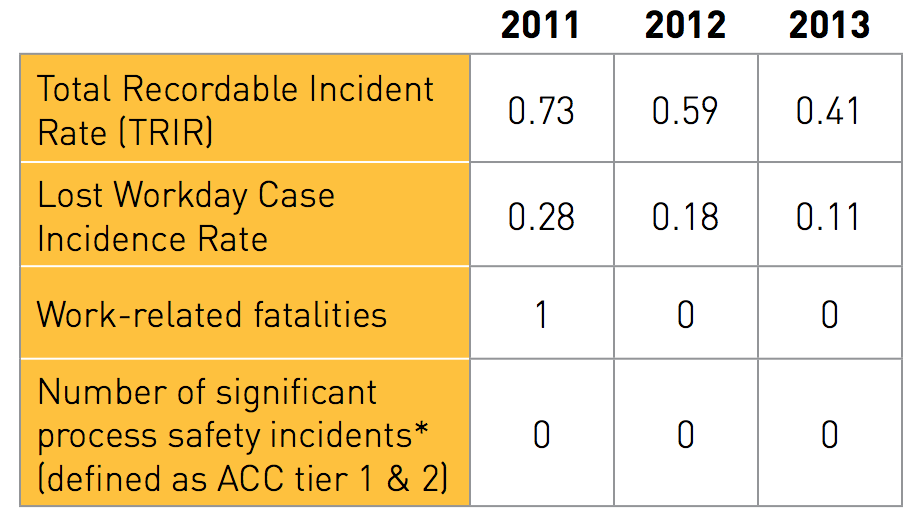


.jpg#metadata)


.jpeg)
