Lesson 12: How to deal with climate change
Lesson 12: How to deal with climate changeMotivate...

Imagine preparing for a big storm that's been all of the news. You’d likely do two things. First, secure what you already have—board up windows, reinforce your home, and stock supplies. Second, you’d think about how to avoid storms in the future—maybe relocating, building stronger shelters, or advocating for better warning systems. When it comes to climate change, we face a similar challenge. We need to brace for impacts already happening while also working to prevent the worst outcomes in the years ahead. This dual approach, balancing adaptation and mitigation, is what we need to address if we are going to combat climate impacts.
Adaptation is about resilience—limiting our vulnerability to climate impacts through practical solutions like protecting coastlines, managing water supplies, and diversifying crops. It's an acknowledgment that some degree of climate change is inevitable and we must be prepared. But adaptation alone won’t be enough. That’s where mitigation comes in, aiming to reduce the extent of climate change itself by cutting greenhouse gas emissions or, in some cases, considering bold geoengineering techniques.
We’ll explore both strategies. On one hand, we’ll discuss the global policy frameworks that guide our efforts and outline how nations work together to reduce emissions and adapt to changing conditions. On the other, we’ll examine the innovations that make these goals achievable: improving energy efficiency, electrifying systems with renewable power, and embracing sustainable development practices that balance economic needs with environmental protection.
But the road forward isn’t straight and obvious. Geoengineering—using large-scale interventions like carbon capture, solar radiation management, or oceanic iron fertilization—offers tantalizing possibilities to help "fix" what is broken. However, it comes with risks that could reshape the planet in unpredictable ways. Can we trust these methods, or are they too dangerous to pursue? We need to weigh the trade-offs and consider their ethical implications. We'll also look at what it means to design a climate-resilient future. From building infrastructure that can withstand extreme weather to adopting smarter agricultural and water management practices, these strategies aim to protect vulnerable communities while ensuring that societies can thrive even in a changing climate.
Together, adaptation and mitigation form the foundation of how we respond to climate change. They remind us that while we can’t undo the past, we may have the tools—and the responsibility—to shape a more sustainable future.
Climate Solutions: Adaptation vs. Mitigation
Climate Solutions: Adaptation vs. MitigationPrioritize...
After completing this section, you should be able to:
- Define adaptation and mitigation in the context of climate change.
- Explain why serious climate solutions should include some combination of both adaptation and mitigation strategies.
Read...
We've spent all semester talking about the science of climate, the history of climate, and why we have observed (and expect) the climate to change. So, what do we do now? Throw up our hands and say "good game!"?
When it comes to addressing the challenges of climate change, the conversation often revolves around two main strategies: adaptation and mitigation. These represent the broad paths humanity can take to confront the impacts of a warming planet.

Mitigation focuses on reducing the extent of climate change itself. An analogy would be trying to avoid injuring yourself while playing in a basketball game—perhaps you wear a knee brace proactively. This can be achieved through two main approaches:
- Emissions reductions, which address the problem at its source by curbing greenhouse gas emissions.
- Geoengineering, which involves large-scale technological interventions designed to offset the effects of those emissions (a controversial topic we’ll explore in a future lesson).
Adaptation, on the other hand, emphasizes efforts to limit our vulnerability to the impacts of climate change. This typically involves measures to protect human communities—like building seawalls, managing water resources, or altering agricultural practices—without necessarily addressing the root cause of the problem. Essentially, we are trying to harden ourselves against expected future challenges. Using our example above, if you hurt your knee, you now try to do things that allow you to function as well as possible given a hurt knee—perhaps you use crutches or do activities that don't require standing or walking.
It’s worth noting that adaptation often focuses on safeguarding human systems, not natural ecosystems. For instance, coral reefs are unlikely to adapt to the combined pressures of warming oceans and acidification. Unfortunately, humans do not control that. As ecosystems collapse, the essential services they provide—like coastal protection or fisheries—could be lost, with severe consequences for human civilization.
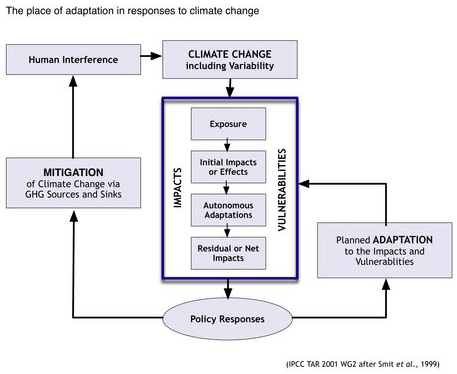
See the flowchart below. Start in the top left box—humans are changing the climate. This leads to all the impacts and vulnerabilities in the purple box. We now have two strategies (mainly driven by policy, which we'll talk about soon): mitigation and adaptation.
Text description of the climate change adaptation image.
The image presents a flowchart illustrating the place of adaptation in responses to climate change. At the top, it includes a box labeled "Human Interference," which connects to another box labeled "CLIMATE CHANGE including Variability." Below this, there is a central box titled "IMPACTS," which outlines three subcategories: "Exposure," "Initial Impacts or Effects," and "Autonomous Adaptations." Adjacent to this are two boxes labeled "Residual or Net Impacts" and "Vulnerabilities." A curved arrow leads from "IMPACTS" to "Policy Responses," depicted as an oval at the bottom. The entire chart is framed by a purple box, emphasizing the context of adaptation, while the flow of information is represented through arrows guiding from one section to another, highlighting relationships and dependencies. The background is white, allowing the gray and purple elements to stand out clearly.
Sometimes, you might hear people say, "Why worry about trying to stop climate change? We should just focus on adapting to it." Others might argue, "Planning for adaptation means you’ve already given up on stopping it!" So, what do we do?
The reality is that framing this as an either-or question is misleading—we’re going to need both adaptation and mitigation to tackle climate change effectively. The greenhouse gases we’ve already put into the atmosphere have committed us to at least 1°C of additional warming, a concept known as committed climate change. This warming is already "baked in," and no amount of mitigation can undo it. That’s where adaptation comes in—we have to prepare for the changes we can’t avoid. At the same time, adaptation alone isn’t enough. Without mitigating future emissions, the problems will only escalate. For instance, you can build a seawall today, but if emissions continue unchecked, rising seas could overtop it in just a few decades, forcing ever-larger fixes. That would be a vicious cycle, for sure.
To understand the interplay between these two strategies, consider a few scenarios:
- No response measures (so we do nothing, no adaptation nor mitigation): This leads to widespread and severe vulnerabilities across the globe. Obviously, very bad.
- Adaptation alone: Without mitigation, adaptive measures may slow local impacts but cannot prevent the worsening of global climate conditions. Our "spiral" we talked about above.
- Mitigation alone: While limiting our emissions and resulting greenhouse gas concentrations might reduce the magnitude of climate change, vulnerable regions, especially in the tropics, would still face severe impacts. We've already seen there is far more CO2 in the atmosphere now than in recorded human history: "the cake is (somewhat) baked."
- Adaptation and mitigation combined: Together, these approaches can significantly reduce vulnerability, offering a more sustainable path forward for most regions. This seems like our best option!
Hopefully, your convinced that only a combination of adaptation and mitigation can minimize risks to both human and natural systems.
One helpful way to think about climate vulnerability is by comparing different scenarios: no response at all (no adaptation or mitigation), adaptation on its own, mitigation on its own, and a combination of both strategies. Play with the slider in the interactive tool below to explore these scenarios. As you move the slider to the right—representing an increase in both adaptation and mitigation efforts—you’ll notice the map’s colors shift from dark red, nearly black (indicating high vulnerability), to much lighter shades across the globe. This visual demonstrates the powerful impact of combining adaptation and mitigation to reduce climate risks worldwide.

As is apparent from the above comparisons, much of the world would likely suffer extreme vulnerability to climate change in the absence of any mitigation efforts at all, regardless of what adaptive measures are taken. Yet, mitigation alone, for example limiting CO2 concentrations to 550 ppm, would, in the absence of any adaptive measures, still result in great vulnerability, particularly in tropical and subtropical regions. However, a combination of adaptation and mitigation could reduce vulnerability to modest levels for most of the world.
While mitigation strategies will be covered in-depth in later sections, early in this lesson the spotlight is turned on adaptation. We’ll explore specific examples of adaptive measures in areas such as:
- Coastal protection (e.g., barriers against rising sea levels),
- Water resource management (e.g., systems for drought resilience), and
- Agriculture and food security (e.g., crop diversification and irrigation technologies).
However, adaptation comes with limits. It is inherently reactive and localized, often unable to address the cascading effects of environmental degradation. For instance, when ecosystems like coral reefs collapse, the ripple effects extend beyond biodiversity loss to include economic and social challenges for human communities.
Ultimately, adaptation and mitigation are complementary, not competing, strategies. Each plays a critical role in addressing climate change, but neither can succeed in isolation. As we delve into adaptation strategies, let us remain mindful of the larger context in which they operate—and the urgent need for a balanced, dual-pronged approach to climate solutions.
Quiz Yourself...
Public Policy: Carbon Emissions, Kyoto and Paris
Public Policy: Carbon Emissions, Kyoto and ParisPrioritize...
After completing this section, you should be able to:
- Define climate policy and describe what an international agreement is.
- Understand that the Kyoto Protocol came first, was followed by the Paris Agreement, and describe the basic outcomes of each.
Read...
On the last page, we mentioned the word "policy." But what does that actually mean? While individual choices can contribute to reducing carbon emissions—through decisions you and I can make at home, like conserving energy, driving less, or consuming more sustainably—they alone are insufficient to drive the large-scale changes required to address climate change. Don't get me wrong, there is a benefit to collective action, but without getting everyone in the world to snap their fingers and buy in, it will not be enough.
Key Definition:
Climate policy refers to the rules, strategies, and actions implemented by governments and organizations to reduce greenhouse gas emissions, adapt to climate change impacts, and promote sustainable practices.
In market-based economies, such as those in North America, Europe, and increasingly in the developing world, change depends on aligning incentives with sustainable practices. What on Earth does that mean? Currently, the economic system provides minimal support for renewable energy development while heavily subsidizing fossil fuels. Financially, it makes sense to continue emitting. If one person or one country cuts emissions, they might be at a heavy disadvantage to another. That is where climate policy comes in.
We're going to talk mainly about large-scale global policies here, but this can happen at all levels of society: from the entire globe down to an individual home owners' association!
The Kyoto Protocol: A First Step in Global Collaboration
Understanding the global nature of greenhouse gas emissions, nations have long recognized the need for international cooperation to tackle climate change. The first significant step came in 1992 with the United Nations Framework Convention on Climate Change (UNFCCC), established at the Earth Summit in Rio de Janeiro. This agreement laid the groundwork for the 1997 Kyoto Protocol, where participating countries outlined targets to stabilize greenhouse gas concentrations. Officially coming into force in 2005, the Kyoto Protocol focused on emissions reductions but left many details—like defining how much warming is dangerous or whether to use carbon taxes or trading—up to individual nations to decide.

By 2007, the European Union had stepped into a leadership role, framing the idea of "dangerous anthropogenic interference" (DAI) as a global temperature rise of 2°C above pre-industrial levels. DAI is essentially the tipping point where climate impacts shift from manageable challenges to widespread crises. Think of it like a boiling pot of water: at first, it heats up slowly, and you can manage it by turning down the heat, but if you wait too long, the water will boil over and create a mess—much harder to clean up.
While 192 nations eventually ratified the Kyoto Protocol, key players like the United States and China held out. Both economies are deeply tied to fossil fuels, and in the U.S., lobbying by the fossil fuel industry has long influenced climate policy. Without the participation of these two major emitters, meaningful global progress in reducing emissions faced significant hurdles.
Kyoto marked an important milestone because it demonstrated that the global community recognized a problem and agreed (roughly) on a path forward to address it. However, it wasn’t without flaws. Low-lying island nations and tropical countries, already grappling with climate impacts, argued the agreement didn’t go far enough. For them, DAI isn’t a future problem—it’s an imminent crisis, and their limited resources make large-scale adaptation nearly impossible without international support. On the other hand, while many viewed Kyoto as a stepping stone toward stronger climate action, critics—especially in the U.S.—claimed it would harm economic growth. I'll note that most cost-benefit analyses (this isn't an economic class, so I'll spare you the details!) indicate the long-term costs of inaction far outweigh the price of addressing climate change now.
So, how did countries perform? The chart below compares emission targets under the Kyoto Protocol with actual outcomes between 1990 and 2010. Positive numbers (blue) show countries that exceeded their targets, while negative numbers (red) indicate countries that fell short. For instance, a nation pledging a 10% reduction but increasing emissions by 10% would score -20, while a nation pledging a 5% cut but achieving a 15% reduction would score +10. Eastern European countries generally outperformed their targets, while nations like Canada and Australia significantly missed theirs.

Overall, it’s a mixed bag. Some nations exceeded their goals, while others fell far behind. This uneven performance isn’t surprising, given that the Kyoto Protocol lacked strong enforcement mechanisms (in other words, it lacked "teeth"), relying largely on peer pressure between countries. Still, Kyoto’s legacy lies in demonstrating that global cooperation is essential for tackling climate change. Its successes and shortcomings set the stage for future agreements, highlighting the ongoing challenge of balancing fairness, economic interests, and the need for urgent action. As we’ll see in upcoming sections, solving this problem requires not only innovative policies but also a commitment from major emitters to prioritize the planet’s future over short-term gains.
The Paris Agreement and Prospects for Future Policy
In the years after the Kyoto Protocol, efforts to secure binding international climate agreements faced numerous hurdles. High-profile summits, including Bali in 2007 and Copenhagen in 2009, ended without significant breakthroughs. The core challenges remained: conflicting priorities between major players like the U.S. and China and broader divides between wealthier, industrialized nations and those still developing or struggling to develop. In the United States, political gridlock and intense lobbying from the fossil fuel industry further stalled progress, as well-funded campaigns sowed doubt about climate science and targeted lawmakers pushing for action.
These setbacks left many feeling disheartened about the prospect of global climate cooperation. Yet, there were glimmers of hope. China, the world’s largest emitter of carbon dioxide, began making notable strides in renewable energy investments, surpassing even the United States in its commitment to solar and wind power. In 2014, a historic moment occurred when Chinese leader Xi Jinping and U.S. President Barack Obama reached a bilateral agreement to limit greenhouse gas emissions. This pact between the two largest emitters showed the world that collaboration—even between economic competitors—was possible and necessary.
Domestically, while the U.S. Congress failed to pass sweeping climate legislation, incremental progress emerged through state and local efforts and executive actions. The Obama administration introduced ambitious measures, including the Clean Power Plan, which set a goal of cutting emissions from power plants by 32% by 2030, and stronger fuel-efficiency standards for vehicles. These policies highlighted how leadership at multiple levels could complement stalled federal action and reinforce international commitments.
The Paris Agreement, adopted in 2015, built on the foundations laid by the Kyoto Protocol but offered a more inclusive and flexible framework. Unlike Kyoto, which set binding emissions targets primarily for developed nations, Paris sought commitments from nearly every country, recognizing the shared but differentiated responsibilities of nations at various stages of development. The agreement aimed to limit global warming to “well below 2°C” above pre-industrial levels, with aspirations to cap it at 1.5°C—a recognition of the heightened risks faced by vulnerable nations like small island states.

What made Paris unique was its reliance on voluntary emissions targets, allowing countries to set their own goals based on their capabilities and circumstances. While critics argued that these voluntary targets lacked enforcement mechanisms, the agreement fostered a spirit of collective responsibility and accountability. Regular reviews and updates to these targets encouraged nations to increase their ambition over time, creating a dynamic framework rather than a static treaty.
The Paris Agreement also emphasized the importance of financial and technical support for developing nations, ensuring they could adapt to climate impacts and transition to cleaner energy systems. This focus on equity recognized the historical emissions of industrialized countries while addressing the urgent needs of those already facing the brunt of climate change.
Though the Paris Agreement has not solved the climate crisis, it represents a significant step forward in global cooperation. It acknowledges the scale of the challenge, the necessity of collective action, and the need for both mitigation and adaptation. As we explore climate solutions, Paris serves as a reminder that while progress may be slow and imperfect, it is possible when nations work together with a shared vision for the future.
Quiz Yourself...
Reducing Energy Intensity: Efficiency
Reducing Energy Intensity: EfficiencyPrioritize...
After completing this section, you should be able to:
- Define energy intensity and energy efficiency and list three areas where active efforts seek to improve efficiency.
- Understand why electric vehicles have a smaller carbon footprint, even if the electricity used to charge their batteries arises from fossil fuel combustion at a power plant.
Read...
Reducing energy intensity—how much energy we use relative to economic output—is an important cornerstone of addressing climate change. There can be a misconception that emission reductions mean that we have to sacrifice things—get rid of road trips, cut down on transcontinental trips, etc. However, that’s not (necessarily) true. It’s about doing more with less: less energy waste, less reliance on fossil fuels, and fewer emissions. By improving energy efficiency and transitioning to electrification, we can make significant strides toward a cleaner, more sustainable energy future. If a gallon of oil can take us five times as far, we’ve started winning the battle!
Energy efficiency
Improving energy efficiency means reducing the amount of energy needed to power our homes, businesses, and industries. It’s often the easiest, most cost-effective way to cut emissions while saving money. Consider these key areas:
Buildings:
- Heating, cooling, and lighting account for a large portion of energy use in buildings. Insulating homes, installing energy-efficient windows, and using LED lighting can drastically reduce energy consumption.
- Smart technologies like programmable thermostats and motion-sensor lighting further reduce waste.
Transportation:
- Traditional internal combustion engines are notoriously inefficient, converting only about 20-30% of fuel into motion. By contrast, electric vehicles (EVs) are far more efficient, with 60-80% of the energy stored in their batteries powering the wheels.
- Public transit systems, carpooling, and hybrid vehicles also help lower energy use in the transportation sector. Even if a "dirty" bus emits three times as much as a car, having 50 people on that bus dramatically reduces carbon emissions!
Mythbusting
A common misconception is that electric cars are no better for global CO2 emissions than internal combustion engines that run on gasoline. After all, burning fossil fuel sources like coal and natural gas emits CO2 just like cars do. So, if we are emitting carbon to make electricity to charge our batteries, what good are we doing? Well, while it’s true that generating electricity from fossil fuels DOES produce CO₂, the overall emissions from an electric car are significantly lower than those of a gasoline car—even when powered by a grid that relies heavily on fossil fuels! This is because electric motors are far more efficient than internal combustion engines, converting a much higher percentage of their energy input into motion.
Check out the image below. Out of the 8.9 million barrels of gasoline for motor vehicles consumed daily in the U.S. on average, only 1.8 million gallons, or approximately 20 percent, actually propel an internal combustion vehicle forward. The other 80% is "lost" (wasted) on heat and friction, and other inefficiencies. How much energy could we save if we still got the same "1.8 million gallons" of motion with electric cars? That's what the other three panels show. Even by replacing gas engines with a "dirty" electricity source (coal), we reduce energy use by 31% since the "lost" energy between combustion and wheels moving is reduced. Running electric vehicles powered by renewable energy sources like wind and solar? That reduces energy needs by a whopping 75%!

Industry:
- Industries can reduce energy use through better equipment design, optimized processes, and waste heat recovery systems. For example, advanced manufacturing techniques like 3D printing can minimize material waste and energy.
Energy efficiency reduces greenhouse gas emissions while saving money. It’s like fixing leaks in a bucket before refilling it—saving every bit of energy means fewer emissions overall!
Quiz Yourself...
Reducing Energy Intensity: Electrification
Reducing Energy Intensity: ElectrificationPrioritize...
After completing this section, you should be able to:
- Explain how changing sources of electricity generation can reduce carbon emissions without reducing the energy we consume.
- Understand that renewable energy sources still have a carbon footprint due to the manufacture, transport, and maintenance of their systems, but that they drastically reduce carbon emissions needed to generate energy.
Read...
Electrification is a game-changer for reducing greenhouse gas emissions because it shifts energy consumption away from fossil fuels like coal, oil, and natural gas toward cleaner, renewable sources like wind, solar, and hydropower. These renewable energy sources produce little to no direct emissions during operation, which means that as the electricity grid becomes greener, the emissions associated with electric systems—like vehicles, heating, and industrial processes—drop substantially. For example, as we saw above, charging an electric vehicle (EV) using electricity from solar panels or wind turbines is virtually emissions-free, compared to the substantial CO₂ released by burning gasoline in a traditional car. This transition can also reduce the dependency on volatile fossil fuel markets, stabilizing energy costs while cutting pollution that contributes to climate change and poor air quality.
How much carbon emissions can we save by transitioning energy sources? It's not an exact science, but the graph below shows numbers provided by the IPCC. The units are grams of carbon dioxide emitted to generate one kilowatt-hour of energy. To put this in context, 1 kilowatt hour is about 50 full smartphone charges. It’s enough to power a microwave for an hour, perfect for cooking dinner (and the leftovers a few times). If you’re more into streaming, 1 kWh can fuel about ten hours of your favorite Netflix show on a modern TV. It can keep a 10-watt LED bulb on and glowing for 100 hours. It’s also enough to boil water for around 40 cups of tea with an electric kettle or run a space heater for 45 minutes on a chilly State College day in December.
To do each of those things, coal combustion emits 820 grams of carbon dioxide equivalent, or about four medium-sized apples. That doesn't sound like a lot, but just think of how often people around the world are doing activities that require energy—it's easy to see how global carbon dioxide levels increase in the ways we have observed. Now, let's say we replace some of those coal power plants with solar energy. Instead of 820 grams, we are now emitting a little less than 50 grams. Instead of an apple, it's merely a tablespoon of sugar! This is another powerful reminder of energy efficiency – we can lower our emissions without sacrificing charging our smartphone if we can leverage greener energy sources.

Now, you might look at the above graph and ask "wait, why do energy sources like solar and wind emit carbon, I thought they were renewable?!" Well, while the energy they produce is clean and doesn’t emit carbon during operation, the process of manufacturing, transporting, installing, and maintaining the infrastructure for these energy sources does have a carbon footprint. For example, building solar panels involves mining raw materials like silicon, aluminum, and glass, which require energy-intensive processes. Similarly, wind turbines require steel and concrete, both of which are associated with significant emissions during production. Transporting these components to installation sites via trains and trucks, as well as maintaining them over their lifespan, also contributes to emissions. That said, the carbon emissions from newer, green sources are minimal compared to fossil fuels, and over their lifetime, they more than make up for the initial carbon cost by providing clean, renewable energy—that's what the above graph is telling us.
Moreover, electrification enables sectors that were traditionally dependent on fossil fuels to leverage the efficiency and scalability of electricity. For instance, electric heat pumps can provide space heating and cooling far more efficiently than oil or gas furnaces, while electric industrial processes can eliminate emissions from burning fuels directly at factories. By using electricity derived from renewable sources, these systems not only reduce carbon emissions but also eliminate other harmful pollutants, like sulfur dioxide and nitrogen oxides, which are common byproducts of fossil fuel combustion. In short, electrification offers a pathway to cleaner energy use across all sectors of society, accelerating progress toward a low-carbon future and helping mitigate the impacts of climate change.
Quiz Yourself...
Sustainable Development
Sustainable DevelopmentPrioritize...
After completing this section, you should be able to:
- Define sustainable development and explain its linkage to climate change
- List at least three examples of sustainable development practices, why they can help mitigate climate impacts, and their potential implementation drawbacks
Read...
Sustainable development refers to creating solutions that allow people to meet their basic needs—like food, clean water, housing, and energy—without depleting natural resources, polluting the environment, or harming ecosystems. It focuses on balancing economic growth with protecting the planet so future generations can enjoy the same resources and quality of life we do today. In the context of climate change, sustainable development means ensuring society operates in a way that mitigates climate change.
Economic growth and environmental sustainability might seem to be at odds. After all, industrial development has often come at the expense of ecosystems, clean air, and water. For example, deforestation to make way for urban expansion has destroyed habitats, reduced biodiversity, and contributed to soil and water degradation. But when we look at the bigger picture, it becomes clear that growth without consideration of its climate impacts undermines the very foundation of long-term prosperity. Without a stable climate, healthy ecosystems, and reliable natural resources, economies cannot thrive, and societies cannot endure. For a planet projected to host nearly 10 billion people by 2050, sustainability isn't something that's just "nice to have." It's a "must-have."

So, what does sustainable development mean in practice? It means creating policies that allow for economic growth while protecting and even restoring the environment. This includes helping developing nations grow in ways that avoid the mistakes of the past—like unchecked deforestation, over-reliance on fossil fuels, and pollution. Developed nations, whose current consumption patterns are among the least sustainable, must take the lead in charting a new course, sharing technology and resources to help developing nations leapfrog to cleaner, more efficient ways of living and working.
Climate Solutions as a Path to Sustainability
The good news is that many strategies to address climate change align directly with the principles of sustainable development. Take recycling: it reduces waste, conserves raw materials, and lowers carbon emissions by decreasing the energy needed to produce new goods. You've probably been taught that since elementary school! Similarly, transitioning to renewable energy doesn’t just cut emissions—it creates new industries, jobs, and opportunities for innovation. Solar panels, wind turbines, and electric vehicles are not only climate solutions but also drivers of economic progress in their own right. In the early 2020s, Tesla became one of the world's largest companies, built on the back of improving energy efficiency and electrifying vehicular transportation!

Agriculture offers another example. By adopting climate-smart practices like precision farming, using drought-resistant crops, and minimizing food waste, we can reduce emissions while securing food supplies for a growing population. Similarly, investing in resilient infrastructure that can withstand climate impacts—like flooding or sea-level rise—not only protects communities but also strengthens economies by reducing disaster recovery costs.
For sustainable development to succeed, it requires collaboration on a global scale. Developed nations must take responsibility for their historical emissions and current consumption patterns by leading the charge in reducing emissions and funding clean energy innovation. At the same time, they must support developing nations in adopting sustainable practices through financial aid, technology transfer, and capacity-building. The goal is not simply to mitigate climate change but to create a world where economic progress and environmental health go hand in hand. We don't have enough time in this class to get further "in the weeds" here—we could have a separate lecture on each of these topics! But spend time reading and understanding the table below. From left to right, a mitigation option is listed followed by some reasons why it's "good" in terms of sustainable development and what the potential drawbacks are (in life, it is rare that something is a "silver bullet").
| Mitigation Options | Compatibility with sustainable development | Trade-offs |
|---|---|---|
| Improving Energy Efficiency | Cost-effective; creates jobs; benefits human health and comfort; provides energy security | Requires retraining workers, may harm local economies centered around traditional fossil fuel energy sources |
| Reforestation | Slows soil erosion and water runoff | Reduces land for agriculture |
| Deforestation avoidance | Sustains biodiversity and ecosystem function; creates potential for ecotourism | May result in loss of forest exploitation income and shift to wood substitutes that produce more emissions |
| Incineration of waste | Energy is obtained from waste | Air pollution prevention may be costly |
| Recycling | Reduces need for raw materials; creates local jobs | May result in health concerns for those employed in waste recycling |
| Switching from domestic fossil fuel to imported alternative energy | Reduces local pollution; provides economic benefits for energy-exporters | Reduces energy security; worsens balance of trade for importers |
| Switching from imported fossil fuel to domestic alternative energy | Creates new local industries and employment; reduces emissions of pollutants; provides energy security | Alternative energy sources can cause environmental damage and social disruption, e.g., hydroelectric dam construction |
© 2015 Pearson Education, Inc.
Quiz Yourself...
Geoengineering: What's the Big Deal?
Geoengineering: What's the Big Deal?Prioritize...
After completing this section, you should be able to:
- Define "geoengineering."
Read...
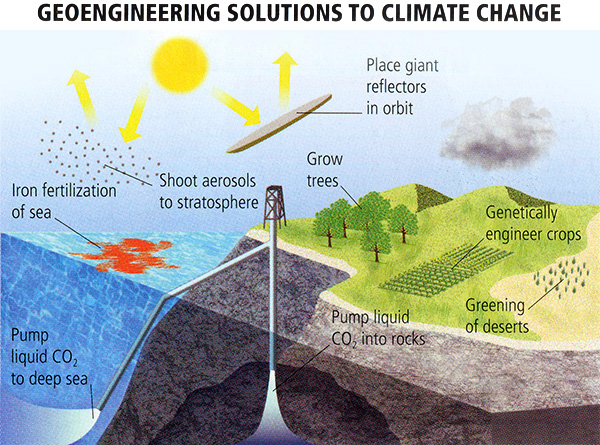
Geoengineering refers to the intentional manipulation of the environment on a global scale, aiming to counteract the effects of climate change. The term "geoengineering" combines "geo," meaning Earth, and "engineering," reflecting the deliberate design and manipulation of systems! While humans have already had significant unintended impacts on the climate—through burning fossil fuels, producing sulfate aerosols, and altering land surfaces—these changes don’t qualify as geoengineering because they weren’t deliberate attempts to modify the climate.
At this stage, geoengineering remains a theoretical concept, but it’s increasingly part of discussions around potential climate solutions. The basic idea is straightforward: to actively intervene in the Earth’s systems in ways that offset the warming effects of greenhouse gas emissions. However, the strategies proposed vary widely in scope, feasibility, and risk.
Some geoengineering approaches focus on carbon removal. For instance, carbon capture and sequestration (CCS) involves capturing CO₂ emissions from sources like power plants before they enter the atmosphere, while air capture seeks to remove CO₂ already in the atmosphere—akin to trying to "put the genie back in the bottle." This might include strategies like reforestation or even creating artificial "super trees" designed to extract carbon more efficiently than their natural counterparts. In these cases, the captured carbon would need to be stored securely underground or in the deep ocean, isolated from the atmosphere for long periods. Another proposal involves fertilizing the ocean with iron to stimulate the growth of phytoplankton, which could, in theory, absorb more CO₂ through photosynthesis and sink it into the deep ocean.
Other strategies, known as solar radiation management, aim to cool the planet by reflecting sunlight away from the Earth's surface. One idea is to mimic the cooling effects of large volcanic eruptions by injecting sulfate aerosols into the stratosphere. Another envisions placing massive arrays of reflective mirrors in space to reduce the sunlight reaching Earth. Related proposals focus on increasing the Earth's surface reflectivity, such as by painting rooftops white or modifying land surfaces to reflect more solar radiation.
Each scheme has its own set of potential benefits, risks, and trade-offs. We'll talk about them over the next few pages!
Quiz Yourself...
Interception! Carbon Capture and Sequestration
Interception! Carbon Capture and SequestrationPrioritize...
After completing this section, you should be able to:
- Define what "carbon capture and sequestration is" and how it can reduce carbon emissions at energy sources (like a power plant).
- Describe the rocky history of carbon capture and storage (CCS) and explain why it's unlikely to be the only solution to climate change.
Read...
Among the various geoengineering proposals, carbon capture and sequestration (CCS) is often considered the least invasive to the Earth's systems. The idea behind CCS is simple yet ambitious: prevent carbon dioxide (CO₂) produced during fossil fuel combustion from ever reaching the atmosphere. In theory, this could allow energy generation from fossil fuels with near-zero carbon emissions. However, CCS is only economical for large point sources, such as coal-fired power plants or industrial facilities like steel mills, cement factories, and oil refineries.
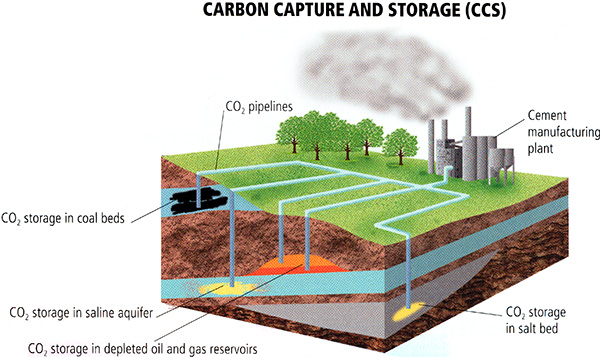
One notable attempt to demonstrate the feasibility of CCS was the FutureGen project, a full-scale "proof of concept" for CCS at a coal-fired power plant in Illinois. Funded by the U.S. Department of Energy in partnership with coal producers, users, and distributors, FutureGen aimed to capture CO₂ from coal combustion, compress and liquefy it, and inject it deep underground for long-term storage. The site chosen, Mount Simon in Illinois, offered an ideal geological setting, with porous rock formations to absorb CO₂ and impermeable caprock to seal it in, all situated well below freshwater aquifers.

The process involved a technique called oxy-combustion, where coal is burned in a mixture of oxygen (O₂) and recycled CO₂ instead of regular air. This results in a relatively pure stream of CO₂ after combustion, which is then scrubbed of residual pollutants, compressed, liquefied, and injected into deep geological formations. Over time, the CO₂ reacts with porous igneous rocks to form stable limestone, mimicking natural geological processes. FutureGen estimated it could bury 1.3 million tons of CO₂ annually—equivalent to 90% of the plant's emissions.
FutureGen was intended not only to reduce emissions but also to generate critical data on the efficiency and long-term viability of CCS. Researchers planned to monitor the injection sites, ensuring that CO₂ remained securely stored. Lessons learned from this experiment could, in theory, guide the deployment of CCS at other locations worldwide.

Why was FutureGen considered a good choice for testing the efficacy of CCS? The geology of the Mount Simon site in Illinois is well suited for CCS, and it is also reasonably representative of geological formations found in many other regions of the world. Whatever was learned from FutureGen could, in principle, be applied to many other potential CCS sites around the U.S. and the world.
Like Mount Simon, geological formations that contain salt water are ideal because of their porosity -- a fancy way of saying there are lots of pockets in which to store things. Moreover, there is impermeable caprock to seal in CO2. The formation is deep, placing it well below the depth of aquifers that are tapped for freshwater supply.
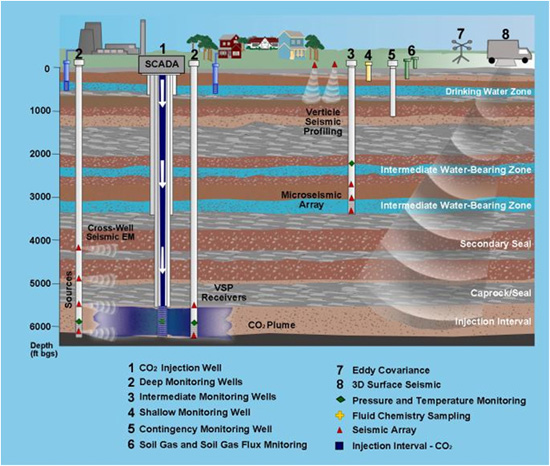
More than anything else, FutureGen was proposed as an experiment. The FutureGen operation would have evaluated potential storage sites before deciding precisely where the liquefied CO2 would have been injected for long-term storage, based on both theoretical modeling and data collection to evaluate detailed geological information about potential storage sites. The effectiveness of the injection system would be evaluated, and there would be continual monitoring of the burial process to ensure that CO2 was indeed being sequestered and remained sequestered. Whatever was learned could, in principle, be applied to any full-scale future deployment of CCS in the U.S. and abroad.
Despite its promise, FutureGen faced significant hurdles. The project was restructured as FutureGen 2.0, but it was eventually suspended in 2015 due to funding issues. Similarly, other CCS projects, like the Kemper County plant in Mississippi, struggled with cost overruns and ultimately abandoned CCS in favor of natural gas combustion. While some CCS efforts continue, such as Texas's Petra Nova project and Iceland's CarbFix program, they remain limited in scope and application.
Although CCS appears to offer a pathway to reducing greenhouse gas emissions, its potential is constrained by several factors:
- Residual Emissions: Even with a 90% sequestration rate, CCS-equipped plants still emit some CO₂, meaning they cannot achieve zero emissions.
- Geological Risks: Seismic activity, groundwater flow changes, or other unforeseen events could compromise storage integrity, leading to CO₂ leaks and undermining the economic investment in the CCS infrastructure.
- Economic Viability: Establishing and maintaining CCS sites requires significant upfront costs, which may not compare favorably to other low-carbon energy solutions.
Moreover, the promise of "clean coal" technology remains largely theoretical. Without extensive data from projects like FutureGen, the long-term efficacy of CCS in sequestering carbon remains uncertain. Evaluating whether stored CO₂ remains secure could take decades—time we may not have, given the urgency of reducing emissions to avoid severe climate impacts.
While CCS shows promise, it is unlikely to serve as a magical solution for climate mitigation. The technology could play a role in reducing emissions from hard-to-decarbonize sectors like heavy industry, but relying on it as a primary strategy risks delaying critical transitions to renewable energy and other low-carbon solutions. As we continue to explore potential pathways for addressing climate change, CCS may complement, but cannot replace, more comprehensive efforts to reduce emissions at their source.
Quiz Yourself...
Air Capture: Putting the Genie Back in the Bottle
Air Capture: Putting the Genie Back in the BottlePrioritize...
After completing this section, you should be able to:
- Define what we mean by "air capture" and understand how capturing carbon dioxide already in the atmosphere differs from carbon capture during emission.
- Understand what scientists mean by natural and artificial trees, and how both could be possible solutions to help remove excess CO2 from the atmosphere.
Read...
Air capture offers a bold approach to addressing carbon dioxide (CO₂) emissions: removing CO₂ directly from the atmosphere after it has already been released. Unlike carbon capture and sequestration (CCS), which targets CO₂ at the source, air capture aims to scrub CO₂ from the ambient atmosphere. While this idea might sound futuristic, its potential is both intriguing and complex.
Nature’s Approach: Reforestation
One natural method for air capture is reforestation—planting more trees to absorb CO₂ through photosynthesis. While this may seem like a straightforward solution, it has limitations.
Wait, why's that? Trees act as temporary carbon sinks, storing CO₂ as they grow, but this storage is not permanent. All that carbon gets (primarily) locked up in the solid parts of the tree: the trunk, branches, and roots. When trees die, their organic matter decomposes, releasing much of the stored carbon back into the atmosphere in the form of CO₂ or methane, depending on decomposition conditions. This means that the carbon captured during the tree's lifespan isn't permanently removed from the carbon cycle, making reforestation an inefficient method for achieving long-term carbon sequestration. Don't get me wrong, planting trees is good from a climate perspective. If we increase the number of trees growing on the Earth's surface, we increase the total carbon pool in trees, but we can't do that infinitely, unfortunately.While reforestation remains a valuable tool for improving biodiversity and providing ecosystem services, it should be seen as one piece of a larger climate solution, not a standalone fix for stabilizing atmospheric CO₂ levels. See the schematic below to get an idea of what I'm talking about.
Furthermore, factors such as deforestation, forest fires, or land-use changes can abruptly release this stored carbon, negating the benefits of the initial planting. Additionally, reforestation in snow-covered extratropical regions could inadvertently contribute to global warming by reducing Earth's reflectivity (albedo) during winter and early spring, as highlighted by climate scientist Ken Caldeira of Stanford University.

A Technological Alternative: Artificial Trees
What if we could "make" trees that vacuum up carbon like real trees but then hold it instead of eventually dying and releasing it back into the atmosphere? Enter the concept of artificial trees. No, not the ones you shove up in your attic after Christmas, but rather a more engineered approach to air capture. These synthetic "super trees" are designed to absorb CO₂ more efficiently than natural trees while avoiding the drawbacks of decomposition and albedo reduction. In fact, they can be constructed with reflective surfaces to enhance Earth's albedo, potentially offsetting warming effects.
Artificial trees use chemical filters to capture CO₂, which is then extracted, compressed, and buried for long-term storage. How does that work? One common method involves calcium oxide (quick lime), which absorbs CO₂ at high temperatures (~400°C) and releases it at even higher temperatures (~1000°C) for sequestration. Concentrated solar heating could power this process, eliminating the need for fossil fuels.
An engineer named Klaus Lackner has proposed an even more efficient system for artificial trees. His design relies on ion exchange resins, which capture and release CO₂ by changing humidity rather than temperature. This approach significantly reduces energy demands compared to traditional methods, making it a promising candidate for large-scale deployment. See below for an example of what one of these artificial trees looks like!
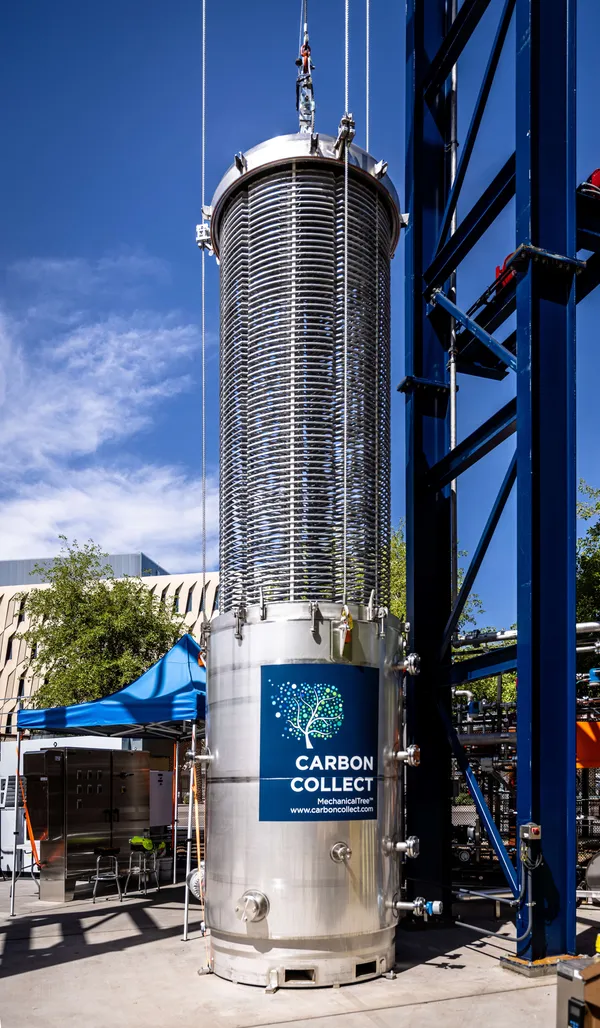

These schemes might seem rather fanciful and far-fetched, but, in fact, they are quite implementable. Air capture has already proven feasible. In 2008, scientists, in a review study, estimated that a basic carbon capture tower could remove up to half of the CO₂ from incoming air. That sounds great, what's the catch?!
The challenge lies in the technology's cost-effectiveness—how expensive it is to remove one "unit" (whatever that may be) of carbon dioxide. Capturing CO₂ from diffuse levels in the atmosphere is far less efficient than capturing it from concentrated sources, as in traditional CCS systems. Consequently, air capture is currently less viable than cheaper alternatives.
That said, air capture may become an essential tool as the cost of emitting carbon rises through carbon pricing or as climate risks escalate. If global CO₂ levels reach dangerous thresholds, air capture could be the only way to stabilize or reduce atmospheric CO₂ concentrations rapidly. Air capture holds unique promise for actively lowering atmospheric CO₂ levels.
Unlike other geoengineering solutions that we'll talk about next, air capture addresses the root problem: rising CO₂ levels. While air capture faces significant technological and economic hurdles, its potential to reverse atmospheric CO₂ accumulation makes it an essential option in our climate mitigation toolbox. As the urgency to stabilize global temperatures grows, air capture could play a pivotal role in achieving a sustainable climate future.
Quiz Yourself...
Solar Radiation Management: Casting a Shade on Warming
Solar Radiation Management: Casting a Shade on WarmingPrioritize...
After completing this section, you should be able to:
- Define "solar radiation management" and describe two ways it can theoretically be done.
- Explain the potential drawbacks of emitting sulfate aerosols either near the surface or high up into the atmosphere.
Read...
Solar radiation management (SRM) is one of the most widely discussed and controversial geoengineering approaches. Unlike methods such as carbon capture and storage (CCS) or direct air capture, which focus on reducing greenhouse gas concentrations (in other words, lowering the amount of carbon dioxide in the atmosphere), SRM aims to counteract the warming effects of these gases by reducing the amount of solar radiation that reaches the Earth's surface. Remember our energy budget model from earlier in this class: we can "turn down" the sun's energy input and offset warming that way, too. This can be achieved in two primary ways: decreasing the total solar energy received (effectively reducing the solar constant) or increasing the Earth's ability to reflect radiation back into space (increasing the planet's albedo).

So, how might we do this? One potential method involves introducing sulfate aerosols into the lower troposphere (the region of the atmosphere closest to the surface), which has already happened unintentionally as a byproduct of industrial activity. These aerosols act like tiny mirrors, reflecting sunlight, and have offset some greenhouse warming over the past few decades. In some ways, this gives us a glimpse into how intentional manipulation of the Earth's shortwave (i.e., solar) radiative balance might work. For example, removing sulfur scrubbers from smokestacks or intentionally not installing them in emerging economies like China could sustain or increase the current sulfate aerosol burden. This cooling effect could, in theory, act as a "free pass" for some portion of the CO₂ emissions we’ve already added to the atmosphere.
Hopefully, your immediate reaction is: "Adding more particulate matter and aerosols to the atmosphere seems like a bad idea." You’d be right—there are some serious drawbacks to this approach. Sulfate aerosols contribute to problems such as acid rain and air pollution. This approach might be the definition of "robbing Peter to pay Paul."
Another, more ambitious strategy involves injecting sulfate aerosols into the stratosphere rather than the troposphere, mimicking the natural cooling effect of large volcanic eruptions, such as Mount Pinatubo in 1991. The idea is to periodically load the stratosphere with enough aerosols to reflect sunlight and offset the warming caused by greenhouse gases—essentially, artificially creating the cooling effects of a volcanic eruption on a regular schedule. For example, if CO₂ levels are limited to double pre-industrial concentrations, a Pinatubo-scale injection would be required approximately every six years to keep the planet's temperature stable. For higher CO₂ levels, more frequent injections would be necessary.
Technological proposals for stratospheric aerosol injection include launching containers that release sulfate aerosols at high altitudes via balloons or dispersing them directly from aircraft flying in the lower stratosphere.

But how sensible and safe is the idea of solar radiation management? Just because an approach mimics a natural process doesn’t guarantee it’s harmless—sometimes, it can be "too much of a good thing." Some scientists support this approach, arguing that the urgency of the climate crisis might make it necessary. If we cannot implement emissions reductions, carbon capture, or air capture quickly enough to avoid crossing the threshold of dangerous anthropogenic interference (DAI) with the climate system, geoengineering methods like stratospheric sulfate aerosol injection might be needed as a last resort.
However, there are significant challenges and risks. For one, the cooling effect of SRM is not uniform across the globe, much like the uneven impacts of a large volcanic eruption. Changes in atmospheric circulation could lead to uneven temperature effects, cooling some regions significantly while others, such as parts of the Arctic, might continue warming. This uneven warming could accelerate Arctic sea ice loss or Greenland ice sheet melting, compounding the very problems SRM seeks to mitigate. Precipitation patterns could also shift dramatically, with many continental areas drying out, threatening water supplies and agriculture. Additionally, sulfate aerosols worsen stratospheric ozone depletion, presenting a clear environmental tradeoff.
While other SRM approaches could avoid some of these issues—such as placing reflective mirrors in space or increasing the Earth's albedo by painting roofs and roads white—these alternatives face their own challenges. Many are prohibitively expensive or logistically unfeasible on the massive scale required. For instance, launching enough mirrors into space to counteract existing warming would cost more than one trillion U.S. dollars, not including the cost of positioning and maintaining those mirrors. Furthermore, none of these strategies address rising CO₂ levels, leaving ocean acidification—a critical problem—entirely unmitigated.

One notable advantage of SRM is its rapid deployability, offering a faster response compared to the slow pace of greenhouse gas mitigation. However, this quick implementation comes with its own dangers. If the world becomes reliant on SRM to offset warming, any disruption—whether due to war, economic collapse, or sabotage—could abruptly halt its deployment. Imagine developing a strategy to release sulfate aerosols into the stratosphere for decades, only to suddenly stop. This immediate cessation would almost certainly unmask decades of accumulated greenhouse warming in a matter of months, resulting in climate changes far more rapid and severe than what would have occurred otherwise. Reliance on SRM, therefore, introduces a precarious dependency.
Quiz Yourself...
Oceanic Iron Fertilization: Feeding the Ocean to Cool the Planet
Oceanic Iron Fertilization: Feeding the Ocean to Cool the PlanetPrioritize...
After completing this section, you should be able to:
- Define iron fertilization of the ocean, explain how it works, and give at least one example of a potential drawback.
Read...
Finally, let’s dive into another possible but controversial geoengineering idea: iron fertilization of the oceans. Unlike CCS or air capture, which focus on directly capturing and storing carbon, this approach seeks to amplify the natural carbon cycle. Think of it like having a morning cup of coffee or an energy drink—it’s not essential, but it gives your body a boost to perform better. Similarly, iron fertilization aims to "turbocharge" the ocean's natural processes to draw down more CO₂ from the atmosphere.
Phytoplankton, the tiny plants in the upper ocean, play a crucial role in the marine carbon cycle by taking up CO₂ from the atmosphere through photosynthesis. This is the first step in something known as the marine biological pump, where carbon absorbed by phytoplankton moves up the food chain. This pump not only helps regulate atmospheric CO₂ but also drives the transfer of carbon from the surface to the deep ocean, creating a natural mechanism for long-term carbon storage. Some organisms that consume phytoplankton produce calcium carbonate skeletons, and when these organisms die or create waste, their carbon sinks into the deep ocean, potentially locking it away for centuries. In theory, increasing phytoplankton productivity could amplify this process, leading to greater long-term carbon burial in the ocean!

The productivity of phytoplankton often depends on the availability of nutrients, particularly iron. Natural events like upwelling—when nutrient-rich deep water rises to the surface—can trigger phytoplankton blooms, dramatically increasing their activity fueled by newly available iron, nitrogen, and phosphorus. Because iron is a key limiting nutrient in many ocean regions, such as the North Pacific and North Atlantic, adding iron to these waters could, in principle, stimulate phytoplankton growth and enhance carbon sequestration. It's like fertilizing a garden—just as adding nutrients to soil can make plants grow faster and more abundantly, adding iron to nutrient-poor ocean regions could "fertilize" phytoplankton, sparking blooms that suck up CO₂ from the atmosphere.

As far-fetched as this may sound, it has already been attempted. About a decade ago, a company called Planktos launched efforts to fertilize the ocean with iron, though the project was ultimately abandoned due to a lack of funding and public support.
So... obvious question time. Does the concept hold promise? Limited research shows that iron fertilization can boost phytoplankton activity. However, studies measuring carbon fluxes suggest the main effect is simply a faster cycling of carbon through the upper ocean’s food web. This means the extra carbon absorbed by phytoplankton is quickly re-released into the atmosphere rather than being transported to the deep ocean for long-term storage. As a result, the effectiveness of iron fertilization in increasing true carbon burial remains highly uncertain.
Even more concerning is potential unintended consequences. Some studies indicate that iron fertilization could favor the growth of harmful or toxic plankton species, such as those responsible for red tides, which can devastate marine ecosystems and harm human health. Not good. These risks underscore the unpredictable nature of tampering with the complex and interconnected oceanic environment, making iron fertilization a controversial and uncertain path forward.

Quiz Yourself...
Geoengineering: What Could Possibly Go Wrong?
Geoengineering: What Could Possibly Go Wrong?Prioritize...
After completing this section, you should be able to:
- List eight potential unintended consequences of geoengineering and briefly explain the potential negative ramifications.
Read...
We’ve touched on some of geoengineering's potential downsides, but let’s examine these risks in more detail.
Alan Robock, a prominent climate scientist at Rutgers University, has conducted groundbreaking research on the effectiveness and potential dangers of geoengineering. In fact, he authored a piece, "20 Reasons Why Geoengineering May Be a Bad Idea", published in the Bulletin of the Atomic Scientists. Fear not; it isn't required reading, but if you are interested in this topic, I encourage you to read it! His work offers a thoughtful and critical examination of geoengineering’s promise and its significant risks.

Robock primarily focuses on the effects of the stratospheric sulfate aerosol solar modification scheme. Remember, this is the idea that we put billions of tiny little aerosol mirrors in the atmosphere, increasing the Earth's albedo and reflecting some sunlight back to space to help cool us down. But this scheme is certainly not without pitfalls! Robuck outlines some of them as follows.
Effects on Regional Climate
Stratospheric sulfate aerosols wouldn’t offset global warming evenly. Some regions would cool, while others could experience warming. Shifts in atmospheric circulation would result, likely leading to drying across many continental areas, with significant implications for water resources and agriculture.
Ozone Depletion
Injecting sulfate aerosols into the stratosphere could accelerate ozone-depleting chemical reactions, worsening the damage to the ozone layer and exposing the Earth to more harmful ultraviolet radiation.
Unintentional Warming
Sulfate aerosols in the lower stratosphere might sink into the upper troposphere and seed cirrus clouds, which could have a net warming effect. Cirrus clouds trap more heat than they reflect, potentially counteracting the cooling effects of the aerosols.
Reduced Solar Power Availability
Any strategy that reduces the amount of solar radiation reaching the Earth’s surface, whether through aerosols, mirrors, or cloud seeding, would diminish the efficiency of solar energy—a vital renewable resource.
Risk of Sudden Climate Change
If geoengineering efforts are abruptly halted—due to war, economic crises, or sabotage—the greenhouse warming masked by the geoengineering would resurface quickly. This sudden warming and the associated shifts in wind and precipitation patterns could be catastrophic for ecosystems and human societies.
Dependence on Geoengineering
Geoengineering could act as a “crutch,” enabling continued carbon emissions while avoiding immediate warming. However, this dependence would lock us into perpetual geoengineering. As CO2 levels rise, the interventions would need to grow increasingly extreme, leaving us with no option to reverse course without facing dire consequences.
Ocean Acidification
Geoengineering schemes like sulfate aerosols do nothing to address ocean acidification, often called the “other CO2 problem.” Without mitigating atmospheric CO2 levels directly, the increasing acidity of oceans will continue to pose grave threats to marine ecosystems and biodiversity.
Unintended Consequences
The Earth system is extraordinarily complex, and our understanding remains incomplete. Tampering with it could lead to unexpected outcomes, many of which are unlikely to work in our favor. These unintended consequences pose a major ethical and practical challenge to any geoengineering approach.
Quiz Yourself...
Adaptation Strategies
Adaptation StrategiesPrioritize...
After completing this section, you should be able to:
- List three areas that can benefit from climate-resilient strategies and give an example of a strategy in each area.
Read...
We've talked a lot about mitigation but not so much about adaptation since we defined it earlier in the lesson. Before we wrap this up, let's touch on some strategies here. Remember, adaptation is adjusting our systems and behaviors to cope with the impacts of climate change we can’t avoid.
As the impacts of climate change become increasingly apparent, communities must adapt to ensure their systems and resources remain functional and resilient. This is especially important for our infrastructure, agriculture, and water management. You may not think of them on a regular basis, but they are critical to sustaining daily life and economic stability. Imagine how the world would grind to a halt if roads were to disappear, if food were to quintuple in price, and if fresh, clean water couldn't come out of your tap. Let’s examine what climate-resilient strategies look like in each of these areas.
Building Climate-Resilient Infrastructure
Infrastructure is the backbone of modern civilization, encompassing everything from roads and bridges to power grids and urban water systems. However, much of our existing infrastructure was designed for a climate that no longer exists. For example, stormwater systems in many cities were built to handle rainfall patterns of the past 100 years, but we've already seen that we expect extreme rainfall rates to increase in a warmer world. Rising sea levels, stronger storms, and more frequent flooding are already straining these systems. Without proactive adaptation, failures in critical infrastructure could disrupt transportation, energy access, and public safety.
To address these risks, engineers and urban planners are turning to climate-resilient design. This means constructing buildings and infrastructure capable of withstanding the stresses of a changing climate. For example, cities in flood-prone areas are raising roads, building seawalls, and installing permeable pavement that allows water to drain naturally. Coastal regions are also rethinking development patterns, moving critical facilities like hospitals and power plants to higher ground. Additionally, designs that include redundancies—such as backup power systems and alternative transportation routes—can help communities recover more quickly from extreme weather events. Click on the graphic below to see a list of potential climate-resilient design strategies from the Boston Society for Architecture.

The emphasis on resilience isn’t just about protecting what we already have. It’s also an opportunity to modernize. By incorporating renewable energy systems and sustainable building practices, new infrastructure can reduce emissions while preparing for future climate conditions. Think of it as building not just for survival, but for long-term sustainability.
Adapting Agriculture to a Changing Climate
Agriculture is another cornerstone of human society that faces significant challenges from climate change. Shifting weather patterns, prolonged droughts, and more intense heat waves are already affecting crop yields and food security worldwide. For farmers, this means rethinking traditional practices and adopting new strategies to ensure the resilience of their operations.
One of the most promising approaches is the development and use of drought-resistant and heat-tolerant crops. These varieties are specifically bred to thrive in harsher conditions, helping to maintain productivity even when rainfall is scarce or temperatures spike. For example, scientists have developed strains of wheat and maize that can survive with less water and withstand prolonged heat—a critical advancement for regions increasingly affected by desertification.
Another important strategy is diversifying crops. Instead of relying on a single crop, farmers have begun planting a mix of varieties to spread risk. If one crop fails due to drought or pests, others may still thrive. In some areas, farmers are also shifting planting schedules to better align with changing growing seasons, ensuring that crops mature under optimal conditions. Advances in agricultural technology, such as precision irrigation and soil moisture sensors, also play a role by reducing water waste and maximizing efficiency.
Ultimately, agricultural adaptation is not just about maintaining food supplies—it’s also about preserving livelihoods. By equipping farmers with the tools and knowledge to adapt, we can help rural communities remain stable in the face of an uncertain future.
Rethinking Water Management for a Warming World
Water is a resource we often take for granted, but climate change is making it far less predictable. Some regions are facing more frequent droughts, while others are grappling with increased flooding. These changes disrupt water availability, complicating everything from agriculture to daily household use. To manage these challenges, new approaches to water conservation and efficiency are essential.
One key strategy is improving water storage and distribution systems. In areas prone to drought, this might involve building reservoirs to capture and store water during rainy periods. Similarly, updating leaky or inefficient infrastructure can help ensure that more water reaches its intended destination rather than being lost along the way. Urban areas are adopting "green infrastructure" like rain gardens and wetlands to absorb stormwater naturally, reducing the risk of floods while replenishing groundwater supplies.

Water conservation efforts are equally important. Simple changes, like installing low-flow fixtures and promoting water-efficient irrigation practices, can significantly reduce consumption. Public education campaigns are also critical, encouraging individuals and industries to use water wisely. For example, some cities now incentivize the use of recycled or "greywater" for non-potable purposes like landscaping and industrial cooling. Greywater refers to gently used water from sinks, showers, and laundry that can be treated and reused for purposes like irrigation or flushing toilets, reducing the demand for freshwater resources.
Finally, adapting water management means planning for extremes. This includes designing flood control systems that can handle the deluge of a 100-year storm and developing policies to allocate scarce water resources during prolonged droughts. By prioritizing both conservation and preparedness, communities can better navigate the challenges of an increasingly unpredictable water cycle.
Quiz Yourself...
Summary
SummaryRead...
We've covered quite a bit of ground -- what did we learn?
- Adaptation focuses on limiting vulnerability to climate impacts through measures like coastal protection, water management, and agricultural resilience, while mitigation reduces the extent of climate change by curbing greenhouse gas emissions or using geoengineering.
- A combination of adaptation and mitigation is necessary to reduce climate vulnerabilities effectively, as neither strategy alone can fully address the challenges of climate change.
- International climate policy agreements, such as the Kyoto Protocol and Paris Climate Agreement, establish frameworks for global cooperation on reducing emissions and adapting to climate impacts, with Kyoto focusing on binding targets for developed nations and Paris emphasizing voluntary commitments and shared responsibilities for all countries.
- Reducing energy intensity through improved efficiency in buildings, transportation, and industry minimizes energy waste, lowers greenhouse gas emissions, and supports a sustainable future while maintaining economic productivity.
- Electrification reduces carbon emissions by transitioning energy use from fossil fuels to cleaner renewable sources, which produce minimal emissions during operation, and enables efficient, low-pollution energy use across sectors despite the initial carbon footprint of infrastructure production.
- Sustainable development balances meeting societal needs with environmental protection by promoting practices like energy efficiency, renewable energy, and climate-smart agriculture, which mitigate climate impacts but may involve trade-offs such as economic shifts or infrastructure costs.
- Geoengineering involves deliberate large-scale interventions in Earth’s systems, such as carbon removal or solar radiation management, to counteract climate change, though these strategies remain theoretical and come with significant risks and trade-offs.
- Carbon capture and sequestration (CCS) aims to reduce emissions from large point sources by storing CO₂ underground, but challenges such as residual emissions, high costs, and geological risks limit its feasibility as a standalone climate solution.
- Air capture removes CO₂ directly from the atmosphere using natural methods like reforestation or technological solutions like artificial trees, but its effectiveness is limited by cost, efficiency, and the temporary nature of carbon storage in natural systems.
- Solar radiation management (SRM) aims to reduce warming by reflecting sunlight, using methods like sulfate aerosol injection or reflective surfaces, but it poses risks such as uneven cooling, precipitation shifts, ozone depletion, and reliance on potentially fragile systems.
- Oceanic iron fertilization aims to stimulate phytoplankton growth to enhance carbon sequestration, but its effectiveness in long-term carbon storage is uncertain, and it risks unintended consequences like harmful algal blooms.
- Geoengineering poses risks such as uneven climate effects, ozone depletion, unintentional warming, reduced solar energy efficiency, sudden climate change if halted, dependence on interventions, continued ocean acidification, and unpredictable unintended consequences, highlighting the complexity and ethical challenges of these approaches.
- Climate-resilient strategies include designing infrastructure to withstand extreme weather, adapting agriculture with drought-resistant crops and diversified practices, and improving water management through conservation, efficient distribution, and flood control systems.