Module 1: Science!
Module 1: Science! jls164Welcome to Module 1
Welcome to Module 1Before we get started, did you complete the Course Orientation?
“... when people thought the Earth was flat, they were wrong. When people thought the Earth was spherical they were wrong. But if you think that thinking the Earth is spherical is just as wrong as thinking the Earth is flat, then your view is wronger than both of them put together..”
Note: The Earth is almost but not quite spherical because it bulges a little around the equator in response to the planet’s rotation, and it has mountains and other bumps, but the Earth is still much closer to being spherical than to being flat!
Science!
We will explore geology (broadly, the study of the Earth) and some related issues (evolution, biodiversity, climate, and energy). But first, we will take a quick look at science. What is it? Why do we pay for it? Why do it? Why do most of us trust it? What do we learn from it? Why bother? Most of you have been forced to sit through some version of this about ten times in elementary and high school, so we’ll try to give it a slightly different twist here and make it worthwhile. (Plus, we promised Penn State we would do this when they approved the course, so you need to do it to get a good grade.)
Module 1 will introduce you to both science and the field of geology, giving you an overview of what it's about, why it's important, and how it benefits people. Module 1 is our entry point to the magnificent environmental legacy that is our National Parks—a system of parks and monuments designed for us to enjoy today, and to preserve for the future, society's very best geological, biological, cultural, and historical records, and artifacts.
Learning Objectives
- Explain how science works, including how useful it is and its limitations.
- Understand that national parks must preserve important features for future generations while allowing people to learn from these features and enjoy them today.
- Recognize the many contributions that geologists make, helping us find valuable things, avoid hazards, get along with the Earth better, and enjoy what we learn.
- Understand a few basic science results that many of you learned in middle school but some of you may need because your schools didn't teach them, so you are ready to understand our fascinating journey through the parks.
What to do for Module 1?
You will have one week to complete Module 1. Complete all assignments in Canvas. See the course calendar for specific due dates.
- Take the RockOn #1 Quiz.
- Take the StudentsSpeak #2 Survey.
- Begin Exercise #1.
So, What is Science?
Science is the most successful way humans have ever developed to learn how things work and to use that knowledge to do things we want to do and predict things we want to predict.
Science is not a magic path to the ultimate truth. Instead, science is humans keeping track of what works and what doesn't and trying not to fool ourselves in the process. The “scientific method” is common sense dressed up with fancy words and expensive machines. Science doesn't tell us what we should do or why we're here, but if we use science efficiently, it makes us healthier, wealthier, and more comfortable while we figure out those big issues.
Questions?
If you have any questions, send an email via Canvas, to ALL the Teachers and TAs. To do this, add each teacher individually in the “To” line of your email. By adding all the teachers, the TAs will be included. Failure to email ALL the teachers may result in a delayed or missed response. For detailed directions on how to do this, see How to send an email in GEOSC 10 in the Important Information module.

This course is offered as part of the Repository of Open and Affordable Materials at Penn State. You are welcome to use and reuse materials that appear on this site (other than those copyrighted by others) subject to the licensing agreement linked to the bottom of this and every page. Students registered for this Penn State course gain access to assignments and instructor feedback and earn academic credit. Information about registering for this course is available from the Office of the University Registrar.
Main Topics: Module 1
Main Topics: Module 1Overview of the main topics you will encounter in Module 1
Science
- Science is a human activity—it isn’t Truth, but it works.
- Science is the best way to answer many questions (How does something work? How can we use that information to help ourselves, by curing disease or finding clean water or in other ways?).
- Science cannot answer many questions we care about (What should we do? Why are we here?), but it gives us important background information.
Scientific Method
- Get a new idea (hypothesis) from somewhere (genius?).
- See if the new idea beats old ideas in predicting what will happen (experiment).
- If yes (after many tests), use the new idea; if no, we still use the old one.
- Repeat—there’s always more to learn.
- Ideas that work better might be True, Close, or Lucky, so science is never sure.
- Science can prove ideas wrong, but cannot prove them correct.
- But, if we act as if science finds truth, we succeed in doing many things... If we follow the scientific method.
Why National Parks?
- National Parks were a U.S. idea; Yellowstone was the first (1870).
- Take a quick visit to Yellowstone, and imagine what we would have lost if it had been developed as a power plant or a shopping mall.
- Problem: parks are for both “conservation unimpaired for future generations” and “enjoyment” for this generation.
- Doing both is not always easy.
Why Geology?
- Find valuable things (oil, water, ores, gems).
- Avoid hazards (earthquakes, volcanoes, landslides).
- Learn how Earth works to keep it and us happy and healthy.
- Have fun (Why are the parks so pretty? What were dinosaurs like?).
Some Geological Background
- We WILL cover the evidence for all of this during the semester, but we must start somewhere.
- Earth is 4.6 billion years old and formed from pieces that fell together from space under gravity.
- Earth heated as it formed (natural radioactivity, and the heat from stopping those falling pieces—think of the hot-brake smell after stopping a truck on a steep hill).
- This heating melted Earth and allowed it to separate into layers (think of a car-bottom clump on a snowy day—ice, rocks, and dead-squirrel parts are all lumped together but separate when they melt in the garage).
- The layers include the iron-rich core, the iron-silica mantle, and the more-silica/less-iron crust. Refer to the Chemistry Sidebar in this module if this seems unfamiliar.
Science, Geology, and National Parks
Science, Geology, and National Parks
Your Geosc 10 instructional team loves Science, Geology, and National Parks. We hope you do, too, and if not, we'll try to show you why we do. These “big-picture” issues are probably more important than anything we cover in this class.
Humans have always had a love-hate relationship with our “tools.” Cars are great, but getting run over by one isn’t. Television is great until you want to have a heart-to-heart discussion with someone deeply engrossed in a playoff game. Science collects the wisdom of the world’s peoples, experiences, and insights, then tests that wisdom repeatedly, revising and improving, to help us learn to understand and to do things we want. This may be humanity's greatest tool... but that also means that occasionally someone may not like it.
Sometimes, a person becomes unhappy when their idea loses to a better one. In the early 1600s, when Galileo advocated the idea that the Earth orbits the sun, Pope Urban VIII saw conflict with certain verses in the Bible (e.g., Psalm 93, “The world will surely stand in place, never to be moved,” or Psalm 104, “You fixed the earth on its foundation, never to be moved”; both quoted here from the New American Bible, although Urban VIII would have read them in Latin.) Some religious authorities of the time did not see any conflict between these verses and Galileo’s ideas, and the Pope had initially been at least somewhat open to Galileo’s ideas. However, the Pope eventually turned Galileo over to the Inquisition due to this supposed heresy, and the Inquisition forced Galileo to recant, sentenced him to house arrest, and banned his book and future publications. Fortunately for Galileo, the Inquisition did not have him tortured and executed. (It is an interesting question whether the problem was Galileo’s sun-centered view or whether the Pope got mad because Galileo's book featured a dialogue in which the Pope's favored views were spoken by the "loser.")
The papacy subsequently decided that the reality of the Earth orbiting the sun did not undermine scripture, and astronomers could do their job while the religious leaders did theirs. Indeed, important scientific discussions have been hosted by subsequent popes.
It remains that sometimes conflict arises between some members of some religious or other groups and some aspects of science. In 2005, for example, the state school board in Kansas changed their definition of science, apparently to enable teaching in science classes of ideas that repeatedly have been rejected as being nonscientific by courts and scientific organizations. After a 2007 election that changed the membership of the school board, the board restored its definition that science is a search for natural explanations for what we observe in the world around us. We will have a chance to discuss these ideas later in the course because Kansas and other states have continued to fight over the issues. Such discussions have been ongoing for centuries, and we can be confident that they will continue far into the future. Environmental and public health issues often face similar disagreements.
So, let’s look a bit more carefully at what science is, and isn’t.
Why Science?
Why Science?One important reason for science is clear—tightly coupled to engineering and technology, science works. The products of scientists and engineers are tested in the real world every day. Oil companies hire new geologists, geophysicists, and petroleum engineers when the old ones retire because those scientists and engineers do find oil and make money for the oil companies. Congress funds biomedical research because it keeps lengthening our lives and curing diseases. You read this on a computer or phone, which was designed using the principles of quantum mechanics and the remarkable discoveries of materials scientists and engineers.
High school teachers like to expound on the scientific method. Scientists do have a method of sorts, and it helps them achieve their results. But lots of people—astrologers, palm readers, telephone “psychics”—have methods that don’t get funded by industry and Congress. The typical industrial officer is likely to be more interested in the results of science than in the details of how those results were achieved.
Across campus, scientists are sometimes viewed as just another group for sociologists to study. Scientists have their tribes and other social interactions. Scientists occasionally seek fame and fortune, lie, and steal in much the same way that other humans do. The extremists in sociology have gone so far as to argue that science is only a social construct, one of many possible ones. This, however, is the kind of intellectual exercise that gets a few academics in trouble with the real world. Anyone with a little common sense knows that it is possible to have a cruise missile deliver a small exploding device to a selected building in another continent using some clever applications of Newtonian physics and that no other human social construct can make a similar claim. Mere social constructs do not design new antibiotics that save millions of lives, either. (If you’re still not convinced, or you just want to know how Einstein is in your pocket, you might watch this short Geomation on do-it-yourself cell phone kits.)
Video: GPS in Phone (5:40)
Transcript: GPS in Phone
Dr. Richard Alley: This is a true story. Many years ago I had been resisting getting a newfangled cell phone I was scheduled to give a talk in Baltimore. There was a bit of snow but I just drove the 170 miles down from University Park. If you saw the 1964 nuclear war film Fail-Safe with Henry Fonda as the president, nuclear bombers were dispatched and they couldn't be recalled. That was me. They called my wife Cindy at home about 20 minutes after I left and said it was too dangerous to drive. She couldn't call me, so I drove the whole way down. I arrived, I found the venue locked. I called Cindy, and she said, "You are getting a cell phone.", which I did.
What is a cell phone, really? It's just some sand for the glass, and the Silicon that goes in the computer chip, some oil or other organic material for the plastic, and the right rocks, the ones with the palladium and the rare Earth elements, and other things. Plus science and engineering and design and marketing. There's a computer chip. It's based on the transistor that was invented by Bell Labs. That was a private industry with a government-granted monopoly and Air Force money to develop it. It was designed with quantum mechanics from professors such as Bohr and Feynman, who taught at universities. It connects to the internet. When I first logged onto the internet it was the Arpanet, with Department of Defense funding to UCLA, Stanford, and Wisconsin, to improve communications among researchers for national security reasons.
When Cindy first got her GPS, the voice was a guy with a great Australian accent. My phone has a friendly-sounding lady in it. So here is a very light-hearted look at how the GPS works. And, if you're bored, you can think about how to redo this for the Australian guy. But for my phone.
Singing: There's a lady in my phone, so I never drive alone. She tells me where to go, so we get home, that nice lady in my phone. She relies on GPS, so we never get into a mess. It tells her where we are without a guess, as she relies on GPS. She listens to each satellite that she can get into her sight. They tell their time and place for day and night, as she listens to each satellite. Distance from each is time times rate, so she can triangulate, four-time differences give our place, and that works great. Distance from each is time times rate.
When I first met GPS my advisor, the late great Ian Whillans at Ohio State, was using it to survey the motion of Antarctic Ice streams. He had to bring the data home from Antarctica and post-process because the military was dithering them. It was called selective availability. GPS started as a U.S. military program, and then, precise positioning was a secret for national security reasons.
Singing: But there is complexity, space-time is warped by gravity. To get it right she needs relativity. For there is complexity. Einstein got that figured out. His equations work without a doubt. We're never lost when Albert is about, for Einstein got it figured out.
Special relativity and general relativity are required because the satellites move faster and are farther from Earth's gravity than clocks on Earth. It's about a 10-kilometer, six-mile, correction per day, or enough to degrade the accuracy of the phone in about two minutes. Without relativity, we'd start to get lost in two minutes. And fortunately, Einstein helps the nice lady or the Australian guy in my phone. Back in the dark ages of my youth, I suspect most people would have said that quantum mechanics and relativity are the most esoteric and useless of sciences. So now they're in our pockets and modern life as we know it would not be possible, without the technologies they enable. They come from public-private partnerships, building on university research, and based on the fact that science really works.
Science differs from other human endeavors in that its disputes are appealed to nature. With Art, you cannot judge whether Picasso or Rembrandt was a “better” painter. You can study the brushwork, perspective, social context, or whatever else, and learn about art from the discussion. However, you cannot reach an objective decision regarding who was the better painter. But, if asked whether Aristotle’s or Newton’s physics works better, we can answer the question with extraordinarily high confidence.
This is where the scientific method comes in. We study Aristotle’s ideas and Newton’s ideas until we figure out some way that they differ. This allows us to propose an experiment: if we do experiment A, Aristotle expects B to happen, and Newton expects C. Then, we do A and see what happens. If it comes out C, Aristotle is wrong. In reality, one test is never definitive—the fans of Aristotle might claim that the experiments were rigged, or the experimenters didn't really understand Aristotle's ideas and so did the wrong test, or that statistically there is still a slight chance that Aristotle is right. But after many tests, the answer becomes obvious. Science has then progressed—we’ve gotten rid of something that was wrong.

Transcript: The Scientific Method.
The scientific method is presented as six steps in a circle. 1) Observation/Question: Find a new idea by looking around, talking to people, reading; 2) Research topic area: How does your new idea differ from best old idea or ideas on this subject; 3) Hypothesis: Doing this experiment will yield this outcome if new idea better, or that outcome if old idea better; 4) Test with experiment: Look at the rocks in the next cliff, or observe with a $10 billion space telescope, or ...; 5) Analyze data: Can be simple or really complex, with careful statistics, etc.; 6) Report conclusions: Is new idea really better or not? Gives other people useful results, and gives scientists new ideas...
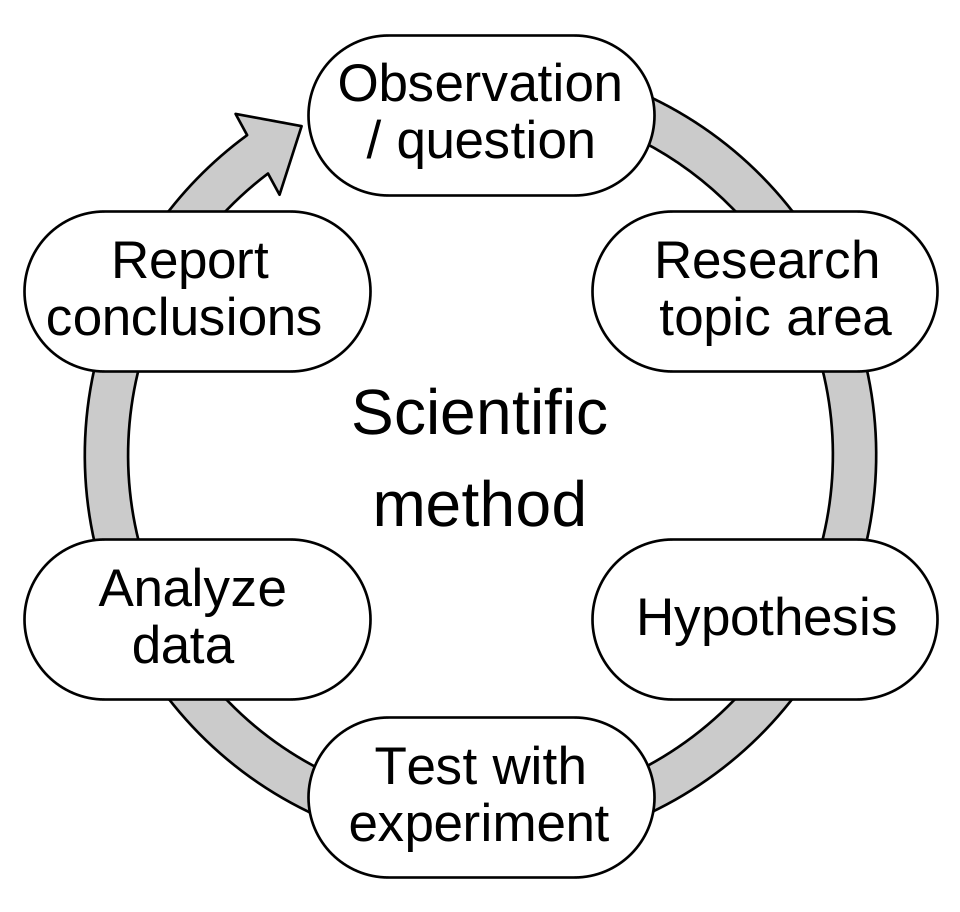

Science remains an exercise in uncertainty, though. If Newton “beats” Aristotle, that means Aristotle is wrong, but it does not mean that Newton is right—maybe he’s just lucky, or pretty close, but not quite right. As it turns out, Newton’s ideas fail for things that are really small, really large, or moving really fast, and we must turn to quantum mechanics and relativity. (But all that fancy physics reduces almost exactly to Newton’s description for things of size and speed that we usually deal with—bigger than atoms, smaller than galaxies, and much slower than the speed of light—so, Newton was and is fantastically useful. Our buildings and airplanes were designed using only Newtonian physics—quantum mechanics is not important for football stadiums or massive jets—although they were designed on computers that were designed using quantum mechanics.) Science thus cannot give the ultimate answers to anything because we are never sure whether we are right, close, or lucky. We can only say that, if we act as if the scientific results are true, we succeed (in curing diseases, finding oil, making cell phones that work, etc.).
Science is an expensive way of learning about the world. Suppose you are a farmer, and you are trying to feed yourself. You try an idea (say, burying fish heads with your corn seeds, or planting during the dark of the moon), and the corn grows well. So, you do that every year. If it works, great. If it does not work but does not hurt, it is no big problem. If it makes things worse, you might starve, but few others are bothered.
Now, suppose you are a modern farmer trying to feed 100 people. If you try something that makes things worse, many people may starve, and some may get mad at you before they do. So, you start asking whether the fish head works, and whether two fish heads would work better, or whether other parts of the fish would be better, and then you get serious and ask what is it in the fish head that works and how can you get a lot of that without killing fish, and so on. One test does not do it—crops grow well much of the time, so most things you test (such as planting in the dark of the moon) will seem to work even if they do not help.
The modern solution is to have a scientist helping the farmer, trying things carefully, and trying them many, many times, figuring out which ones work better, and communicating those results to others who are interested. All that testing takes a lot of effort, but it is cheaper in the long run for important things. Rather than 100 people each trying to feed themselves, and some failing and starving, we have a scientist, a farmer, a tractor manufacturer, a trucker, and a grocer feed all one hundred, freeing 95 to do something else. (Enjoy! You probably don’t have to spend the summer hoeing corn to keep from starving over the winter.) So, although science is expensive, for important things it is cheaper than ignorance. For unimportant things, living with a little more uncertainty may be easier.
Science has been wildly successful on simple questions: If I drop a rock, how fast will it fall? If I put a lot of a certain isotope of uranium in a small area, what will happen? If I use steel beams this big, in this pattern, how heavy a truck can drive over the bridge without breaking it? Most of physics, much of chemistry, and some of medicine fall in this “simple question” part of the world. For a little more discussion on the uses of science, see this short video on Silly Putty.
Video: Silly Putty (1:40)
Transcript: Silly Putty
Dr. Richard Alley: This is Silly Putty. You get it by mixing silicone oil and boric acid. It may not be the greatest triumph in the history of science, but it's fun! Occupational therapists have used Silly Putty for exercises for people recovering from hand injuries. NASA used it to stick down tools so they wouldn't float away in zero gravity. Scientists have mixed Silly Putty with graphene and made sensors that are so sensitive that they can measure the footfall of a spider. Look around you at all the applications of science through engineering, design, and marketing. The medicines and computers and phones and televisions and microwave ovens, like that one. The physics of how radiation interacts with water to heat a pizza in a microwave oven has a little bit to do with the physics that the Air Force uses to design sensors on heat-seeking missiles so that carbon dioxide doesn't block the view of the enemy bomber that you're trying to shoot down. And those physics are the same ones that climate scientists use when they're calculating how much warming we will get from the CO₂ we release from fossil fuel burning. Science works. Science helps us. And science can be fun.
Science is gaining ground on some harder questions. Predicting weather or earthquakes, understanding and curing cancer, understanding and managing ecosystems and biodiversity—these are more complex, involve more interactions, and may have limits on predictability (chaos), but real, useful progress has been made, and improvement continues. The research frontiers often lie in these complex systems. Much of geology lies in complex systems, and we are in the midst of some great advances in geology.
Science has a long way to go on really tough questions, such as predicting how various actions will impact the working of society and the health and happiness of people. And, science cannot address many questions — “How should society work?” is a value judgment, not a question of reality, and is not part of science, although science is central in the discussion.
Science is restricted to the search for natural explanations of the world around us. This does not mean that science opposes religion or claims that there is no God. (Some scientists may do such things, but many other scientists do not.) Quite simply, no experimenter knows how to guarantee the cooperation of an omnipotent deity. A miracle, by definition, cannot be repeated reliably by anyone in any lab anywhere in the world, and so must fall outside of science.
In short, science is a human social activity but differs from other human social activities in that the ideas of science must be tested against reality. Science enjoys a special place in society because science is so successful. Science shows which ideas are wrong and identifies ideas scientists cannot disprove. If we act as if these not-yet-disproven ideas are true, we are successful in doing things. These not-yet-disproven ideas remain conditional because we might find better ideas in the future. Science keeps track of what works and what does not, to save future workers trouble. Science is a meritocracy—good ideas tend to rise to the top, no matter who originated those ideas. (This may take a while because scientists are human with human failings, and scientists certainly have a history of dismissing some ideas because they came from the wrong people, but the triumph of merit is more likely and faster in science than in most human activities.) Science tests the structure of knowledge continually—a good scientist does not tiptoe around the tower of knowledge put up by earlier scientists but tries to tear that tower down. Only those ideas sturdy enough to survive such attacks are saved, so the scientific edifice is exceptionally sturdy.
Why National Parks?
Why National Parks?Societies have tried many ways to deal with private versus group ownership. Private ownership often raises ethical questions—did you come by that piece of land fairly? Can you claim for your king some land that was already occupied by other peoples? Do other species have land rights? Public ownership often raises the “tragedy of the commons”—if I can sneak a few more of my sheep onto the public green, I’ll gain in the short term, even if, in the long term, we all lose because the extra sheep kill the grass.

The U.S. tradition has focused on private ownership, but we have also recognized the benefits of public ownership. The idea of a National Park—taking the choice pieces of the country and placing them under public control—is a U.S. idea, developed by the Washburn expedition to Yellowstone in 1870 and eventually enacted by Congress in 1872.
Since then, the idea of national parks has spread across the nation and worldwide. This is surely one of the great ideas of the modern world, to save key scenic environments in the public domain.
However, the national parks of the United States, and the world, face a grave dilemma. The act establishing Yellowstone and the concept of national parks specified “conservation... unimpaired for...future generations” and “to provide for the enjoyment” of the parks. Saving a wild region for the future while having it enjoyed by millions of visitors each year is perhaps the largest of many difficulties facing the parks today.

Most of the national parks were founded to preserve geologic features—the geysers of Yellowstone, Crater Lake, the Grand Canyon, the Badlands, etc. Many national parks were founded when they were, biologically, small pieces of a vast, unbroken wilderness of similar habitats. Today, the parks are often becoming islands of the natural environment in a sea of human-controlled and human-altered land. Thus, much focus on the parks today involves biodiversity. We will revisit the questions of biodiversity and island biogeography later. (Yes, this is a geology course, but some things are too important to pass up just because they belong in a different department.)
What is Geology?
What is Geology?Geology, broadly, is the study of the Earth. Geologists and friends—geophysicists, geochemists, geobiologists—study the rocks that make up the Earth, the history of the Earth as recorded in those rocks, and the processes that change those rocks. This includes oil and ores, landslides and volcanoes, dinosaurs, meteorites, and much more. Most geologists are involved in one of four areas: i) finding valuable things in the Earth (gold and silver, diamonds, oil, building stone, sand, and gravel, clean water, etc.); ii) warning of geological hazards (volcanic explosions, earthquakes, landslides, groundwater pollution, etc.); iii) building an operators' manual for the Earth (Earth System Science); and iv) informing/entertaining (What killed the dinosaurs? How has the Earth changed over time?). Many geologists do more than one of these, or even all of them, at the same time, and there surely is a lot of overlap.
Historically, most geologists have worked at finding valuable things. These geologists have been truly successful, too successful for their own good, in fact. Some of the things we extract from the ground are very cheap today (after you subtract inflation and taxes), so there have been fewer jobs for geologists with companies mining some things than in years gone by. Oil prices have fluctuated a lot over time, with boom-and-bust cycles occurring over and over, but there still are some good jobs in this area. The US used to spend a lot more money on cleaning up groundwater pollution than we have recently, but it turns out that an immense amount of that money was spent on lawyers arguing about paying for cleanup rather than on scientists and engineers cleaning up. A lot of geologists are not happy with this situation and hope that finding and restoring clean water will be more vigorously pursued in the future.

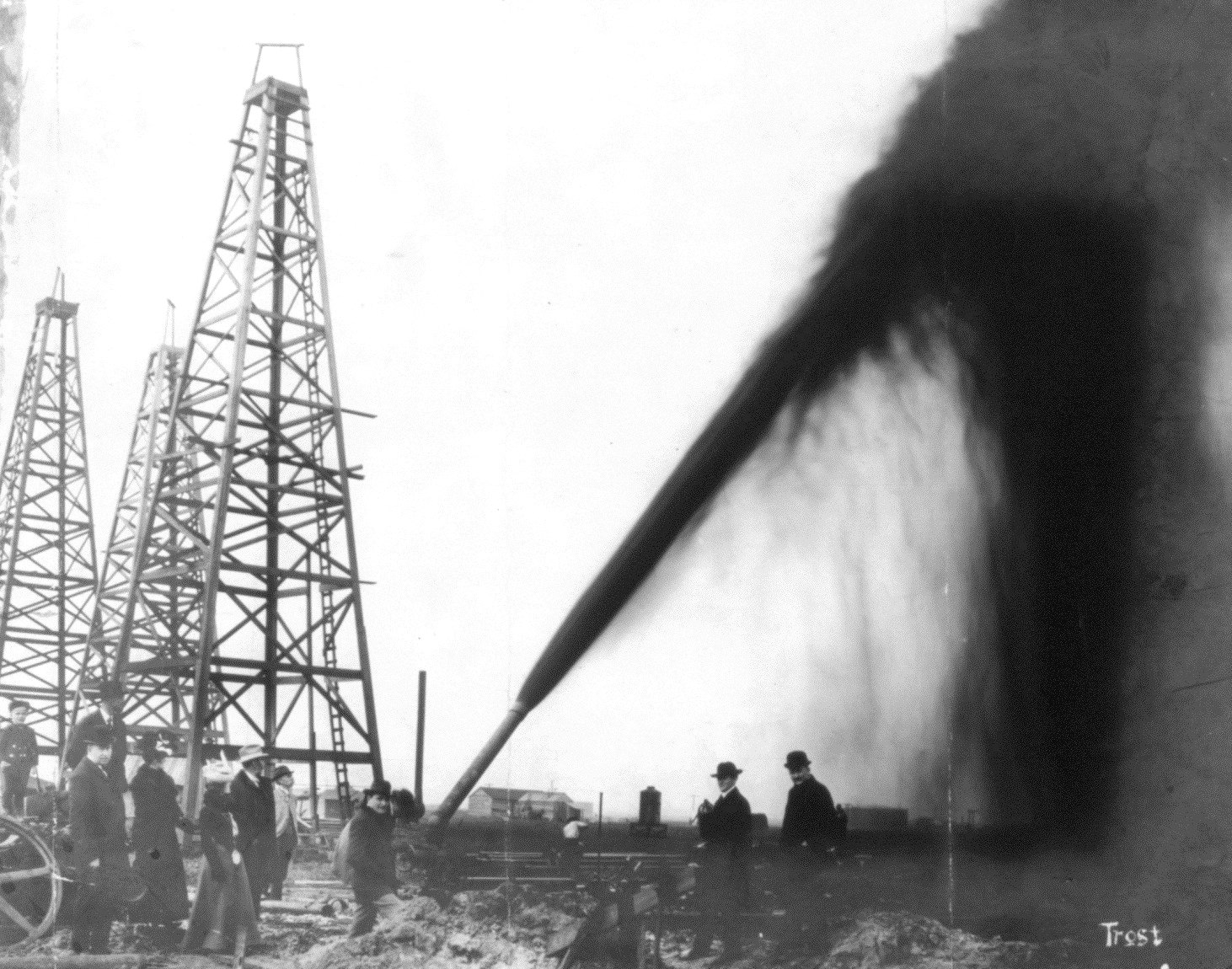

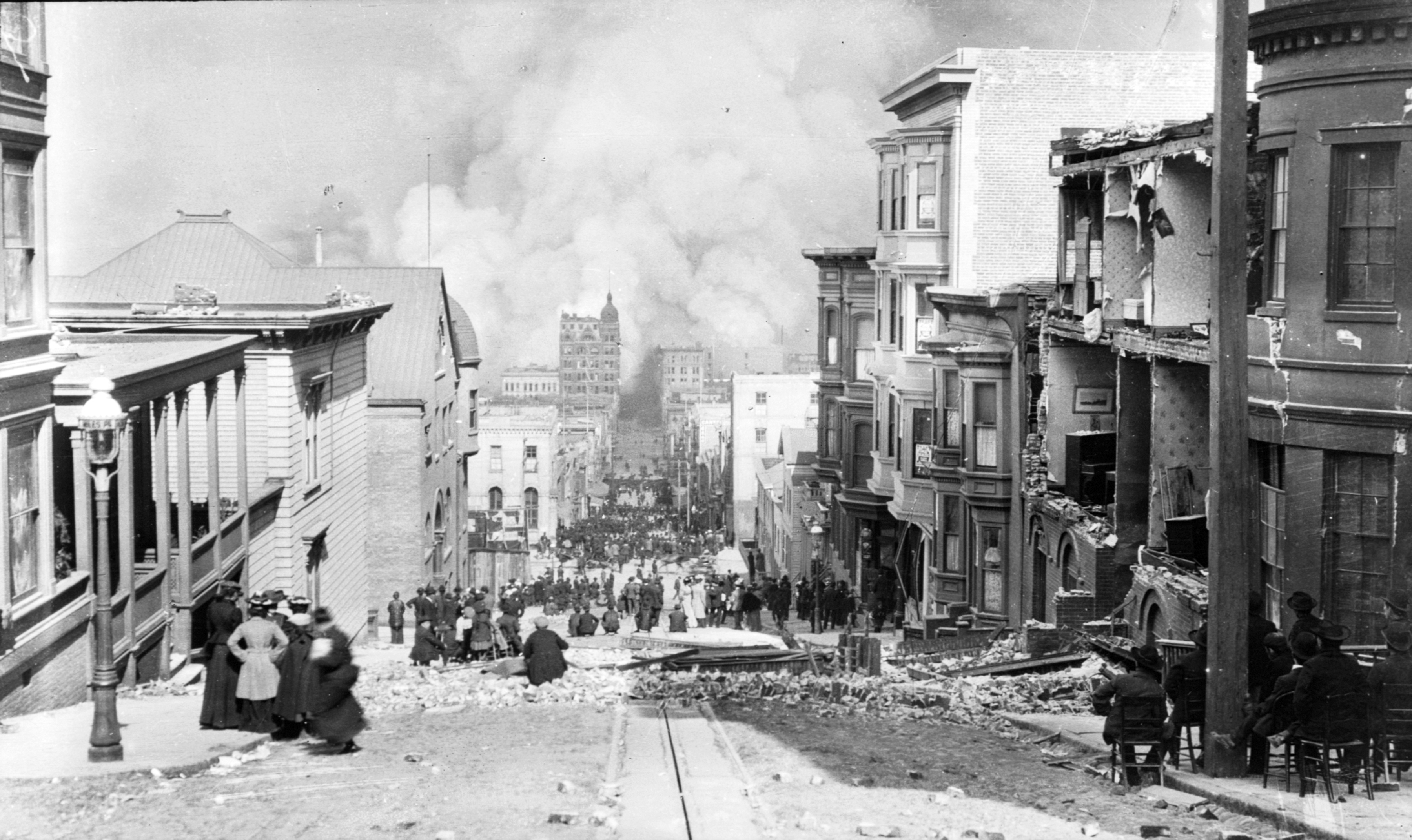
Warning of geological hazards is also a growing field. As more and more humans build houses on floodplains, debris-flow deposits, and other indicators of past disasters, these people become more dependent on someone to tell them if and when the trouble will return. Many geologists favor a different approach—find out where the dangers are, and then don’t build in those places—but real estate developers often don’t listen. (In the spring of 2012, a bill was introduced to the North Carolina legislature—although not passed in its original form—to make it illegal to use the best science to tell coastal people the regions that might be attacked by the sea. This echoed efforts a century before by developers in San Francisco to discredit scientists who correctly argued that the earthquake that had just devastated the city meant that additional earthquakes were possible or even likely. Other such efforts to ignore or downplay large dangers have occurred and continue to occur.)


The disaster of Hurricane Katrina in New Orleans and its surroundings in 2005 showed the dangers of building in harm's way. With almost 1400 dead, and over $100 billion in damages (that is $300 for every person in the US!), Hurricane Katrina definitely caught the attention of many people. Interestingly, geologists had known of the impending disaster, and warned of it, for decades, as the city slowly sank beneath river level and sea level. Thousands of Geosciences 10 students had studied this issue in the years before the storm struck (and you will get to look into the issue soon). Fortunately for New Orleans, the storm’s strength had ebbed before it hit the city, or the damage could have been even worse.

The operators’ manual for Earth is a new idea. It may be the most important thing geologists can do for the future of humans. We, humans, are everywhere today — living on every continent, tilling more and more of the land, claiming as our own more and more of the productivity of the planet. We have changed the forests, changed the soils, changed the atmosphere, changed the waters—nowhere on Earth remains free of our imprint. A scientific analysis from the year 2023 found that all the humans on Earth together weigh about 390 megatons, our domestic animals outweigh us at 630 megatons, and we dwarf all the wild mammals on Earth together at only about 60 megatons—add up all the whales and elephants and wildebeest and moose and mice and…, and the number is still small compared to us. Credible estimates indicate that we and our close friends—cows and corn and chickens and house cats and Chihuahuas—are using more than half of everything made available by the planet, leaving less and less for all other species. We are managing to support roughly 5 billion people pretty well (out of the 8-plus billion of us here), with the population projected to reach 9 or 10 billion in a few decades, so we are planning on greatly increasing, perhaps even doubling, the number of people we support well.
Given that we are doing this, and we will continue to do so, many thinkers believe it would be wise to have a better idea of how this works and what we are doing. You would not try to repair a fine watch or a cell phone without knowing how it works—take a few pieces out and you may never get it running well again. We are doing precisely that to the planet, changing a lot of things we do not understand. Earth System Science is the attempt to understand the planet, its water, air, ice, rock, and life, well enough to learn the consequences of our actions so that we can make wise decisions. Earth System Science is still a new science, providing much that is useful but with much more to learn, and many of us believe that it is an incredibly important effort.

And there is always education and entertainment. Some people like to know things, and geologists have some of the most interesting stories to tell. We hope you agree after taking our class!
A Brief Overview of Geology
A Brief Overview of GeologyThroughout the course, we will explore not only what geologists learn, but how we learn it. For the first few Modules, however, we ask you to take our word for some things. You will see statements such as “The Earth is 4.6 billion years old.” Before we’re done, you will also see where that number comes from, how good it is, and much more about it. But we can’t do everything at once.
Anyway, we believe that the universe started in the “Big Bang” about 14 billion years ago. The Earth is “only” about 4.6 billion years old. We live in a second-generation solar system because the planets and the sun contain abundant chemicals such as iron that were first formed during the death of older stars. So, there were some stars, and they exploded and generated gases and dust, and something (another nearby star exploding?) caused that gas and dust cloud to be compressed a little. Once the dust and gas started falling together, gravity took over. Eventually, most of the mass went to form the sun, which was squeezed enough under gravity that the sun’s hydrogen began fusing to form helium, in the process releasing energy—sunlight! Some of the gas and dust collected into planets.
Assembly of the Earth involved the falling together of lots of big and little chunks. The largest chunk was probably about the size of Mars. It hit the Earth after most of the assembly was finished and blasted enough material off the Earth to make the moon. (Note that there is still a little discussion in the scientific literature about the details of this Mars-sized moon-forming collision, so stay tuned...)
The falling-together of pieces makes heat, as the pieces give up their energy as they stop. (If you have ever smelled the burning brakes on a large truck that has had to stop suddenly on a steep hill, you know that stopping gives up heat. Something similar happened to the Earth.) That heat partially or completely melted the planet. The melting allowed the planet to differentiate or become layered. The denser material sank to make a core, mostly of iron with some nickel and a few other elements. The lowest-density material rose to the top to form a silicate scum, or crust, floating on a vast mantle of denser silicate (see the sidebar on chemistry). The Earth is hottest in the middle and coldest on the outside. Heat favors melting, but higher pressure tends to make most liquids turn solid. These two effects compete in the Earth, so you find both solid and liquid down there. Going down in the Earth, the crust and the upper part of the mantle are solid (together forming the lithosphere) except in special places where volcanoes occur; the deeper part of the mantle is solid but soft and has a zone of about 100 km (60 miles) down in which a little melting occurs. The soft zone in the mantle is the asthenosphere--we will not learn a huge number of new words in this class, but we do get a few great ones! The core has two layers, a solid inner core, and a liquid outer core.

Click here for a transcript of the Internal Structure of the Earth Diagram.
The image is a labeled diagram showing the internal structure of the Earth, both to scale and not to scale. The not-to-scale section is a cutaway illustration depicting the layers of the Earth. At the top, there is a rugged, mountainous landscape representing the Earth's crust. Directly beneath the crust is the asthenosphere, which is shown as an orange layer. Below the asthenosphere is the mantle, depicted in shades of yellow and gray. Further down, the outer core is marked as "Liquid" with a gray color, and the inner core is labeled as "Solid" with a darker gray hue. The diagram also shows distances from the surface downward: 0-100 km for the crust, 2900 km to the boundary of the outer core, 5100 km to the inner core, and the total radius of the Earth at 6378 km. On the left, there is a circular cross-section labeled "To scale," which graphically represents the proportionate thickness of the layers. The lithosphere is also noted as comprising the crust and the uppermost solid mantle.


Some of the Earth’s heat is left over from when the planet formed, and a lot comes from the decay of naturally radioactive materials in the Earth. As the early heat has escaped and the radioactive materials have decayed, the Earth has slowly been cooling off, but plenty of heat remains to drive geologic processes. The Earth has developed an atmosphere, oceans, and life, and a rich sedimentary history of how those developed. The atmosphere and oceans spend their time wearing down mountains, but the heat of the Earth keeps driving processes that build mountains up, so there is a near-balance. And all of this should become clear as we tour the national parks.
Sidebar: A Brief Chemistry Lesson
Sidebar: A Brief Chemistry LessonMost students reaching the university have taken a chemistry course somewhere along the way, but a few of you haven’t. Here is a BRIEF summary of chemistry, as a refresher for those who have had a chemistry course and as a teaser for those who have not. We do not use a lot of chemistry in this course, but it comes up often enough that you may find a summary to be helpful.
If we pick up anything around us (water, chewing gum, rocks, whatever) and try to divide it into smaller and smaller pieces, we will find that it changes as it is divided. A tree becomes a log as soon as we cut it down. If we dry the log before burning it, we find that it contains lots of water, plus other things that are not water. If we then use fire to break the log into smaller pieces, we find that we can do so, while releasing energy. Using tools and energy levels that are easily available to us, we will find that we can continue dividing something until we get to elements, but that we cannot divide the elements.
The “unit” of an element is called an atom. There are 93 naturally occurring elements, plus others that humans have produced. If we use even higher energies, such as those achieved in nuclear accelerators, we find that we can take atoms apart.

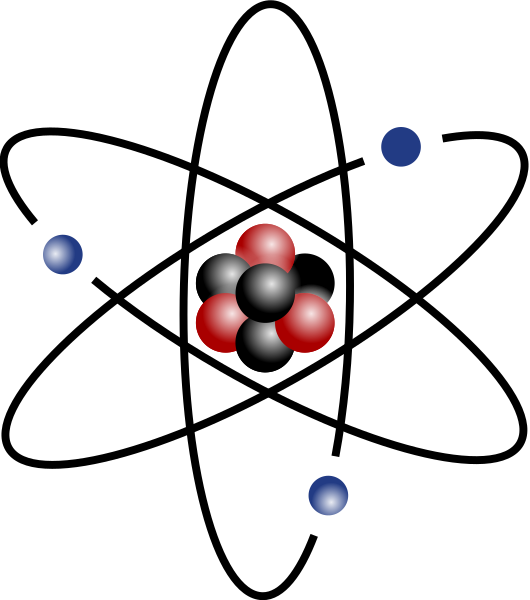

Each atom proves to have a dense nucleus, surrounded by one or more levels where electrons are found. It may prove helpful to think of electrons circling a nucleus the way planets orbit the sun, although this simplified model doesn't capture all the features of an atom.
The nucleus contains smaller particles called protons and neutrons. Protons have a characteristic that we call positive charge, electrons have an equal-but-opposite negative charge, and neutrons are uncharged or neutral. A neutral atom of an element contains some number of protons and the same number of electrons, with their positive and negative charges just balancing each other.
The type of atom, or element, is determined by the number of protons; add one proton to a nitrogen atom, for example, and it becomes an oxygen atom. (Breathing nitrogen without oxygen would cause you to die quickly; they are different!) The positively charged protons packed tightly in a nucleus tend to repel each other, but the neutrons act to stabilize the nucleus. Some elements come in different “flavors,” called isotopes, which have different numbers of neutrons and so different weights. Slight differences in the behavior of isotopes allow us to use them to learn much about certain processes on Earth, as we’ll see later. All atoms of an isotope are identical, and all atoms of an element are nearly identical.
Chemistry includes all of those processes by which plants grow, we grow, wood burns in a fireplace, etc. Chemistry involves changes in how electrons are associated with atoms. An atom may give one or more electrons to another, and then the two will stick together (be bonded) by static electricity, the attraction of the positive charge of the electron-loser for the negative charge of the electron-gainer. An atom that gains or loses one or more electrons is then called an ion. Atoms may also share electrons, forming even stronger bonds and making larger things called molecules.
Most Earth materials are made of arrays of ions, although some are made of arrays of molecules. The ions or molecules usually form regular, repeating patterns. For example, in table salt, a lot of sodium atoms have given one electron each to a lot of chlorine atoms, making sodium and chloride ions. Then these stick together. One finds a line of sodium, chloride, sodium, chloride, sodium, chloride, and so on, and a line next to it of chloride, sodium, chloride, sodium, ..., and above each sodium there is a chloride, and above each chloride a sodium, in a cubic array. A grain of salt from your saltshaker will be a few million sodium and chlorides long, a few million high, and a few million deep.


The properties of the grain of salt—how it tastes, dissolves, breaks, looks, etc.—are determined by the chemicals in it and how they are arranged. We call such an ordered, repeating, “erector-set” construction a mineral. Almost all of the materials in Earth are minerals. Liquid water is not a mineral because the water molecules are free to move relative to each other, but liquid water becomes a mineral when freezing makes ice.
When the Earth formed, we received a few elements in abundance and only traces of the other naturally occurring elements. More than half of the crust and mantle are composed of two elements–oxygen and silicon. Most minerals and rocks thus are based on oxygen and silicon, and we call these rocks silicates. In silicates, the silicon and oxygen stick together electrically, with each little silicon surrounded by four oxygens. Silicon, oxygen, and six others–aluminum, iron, calcium, sodium, potassium, and magnesium–total more than 98% of the crust and mantle. Geology students used to be required to memorize the common elements, and their abundance, in order; for our purposes here, know that only a few are common, and we’ll come back to them later.

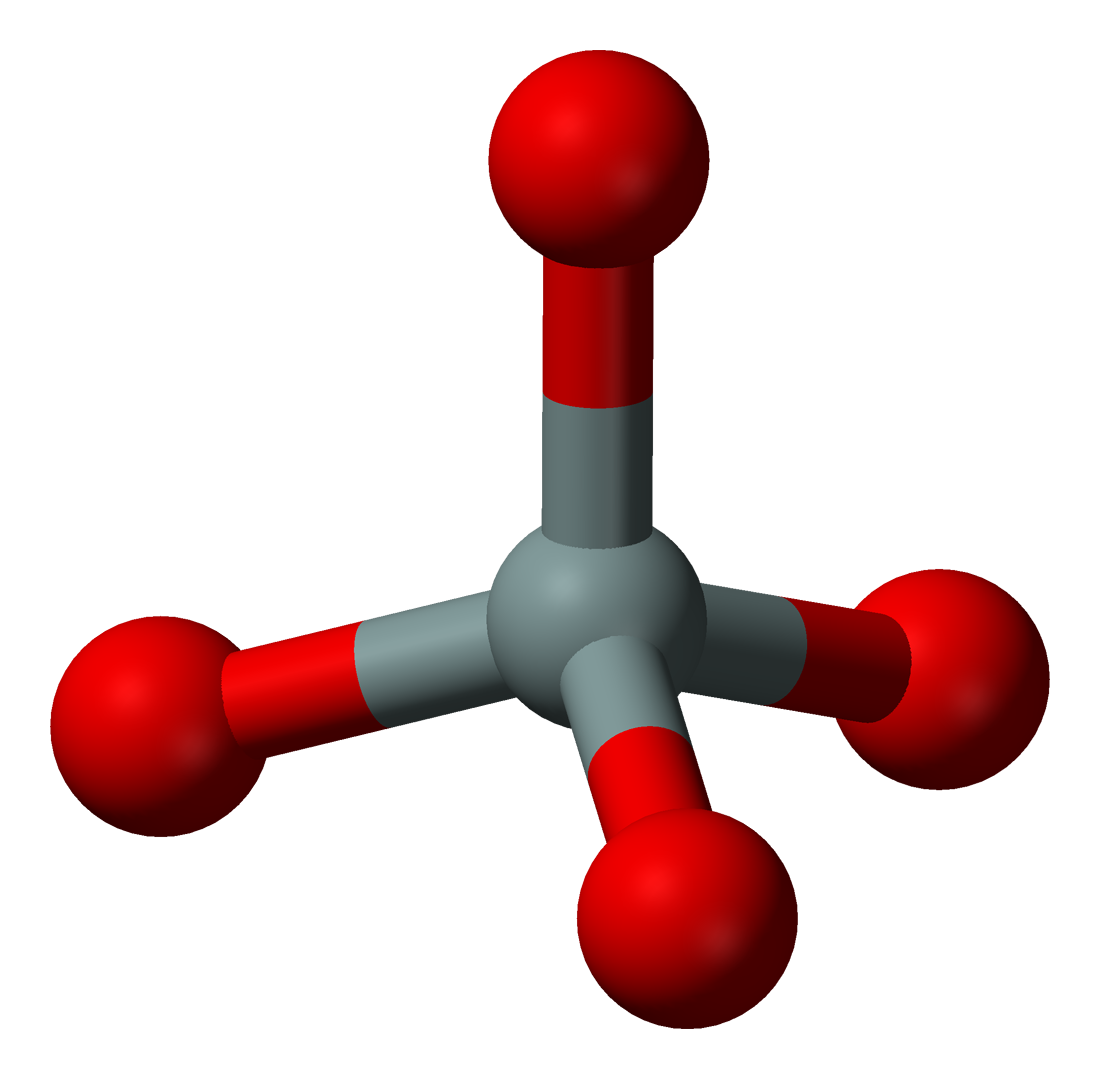


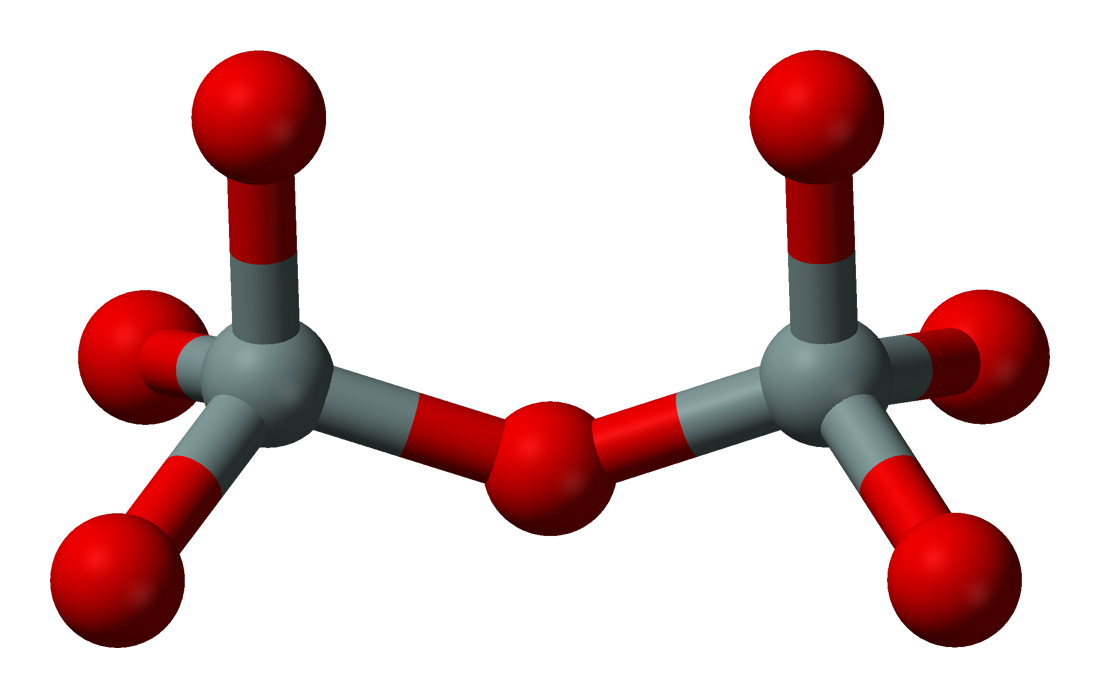

The silicon-oxygen groups form minerals either by sticking to each other by sharing oxygens, or by sticking to iron, magnesium, or other ions. Minerals that contain a lot of iron and magnesium are said to be low in silica, even though they may still contain more silicon and oxygen than iron or magnesium. In general, minerals high in silica are light-colored, low-density, have a low melting point, often contain a little water, and occur mostly in continents; minerals that are lower in silica usually are dark-colored, high-density, melt at high temperatures, and occur on the sea floor or in the mantle more often than in continents. You may hear “basaltic” used for low-silica because basalt is the commonest low-silica rock at the Earth's surface; similarly, “granitic” means high-silica because granite is a common high-silica rock.
Just for Fun—Rockin' Around the Silicates Video (4:24)
We've seen that most of the Earth's crust is made of minerals with silica (silicon and oxygen) in them. Melting these minerals feeds volcanoes, and freezing the melt clogs volcanoes and makes new minerals in new rocks. When we get to the Redwoods and the Badlands in a couple of weeks, you'll see how the weather attacks the new minerals, and you'll meet a few of the minerals being attacked. Here, just for fun, you can see some truly beautiful minerals, and learn a bit about the wonderful ways they are put together—Lego blocks and erector sets have nothing on nature! Meet the main minerals of the crust, in a parody of Bill Haley and the Comets' Rock Around the Clock. This Rock Video has a bit more detail than we'd ever ask in this class, so don't worry about actually learning the difference between nesosilicates and inosilicates unless you're interested.
Transcript: Rocking Around The Silicates
[MUSIC PLAYING]
Dr Richard Alley: (SINGING) Definite chemical composition. Repeating order, each in position controls the growth of the faces crystalline. Minerals, silicates are commonest here. Silicon plus 4 has a friendly face, gets 4 oxygens to share its space. Then little silicon is really hid in a tetrahedral pyramid, SiO4 -4 won't balance out. So put a silicon on the other side, of an O -2 that's nice and wide. Then one extra O electron counts each way, with the O in two tetrahedra to stay, sometimes it pays to share, there is no doubt.
But shared oxygen's not the only way to balance out the charge today. Put a +2 ion in between two oxygens from the pyramid scene. Give iron or magnesium a shout. Share all four oxygens, that's great. You've made a tectosilicate. And half of four with each Si makes SiO2 coming by. That's quartz, but crystals don't work at the bar.
But there's lots of aluminum plus 3 that needs a space where it can be. Take four SiO2 then place one Al in an Si space. K or Na plus balance alkali feldspar. Or kick out Si for two Al that happen by, and balance with Ca +2, Na to Ca solid solution, and then that is plagioclase feldspar.
But if your tetrahedra just won't share, a nesosilicate is there. When each tetrahedron can be found with iron or magnesium all around. SiO4, it's olivine you'll see. Share some oxygens but not each one, so many ways to mineral fun. Share 3 in sheets, the phyllosilicate way, Si2O5s in mica, serpentine, clay, with some other things, gives cleavage that's flaky.
Share one O, tetrahedra form a pair. Si2O7 in the equation somewhere. Sorosilicate, epidote, you know, but we've still a little way to go 'cause some other tetrahedra want to join up, you will see.
Share 2 in a ring, Si6O18, cyclosilicates beryl, and tourmaline. SiO3 sharing two in a line, or Si2O6, that's also fine. Pyroxene, single-chain inosilicate, baby. Join two ions side by side, is it rings or chains? Si8O22 gives you amphibole grains. It's a double-chain inoslicate. Learn the hornblende formula, just can't wait. Half the tetrahedra share 2 Os half share three. Neso, soro, ino, cyclo, phyllo, tecto, silicates-o, tetrahedral Si, and O form the minerals commonest below with Al, Fe, Ca, Na, K, Mg.
This Course
This CourseIt would be fun to take a tour of all the national parks and learn a little about each. But Penn State would not award you General Education credit for such a course—you are supposed to be taking a tour of a field of knowledge, in this case, geology.
So, we will take a tour of geologic ideas. But some of the best geological features of the world are enshrined in the U.S. (and other!) national parks. We will use national parks as illustrations, delving into park history and culture when we can, but concentrating on those things that illustrate how the Earth works.

Scientific Literature: An Introduction to Exercise 1
Scientists communicate in a lot of ways, but the most important is through refereed scientific literature. Any scientific paper is first submitted to a learned journal, and the editor sends the paper out for peer review. In this, several recognized world experts read the paper and make sure it is “good.” Are the methods described well? Are uncertainties given? Is proper credit assigned to other sources? Do the equations make sense? Are substantive conclusions reached? If there are obvious errors, then the paper is sent back to the author or authors for revision. If the paper is unclear, or can’t be read well, or information is omitted, if unsubstantiated claims are made, or if anything else is wrong, the paper is sent back for revision. Only when the paper clearly and logically presents new results, will it be published.
Peer review takes a lot of time and effort. Peer review also slows down the publication of important results. (The papers authored by Drs. Alley and Anandakrishnan which have been of greatest use to other people were also the ones that had the hardest time gaining approval from reviewers, who check especially carefully on the big stuff.) And, there is no guarantee that the reviewers will get everything right; errors do sneak by. However, peer review raises the quality of the scientific literature above the quality of other sources that are available to you.
You can find information in many places—books, magazines, newspapers, the Web, speeches by public officials, graffiti in restrooms, etc. Some of this information is more reliable than others. In general, the more permanent a publication is, and the more expensive it is to get you the information, the better the information. (So the Web, which is cheap and has a huge turnover in websites, includes an immense amount of nonsense as well as some good stuff.) But, there are surely exceptions to this “rule.”
If something matters, the refereed scientific literature, with its long traditions, its focus on accuracy, and its appeal to nature to test ideas, is the most reliable source available. Textbooks, lectures by professors, and other ways we give you information aren’t bad, but the refereed scientific literature is still better. You’ll have the opportunity to explore this in Exercise 1.
Virtual Tours
Virtual ToursThroughout this course, you will have the opportunity to join Dr. Alley and the Geosc10 team for "virtual tours" of National Parks and other locations that illustrate some of the key ideas and concepts being covered. For the rest of the course, VTrips will present important material that may show up on the quizzes. In general, the slide shows start with pretty pictures to introduce you to a park and end with pictures focused on scientific ideas. The more scientific, the more likely to be on a quiz! Next, mostly for your enjoyment, are pictures of the world's largest national park (Northeast Greenland). Have fun!
Take a Tour of Northeast Greenland National Park
Preserving the best of the landscape in national parks is a U.S. invention that much of the world has adopted. The largest national park, Northeast Greenland National Park, is in NE Greenland and was founded in 1974. Both Dr. Anandakrishnan and Dr. Alley have conducted research there. Most of the pictures were taken by Richard Alley in or just outside of the national park, during a research expedition to Scoresby Sund in the autumn of 2005. Enjoy!
A Rocking Review
A Rocking ReviewWe’re off on a great journey through the National Parks, around the world, and deep into history. Here’s a preview of some of the things we’ll visit before the semester ends. These "Rock Videos" are mostly parodies of famous songs. Later in the semester, they really will be useful reviews of the units.
Video: Geoman "Piano Man" Parody (5:14)
Transcript: Geoman "Piano Man" Parody
Dr. Richard Alley: 4.6 billion years, as the story starts before our new crowd'll shuffle in; the ones who can learn from the scary parts, and enjoy that the ball's still in spin. Falling meteorites hit with energy bringing radioactivity. And the melt from that heat, gave us layers, discrete the core, mantle crust, air, and sea. Then a Mars-sized one blasted the moon out to make tides and to shine down on us from on high.
Sings us a song, you're the GeoMan. What was, and what is, and will be, On this blue-green ball spinning as fast as we can, with rocks, water, air, you and me.
No living thing softened that Hadean scene. No oxygen blew through the sky. 'Til photosynthetic bacteria, blue-green gave us something to breathe by and by. That oxygen changed the Earth's chemistry and broke down so much greenhouse gas that the new O2 breeze gave a Snowball deep freeze 'til volcanic CO2 made it pass. Now, while Venus melts lead, and Mars shivers This ball that we love is fine-tuned in between.
Sings us a song, you're the GeoMan. What was, and what is, and will be, On this blue-green ball spinning as fast as we can, with rocks, water, air, you and me.
Precambrian microbes, then trilobites in Paleozoic warm seas led to sauropod-Tyrannosaurus fights across Mesozoic countries. 'Til one fateful day of the meteorite, just 65 million years past, in that fire-ice hell the great dinosaurs fell, while a few mammals weathered the blast. And, the jobs that the dinos left open have slowly been filled by those mammals' offspring.
Sings us a song, you're the GeoMan. What was, and what is, and will be, On this blue-green ball spinning as fast as we can, with rocks, water, air, you and me.
There's a pretty good crowd here on Saturday. Procreation for mammals a thrill. Cenozoic's long scene becomes Anthropocene, and we wonder if we have the will. 4.6 billion years of just nature, Then 6 billion of us join the mix (2012 update -7 billion and counting). Some are thinking quite clear, but some smell like a beer, and there's lots of things here we should fix. But as long as the ball keeps on spinning, and as long as the music keeps playing, we're in.
Sings us a song, you're the GeoMan. What was, and what is, and will be, On this blue-green ball spinning as fast as we can, with rocks, water, air, you and me.
Optional Enrichment Article
Optional Enrichment ArticleWe ask you to learn a lot of material for this course, but there is MUCH more to learn. Sometimes, we will give you a little extra material in an Optional Enrichment Article. These are not required; they are optional. The additional material they cover will not be on the RockOn Quizzes or in the Final. But, in discussing science with former students, we have found many students want answers to certain questions, and we have tried to answer those especially common questions in the Optional Enrichment Articles. Here is one discussing some of the reasons why some people resist some of the ideas of science
Babies, Big Ben, and the Age of the Earth
In this course, we will deal with several ideas—the age of the Earth, the occurrence of evolution, the prospect of global warming, and others—about which there are sometimes heated public debates in the US. These debates have persisted in the US, and in some other places, long after scientists reached a consensus and moved on, using science to help people. These debates have persisted here long after most people in many other countries accepted the scientific results, and began helping the scientists use the information to help people. Why is this? Are scientists and people in some other countries just stupid, ignoring common sense? Are many regular people in the US just stupid? Are US politicians cynically exploiting subjects for personal gain? You will get many different answers to these questions from different people!
Here, we’d like to give you something to think about. The discussion here in no way proves that scientists are right about the age of the Earth, evolution, or global warming—we’ll discuss the evidence about these later in the course. But, the discussion here may help you to think about thinking about these issues and to examine your own ideas on the topics. So…
Have you ever visited an old European city and tried to drive through the downtown? Or have you watched from the sidewalk, or in a movie, while others tried to drive the winding streets of Rome or London? People who have done so quickly form opinions about the experience, and those opinions are very seldom, “Wow, what an efficiently designed road system, ideal for moving traffic.” Far more common is “Wow, what a mess!” And yet, although almost everyone knows that the roads are a mess in the downtowns of major old cities, those roads are still there. Why?
The answer is fairly simple. The roads were built when the city was tiny, centuries or even millennia ago, to serve that proto-city. Then, as the city grew, it grew around those roads. Buildings went up, and museums and castles and theaters and sewers and all the other stuff of a city. Would you move Big Ben, or tear down the Louvre and start over, to straighten out a winding road? When faced with that choice, people usually keep the old roads. Careful checking will show you that people actually have put a lot of effort into improving the roads over time, moving things, tunneling under or bridging over, adding subways to take off some of the strain, patching and fixing and repairing, spending billions of dollars (or Euros, or pounds, or whatever), but always starting from the existing system rather than starting over.
There is a useful analogy here in considering how humans learn things, and in particular how we learn science. I (this is Dr. Alley writing) have had the joy of watching closely as our two daughters grew from babies to toddlers (and on to remarkable young women), and there is a good chance that you have either closely observed growing babies or will. Scientists watch babies, too, and are learning a lot about learning.
By the time a baby is a year old, he or she knows an amazing amount about the world. The baby knows that some things are inanimate and others animate—rattles don’t walk away, but parents do. Many things are predictable for a baby—a rattle released in midair always falls down, not up, unless grabbed by a mother or father or other living things. A rattle placed properly on the railing of a crib will stay there.
In gaining this knowledge, the baby is putting down “roads” in the brain, wiring in the information that later will be called “common sense”. When artificial intelligence researchers have tried to get computers to do human jobs, perhaps the biggest difficulty has been that the computers lack this “common sense”—teaching the computer all the things that a baby learns proves to be quite difficult because the baby learns so much.
Notice, however, that this “common sense” is often not correct. For example, babies do not start with a modern view of the shape of the Earth and the physics of gravity. Whatever a baby does think, a “round, round world”, with people and rattles pulled toward the center by the warping of space-time by mass that causes gravity, is not in the original common-sense picture.
Careful studies show that, when children are finally told about gravity on the spherical Earth, they initially resist the idea. They may deny it, or they may try to modify it to fit with their “common sense”. (If asked to draw the world, they may add a flat spot or divot just where they live in an otherwise spherical Earth, or they may draw people living inside a sphere.) Often, it takes until age nine or so before children say that they accept the idea that they are held to a spherical Earth by gravity, and they draw pictures properly illustrating the idea.
Furthermore, studies show that children show this sort of resistance to most or all new ideas that conflict with the “naïve physics” or “naïve psychology” formed in the cradle. Like a city preserving its old roads, a child preserves the initial ideas—perhaps adding or patching, building new paths in the “suburbs” of the mind, or building “subways” that take the new idea around the old ones, but get rid of the old idea only when necessary.
Now, almost all children eventually come to accept the spherical Earth. (There are a few people out there who still argue against the spherical Earth, just not very many.) But, typically all of the authority figures in a child’s life agree in telling the child that the Earth is spherical—teachers, parents, preachers, TV, books, and more—with almost no disagreement. (And yes, even young children have a ranking of the reliability of information sources, picking which “authority figures” to believe more.) Yet with all of the authority figures agreeing, years may still be needed to convince a child to replace the old “road” in the brain with a new one (and that old road might even still be in there somewhere).
What about, say, the age of the Earth? The scientific evidence indicates that the Earth formed about 4.6 billion years ago. But 4.6 billion years is not “common sense” to most people—we don’t imagine such large numbers very well. If you ask a very young child how old the Earth is, you are almost guaranteed to get an answer that is not “4.6 billion years”.
In many parts of the world, all of the authority figures in a child’s life agree in telling a child that the Earth is 4.6 billion years old—teachers and parents and preachers and politicians and more—and almost all children in those places eventually come to believe that the Earth is 4.6 billion years old. But in some places, including the USA, many authority figures do not agree on this. Some preachers, some parents, some politicians, and even a few teachers express doubt about this scientific idea, and some may be actively hostile to it, claiming a very different answer. When faced with a scientific idea that runs against the “common sense” developed at a young age, and with a split opinion among authority figures, a typical child will keep the old “road” through the “city” of their mind. And that child is likely to grow up into a parent, preacher, or politician who disagrees with the science.
As noted above, this does not in any way prove that science is right and young-Earth politicians are wrong, or that young-Earth politicians are right and scientists are wrong. We’ll address those questions later, after looking at how the Earth works. But, lots of evidence (and common sense!) shows that people do arrive at ideas much as described here, and you can go watch babies, visit other places, and convince yourself. (You might also look at the article listed at the end of this text for a little more information; some of the ideas and examples given here were taken from that article, which provides additional insights.) So, when you visit Paris or Madrid, please safely enjoy walking the narrow, winding streets. Then, on the plane home, ask yourself what the “roads” look like in the mind of the person in the seat next to yours—or in your seat.
Reference
Bloom, Paul; Sklonick, Deena. Childhood Origins of Adult Resistance to Science. Weisberg Science. 2007. v. 316, p. 996-997
Module 1 Wrap-Up
Module 1 Wrap-UpReview Module 1 Requirements
You have reached the end of Module 1! Double-check the list of requirements on the Welcome to Module 1 page and the Course Calendar to be sure you have completed all the activities required for this module.
Reminder
Exercise #1 opened this week. You have two weeks to complete it, but please start early to avoid technological difficulties. See Course Calendar for specific dates.
Comments or Questions?
If you have any questions, send an email via Canvas, to ALL the Teachers and TAs. To do this, add each teacher individually in the “To” line of your email. By adding all the teachers, the TAs will be included. Failure to email ALL the teachers may result in a delayed or missed response. For detailed directions on how to do this, see How to send an email in GEOSC 10 in the Important Information module.