8.10 Comparison of Different Bulbs
8.10 Comparison of Different BulbsIncandescent Lamps:

Credit: @ Maria / Adobe Stock
- No ballast required: Connect directly to standard line voltage.
- Excellent color quality: Produces a warm white light (~2700 K) with perfect color rendering (CRI = 100).
- Compact point source: Emits light from a small area, which can create harsh glare if fixtures lack proper shielding or diffusers.
- Simple installation: Uses standard screw-in (Edison) bases for easy replacement.
- Low efficiency: Produces relatively little light per watt (low luminous efficacy) and converts most energy into heat.
- Short lifespan: Typically lasts 750–2,000 hours, significantly less than fluorescent or HID alternatives.
- Fragile filament: Sensitive to vibration, shock, and frequent switching, which can shorten lamp life.
- Voltage sensitive: Even minor fluctuations in line voltage can noticeably reduce light output and lifespan.
Fluorescent Lamps:
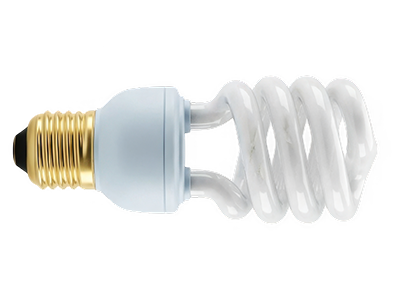
Credit: @ Bruno Stock / Adobe Stock
- Requires a ballast: Needed to start the arc and regulate current during operation.
- Versatile light quality: Available in a wide range of color temperatures and CRI ratings to suit different applications.
- Diffused light output: Larger tube surface area creates lower surface brightness, reducing glare compared to point sources.
- Cooler & more efficient: Operates at lower temperatures and delivers significantly more lumens per watt than incandescent lamps.
- Temperature sensitive: Light output and starting performance drop in extreme cold or heat. Cold environments may require a specially rated ballast.
- Ballast compatibility matters: Must be paired with the correct ballast type and starting method (instant, rapid, or programmed start).
- Thermal protection required: Indoor fixtures must use thermally protected ballasts (historically labeled Class P) that automatically shut off if overheating occurs. Excessive heat still shortens ballast life.
- Airflow dependent: Convection currents and fixture design affect heat dissipation, which in turn impacts efficiency and lifespan.
High Intensity Discharge (HID) Lamps:

Credit: @ ismail / Adobe Stock
- Requires a ballast: Needed to generate the high starting voltage and regulate arc current.
- High light output: Delivers very high lumen packages in a relatively compact form.
- Point source characteristics: The small arc tube acts as a concentrated light source, requiring careful optical control to prevent glare.
- Variable color quality: Color temperature and CRI depend on the specific lamp type (e.g., metal halide offers good color rendering; high-pressure sodium does not).
- Long lifespan & high efficacy: Generally lasts 10,000–24,000 hours and operates more efficiently than incandescent or fluorescent lamps.
- Stable output across temperatures: Unlike fluorescents, light output remains relatively consistent in normal ambient conditions. However, extreme cold can delay starting and may require a specialized ballast.
- Electrical considerations: Sensitive to voltage drops and fluctuations. Circuits must be properly sized to handle high inrush (starting) currents.
- Warm-up & restrike delay: Takes several minutes to reach full brightness when turned on, and requires a cool-down period (5–15 minutes) before it can restart if powered off.
Light Emitting Diode (LED) Lamps

Credit: @ XpertDesigner / Adobe Stock
- No external ballast required: Most LEDs have an integrated driver that connects directly to standard line voltage.
- Excellent, customizable color quality: Available in color temperatures from warm white (2700 K) to daylight (5000+ K); high CRI (90+) options widely available.
- Directional light output: LEDs naturally emit light in a specific direction, reducing the need for reflectors—but may require diffusers for even room lighting.
- Simple installation: Uses standard screw-in (Edison) or pin bases; verify dimmer and enclosed-fixture compatibility before installing.
- Highly efficient: Produces 75–90% more light per watt than incandescent; typical efficacy: 80–150+ lumens per watt.
- Very long lifespan: Rated for 25,000–50,000+ hours (15–25+ years at 3 hrs/day use).
- Durable solid-state design: No filament or glass tube; resistant to vibration, shock, and frequent switching.
- Heat management is critical: LEDs don't emit heat forward, but internal components require heat sinks. Overheating reduces lifespan and light output.
- Dimming compatibility varies: Many LEDs are dimmable, but require LED-compatible dimmers and drivers to avoid flicker or buzz.
- Wide temperature tolerance: Perform well in cold environments (ideal for outdoor use); extreme ambient heat can reduce lifespan if thermal management is inadequate.
- Instant on, no warm-up: Reach full brightness immediately with no restrike delay.
- No hazardous materials: Contains no mercury; easier and safer to dispose of than CFLs or HID lamps.
- Higher upfront cost, lower total cost: Purchase price is higher than incandescent or CFL, but energy savings and longevity deliver significant lifetime value.
| Feature / Bulb Type | Incandescent | Fluorescent | HID | LED |
|---|---|---|---|---|
| Ballast/Driver | None | Required | Required | Integrated driver (usually) |
| Efficacy (lm/W) | 10–17 | 50–100 | 35–150 | 80–150+ |
| Lifespan (hours) | 750–2,000 | 8,000–15,000 | 10,000–24,000 | 25,000–50,000+ |
| Color Rendering (CRI) | 100 | 70–95 | 20–90 (type-dependent) | 80–98 |
| Start Time | Instant | Seconds | Minutes | Instant |
| Temperature Sensitivity | Moderate | High | Moderate | Low (heat management needed) |
| Dimmable | Yes (standard) | Special ballast required | Special ballast required | Yes (with compatible driver/dimmer) |
| Mercury Content | No | Yes (trace) | Yes (trace) | No |
| Best For | Decorative, low-use fixtures | Offices, schools, general indoor | High-bay, street, outdoor area | Nearly all applications; retrofits |