Lesson 8: Lighting
Lesson 8: LightingThe links below provide an outline of the material for this lesson. Be sure to carefully read through the entire lesson before returning to Canvas to submit your assignments.
8.1 Lesson 8 Introduction
8.1 Lesson 8 IntroductionWelcome to Lesson 8!
In 2020, 81 billion kWh of electricity was used for lighting homes in the US. Commercial buildings added 208 billion kWh and industrial facilities added another 53 billion kWh. This means in the US, we spend literally billions of dollars to light our environment. Additionally, this means tons of additional carbon emissions, into the atmosphere.
The good news? Lighting is one of the easiest places to save energy.
- Switching just five frequently used bulbs to LED can save ~$75/year and prevent ~1,000 lbs of CO2 emissions.
- Upgrading lighting in a school, office, or community building can cut energy costs by 50% or more.
The Lighting Revolution: Then → Now
| Era | Dominant Technology | Typical Efficacy |
|---|---|---|
| ~2000 | Incandescent bulbs | 10–17 lumens/watt |
| ~2010 | Compact Fluorescent (CFL) | 50–70 lumens/watt |
| Today | LED (Light-Emitting Diode) | 80–150+ lumens/watt |
Twenty years ago, nearly every home used incandescent bulbs. Today, LEDs dominate the market because they:
- Use up to 90% less energy than incandescents
- Last 15–25+ years (vs. 1–2 years for incandescents)
- Contain no mercury (unlike CFLs)
- Offer instant-on, dimmable, high-quality light in warm or cool tones
In this lesson, we'll explore how each technology works—and why LEDs represent the most efficient way to generate visible light today.
Key Concepts We'll Cover
Light Measurement Basics
- Lumens = total visible light output (brightness)
- Watts = energy consumed (not brightness!)
- Foot-candles = light received on a surface (lumens per square foot)
- CRI (Color Rendering Index) = how true colors appear under a lamp (0–100 scale)
Life-Cycle Cost Analysis
We'll practice the most important calculation in this lesson: comparing the total cost of ownership for different lamps. This includes:
- Purchase price × number of replacements needed
- Energy costs over the lamp's lifetime
- Maintenance and disposal considerations
Remember: The cheapest bulb upfront isn't always the cheapest over time.
Smart Lighting Strategies
- Matching light levels to tasks (reading vs. hallway vs. accent lighting)
- Using controls (timers, motion sensors, dimmers, photocells) to eliminate waste
- Retrofitting existing fixtures for better efficiency
Lighting
These are some statistics on lighting in the US. The latest report from the Office of Energy Efficiency and Renewable Energy was put out in April 2024, but it refers to a study from 2020.
- Lighting accounts for 4% of all electricity consumed in the United States. This has been steadily decreasing as more energy-efficient lighting options have come on the market in
- An average household dedicates 6% percent of its energy budget to lighting. Commercial establishments consume about 17% percent of their total energy just for lighting.
- Technologies developed during the past 25 years, specifically LED lightings, have helped cut lighting costs 30 to 75 percent while enhancing lighting quality and reducing environmental impacts.
Lesson 8 Objectives
Upon completing this lesson, students will be able to:
- Explain how different lamp types (incandescent, halogen, fluorescent, HID, LED) produce light
- Compare lighting efficiency using lumens, watts, and lumens per watt
- Identify lighting controls that reduce waste without sacrificing comfort
- Perform a life-cycle cost analysis to compare total ownership costs
Questions?
If you have any questions, please post them to the General Course Questions forum located in the Discussions tab in Canvas. While you are visiting the discussion board, feel free to post your own responses to questions posted by others - this way, you might help a classmate!
8.2 How Lighting is Measured
8.2 How Lighting is MeasuredWhen shopping for a light source, most people look first at watts (W). However, watts measure power consumption—the rate at which electricity is used—not the amount of light produced. A higher wattage means higher energy use, not necessarily brighter light.
Terminology: "Bulb" vs. "Lamp"
In everyday language, we call the entire light source a "light bulb." Technically, however:
- Bulb: Refers only to the glass envelope that surrounds the light-producing component.
- Lamp: The correct industry term for the complete, replaceable light source (including the base, filament or arc tube, and glass).
Lighting professionals use "lamp" to describe the whole unit. In this course, we may use "lamp" and "light bulb" interchangeably for clarity, but it is helpful to know the technical distinction.
Measuring Light: The Lumen
The standard unit for light output (also called luminous flux) is the lumen (lm). Unlike watts, lumens tell you how much visible light a lamp produces—the higher the lumen rating, the brighter the light.
When you look at a lamp's packaging, you will often find three key specifications
- Luminous Flux (lumens)- or how much visible light the lamp produces. Eg. 800 lumen
- Power consumption (Watts) which tells us how much electricity the lamp uses. Eg. 9 Watts
- Rated Life (hours or years)- which tells us the expected operational life span. Eg. 10,000 hours or ~9 years

Text description of the light bulb packaging image.
The image is a side-by-side comparison of two packages of GE LED light bulbs. The left package, set against a blue background, features the "refresh" LED brand, labeled as "Energetic Daylight." It displays four bulbs with silver bases, highlighting features like "Enhanced Color Contrast & Boldness" and "13 Year Life." Additional information includes "Daylight," wattage equivalent, "Dimmable" indicator, "Brightness 800 lumens," and "Estimated Energy Cost $1.02 per year."
The right package, in an orange background, showcases the "relax" LED brand, described as "comfortable soft white light." Similarly, it displays four bulbs and highlights "Enhanced Color Contrast," "40w replacement," "5.5w energy use," and "13 Year Life." Other details include "Soft White," "Dimmable," "Brightness 450 lumens," and "Estimated Energy Cost $0.66 per year."
Watch this video below to find out more about lumens. (1:44)
Transcript: Energy 101: Lumens. (1:44)
Today you’ll see more light bulb options in stores. These bulbs will give you the light you want while saving you energy—and money.
Here’s something to consider. In the past, we bought light bulbs based on how much energy—or how many watts—they use. But today’s energy-saving light bulbs use up to eighty percent less power to give you the same amount of light. So wouldn’t it make more sense to buy light bulbs based on how much light they provide? With lumens, you can do just that.
Lumens are a measure of brightness. So if you know how many lumens you want, you’ll buy just the right bulb for any spot in your home.
Instead of buying an inefficient sixty-watt bulb, look for an efficient replacement that gives you about eight hundred lumens of light. If you’re replacing a one hundred-watt bulb, look for an energy-saving bulb that gives you about sixteen hundred lumens.
Just think: the more lumens, the brighter the light.
To help you shop for the light you want, you’ll find an easy-to-read label on light bulb packages. So you’ll have a simple way to see the bulb’s brightness, how much the bulb will cost to operate for a year, and other qualities like light color—from warm yellowish to cool bluish.
With more energy-saving choices appearing on store shelves, including compact fluorescents, or CFLs, light emitting diodes, or LEDs, and energy-saving incandescents, you’ll have more options that save you money.
So when shopping for a new bulb, look for lumens—or how bright the bulb is. Remember, lumens is the new way to shop for light.
Footcandles
A footcandle (fc) is the Standard unit of measure for illumination on a surface. It is a lumen of light distributed over a 1-square-foot (0.09-square-meter) area.

The average footcandle level on a square surface is equal to the amount of lumens striking the surface, divided by the area of the surface.
Example
A 40 watt bulb produces about 505 lumens and has a life of about 1,000 hours. When this bulb is used to light a room of 10 x 10 feet, these 505 lumens are distributed over 100 square feet of floor area. What is the illumination?

 Lighting Efficacy measures how effectively a light source converts electrical energy (watts) into visible light (lumens).
8.3 How Much Lighting is Needed
8.3 How Much Lighting is NeededHow much light is needed in a room depends on the task(s) being performed (contrast, requirements, space, size, etc.). There are three different types of task-oriented lighting: Ambient, Task, and Accent. The light requirement also depends on the ages of the occupants and the importance of speed and accuracy of the task.
- Ambient lighting is general purpose lighting—an example is the lighting used in hallways for safety and security. An illumination of 30–50 fc is generally the maximum that one needs for this purpose.
- Task lighting is lighting that is designed for specific tasks. Reading and writing are the most light-intensive tasks and require about 50 fc at home. Tasks like cooking, sewing, or repairing a wrist watch require more -- about 200–300 fc. However, the area with this level of illumination will be small. Increasing the light everywhere is not required and is a waste of energy.
- Accent lighting is the lighting that is provided to highlight certain objects or areas, for example, the use of floodlights to highlight a painting or a statue. Accent lighting also illuminates walls, so they blend more closely with naturally bright areas like ceilings and windows. Accent lighting can be high intensity or subtle.
How Much Light is needed?
Your lighting levels and color temperature is much a matter of preference, but the Illuminating Engineering Society (IES) has come up with guidance to determine the appropriate lighting levels for various spaces in your home.
| Lighting Area | Recommended Foot Candles |
|---|---|
| Living Rooms, Bedrooms, and Relaxation Areas | 10–20 foot candles (ambient). |
| Kitchen (General) | 30-40 foot candles |
| Kitchen (Task Areas - Stove & Sink) | 50-100 foot candles |
| Bathrooms | 20-50 foot candles |
| Home Office/Reading Area | 20-50 foot candles |
| Dining Room | 30-40 foot candles |
| Hallways & Entryways | 5-20 foot candles |
| Garage (General) | 30 foot candles |
| Garage (Workbench) | 100 foot candles |
Indoor Lighting Levels Requirements
| Indoor Lighting Area | Recommended Foot Candles |
|---|---|
| Corridors / Stairways / Restrooms | 10‑20 |
| Storage Rooms | 10‑50 |
| Conference Rooms | 20‑50 |
| Gymnasiums | 30‑50 |
| Merchandising | 30‑150 |
| Cafeterias | 50 |
| Classrooms | 20-100 |
| General Offices | 50‑100 |
| Manufacturing Assembly | 50‑100 |
| Parking Lots (security) | 0.5-3 |
Color Rendering Index
Lamps are assigned a color temperature (according to the Kelvin temperature scale) based on their "coolness" or "warmness." The human eye perceives colors as warm if they are at the red end of the spectrum, and cool if they are at the blue-green end of the color spectrum.

Text description of the LED color temperatures image.
The image displays a series of six black pendant lights, each suspended from the ceiling, against a backdrop divided into six vertical sections. Each section is illuminated with a different color temperature, ranging from warm to cool white. The leftmost section shows a warm yellow light at 2700K, transitioning to a slightly cooler light at 3000K, followed by neutral white at 3500K and 4000K, progressing to cooler light at 5400K, with the final section showcasing a blue-tinted cool light at 6500K. The walls underneath the lights show the corresponding color temperature numerically, written in colors that match the light above.
Light sources the color temperatures represent.(0:27)
(Note: The video has no audio.)
Text description of the Light sources the temperatures represent. (0:27)
Here are some examples of light sources that a color temperature (measured in Kelvin) might represent.
- 1,000° K - Sunrise
- 1,900° K - Candle light
- 2,800° K - Light bulb
- 3,000° K - Halogen bulb
- 4,000° K - Fluorescent light
- 5,500° K - The Sun at noon
- 7,000° K - Overcast sky
- 10,000° K - Clear blue sky
The ability to see colors properly is another aspect of lighting quality. Objects' colors appear to be different under different types of light. The color rendering index (CRI) scale is used to compare the effect of a light source on the color appearance of its surroundings. A scale of 0 to 100 defines the CRI. A higher CRI means better color rendering, or less color shift.
Instructions: Move the drag button in the center of the picture below to see the difference between low CRI and high CRI.
Factors Affecting the Number of Lamps Required
Instructions: Click on the hot spots below to determine the factors that affect the number of lamps required:
8.4 Types of Lighting: Incandescent Bulbs
8.4 Types of Lighting: Incandescent BulbsThere are four basic types of lighting:
- Incandescent
- Fluorescent
- High-intensity discharge
- LED
Incandescent Bulbs
Thomas Alva Edison invented the incandescent light bulb with reasonable life. Lewis Latimer has perfected it with the use of carbon filament.
The incandescent bulb consists of a sealed glass bulb with a filament inside. When electricity is passed through the filament, the filament gets hot. Depending on the temperature of the filament, radiation is emitted from the filament.
The filament's temperature is very high, generally over 2,000º C, or 3,600º F. In a "standard" 60-, 75-, or 100-Watt bulb, the filament temperature is roughly 2,550º C, or roughly 4,600º F. At high temperatures like this, the thermal radiation from the filament includes a significant amount of visible light.
This principle of obtaining light from heat is called ‘incandescence.” At this high temperature of 2,000º C, about 5 percent of the electrical energy converts into visible light and the rest of it is emitted as heat or infrared radiation.
How Does a Light Bulb Work? (3:47)
Transcript: How Does a Light Bulb Work? (3:47)
Before the advent of electrical lighting, illuminating space was a serious challenge. The only choices people had were candles or oil lamps, neither of which could provide sufficient brightness for extended periods.
However, things took a historic turn in the 1800s, when Thomas Alva Edison conceived and patented the first incandescent light bulb. This innovative technology revolutionized the way we light our homes and workplaces, and has remained largely unchanged from its original design to this day. Incandescent light bulbs function based on a number of interesting aspects of physics, which we'll explore in this video.
The incandescent bulb is made of two main components—the bulb and the filament. The bulb is typically crafted from glass and filled with a vacuum to extend its lifespan. Should air molecules make their way inside, the bulb's temperature would rapidly increase, leading to the glass shattering due to the heat.
The filament is where light production commences. This filament is a long, coiled conductor of electricity, usually made of tungsten. Additionally, an inert gas like argon can fill the bulb’s interior, which aids in slowing down the decay of the tungsten filament.
As electricity flows through the filament via metal contacts, atoms are stirred up, causing electrons to become excited and jump to higher energy levels by absorbing the current's
energy. Almost instantly, these excited electrons lose their extra energy and revert to their initial energy levels, consequently producing small packets of light energy, also known as photons.
From our perspective, this is seen as the bulb lighting up! It’s important to understand that the illumination process of incandescent light bulbs involves the filament being heated to the point of photon emission, thus burning itself to emit light.
A significant part of the electricity coursing through the bulb is utilized to excite the atoms, leading to heat energy production. However, only a nominal fraction of this energy transforms into light, making the bulb's conversion efficiency quite unimpressive, as a substantial amount of energy is wasted as heat.
Over time, various efficient alternatives to traditional incandescent bulbs have been introduced, such as the halogen bulb, fluorescent bulb, and the Light Emitting Diode (LED) bulb. These lighting options utilize different mechanisms to reduce energy loss via heat, providing more substantial light output per unit of electrical energy input.
Halogen bulbs encase a tungsten filament within a quartz capsule filled with an inert gas and minor traces of halogens, enhancing its life through the "halogen cycle."
Fluorescent bulbs, on the other hand, use the fluorescence principle. They energize mercury vapor with electricity, producing ultraviolet radiation that hits a phosphor coating, radiating light energy. These bulbs are four times more efficient and ten times longer-lasting than incandescent bulbs.
Lastly, there are LED bulbs, which are considered the most energy-efficient modern lighting solution. They work by connecting the positive side of the voltage to the anode (the longer leg of the LED) and the negative side to the cathode (the shorter leg). When a forward voltage is applied, it allows the flow of current through the LED, prompting the release of light.
In an era of dwindling resources, sustainable and energy-efficient lighting equipment like LED bulbs, which emit minimal heat energy and last up to 25,000 hours, are the future of lighting in homes and commercial spaces. As inventors continue striving to create better and more efficient technologies, the future of lighting appears incredibly bright!
Let’s now look at several different types of incandescent bulbs.
Standard incandescent bulbs
Standard incandescent bulbs are most common and yet are the most inefficient. Larger wattage bulbs have a higher efficacy (more lumens per Watt) than smaller wattage bulbs.
Instructions: Click the “graph” button below to create a graph comparing Watts and efficiency, and then answer the question below.
Comparison of Watts and Efficiency for an Incandescent Bulb
The table below compares the number of Watts of a light bulb to its efficiency (lumens per Watt).
| Watts (power) | 25 | 40 | 60 | 75 | 100 | 150 |
|---|---|---|---|---|---|---|
| Efficiency (lumens per Watt) | 8 | 12 | 14 | 15 | 17 | 19 |
Based on this data, it is clear that as the number of Watts increase, so does the efficiency.
Tungsten halogen bulbs
Tungsten halogen is an incandescent lamp with gases from the halogen family sealed inside the bulb and an inner coating that reflects heat back to the filament. It has similar light output to a regular incandescent bulb, but with less power. Halogens in the gas filling reduce the material losses of the filament caused by evaporation and increase the performance of the lamp.

Tubular tungsten-halogen bulbs
Tubular tungsten-halogen bulbs are commonly used in “torchiere” floor lamps, which reflect light off of the ceiling, providing more diffused and suitable general lighting.
Although these provide better energy efficiency than the standard A-type bulb, these lamps consume significant amounts of energy (typically drawing 300 to 600 W) and become very hot (a 300-W tubular tungsten-halogen bulb reaches a temperature of about 2600° C compared to about 600° C for a compact fluorescent bulb). Because Tungsten-halogen lamps operate at very high temperatures (high enough to literally fry eggs), they should not be used in fixtures that have paper- or cellulose-lined sockets.

Halogen bulbs
A halogen bulb is often 10 to 20 percent more efficient than an ordinary incandescent bulb of similar voltage, wattage, and life expectancy. Halogen bulbs may also have two to three times as long a lifetime as ordinary bulbs. How much the lifetime and efficiency are improved depends largely on whether a premium fill gas (usually krypton, sometimes xenon) or argon is used. The image below shows a picture taken with an Infrared camera comparing the heat produced by a halogen and a compact fluorescent light bulb. The red and white color zones are extremely hot, and the blue zones are cooler.

Reflector Lamps
Reflector Lamps - Light waves from a bulb spread in all directions. The light that goes toward the back is not useful when the light is most needed in the front. Reflector lamps (Type R) are designed to spread light over specific areas.
Reflector lamps have silver coating on the sides, like any mirror, and therefore all the light waves passing through the sides or the back are reflected to the front. Therefore, they are called reflector lamps and are also called floodlighting, spotlighting, and down lighting bulbs.
For more information on the history of the light bulb, check out the History of the Light Bulb by the US department of energy.
8.5 Types of Lighting: Fluorescent Bulbs
8.5 Types of Lighting: Fluorescent BulbsThe fluorescent lamp is a major advancement and a commercial success in small-scale lighting since the original tungsten incandescent bulb. These bulbs are more efficient compared to incandescent bulbs. Fluorescence is the phenomenon in which absorption of light of a given wavelength by a fluorescent molecule is followed by the emission of light at longer wavelengths.
Types of Lighting, Fluorescent
A fluorescent bulb consists of a glass tube with an electrode at each end. Inside the tube is a small amount of inert gas (usually argon or an argon‑krypton mixture) and a trace of mercury. The inner surface of the glass is coated with a special material called a phosphor.
When the bulb is turned on, electricity flows between the electrodes and creates an electric arc. This arc excites the mercury atoms, pushing them to a higher energy state. As the atoms return to their normal (ground) state, they release that excess energy as ultraviolet (UV) light. UV light is invisible to the human eye and can be harmful in high doses.
The phosphor coating solves both problems. It absorbs the invisible UV light and re‑emits it as visible light. This two‑step process—absorbing higher‑energy UV radiation and emitting lower‑energy visible light—is known as fluorescence. Bulbs that operate on this principle are called fluorescent bulbs. Without the phosphor coating, the tube would only emit invisible, potentially harmful UV light and would not function as a practical light source.
In short: A fluorescent bulb uses electricity to excite mercury vapor, which produces UV light. A phosphor coating then converts that UV light into the visible light we see.
How do Fluorescent Lights work? (2:02)
Transcript: How do Fluorescent Lights work? (2:02)
Fluorescent lights are ubiquitous, they're used to light up signs, in restaurants, offices, homes, they are almost everywhere. In this video we'll explain how they work.
The fluorescent tube came about thanks to American electrical engineer and inventor Peter Cooper Hewitt's research into the work of physicist Julius Plucker and Heinrich Geissler, who was a glassblower. In 1901, when Hewitt passed an electric current through tiny amounts of mercury in one of Plucker's glass tubes, it lit up, making it the very first fluorescent tube to use mercury. These lamps work in much the same way today, with a few modifications of course.
There are 4 main components to a fluorescent light. The first is an electrode. There is also a very small amount of mercury vapour and an inert nobel gas swirling around inside the tube. And lastly there is a phosphor coating on the outside. An important piece of the fluorescent puzzle to note is that the inside of the tube is kept well below atmospheric pressure, usually around 0.3% of atmospheric pressure. This ensures that the mercury remains as a vapor. Electricity first enters the light fixture, like a troffer, and through a ballast. The ballast – which regulates voltage, current, etc. and is necessary for a fluorescent bulb to light. The ballast feeds the electricity into the pins of the fluorescent bulb on both ends. Then, after the electricity enters through the pins, it flows to the electrodes inside the sealed glass tube, which is kept under low pressure. Electrons begin traveling across the tube, from one cathode to the other. Inside of the glass tube are inert gasses and mercury which are excited by the electrical current. The mercury vaporizes as electricity flows, this leads to the excitation of electrons and the subsequent electron relaxation to produce an invisible UV light that we actually cannot see with our naked eye. This uv light is then absorbed by the phosphor coating which leads to excitation of more electrons where upon relaxing they finally emit visible light and this is what we see.
Thanks for watching! If you learned something new in this video don’t forget to like and subscribe.
Fluorescent lamps are about 2 to 4 times as efficient as incandescent lamps at producing light at the wavelengths that are useful to humans. Thus, they run cooler for the same effective light output. The bulbs themselves also last a lot longer—10,000 to 20,000 hours versus 1,000 hours for a typical incandescent.
Fluorescent Tube Lighting
You have likely seen fluorescent tube lighting in hospitals, schools, or office buildings. Fluorescent lights require ballasts—devices that regulate the electrical current flowing through the tube. Ballasts are essential for starting the lamp and providing circuit protection.
Ballasts consume energy themselves, and certain types operate most efficiently when the lights remain on for extended periods rather than being frequently switched on and off. There are two main types of ballasts: electronic and magnetic. Older magnetic ballasts often cause noticeable flickering, while modern electronic ballasts provide steadier light.
The image below shows the different types of fluorescent tubes available on the market. In general, smaller-diameter tubes are more energy-efficient. However, fluorescent tubes are not simple replacements for standard incandescent light bulbs. They come in various lengths and have different pin configurations, so it's important to match the size and style of your existing fixture when doing a lighting upgrade. Additionally, installing more energy-efficient tubes may require upgrading the ballast as well.

Text description of the Fluorescent tube lighting image.
The image displays five fluorescent light tubes of varying diameters, arranged horizontally against a plain gray background. Each tube is labeled with text to the left: T2, T4, T5, T8, and T12. The tubes are organized from top to bottom, starting with the thinnest, labeled T2, and progressing to the thickest, labeled T12. The tubes are all white with metallic gray caps at each end where the electrical pins are located.
Full-size fluorescent lamps are available in several shapes, including straight, U-shaped, and circular configurations. Lamp diameters range from 1" to 2.5". The most common lamp type is the four-foot (F40), 1.5" diameter (also called T12) straight fluorescent lamp. More efficient fluorescent lamps are now available in smaller diameters, including the 1.25 " (also called T10) and 1" (also called T8).
Fluorescent lamps are available in color temperatures ranging from warm (2700 K) "incandescent-like" colors to very cool (6500 K) "daylight" colors.
Cool white (4100 K) is the most common fluorescent lamp color. Neutral white (3500 K) is becoming popular for office and retail use.
Compact Fluorescent Lamps (CFL)
Compact Fluorescent Lamps are miniaturized fluorescent lamps that usually have premium phosphors, which often come packaged with integral or modular ballast, as shown in the image below.

Text description of the Types of compact fluorescent bulbs available on the market image.
The image illustrates six types of compact fluorescent lamps against a light gray background. Each lamp is labeled with a letter from a to f. Lamp (a) has a single U-shaped tube. Lamp (b) features a double U-shaped design with two parallel tubes. Lamp (c) consists of three parallel U-shaped tubes. Lamp (d) has a bulbous, rounded shape on top. Lamp (e) is a modular circline and ballast. Lamp (f) is rmodular quad-tube and ballast. Each lamp has a screw-in base.
Compact Fluorescent Lamps have the following characteristics. They:
- Typically have a standard screw base that can be installed into nearly any table lamp or lighting fixture that accepts an incandescent lamp.
- Come in a variety of sizes and shapes and are being used as energy saving alternatives to incandescent lamps.
- Have a much longer life—6,000 to 20,000 hours (10 to 20 times longer), compared to 750 to 1000 hours for a standard incandescent.
- One of the major challenges of CLF is the disposal. Due to the use of mercury they cannot be put in household trash. Most home improvement stores have a disposal box on site or will need to be transported to local hazardous waste facility. Investigate where you can dispose of CLF bulbs in your community.

Text description of the Managing CFL Bulbs image.
The image is an informational poster titled "Why Recycle Bulbs?" It focuses on the dangers of CFL (Compact Fluorescent Lamp) bulbs and provides steps on how to recycle them. The top section of the poster shows the title with an illustration of a CFL bulb. Below, two main sections are presented side by side: "The Dangers of CFL Bulbs" on the left with a red color scheme, and "How to Recycle CFL Bulbs" on the right with a blue color scheme.
The left section lists three dangers: "Contains Mercury," "Pollution Hazard," and "Landfill Waste." Each danger is accompanied by an illustration—mercury is depicted as a bulb with a mercury droplet, pollution with a smoking factory, and landfill waste by a trash can overflowing with bulbs.
The right section outlines four steps for recycling: finding a recycling center, handling the bulbs with care, ensuring proper transport, and recycling responsibly. Each step features a corresponding icon such as a map, hand placing bulbs in a sealed bag, a car with bulbs in the trunk, and a recycling bin.
At the bottom is a green banner with "DO NOT THROW CFLs IN THE TRASH!" flanked by red circular icons highlighting "No Landfill," "No Incineration," and "No Hazardous Waste."

Text description of the Compact Fluorescent Bulbs image.
The image displays four different types of light bulbs lined up side by side on a white background. From left to right, the first bulb is a compact fluorescent lamp (CFL) with a spiral shape and a screw base. The second bulb is also a CFL with a tight, coiled spiral design and a screw base. The third bulb is a CFL with a more elongated spiral design; it features a screw base. The fourth and final bulb is an LED bulb with a smooth, dome-shaped top and a screw base.
8.6 Types of Lighting: High-intensity Discharge
8.6 Types of Lighting: High-intensity DischargeHigh-Intensity Discharge (HID) Lamps
High-intensity discharge (HID) lamps are a type of electrical gas-discharge lamp that produces light by creating an electric arc between two tungsten electrodes housed inside a transparent quartz or ceramic arc tube. The arc tube is filled with gas (typically xenon or argon) and metal salts.
How HID Lamps Work
HID lamps operate similarly to fluorescent lamps in that both generate light using an electric arc between electrodes. However, there are key differences:
- Arc length: HID lamps have a much shorter, more compact arc
- Light output: HID lamps produce significantly more light, heat, and pressure within the arc tube
- Efficiency: HID lamps are generally more efficient than fluorescent lamps, producing more lumens per watt
When the lamp is turned on, the ballast provides a high-voltage pulse to initiate the arc. As the lamp operates, the metal salts inside the arc tube vaporize and become part of the plasma, producing intense light.
Types of HID Lamps
Below are the main HID lamp types, listed in increasing order of efficacy (lumens per watt):
- Mercury Vapor (35–65 lm/W)
- The oldest HID technology
- Bluish-green light with poor color rendering
- Common in older streetlights and industrial facilities
- Being phased out in many areas due to low efficiency
- Metal Halide (75–100 lm/W)
- Excellent color rendering and bright white light
- Widely used in stadiums, gymnasiums, retail spaces, and parking lots
- Contains rare earth metals that produce a full spectrum of light
- High-Pressure Sodium (HPS) (85–150 lm/W)
- Golden-yellow light
- Very efficient with long lamp life (up to 24,000 hours)
- Common in street lighting, warehouses, and outdoor security lighting
- Poor color rendering (makes colors appear brownish or gray)
Note: Low-pressure sodium (LPS) lamps are sometimes mentioned alongside HID lamps due to their high efficiency (100–200 lm/W), but they are technically a different category of discharge lamp. LPS lamps produce monochromatic yellow light and are primarily used in areas where color recognition is not important, such as highway lighting.
Ballasts and Operation
Like fluorescent lamps, HID lamps require ballasts to:
- Regulate current flow through the lamp
- Provide the high voltage needed to start the arc
- Prevent the lamp from drawing excessive current once operating
Important operational characteristics:
- Warm-up time: HID lamps take 3–5 minutes to reach full brightness when first turned on because the ballast needs time to establish the arc and vaporize the metal salts
- Restrike time: If an HID lamp is turned off while hot, it must cool down (5–15 minutes) before it can restart. This is a significant limitation for applications requiring instant on/off capability.
- Position sensitivity: Some HID lamps must be operated in specific orientations (base up, base down, or horizontal) for optimal performance and lifespan
Advantages and Disadvantages
Advantages:
- High luminous efficacy (more light per watt than incandescent or halogen)
- Long service life (10,000–24,000 hours)
- Compact size relative to light output
- Good for high-ceiling and outdoor applications
Disadvantages:
- Long warm-up and restrike times
- Require ballasts (adding cost and complexity)
- Contain mercury (environmental hazard)
- Light output degrades over time
- Color rendering varies by type (poor for HPS, good for metal halide)
- Being replaced by LED technology in many applications
Modern Context
While HID lamps were once the standard for high-bay industrial lighting, street lighting, and large-area illumination, they are increasingly being replaced by LED lighting, which offers:
- Instant on/off with no restrike time
- Higher efficiency
- Better color rendering
- Longer lifespan
- No mercury content
- Lower maintenance costs

Text description of the HID Light Bulb image.
The image shows four illustrations of different types of light bulbs, each labeled with its name. From left to right, the first bulb is labeled "Mercury Vapor," and it features a teardrop shape with a transparent enclosure and internal components visible. The second bulb is labeled "Metal Halide," similar in shape to the first with slight variations in the internal structure. Third is the "High-Pressure Sodium" bulb, which is more elongated with a central amber-colored tube inside. The last bulb is labeled "Xenon," which has a slim, cylindrical design with a more complex base. Each bulb has a distinctive internal configuration reflecting its function.
When HID lamps reach "restrike" time, the gasses inside the lamp are too hot to ionize, and time is needed for the gasses to cool and pressure to drop before the arc will restrike. This process of restriking takes between 5 and 15 minutes, depending on which HID source is being used. Therefore, good applications of HID lamps are areas where lamps are not switched on and off intermittently. This is why the basketball court lights seem to take a while to come back on if someone accidently hits the switch.
8.7 Types of Lighting: LED
8.7 Types of Lighting: LEDYou've probably heard the term LED—it stands for Light Emitting Diode. But what does that really mean?
Think of an LED as a tiny, super-efficient light maker. Unlike older bulbs that use filaments (like incandescents), gases (like fluorescents or HID lamps), or moving parts, an LED creates light using a special kind of solid material called a semiconductor. When electricity flows through this material, it directly produces light—no heat waste, no fragile parts, no warm-up time.
Why does this matter?
- Long-lasting: LEDs can last 25,000–50,000 hours (that's years of normal use!)
- Energy-saving: They use up to 90% less electricity than incandescent bulbs for the same brightness
- Durable: No glass filament or gas tube to break—great for outdoor lights, phones, cars, and more
- Instant on: Full brightness the moment you flip the switch
- Cooler operation: Less wasted heat means safer fixtures and lower cooling costs
In short: LEDs turn electricity straight into light—cleanly, efficiently, and reliably. That's why they're becoming the go-to choice for everything from nightlights to stadium lights.
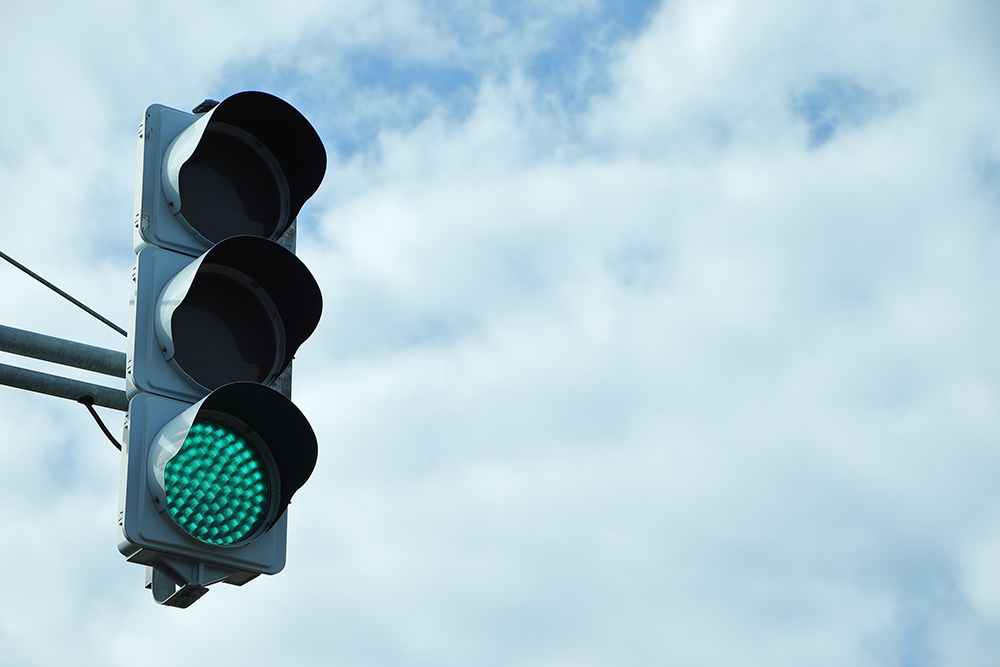
LEDs do not directly produce white light. Due to this quirk, LEDs were originally used for colored light applications such as traffic lights and exit signs. LED lighting is very different from other lighting types such as incandescent and CFL. Key differences include:
- Light Source: LEDs are the size of a fleck of pepper, and can emit light in a range of colors. A mix of red, green, and blue LEDs is sometimes used to make white light.
- Direction: LEDs emit light in a specific direction, reducing the need for reflectors and diffusers that can trap light. This feature makes LEDs more efficient for many uses such as recessed downlights and task lighting. With other types of lighting, the light must be reflected to the desired direction and more than half of the light may never leave the fixture.
- Heat: LEDs emit very little heat. In comparison, incandescent bulbs release 90% of their energy as heat and CFLs release about 80% of their energy as heat.
Lifetime: LED lighting products typically last much longer than other lighting types. A good quality LED bulb can last 3 to 5 times longer than a CFL and 30 times longer than an incandescent bulb.
Source "LED-Lighting"- U.S. Department of Energy.
Text description of the LED Traffic Light image.
The image shows a traffic light against a backdrop of cloudy sky. The traffic light consists of three circular lights arranged vertically in a metal casing. Of these, the bottom light is illuminated green, signaling vehicles to proceed. The two upper lights are not lit. The green portion of the traffic light is made up of more than 90 individual LED lights.
Because of their extremely high efficiencies (150 lumens per watt!!, and up to 90 % more efficient than incandescent light bulbs), researchers found ways to convert their outputs to white light. As such, they are one of the highest efficiency lighting options available.
Here are three examples:
- Phosphor conversion, in which a phosphor is used on or near the LED to convert the colored light to white light
- Color-mixed systems, in which light from multiple monochromatic LEDs (e.g., red, green, and blue) is mixed, resulting in white light
- A hybrid method, which uses both phosphor-converted (PC) and monochromatic LEDs.

Methods of making white light from LEDs.
The image is a diagram titled "Creating White Light," showcasing three methods for generating white light using LEDs. Each method is illustrated with a schematic on a gray background.
- The first representation is labeled "Phosphor-Converted LED." It includes a large arrow labeled "White Light" pointing upward, under which a yellow layer labeled "Phosphors" converts the light from a magenta base labeled "Blue or UV LED."
- The middle section is labeled "Color-Mixed LED," displaying another upward-pointing arrow labeled "White Light." Below this, a block labeled "Color mixing optics" is overlaid on blue, green, and red squares labeled "Multi-colored LEDs."
- The third section named "Hybrid Method LED" also features an upward arrow indicating "White Light," above a similar "Color mixing optics" layer. Below it, alternating red and magenta squares are labeled "Colored and PC LEDs."
Beneath these diagrams, a gray panel holds descriptive text for each method:
- "PHOSPHOR-CONVERTED LED: Phosphors are used to convert blue or near-ultraviolet light from the LED into white light."
- "COLOR-MIXED LED: Mixing the proper amount of light from red, green, and blue LEDs yields white light."
- "HYBRID METHOD LED: A hybrid approach uses both phosphor-converted and discrete monochromatic LEDs."
These innovations have allowed these bulbs to be suitable for general lighting in residential applications. These bulbs last for 5-10 years depending on their usage. Now, you can find them in almost every store, and they look something like this.

Text description of the General Purpose LED Lights image.
The image features a row of five LED light bulbs positioned upright on a wooden surface. Each bulb emits a distinct color temperature, creating a gradient from warm to cool light. Starting from the left, the first bulb glows with a warm amber hue, the second with a neutral white light, the third with a cool white light, the fourth with a slightly cooler white, and the fifth with the coolest white light. The wooden surface has a natural, medium-brown color, providing a contrasting background to the bright whites of the bulbs.
8.8 Life Cycle Cost Analysis
8.8 Life Cycle Cost AnalysisBack in Lesson 6, we learned about calculating the Life Cycle Cost Analysis. We can do the same thing with lighting. Performing a life-cycle cost analysis (LCC) gives the total cost of a lighting system—including all expenses incurred over the life of the system. This analysis can be applied not only to lighting but for most of the appliances, automobiles, heating systems, and so on, when two systems are compared to determine the most cost effective options.
There are two reasons to do an LCC analysis:
- To compare different systems, or bulbs in this case.
- To determine the most cost-effective system or a bulb.
For some lighting systems, one of two situations may exist:
- The initial cost may be high, but the energy costs will be low over its lifetime.
- The initial cost to buy a bulb or a system and the energy or the maintenance costs may be low, but the useful life of such a bulb or system may be short. (In this case, we may have to replace the appliance several times to get the same useful life as the other option.)
Therefore, a life-cycle cost (LCC) analysis can be helpful for comparing the total costs incurred over the lifetime of a lighting system. It is, in essence, calculating all the costs incurred to buy, maintain, and run the system over its lifetime.
In the formula above,
- Cost to buy is the purchase price of the lamp or the system.
- Cost to maintain is the cost incurred to maintain it in good operating condition. (For example, in the case of a car, an engine oil change every 3,000 miles is part of maintenance costs.)
- Cost of energy is the energy or the fuel it takes to run the appliance or lamp for its lifetime.
- Replacement cost is the cost to replace the bulb. In this case, the LED has a lifespan of 20,000 hours, so we will need two CFL bulbs over the lifetime. If we were comparing Incandescent lights, we would need 20 bulbs over this lifespan. (Some incandescent lamps had a lifespan of only 1000 hours!)
The table below shows a life cycle cost analysis in comparing a CFL and a LED.
| Category | Compact Fluorescent Lamp (CFL) | Light Emitting Diode (LED) |
|---|---|---|
| Rating | 13 Watts | 8.5 Watts |
| Lumen output | 800 Lumens | 800 Lumens |
| Cost to buy the bulb ($) | $2.87 | $3.50 |
| Life of each bulb | 10,000 h | 20,000 h |
| Bulbs needed for same life | 2 bulbs - $5.74 | 1 bulb - $3.50 |
| Energy Consumption | 13 Watts x 20,000 h 260,000 Wh = 260 kWh | 8.5 Watts x 20,000 h 170,000 Wh = 170 kWh |
| Price of electricity | $0.1625 | $0.1625 |
| Cost of Electricity needed for 20,000 h | 260 kWh x $0.1625/kWh = $42.25 | 170 kWh x $0.1625/kWh = $27.63 |
| Total Cost (Life Cycle costs) to own and operate the bulbs for 20,000 h | $42.25 + $5.74 $47.99 | $27.63 + $3.50 $31.13 |
Replacing a single CFL bulb with an equivalent LED can save approximately $16.86 over 20,000 hours of operation. Now multiply that by the number of fixtures in your home—living room, kitchen, bathrooms, bedrooms, closets, garage, and more. The cumulative savings add up quickly. If you still have incandescent lights in your home, this savings will be even larger.
LEDs also have some other advantages over LEDs. LEDs deliver the same (or better) light quality as CFLs while using less energy, lasting longer, and eliminating mercury concerns. If you still have working CFLs, it's fine to use them until they fail—but when it's time to replace, choose LED for maximum savings and performance.
8.9 Improved Lighting Controls
8.9 Improved Lighting ControlsLighting controls give you the flexibility to adapt a space for multiple uses while improving accessibility. They should be included in the lighting plan for every room. Both manual and automatic controls reduce energy costs by ensuring lights are used only when and where needed.
Controls are especially effective with high-wattage lamps, but they should be considered for any lighting that might be left on in unoccupied spaces. The easiest way to save energy is to turn things off when not in use!
Important: Always choose controls that are compatible with your specific lamp type and ballast. Invest in quality controls—they perform better and last longer.
Types of Lighting Controls
1. Switches
The basic on-off switch (wall-mounted or on the fixture) should always be obvious and convenient.
Best Practices:
- Pull-cord switches: Attach a visible, easy-to-grasp object to the end of the cord
- Multiple entrances: Install three-way or four-way switches in hallways, staircases, and large rooms with more than one entry point
- Visibility: Use oversized toggles or glow-in-the-dark switch plates to make switches easy to find in the dark
- Indicator lights: Install a small light near the switch to signal when out-of-sight lights (basement, outdoor) are left on
- Individual control: If one switch controls multiple fixtures, each lamp should also have its own switch for selective use
- Task separation: In kitchens, put overhead ambient lights, counter lights, and island lights on separate switches
- Multi-level lamps: Use three-way switches in lamps to match light output to need—use the lowest setting when full brightness isn't necessary to save energy
2. Photocells (Photosensors)
A photocell measures ambient light levels and automatically turns electric lights on when light drops below a set minimum.
Best Applications:
- Outdoor fixtures that stay on all night
- Night lights
- Security lighting
Limitations:
- If a light doesn't need to stay on all night, use a timer or motion sensor instead for greater energy savings
3. Timers
Timers control how long a light stays on. They're inexpensive and can be installed at the switch, plug, or socket.
Types:
- Manual timers: Turned on by hand, automatically turn off after a set duration (minutes or hours)
- Programmable timers: Turn on and off at specific times of day
- Mechanical vs. solid-state: Both available; some offer manual override
Safety Tips:
- Don't set timers so lights turn off while someone might still be in the space
- Install glow-in-the-dark switch plates or a low-wattage night light with a photosensor near the switch for easy location
Compatibility Warning: Some screw-base compact fluorescent lamps (CFLs) cannot be used with timers. Always check the manufacturer's recommendations.
4. Motion/Occupancy Sensors
Motion detectors (occupancy sensors) automatically turn lights on when movement is detected and off after a specified period of no motion. They're excellent for energy savings.
Best Applications:
- Bathrooms and bedrooms (where lights are frequently left on)
- Outdoor walkways and driveways
- Security lighting
- Closets, laundry rooms, and garages
Features:
- Automatic operation: On with motion, off after no motion
- Manual override: Some models include on/off switches
- Dimming mode: Reduce light to a preset level instead of turning completely off
- Dual technology: Combine motion detection with photocells so lights only activate when it's dark and motion is detected
Installation Tips:
- Follow manufacturer instructions to ensure proper coverage area
- Verify lamp compatibility before installation
Compatibility Warning:
- Some CFLs should not be used with motion sensors
- High-intensity discharge (HID) lamps are not suitable because they cannot relight quickly after being turned off
5. Dimmers
Dimmers allow occupants to adjust light output, providing energy savings, reduced peak power demand, and enhanced lighting flexibility.
Dimming Fluorescent Lamps
Dimming fluorescent lamps is more complex than dimming incandescents. Standard dimmers don't work because:
- Reducing power cools the filaments, preventing them from emitting electrons properly
- If filaments get too cool, the lamp shuts off entirely
- Forcing current through improperly heated electrodes causes rapid degradation
Solution: Fluorescent dimming requires:
- Special dimming ballasts
- Compatible control devices
- Equipment designed to maintain filament temperature while reducing current
These systems typically work only with specific lamp models.
Dimming HID Lamps
Some high-intensity discharge (HID) dimming systems also require special dimming ballasts.
Dimming Incandescent/LED Lamps
Standard dimmers work well with incandescent and many LED lamps—just verify compatibility on the packaging.
Most lighting controls can connect to smartphones via Wi-Fi or Bluetooth, allowing you to remotely turn lights on/off, set schedules, and adjust brightness through a mobile app.
8.10 Comparison of Different Bulbs
8.10 Comparison of Different BulbsIncandescent Lamps:

- No ballast required: Connect directly to standard line voltage.
- Excellent color quality: Produces a warm white light (~2700 K) with perfect color rendering (CRI = 100).
- Compact point source: Emits light from a small area, which can create harsh glare if fixtures lack proper shielding or diffusers.
- Simple installation: Uses standard screw-in (Edison) bases for easy replacement.
- Low efficiency: Produces relatively little light per watt (low luminous efficacy) and converts most energy into heat.
- Short lifespan: Typically lasts 750–2,000 hours, significantly less than fluorescent or HID alternatives.
- Fragile filament: Sensitive to vibration, shock, and frequent switching, which can shorten lamp life.
- Voltage sensitive: Even minor fluctuations in line voltage can noticeably reduce light output and lifespan.
Fluorescent Lamps:
- Requires a ballast: Needed to start the arc and regulate current during operation.
- Versatile light quality: Available in a wide range of color temperatures and CRI ratings to suit different applications.
- Diffused light output: Larger tube surface area creates lower surface brightness, reducing glare compared to point sources.
- Cooler & more efficient: Operates at lower temperatures and delivers significantly more lumens per watt than incandescent lamps.
- Temperature sensitive: Light output and starting performance drop in extreme cold or heat. Cold environments may require a specially rated ballast.
- Ballast compatibility matters: Must be paired with the correct ballast type and starting method (instant, rapid, or programmed start).
- Thermal protection required: Indoor fixtures must use thermally protected ballasts (historically labeled Class P) that automatically shut off if overheating occurs. Excessive heat still shortens ballast life.
- Airflow dependent: Convection currents and fixture design affect heat dissipation, which in turn impacts efficiency and lifespan.
High Intensity Discharge (HID) Lamps:

- Requires a ballast: Needed to generate the high starting voltage and regulate arc current.
- High light output: Delivers very high lumen packages in a relatively compact form.
- Point source characteristics: The small arc tube acts as a concentrated light source, requiring careful optical control to prevent glare.
- Variable color quality: Color temperature and CRI depend on the specific lamp type (e.g., metal halide offers good color rendering; high-pressure sodium does not).
- Long lifespan & high efficacy: Generally lasts 10,000–24,000 hours and operates more efficiently than incandescent or fluorescent lamps.
- Stable output across temperatures: Unlike fluorescents, light output remains relatively consistent in normal ambient conditions. However, extreme cold can delay starting and may require a specialized ballast.
- Electrical considerations: Sensitive to voltage drops and fluctuations. Circuits must be properly sized to handle high inrush (starting) currents.
- Warm-up & restrike delay: Takes several minutes to reach full brightness when turned on, and requires a cool-down period (5–15 minutes) before it can restart if powered off.
Light Emitting Diode (LED) Lamps

- No external ballast required: Most LEDs have an integrated driver that connects directly to standard line voltage.
- Excellent, customizable color quality: Available in color temperatures from warm white (2700 K) to daylight (5000+ K); high CRI (90+) options widely available.
- Directional light output: LEDs naturally emit light in a specific direction, reducing the need for reflectors—but may require diffusers for even room lighting.
- Simple installation: Uses standard screw-in (Edison) or pin bases; verify dimmer and enclosed-fixture compatibility before installing.
- Highly efficient: Produces 75–90% more light per watt than incandescent; typical efficacy: 80–150+ lumens per watt.
- Very long lifespan: Rated for 25,000–50,000+ hours (15–25+ years at 3 hrs/day use).
- Durable solid-state design: No filament or glass tube; resistant to vibration, shock, and frequent switching.
- Heat management is critical: LEDs don't emit heat forward, but internal components require heat sinks. Overheating reduces lifespan and light output.
- Dimming compatibility varies: Many LEDs are dimmable, but require LED-compatible dimmers and drivers to avoid flicker or buzz.
- Wide temperature tolerance: Perform well in cold environments (ideal for outdoor use); extreme ambient heat can reduce lifespan if thermal management is inadequate.
- Instant on, no warm-up: Reach full brightness immediately with no restrike delay.
- No hazardous materials: Contains no mercury; easier and safer to dispose of than CFLs or HID lamps.
- Higher upfront cost, lower total cost: Purchase price is higher than incandescent or CFL, but energy savings and longevity deliver significant lifetime value.
| Feature / Bulb Type | Incandescent | Fluorescent | HID | LED |
|---|---|---|---|---|
| Ballast/Driver | None | Required | Required | Integrated driver (usually) |
| Efficacy (lm/W) | 10–17 | 50–100 | 35–150 | 80–150+ |
| Lifespan (hours) | 750–2,000 | 8,000–15,000 | 10,000–24,000 | 25,000–50,000+ |
| Color Rendering (CRI) | 100 | 70–95 | 20–90 (type-dependent) | 80–98 |
| Start Time | Instant | Seconds | Minutes | Instant |
| Temperature Sensitivity | Moderate | High | Moderate | Low (heat management needed) |
| Dimmable | Yes (standard) | Special ballast required | Special ballast required | Yes (with compatible driver/dimmer) |
| Mercury Content | No | Yes (trace) | Yes (trace) | No |
| Best For | Decorative, low-use fixtures | Offices, schools, general indoor | High-bay, street, outdoor area | Nearly all applications; retrofits |
8.11 Lighting Review
8.11 Lighting ReviewEGEE 102 Lesson 8 Review
Throughout this lesson, you've learned that lighting is more than just flipping a switch—it's a critical component of energy use in homes, schools, and businesses. Here's what matters most:
Not all light is created equal: Incandescent, halogen, fluorescent, HID, and LED lamps produce light in different ways—with vastly different impacts on energy use, cost, and the environment.
Lumens measure light; watts measure energy: When choosing a lamp, compare lumens (brightness) and lumens per watt (efficiency)—not just wattage. LEDs deliver the most light for the least energy.
Smart design saves energy: Matching the right light level (foot-candles) to the task—whether reading, highlighting art, or walking down a hall—prevents waste. Simple calculations help you determine exactly how many lumens (and lamps) you need.
Color matters: The Color Rendering Index (CRI) affects how true colors appear. For tasks involving color judgment, choose high-CRI lamps (90+), now widely available in LED options.
Controls multiply savings: Switches, timers, photocells, motion sensors, and dimmers ensure lights are used only when and where needed—cutting energy use without sacrificing comfort.
Think long-term: Life-cycle cost analysis reveals that the cheapest lamp upfront isn't always the cheapest over time. LEDs typically offer the lowest total cost through energy savings, longevity, and reduced maintenance.
Test Yourself
The questions below are your chance to test and practice your understanding of the content covered in this lesson. In other words, you should be able to answer the following questions if you know the material that was just covered! If you have problems with any of the items, feel free to post your question on the unit message board so your classmates, and/or your instructor, can help you out!
- How is light measured?
- What factors determine the amount of light that is needed in a room?
- What are the three main methods of producing light?
- Explain the difference between incandescence, fluorescence, and high intensity discharge.
- What are the common ways in which we can improve energy efficiency?
- A 60-watt light bulb produces 3 watts of radiant energy and 57 watts of heat energy. What is its efficiency?
- A 13-watt lamp is left on all day (24 hours). How much did it cost to operate the light bulb if electricity costs 15 cents per kWh?
- A 100 watt incandescent light bulb is operated for 12 hours, and a 15 watt fluorescent light bulb is operated for the same period of time. At 18 cents per kWh, what are the cost savings of the fluorescent bulb?
- Jackie Smith, who is very conscious about the environment, would like to know how much energy she can save by switching to LED lamps. Estimate the total energy savings for Jackie, who uses a light bulb fixture, by comparing the total costs to own and operate an 8-Watt LED instead of the 60 Watt incandescent bulb that she has been using. The expected life of incandescent and LED bulbs is 1000 h and, 18000 hours. The purchase price of an incandescent bulb is $0.50 and the LED is $2.50. If Jackie Smith replaces 24 bulbs at home with LEDs, what would her savings be if the electricity cost is $0.185 per kWh?