Module 6: Hurricane Stories
Module 6: Hurricane StoriesIntroduction
The 2005 hurricane season, in which Hurricanes Katrina and Rita devastated much of the northern Gulf coasts of Louisiana, Mississippi, Alabama, and parts of Florida, went down in history as the most destructive and expensive hurricane season in US history. After a 12-year period of relative calm, punctuated by Hurricanes Sandy (NY/NJ), Ike (Texas), and Gustav and Isaac (Louisiana), along came the 2017 hurricane season, in which Harvey, Irma, Maria, and Nate devastated many Caribbean islands, the coasts of Florida and Texas, and damaged other areas along the Gulf coast. The combined effects of the 2017 storms dwarfed even the 2005 storms, which at the time seemed like an unbelievable nightmare to those affected. And then came the monster Dorian in 2019 which dwarfed them all!
These catastrophic storms leave indelible marks on the communities they impact. People measure time relative to the storm – hence the common pre-Katrina and Post-Katrina references in New Orleans. They shape the way people live, build their homes, schools, businesses, and infrastructure.
Although Katrina is now more than a decade ago, it is still considered a landmark event that re-shaped the way our society thinks about natural disasters. Since Katrina have come Hurricanes Sandy, Isaac, Irma, Maria, Harvey, and many other catastrophes in the U.S. and around the world. Each of these disasters has provided lessons in resilience. Repeated disaster has an effect of putting stress on the resources designed to help communities recover.
These catastrophes have also shaped policies that are informed by these experiences. However, these policies are not perfect. Millions of people are still living in harm’s way, and local memories fade with time. Gradually, the wisdom gained gives way to reckless building practices, among other things. Billions of dollars are spent on protective engineering structures to protect the most valuable infrastructure and population centers. But some communities inevitably remain unprotected.
In Module 6 we will look at these events from the perspective of the communities affected; looking at case studies provided by New Orleans and the Gulf Coast, New York and New Jersey, Miami, Houston, Puerto Rico, and other Caribbean islands. We will ask – are we learning to live with increasing storm impacts by building more resilient cities? Or are we repeating old mistakes again and again? We hope, in this module, you will learn about the science of coastal catastrophes, but also gain an appreciation for how hazards like hurricanes and tsunamis have the capacity to do so much damage and take so many lives. Likewise, we hope that you will be able to, throughout the remaining modules, understand the societal consequences and some possible ways forward that reduce our risk and improve our resiliency to coastal hazards.

Goals and Objectives
Goals and Objectives- Students will continue to develop the fundamental geospatial skills and concepts needed to assess the coastal processes and hazards discussed in this course.
- Students will develop an understanding of the relationships between the atmosphere and hydrosphere that result in the development of cyclones.
- Students will consider current shoreline processes in the context of cyclones and past and present evolution of coastline morphology.
Learning Objectives
By the end of this module, students should be able to:
- describe the atmospheric conditions that are required for the formation of tropical and extra-tropical cyclones;
- analyze case studies of how coastal systems are impacted by geologic and climatic hazards such as cyclones;
- investigate geomorphological changes that result from cyclones.
Module 6 Roadmap
| Activity Type | Assignment |
|---|---|
| To Read | In addition to reading all of the required materials here on the course website, before you begin working through this module, please read the following required reading to build some required background knowledge on historic storms:
Extra readings are clearly noted throughout the module and can be perused as your time and interest allow. |
| To Do |
|
Questions?
If you have any questions, please use the Canvas email tool to contact the instructor.
Instructors’ Personal Hurricane Stories
Instructors’ Personal Hurricane StoriesHurricanes are very personal for us. Dinah lived through the calamitous Hurricane Katrina in New Orleans in 2005 and Tim was literally a first responder after Hurricane Andrew struck Miami in 1992 and lived through the much less severe Hurricane Fran that hit North Carolina in 1996. We start this module with these personal stories before moving to describe several of the most significant recent storms in detail. Each storm has lessons to tell about how our society deals with national disasters, what storms will be like in the future, and what we need to do to prepare for them.
Dinah’s Experiences
Years of evacuation preceded Hurricane Katrina in New Orleans. These included Hurricane Georges, Hurricane Ivan, and others for which New Orleanians packed up their cars and headed to wherever they had a safe haven. If you did not have relatives and friends in places within driving distance that were safe, or you didn’t have a reliable car, you stayed. I had packed up my daughter and dogs and headed with friends to places like Lafayette for a three-day trip and then returned to an unscathed city on several occasions. Hurricanes on track to impact New Orleans had a habit of making a northerly turn as they approached the Mississippi River delta and hitting the Mississippi coast instead of Louisiana. We were all armchair hurricane experts by the time Katrina entered the Gulf. At the University of New Orleans, I worked with a network of coastal scientists, some of whom were actual hurricane experts, including my boss, the late Dr. Shea Penland, who was a renowned coastal geomorphologist and director of the UNO Pontchartrain Institute for Environmental Sciences. He had made a fateful prediction in the Scientific American Magazine the year before that it was just a matter of time before a storm surge would overwhelm the flood protection system and devastate New Orleans. I clearly remember our staff meeting on Friday, August 26, 2005, in which we discussed the storm entering the Gulf, and the need to retrieve boats and other equipment from coastal locations. It is hard to fathom now, but three days later, on Monday, August 29, Hurricane Katrina made landfall in Louisiana. The adrenaline-driven scramble to prepare for the impending storm is now a blur, punctuated by flashes of memories of moving computer equipment away from windows, moveable objects from yards, and conferring with elderly neighbors about their plans for leaving. After several days of exhausting preparation, during which I observed a general lack of urgency in New Orleans, I was ready to evacuate. I had noticed less boarding up than for Hurricane Ivan in 2004, and many acquaintances seemed almost blasé – I so clearly remember a rowdy crowd spilling from a daiquiri bar onto the street as I made my way home on Saturday night. There was a certain amount of bravado in not leaving. But then there were so many people who did not have any good choices, being without reliable transportation or no place to go to or being too frail or sick to choose for themselves. Neighbors and extended family formed support networks, but these efforts could not avoid the coming specter of tens of thousands of people seeking shelter in the Superdome and Convention Center after the storm flooded the city. The city neglected to plan a mass evacuation by bus prior to the storm.
I evacuated with my two dogs and a few belongings on Sunday, August 28th at around 4:30 am. I heard the Mayor of New Orleans announce the MANDATORY evacuation on the radio as I drove. This was way too late. Residents would have to at least have made their plans and be packing up to leave by then. Many already had, because we were so well trained to do so, but many were too cynical or had no choice but to stay put. Others did not want to leave their property unoccupied. But we were not uninformed. I took back roads to avoid the crush on the interstate. People reported taking four hours to reach Baton Rouge, a trip that usually takes a little over an hour. This was despite the use of contraflow on the interstate highways leading away from New Orleans and the Gulf Coast. I finally arrived in the small town of Walker, to the east of Baton Rouge, where my colleagues had been gathering. There, our business manager, Karen Ramsey, and her husband had a home that could accommodate quite a few people. But I arrived too late - there was no room at the inn. I traveled on to share an off-campus LSU dorm room in Baton Rouge with my daughter, literally timesharing her bed, with the dogs sleeping underneath. The complex of student housing, which amazingly still had power, quickly filled up with evacuee families. I wasn’t sure where I was going to stay for the longer term but, I had enough friends in Baton Rouge that I was soon able to find kind people with a room where I could stay with my dogs for several weeks. The population of Baton Rouge exploded with displaced New Orleanians, which caused some tension. This was happening in cities across the South as half a million people had to find somewhere to stay.
The thing to remember about New Orleans is that it is surrounded by flood protection structures including levees and floodwalls, and the draining of the wetlands upon which the city was built has resulted in significant subsidence of the land elevation so that 50% of the land area within the flood defenses sits below sea level. The other thing was that in 2005, the levees and floodwalls, designed and built after Hurricane Betsy in 1965 to protect the city from a category 3 storm surge, were now almost 4 decades old. They were worn, had subsided, and had many flaws. We had been warned repeatedly via so many information channels that this was a recipe for disaster. The disaster slowly unfolded on Monday morning, but at first, many residents in New Orleans were unaware that it was happening. The cell towers had toppled with Katrina’s winds, so only landlines still worked. I was able to call my ex-husband before my cellphone went kaput on Monday morning. He had chosen to stay and was nonchalant at that point, oblivious to the encroaching floodwaters, which had by then broken through the flood defenses in many places, and the “bowl” of the city was filling up. I remember saying I thought it was a matter of time before the waters reached his house, and that is what happened. The real misery began after the storm itself had passed and moved north. People were trapped on rooftops or were wading or floating on debris through floodwaters trying to find refuge, with children, pets, and belongings in tow. It was blazing hot. Meanwhile, I was in the safety of Baton Rouge just watching in horror and feeling helpless and suffering from survivor’s guilt. I was able to travel to deliver cash I had collected before leaving New Orleans to a friend (how do you access your New Orleans bank account when everything is broken?) and go to a hotel lobby in a small Southwest Louisiana town to use their computer to add texting to my cellphone account so my daughter could locate her father. Not many people were using texting in 2005 and with cell towers down, for some reason, texting worked but calling did not. A family I talked to at the hotel were from St. Bernard Parish, southeast of New Orleans and devastated, and they did not know if members of their family were alive or not or how to reach them. My daughter was able to locate her dad who had made it out of New Orleans with dogs and cats; and she picked them all up in Baton Rouge. Many people and pets were not so lucky. Many ended up in shelters far from home and loved ones could not locate them. Children were separated from parents and elderly grandparents were lost in the chaos. Helicopters continually plied back and forth between Baton Rouge and other locations and the city, on rescue missions.
My first trip back into the city was on September 16. I clearly remember the unforgettable, indescribable smell as we got close to the UNO campus. My colleagues and I were headed there to pick up work vehicles and equipment to bring back to Walker to set up a temporary office for the Pontchartrain Institute. We needed a special permit to enter the city at that point. Although the city had been drained of floodwaters by then (using pumps shipped in from around the world), the entire population of over 480,000 had forcibly been moved out (by 2006 only about half had returned). We stopped to check on colleagues’ houses which had flooded to the roof and the contents jumbled around inside, covered with stinking mud. Dead fish lay in the streets. There was no power, so we had to feel our way up hot, dark stairwells to our offices where mold was already growing, making breathing hazardous. The National Guard had used our offices as a triage center and the campus was a processing center where people were shipped out to shelters. It was quite surreal. I remember looking out of a third-floor window at the downtown skyline and thinking how normal it looked from there, while the city as a whole was wrecked. The UNO campus sits on slightly elevated land on the shore of Lake Pontchartrain, next to the London Avenue drainage canal in which the concrete floodwalls had been breached and Lake Pontchartrain had poured into the low lying Gentilly neighborhood. It is worth repeating that 80% of the city had gone underwater and approximately 1,000 people had died (the exact number will never be known). My old neighborhood, where I had recently sold my home of 14 years had been deeply flooded. The neighborhood where was renting an apartment was fine because it was in Carrollton, an old part of the city on the natural high ground built by the Mississippi River. But on this occasion, I was not allowed to go to my apartment. We were there strictly on official business and we loaded up the trucks and drove back to Walker.
I was very fortunate to still have a job and an intact home, and eventually, we set up a place to work for a year in Walker. Our offices on the UNO campus were closed off for that duration. The fall semester, which had been so rudely interrupted by Katrina, continued in some fashion with online classes, but mostly it was a wash. Students scattered to other institutions to try to continue their studies, only slowly trickling back as accommodation was hard to come by. Residents of the city were able to return neighborhood by neighborhood in October, about six weeks after the storm. Most had to commute from outlying areas to begin work on their wrecked homes (remember the count of flooded houses in New Orleans alone was 134,000). The traffic was bumper to bumper from Baton Rouge to New Orleans with materials for rebuilding being shipped in. Recovery had to start from scratch. At first, the power supply was spotty and the infrastructure sparse, with few services such as groceries, doctors, etc. It was very hard to imagine how the city could possibly recover. I returned in November, having exhausted accommodation options, but still had to commute 1-2 hours to Walker to go to work.
One of the tasks I had in my varied job as a research associate after Katrina was to accompany a photographer who was working on documenting the aftermath of the storm. This took us to many outlying neighborhoods in St. Bernard parish as well as all over New Orleans. Shattered neighborhoods were silent and empty. Dried mud covered everything. Cars sat atop fallen roofs and household items and children’s toys were strewn across the landscape. This was before rebuilding began in earnest, but signs of activity were here and there. Homemade yard signs and sculptures made from the debris were evidence of the enduring humor of the south Louisiana people. Later the sounds of hammering and voices of the thousands of volunteers and day laborers who poured in to help rebuild filled the eerie silence. It was to be a long and difficult road to recovery and one of the many details that we could not fathom before the impending disaster happened, despite all the warnings. Year by year, for the first decade, New Orleans slowly became a fully functioning community. The levees were rebuilt and reinforced. The scars are still clearly visible with swaths of vacant land where there were once neighborhoods and shopping centers, but lives have been rebuilt and the city has moved on.
Hurricane Katrina Damages
Tim’s Experiences
I was literally one of the first people into Miami after Hurricane Andrew roared ashore on August 24th, 1992. I was on my way down to South Florida to fly to Cuba for fieldwork when I heard about the storm approaching. I had a seat on a charter flight, very difficult to obtain so there was no backing out or changes possible. The storm accelerated in the couple of days before slamming into southern Dade county leaving folks little time to prepare. I had lived in South Florida in the late 1980s and grew used to the days-long wait as storms approached, store shelves emptied out, windows were boarded up, only to see the storm veer off or weaken at the last minute. So it was easy to see how everyone was a little complacent in 1992.
Andrew formed over the Atlantic on August 16th, 1992 but very rapidly gained strength on August 23rd over the Bahamas. The storm made landfall in the early morning hours of August 24th near Homestead FL as a category 5 storm with sustained winds of 165 mph making it one of the strongest storms ever to make landfall. Gusts were over 175 and there were reports of gauges on boats recording 195 mph. The fact that the storm intensified so fast as it approached also increased the shock of the damage.
I packed my truck full of coolers, water, camping gas canisters, canned goods, and tarps, left Chapel Hill in the early afternoon of the 24th, and arrived in Miami in the early morning hours of the 25th. One good thing about a hurricane is the cops let you speed, I made 862 miles in just over 10 hours! The morning brought into focus the extent of the damage, but also how most of the heavily populated central and northern part of Miami had minimal damage and had really dodged a bullet. If the storm had gone just 10 miles further north the cost would have been far, far higher. But that was of no consolation to the communities that got hit, and hit very hard. In Kendall and South Miami, where I used to live, and in the Homestead, Cutler Ridge and Perrine areas the damage was unlike anything I had ever seen. It was like Andrew had mowed down the whole landscape, houses included. Almost every home had extensive roof damage, windows had blown out, and houses and pools were full of debris and sand. Some areas were worse than others with whole parts of homes completely destroyed. But the very worst areas were cordoned off by police and inaccessible. Almost every palm tree had lost all of its leaves and palm fronds were everywhere. Roofs of gas stations were now mangled metal and road signs and billboards were flattened. The sun was out and blazing, but power was out everywhere. People were in a daze and told harrowing stories of nights spent in bathtubs covered by mattresses only to emerge to see their homes almost gone. My supplies were happily accepted. I spent much of the next few days nailing tarps to roofs in the blazing sun before leaving for Cuba. It was amazing to leave powerless South Florida and arrive in the relative comforts of the communist country. My Andrew experience left an indelible mark on me, it made me in awe of the force of nature and fascinated by hurricanes and the threat they cause to coastal communities. From then on I became an avid storm watcher, glued to the Weather Channel when a storm was active and to the National Hurricane Center’s website. I’ve seen how sophisticated prediction has become, but, even then, there is still a lot of uncertainty which makes living in a coastal community very challenging in the summertime.
I experienced a hurricane up close, Hurricane Fran in Chapel Hill, North Carolina in 1996, although the storm was very minor compared to Andrew and Katrina. The storm was just turning seaward when I went to bed and the TV forecaster said “looks like we are out of the woods, folks” then the power went out. Imagine the shock then when a 150-foot red oak fell on our tin roof at 2 AM! The noise was deafening and woke me out of a deep sleep. Outside the wind was incredible and all I could hear was the snapping of trees then the boom as they hit the ground, tcshick-thud, tcshick-thud, tcshick-thud, tcshick-thud. They were snapping like matches! It was pitch dark and impossible to see anything and I was terrified (living through a storm is much worse at night believe me!). As I wandered around the house everything looked OK………until water started pouring through the light fixtures and terrified squirrels who came down with the tree and into the house came out of their dazes! Luckily we didn’t have to wait long to see the damage in the daylight, the huge oak tree had cut our roof in two, but fortunately hit the edge of the house so much of it was spared. It could have easily hit me when I was sleeping. Neighbors didn’t fare as well, whole pieces of houses were lifted out of their foundations by giant trees, people were trapped in their bedrooms, and cars were cut in half. Turns out the damage was done by microburst tornadoes spun off by the storm. Sustained winds in our neighborhood were about 60 mph but the tornadoes were over 100 mph.
After the storm came weeks-long rebuilding effort, eight hot days with no power, the constant buzz of chainsaws through the daylight hours, nights of curfew, haggling with the insurance companies. Within months things were back to normal, but the psychological scars were there for years, sleepless nights when thunderstorms came, worrying about which trees could fall and what direction they would fall in. The worrying would increase in summer as storms approached. But my Fran experience was nothing like what people who have lived through category 4 and 5 storms have gone through. And specifically what Dinah went through during and after Katrina.
Hurricane Andrew Damages
Hurricane Andrew: August 1992
Hurricane Andrew: August 1992Hurricane Andrew was a wake-up call for the US. Hurricane Hugo in 1989 had caused a massive amount of damage in Charleston, SC as a result of wind and a massive storm surge up to 6 meters (20 feet). But Andrew was the first major hurricane to hit a major metropolitan area in a long time, and it exposed glaring weaknesses in preparedness, especially building codes. The storm narrowly missed downtown Miami and Miami Beach, which would have led to truly catastrophic damage and many more fatalities. However, the areas that took direct hit including South Miami, Perrine, Cutler Ridge, and Kendall had seen rampant development over the preceding ten years so the damage was still devastating.
Hurricane Andrew
Andrew came ashore in the early morning of August 24, 1992, near Homestead with sustained winds of 165 mph, gusts of 177 mph and a storm surge up to 5 meters (17 feet). Fortunately, the storm had a very rapid forward motion of 16 mph so the maximum impact didn’t last that long, and the storm was quite compact, however, Andrew’s winds still wrecked a narrow trail of havoc. In 1992 development in South Florida was booming. Much of the western part of the Miami metro area is land that has been reclaimed from the Everglades over the past half-century, one of the most extensive and radical reclamation projects in the world. The Everglades is the largest subtropical wetlands in the world, aptly called “a sea of grass” by the famous naturalist Marjorie Stoneman Douglas. The wetlands naturally drain to the south, but this was changed in the 1950s to 1970s when drainage canals were constructed, supposedly to control flooding from hurricanes, and diverted the water to the west and east. The resulting changes to the natural landscape were nothing short of disastrous. Rapid urbanization has covered large areas of the former Everglades with concrete leading to flash flooding in storms, which undoubtedly made damage from Andrew more intense. As devastating storms like Andrew and sea level rise (Module 3) threaten coastal parts of South Florida, we are constantly reminded that the Everglades were not meant to be urbanized.
The other lesson from Andrew had to do with building codes. I remember from my time living in Miami in the late 1980s numerous sprawling developments with large, wooden framed and wood and plaster sided homes packed close to one another on meandering streets with pools, clubhouses, and other amenities. Country Walk was one of them, a particularly massive development of wood-framed houses, which now lives in Andrew infamy. Construction in Country Walk by the company Arvida was particularly shoddy and houses fell like match-sticks in Andrew. The damage was just catastrophic. Residents told harrowing stories of windows and doors exploding, walls toppling over and popcorn ceilings, and whole second stories collapsing. Many people sheltered in interior bathrooms only to have the roofs collapse on them. Almost no homes were left with roofs after the storm. 95% of the 1700 homes in Country Walk were completely destroyed. The difference between Country Walk and neighboring developments with more solid construction was stark. Most residents of Country Walk collected their insurance money and moved away, often out of state.
Investigations of Country Walk found gables that were not braced or connected to roofs, plus poorly connected trusses, sheathing, strapping, and tie beams. Pre-construction plans on models were not checked by structural engineers and inspectors were found to have cut corners because of heavy workloads and many were just doing drive-bys instead of inspecting homes closely.
Video: Hurricane Andrew - Tamiami Airport/Country Walk (19:37) (Video is not narrated.)
This video shows the devastation of Country Walk.
Country Walk was not the only development with severe damage from Andrew. The storm basically exposed all poor construction. In light of this damage and with a view towards the stronger storms of the future, South Florida counties instituted very strict building codes. Code in the so-called “high-velocity hurricane zone” where “basic wind speed” (a measure of the recurrence of strong storms) is over 180 mph, including Miami-Dade and Broward counties, requires new construction to be a wind-resistant design, including windows, doors, and eaves. Hurricane shutters are mandatory in all parts of the state where the basic wind speed is over 120 mph. The performance and installation of shutters are very strict. However, regulations other than shutters vary from area to area and are constantly under attack from the construction industry, so who knows what the future will bring. One last aspect of living in a hurricane-prone area is crazy expensive insurance. Rates for insurance depends on the number of hurricane improvements a home has but can be up to $8,000 a year for a home valued at $150,000!

Video: Hurricane Andrew - Miami-Dade County, Florida - August 23-24, 1992 (8:18) (Video includes people talking, but is not narrated.)
This video summarized the power of Andrew.
Video: Then and Now: Scenes from Hurricane Andrew (11:39)
This video provides a more personal glimpse of the impact of the storm.
Then and Now: Scenes from Hurricane Andrew
[MUSIC PLAYING] C.M. GUERRERO: Hurricane eve, August 24th, and it's like around 3:00 morning. And it's getting louder and louder and flying projectiles all over the roof. And it's getting louder. And the next thing you know, sounds like it's a train, a locomotive above, and machine guns, bombs going off. That's what it seemed like anyway.
It was so noisy. It was so scary. It was absolute devastation. Pure destruction.
Rounded the corner off US1 and Palm Avenue, there was a trailer park there completely gone. And out comes this guy out of the woodwork from all this broken trees and branches. And I kind of focused on him. But this man was purely dazed and confused in his underwear and ankle-deep water. Nobody knew what hit us, including myself. It was quite a horrifying experience.
CARL JUSTE: After Hurricane Andrew, Harris Fields turned into a relief camp. With US soldiers sliding down the embankment of the tents as they scurry to build a little mini city for those who are devastated by the storm. Children gathering, playing, and do what children do. They wait to rebuild their lives.
That made me question, are those the same feelings that refugees feel when they come to this new city? I think back and ask the question, now, do these Americans understand? Do they understand the urgency for normalcy? Do they understand the value of cold and clean water? Do they understand that their life has changed?
I understand. And I think Hurricane Andrew has taught us people to be more understanding. And it's clear that for a brief moment Miamians became tent people. For a brief moment, Miamians understood what it is to be a tent person, to be displaced. I understand.
PETER ANDREW BOSCH: I was headed down south, dodging telephone poles, downed wires, downed trees. And I was headed down south of Country Walk. And I came across a trailer park that, well, it was a trailer park. By the time I got there, it was nothing but debris flying and gone.
And I got out of my car, started walking through all this rubble and everything. And there was a little girl, probably about seven, eight years old with her mother running down the street holding this little cat. And she was just crying. And they both had just looks of despair in their face.
And they had left the park along with everybody else, but they couldn't find their cat. So they had returned. And luckily, they had found the cat. And it was still alive. Could not believe the devastation. It was just like God put his arm down and just wiped it all out.
MARICE COHN BAND: We were riding around in the back of a pickup truck that was delivering water and supplies to people who had been without electricity and water for over a week. And at this point in time, the trucks were being stormed by the neighborhood people. As soon as they'd hear we were there, they would surround the truck. And it was so unmanageable that the people felt like they had to carry weapons with them just to keep the crowds controlled.
They were living in rubble, basically. The majority of the houses were reduced to matchsticks. And they were beginning to put together the tent city where they were living. And I think that they felt more desperate than the rest of Miami.
C.W. GRIFFIN: I met Marjorie Conklin at the Gold Coast Mobile Home and RV Park in Florida City a few days after Hurricane Andrew had impacted South Florida. I returned later that afternoon to photograph her, only to find her taking a heavenly reprieve from the unrelenting heat. She was soaking in a tub of cool water.
Weary from an individual near her demolished double wide mobile home, she spoke for most survivors saying, we're alive and well. The rest is just stuff that can be replaced.
CHARLES TRAINOR JR: My assignment for The Miami Herald was to go to Nassau and meet Hurricane Andrew there. Not much happened. Went back to the hotel room in Nassau and turned on the TV. And right there on CNN, South Florida was just leveled. So we turned back and immediately went to work covering South Dade.
And the first day driving back from South Dade back to the Herald, Old Cutler, about 180th Street, I drove by this canal. And I noticed this research vessel on the banks of the canal behind this house. And it was spoke to the power of the storm to be able to pick this vessel up and put it there.
PATRICK FARRELL: It was scary. It was pitch black. There was no lighting in the intersections.
And we happened upon this family living outside their family-owned Days Inn. And these kids were sound asleep, probably just because they were so exhausted. And it was kind of still a very eerie situation down there and scary.
Folks were worried about looters and were armed. And Donnelly and I were even a little worried about approaching people at that time of night because they couldn't see you approach. And we didn't want people to think we were looters.
So anyway, I had made this photograph 20 years ago. And I went back to visit the Days Inn just recently. And I walked in. And I talked to the guy at the front desk. And he says, oh, Izzy Hatem just sold this three months ago.
So they had actually persevered and raised their kids in Homestead. And the kids are, of course, you know, probably in their late 20s, early 30s. They're out of the house. But they persevered and stayed there and rebuilt. Up until three months ago, they were still there.
TIM CHAPMAN: When I flew over Country Walk to photograph the damage we'd heard about, I was expecting something, but it was much worse than I even imagined. All the roofs were gone. Trusses were exposed. There was no bracing.
The design flaws of flat surfaces, no hip roofs, it was just a prime example of the intense building in the '70s and '80s without proper inspection. And it showed a lack of will on the population of South Florida to build strong. And although we've improved our building codes tremendously, if we slack off on inspecting those and having the will to build strong structures, it'll happen again.
CHUCK FADELY: Cauley Square was a collection of antique shops and tea rooms. And they had this beautiful canopy of trees over it, little historic wooden cottages. And after the hurricane, the trees were all bare. The buildings were torn up. And this woman was walking down the street, bent over, feeling the full weight of the storm, and what had it done to the little shops.
AL DIAZ: I arrived at Loren Roberts' apartment. There's I don't know, several hundred, 1,000 people there. And then this food truck pulls up from with donations from the Florida Jaycees. And you know, all hell starts to break loose. And people start scrambling to get in line.
And the Florida Guardsmen had to contain order and keeping everyone in an orderly fashion lining up for the food. So it was pretty chaotic. And you could see it in people's eyes how desperate they were.
I mean, three days without food, you know? Whatever you got in the fridge, if you're living in a trailer, there's no trailer to go to. There's no place to go.
MARSHA HALPER: 15 days after Hurricane Andrew, I was driving slowly around Florida City still on marked streets. I was surprised to find one shop open for business.
Juan Dominguez's Florida City barbershop, which he had bought the year before, was open, despite no windows and no electricity. The backdrop was desolate. And here he was actually doing a business.
His customers included locals and some military folks who were in South Dade County, then known as Dade County, to help in the cleanup efforts. Dominguez charged $6 a haircut. And he said that he vowed to bring his business back to how it was before the storm.
Today, if you go there, you see a beautiful five-chair shop. The Royal Poinciana tree outside is fully grown back and blossoming beautifully. And Dominguez charges $10 a haircut and says he still has customers from even before Hurricane Andrew.
At the back of Juan Dominguez's shop near the chair he uses for customers is a small framed yellowed newspaper clipping. It shows the photograph that I took in 1992 of his shop after Hurricane Andrew. And Dominguez said he vows to keep that up until he closes up shop.
[MUSIC PLAYING]
There is no doubt that South Florida is much better prepared than it was in 1992. And there is also no doubt it will need to be.
Hurricane Katrina: August 2005
Hurricane Katrina: August 2005
Hurricane Katrina’s historic impacts on New Orleans and Gulf Coast communities in Louisiana, Mississippi, and Alabama in 2005 serve as an important reminder of the destructive forces of hurricanes, most notably from storm surge. Katrina’s storm surge was so destructive that most gauges broke during the storm, making it difficult to get actual measurements. High-water marks in eastern Louisiana and western Mississippi indicate that the maximum surge was close to 9 meters (30 ft.).
In New Orleans, the failed levee systems allowed billions of gallons of seawater to flood 80% of the city, as well as some suburban areas. The mayor called for a mandatory evacuation approximately 24 hours before landfall. This was not enough time for many people to make necessary plans, and a large portion of the population of New Orleans was living in poverty and had no means of transportation, while others did not heed the evacuation order for a variety of other reasons. After the initial partial evacuation prior to the storm, the entire population eventually was evacuated from the city following the flooding. For many families, the evacuation dragged into a long-term or permanent situation because they had no home or jobs to come back to. Tragically, families were dispersed, or family members lost. Meanwhile, outside the levee system, there were areas that were completely destroyed, especially to the east of New Orleans and the Mississippi Gulf Coast communities from Bay St. Louis to Biloxi. Katrina will have lasting effects on these communities for decades to come. So, how is it that this storm became one of the most significant global storms in a century?
Scientists from NASA's Goddard Space Flight Center produced an excellent short video (3:03), "Katrina Retrospective: 5 Years Later," that explains many details of the storm’s development and path. Data from numerous weather satellites were compiled to produce these magnificent 3D animations that illustrate exactly what happened before, during, and after the storm. In the video, you will notice the role of warm surface waters in the Gulf of Mexico as they contributed to increased rates of atmospheric uplift, which resulted in strengthening the storm. You will also see how the bands of precipitation moved across the region and the distinct wind patterns that moved the storm over Florida, out into the Gulf and eventually steering it right toward the eastern tip of the boot of Louisiana, and southern Mississippi.
Video: Katrina Retrospective: 5 Years Later (3:04)
Katrina Retrospective: 5 Years Later
Required Reading
Please read from NOAA – A short summary of the meteorological impacts of Katrina: "Extremely Powerful Hurricane Katrina Leaves a Historic Mark on the Northern Gulf Coast - A Killer Hurricane Our Country Will Never Forget".
The Times-Picayune newspaper produced an excellent interactive map-based time-series animation of the impact of Hurricane Katrina as it came ashore. Anatomy of a flood: How New Orleans flooded during Hurricane Katrina tracks the flooding from levee and floodwall failures as they happened. Each scene includes pop-up dialogue boxes that will guide you through the storm. As you work through the scenes, play special attention to the areas that became flooded (shaded in blue) and the areas where levees were compromised and breached, either due to poor construction and failure or surge levels that overtopped them. Note that the water flowed into the portions of the city that lie below sea level and filled the shallow “bowl” with up to 15 feet of water. In the end, the only areas that sustained little, or no flood damage were located on the natural levees of the Mississippi River or the artificially-created higher ground near Lake Pontchartrain (location of the University of New Orleans).
The storm made its second landfall at Buras, Louisiana (it had already made landfall in Florida before entering the Gulf and strengthening). After crossing the Mississippi River bird’s-foot delta and entering the shallow bays including Lake Borgne in Louisiana and Mississippi Sound near the state line with Mississippi, it made its final landfall near the state line and delivered its historic storm surge to the coastal areas of both states. Water was pushed into the shallow bays, including Lake Pontchartrain and Bay St. Louis, with disastrous consequences. The storm left a trail of destruction, the magnitude of which is hard to imagine without seeing it for yourself.
New Orleans and the low-lying communities to the east that took the brunt of Katrina’s storm surge were essentially crippled for months. It took weeks to pump the water out of New Orleans, as all the pumps that usually drain the city were damaged by the flooding. Pumps were brought in from around the world to drain the city. All that remained of some communities were concrete slabs and pilings. The cities, including the entire city of New Orleans, were without basic services such as power, water, and sewage treatment. Without these utilities, the residents could not return to their homes. Many stories are still told of survival and heroic rescue efforts, as well as people managing to survive by camping out in their wrecked properties during the sweltering September heat following the storm.

Superstorm Sandy: October 2012
Superstorm Sandy: October 2012Sandy, technically Superstorm Sandy because it merged with another low-pressure system before making landfall in the US, was the largest hurricane ever reported with a diameter of 1400 kilometers (1000 miles)! The storm is known for the damage it inflicted on the New York City region, costing a total of $65 billion. It was notable for two main reasons in addition to its size: first, because it was such a late storm, making landfall on October 29th, 2012, and second because it traveled so far north of typical hurricane country before hitting land.
While a hurricane, Sandy inflicted massive damage in Jamaica, Haiti, the Dominican Republic, and Cuba. In Haiti, the storm was especially destructive and responsible for at least 50 deaths. Sandy had a northerly path and after crossing Cuba and the Bahamas, the storm went out over open waters for several days before taking that dramatic left turn due to its interaction with the low pressure and slamming into the New Jersey coast near Atlantic City.


Coastal communities had plenty of time to prepare. New Jersey forced mass evacuations in low-lying areas, and New York City closed bridges and tunnels and covered subway openings. Sandy’s winds at landfall were 80 mph with gusts up to 90 mph, but most of the damage was done by the storm surge, which measured up to 3 meters (9 feet) in New Jersey and 4 meters (14 feet) in Lower Manhattan. Some areas received a foot of rain. The surge flooded city streets and the subway, including traffic tunnels under the river. Raw sewage was also released into city streets and tunnels. Most of New York City lost power for days. Flooding also occurred along the waterfront on the New Jersey side, with devastating flooding in Jersey City and Bayonne. The New Jersey shore bore the brunt of the damage, with whole towns ravaged by the storm. Close to 350,000 homes were damaged and 22,000 permanently destroyed. This destruction was largely flooding, with wind damage at the shore. Significant beach erosion occurred with on average 9 to 12 meters (30 to 40 feet) of shoreline removed by the storm and Sandy carved new temporary inlets along the shore. Up to a meter (4 feet) of sand was dumped on barrier island streets. Piers collapsed into the ocean. The damage was so extensive in some locations that residents were not allowed back for months. In all, 24 states were impacted by Sandy and there were 71 deaths in nine states. A total of six million people were without power right after the storm. At the time it was the second-costliest hurricane (after Katrina) but has now been surpassed by Harvey and Maria.
Hurricane Sandy
These videos show the damage after Sandy
Video: Hurricane Sandy: As It Happened (7:40)
Hurricane Sandy: As It Happened
Text on the screen: Week One Thursday, Oct. 25. Will Hurricane Sandy Become a Halloween Franekstorm?
Eric Holthaus, WSJ Contributing Meteorologist, Viroqua, Wis. via Skype: This is actually the storm that's gonna be merging with Hurricane Sandy to form the frankenstorm.
Text on the screen: Friday, Oct. 26
Male reporting: Hurricane Sandy hammered the Bahamas early Friday after leaving 21 dead across the Caribbean.
Text on the screen: Hurrican Sandy Kills At Least 20 in Carribbean; On Path For U.S. East Coast
Male reporting: Some are calling it a superstorm, what is that all about?
Eric Holthaus: As this storm moves farther north it will expand. It's just really moving into a question of where.
Text on the screen: Saturday, Oct. 27
Governor Christie: This morning I formally declared a state of emergency in anticipation of Hurricane Sandy. We should not underestimate the impact of the storm and we should not assume the predictions will be wrong.
Mayor Bloomberg: The MTA has announced that they will start shutting down service, the subways starting at 7:00 tonight, buses at 9:00 tonight.
Adam Marcus, Long Island resident: This guy at the beach was saying that all this is all for nothing. Guy says, in 40 years I've lived here nothing has happened. And this could be the one time.
President Obama: Look at it as a serious and big storm.
Governor Christie: If something looks like it's stupid to do, it is stupid. Staying on the barrier islands for 36 hours of hurricane-force winds of 75 miles an hour or more sustained, not gusting, is stupid.
Text on the screen: East Coast Braces for Hurrican Sandy.
Wendy Bounds, Wall Street Journal News Editor: Tens of thousands of people were ordered to evacuate coastal areas on Sunday from Maryland through Connecticut, as hurricane Sandy prepared to make landfall Monday or early Tuesday.
Text on screen: Monday, Oct. 29
Man reporting: There's a shot of Atlantic City, New Jersey this morning as Hurricane Sandy is on her way. Stock and options markets are closed today. Thousands of flights have been canceled. Earnings reports are being delayed and, like I said, Sandy isn't even here yet.
Woman reporting: The East Coast grinding to a halt as Hurricane Sandy prepares to make landfall. What are the major steps you should be doing to protect your home and the belongings from damage from flooding?
Woman responding: Well, everybody should have a go kit and everybody should have a plan as to where they're going to evacuate to and let relatives or friends know where it is that you're going.
Text on screen: Keeping Pets Safe in Hurricane Sandy
Alison Jimenez, ASPCA Senior Media Manager: Just like people were doing, we wanted them to make their preparations early. Start thinking about putting aside some of their pets food, some clean water for their pets for drinking, their pet's medications, their pet's medical records.
Man reporting: Two crew members are missing from the HMS Bounty. It was a tall ship. It has sunk.
Man reporting: Well, that is a live shot of a crane here in New York City.
Text on screen: Crane Dangles from NYC Luxury High-Rise
Man reporting: It has flopped over.
Mayor Bloomberg: This is a massive storm.
President Obama: The most important message that I have for the public right now is please listen to what your state and local officials are saying. When they tell you to evacuate you need to evacuate.
Text on screen: Tuesday, Oct. 30
Woman reporting: The East Coast wheeling this morning as it absorbs the aftermath of superstorm Sandy, where economic damages could be in the range of 10 to 20 billion and at least 30 people have been killed. In seven states, more than eight million homes are without power and in New York City the wounds are particularly severe. In the borough of Queens between 80 to 100 homes caught fire last night and were destroyed. Public transportation, meantime, continues to be closed after extensive flooding. There is no timeline on when that will change.
Governor Christie: The level of devastation at the Jersey Shore is unthinkable.
Liz Heron, WSJ Social Media Director: People did have access to information that was still going on. A lot of people were getting tweets. There's ways you can get tweets without actually having internet or being on Twitter. Because everyone has a smartphone, they're taking a lot of photos.
Woman: Everybody's a reporter now.
Liz Heron: Exactly. Um and you know, there was incredible images being shared.
What are the problems, we're trying to assess damage at this stage?
Josh Mitchell, Dow Jones Newswires Reporter: Well there's two types of damage we're talking about here. One is property damage. So how much damage is there to people's homes, to office buildings, to roads, to the subway system that gets people to work.
Text on screen: Wednesday, Oct. 31
Woman reporting: Millions are still without power as the East Coast struggles to recover from Superstorm Sandy. At least 55 lives have been claimed so far in the U.S. Here in New York, Manhattan is beginning a difficult recovery process, with paralyzed transportation services and power outages. You can just see massive paralysis coming to the city.
Man responding: Yeah certainly. I mean the city's just not set up to have everybody who needs to work here drive in.
Mayor Bloomberg: You have to have three people in the car. Bottom line is the streets can only handle so much.
Male reporting: President Obama and New Jersey Governor Chris Christie surveyed storm damage across the Garden State.
Governor Christie: When all of you look around, you see all this destruction, that's fine. But you know what? All that stuff can be replaced. You look to your right and to your left, to your husband or wife, your son or your daughter. All right, those are things that can't be replaced.
Text on Screen: Thursday, Nov. 1
Woman reporting: Day three of Superstorm Sandy recovery and the death toll has risen to at least 72, nearly half of those in New York City where fires still smolder in Queens and there are reports of looting in Brooklyn and Long Island. Meantime tens of thousands of people in the Northeast are battling traffic, gas lines, limited public transit to return to work this morning.
Simon Constable, Wall Street Journal Columnist: Superstorm Sandy likely delivered insurance companies a twenty billion dollar bill.
Mayor Bloomberg: Recovery is underway and New York is starting to build again. The inspections of the crane on West 57th Street are complete. We plan to reopen public schools for classes on Monday. The MTA really did a phenomenal job of getting subway service partially restored in just a few days.
Text on screen: Friday, Nov. 2
Woman reporting: The governor was just speaking and it looks like some relief is going to be on the way for New Yorkers and people in New Jersey.
Governor Cuomo: Look it's been, it's been a long week. It has been a long week for everyone. It's not over. There are still inconveniences but it could have been a lot, lot worse. And let's not minimize what we went through. You know sometimes we can have a short memory. After the storm we went through on Monday, everything shouldn't be back to normal by Friday. It's going to take time
Video: Most dramatic footage of Superstorm Sandy (3:15)
Most Dramatic Footage of Superstorm Sandy
President Obama: This is a serious storm and it could potentially have fatal consequences.
Governor Christie: We have reports of five feet of water in some places in Atlantic County, significant flooding in Cape May County and in Ocean County. Now everybody thinks they're smarter than we are here, and maybe they are, but not about this.
Male reporting: If you're in your home or somewhere safe where you can remain, stay there.
Woman: Uh oh. Uh oh.
Second Woman: Oh my God!
Third woman: My tree!
Man: We have major complications going up the block. We've also got five buildings, three of them collapsed.
Male Reporter: Stay indoors and certainly away from the parks, the beaches, the boardwalks piers, and sea walls.
Woman Reporter: In Midtown, a crane at the top of a luxury high-rise collapsed and dangled frighteningly in the wind.
Woman: I don't know what's going on (inaudible) What the hell is this? Something just exploded.
Woman: It looks like a doll's house, you know a multi-level dolls house that you're looking into, but it's an actual building
Woman reporting: Toppled trees all around the city, this one blocking a street near Washington Square Park.
Male reporting: For most of the people who stayed off the roads and particularly all of those who got out of Zone A. when we ordered everybody to get out, you made the right decision and we're just going to get through this the way we always do.
Woman reporting: Practically no streets left that makes this point accessible. There are fires burning in the area and for first responders to get there has been completely cut off. We are hoping there are no people still in these homes because there's not much left.
Governor Christie: I didn't expect we would see homes, you know, off of their foundations and in the middle of state highways.
Male reporting: Make no mistake about it, this was a devastating storm — maybe the worst that we have ever experienced. MTA CEO Joe Lhota has described this as the worst disaster the agency has seen in the 108 years the subways have been running. All major airports serving the metro area are closed today. Runways are flooded and there are no flights leaving or arriving.
Governor Christie: We have a long road ahead of us, but I have complete confidence we're going to come out of this better and stronger than before. The state is too tough to give in to this type of devastation. And we in the government will be here to work with you to have New Jersey completely recover.
President Obama: Our thoughts and prayers go out to all the families who've lost loved ones. Unfortunately, there have been fatalities as a consequence of Hurricane Sandy. Obviously, this is something that is heartbreaking for the entire nation. I want you to cut through red tape. I want you to cut through bureaucracy. There's no excuse for inaction at this point. I want every agency to lean forward and to make sure that we are getting the resources where they're needed as quickly as possible.
There are many lessons from Sandy. The New Jersey coast is one of the most developed shorelines in the world, with a booming real estate market. The shore has been developed since the 1940s, originally with small and simple family cottages. However, over the last 20 years or so, small homes were bought out in many areas, bulldozed, and large luxury mansions were built in their place. The shoreline contains billions of dollars of expensive homes, often built too close to the shorefront. As we discuss in Module 10, a lot of the blame for this overdevelopment rests with federal and state governments, who resisted passing sensible flood control laws numerous times. This failure resulted in development in areas that flood frequently. The lack of flood control was exacerbated by the National Flood Insurance Program that repeatedly bailed out homeowners, local governments, and the state. The program is supposed to include controls over where rebuilding can take place, but regulation has been loose. Today, NFIP covers 70-100 percent of rebuilding after hurricanes. Environmentalists and others have pushed for much stricter regulation and an end to bailing out homeowners who build in risky locations, but developers and the construction industry have won out (see more detail in Module 10). These failures resulted in homes rebuilt in harm’s way, in some cases multiple times. Environmentalists warned about the devastating impact of a Sandy event for many years, and the storm proved them right. However, once again, the government paid for everything after Sandy!
Extensive damage in New York City was also a wake-up call. Low-lying downtown Manhattan and the waterfront on the New Jersey side of the Hudson River contains some of the most coveted real estate in the world and is a global financial center. Sea-level rise over the coming decades will make the area even more vulnerable to storm surge, with potentially truly devastating financial implications. For this reason, Sandy inspired renewed discussions about a major investment in flood control that would protect Lower Manhattan and the New Jersey waterfront from storm surge in a future Sandy. There has been considerable planning into what this structure might look like with the most extreme cases involving 8 kilometers (5 miles) of concrete and steel surge “gates” extending from New Jersey all the way to Long Island across the harbor and another gate along the west of Long Island Sound. Each structure would involve miles of shore fortification at the ends of the gates. The system would cost in excess of $120 billion.

Read the latest on the proposed system here in this New York Times article: The $119 Billion Sea Wall That Could Defend New York … or Not
The final lesson from Sandy is that climate change will cause powerful hurricanes to move further north and extend the season into October. It is still debatable whether Sandy was a result of climate change, though the Atlantic waters were warm unusually late in 2012. The New York metro area and the New Jersey shore have seen their share of powerful hurricanes, and Sandy may just have been a late-season anomaly. However, it is certainly reasonable with climate change to expect earlier and later storms and for stronger storms to make landfall further north. The large northeastern “megalopolis” extending from Washington DC to Boston and including Baltimore, Philadelphia, New York City is home to some 50 million people with $3.6 trillion in economic output per year. Sandy likely foreshadowed the future and this region better prepare for the eventuality of more large storms.
Typhoon Haiyan November 2013
Typhoon Haiyan November 2013Before we start, remember a typhoon is the same as a hurricane but in the western Pacific Ocean while a hurricane is in the eastern Pacific and Atlantic. We choose to discuss Typhoon Haiyan (also called Yolanda) because it was the most devastating tropical storm of the last century in terms of damage and death toll. The storm was also one of the most powerful ever with sustained winds of 195 mph and gusts up to 235 mph when it came ashore on the eastern part of Samar Island in the central Philippines. The category 5 super typhoon had previously hit the island of Palau and would go on to impact Vietnam and China, but it was the Philippines where most of the damage occurred.
Haiyan came ashore on the eastern Samar island on 7 November 2013. Damage on the islands of Samar and Leyte was absolutely catastrophic, but other islands including Cebu and Bohol were hit very hard. On Samar and Leyte a storm surge of up to 5 meters (17 feet) and waves up to 6 meters (20 feet) were recorded and rainfall up to 0.3 meters (a foot) fell in a day. The damage was just terrible in the low-lying Tacloban City where flooding extended up to a kilometer inland and 90 percent of the city was destroyed. Many people in Tacloban drowned in rapidly rising floodwaters, cars were tossed around like match-sticks, and debris was thrown everywhere.
Typhoon Haiyan
In all, more than 7360 people died, 27,000 were injured and 6 million displaced. 1.1 million homes were swept away or destroyed. Tacloban city more than 4,000 people perished. Overall
Please check the following news reports for stunning before and after pictures of damage in Tacloban City.
In the aftermath getting aid to the millions in need was hampered by the severity of the damage. Water and food were extremely scarce. People had to dig up water pipes just to survive and getting food was even more difficult. The Philippines are used to natural disaster with frequent earthquakes and typhoons, but completely misjudged the strength of Haiyan in the leadup to the storm. Many citizens did not evacuate and remained in low lying areas. For those who did, evacuation centers situated in flood zones turned out to be death traps. Police and medics were also victims so the response was extremely slow and lawlessness ensued. Tacloban was described as a war zone after the storm. Looting was widespread. The city became so dangerous that aid workers were urged not to go. When aid arrived it was poorly distributed, often according to political affiliation. Reports surfaced that food delivered to particular areas was deliberately buried so people could not get access to it. Tens of millions of dollars in aid were sequestered in government bank accounts. Over time international aid flooded in and distribution improved. many places homes were rebuilt from materials damaged in the storm, including battered corrugated iron, old blankets, and tires. But the storm also caused massive resettlement of citizens of the impacted areas as well as relocation away from coastal areas.
Overall Haiyan will be remembered as the most devastating storm of the last century.
Video: Typhoon Haiyan Documentary (20:21)
This documentary portrays the devastation caused by Haiyan.
Typhoon Haiyan Documentary
[MUSIC PLAYING] PRESENTER 1: This is probably one of the top 12 of all storms ever seen on this planet.
PRESENTER 2: [INAUDIBLE] Typhoon Haiyan has made a direct hit on the island.
PRESENTER 3: The storm plowed through the island, leaving homes and buildings destroyed.
PRESENTER 4: This monster storm, it is so big, it's affecting two-thirds of the country.
RICHARD HEARSEY: November the 8th, 2013, marked one of the most devastating events to hit the Philippines-- a disaster so terrifying that left a trail of death and suffering in its wake, and the city changed forever.
YOLANDA STERN: Of all the flood areas that I've ever witnessed since [INAUDIBLE] other places, I think this is quite a calamity.
ANDREW SCHROEDER: The city looks badly damaged. It's clearly much worse than I had thought before I came here.
RICHARD HEARSEY: Neighborhoods were demolished and left unrecognizable. Families were separated and forced to ride out the typhoon on their own. Water rose dangerously high, and some were caught in the current.
ATTY. ESCALONA: It was so devastated to see how tremendous was the damage to my neighborhood.
[NON-ENGLISH SPEECH]
RICHARD HEARSEY: Moments after the storm made landfall, a local man was placed in a desperate situation to save his family.
PRESENTER 5: [NON-ENGLISH SPEECH]
RICHARD HEARSEY: The tide came rushing into the coastal village. Time was running out. The situation was too much for one man to handle.
PRESENTER 5: [NON-ENGLISH SPEECH]
RICHARD HEARSEY: Typhoon Haiyan's landfall destroyed not only properties, but lives as well. Yolanda Village was one of the worst affected areas. Four cargo ships smashed the coastside village without warning. Some say bodies are still trapped beneath them. Surviving individuals are still traumatized by how much they lost in the storm.
PRESENTER 6: [NON-ENGLISH SPEECH]
RICHARD HEARSEY: Typhoons are a common occurrence in the Philippines. But Typhoon Yolanda was far from ordinary. The citizens of Tacloban underestimated the oncoming storm. Clinics and medical facilities were no exception to Typhoon Haiyan's fury.
JOY ABUYABOR: [NON-ENGLISH SPEECH]
RICHARD HEARSEY: Joy and her clinic was one of the worst to be hit. Floodwaters submerged the clinic. Black and murky water smashed in, and trapped Joy inside.
JOY ABUYABOR: [NON-ENGLISH SPEECH]
RICHARD HEARSEY: Joy survived, but the events of that day will haunt her forever. The loss of electricity and diminishing supplies worsened the city's conditions. And with no sign of help, the city fell into chaos.
ATTY. ESCALONA: And my wife and I saw lots of dead bodies just littered along the highway from here in [INAUDIBLE] towards San Jose. They did not have any communication at all. So there was this scarcity of food. People were forced-- some of the people were forced to loot. And the looting was rampant that the government was totally-- where there was total breakdown of government control, the looting.
RICHARD HEARSEY: After the storm had passed came the undeniable grief and loss of Tacloban's citizens. The situation is at its darkest. Many lost their lives and loved ones.
The worst affected of all are the children, one of which is Cesar, who lost his parents and siblings to the storm. Cesar's family was one of many caught by Typhoon Haiyan, unprepared for the harsh wind and rising water. Unfortunately, not everyone was lucky enough to survive. In just one day, Cesar lost those closest to him.
PRESENTER 7: [NON-ENGLISH SPEECH]
RICHARD HEARSEY: Cesar was saved and brought to the evacuation center, along with other survivors. The typhoon destroyed Tacloban. Fallen trees and debris were scattered along the streets. And worst of all, bodies began to pile up.
Cesar's family could not be found. Unknown to Cesar, his family had been swept away by the storm. Fortunately, his grandmother had survived the ordeal and found him.
PRESENTER 7: [NON-ENGLISH SPEECH]
RICHARD HEARSEY: After the storm passed and the waters receded, there was a bitter realization. The devastation caused by Typhoon Haiyan had left many scarred and homeless. Casualties had risen to thousands, and over three million families were affected.
[BELLS RINGING]
In Palo Tacloban, large holes were quickly dug to dispose of the rotting bodies piling up on the streets. Unfortunately, the mass grave could not be completed fast enough due to the continuous rainfall. Instead, bodies had to be layered on top of one another.
PRESENTER 8: [NON-ENGLISH SPEECH]
RICHARD HEARSEY: After five days, the first help arrived. US soldiers brought fresh supplies and medical care into the city. Soon after, various relief organizations from all over the world arrived in Tacloban City, providing much-needed relief and support.
ANDREW SCHROEDER: Well, our goal is to support the medical system here throughout the entire affected area, particularly in Tacloban. So what Direct Relief does is receive medical material donations from large companies, like Pfizer, Abbott, Baxter, what have you. And make sure that people get them on the ground that are the most in need so that they can put them to use in the recovery of the health system here.
RICHARD HEARSEY: It took months. But with the efforts of many kind people, the victims of Typhoon Haiyan are finally catching a glimpse of hope on the horizon.
PRESENTER 9: [NON-ENGLISH SPEECH]
RICHARD HEARSEY: There is still a long way to go. But many are optimistic for the future.
YOLANDA STERN: I think One World Institute is here to just find out from the mayor and the government officials and medical professionals, as well as the people that have been devastated here, what they really need in order to rebuild their lives. I think not only do they need shelter, they need a livelihood. They need a way to earn a living, so they can send their children to school, put a roof over their heads and food on the table.
RICHARD HEARSEY: United, the people of Tacloban stand not as victims, but as victors.
ANDREW SCHROEDER: Just that the international community, and to the degree that we're a part of it, has been an honor to help in this situation. And it's something where it's an unprecedented disaster for the Philippines. And we will continue to help, as long as our help is needed.
PRESENTER 8: [NON-ENGLISH SPEECH]
TOM STERN: Hello. I'm Dr. Tom Stern, chairman of One World Institute. Please join us later for part two of our documentary, which shows how these survivors were reborn. I want to thank all of you for your generous donations. And see you later.
[MUSIC PLAYING]
Hurricane Maria: September 2017
Hurricane Maria: September 2017Hurricane Maria spread wreckage across the Caribbean as she sped toward the island of Puerto Rico. The damage was truly catastrophic in Dominica, where the storm basically flattened scores of homes and flooded others. The photograph below shows just how terrible the damage was there.
Hurricane Maria
Guadeloupe, Martinique, Haiti, and the Virgin Islands also suffered widespread damage. But Maria is almost all about Puerto Rico. The storm made landfall there near Yabucoa on the southeast coast at 10 AM on September 20, 2017. The island was still recovering from Hurricane Irma, which devastated the nearby Virgin Islands and passed to the north of Puerto Rico, but still caused widespread power outages. After Irma, Puerto Rico sent supplies to the Virgin Islands, including water and tarps.
At landfall, winds were clocked at 155 mph, a strong category 4 storm. After landfall winds weakened but the eyewall grew during replacement leading to a larger area of damaging winds. Rainfall caused significant damage, up to 1 meter (38 inches) of rain fell in mountainous areas and much of the eastern half of the island received over 0.4 meters (15 inches). The ground was already saturated as a result of rain from Irma and so this water had nowhere to go. In one notable incident, floodwaters released from the La Plata dam rose up to 4.5 meters (15 feet), caused extensive flooding, and trapped several thousand people. The Guayataca dam was deemed to be at risk of collapse and tens of thousands of people had to evacuate. Flash flooding, mudslides, and landslides were common in mountainous areas, cutting off whole communities. A month after the storm only 640 kilometers (400 miles) of 8000 kilometers (5000 miles) of roads were passable, making getting relief to citizens difficult. Maria destroyed a total of 70,000 homes and damaged up to 300,000 others.

Please take a look at the stunning before and after images from The Guardian, "Puerto Rico six months after Hurricane Maria: then and now" highlighting the impacts and recovery in Puerto Rico. Note that although repairs were completed, most houses pictured have only temporary fixes and blue tarps for roofs.

One of the lessons from Maria was the failure of the power grid. The Puerto Rico power grid was antiquated and extremely vulnerable to a storm like Maria. Lack of funding and years of mismanagement and failure to maintain equipment, combined with damage from previous storms left the grid extremely vulnerable. The national power company, the Puerto Rico Electrical Power Authority (PREPA) was over $7 billion in debt when it filed for bankruptcy months before Maria. Immediately after the storm, the power grid went down for the whole island, leaving 3.4 million people without electricity. Even hospital generators failed. Almost all cell and landline service was down. 90% of the island was still without power a month after the storm, and two months later 1.5 million people were without power. In some places, it took 11 months to restore power! After Maria, the federal government set aside $2 billion to fix the power system, but PREPA has been in bankruptcy negotiations for the last two years, and an earthquake in 2020 again led to widespread blackouts, so problems persist.

Video: Puerto Rico after Hurricane Maria: 'We're American, too, why don't they help?' (9:49)
This video exposes the severity of the poor response to Maria in Puerto Rico
Puerto Rico after Hurricane Maria: 'We're American, too, why don't they help?'
Woman: Everything went like slow motion, like it was like the wizard of oz movie but backwards. You are in the rainbow in oz, the twister and then black and white everything destroyed.
Woman speaking in Spanish - translation: It was like the place had been deserted because there was no way to communicate or to find help. We didn't have water electricity or medicine. It affected our physical health, our emotional wellbeing, and our economy. It has especially affected our safety.
Narrator: Among the most dramatically damaged areas in the capital was La Perla, a small balio near the sea in San Juan. Many homes there were reduced to a roofless jumble.
Man: Puerto Rico remains in a state of crisis.
Woman: Maria. It was a great equalizer. Not for the right reasons. It has made us one.
Trump: I hate to tell you Puerto Rico, but you've thrown our budget a little out of whack because we've spent a lot of money on Puerto Rico and that's fine, we've saved a lot of lives. You can be very proud of all of your people, all of our people, working together.
Narrator: Hurricane Maria hit Puerto Rico last September. It was the worst storm to hit the island in over 80 years. Thousands of homes and businesses were destroyed. And the storm left millions without electricity and water.
Woman: It's horrible to be in that situation where you can't do anything.
Woman: It's very sad. Puerto Rico is destroyed.
Narrator: Puerto Rico is a U.S. Territory. It's citizens, who are Americans, have had to step in where the government has let them down.
Man: Hell. It's just been horrible.
Narrator: More than six months on, at least 150,000 people are still without electricity. And at least 200,000 insurance claims remain open. Vincent used to run a bustling cafe in the center of his village, an hour and a half away from San Juan, the capital. But after the hurricane hit, he was forced to close it down.
Vincent (speaking in Spanish) - translation: If you look here, you can see the damage. The problem is that the electricity only arrived three weeks ago. I can't have the lights on on this side. Because of the rain, they might short circuit. I only use these other ones. We didn't have water either. That stopped us from making or selling food as there isn't adequate hygiene. Up until today, the insurers have yet to visit my business. I've given them all the information and the damage has a value of $40- $45,000 dollars. I try to keep the basics to help the communities that have been left isolated.
Narrator: Vincent is one of the thousands of Puerto Ricans still waiting for insurance payouts. Businesses and organizations are only offered loans not government aid. And the lucky few that have private insurance, like Vincent, are seeing their claims stalled. Of the roughly 45,000 small businesses in Puerto Rico, thousands remain closed following the hurricane. FEMA, the U.S. agency in charge of disaster response, has been criticized by many Puerto Ricans. They say it is failing their island. At least 60% of the 1.2 million FEMA claims have been denied, often because claimants are unable to prove they own their own home. Others say they receive letters from FEMA in English, despite Spanish being the dominant language.
Woman speaking in Spanish - translation: It's been six months since the hurricane and we haven't had any electricity. We are still waiting for it. I fille din the FEMA forms. When they visited m place they took notes of everything I said, about the door, how the water came in, how it came through the ceilings and the bed. Then they sent a later saying I didn't qualify because the damage that we suffered was not connected to the hurricane.
Woman: The mayor of hurricane-ravaged San Juan, Puerto Rico, found herself subjected to a barrage of insults from the President of the United States.
Man: The president lashed out at San Juan's mayor. "Such poor leadership ability by the Mayor of San Juan, and others in Puerto Rico, who are not able to get their workers to help.
Trump: There's a lot of love in this room.
Mayor: And it's not coming from him. There's a lot of disrespect coming from him. The President was disregarding our lives. People were dying. People are still dying. But we don't even know how many people have died from the botched effort. The presumption is that funds are here. We haven't gotten one bloody cent. Only one percent of the population has received the maximum amount of $33,000. FEMA keeps putting these numbers out. Oh, we have given San Juan...you have given San Juan shit. So it isn't that they can't do it. It's that they won't do it. Why? Because our lives don't matter to them. The biggest humanitarian crisis that Puerto Ricans have lived under, for many years, more than 500 years, it's colonialism. It is a powerful weapon of domination on every front. It kind of makes you believe that perhaps you don't deserve to be treated appropriately. We need to be the great equalizers. All of these community efforts have to be brought up to the surface, so that they are not the outliers or something that happens, but that they are the way of life in Puerto Rico.
Narrator: Six months on, the most vulnerable people on the island still feel neglected. Charities say they registered a rise in violence against women as a result of the lack of security and electricity at night, leaving women fearful to leave their homes. One of these women is Sue Hay,
Sue Hay speaking in Spanish - translation: As a transgender person, I can tell you when this happened, the problems with safety were already there, from well before the storm. When the hurricane came these issues were amplified. I was honestly feeling helpless. I did not know whether I was going to wake up alive or simply not wake up. I check the rearview mirror to make sure I am not being followed, to check there aren't any strangers. If there are any strangers and I'm on my own, I'll go for a spin and wait for that person to leave the area, and then I can get to wherever I need to go, but much calmer. And now, one ca at least do their make-up because now there are lights. I survived Hurricane Maria. Great, I am now stronger.
Narrator: In the first month, following the hurricane, the number of 911 calls about domestic violence tripled. And due to the damage caused, many of the organizations that provide front-line services to vulnerable Puerto Rican women and children were forced to close. Only five shelters remain open on the island. One of them is Casa de Lebondad, which is run by Gloria. She is now fighting to change FEMA protocols before the next hurricane season so that the agency can provide them with aid rather than loans to rebuild the shelter.
Gloria, speaking in Spanish - translation: Nothing works here, not even the fans. See, there are no lights. But at Christmas, we still sat the children around the tree and shared the moment together. What is wonderful about what we do here is when we see the happy faces of the children and their mothers. But the lack of electricity for us creates a security problem. And when I mention this now, there's still this feeling of sadness because there are so many women who really need these services. Six months after the hurricane, it's been a great sacrifice, it has cost us many tears. It has cost us a lot of work.

Drinking water was also hit hard by Maria. Up to 50% of citizens had no running water for several weeks. Sewage treatment plants were inoperable for months. Maria wiped out 80 percent of the crop value in Puerto Rico, about $780 million, destroying sugar cane and fruit trees, coffee plants, and vegetables. The storm was particularly hard on trees, ripping off leaves, and stripping bark. One farmer described losing every single one of his 14,000 plantain trees. Row upon row of crops were destroyed. The island imports about 85% of its food, leaving it very vulnerable to a devastating storm like Maria, however before the storm small farming operations were increasing as were local farmers' markets. The loss of croplands combined with the slow response left citizens without food, hungry, and rationing canned goods. After Maria hit, a Federal Emergency was declared and FEMA assistance began with daily relief flights. The Navy deployed numerous ships to help in the relief. However, the scale of the disaster was daunting, hampered by poor communication and difficulty getting assistance to people who needed it, and the government has been criticized for underestimating the severity of the crisis. All in all the storm caused $90 billion in damage.
Estimating the death toll from Maria has been difficult. Officially, 64 people died as a direct result of the storm. However, power cuts, lack of drinking water, food shortages, and the extremely slow governmental response were responsible for far more deaths, especially of people with underlying health problems. But since some of these deaths might have occurred without the storm, the only way to estimate the number is by comparison with mortality rates in previous years. Numerous universities and investigative reporters have made these comparisons, and the estimates are staggering. Up to 3,000 people are thought to have perished in the aftermath of Hurricane Maria, exceeding fatalities in Katrina. Many citizens moved to the mainland US, especially to Florida. Because Puerto Rico is a US territory and citizens pay some federal taxes including Medicare and Social Security, the federal government has been blamed for the slow response , and for not providing more immediate relief and long-term financial aid to the island. The response was so inadequate and the suffering so significant that the international relief organization Oxfam intervened and provided aid to the island. Although the storms, the location, and the nature of the damage were very different and comparisons are difficult, the response (or lack of) to Maria resembled Katrina to many. And because the majority of people impacted by both of these tragedies were minorities, African Americans in the case of Katrina and Hispanics in the case of Maria, there have been charges of environmental racism in both cases. Certainly, the responses to Harvey and Sandy were far superior. Even now, three years after the storm, blue tarps still dot rooftops all over the island, memories of Maria.
Hurricane Harvey: August 2017
Hurricane Harvey: August 2017Hurricane Harvey came ashore on August 25th near Rockport, TX, with 120 mph winds devastating the small coastal town and flooding the coastal areas with a storm surge, then made another landfall at Holiday Beach as a category 3. By that time, the storm was rapidly weakening to become a tropical depression, and it also was moving very slowly towards the sprawling metropolis of Houston. The storm basically stalled over the city for a few days, and it was rain, not wind, that would become deadly. Harvey has two primary lessons for us: (1) that the warmer atmosphere of today and the future, combined with the predicted slower movement of some storms, can be devastating “rain engines” that dump biblical amounts of precipitation on coastal communities and cause life-threatening flooding; and (2) that particular cities have a great deal more vulnerability than others because of low elevation combined with poor planning. On this note, Houston is a sprawling metropolis of 6 million people that has set itself up for catastrophe.


Tropical Storm Harvey was the wettest storm ever to hit the US. The Gulf of Mexico is an incredibly warm water mass, with a temperature of 30 deg C (86 deg F) during Harvey. As we learned in the last module, warm water holds more moisture than cold water and ocean warmth also fuels the energy for the storm. For every 1°C increase in temperature, the atmosphere can hold around 7 percent more water vapor. This may not sound like a lot, but think about this, hurricanes can form when waters exceed 26 deg C (79 deg F) in temperature, so the Gulf of Mexico atmosphere could hold almost 30 percent more moisture than other storms. And because under many conditions the warm atmosphere makes storms move slower, means that devastating rain engines like Harvey will become increasingly common in the future.
Let’s talk about the rain. The rainfall in Harvey has often been called a rain “bomb”, but the term rain bomb is generally reserved for locally intense rainfall over periods of minutes or hours at most. So for Harvey, what we saw was a nuclear rain bomb! It poured for days! Over the five-day period from August 25 to August 29, many parts of Houston received over 30 inches of rain (0.76 meters) with a maximum of 60.58 inches in Nederland, Texas. In total, the Houston region received over 24 trillion gallons of rain. That is enough water to fill every NFL and Division 1 football stadium 100 times over!


The other ingredient for the disaster in Houston was the lack of planning and smart land use. Houston has experienced growth more rapidly than almost any US city, and it has spread outwards rather than upwards. The city now covers an area as large as Chicago, Cleveland, Detroit, and Philadelphia combined! In fact, a large part of the city is built on an ancient floodplain, the Katy Prairie, which extends 30 miles west of downtown. This prairie acts like a natural sponge for water, but is largely paved over during the rapid growth of the Houston metro area. Even outside of the prairie, urbanization clearly intensified runoff and flash flooding. In fact, planning is not a strong point of development in Houston. The city has no zoning and little regulation of any sort. It’s a pro-business, small-government boom town! You drive around town, and you might see pawn shops next to schools and factories next to churches. So the floodplain is full of housing developments and apartment complexes. To make matters worse, development was permitted inside two large reservoirs, the Barker and Addicks Reservoirs which ironically were originally purchased by the Army Corps of Engineers to protect the downtown from flooding, and many of the families living in the reservoir only found out about it AFTER Harvey. Water levels in the reservoirs were controlled by dams and flood gates, but the Corps had a delicate balancing act. They had to release water slowly down the Buffalo Spillway on the east side to prevent the dam from overtopping, which would have caused a catastrophe, but they could not release so much because that would have flooded downtown. But as it turned out, properties in the reservoir flooded; a gated development called Canyon Gate at Cinco Ranch within the Barker Reservoir with over 700 homes suffered extensive flooding. Those living within the reservoirs may have been more fortunate than those living around it. The Corps released water down the Buffalo Spillway into Buffalo Bayou without warning homeowners and flooded homes in West Houston. There was extensive damage and several fatalities. Needless to say, the Corps has endured severe criticism and lawsuits.


This sequence shows how the flooding occurred around the Barker and Addicks Reservoirs: New York Times: How One Houston Suburb Ended Up in A Reservoir
Long term, there is a discussion about building structures called a berm around what is left of wetlands in the Katy Prairie to provide flood control to development in the western part of Houston. But even then the location of the city and its elevation combined with the sheer amount of concrete and lack of flood control means that storms like Harvey are almost certain to happen again, and it will take a lot more than that to avoid catastrophe in the future. Whole neighborhoods will need to be resettled, and new construction banned in certain locations. But those types of regulations will be a tough political sell in a pro-business town. In 2008, Hurricane Ike prompted a debate that was reinvigorated after Harvey about the need for better coastal protection to prevent storm surges from flooding Houston via the Houston Ship Channel and Galveston Bay, from the Gulf. And the next massive rain soaker of a storm might be on the horizon.
Hurricane Dorian: September 2019
Hurricane Dorian: September 2019The Bahamas are used to hurricanes. There is no official “hurricane alley” (like tornado alley) but if there were, the Bahamas would be smack in the middle of it. The island nation is generally under a hurricane watch and warning several times a year and has been ravaged by storms in the past. But nothing like Dorian. The storm moved through the Caribbean and took aim on the islands before rapidly strengthening as it approached. Dorian made landfall on September 1, 2019, on Grand Abaco Island with sustained winds of 185 mph and gusts over 220 mph, let me repeat that sustained winds of 185 mph and gusts over 220 mph (!), making it one of the strongest storms on record in the Atlantic and Pacific.


Dorian was an unusual storm in several ways. Remember in the last module we learned that hurricane strength is generally measured by the minimum atmospheric pressure, and Dorian’s pressure was not that low. But, the storm was enormous. Dorian was particularly deadly because the devastating winds were combined with an extremely slow forward motion of about 5 mph so that the storm ravaged the Bahamas for days. Devastating storms like Andrew and Katrina had much faster motion, but the slow speed of Dorian made the damage much, much worse. It’s hard to imagine what it would have been like for all the citizens of the Bahamas to have experienced the impacts of the storm for that long. After pummeling the Abacos, a group of islands in the northeast Bahamas, the storm went back over open water and made landfall without weakening on September 2 on Grand Bahama, the largest Bahama island, where it literally stalled for a day before weakening a little and moving back over open water. The damage to the Bahamas was truly catastrophic, as the pictures show.
The Bahamas had plenty of time to prepare for Dorian. Evacuation orders for low-lying areas were given the day before the storm and residents were urged to seek shelter on higher ground, boats picked people up from small, low-lying islands, and resorts were closed, but even so, many people ignored the warnings. At landfall on the Abacos and again on Grand Bahama, Dorian’s intense winds were accompanied by a massive storm surge of about 6-9 meters (20-25 feet) and heavy rain. In total, about a meter (3 feet) of rain fell over most of the northern Bahamas. Again, imagine experiencing these winds, rains, and storm surge for almost a whole day like folks in the Abacos and Grand Bahama did! It must have been truly terrifying on both sets of islands. There are harrowing tales of people clinging on to trees and other harrowing survival stories, but sadly many were not so fortunate. The official death toll from Dorian is 70, but is almost certainly much, much higher because there were many undocumented citizens living in shantytowns. Initially, there were over 1000 people missing, and now that number is around 300, so the death toll is likely to be 500-600. The true number may never be known.
Watch these short videos that show incredible footage of the peak of the storm and its aftermath!
Video: Hurricane Dorian batters Bahamas with severe flash floods and ferocious wind (1:48)
Hurricane Dorian batters Bahamas with severe flash floods and ferociious wind
Text on screen: Hurricane Dorian has brought chaos and disruption to the Bahamas.
Voices yelling: Swim! Swim! Swim! Swim! Keep going!
Man: Alright, we gotta move, guys. We have to jump a fence over here.
Text on screen: One of the most powerful Atlantic hurricanes on record brought ferocious wind and heavy flash floods, damaging over 13,000 homes.
Man: I'm on top of the sink right now.
Man: That's the water hitting my front room window, which is extremely high. And this is the water by my back door and glass. So this is what I'm facing at the moment.
Text on screen: The Rand Memorial Hospital in Freeport was also flooded and Freeport International Airport was 6 ft underwater. Dorian began its destructive path in the Abaco Islands where it killed at least five people and caused widespread damage. It then stalled over the Grand Bahama Island for over a day. Dorian is now crawling from the Bahamas towards the U.S.
Iram Lewis: We don't mind the properties, we just hope that lives will be saved. But as you can tell, we are going to need a lot of support after this hurricane is over.
Video: The town forgotten in the aftermath of Hurricane Dorian (4:33)
The town forgotten in the aftermath of Hurricane Dorian
Stuart Ramsay, Reporter: This disaster remains an emergency, and even now it's growing in different ways. On Grand Bahama, an oil storage facility next to pristine waters is spewing oil into the environment. The hurricane winds literally tore off the lids of these huge tanks. Oil is clearly using out of one of the stores. The land around the facility is saturated in oil. One of the tanks appears to have emptied itself. With so much damage to the island's infrastructure and so much human need, nobody's been able to deal with this yet. And the human crisis remains a serious problem. Roads and bridges linking isolated communities are still unpassable. On Abaco island, the community of Fox Town is only just getting aid. The houses here were overwhelmed by the storm surge. People here are still waiting in lines hoping to be evacuated. It's happening, but the process is long and there are so many others in need as well. While they may have made it on board, this is another family split by this storm. And thousands upon thousands of people here are homeless, and many have still not been able to get to safety. This village, once home to 2,000 people, doesn't have a name. Now it doesn't exist either, completely leveled by Dorian. But as we circled we saw signs of life - washing on clotheslines, then a glimpse of people beneath us. We landed and took them what food and water we had and to see how they were. These are the Haitian workers of a long since closed farm. They took us into what was the center of the village. How anyone survived here is quite remarkable. It has been obliterated. Most of the survivors fled in the aftermath of the storm, leaving this small group behind. They're cut off. They have no communication or vehicles. Nobody knew they were here, forgotten in the chaos.
Stuart Ramsay interviewing a survivor. So people came out of the house...
Survivor Newman Jean: Yeah.
Stuart: ...to try to get to another house and then it got blown down too.
Newman Jean: It blew down, yes, it blew down.
Stuart: But the storm lasted a long, long time.
Newman Jean: long time - he go, he come back, he go, he come back, that's it
Stuart: What happened here was horrendous. The emotional toll it's taken on the survivors is difficult to imagine. Everything for them must seem hopeless now. And however strong they appear, they're hurting. None of these survivors have been able to speak to their family since the storm. They used our satellite phones and the first contact is hard too.
The roof of Mark San Vincent's home was torn off in seconds.
Stuart interviewing Mark San Vincent: Have you put this back on?
Mark San Vincent: Yes, sir.
Stuart: So the whole roof?
Mark San Vincent: Yes, sir.
Stuart: So under the car here?
Mark San Vincent: Under the car, yeah.
Stuart: And you survived in there?
Mark San Vincent: yeah
Stuart: Holding his wife and baby, they made it outside and hid beneath the car. Incredibly they survived. What happens next, he has no idea.
Mark San Vincent: I got my wife on Nassau yesterday. I got baby to Nassau yesterday. I'm just gonna stay for a couple of weeks, but I don't know. I got no money to go to Nassau. I just sleep on the outside.
Stuart: How families have been torn apart by Hurricane Dorian, none will ever forget this. But perhaps the youngest are the most resilient.
Young boy: The storm was like wind, raining, and water.
Stuart: Were you scared?
Young boy: Yes sir.
Stuart: This battered group in this destroyed community is representative of so many thousands of people who endured the storm and are now struggling with the survival. Like the islands themselves, the people will take years to recover.
Stuart: Stuart Ramsay, Sky News in the Bahamas.
On the Abacos, 60 percent of homes were destroyed, in total thousands of homes, including most of the poor shanty town dwellings. The power grid was completely destroyed and the airport flooded. 60% of Grand Bahama island was left underwater, hundreds of homes destroyed and a hospital was badly contaminated by sewage. Dorian will certainly be remembered as one of the most devastating Atlantic storms.
Hurricane Dorian
Moving forward, the lesson from Dorian, like Harvey, is definitely that our warming climate often results in storms that move super slowly. We need to prepare for a Dorian-like storm to hit Miami or New Orleans or under the right circumstances, even Washington DC. Building codes and infrastructure need to be adapted for this eventuality. It’s just a matter of time.
Hurricane Ian: September-October 2022
Hurricane Ian: September-October 2022Hurricane Ian: Sept-Oct 2022
Now to Hurricane Ian that hit southwest Florida in September 2022. The storm was notable because of how rapidly it intensified, with wind speeds increasing from 75 mph to 155 mph in just two days. The very large storm came ashore at Cayo Costa island just to the north of Fort Myers on September 28th, 2022. Sustained wind speeds at landfall were 150 mph, likely with higher gusts. It was the fifth-strongest storm ever to hit the 50 contiguous states.
But the damage in southwest Florida was not just inflicted by the wind. Since the path of the storm closely paralleled the coast as it approached land, and because the highest surge is in the right front quadrant of the storm due to its counter-clockwise circulation, the storm surge over large areas was devastating.
The storm surge was between up to 15 feet above normal sea level along the barrier islands of Captiva, Sanibel, and Fort Myers Beach. This wall of water caused massive devastation in these areas, as observed in the photographs below.


Ian moved slowly in the northeast direction across the Florida peninsula, and this slow path caused heavy rainfall over a wide area (see photo above), with precipitation totals of up to 17 inches over a 12-24 hour period. This rainfall caused widespread flooding well inland in places such as Orlando.
One of the main stories of the storm was a prediction. The different forecast models agreed closely as the storm approached southwest Florida, but because the path was so close to parallel to the coast, a small change led to a major difference in the landfall location. Two days out the path was more northerly with the eye forecasted to make landfall near Tampa, but then a day out a minor jog in the forecast to the east shifted the forecasted landfall of the eye well south. This change led to some delays in evacuation in the Fort Myers area.
The storm caused massive damage over a widespread area with catastrophic damage to housing along the coast, especially in Fort Myers, Sanibel Captiva, and Port Charlotte. More than 2.7 million people lost power at the height of the storm, and a large number were without clean water. Overall, the storm led to 136 fatalities in Florida and a total of $50 billion in damage.
Hurricane Helene: September 2024
Hurricane Helene: September 2024
Hurricane Helene arose as a depression in the Caribbean. The storm rapidly intensified over the unusually warm Gulf of Mexico as it moved towards the Big Bend region of Florida where it made landfall on the evening of September 26, 2024, as a category 4 hurricane with sustained winds of 140 mph. The hurricane was also very large and had a high storm surge along a long area of the western Florida coastline from about 10 feet in the Big Bend to about 7 feet in the Tampa Bay region, causing extensive flooding along the whole coast.
Since the storm was moving so rapidly it maintained its strength inland and it was still a hurricane when it hit southern Georgia. Wind damage was severe well inland in both states.
Helene was still a tropical storm when it moved across northern Georgia near Atlanta, South Carolina near Greenville, and North Carolina near Asheville. In these regions, some damage was caused by wind, but most of it was done by water. A stalled frontal boundary had dumped up to 9 inches of rain over the mountains of western North Carolina before the storm arrived. The ground was therefore already saturated when the storm arrived, and this led to extensive tree damage from tropical-storm-force winds. Rainfall totals of up to 32 inches in the mountainous terrain caused many landslides and mudslides. The water rushed down the hillslopes causing rivers to rise rapidly, and overflow their banks leading to extensive flash flooding. River levels were at record levels, for example, the French Broad and Swannanoa rivers in Asheville were up to 5 feet above historic levels, breaking a record set in 1916. The results were absolutely catastrophic in Asheville and small mountain towns all over western South Carolina, North Carolina, and Tennessee. Extensive flash flooding swept away single-family homes and mobile homes, and flooded businesses.
Video: Examining Hurricane Helene's shocking impact in North Carolina (7:51)
Examining Hurricane Helene's shocking impact in North Carolina
Scott Withers, Scripps News Reporter: Joining us now, is Stephen Pruitt. He left Ashville and is now at the Dallas Fort Worth International Airport to give us a view from the ground of what is unfolding. Thank you so much for giving us some time. As we're looking on the screen, you captured some really, really telling, an awful footage of from your time on the ground there in North Carolina. What were you doing there? How bad was it? How do you get out?
Stephen Pruitt: I am from Ashville. So I live in the area and East Nashville specifically want to know area, which is the one in a river valley, got hit about the hardest to community center there a few months ago. But I don't know. The media production company here and downside photographer and videographer drone pilots. I was out documenting of course in the media agency. Yeah, I mean, definitely far the worst thing we've ever had. And we were saying it was the worst one in 100 years. But they're saying the one that was in 1916, that pretty much but actually under water was 10 feet less than this one. So, pretty bad.
Female News Reporter: So what was your expectation when you landed in North Carolina for this assignment, and compare that to just what you saw and what we're looking at here video.
Stephen Pruitt: Well, I'm actually based out of Ashville, so I didn't fly in, I'm from there. But my studio is actually in the River Arts district, which is the low point in Ashville, that was pretty much gone. But I think we were expecting something again for the 2004. I believe it was Hurricane Ivan. We were expecting somewhere around 20 feet of water, wind up getting 31 feet of water going front. And it's usually, you know, usually can handle about 5 feet before flooding. So I mean, it's once in 1000 year flood.
Scott Withers: Every time I see one of these tragedies unfold, my first thought is: People have lost everything, their homes, their business. Where do you begin? What is step one in terms of what's next and where you go from here?
Stephen Pruitt: Well, I mean, most of us hopefully have insurance. You know, still trying to navigate that and whether, you know, whatever all that stuff pays. Fema is supposed to be arriving in the area here. I believe they're supposed to be arriving in here today or they got here late yesterday. People should know that if their homeowners or thier cars are damaged, they can apply for federal aid through FEMA online. I know most people don't have service, we didn't have it. I mean, it was no pocket service anywhere. We're completely cut off from the world, you know, we're already in like the mountain, so like all the interstates and major roads were completely cut off coming in. If anyone needs to get out, I managed to get out through !20 South out the Greenville Airport. I flew out of Greenville, South Carolina. I've got family up in Montana right now that I am going to go stay with for a little bit. That's my plan.
Female News Reporter: We spoke with a professor earlier today, who I think said something really profound. She said that she always tries to imagine, you know, the devastation that others feel during natural disasters. People who deal with hurricanes in Florida and tornadoes. And she said that you will never truly know what that is like until you are standing in knee-deep water in your own home, and you're trying to grab all the important things that you can hold, and you have your neighbors who are doing the same thing. Is that something that you felt as well? When you realize you had to get out, what was that like for you to leave a place that you've called home for so many years?
Stephen Pruitt: Well, I mean, I got out my house and thankfully is ok. Where I'm at is a U shape, but basically on top of a hill with a river wrapped entirely around me. So I was lucky that my house was spared my studio, maybe not so much, but if something's going to happen it is better to be my house make it not, that. But so many of my friends lost that. And the cove adjacent to me, I had reports they're pulling bodies out of and they're still missing 1000 plus, people just in Bucking County. So, you know, I'm kind of, my nerves are completely shot. But I'm feeling pretty thankful that I didn't lose my house and my family's ok, because we're 6 generations from western North Carolina. Got a lot of family that are still completely stranded, that, you know, hopefully FEMA is able to get to. Because we're cut out by rivers and all bridges are washed out.
Scott Withers: And as someone who's from there and like you said, has deep family roots there, a business there, I mean your life is in Ashville, North Carolina. Has it sunk in yet, these images that we're watching and potentially everything and sadly, people who are gone as well. Are you able to process this or you just still kind of running on fumes, man?
Stephen Pruitt: Kind of running on fumes. I wouldn't say that I've really processed it yet. I don't know that anyone really has. I'm not really something, you know, it's like downloading new information, you never really seen it. You don't really know how to process it. I feel like it takes while for that to actually affect you for better or worse.
Female News Reporter: Do you have any idea when you will return?
Stephen Pruitt: I'm going to go back, I am supposed to be flying back on Saturday. I've got friends coming down from all over the country that are hopefully helping right now. The main thing people need is gas for generators and drinking water. You know, I had a reverse osmosis machine that I was able to filter rainwater. It does on the generator. But then I'm getting low on gas. You know, the gas situation is kind of tough. That's that's what people need the most out there.
Scott Withers: And for folks who may not know Ashville through just kind of hearing the name on the news, and seeing these images. What would you like the rest of the country to know about your hometown?
Stephen Pruitt: We're you know, our whole economy based on tourism here. You know, we are one of the biggest destinations in the country, constantly winning best outdoor city from every publication that ever existed. And you know, for better or worse people are going to, you know, want to help. But today, you know, a lot of us are on offer tourism, and so come back visit. Spend your money here. Whenever things are back open, you know, help out any way you can. You know, it's just like, you know, a few years ago, shoot down in Saint John, and in the Virgin Islands quite a bit. You know, whenever all that got decimated by the hurricane, you know, people, you know, we're wary to go back for a while. Like a we need people to come back here and visit, you know our entire economy runs off of that. So, you know, obviously give it some time, but you know, maybe if you've never been check it out. You know, it's one of the best places in the world. That's why I stayed there.
Female News Reporter: You know, everyone who I know who has visited there has said that exact thing that's why they continue to go back. They love the people they love just everything about it on. So I truly hope that that recovery process, we know it's a long road out, but get started and you guys can rebuild because I know it is truly beautiful place. Stephen, thank you so much for joining us and for your amazing work, too that we see here on the screen just really capturing the devastation in that area. For our viewers, weappreciate your time and best of luck to you.
Stephen Pruitt: Thank you, I appreciate it.
The most dire result of Helene was loss of life. The storm was the most deadly since Hurricane Katrina with over 280 dead. Over 100 of these deaths occurred in western North Carolina, where many more are still missing at the time of writing. The storm was also the costliest since Katrina with estimates of over $50 billion with billions of dollars of uninsured flood damages.
Video: Surviving after Helene: 'Just living is a challenge' (4:27)
Surviving after Helene: 'Just living is a challenge'
Travis Long, News Journalist: I've covered you know, probably 20 name storms somewhere around in that area. And this is probably by far in a lot of ways the worst that I've experienced Just in the scope of the damage, and how difficult it is and remote some of these communities are. Communication has largely been cut off especially during the first couple of days. Cell service is virally non-existent, and the only way that I've been able to even send some of my pictures out and communicate with my colleagues is through satellite Starlink. This hurricane is different because it was mostly a flooding event. And the power of the water is incredible, it's different than wind. It has the ability to uproot trees, and wash away buildings, buckle roads, pick up tractor trailers, and move them hundreds of feet. Some of the things that I've seen the water do is just unfathonable.
Travis Long: The first couple of days, especially, I think it was just everyone was just in shock. The devastation, the best way to explain it, is in pockets. And those pockets tend to be where there's a valley, and and a river, and a community that's along the river. And then within that those pockets, it's difficult to get to and people just don't have the basic, basic things that they need. Just living is a challenge. Just so many things that you take for granted. I mean even just at night it's striking how dark it was out here with no power. As a journalist I don't want to become part of the problem. So I try to be as self-sufficient as I can, and I try to be as respectful as I can in covering these communities because I don't want to do any more harm that's already been done. Every single thing becomes a challenge when you don't have cell signal, you know you need to be driving, but also looking at maps. When there's no gas, you have to pull over and put gas in your tank from gas that you brought with. There are no restaurants, so you have to eat snacks or make your own food. It's just being out here is a challenge. I see people a lot of times at the best moments in their life, or the worst moments in their life and not a whole lot in between. In this situation it's it is the worst moment for people, but it's something that needs attention and if I can help shed a light on people that need help I think that's what I have the skills and the tools to do.
Travis Long: There was one moment in particular that was something I had never seen or experienced. There was a a tractor trailer that apparently had been on a road in Black Mountain and had been washed up over a railroad track, and then into into some woods. And the residents there had opened the back of the tractor trailer and it was loaded with bottled water. And so we had people from churche,s and just anyone who was passing by and saw what was going on, climbing into the back of the tractor trailer and removing all the water and distributing it to anyone who needed it. And it was just an incredible sight to see. People should be careful about the information that they share and make sure that it's accurate, because it's not helping anyone to share inacurate information about what's going on in here. Things are bad enough without compounding that. So I I encourage people to, you know, look at the work that the Charlotte Observer and the New York Observer are doing. We're here on the ground we're trying to be as accurate as possible and give out good information so that people can get the help that they need and find ways to help people.
The storm left 4 million people without power, but more damaging was the flood damage, along the Florida coast from the storm surge and in the mountainous regions of the Carolinas and Tennessee from flash flooding. Here the water washed out roads causing severe disruptions to transportation and severed water lines including in larger towns like Asheville. Communication was made even more difficult by the loss of cell phone service as towers were knocked down by wind.
Recovery over the wide area impacted by Helene is still underway with major roles from FEMA and state agencies.

Asheville, NC: One month after Hurricane Helene
ETS Titan: February 2014
ETS Titan: February 2014In the remainder of this module, we discuss historic extratropical systems. In early 2014 several winters (extratropical) storms developed off the western coast of the U.S. In the case of the storm featured in the video below, the extratropical cyclone had already developed and then merged with a cold front or “atmospheric river” in February 2014. Another event developed a strong rotation later in February and early March. This storm was named Titan. Collectively, these atmospheric river-producing events helped to form large coastal swells and brought much-needed rain to California. The state had been suffering from significant drought conditions for more than 3 years.
Video: Animation of extratropical cyclone merging with atmospheric river off California." (1:06) (Video is not narrated.)
Animation of extratropical cyclone merging with atmospheric river off California. In mid-February 2014, an intense extratopical storm merged with an atmospheric river and hit the California coast. This three-part animation shows a satellite view of the storm clouds, then a color-coded animation of moisture flowing out of the tropics, and finally, how the atmospheric river banked up against the storm's cold front and moved inland with it.
Video: 2/28/14-3/1/14 West Coast Extratropical Cyclone Water Vapor Satellite Loop. (00:58) (Video is not narrated.)
West Coast Extratropical Cyclone Water Vapor Satellite Loop. This water vapor satellite imagery loop shows the evolution of an impressive extra tropical cyclone off the coast of California on 2/28/14-3/1/14.
The National Weather Service reported that more rain fell in a few hours than had fallen in eight months as a result of just one of these storms. Due to the relatively steep terrain of the region, and because of the extensive drought, as much needed as the rain was, numerous landslides resulted, and coastal erosion at the base of several sections of the coastal highway was undermined or buried. In some areas, roads were closed and people were evacuated. So, although the storms were not as large in scale as most tropical storms, they definitely impacted coastal regions in many of the same ways.
Below, a home video, taken in 2008 at Marina State Beach, just north of Monterey, California, and south of Salinas River National Wildlife Refuge, shows massive waves some 30’ high. The video illustrates the power of waves as they interact with the shoreline.
Video: Giant Pacific Wave Storm, January 5th, 2008 (1:53) (Video includes people talking, but is not narrated.)
Giant Pacific Wave Storm, January 5th, 2008
Although the winds don’t appear to be too intense, significant wave run-up is shown, and you can easily see how the swells produce extensive coastal scour and erosion along the shoreline. In the months following, portions of California experienced additional storm activity. Large waves, some in excess of 15 feet, pounded the shoreline up and down the coast. High winds, some gusts as high as 55 mph, were measured, and significant accumulations of snow were dumped at higher elevations, High Surf, Wild Winds Pound Southern California (CBS Los Angeles).
The Historic “Bomb Cyclone” of January 2018
The Historic “Bomb Cyclone” of January 2018In January 2018 a particularly intense nor’easter impacted the northeastern United States, bringing a freezing storm surge ashore in cities such as Boston. Although this was a rare set of circumstances, storms like this are not uncommon.
The storm originated on January 3rd as an area of low pressure off the coast of the southeastern U.S., which traveled rapidly up the eastern seaboard. The storm explosively deepened during this period, earning the storm its memorable moniker of “Bomb Cyclone.” The storm was also given other unofficial names, such as Winter Storm Grayson, Blizzard of 2018, and Storm Brody.
The term bomb cyclone comes from meteorological terms describing an extreme drop in the central pressure of the storm. Terms including explosive cyclogenesis, weather bomb, meteorological bomb, bomb cyclone, and bombogenesis were used to describe the rapid deepening of the low-pressure area of the extratropical cyclone.
By the morning of January 4, the powerful storm system had deepened by 53 mbar of pressure in 21 hours—one of the fastest rates ever observed in the Western Atlantic (Wikipedia). This drop in pressure was over twice the threshold (24 mbar in 24 hours) for bombogenesis.
In Massachusetts, winds gusted to hurricane-force at 76 miles per hour (122 km/h) on Nantucket Island. At least 17.0 inches (430 mm) of snow fell on Boston. In Boston, a freezing storm tide of 15.16 ft (4.62 m) was recorded during the blizzard which flooded areas of the financial district, including a subway station, setting a new historical record. Significant coastal flooding occurred in Maine and New Hampshire.

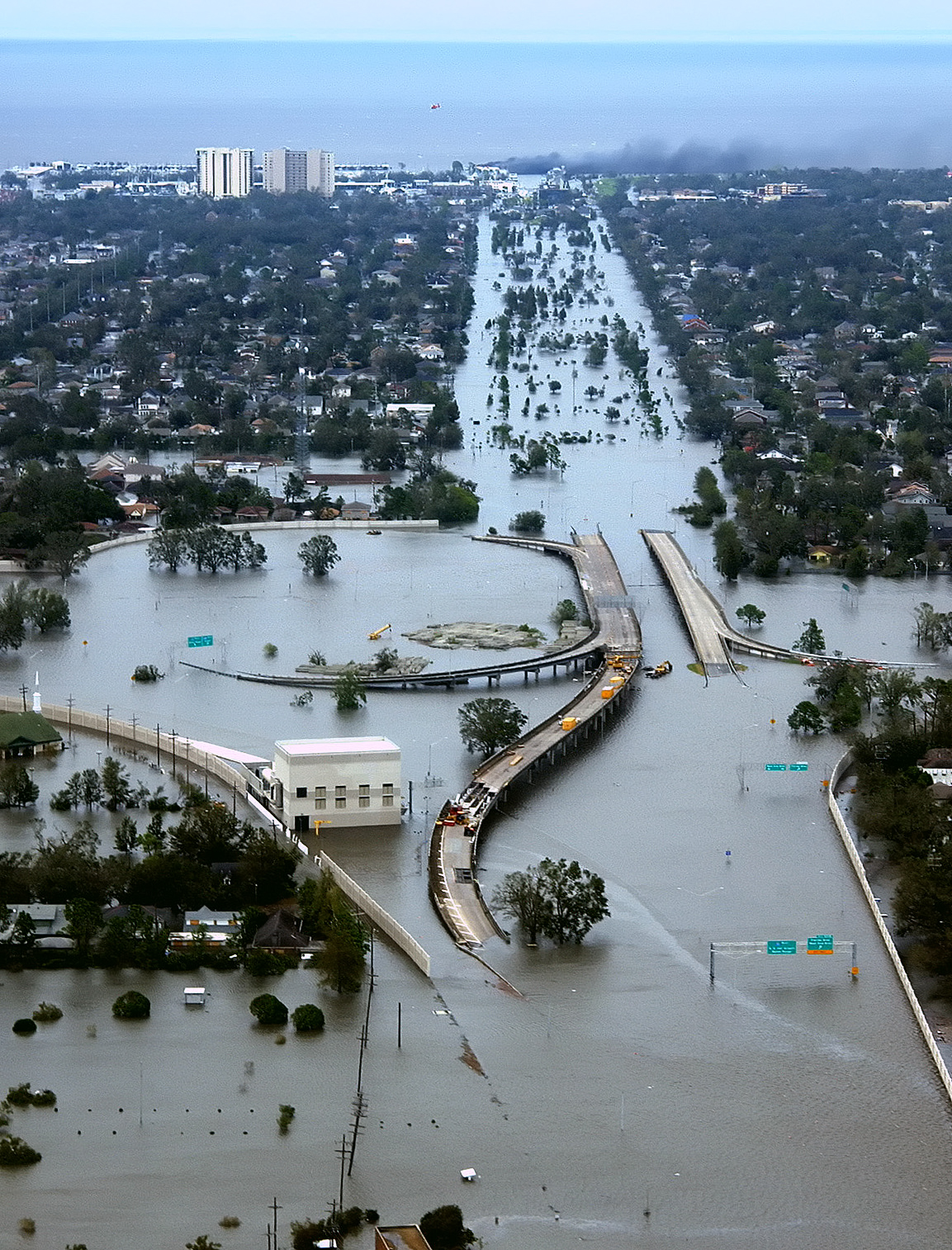

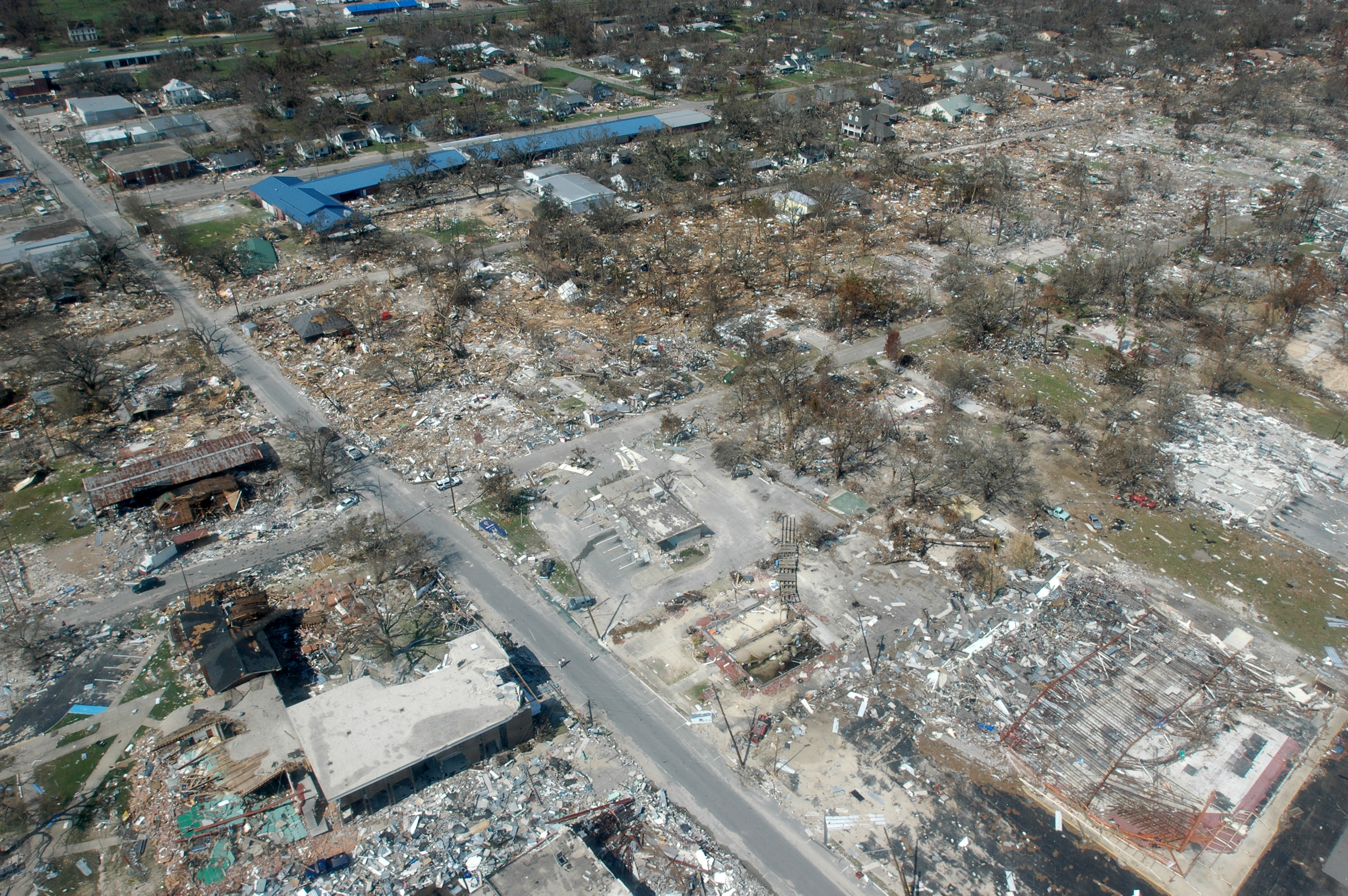


_170923-H-NI589-0007_(36602415074).jpg)


_(50).jpg)


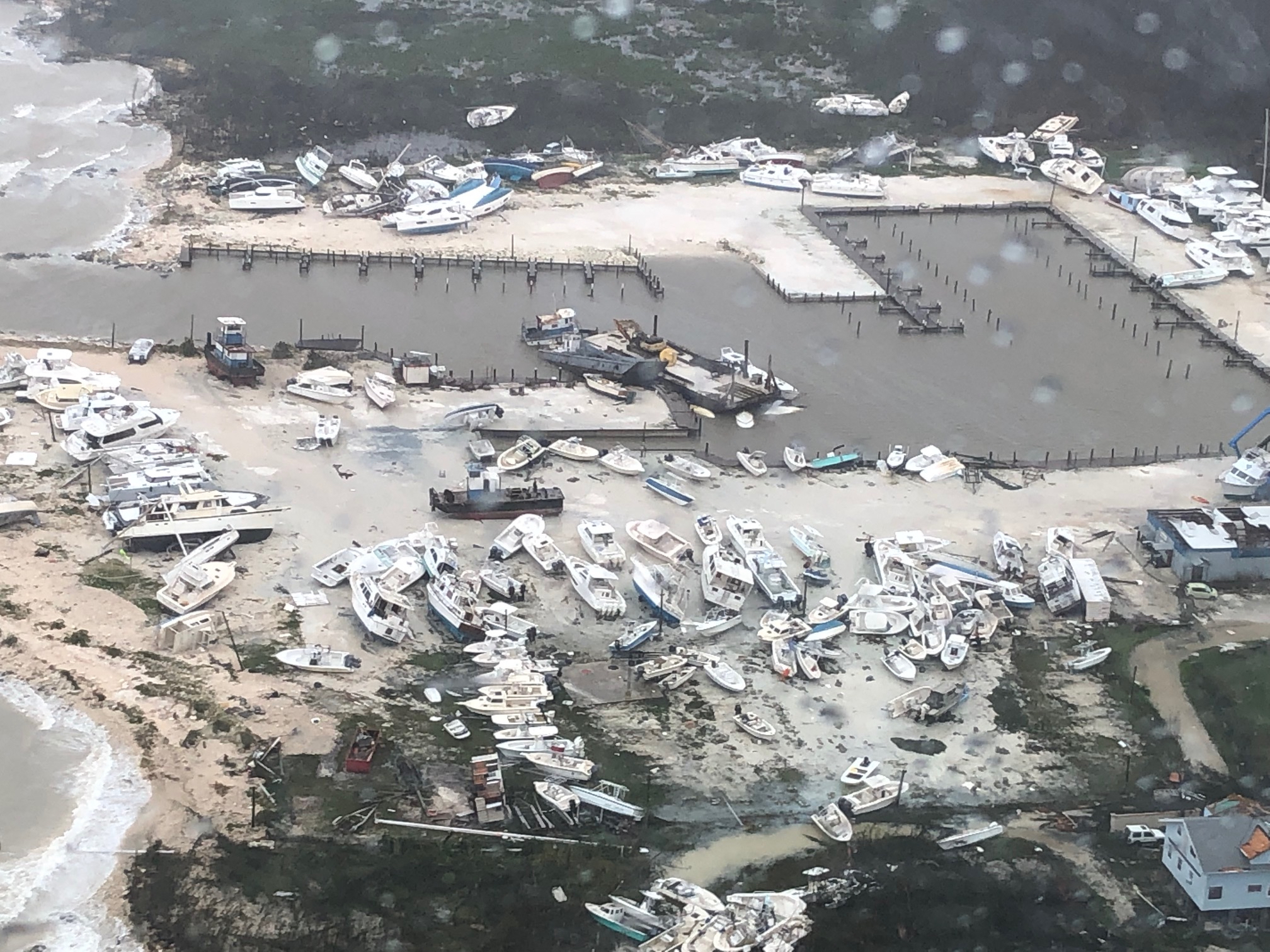

For more information
- Washington Post Video: Storm surge floods coastal towns in Massachusetts
- Business Insider: Bomb Cyclone Imagery
Shoreline Effects of Storms
Shoreline Effects of StormsIn “Beaches are Moving: The Drowning of America’s Shoreline”, coastal geologist and author Orrin Pilkey discusses the four components of shoreline equilibrium – material, energy, shape, and sea level - and how they interact in the event of a storm. He states: “During a storm the strong wind and waves pick up much more sediment than usual, carrying it inland into the dunes or seaward into the waves”…. “Covered by the storm surge, the beach temporarily loses its usual position in the marine environment and becomes an underwater or offshore bar... …the boiling surf keeps the sand particles in suspension, and because the energy of the big waves reaches deeper water, the sand cannot settle until it is either far offshore… or until it is washed up on land to reshape the beach”.
The result, after a storm has passed, is a very different shoreline than before. The energy of water is awesome in its ability to move sediment from one place and deposit it in another. This is often in conflict with the human desire to stabilize and prevent shorelines from moving. But storms and the shoreline naturally interact in a dynamic way. Humans place structures on shorelines, and they get destroyed and rebuilt. But this cannot go on indefinitely.
A point that Dr. Pilkey repeatedly makes is that storms and shorelines are the natural state in a “constant, dynamic balancing of materials, energies and shapes”. When people attempt to change this dynamic equilibrium, a catastrophe happens. This is something to keep in mind as we consider the impacts of the storms we have discussed in this module and as we move forward to explore ways communities deal with these impacts.
Dr. Sean Cornell of Shippensburg University, who does fieldwork on Wallops Island, captured the following images documenting the impacts to the barrier island after Hurricane Irene in 2011. Read through his description and examine the photographs to learn about the local impacts of a hurricane on a barrier island beach. He contrasts Hurricane Irene with Hurricane Sandy, pointing to the difference in angle of approach.
Irene developed as a tropical storm some 300 km off the eastern end of the Lesser Antilles and outside of the Caribbean Sea. It first became a hurricane on August 22, 2011 as it made landfall on Puerto Rico. Despite making landfall, the storm continued to strengthen and eventually became a Category 3 hurricane as it passed through the Bahamas on August 24. The storm then tracked northward and impacted the Outer Banks of North Carolina as a Category 1 storm before emerging once again out into the Atlantic Ocean off the coast of Virginia just south of Virginia Beach on August 28.
As the storm moved northeastward, it ran parallel to the shoreline of the Delmarva Peninsula, where it produced strong winds and waves and high water for the barrier islands and coastal bays located behind the barrier islands, including Wallops Island, home of NASA’s Wallops Island Flight Facility, as well as Chincoteague and Assateague Islands. These barrier islands are nearly continuous along a distance of almost 150 miles of shoreline between the Chesapeake and Delaware Bays. They are interrupted only occasionally by relatively narrow inlets. Nearly 80 miles of this shoreline is relatively undisturbed and undeveloped and is generally allowed to behave naturally and without significant modification by human activity (although see the impact of constructed shorelines at Ocean City, Maryland, and recent coastal engineering projects on Wallops Island to help protect the launch facility and infrastructure). Centered in this region is one of the largest bays on the Delmarva. Chincoteague Bay straddles the Virginia-Maryland border and today has two inlets to the ocean, one between Wallops Island and Assateague Island (i.e., the Chincoteague Inlet), on the south, and one between Assateague and Fenwick Island on the north (i.e., the Ocean City Inlet; see figure below).

For the Eastern Shore of Virginia, and although it was relatively fast-moving, Hurricane Irene was a significant event as the center of the storm passed only about 30 miles offshore. During the onset of the storm, onshore winds and waves piled significant volumes of water along the barrier islands producing storm overwash, eroding shorelines (see images below), and relatively robust storm surge in back bay areas along the mainland (see images below), although nothing is comparable to the levels observed during Katrina on the Gulf Coast, or during Hurricane Sandy in New York. This was, in part, because of the trajectory of the storm, the speed of the storm, the fact that it moved along the continental shelf, and also because the number of inlets was relatively few and narrow. These factors, combined with the robust nature of the barrier island maritime forests and dune systems, helped reduce the total volume of water that could enter the coastal bays. As the storm moved north of the region, offshore winds on the trailing edge of the storm helped to push surge waters back out of the bays and helped produce extensive scouring in the vicinity of the unprotected inlet. This helped form a large ebb-tidal delta that helped fill in much of the navigational channel between Assateague and Wallops. Thus, for this region, Hurricane Irene’s impact was significant but could have been much worse if the storm’s trajectory had been different.


Hurricane Sandy
In contrast, although Hurricane Sandy was similarly scaled in wind speed and size to Irene, ultimately it was much more impactful further north to New York and New Jersey, primarily because of the storm track it took and the orientation of the shoreline where the storm made landfall. The figure below shows the storm track for Sandy in the fall of 2012. Whereas Irene’s track was parallel to the shore, Sandy’s approach was more perpendicular with landfall toward the northwest. In this way, not only was the brunt of the storm’s energy focused on the shoreline, but the geomorphic configuration of the shoreline and the shallow nature of the inner shelf led to amplification of the storm surge as outlined in the previous module.

Module 6 Lab
Module 6 LabA few of our Labs in this course are considered "mini" Labs, meaning the work will not be as involved, and they will not be worth quite as much. However, the work remains just as important.
In this Lab, you will:
- Use Google Maps to examine the impacts of two major storms in two locations.
- Observe and analyze, using street view and historic imagery in Google Maps, the changes to the landscape and communities caused by the hurricanes' surges and winds.
- Compare redevelopment in the two communities and consider the possible factors influencing redevelopment.
Lab Overview
For this short Lab, we tour two locations in the U.S. to view the impacts of two storms: Hurricane Katrina (Aug 29, 2005) in Pass Christian, MS; and Hurricane Sandy (Oct 31, 2012) in Mantoloking, NJ. Both of these storms were unique, and each community had unique characteristics based on the geomorphology of the coastline and the details of the structures built there. While you make your observations, keep these variables in mind. You will assess the damage to the human structures (mostly individual homes) and then use historic imagery and street views to estimate the level of rebuilding that has taken place in the years following the storms. Consider the factors that may influence homeowners' decisions about rebuilding, including the time elapsed and economic factors. Think about how exposed both of the locations are to coastal hazards and the probability of a future coastal disaster impacting this coastline. Your ability to judge details will be limited by the tools you are using, so you will need to estimate and use the online resources provided to help you fill in gaps of knowledge.
Guidance Video
Downloads/Resources
- Module 6 Lab Worksheet
- Pass Christian, MS (Read the section on Hurricane Katrina)
- Mantoloking, NJ (Read the section on Hurricane Sandy)
 Statement of Use of AI on Exams, Quizzes, and Labs
Instructions
Before you begin the Lab, you will need to download the Module 6 Lab Worksheet. The worksheet contains the steps you need to take to complete the Lab in Google Maps. In addition, it contains prompts for questions that you should take note of (by writing down or typing in) as you work through the Lab. Once you have worked through all of the steps , and answered all of the questions, you will go to the Module 6 Lab Quiz and answer the multiple-choice questions. The questions and answer choices on the lab worksheet will match those in the multiple-choice quiz. Submit the quiz for credit.
Summary and Final Tasks
Summary and Final TasksCoastal storms ultimately present a great risk to human and natural landscapes. It is probably true that no one will ever die from sea level rise, but millions of people around the world live, work, and play in areas that are prone to the deadly impact of storms. Although modern meteorological equipment has been developed to the point where we now have good success at predicting major storms, evacuation out of harms way is extremely difficult, as we will see in Module 11. And as we will see in Module 7, tsunamis are much greater as the speed at which tsunami waves propagate as well as the complex ways that waves reflect, refract, and interfere with one another as they move around landmasses and across oceanic shelves.
As these phenomena are so incredibly damaging to human societies around the world each year, it is critical that scientists help promote public awareness and facilitate the development of plans to respond, react, and minimize human losses in the event of the inevitable. In Modules 8-13, we will explore, in more detail, the ideas of coastal zone resource management, managing risk, and planning for a more productive, safe, and less impactful future. Given that global warming processes produce more severe storms each year, coupled with the fact that sea level is rising at a more noticeable rate than ever before, many hard decisions have to be made in the future if we are to continue to enjoy the quality of life that comes from living on or near the coastline.
Reminder - Complete all of the Module 6 tasks!
You have reached the end of Module 6! Double-check the Module 6 Roadmap to make sure you have completed all of the activities listed there before you begin Module 7.
References and Further Reading
The following links are meant to provide suggestions for further investigation into some of the topics covered in Module 6.