Module 10: Rising Seas
Module 10: Rising SeasIntroduction
Video: Module 10 Introduction (00:53)
Module 10 Introduction
TIM BRALOWER: Good morning, students. Welcome to module 10 on sea level rise. By 2100, sea level is forecasted to rise by about 60 centimeters. That's about this much. And that may not sound like a whole lot, but I'm standing here on Hilton Head Island in South Carolina, and 60 centimeters takes us all the way from the shore, where the waves are crashing, all the way up to the base of these dunes here behind me. That's about 60 centimeters.
So by 2100, the ocean level will be at the base of these dunes. And superimpose on that a hurricane with a storm surge of about 15 feet, and that will take the ocean right into those condos that are right behind me there.
So that's why folks up and down the East Coast and elsewhere around the world are very concerned about sea level rise moving into this century. We'll be learning a lot more about that in this module, and I hope you enjoy it very much.
Superstorm Sandy came ashore in New Jersey on October 29th, 2012. The storm caused 109 fatalities in the US and more than $71 billion in damage and lost business income. The destruction caused by a combination of wind, flooding, and storm surge was focused in New Jersey and New York City. An extremely large area hundreds of kilometers across received extensive damage. Half of the city of Hoboken flooded, a 50-ft segment of the Atlantic City boardwalk washed away, and hundreds of beachfront properties all over the New Jersey shore were damaged or destroyed. In New York City, the East River flooded its banks in lower Manhattan and the subway system suffered its worst flooding in history. A storm surge of almost 14ft flooded Battery Park and a 16ft surge hit Staten Island, where damage and casualties were particularly severe. However, lost in the discussion about the causes and impacts of the storm is this: scientists have known for a long time that the New York City region is very vulnerable to storm damage.
Hurricane Damage
Sandy has reinvigorated the debate about hurricanes and climate change (see Module 3). Remember, climate change is supposed to result in stronger and wetter storms, not necessarily more frequent storms, although there is still a lack of agreement among scientists in this forecast. The basic problem is that unlike temperature and precipitation, where we have massive amounts of data to see trends, run models and make projections, we have very few large storms to accurately forecast. Nevertheless, the amount of heat in the North Atlantic Ocean in October 2012, is a strong, if not irrefutable argument for a relationship between Sandy and climate change. And the interaction between a hurricane very late in the season for the northeast coast and a cold front more typical of that time of year was what made Sandy so large and so deadly, as well as steering indirectly towards the coast. The discussion about Sandy and climate change is bound to continue for a long time. However, we know for certain that global sea level is 1.5 ft higher than when New York City was hit by a storm of comparable size in 1821, the massive Norfolk and Long Island Hurricane, and that extra foot plus made a huge difference in Lower Manhattan.
Ten percent of the world's population, or approximately 600 million people, live on land that is within 10 meters of sea level. This low elevation coastal zone includes some of the world's most populous cities besides New York, including London, Miami, Calcutta, Tokyo, and Cairo. In the US, the situation is most dire in New Orleans where a large portion of the city lies below sea level making the city highly vulnerable to storms such as Hurricane Katrina. New Orleans is in an especially precarious positions because the land on which it is built is subsiding rapidly, at a rate far faster than modern sea level rise, as a result of the development of marshlands, and major decisions will need to be made in the future on whether to keep investing in infrastructure to keep the seas out or whether to retreat from low-lying areas. Such investment has already been made in the Netherlands, where a massive system of flood protection has been developed to keep the oceans at bay. However, tiny island nations in the Pacific and Indian Oceans that are within a meter's elevation of sea level do not have the resources available to protect the land from rising seas, and these nations are grappling with the distinct possibility that they will be completely submerged by the middle part of the century.
Flooding Around the World

This graph illistrates projected sea level rise from 1990 to 2100. The y-axis represents sea level rise in meters (0 to 1.0 m), while the x-axis shows years. The graph includes model projections mainly from ocean thermal expansion and glacier melting (gray shaded area), with additional contributions from ice-sheet dynamic processes (pink shaded area). Larger values beyond 1.0 m are noted as excluded. The sea level rise starts near 0 m in 1990 and increases steadily, with projections reaching up to 0.8 m by 2100, including potential higher rises from ice-sheet dynamics.
- Graph Overview
- Title: CSIRO
- Type: Projection graph
- Time Period: 1990 to 2100
- Axes
- Y-axis: Sea level rise (0 to 1.0 meters)
- X-axis: Year
- Projections
- Model Projections
- Description: Mainly from ocean thermal expansion and glacier melting
- Visual: Gray shaded area
- Additional Contributions
- Description: From ice-sheet dynamic processes
- Visual: Pink shaded area
- Larger Values
- Note: Excluded, above 1.0 m
- Visual: Red arrow and dashed line
- Model Projections
- Trend
- 1990: Near 0 m
- 2100: Up to 0.8 m, with potential higher rises
Average global sea level has risen about 23 cm since 1900 with considerable variability from place to place. The average global rate of sea level rise is about 3 mm per year, but in parts of the western Pacific, this rate is closer to 1 cm per year. New techniques enable extremely precise measurements of sea level, and this has allowed geoscientists to determine the vulnerability of different places to future sea level rise. As we have observed in Module 2, the large ice sheets of the world are melting at rapid rates. In fact, the Intergovernmental Panel on Climate Change predicts that sea level will rise by up to an additional 0.6 m by the year 2100 (see adjacent plot), although a great deal of uncertainty is associated with the unpredictability of ice sheet behavior combined with different emissions scenarios and warming trends.
In fact, if we go back 125,000 years before present to the last interglacial period, much of Greenland was ice-free and sea level was 4-6 meters above present. However, this amount is dwarfed by the sea level changes that have taken place in deep geologic time. For example, about 90 million years ago, sea level was hundreds of meters higher than today, and the ocean extended across the North American continent connecting the Gulf of Mexico to the Arctic Ocean.
The stakes are huge. Recent data suggests that the melting of the Greenland Ice sheet is accelerating. Imagine the consequences of this process should it continue for decades to come. Just one number should make the point clearly. A seawall which is being discussed to protect New York City and parts of New Jersey from future Sandys will cost about $23 billion. Imagine what it would cost to protect Boston, Philadelphia, Washington DC, Miami, Houston, Los Angeles, and San Francisco!
If we melt all the ice on the Antarctic and Greenland ice sheets, sea level will rise by about 70 meters. We are centuries away from this point at current warming rates, but the video below shows what the world would look like.
Video: How Earth Would Look If All The Ice Melted (No Audio) (2:44)
Check Your Understanding
Goals and Learning Outcomes
Goals and Learning OutcomesGoals
On completing this module, students are expected to be able to:
- describe the processes that cause sea level to rise and fall;
- explain the evidence for sea level change in the geologic record and over the last century;
- project sea level rise in coming decades and beyond and their impact on coastal communities;
- propose strategies to cope with rising seas in communities that are most threatened by sea level rise.
Learning Outcomes
After completing this module, students should be able to answer the following questions:
- How much is sea level forecasted to rise in 2100?
- What are the processes that are causing modern sea level rise and what is the relative role of each?
- How much would sea level rise if all of the ice on Greenland and Antarctica were to melt?
- What is the current rate of sea level rise?
- What instruments are used to measure modern sea level rise?
- What faunas can be used to reconstruct ancient (but fairly recent) sea levels?
- When in the last 25 thousand years were the fastest rates of sea level rise?
- What are some of the processes that are causing relative sea level change in the region around New Orleans, and how much are some parts of the city subsiding?
- What do the terms transgression, regression, and sequence refer to and how do they fit into the concept of relative sea level change?
- What is reflection seismology and how does it help determine ancient sea level?
- Why was sea level so high in the Cretaceous and Eocene?
- What is storm surge, and why did it do so much damage during Katrina?
- What strategies are being used to prevent flooding in the next Katrina?
- What strategies are being used to prevent flooding on the Outer Banks, Netherlands, and Venice?
- What is the future of sea level rise in Bangladesh, Pacific Islands, and the Torres Straits?
Assignments Roadmap
Assignments RoadmapBelow is an overview of your assignments for this module. The list is intended to prepare you for the module and help you to plan your time.
Assignments
- Lab 10:Impact of Sea Level Rise on Coastal Communities
- Submit Module 10 Lab 1.
- Take Module 10 Quiz.
- Yellowdig Entry and Reply
Processes that Cause Sea Level to Rise
Processes that Cause Sea Level to RiseFor most people, sea level rise is caused by melting ice sheets. It is so easy to visualize a glacier melting into the ocean. As it turns out, an equally important factor is the expansion of seawater as it warms. In this section, we explore these different mechanisms in some detail.
Growth and Melting of Ice Sheets
How are absolute changes in sea level caused? As we have seen, the most direct way is through the growth and melting of the major ice sheets, as discussed in the following video.
Video: NASA: A Tour of the Cryosphere 2009 (5:12)
NASA: A Tour of the Cryosphere 2009
[MUSIC]
Narrator: Though cold and often remote, the icy reaches of the Arctic, Antarctic, and other frozen places, affect the lives of everyone on Earth. We start our tour in Antarctica. Where they meet the sea, mountains of ice crack and crumble. The resulting icebergs can float for years. Ice shelves surround half the continent. They slow the relentless march of ice streams and glaciers, like dams hold back rivers. But the region is changing.
As temperatures increase, we see a growing number of melt ponds. As this heavy meltwater forces its way into cracks, ice shelves weaken and can ultimately collapse. After twelve thousand years, the Larsen B Ice Shelf collapsed in just five weeks. Offshore, sea ice forms when the surface of the ocean freezes, pushing salt out of the ice. The cold, salty, surface water starts to sink, pumping deeper water out of the way powering global ocean circulation. These currents influence climate worldwide. Most ice exists in the cold polar regions, but we see glaciers like these in the Andes, all over the world. Most are shrinking.
Here in North America, millions of people experience the cryosphere every year. Eastward moving storms deposit snow, like thick paint brushes. Mountain snow packs store water. Snowmelt provides three-quarters of the water resources used in the American West. Substantial winter snows produced a green Colorado in 2003, but drier conditions the previous year limited vegetation growth and increased the risk of fires. In the Rocky Mountains, there are patches of frozen ground called permafrost that never thaw.
These regions are unusual in the mid-latitudes, but farther north, permafrost is more widespread and continuous, covering nearly a fifth of the land surface in the Northern Hemisphere. Sea ice varies from season to season and from year to year. Data show that Arctic sea ice has shrunk dramatically in the last few decades. The effects could be profound. As polar ice decreases, more open water could promote greater heating. More heating could lead to faster melting, reinforcing the cycle. If this trend continues, the Arctic Ocean could be ice-free in the summer by the end of the century. These changes in ice cover are not limited to oceans.
Greenland's ice sheet contains nearly 10% of the Earth's glacial ice. Glaciers in western Greenland produce most of the icebergs in the North Atlantic. After decades of stability, Greenland's Jakobshavn ice stream, one of the fastest flowing glaciers in the world, has changed dramatically. The ice has thinned, and the front retreated significantly. Between 1997 and 2003, the glacier's flow rate nearly doubled to 5 feet an hour. These are just some of the cryospheric processes that NASA satellites observe from space. Continued observation provides a critical global perspective, as our home planet continues to change day to day, year to year, and further into the future.
Iceberg Images
The following videos describe melting of ice sheets on Greenland and Antarctica.
Video: "CHASING ICE" captures largest glacier calving ever filmed (4:41)
Transcript: Video: "CHASING ICE" captures largest glacier calving ever filmed
Speaker 1: I'm on the phone with Jim on one of our regular check-ins. Jim, just nothing's happening.
Speaker 2: Hey, Jim. It's going well. We had some serious bouts of wind, but other than that, things are fairly well set up here. We've got some continuous time-laps.
Speaker 1: It's starting, Adam. I think Adam is starting.
Speaker 2: Oh, wait, Jim. Jim, this is the big piece is starting to cast. Let me call you back. Hold on. Okay, bye.
Speaker 1: You're still going?
Speaker 2: Yeah. In that V section right there. Holy shit. Look at that big bird rolling. All four are running, right?
Speaker 1: Yeah.
Speaker 2: Look at that. You see? Look at the whole thing.
[Ice cracking noises and ocean water rushing]
Speaker 1: The calving face is 300, sometimes 400 feet tall. Pieces of ice were shooting up out of the ocean, 600 feet and then falling. The only way that you can really try to put it into scale with human reference is if you imagine Manhattan. And all of a sudden, all of those buildings just start to rumble and quake and peel off and just fall over and fall over and roll around. This whole massive city just breaking apart in front of your eyes. We're just observers. These two little dots on the side of the mountain. We watched and recorded the largest witness calving event ever caught on tape.
Speaker 1 at a podium: So how big was this calving event that we just looked at? We'll resort to some illustrations again to give you a sense of scale.
[Music]
Speaker 1: It's as if the entire lower tip of Manhattan broke off, except that the thickness, the height of it is equivalent to buildings that are two and a half or three times higher than they are.
[Music]
Speaker 1: That's a magical, miraculous, horrible, scary thing. I don't know that anybody's really seen the miracle and horror of that. It took 100 years for it to retreat 8 miles from 1900 to 2000. From 2000 to 2010, it retreated 9 miles. So in 10 years, it retreated more than it had in the previous 100.
Video: Antarctic Wilkins Ice Shelf Collapse (No Narration) (2:20)
Description: Antarctic Wilkins Ice Shelf Collapse
[Ambient Music]
0:00 – 0:24 | Geographic Context
The video opens with a static map of the Antarctic continent.
A red star and circular highlight indicate the location of the Wilkins Ice Shelf, situated on the southwestern side of the Antarctic Peninsula, bordering the Bellingshausen Sea.
The map zooms in to show the specific proximity of the ice shelf to the Rothera Research Station.
0:25 – 1:04 | Satellite Time-Lapse (Feb 28 – March 8, 2008)
Satellite imagery from February 28, 2008, shows a solid, white expanse of ice.
By February 29, dark fissures and "melt ponds" become visible on the surface.
On March 8, a massive "region of disintegration" is identified.
A massive section of the shelf, approximately 400 square kilometers, has shattered into a mosaic of small ice blocks and thin rectangular slivers.
A scale bar indicates the width of the main disintegration area is roughly 25 miles (40 km).
1:05 – 1:44 | Aerial Survey Footage
Footage taken from a Twin Otter aircraft flies low over the collapse zone.
The camera captures thousands of jagged, vertical ice fragments floating in dark blue seawater.
The edges of the remaining ice shelf are shown as sheer, high white cliffs, highlighting the depth of the shelf before it shattered.
1:45 – 2:10 | Scale and Satellite Detail
High-resolution satellite shots provide a top-down view of the debris field.
A 1 km scale bar appears on screen to illustrate the size of individual ice blocks, some of which are several hundred meters long.
The footage pans across the seemingly endless field of broken ice, contrasting the white ice against the dark ocean.
2:11 – End | Call to Action & Credits
The screen fades to black with white text: "YOU control Climate Change".
Followed by a list of actions: "Turn down, Switch off, Recycle, Walk. CHANGE".
Final credits credit the NSIDC, University of Colorado, and the British Antarctic Survey for imagery.
This process has been active over much of geologic time, all except for the very warmest time periods when there were no polar ice sheets. If we were to melt all of the ice on Antarctica and Greenland, we would see a sea level rise of almost 70 meters (Greenland would cause about 6 m of sea level rise, Antarctica about 60 m). This would take melting of the relatively stable interior of the ice sheets, which will take thousands of years to occur if modern warming rates continue unabated. However, there is much we do not understand about the behavior of the more dynamic areas of the ice sheets closer to the edges, and this imparts a great deal of uncertainty to any predictions of sea level rise in the coming centuries.

New research appears all the time that shows vulnerable parts of the Antarctic ice sheet, especially its shelves. Geologists are able to use radar instruments to image the base of the ice shelf and the seabed. Ice shelves refer to places where ice overlies seawater or bedrock that is below sea level. Recently, glaciologists have found places in West Antarctica where the underlying seabed is much smoother than expected, meaning that the glacier can advance readily under the right circumstances. Moreover, some of these places are vulnerable to being heated by warm ocean currents in the future. We presented the physical evidence for ice melting in Module 2, below are before and after photos from Alaska to remind you.

The second process that is causing sea level rise on human time scales is the physical expansion of seawater as a result of temperature increase. When materials are heated, they expand and, in the case of the oceans, this causes the surface of the water to rise. This thermal mechanism can cause absolute sea level changes on the order of millimeters and centimeters per decade. It varies geographically depending on how fast the ocean is warming in individual locations, and temporally depending on variations in ocean temperatures associated with climate oscillations such as El Niño . Hard as it is to imagine with all of the press attention over melting ice, but thermal expansion may actually cause more sea level rise in the 21st century.
The following video describes how satellites provide a very detailed picture of sea level change.
Video: How to Get NASA Sea Level Rise Data | Climate Analysis Tutorial (8:07)
Transcript: Video: How to Get NASA Sea Level Rise Data | Climate Analysis Tutorial
Narrator: Sea level may seem like just another number, but it's actually one of the clearest signals we have that Earth's climate is changing. With every millimeter of ocean rise, our planet is telling us something. Now, thanks to NASA's satellite observations, we can explore sea level data more clearly than ever before. In this tutorial, we're going to explore NASA's global sea level data, how it's collected, what it reveals about our warming world, and how you can access and analyze it yourself, whether you're a GIS analyst, student, or climate educator.
Let's begin with why sea levels are rising. Scientists identify two major drivers. The first is the melting of glaciers and massive ice sheets in places like Greenland and Antarctica. As this ice melts, it adds fresh water directly into the oceans. The second factor is thermal expansion. As water warms, it expands. This increase in volume causes sea levels to rise slowly but steadily. Now, here's a striking fact. Since 1993, global sea levels have risen by about 100 millimeters. That's 10 centimeters, roughly the height of a coffee cup. It may sound small, but this rise is happening across the entire surface of the world's oceans.And it's accelerating.
NASA tracks sea-level rise using satellite missions managed by the Goddard Space Flight Center. These satellites use altimeters to precisely measure changes in sea surface height over time. This data is incredibly valuable, giving a near continuous global view of ocean changes month by month, year after year. Let's look at what this data actually shows. The first graph presents satellite measurements from 1993 to the present. It shows a clear upward trend in global sea level. As of April 2025, the rise totals 99. 5 millimeters, with a margin of error of plus or minus 4 millimeters. While there are small seasonal fluctuations, the overall pattern is unmistakable. Sea level. Sea level is rising and the rate of change is increasing.
To understand longer term trends, NASA scientists combine satellite data with tide gage measurements that date back over a century. This is where the second graph comes in. The second graph extends from 1900 to 2018 and includes both coastal tide gage and satellite data. From 1900 to about 1950, sea level rise was slow and gradual. But after 1990, the trend steepens, showing a much faster rate of increase. This acceleration is largely due to intensifying ice melt and warming oceans, direct effects of human caused climate change.
This graph also shows the different factors that influence sea level rise or fall. You'll see plus signs where rising influences occur, like mountain glacier melt, Greenland and Antarctica ice sheet loss, and thermal expansion. You'll also see occasional negative influences, like major dam projects that temporarily stored water on land instead of in the ocean. Now, let's say you want to explore this data yourself. Start by visiting the NASA Climate Vital Signs page on sea level. The address is climate.nasa.gov/vitalsign/sea level. To download the full data set, you'll need to create a free Earth data account. Simply go to urs.Earthdata.nasa.gov, sign up with your email, and once your account is verified, return to the sea level page and click the Download Data button. The data set includes a range of variables listed across 13 columns. These columns are labeled as HDR1 through HDR13. The data starts with metadata like altimeter type and the cycle number of the satellite observation. It then includes the time of measurement, the number of observations used, and the variation in global means sea level, both with and without adjustment for land motion, also known as GIA or glacial isostatic adjustment.
Some columns show the raw sea level change, while others show smooth versions of the data using a 60-day Gaussian filter to remove short-term noise. There are also versions with annual and semi-annual seasonal signals removed to help clarify long-term trends. Once downloaded, you can import this data into a data visualization tool. Thanks to open access data from NASA, we now have the tools to explore, teach, and act on the truth that our oceans are rising. As GIS professionals, educators, and students, we have the responsibility the ability to use that knowledge for good. The sea is rising, the data is here, and you now have the tools to make sense of it.
In the past, the significant sea-level rise was caused by major episodes of volcanism that added crust in the ocean basins and displaced seawater towards land. This happened when processes deep in the interior of the earth caused seafloor spreading rates to increase and massive eruptions of volcanic submarine plateaus away from the ridge. These processes occur on very long or geological time scales and are not a factor today.
Check Your Understanding
The Doomsday Glacier
The Doomsday GlacierScientists are increasingly concerned about one massive glacier, the Thwaites glacier, on the edge of the West Antarctic Ice Sheet. Satellite images show that the Florida-sized glacier is rapidly becoming destabilized, with giant cracks criss-crossing its surface. These features suggest that collapse could happen within the next decade. A large part of the Thwaites glacier on its eastern side is held back by a giant ice shelf, which is the part of the glacier floating on the ocean surface. The ice shelf acts as a brace or a buttress, holding the giant ice sheet back and keeping it from disintegrating. The ice shelf is being heated from below by the warming ocean and scientists have recently noticed cracks and crevasses, which signify that it is thinning. Moreover, these features allow warm water to attack further inside the glacier, accelerating its melting. At some stage, the ice shelf will break up, a phenomenon that is happening in numerous places along the edge of Antarctica. This will cause the Thwaites glacier to rapidly collapse into the ocean. Estimates are that this collapse would cause a 65 cm rise in global sea levels over a few years. Remember that sea levels are currently rising by millimeters per year and have risen by 20 cm since 1900, so this sudden rise would be unprecedented and catastrophic for low-lying cities such as New York, Miami, Mumbai, and Shanghai.
Melting of the Thwaites glacier already accounts for about 10% of global sea level rise. The glacier itself is also being attacked by warm water along its base. The ice grounding line, which is where the edge of the base of the ice sheet runs across bare continental rock, is being melted by warm waters pumped under the ice shelf by tides. This zone is rugged and chaotic with broken up rock, blocks of ice and warm water mixed in. As it melts, an ever thickening stack of ice is exposed to the warm water.
The collapse of the Thwaites glacier could also lead to failure of other nearby ice sheets via a process known as Marine Ice Cliff Instability. This is where rapidly retreating ice sheets that are un-buttressed by ice shelves, expose large, unstable cliffs that readily collapse into the ocean. So the collapse of Thwaites would expose the front of adjoining glaciers to the warming ocean, leading in turn to their collapse. Models suggest that the collapse of Thwaites could ultimately lead to the collapse of much of the Western Antarctic Ice Sheet, leading to three meters of sea level rise via this process. For this reason, the Thwaites glacier is also known as the “Doomsday Glacier”. The timing of its demise is currently impossible to predict, but the signs are that it is beginning to happen and the resulting sea level rise will have a very profound impact on coastal cities around the world.

Video: Doomsday Glacier: Expers Raise Alarms About Cracking Antartctic Ice Shelf (7:08)
‘Doomsday Glacier’: Experts Raise Alarms About Cracking Antarctic Ice Shelf
CHRIS HAYES, MSNBC COMMENTATOR: Rolling Stone just published this incredibly frightening piece titled, “The Fuse Has Been Blown. And the Doomsday Glacier is Coming for Us All.” Which, yikes! It's about a huge glacier in the western Antarctic that's the size of the state of Florida. That glacier, known as, Weights, is basically holding back enough ice to raise sea level around the world by 10 feet.
A new study found that the ice shelf holding that ice in place could be gone in less than a decade. I’m going to quote for you from this new piece, “If the Weights Glacier collapses, it opens the door for the rest of the West Antarctic ice sheet to slide into the sea. Globally, 250 million people live within three feet of high tide lines. 10 feet of sea level rise would be a world-bending catastrophe. Not only goodbye Miami, but goodbye to virtually every low-lying coastal city in the world.”
Jeff Goodall is the author of that piece for rolling stone, and he joins me now. Jeff, you've been a great climate reporter for many years. I’ve read your last book about flooding. And, describe for me the finding here. Because there's a little, there's sort of a difference between like the shelf, the glacier is on the glacier? Is that right?
JEFF GOODALL, AUTHOR/REPORTER, ROLLING STONE: Yeah, there's been a lot of confusion about this. So what was recently been kind of revealed is that the ice shelf that works, it's like a kind of like a fingernail that grows off the glacier itself and is floating in the ocean, is cracking up. They found some major fissures and fractures in that ice shelf. And one of the scientists in this recent study has suggested that that ice shelf could crack up within five years. Which is a very big deal in itself, but that is not what's going to raise sea levels. The ice shelf is already floating. And so, like ice cubes in a glass of water, or something, when the ice keeps melting it doesn't raise the water level.
What the ice shelf does is work as a kind of buttress, kind of holding back of the glacier itself. And, as you said in the intro, Weights is a giant glacier. It's the size of Florida. And once that buttress is gone, there's no telling how long it will take for that glacier to begin collapsing. And what's really important to note about weights that's different than basically every other glacier in the world is that it's not melting like a popsicle on a sidewalk on a hot summer day. You know, because of warmer weather. It's melting because the changes in the ocean current temperature, just one or two degrees, that warmer water is getting underneath the ice shelf, and underneath the glacier itself. And the concern is that by melting it from below it will destabilize a lot of the glacier, or most of the glacier, and the whole thing will crumble and fall into the sea. Kind of like dumping a whole like bag of ice into the water at once. And that is a catastrophe.
CHRIS HAYES: Right, so you've got this ice shelf that is cracking. And that shelf, what's key about that is, it's a key protector for the glacier. It's a buffer zone. It's a shield. The thing that stands between it and the water. And to the extent that that goes away, that reduces the protection the entire glacier has. And now it's being attacked, essentially structurally, by warmer water, and the warmer water is being driven by climate change.
JEFF GOODALL: Exactly, exactly. And what's important is that, I mean there's many things that are important about this, but one of the things that's important is that you know it's a great example of how you know we talk about one degree of warming or two degrees of warming, and what the changes that will bring to our world. And of course, we're already seeing them in places like Alaska, like you showed in your intro, and the wildfires in Colorado right now. But what Antarctica really shows is that even tiny changes, literally one degree of change in the water temperature, is enough to destabilize this entire ice sheet. Which has huge consequences for our world.
CHRIS HAYES: Yeah, and it also speaks to the fact that it's happening. The most extreme places we're seeing, the most extreme manifestations of climate change we're seeing now, is in the North Pole, and are in those places in the world in the Arctic, where the changes are the most intense. But they have repercussions for all of us that don't live in the Arctic. I mean, that's the other obvious but fundamental thing to get your head around here.
JEFF GOODALL: Yeah, I mean, it's one of the really hard things to communicate about climate change, and about why this crisis is so urgent. Is that it's not just you know that it's 70 degrees, or 75 degrees today here in Texas where I am. It's not just what we see and feel in real time around us. It's these much larger changes that are happening to our world in places that are very remote from us but have incredible consequences.
I mean, when I was at the Weights Glacier, a couple of years ago I was there on a research vessel. And we went right up to the face of it. And it was this incredible moment of encountering this, sort of, I felt like being on another planet. But it was also, I know from my work as a journalist, that what happens there has a direct impact on Miami Beach real estate, and on the supply chains in Houston, and on the risks of extreme storms in, and flooding on, the Gulf Coast. So, it's making these larger links that is what's so hard to bend your mind around the climate crisis. And why it's so important to pay attention to this stuff.
CHRIS HAYES: Yeah, your last book is called, “The Water Will Come.” Is that the last book?
JEFF GOODALL: Yeah.
CHRIS HAYES: Yeah, I love that book. I would recommend it to people. It's a really, really good book. We should just also know, you mention the wildfires. There are wildfires right now outside Boulder. In December, I think, there’s including, I believe, if I’m not mistaken, a hospital, or at least been evacuated or threatened by these December wildfires. Which is obviously unheard of and unnatural, and another indicator of how awry things have already gone, and how much worse they will get if we don't do everything we can.Jeff Goodall, great reporting. Many thanks.
JEFF GOODALL: Thank you for having me, Chris.
CHRIS HAYES: So that does it for all in this year. I would just say, if you're about to go into this new year mourning someone that you lost this year, I wanted to offer my condolences. And, I tell you that a lot of people are thinking about people they lost this year, people that got sick this year, hardships they went through. And, I hope everyone can be as kind to each other as possible. Show each other grace in this new year, and struggle together for a better world.
[Music]
Sea Level: Measurement and Recent Trends
Sea Level: Measurement and Recent TrendsSea level is rising at present and this rise provides some important insight into recent climate change — a warmer planet means the transfer of glacial ice to the oceans, and warming of the oceans causes an expansion of seawater. There are two main ways to directly measure recent changes in sea level — tide gauges and satellites. Tide gauges are fairly simple devices that record the height of sea level at a particular spot; the records are dominated by the daily tides (see photo below), but the data can be used to estimate the average sea level height each year.
Tide Gauges

Tide gauges measure the height of sea level relative to the ground, and if the ground is stable, then they may be recording a global sea level change; if the ground is unstable, then the tide gauge record is difficult to interpret. Sites that are near the boundaries of tectonic plates are geologically unstable, so their tide gauge records are not reliable. Other sites located near the locations of formerly large ice sheets are also unstable in the sense that the land there is rising due to the removal of the ice from the last glacial age. This ice weighed a great deal (it was around 5 km thick) and its removal has triggered a very slow, steady rise of the crust — it’s like pushing down on a block of wood floating in the water and then removing your hand — the block rises up. Extending this analogy to the Earth, the block of wood is the crust and the water is the mantle, which is a very, very sluggish fluid, thus the crust does not spring up quickly, but takes several tens of thousands of years. If the land is rising up, then it would appear that sea level is falling, and indeed, this is seen in many tide gauge records from polar regions.

The scatter plot shows monthly mean sea level data in millimeters from 1940 to 2010. The y-axis represents sea level in millimeters, ranging from 6600 to 7800 mm, while the x-axis shows years from 1940 to 2010. The data points, plotted as blue dots, exhibit significant variability but reveal a general downward trend over the 70-year period, starting around 7400 mm in 1940 and decreasing to approximately 6700 mm by 2010.
- Graph Overview
- Title: Implied as Monthly Mean Sea Level (not explicitly stated)
- Type: Scatter plot
- Time Period: 1940 to 2010
- Axes
- Y-axis: Monthly mean sea level (6600 to 7800 mm)
- X-axis: Year (1940 to 2010)
- Data Points
- Representation: Blue dots
- Trend: General downward trend
- 1940: Around 7400 mm
- 2010: Around 6700 mm
- Variability
- Description: Significant fluctuations throughout the period
This tide gauge record comes from Churchill, Ontario (Canada), on the edge of Hudson’s Bay; here, you can easily see the downward trend, meaning that sea level appears to be falling, but this is just in a relative sense. The story here is that the crust is rising, so sea level appears to be falling. The crust is rising in response to the melting of an ice sheet about 5 km thick that was present during the last ice age.
Because of the problem of crustal stability, tide gauge records have to be selected very carefully if we want to learn something about how global sea level is changing. Not surprisingly, this work has been done (Douglas, 1997), and a set of 23 tide gauge records have been selected, shown in the figure below.

Satellites
The satellite data are interesting to consider — how can a satellite measure sea level changes? The answer is surprisingly simple at one level — it just measures the distance from the satellite to the sea level surface. The figure below shows how the system works, using a radar beam that bounces off the water surface and returns to the satellite. The height of sea level is actually the difference between the distance between the satellite and the sea surface and something called the reference ellipsoid, which is a kind of smoothed approximation of the Earth’s shape.

The diagram illustrates how the TOPEX/Poseidon satellite measures ocean characteristics. The satellite, in orbit, uses a radar altimeter for ranging, a microwave measurement system for water vapor in the column, and communicates with a GPS satellite for positioning. It also interacts with a DORIS beacon and a laser ranging station on the ground. The diagram shows the sea surface, sea level, geoid, sea-floor topography, and a reference ellipsoid, with arrows indicating the measurement paths from the satellite to the ocean and ground stations.
- Diagram Overview
- Title: TOPEX/Poseidon Measurement System
- Type: Illustrative diagram of satellite measurement
- Satellite Components
- Satellite: TOPEX/Poseidon
- Position: In orbit
- Features: Radar altimeter, microwave measurement system
- GPS Satellite: Assists with positioning
- Satellite: TOPEX/Poseidon
- Measurement Methods
- Radar Altimeter Ranging: Measures distance to sea surface
- Microwave Measurement: Assesses water vapor column
- Laser Ranging Station: Ground-based, interacts with satellite
- DORIS Beacon: Ground-based, supports satellite positioning
- Ocean Features
- Sea Surface: Top layer
- Sea Level: Average height
- Geoid: Gravitational surface
- Sea-Floor Topography: Ocean floor structure
- Reference Ellipsoid: Baseline for measurements
- Visual Elements
- Arrows: Indicate measurement paths
- Colors: Blue for ocean, beige for land, gray for stations
The satellite is orbiting the Earth at a height of around 1300 km and can cover the surface of the oceans in 10 days, making several hundreds of thousands of measurements during that time, and keeping very close track of where it is located relative to some control points on the Earth. As a result, this system can measure the mean sea level to within a few millimeters — quite a remarkable achievement.

These observations show that sea level is undoubtedly rising, but in a somewhat irregular pattern, and lead us to ask why. What is causing this rise in sea level? There are two main explanations for this rise. One is a simple expansion of seawater as it warms and becomes less salty — this is known as the steric effect. As seawater expands, it takes up a greater volume, and so the sea surface elevations rises. If the sea water warms by 1 °C, the steric sea level rise would be about 7 cm. An additional small increase comes from a slight freshening of the oceans — salty water is denser than fresh water. This steric effect is believed to account for the majority of the observed sea level rise. The other main reason for sea level rise is from the melting of glaciers, which transfers water previously stored above sea level back to the oceans. As we have seen, mountain glaciers around the globe are melting and so are the big ice sheets of Greenland and Antarctica.
The effect of warming and freshening of the oceans is believed to be behind the annual cycle seen in the above satellite data. As you might expect, the warming and freshening do not occur uniformly across the globe, so the global pattern of sea level rise and fall is somewhat complicated, and this goes a long way toward helping us understand why the tide gauge records (from the “stable” sites) show considerable variations.
Other Indicators
Looking further back, we must rely on the geologic record. Benthic foraminiferal species that live in marshes have narrow depth ranges. Foraminifera found in cores of tidal marsh sediments can yield the depth at which they live and dated to provide an age. In this way, geologists have determined changes in sea level of the North Carolina coastal zone back to 0 AD, before tidal gauges were employed. The curve shows a sharp increase in the rate of sea level rise in the middle of the 19th century, coincident with the Industrial Revolution.

The graph plots GIA-adjusted sea level in meters on the y-axis (-0.4 to 0.2 m) against years AD on the x-axis (0 to 2000). The graph includes data from Sand Point (gray) and Tump Point (blue) with error bands. It shows three distinct periods: a stable sea level from 0 to 855 AD (0 mm/yr), a slight rise from 855 to 1274 AD (+0.6 mm/yr), a stable period from 1274 to 1865 AD (-0.1 mm/yr), and a sharp increase from 1865 to 1892 AD (+2.1 mm/yr). Green change point indicators mark transitions at 855-1076 AD, 1274-1476 AD, and 1865-1892 AD.
- Graph Overview
- Title: Summary of North Carolina sea-level reconstruction (1 and 2σ error bands)
- Label: C
- Type: Line graph with error bands
- Time Period: 0 to 2000 AD
- Axes
- Y-axis: GIA-adjusted sea level (-0.4 to 0.2 m)
- X-axis: Year AD (0 to 2000)
- Data Sources
- Sand Point: Gray error bands
- Tump Point: Blue error bands
- Periods of Sea Level Change
- 0-855 AD: Stable (0 mm/yr)
- 855-1274 AD: Slight rise (+0.6 mm/yr)
- 1274-1865 AD: Stable (-0.1 mm/yr)
- 1865-1892 AD: Sharp increase (+2.1 mm/yr)
- Change Points
- 855-1076 AD: Transition to rising sea level
- 1274-1476 AD: Transition to stable sea level
- 1865-1892 AD: Transition to sharp increase
- Visual: Green peaks indicating change points
Corals provide a reliable way to determine sea level in the past since they grow within about 5 meters of the sea surface (see Module 7). If we find a coral submerged at 200 meters (see below), then sea level must have been 195-205 meters below current levels. In this way, sea level for the last 22 thousand years has been developed using the depths of corals, dated using carbon-14 or uranium isotopes, below current sea level.

Drowned Coral

Besides coral, there are other indications of sea level rise. Fjords are drowned glacial valleys, and estuaries, such as the Chesapeake Bay, are drowned river valleys. Both of these morphological features indicate that sea level has risen recently.
Sea Level Rise
We can see that sea level changes much more dramatically on the timescale of the ice ages. The last ice age peaked around 20,000 years (20 kyr) ago, and at that time, a great deal of water from the oceans was locked away in large ice sheets, so sea level was about 120 m lower than it is today! This is a colossal change and it would have dramatically changed the coastlines of the world. It is interesting to consider the rate of sea level change associated with this transition out of the last ice age. Sea level rose by about 120 meters in about 10 kyr, giving us a rate of 12 mm/yr, which is about four times faster than the average rate of sea level rise today.
Imagine what the world looked like 20,000 years ago when sea level was so much lower. To help, look at the figure below, which shows the elevation both above and below current sea level. The modern shoreline is easy to see — it is where the green colors begin. The black line offshore shows about where the shoreline was when sea level was 120 meters lower than today.

Now, more realistically, let's imagine what will happen to the coastal zone in coming centuries if sea level rise accelerates. We will observe flood maps in the following lab.
Check Your Understanding
Absolute Versus Relative Sea Level Change
Absolute Versus Relative Sea Level ChangeIn fact, changes in the height of the ocean as a result of melting ice or warming seas (absolute or eustatic sea level change) only tell part of the story. The level of the ocean can also change because the underlying land is rising or falling with respect to the ocean surface. Such relative sea level change usually affects a local or regional area, and in numerous cases, is actually outpacing the rate of sea level change.
Relative sea level changes can be caused by plate tectonic forces. For example, the Great Japan earthquake on March 11, 2011, caused part of the island of Honshu to rise up by nearly three meters. The sea floor can also drop when huge amounts of sediment are deposited by rivers and deltas. The weight of the sediment depresses the underlying crust, often at a faster rate than the sediment is being deposited. This process is happening along the east coast of the US today in places along the coasts of Maryland, North Carolina and Georgia, and the Gulf Coast, especially in the Mississippi Delta region. In parts of Florida where large amounts of water have been pumped out of aquifers for water supply, the land is also subsiding rapidly.
Relative
One of the most drastic examples of relative sea level change is around New Orleans, where sea level is rising with respect to the land at alarming rates. The map below left shows that in parts of the city, the land surface is subsiding at nearly 3 cm per year! There are two additional alarming parts of this story. The first is that the rates actually may have been faster in the past and have the potential to increase again; the second is that parts of the city already lie 4 meters below sea level (see map below left). The causes of the New Orleans subsidence are partially natural. The city sits on delta sediments that are accumulating very rapidly and causing the underlying crust to subside due to their weight. However, humans are also responsible. Draining wetlands, over pumping aquifers and diverting floodwaters from the Mississippi River are all contributing to rapid subsidence.
The New Orleans subsidence map is an excellent example of relative sea level change. However, the fact that the land the city is built upon is subsiding so rapidly makes it more prone than most areas to absolute sea level rise as a result of warming oceans and melting ice sheet. Late in this module, we will observe some of the changes the city has made to combat both sources of sea level rise. However, the rates of subsidence are so rapid that some scientists are advising retreat from the coast as the wisest option from an economic and safety point of view.
New Orleans Flooding Maps

The diagrams illustrating coastal changes due to sea level fluctuations. The top diagram shows a transgression phase where the shore migrates inland, with the shoreline moving over land due to rising sea levels, depicted with a blue ocean layer encroaching onto a green and brown landscape. The bottom diagram illustrates a regression phase, labeled "maximum limit of transgression," where the shore migrates seaward due to falling sea levels, exposing more land. It highlights uplift and erosion with a yellow arrow, showing sediment layers and a river system forming as the ocean (blue) retreats from the land (green and brown).
- Diagram Overview
- Type: Two cross-sectional views of coastal changes
- Top Diagram (Transgression)
- Description: Shore migrates inland
- Visual: Blue ocean layer encroaching on green and brown land
- Label: Shore migration inland
- Bottom Diagram (Regression)
- Description: Shore migrates seaward
- Labels: Maximum limit of transgression, shore migration seaward
- Visual: Blue ocean retreating, exposing green and brown land
- Additional Process: Uplift and erosion
- Visual: Yellow arrow indicating uplift and sediment layers
- Features: River system forming on exposed land
Once this regression reaches a certain point, much of the shelf becomes subaerial and characterized by sporadic deposition and erosion. This erosion makes a surface that is called an unconformity, which is essentially a gap in time. The unconformities end up bounding a package of strata that is deposited by one individual sea level rise and fall. Such packages are known as sequences. The multiple sea level rises and falls have produced sequence upon sequence underneath the continental shelf and slope. These sequences hold within them the history of relative and absolute sea level change.

The diagram Illustrates a cross-sectional view of layered sediment deposits. It shows various systems tracts labeled TST, HST, FSST, and LST, representing different phases of sediment deposition. The layers are color-coded: green for coastal plain, yellow for shallow-marine sandstone, and gray for offshore mudstone with subaerial erosion and exposure. A note indicates that not all systems tracts are present at any given location. Red lines mark the boundaries between the tracts.
- Diagram Overview
- Title: Complete depositional sequence
- Type: Cross-sectional view of sediment layers
- Systems Tracts
- TST (Transgressive Systems Tract)
- HST (Highstand Systems Tract)
- FSST (Falling Stage Systems Tract)
- LST (Lowstand Systems Tract)
- Visual: Labeled with red boundary lines
- Layer Types
- Coastal Plain
- Color: Green
- Shallow-Marine Sandstone
- Color: Yellow
- Offshore Mudstone and Subaerial Erosion and Exposure
- Color: Gray
- Coastal Plain
- Additional Note
- Text: Not all systems tracts present at any given location
Geophysicists can image the subsurface using a technique called reflection seismology. Basically, elastic waves from ships are produced by airguns, these waves travel down through the ocean and reflect back off the seafloor and the layers underneath it. It turns out that the unconformities between the sequences reflect a lot more energy than the conformable layers within the sequences, so the sequences can be mapped precisely using reflection seismology. Individual sequences can be age dated using microfossils (see Module 1) and in this way, the history of sea level can be determined. This technique is known as sequence stratigraphy.
Absolute
So, the big question is how we know whether sequence stratigraphy reflects relative sea-level change caused by changes in subsidence, sedimentation, and sediment loading, as we discussed in the previous section, or absolute or eustatic sea level changes? The way individual sequences can be confirmed as eustatic is when they are observed on different continental margins (it would be difficult to imagine how regional subsidence, sedimentation patterns, and sediment loading would impact margins in a different part of the world at the same time).

The graph shows sea level changes in meters on the y-axis (-150 to 400 m) over millions of years ago on the x-axis (0 to 542 million years). The graph features two data sets: a red line labeled "Hallam et al." and a blue line labeled "Exxon Sea Level Curve." Both lines fluctuate significantly, indicating sea level rises and falls across geological periods marked on the x-axis: Neogene (N), Paleogene (Pg), Cretaceous (K), Jurassic (J), Triassic (Tr), Permian (P), Carboniferous (C), Devonian (D), Silurian (S), Ordovician (O), and Cambrian (Cm). A notable drop occurs during the Last Glacial period, around 0-50 million years ago, with sea levels falling to around -100 m.
- Graph Overview
- Title: Global Sea Level Fluctuations
- Type: Line graph
- Time Period: 0 to 542 million years ago
- Axes
- Y-axis: Sea level change (-150 to 400 m)
- X-axis: Millions of years ago (0 to 542)
- Data Sets
- Hallam et al.: Red line
- Exxon Sea Level Curve: Blue line
- Geological Periods
- Neogene (N), Paleogene (Pg), Cretaceous (K), Jurassic (J), Triassic (Tr), Permian (P), Carboniferous (C), Devonian (D), Silurian (S), Ordovician (O), Cambrian (Cm)
- Key Event
- Last Glacial: Around 0-50 million years ago
- Sea Level: Drops to around -100 m
- Last Glacial: Around 0-50 million years ago
- Trend
- Description: Both lines show significant fluctuations, with peaks and troughs across periods
As it turns out, sea level curves such as the ExxonMobil curve have a hierarchy of cycles. Very short frequency cycles with frequencies lasting a few thousand years are superimposed on cycles with millions of year frequencies, and these are superimposed on long frequency cycles lasting 100s of millions of years. The current chart has five orders of cycles, all superimposed. The longer order cycles are almost certainly eustatic in origin. The shorter order cycles which cannot unequivocally be matched between continents are likely relative sea level changes. The big argument is whether the cycles in between represent absolute or relative sea level changes. Long order changes likely represent slow processes such as changes in seafloor spreading, whereas middle order cycles likely represent faster sea level changes associated with melting of glaciers.
Check Your Understanding
Ancient Sea Level: Concept of World Without Ice
Ancient Sea Level: Concept of World Without IceWe have been there before. There is plentiful evidence that the sea flooded the interior of continents multiple times in Earth history. These marine incursions alternated with times when the ocean receded to below the level of the current continental shelf. The sedimentary rocks that are found in the interiors of continents contain the fossilized remains of marine organisms such as clams, oysters, and corals, demonstrating that they were deposited below the sea. Geologists have known about these continent-scale sea level fluctuations for a long time. In the 1950s and 1960s, the brilliant geologist Larry Sloss of Northwestern University mapped out marine units across from one side of North America to the other and showed that they lasted many millions of years.

We now know that some of the highest sea levels took place at times when the climate was warm and there were no ice sheets covering the poles. Likewise, times when global sea level very low corresponded to cold intervals when the ice sheets were extensive. As we established in Module 5, one of the main drivers of climate during these times was the amount of CO2 in the atmosphere.
One period with high CO2 levels, the late part of the Cretaceous about 90 million years ago, was a time when the high latitudes were too balmy to maintain ice sheets. There is much evidence for late Cretaceous warmth, none less compelling than the discovery of fossils of palm trees and reptiles in northerly places such as Alaska and Ellesmere Island in northern Canada. Beginning in the late Eocene (about 40 million years ago) ice began to accumulate on Antarctica and in the late Pliocene (about 3 million years ago) the northern hemisphere ice sheets began to grow. These changes in the psychrosphere (the technical name for the major ice sheets) led to substantial changes in sea level. In fact, some estimates of sea level in the middle Cretaceous are 170 meters higher than at present and those in the Eocene are 100-150 meters higher (see curve below).
The graph shows sea level changes in meters on the y-axis (-150 to 400 m) over millions of years ago on the x-axis (0 to 542 million years). The graph features two data sets: a red line labeled "Hallam et al." and a blue line labeled "Exxon Sea Level Curve." Both lines fluctuate significantly, indicating sea level rises and falls across geological periods marked on the x-axis: Neogene (N), Paleogene (Pg), Cretaceous (K), Jurassic (J), Triassic (Tr), Permian (P), Carboniferous (C), Devonian (D), Silurian (S), Ordovician (O), and Cambrian (Cm). A notable drop occurs during the Last Glacial period, around 0-50 million years ago, with sea levels falling to around -100 m.
- Graph Overview
- Title: Global Sea Level Fluctuations
- Type: Line graph
- Time Period: 0 to 542 million years ago
- Axes
- Y-axis: Sea level change (-150 to 400 m)
- X-axis: Millions of years ago (0 to 542)
- Data Sets
- Hallam et al.: Red line
- Exxon Sea Level Curve: Blue line
- Geological Periods
- Neogene (N), Paleogene (Pg), Cretaceous (K), Jurassic (J), Triassic (Tr), Permian (P), Carboniferous (C), Devonian (D), Silurian (S), Ordovician (O), Cambrian (Cm)
- Key Event
- Last Glacial: Around 0-50 million years ago
- Sea Level: Drops to around -100 m
- Last Glacial: Around 0-50 million years ago
- Trend
- Description: Both lines show significant fluctuations, with peaks and troughs across periods
We have seen that if we melt all the ice on the Antarctic and Greenland ice sheets, that sea level will rise by about 70 meters. So how come sea level in the Cretaceous and Eocene was almost double this amount higher than at present?
The answer to this question is not just a climatic one. The Cretaceous, in particular, was a time of very active volcanism. Thick deposits of volcanic ash are found in Cretaceous marine sediment sequences, suggesting some gargantuan volcanic eruptions. Moreover, there is substantial evidence that volcanic activity was also more intense in the ocean basins themselves. Numerous large plateaus, known as large igneous provinces, or LIPS for short, date back to the Cretaceous. One of these, the Ontong Java Plateau in the western Pacific, is an area as large as Alaska and up to 30 km thick. In total, the Ontong Java eruptions lasted a few millions of years and spewed out 100 million cubic kilometers of lava. The period from 125 to 90 million years ago was characterized by very active volcanism. In addition to the Ontong Java Plateau, there are numerous other LIPS in the Pacific and Indian Oceans, as well as the Caribbean. In fact, much of the western part of the Pacific Ocean is characterized by a topographically elevated crust of Cretaceous age, known as the Darwin Rise, that was produced during times of very active volcanism. The Darwin rise is peppered with volcanic islands and seamounts.

There is evidence that the largest of the LIP eruptions including the Ontong Java Plateau and the Caribbean involved the outgassing of so much CO2 that they caused abrupt global warming events somewhat similar to the PETM. Because the ocean was already quite warm at these times, and warm water can hold less oxygen than cold water (as we saw in the section on hypoxia in Module 6), the Cretaceous LIP eruptions are thought to have triggered ocean wide hypoxic or anoxic events that led to the deposition of sediments called black shales. As it turns out, these black shales are thought to have sourced large amounts of the world’s petroleum, and the hypoxic events had major evolutionary consequences.

Emplacement of LIPs would have displaced a lot of seawater in the oceans. Thus, this volcanism can explain why sea level was significantly higher than the modern ocean, even with the complete melting of the ice sheets. The other potential reason is that the Cretaceous also saw higher rates of volcanism at mid-ocean ridges, which would also have displaced seawater and elevated sea level.
The Future of Sea Level Rise: The Role of Coastal Engineering
The Future of Sea Level Rise: The Role of Coastal EngineeringIn this section we explore current and future challenges posed by sea level rise. Our example case studies come from the developed and developing world. We will see that there will be a very different range of options in countries with ample resources from those without.
Mississippi Delta and North Carolina
Mississippi Delta and North CarolinaLet us assume that by 2100 sea level will rise by amounts similar to the upper bounds of the 2023 IPCC estimates, roughly 60 cm. At the same time, let's assume that subsidence rates on the New Orleans region continue at current rates between 2 and 28 mm/year. The result would be between 0.8 and 3.1m of sea level rise relative to the current land surface.
Forty-nine percent of the city is already below sea level so there have been growing discussions about abandoning the city in the long term because of the cost of fortifying the city. Sadly, whole communities in the Mississippi Delta have already been abandoned because of sea level rise. Southeast Louisiana, the region to the south of New Orleans, is the fastest disappearing land on Earth. Every half hour a whole football field of land is lost to the ocean. Drilling by oil companies has intensified the process as it has killed the salt water marsh speeding up erosion. Given this about 20 years ago the US Congress funded a project Morganza to the Gulf, southwest of New Orleans. The project involved almost 100 miles of earthen levees, floodgates, and pump stations to protect a large area from the encroaching seas. Sadly, whole communities were left out of this projection. The heartbreaking video below tells the story of one of these, the Isle de Jean Charles, a native community that was given the choice to abandon the home they occupied for centuries and relocate, the first federally funded community-scale climate relocation project in the United States.
Video: Isle de Jean Charles from the documentary Last Stand on the Island (11:22)
Transcript: Isle de Jean Charles from the documentary Last Stand on the Island
[Melancholic Music]
Island Resident 1: You and I will enjoy this marsh. Our kids will enjoy some of it. Our grandkids don't stand a chance.
Island Resident 2: The island was pretty big. We had a lot of trees on both sides of the island. And now we ain't got no more trees, just a few. So the salt water messed up everything. The oil company has dig some canal. The more canal you dig, the more water pass through. And then after they dug the canal, the salt water start to come in. And then that's when the erosion started. So the salt water messed up everything.
Island Resident 1: And every time you're out there fishing, you see a nice clump of grass floating on down with the current, you know, that's a piece of marsh gone.
Edison Dardar Sr.: I am what I am. Nobody gonna move me. And if you try, you know, to move me, you got a problem. 'Cause that's my home, my land, and I like it down here. So that's how we live, and that's how we gonna stay.
[Guitar music]
Island Resident 1: Took me 7 months. 2, 3 weekends a month coming down here, just visiting with them, just checking them out, them checking me out. You don't stand a chance unless they get to know you. It's almost like a gated community, but there's no gates.
Wenceslaus Billiot: Hurricanes start to come left and right. Andrew in '92. And that's, uh, we had a lot of water. For Andrew, we had about 3 feet of water in the house. The house was done. And then, uh, the next one came in 2002. Really, Andrew had some water. And that's when we started to raise up the hobs because they had 5 foot of water on the land over here. And then after that, every 2 years, 2, 3 years, we had a hurricane.
Edison Dardar Sr.: We didn't get that much water for them hurricane, but they were hurricane with plenty water.
[Seneca tribal music]
Like the people on the island, they can do, they do almost everything for themselves, you know. We used to build our own house. Put 2 or 3 men together, you can build a house, you know.
Island Resident 1: I got to admit, I can understand why these Indians down here, they're so in love with this little island.
[Guitar music]
This is just like heaven down here. This beats any camp that I have ever been to. They try to just protect this little bit of piece of marsh, you know. We don't really tell anybody about this down here. We try to keep it a secret.
Edison Dardar Sr.: Oh, we didn't care about Albert. Albert don't run the island. He's the chief, but he don't run us, you know? We do what we please.
[Guitar music]
Chief Albert Naquin: My deal is to get a big enough piece of land and not have to worry about oil spills or hurricanes. Let's say we take this reservation here and we'll take it and we'll move it here. And this is the reservation.
Interviewer: So you wouldn't want the reservation to be on the island?
Chief Albert Naquin: Well, would you?
[Guitar music]
On-screen Text: A 72-mile levee is bing built by the US Army Corps of Engineers to protect 120,000 people from huricane damage. Isle Jean Charles is being left out.
Chief Albert Naquin: Considering the deal we got right now with the Morganza to go off and leave us out in the open, we just wash away.
Wenceslaus Billiot: Maybe they want to take the island. Give that to the rich people, the millionaires.
Edison Dardar Sr.: We're not gonna sell the island. And nobody can buy that island, partner. Before they buy that island, it's gonna be a war. You see, when they was talking about moving the people on the island, I bought 200 worth of ammunition. Me. And I got 4 guns. Only thing I don't got is a Machine gun. But I'm fixing to put my hand on one.
[Upbeat music]
Edison Dardar Sr.: We know how to shoot gun. We got bow and arrow, we got hatchets. We can throw hatchets. I can throw a hatchet to that tree and stick in that tree. See, the people think we stupid on the island, but we not.
[Upbeat music]
Most of the community took the option to move but a small handful of the community did not and remain on this rapidly disappearing land.
Even if sea level rise does not inundate low-lying coastal regions, it will make them more prone to flooding during storms and prolonged periods of heavy rainfall. In fact, this is the predominant fear in places like Bangladesh and New Orleans. Let's consider the area around New Orleans where hurricanes are a constant threat. The extensive damage caused by Hurricane Katrina did not arise from wind or rain, rather the massive storm surge, the giant wall of water that was pushed up onto the land during the hurricane. This storm surge was over 9 meters to the northeast of the city and peaked at about 5 meters within the city limits. This water either overtopped the levees and flood walls that were built to protect low-lying areas of the city, or, more frequently, combined with the wave action to topple levees from the base upwards. In the aftermath of Katrina, the Army Corps of Engineers has rebuilt the levee and floodwall system in New Orleans, and upgraded pump stations, to defend the city from a similar storm surge in the future. The new system offers multiple lines of defense beginning outside of the perimeter of the city. The massive Inner Harbor Navigation Canal Lake Borgne Surge Barrier is the largest flooding structure in the US.
Levees
The following videos describe how subsidence is leading to sea level rise in the Mississippi Delta region and how engineering is being used to combat it.
Video: Sea-Level Rise, Subsidence, and Wetland Loss (9:44)
Sea-Level Rise, Subsidence, and Wetland Loss
[MUSIC]
TEXT ON SCREEN: Sea-Level Rise, Subsidence, and Wetland Loss
U.S. Geological Survey National Wetlands Research Center
Intro
NARRATOR: The earth is undergoing dramatic change over its geologic history. As the earth is cooled and warmed, ice fields have advanced and receded. During warming periods, ice melts and water expands, causing sea-level rise. Scientists are studying how sea-level rise may affect coastal wetlands. A key study site is the Mississippi River Delta, which is experiencing high rates of relative sea-level rise due to rapid land subsidence.
Subsidence and Sea-Level Rise
TEXT ON SCREEN: What is subsidence and how does it relate to sea-level rise?
NARRATOR: Subsidence is the process of sinking to a lower level. Sediment deposited by the river undergo subsidence due to compaction and dewatering. As water and gases are squeezed out of spaces between soil particles, soft sediment compacts. As the sediment compacts, subsidence occurs and the land gradually sinks. Buildings and other structures also sink along with the soil surface. The other process contributing to land loss is sea-level rise. As global temperatures rise and land-based ice melts, oceans expand. As ocean volume expands, sea level rises globally. This is known as eustatic sea-level rise. Relative sea-level rise is the combination of eustatic rise in sea level and land movement and is unique for each location. The combination of the two processes determines the rate of submergence in each coastal area.
Mississippi River Delta
TEXT ON SCREEN: Why is the Mississippi River Delta Subsiding?
NARRATOR: The Louisiana coast is a dynamic system, built in part by the action of the Mississippi River. To understand how subsidence affects the Mississippi River Delta and its wetlands, we first have to go back a few thousand years. Because glaciers were melting 8,000 years ago, sea levels were higher at that time, so much of the present-day coast was underwater.
TEXT ON SCREEN: Ancient Shoreline
Where New Orleans is located today was also under the sea. Sea level continued rising, forming a bay that would ultimately become Lake Pontchartrain. Sea-level rise then slowed, and the river began building up sediments along the coast.
TEXT ON SCREEN: Delta Cycle
Scientists call these deposits Delta lobes. Additional Delta lobes were formed as the river switched from east to west and back again. When the river switched to a new course, the abandoned lobe began to deteriorate, a process that caused formation of barrier islands. The last area to form is what is now the modern Delta. This cycle of land building, followed by deterioration and rebuilding, is a natural part of the Delta cycle which has created a vast expanse of marshes, swamps, and barrier islands.
The river periodically overflowed its banks each spring, delivering sediments to the coastal marshes and swamps.
TEXT ON SCREEN: European Settlement
Then Europeans arrived on the scene and established New Orleans in a bend of the Mississippi River. To prevent flooding of New Orleans, levees were built and these were extended as the city grew. Then in the 1920s, there were catastrophic floods, such as the great flood of 1927. Disastrous flooding prompted the construction of levees which eventually extended the entire length of the lower part of the river. Levees prevented natural sediment delivery to the wetlands in the Delta. Instead, sediment was shunted offshore into deep water and the wetlands sitting atop, compacting sediment, began deteriorating.
Canals
TEXT ON SCREEN: What other factors have caused wetland loss?
NARRATOR: Scientists attribute a portion of wetland loss to direct and indirect effects of canals, which were built for navigation as well as for access to oil and gas wells.
TEXT ON SCREEN: Canals have caused direct land loss and indirect loss by altering water movement
NARRATOR: Material was dredged from the wetland and deposited in spoil banks along the canals. These spoil banks acted like levees blocking natural tides and currents and generally altered the hydrology, increasing the depth and duration of flooding.
Flooding
TEXT ON SCREEN: How does flooding affect wetland plants?
NARRATOR:Wetland plants must tolerate periodic flooding. When a plant establishes in a well-drained soil, the pore spaces between soil particles are filled with oxygen. Upon flooding, however, soil pores become filled with water and respiration of microorganisms uses up oxygen faster than it can be replaced. Thus, flooded soils have little or no oxygen. Plants tolerate such low oxygen conditions by developing special airspace tissue inside the roots called aerenchyma, which creates an internal aeration pathway that allows oxygen and atmosphere to reach the roots. This is one mechanism that allows plants to survive flooding. Although wetland plants are adapted for growth in flooded soils, excessive flooding causes stress and lowered productivity. Over time, the vegetation thins and dies out, leaving ponds that coalesce forming open water behind the spoil banks, which ultimately subside and disappear.
TEXT ON SCREEN: Don't hurricanes destroy wetlands?
NARRATOR: Storms and hurricanes can also damage wetlands, causing shoreline erosion, burial with wrack, which smothers vegetation and other impacts. However, hurricanes may also deliver nourishing sediment that counterbalances subsidence. Hurricane Katrina, for example, delivered several centimeters of sediment to coastal marshes, raising soil elevations and reinvigorating marshes. Evidence of sedimentation from prehistoric hurricanes can be seen in cores collected from coastal marshes, indicating that storm sediments have also contributed to accretion in the past.
Saltwater
TEXT ON SCREEN: What about saltwater intrusion?
NARRATOR: Rising sea level can also bring saltwater farther inland. A common misconception, however, is that all wetland plants are harmed by saltwater. In fact, several coastal plant species are tolerant of sea-strength salinity due to special morphological and physiological adaptations. For example, the extensive salt marshes in the coastal zone are dominated by a plant which grows well in salt water, called smooth cordgrass. Another species common to the coastal fringe is the black mangrove. These species have salt glands in their leaves which excrete salts onto the leaf surface where they crystallize.
[MUSIC]
NARRATOR: This is just one of several special mechanisms allowing such species, known as Halophytes, to thrive in salt water. Other species common to coastal marshes have lower tolerances of saltwater. These are found in intermediate and brackish habitats where they grow well under low to moderate salinity levels. The most sensitive plants are found in freshwater wetlands. The species here can be killed by sudden pulses of salt water. However, depending on the duration of exposure and other factors, the community may recover from seeds contained in the seed bank.
Conclusion
TEXT ON SCREEN: What, then, is the cause of weland loss?
NARRATOR: The causes of wetland loss are complex and not the result of a single factor.
TEXT ON SCREEN: Natural and Human Processes
NARRATOR: Instead, wetland loss is the consequence of multiple interacting natural and human-induced factors, such as subsidence associated with the Deltaic cycle and the leveeing of the Mississippi River, in combination with regional and global changes, such as sea-level rise and climate change.
TEXT ON SCREEN: Global Processes
NARRATOR: One thing is certain, the Mississippi River Delta is a dynamic system that has undergone dramatic changes over its geologic history and will likely continue to change in the future.
[MUSIC]
Video: New Orleans Levees (2:07)
New Orleans Levees
NARRATOR: The US Army Corps of Engineers and the St. Bernard levee partners are in the process of constructing a new levee system to provide a 100-year risk reduction and to raise the protection level between 26 and 32 feet. In August 2005, Hurricane Katrina devastated St. Bernard Parish. At that time, the levee had an elevation of 14 to 15 feet. The storm surge from Hurricane Katrina was approximately 22 to 23 feet, which caused a significant amount of water to flow over the levees and flood the parish. The surge washed away thirteen and a half miles, or about 50 percent of the levees.
Today, the St. Bernard levee partners are building T wall levees. The T wall is a concrete and steel structure on top of the existing earthen levee. The top of the levee is cut down, wide enough for the base of the T wall. From there, a bower RTG piling rig will drive sheet pile at a depth of 25 to 40 feet. The primary purpose of the sheet pile is to stop water seepage. The construction of the levee has been designed to withstand the subsidence for the next 50 years. Once the sheet pile is driven, H piles are driven to a depth of 90 to 100 feet to support the T wall sections. After the piles are driven, a base slab and wall are poured.
The T walls are constructed in 50-foot monolith sections. A monolith is one section of T wall. The levee is designed in a way that the H piles support the footings of the T wall. Theoretically, everything underneath the T wall could wash out and the structure would remain standing like a bridge deck. The rebar is also tied into the footings through a system of stirrups to provide developmental strength in the concrete. The St. Bernard levee partners were given the notice to proceed in February 2010 and are expected to complete the project in June 2011.
The design of all of the New Orleans flood protection is based on the elevation of a flood that occurs every 100 years. In other words, there is a 1% chance that the system will fail each year. You might ask why this risk is being taken and the structures have not been built higher. The answer is that it costs a large amount of money to build of the structures to withstand higher water levels.
Although New Orleans has received much attention after Katrina, and rightly so, many other areas are also at great risk from hurricane winds, waves and storm surge.
Outer Banks, North Carolina
One of the most popular holiday spots on the East Coast, the Outer Banks (OBX) of North Carolina, is also highly susceptible to sea level rise. In fact, recent research suggests that the OBX may be experiencing some of the fastest sea level rise on the planet at least as a result of very rapid subsidence of the land. Sea levels in OBX have climbed as much as 3.7 centimeters (1.5 inches) per decade since 1980, while globally they've risen up to 1.0 cm (0.4 inches). Models suggest that sea level may rise by up to 1.6 meters (5 ft) by 2100! The Outer Banks are part of a chain of barrier islands that stretch from Florida to Massachusetts along the Atlantic seaboard. Barrier Islands are delicate sand bodies that are generally moving towards the adjacent continent as sea level rises; this process occurs largely because storms erode sand from the seaward side of the island and deposit it on the landward side. The OBX is moving at a rate that is quite alarming from a development point of view, a point illustrated best by the famous Cape Hatteras lighthouse. The lighthouse was built in 1870 some 1,500 feet from the ocean. By 1970, the lighthouse was just 120 feet from the ocean, and its fate was not very uncertain. Fortunately, the lighthouse was moved some 2900 feet inland. At the rate the OBX are shifting, all development is threatened. However, development modifies the response of the coastal environment to erosion from storms often increasing erosion rates along the undeveloped parts of the coastline.
The OBX are extremely vulnerable to storms as a result of their exposed position in the open Atlantic Ocean, which has led to a greater number of hurricanes. As we have seen, experts predict there will be fewer more powerful storms in the future. The impact of these storms will be amplified by the continuing sea level rise and a powerful hurricane could have an extremely destructive impact on the fragile barrier islands.
North Carolina Storm Damage
Check Your Understanding
Miami Beach and Rising Seas
Miami Beach and Rising SeasOne of the most vulnerable places for sea level rise in the US if not the world is Miami and more specifically Miami Beach, which lies on a fragile barrier island along the coast. Miami has a booming tourism and real estate industry, and Miami Beach and other beachside communities house some of the most luxurious developments in the country. According to Zillow, Miami contains 26 percent of homes at risk of rising seas. Sea level in the area is rising at a rapid rate, with six to ten inches of rise expected by 2030 and up to six feet by 2100. This is threatening everything. Six feet of rise would leave much of Miami Beach (and the Greater Miami area) underwater. Even six inches could be more damaging during hurricanes with storms surge pushing further inland and causing more destruction, but six feet would be truly devastating during these events. Left unchecked, the city could lose its thriving economy and be faced with massive damages from the rising waters within a couple of decades.
The last decade in Miami Beach has seen a dramatic increase in “sunny day” flooding events, which generally occur at monthly high tides, and some more drastic “king tide” flooding during the highest tides of the year. All of these events have led to flooded streets and parking lots. Rising seas also threaten Miami’s drinking water as salt water is beginning to seep into the city’s aquifer, threatening its water supply (the salt water incursion issue discussed in Module 8). Sea level rise also has the potential to destroy many of the city’s septic systems.


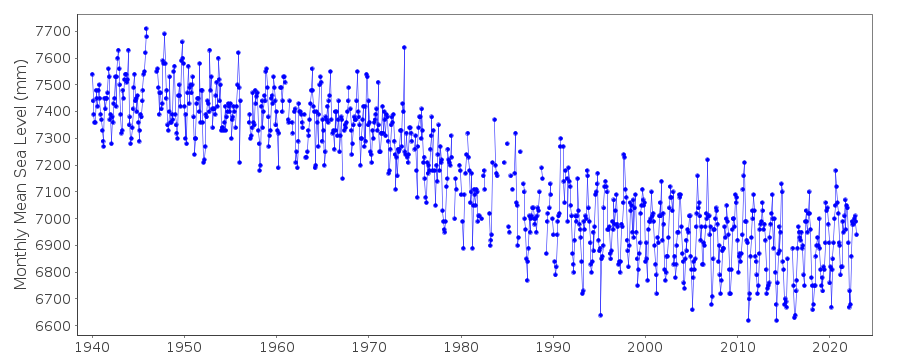
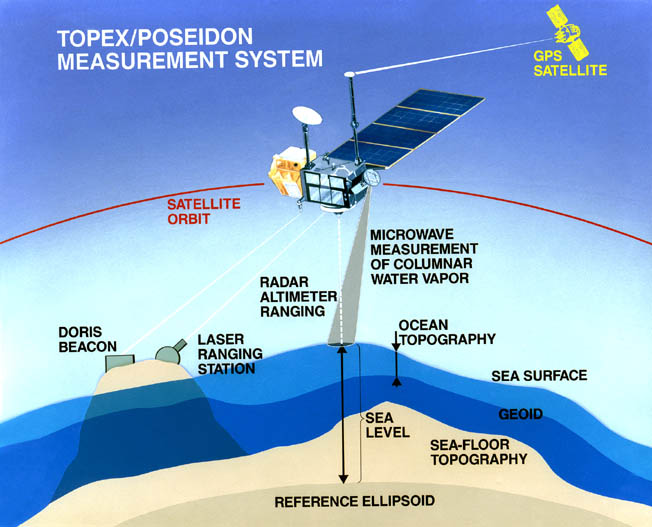
Faced with these threats, the city managers have taken on extremely proactive measures to stave off the rising seas and give the city a future. The city has raised taxes and employed some of the top coastal engineers to design systems to hold back the rising ocean. These systems include elevating the roads and building walls to protect key structures. Powerful pumps are being installed to drain water away during the king and sunny day high tides. Valves are being placed in drinking water systems to keep salt water out of the drinking water supply.
All of these measures are designed to ensure that the city stays vibrant well into the future even when the rate of sea level rise increases.
Video: Is Miami Beach Doomed? (6:28)
Is Miami Beach Doomed?
NEWS ANCHOR 1: Flooding emergency along coastal cities today in South Florida, as rising tides are leading to flooded streets.
NEWS ANCHOR 2: Another night of tidal flooding in Miami.
NEWS ANCHOR 3: Florida reportedly has the most number of big cities at risk from rising sea levels.
NEWS ANCHOR 3: Scientific models predict most of Miami Beach could be underwater by the end of the century.
PHILIP LEVINE, MAYOR, MIAMI BEACH: I think that in every generation there's going to be a big cause. There's going to be a challenge or a war. I think today we have sea level rise and climate change.
TEXT ON SCREEN: NOAA predicts the global sea level could rise up to 6.6 feet by 2100. The City of Miami Beach has taken unprecedented measures to protect itself.
MAN: This street…
PHILIP LEVINE:Okay, perfect. …
MAN: and all the, you know, like the better spots…
PHILIP LEVINE: Perfect, it's important. We have to have these everywhere because…
MAN: I'm on top of this…
PHILIP LEVINE: Go ahead. The more we communicate with the people, the better they understand what we're doing.
MAN: That's the whole point.
PHILIP LEVINE: Because we are rising above.
MAN: Yes.
PHILIP LEVINE: Thank you.
MAN: Yeah.
[MUSIC]
PHILIP LEVINE: So, what was going on, and people were seeing it more and more, we were having what's called sunny day flooding. Can you imagine? It's a beautiful sunny day on Miami Beach, which we have many of, and all of a sudden in certain streets we would see water coming up through our drains. So the streets would actually become flooded, which is very unnerving to the residents, to the tourists. It's been happening over a period of many years, but it seems over the last three, four, five, six, seven years it's gotten worse, and it's gotten faster.
We had areas where cars got underwater a bit, where it went into the bottom of the cars and ruined cars. The big challenge we have is that you know, in a city like Miami Beach, there are certain roads that are city roads, and there are certain roads that are state roads. So, for example, one of the main roads in our city is a state road called, Indian Creek Drive. In this road, underwater, underwater, underwater. But it's not our road, it’s the State of Florida. And the difficulty we're having is convincing the Governor and the Secretary of Transportation that they need to fix their road. But unfortunately, we have an administration in Tallahassee that doesn't believe in sea level rise. We can show them there are fish on the street. Water is coming over, and this road is you know, you can't even go on it. We had to close it down. We were forced to take immediate action. And, of course, I didn't realize as a mayor you had to become a hydrologist, but we all kind of learned very quickly. We have found that where we attack, we beat back the water.
Historically, the way the water would leave our city, it would go down the drains, and it would go out our sea walls back into the bay. Because the water level has risen so high in the bay, the actual out-falls on the sea walls are under the water level. So, what happens is the water reverses course and comes out our drains onto the street. So, what did we do? Number one, we put on one-way flex valves, so now the water goes out, and then the flex valve closes. The water can't return in. The second thing is, is that in order for that water to get out of that one one-way flex valve back into the bay, we had to put in pumps.
It's basically taking the water that's coming through our drainage system and pushing it out, opens up the Flex valve, and the water goes back into the bay. Raising our roads - we're literally building on top of our existing roads and making our roads higher. Your roads are higher, they won't get flooded. A third thing, of course, is sea walls. If the bay gets too high, it won't go over the seawall. The sea wall will protect the area.
JIMMY MORALES, CITY MANAGER, MIAMI BEACH: Our current plan is sort of how do we stay relatively dry for the next 30 to 50 years? The real long-term issue now is, how do we create a sustainable community that includes our land use codes? You know, our building codes and materials? Do we need to go to a landscaping plan that deals with more salt-tolerant species? How do we help individual property owners? How do they raise their houses? Or what's the alternative there? Is an insurance company going to ensure that home? Will rates go up? The early focus has been on the engineering solution. Now we’ve got to figure out what's our strategy going forward?
PHILIP LEVINE: We don't have all the answers. We have a lot of questions still, a lot of questions. Really, what it comes down to, of course, is predictions. Do we really know the real predictions? You have someone, say five feet, and three feet, and two feet, and six inches, and I think there's no necessary really true prediction. A lot of people say, you know, well, you pump, you're raising streets, you're changing building codes, you're raising sea walls. That's going to last you 30, 40, 50 years and I said you know what? That may be true. But I believe in human innovation, and I believe in entrepreneurship. I believe we're going to have such solutions through innovation. In the next 20-30 years that we're going to be astounded. I think we're going to be able to shoot the water down below, way below the aquifer. I think that we’re going to be able to pull water out of our city. We may need to potentially have, you know, little levees going through certain areas to carry water. I'm not sure. But I know that I believe in human innovation. And I know that Miami Beach is not going anywhere. As well as all the world coastal cities.
JIMMY MORALES: When you look at this map, you realize most of South Florida's fairly low-lying. So, you know, a lot of the talk is about Miami Beach. Sea-level rise is going to impact everything here along the coast. It's going to impact the Keys, and certainly, you have the Everglades recharging a freshwater brackish water ecosystem. There is no handbook. That's the real challenge we're facing. There is no handbook. No community has really done this. We're sort of at the front line of it, which is exciting and frightening at the same time.
PHILIP LEVINE: We show that we can make progress. We show that we have the formula. We know what to do. Now we're going to roll out this program citywide. It's a four hundred-million-dollar program. It's going to take another four or five years. Right now, we're shouldering the entire cost ourselves as a city. We really need state help. We need federal help.
CITIZEN 1: Yeah, the flooding is a problem. I think it will be good because we need to clean this area.
CITIZEN 2: Alton Road, it was just a flood every single day. And I got a young daughter, and it's like, I'd show her, and she's now she points out, look the bridge is filled over with the tide. It's definitely frightening.
JIMMY MORALES: Miami Beach is going to be here a hundred years from now. It probably won't look like this. The reality is, we may have to learn to live with a little bit of water, like they do in Venice. Like they do in the Netherlands. We may have to do that as well in the long term.
PHILIP LEVINE: I want to be the mayor of Miami Beach. I don't to be the mayor of Venice. Whether it's Florida, whether it's the United States, we're a part of the expression. We're in all in the same boat. Seas are rising, climate change is a reality, and you can see it right here in Miami Beach, this wonderful, incredible city in Florida, in the United States of America.
[MUSIC]
Venice and Holland
Venice and HollandVenice
Next, let's travel to Venice. The average rate of land subsidence is about 1mm/year, largely due to the consolidation of the sediment and pumping of aquifers. This low amount is at odds with reports of crumbling building foundations and regular flooding of city monuments. What is going on?
Flooding in Venice
Venice has a long legacy of devastating flooding and the severe threat of sea level rise rendering the historic city uninhabitable, and, potentially destroying art and architectural treasures and spoiling a major tourism industry. Today, the average elevation of Venice is close to sea level. The city lies in a location with a moderate (certainly not large) tidal range of less than one meter. Yet, high tides regularly cause flooding. In fact, flooding driven by high tides submerges the lowest 14 percent of the city four times a year. The situation is where it is today in part because the land the city is built upon is rapidly subsiding due largely to the removal of groundwater. The city subsided 12 centimeters in the two decades before 1970. The old buildings are constructed on wooden pilings that sink into the mud, making them even more susceptible to subsidence. With so much at stake, the city is fighting back. Construction is well underway in the MOSE (Modulo Sperimentale Elettromeccanico, Experimental Electromechanical Module) project to construct giant barricades to keep floodwater from the Adriatic Sea out of the city. The flood control system will consist of 78 giant barriers that will rise out of the water when floodwaters threaten and prevent water from entering the three entry points to the lagoon. The barriers are like giant airbags inflated by air that fills in response to the water level. Once the threat passes, the barriers will fill with water and be lowered back to the seabed. The project has suffered numerous delays and there is growing frustration that it will be too little too late when it is completed, hopefully in 2021. Meanwhile, the floods continue.
MOSE Project
Holland
The Netherlands is an extremely low-lying country, about a quarter of which lies below sea level and half of which is within a meter of sea level. The city of Rotterdam, Europe’s busiest port lies below sea level. Two-thirds of the country is vulnerable to flooding from the sea and from rivers. Even before the threat of sea level rise came on the horizon, the country had already invested a great deal in engineering projects to keep the sea at bay. Like New Orleans and Katrina, the Dutch had their own “wake-up” call in 1953 when a high-tide storm breached levees, flooded a massive area and killed 1900 people. The country responded by developing a major flood control enterprise, the most extensive storm protection system in the world. Currently, the land is protected by a massive system of human-constructed levees, storm-surge barriers, dunes, canals, pumping stations and floodgates that are emplaced when tides are abnormally high or storms threaten. The system is designed to survive flood levels that occur only every 10,000 years (note the new levee system in New Orleans is designed to withstand the 100 year flood), however with rising sea levels and the potential for increased storm activity, the Dutch are looking to increase their efforts to keep the sea at bay. They plan to invest over $2 billion per year for the next 100 years to change drainage patterns to relieve the current strain on certain canals, in part by flooding land that is dry today. The scheme also proposed to reclaim more land from the ocean and push the shoreline out to sea. Moreover, the Dutch are even mulling building construction of floating cities. With decades worth of engineering experience, countries that are threatened by rising seas are looking to the Dutch for advice and innovation.
Holland
The following video provides an overview of engineering in the Netherlands designed to combat sea level rise.
Video: Oosterschelde Storm Surge Barrier - Virtual Tour. This video is not narrated. (4:45)
Transcript: Oosterschelde Storm Surge Barrier - Virtual Tour. This video is not narrated. (4:45)
The Oosterschelde Storm Surge Barrier is a permeable barrier with gates that can be closed during storm surges. The rest of the time the dam is open. The barrier is 9 kilometer-long and consists of 65 huge concrete pillars separated by sliding barrier gates. This approach protects the land inland from flooding while preserving the natural dynamics of tides including maintaining the salinity of the seawater and protecting the expansive low lands inland of the barrier. The video shows a tour of the barrier from the outside and also the inside construction.
Check Your Understanding
Bangladesh, Pacific Islands, Torres Strait
Bangladesh, Pacific Islands, Torres StraitBangladesh
Finally, let's visit the country of Bangladesh, where a large swath of the populous coastal lies very close to sea level. In fact, a one-meter rise in sea level would inundate 30,000 km2 and displace 20 million people. This area is already extremely prone to flooding from cyclones, and this danger will increase with sea level rise.
Bangladesh Flooding
The following video provides a stark picture of flooding in Bangladesh in 2004.
Video: Complete Bangladesh Movie (3:33). This video is not narrated.
Complete Bangladesh Movie
[MUSIC]
Bangladesh 2004
July to September
70% of the country is less than 1m above sea level. The three main rivers are, Brahmaputra, Meghna, and Ganges. It is the world’s most densely populated country with 150 million people. Bangladesh has one of the world mega deltas, 52 rivers emptying to the Bay of Bengal. Every year, Bangladesh, suffers a monsoon and vast amounts of snow melt.
The Causes - Long Term
Global Warming
The global warming effect, causes more severe weather. In the example of Bangladesh it created more violent monsoons and snow melt, adding to flooding.
Urbanization
Huge cities are stopping the rain from reach the earth, making faster run-off and more chance of flooding. Poorly maintained river and lake embankments made the maximum river discharge very low, and increasing the chance of floods.
The Causes - Short Term
Spring Snow Melt
Each year, the snow melt puts the rivers to breaking point. In 2004, this combined with other factors made a huge flood.
Deforestation
Deforestation in Bangladesh has stopped interception, meaning that the rain gets to the rivers faster, increasing the chance of flooding. It was monsoon season, with the highest rainfall for 50 years, leaving the ground saturated.
Burst Dam
A dam at Tsatitsu Lake in the Himalayan kingdom of Bhutan had burst, spilling water into tributaries of the Brahmaputra.
The Events
Around 20 million families in need of emergency relief making six million people live in makeshift shelters, their homes destroyed. More than 2,000,000 acres of farming land was submerged and countless crops ruined. 500,000 cattle and poultry were killed. About two-thirds of the low-lying nation is underwater, polluted with sewage, exposing 5 million people to water-born diseases. Damaged transport blocked aid getting to people in rural areas, so the death toll rose. The flooding washed away entire rice plains, leaving millions without food. These millions then having to share the little aid that reached them, causing national, malnutrition, and starvation. The damage is thought to be in excess of $2.2 billion. The death toll was estimated at about 800. Although some people were not found, or not reported dead.
Responses - Short Term
Boats and emergency services sent to help the stranded and drowning… emergency food, medicine, and tents were sent to those who were not stranded. Aid from other countries and international help were sent. Repair to homes and to the sewage works started as soon as possible.
Responses - Long Term
New laws are in place to reduce deforestation. 350km of embankment seven meters high have been built. Seven large dams are under construction to store excess water. 5000 flood shelters built to hold the entire population. The Bangladesh floods of 2004 were a world catastrophe. Many died and many more became homeless or lost their livelihoods. Bangladesh has learned from the floods, and are working towards a safer, more secure country.
Credits: Christopher Cooper.
Pacific Islands
A dire picture also emerges in small island nations in the western Pacific, including Kiribati, Tuvalu and the Marshall Islands, where sea level rise over the next century could cause these nations to completely disappear. In fact, the President of the nation of Kiribati has publicly stated that the 100,000 citizens in his country may need to be relocated as a result of climate change and sea level rise. In Tuvalu, large tides occurring in January, February, and March, and August, September, and October, known as King Tides, flood some areas of the main island and capital city Funafuti. Before sea level rise was a problem, these tides did not cause extensive flooding. Now, they are responsible for salinization of the soil which makes it infertile and for spreading diseases because of the leaking septic tanks, as well as loss of inhabitable land.
Like in the Torres Straits, inhabitants on many low-level islands in the Pacific are building sea walls to keep the rising seas out. However, in many places, the walls are built out of coral, often obtained from fragile offshore reefs that themselves offer some protection from the rising seas.
Pacific Islands
Torres Strait
One hundred and fifty islands lie between Cape York Australia and Papua New Guinea, 17 of the islands are permanently inhabited by about 7000 people belonging to indigenous populations related to the Aboriginal peoples of mainland Australia. With an average elevation close to sea level and a large tidal range (spring tide is about 10 feet), the islands are very prone to the effects of sea level rise. Trends suggest that the island may be characterized by a slightly higher rate of sea level rise than the global average. Even if the islands remain emergent, as sea level rises, they will still be far more prone to the impact of extreme events such as tropical cyclones as well as regular high tides. With very limited resources, the islands have had a piecemeal response to rising sea levels by building sea walls along the low-lying area. Unfortunately, these walls are in dire need of repair and reinforcement. Torres Islanders have pleaded with the Australian government to help rebuild and fortify the sea walls to protect the vulnerable areas. In August 2011, the government appropriated $22 million to build the wall, however, they backtracked four months later and, thus, the plight of the islanders remains in jeopardy.
Torres Strait
So, a final word. As you can imagine, Hurricane Sandy has reinvigorated the call for flood barriers and sea walls at the entrance to the New York City harbor. Such structures are very expensive, but would have saved an enormous amount of destruction from the storm. This is not the only city where flood barriers will be needed in the future, as the video below describes graphically.
Video: RockWorks: EarthApps - Sea Level Rise Simulations (3:01)
RockWorks: EarthApps - Sea Level Rise Simulations
[OMINOUS MUSIC]
TEXT ON SCREEN: If the ice that lies above Antarctica were to melt, global sea level would rise by 61 meters (200 feet).....the results would be catastrophic.
NARRATOR: The following simulations depict 61 meter increases in sea level over the next 10 years.
TEXT ON SCREEN: San Francisco
This 10-year time period was chosen for dramatic purposes, completely unrelated to scientific observations. Instead, these simulations, coupled with ominous music and low-frequency narration, definitively answer the biggest challenge currently facing mankind.
In this simulation, the city of San Francisco, California is virtually destroyed.
[OMINOUS MUSIC]
TEXT ON SCREEN: London
NARRATOR: One of the few features left above water within London would be the clock at the top of Big Ben.
[OMINOUS MUSIC]
TEXT ON SCREEN: Sydney
NARRATOR: The Opera House in Sydney would be completely submerged.
[OMINOUS MUSIC]
TEXT ON SCREEN:Hong Kong
NARRATOR:Property values within Hong Kong would continue to rise.
[OMINOUS MUSIC]
NARRATOR: What can you do to prepare for these changes? Take your family and loved ones and head to high ground. Wait, first buy Rockware products, and then head to high ground.
Check Your Understanding
Lab 10: Impact of Sea Level Rise on Coastal Communities
Lab 10: Impact of Sea Level Rise on Coastal CommunitiesDownload this lab as a Word document: Lab 10: Impact of Sea Level Rise on Coastal Communities (Please download required files below.)
There are two parts of this lab. In the first, you will look at recent trends in sea level from tidal gauge data going back to about 1940. This will allow you to determine the places where sea level is rising the fastest. In the second part of the lab, you will be looking at future sea level rise projections for certain areas. The first part of the lab is in Google Earth; the second part is in a web browser (the Google Earth files for this type of analysis don’t work well yet).
Files to Download
Practice Questions
Part 1.
In this part of the lab, you will look at tide gauge data showing relative sea level rise data back to about 1940. The goal will be to determine trends from rather noisy data, determine places where relative sea level is rising faster than others, and the reason for the rapid rise. In the practice lab, we will focus on the West Coast of the US.
Load the PSMSL Tide gauge file in Google Earth. The file shows tide gauge data from around the world, which will allow you to explore the rates of sea level rise. The dots show stations organized by the last reported year. Click on stations, and you will see a PSMSL ID number; click on that, and you will get tidal gauge data in mm (for several locations, several dots appear; make sure you click on one of the dark green dots).
- Go to Crescent city in Northern California. Is relative sea level rising or falling over time?
- Rising
- Falling
- Roughly how much has relative sea level changed since the beginning of the record at Cresent City?
- Over a meter
- Over 0.25 m
- Under 0.25 m
- Now go to Neah Bay in Washington State in the tip of the Olympic Peninsula. Is relative sea level rising or falling over time?
- Rising
- Falling
- Roughly how much has relative sea level changed since the beginning of the record at Neah Bay?
- About 0.5 m
- About 0.3 m
- About 0.1 m
- Based on just these two records, what is the dominant process controlling relative sea level change in these locations?
- Isostatic rebound (removal of ice)
- Subsidence
- Uplift due to tectonic activity
Part 2.
Prediction of the extent of flooding that results from sea level rise is much simpler than predicting the absolute amount of sea level rise that will occur over coming decades. Flooding predictions are based on digital elevation maps that have great accuracy and resolution. The NOAA sea level rise and coastal flooding tool allows you to look at areas in detail and make predictions about the future under higher seas. At the top, you can enter an address to look closely at an area. For the practice, we will look at Tampa, FL, so enter this in the search window. Note: it can take a while for a clear image to come into view. Remember 1000 mm is a meter.
Go to NOAA Sea Level Rise Viewer and click on Get Started. You will see a map focused on the US, which is where we will be working. On the bottom left, please make sure the elevation scale is in meters, not feet. We will look at three different views: (1) sea level rise which allows you to see how the area floods as you move the slider up. (2) Flood frequency which shows the areas that currently flood frequently; and (3) vulnerability, which is a comprehensive assessment on how vulnerable certain regions are to sea level rise (based on elevation as well as population density and demographics such as the percentage of people living under the poverty line).
Using these three maps, answer the questions following questions
- At what sea level rise in meters does Davis Island begin to flood? (Give your answer as a number.)
- At what sea level does St. Pete Beach begin to flood? (Give your answer as a number.)
Q8-12 are in the Practice lab.
Module Summary and Final Tasks
Module Summary and Final TasksEnd of Module Recap:
In this module, you should have mastered the following concepts:
- the factors contributing to sea level rise;
- the techniques for measuring the rates of change in different places, and the result that rates of change are by no means uniform on a global basis;
- relative versus absolute sea level change;
- evidence for major changes in sea level in the past;
- impacts of sea level change in low-lying coastal areas including the North Carolina Barrier Islands, the Mississippi Delta, The Netherlands, Venice, and Pacific island nations, strategies to mitigate these impacts;
- prediction of future sea level change is extremely difficult, making it even more challenging to develop a strategy to deal with this serious threat to coastal communities in coming decades.
Assignments
You should have read the contents of this module carefully, completed and submitted any labs, the Yellowdig Entry and Reply and taken the Module Quiz. If you have not done so already, please do so before moving on to the next module. Incomplete assignments will negatively impact your final grade.
Lab
-
Lab 10: Impact of Sea Level Rise on Coast Communities